Beijing Zoo: The Complete Visitor Guide
Beijing Zoo is one of China's oldest and largest zoological parks, covering over 80 hectares in Xicheng District. Home to the city's most accessible giant panda viewing experience, it draws millions of visitors each year. This guide covers what to expect, when to go, and how to make the most of your time there.
Quick Facts
- Location
- No. 137, Xizhimenwai Street, Xicheng District, Beijing
- Getting There
- Beijing Zoo Station, Subway Line 4 (direct access)
- Time Needed
- 2.5 to 4 hours for a thorough visit; half a day with children
- Cost
- CNY 15 (peak, adult); CNY 10 (off-season); Combined zoo + Panda House: CNY 19 peak / CNY 14 off-season
- Best for
- Families, first-time visitors, panda enthusiasts, budget travelers
- Official website
- www.beijingzoo.com
What Beijing Zoo Actually Is
Beijing Zoo, officially 北京动物园 (Běijīng Dòngwùyuán), is one of the oldest and most significant zoological parks in China. Built in 1906 during the late Qing dynasty and officially named Beijing Zoo in 1955, it covers approximately 80.05 hectares in Xicheng District. The grounds contain a lake, gardens, historic pavilions, and purpose-built animal enclosures spread across what was once an imperial estate.
For most international visitors, the primary draw is straightforward: giant pandas. The Panda House is one of the most accessible locations in all of China to view these animals at close range without a long journey, and admission remains genuinely affordable. Beyond the pandas, the zoo holds large collections of African wildlife, marine animals, reptiles, birds, and other species from across China, including the rare giant salamander and Siberian tigers.
The zoo sits in the western part of Xicheng District, a short walk from the Xicheng neighborhoods that contain some of Beijing's most significant traditional architecture. It is not a world-class facility by contemporary international zoo standards, and the enclosures for some species are older and more compact than visitors from Europe or North America may expect. Understanding this in advance prevents disappointment and helps you appreciate what the zoo does well.
💡 Local tip
Buy the combined zoo + Panda House ticket at the entrance rather than the zoo-only ticket. At CNY 19 in peak season, it saves you the separate Panda House surcharge and guarantees you do not queue again at the panda enclosure gate.
The Panda House: What to Expect Inside
The Panda House is a dedicated facility within the zoo grounds, and it operates as a separate paid zone. Giant pandas can be viewed there during the Panda House's separately posted opening hours.
Giant pandas are most active in the morning, typically between 08:00 and 10:30, when keepers deliver fresh bamboo. Arriving during this window means seeing the animals eating, moving, and occasionally playing rather than sleeping in a corner. By midday, especially in summer, the pandas tend to be sedentary. This is worth factoring into your schedule: get to the zoo when it opens at 07:30 if the pandas are your primary reason for visiting.
The viewing corridors can become congested on weekends and national holidays, with crowds pressing against the glass barriers and visitors lifting children for photographs. The physical space inside the Panda House is not vast, so patience is necessary. Weekday mornings in spring or autumn are considerably calmer.
⚠️ What to skip
Photography rules inside the Panda House restrict flash photography. Turn off your flash before entering to avoid warnings from staff and to protect the animals' comfort.
Tickets & tours
Hand-picked options from our booking partner. Prices are indicative; availability and final rates are confirmed when you complete your booking.
Beijing Summer Palace Entrance Ticket
From 7 €Instant confirmationFree cancellationMutianyu Great Wall and Summer Palace small-group tour from Beijing
From 171 €Instant confirmationFree cancellationPrivate Customized Beijing Tour with Local Guide and Transfer
From 53 €Instant confirmationFree cancellationLama Temple entrance tickets in Beijing
From 6 €Instant confirmationFree cancellation
Beyond the Pandas: The Rest of the Zoo
A significant portion of visitors to Beijing Zoo spend their entire visit in the panda area and leave, which means large sections of the grounds are consistently quieter. The African animal zone, which includes giraffes, zebras, and hippos, occupies the northern part of the park and is worth the walk. The giraffe enclosure in particular allows closer viewing than many international equivalents.
The aquarium, located within the zoo complex but operating under a separate ticketing structure as Beijing Aquarium, is a substantial attraction in its own right. It houses beluga whales, sharks, and large coral reef tanks, and is one of the larger inland aquariums in Asia. If you are visiting with children and want to extend the day, it justifies a separate entry fee.
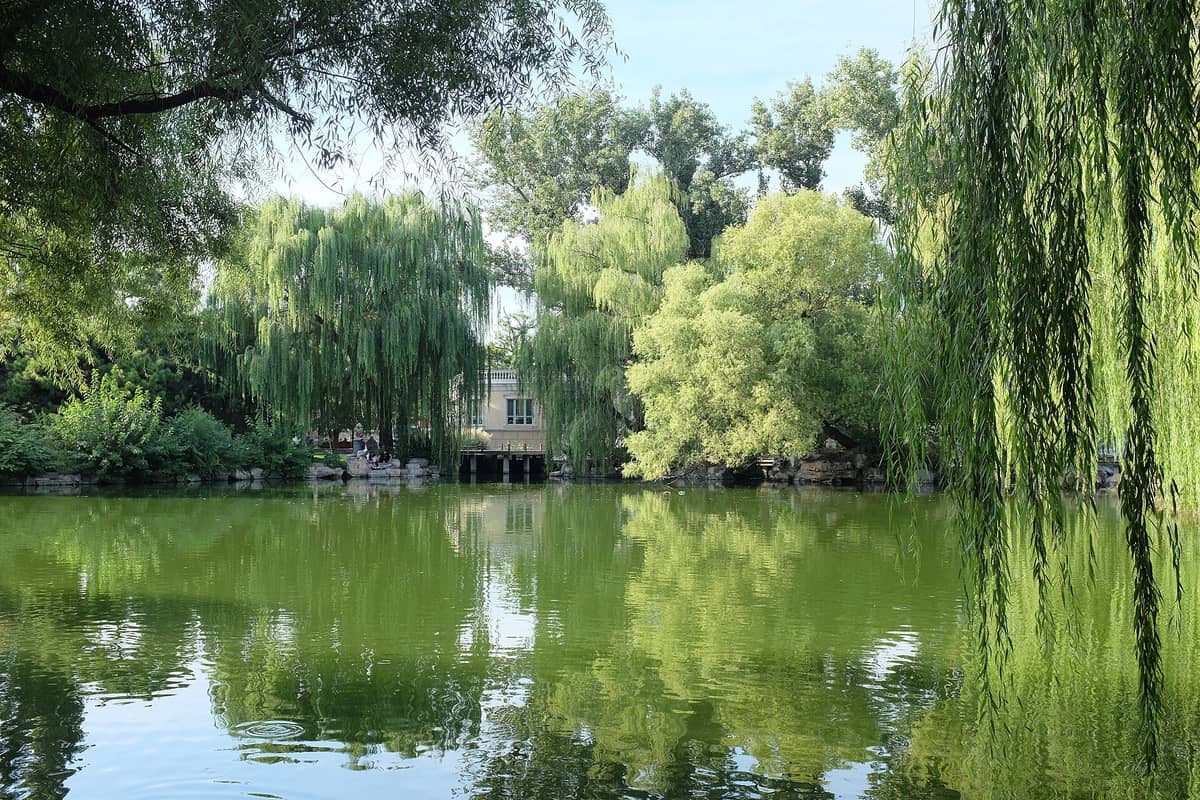
The zoo's large lake, Jinyuzao Lake, sits roughly at the center of the grounds and provides a visual break from enclosure-to-enclosure walking. Benches around its edges are genuinely useful for resting, and the surrounding gardens have a quiet quality on weekday mornings. You can read more about the neighboring water areas in our guide to Houhai and Shichahai, which are within reasonable walking or transit distance.
The reptile house and bird of prey exhibits tend to be among the least crowded areas even during peak times. The reptile collection includes large crocodilians and several snake species native to China. The quality of the facilities here is uneven, and some older enclosures show their age, but the collection itself is substantive.
Opening Hours, Tickets, and Getting There
Opening hours change between seasons. From April 1 to October 31 (peak season), admission is available from 07:30 to 18:00. From November 1 to March 31 (off-season), admission is available from 07:30 to 17:00. The Panda House opens at 08:00 and closes at 18:00 in peak season or 17:00 in off-season.
Peak season adult admission is CNY 15. Off-season adult admission drops to CNY 10. Discounted zoo tickets are CNY 7.50 in peak season and CNY 5 in off-season. The combined zoo and Panda House ticket costs CNY 19 in peak season and CNY 14 in off-season. These prices were verified against the Beijing Municipal Government listing in September 2026, but fees can change, so confirm before your visit.
Getting there is uncomplicated. Beijing Zoo Station on Subway Line 4 serves the south gate. The northwest gate is served by National Library of China Station on Metro Lines 4, 9, and 16. The surrounding streets also have municipal bus stops serving multiple routes, and the zoo is accessible by taxi or ride-hailing via DiDi.
If you are planning a broader day in this part of the city, the zoo pairs naturally with a visit to Beihai Park to the east, or you could include it as part of a longer itinerary following our 3-day Beijing itinerary.
ℹ️ Good to know
Visitors with accessibility needs should contact the zoo directly before visiting at +86 10 6839 0274 to confirm which entrances, routes, and facilities are suitable. The grounds are large and not uniformly flat.
When to Visit and What the Conditions Are Like
April through May and September through October are the best periods to visit. Spring brings mild temperatures, green gardens, and manageable crowds on weekdays. Autumn light is clear and the air quality tends to be better than summer. The zoo's gardens and tree-lined paths are at their most pleasant when the temperature stays between 15°C and 22°C.
Summer visits are viable but require adjustments. July and August bring temperatures above 30°C, and the zoo has limited shade in some zones. Carry water, wear light clothing, and plan to arrive at opening time to complete the panda visit before the heat peaks. Many animals retreat to indoor or shaded areas by mid-morning on the hottest days, which reduces what you can observe.
Winter visits have their own logic. Off-season ticket prices apply, crowds are minimal, and some visitors find the zoo unexpectedly atmospheric on cold, clear days. However, several outdoor enclosures limit animal visibility in cold weather, and the experience is noticeably reduced compared to spring and autumn. Snow on the grounds is occasionally possible in January and February.
National holidays, particularly Golden Week in early October and the Spring Festival period, bring extremely large crowds. If you are visiting Beijing during these windows, read our advice on visiting Beijing with kids during busy periods before planning your zoo day.
Photography, Practicalities, and Honest Limitations
Beijing Zoo is a photogenic location in ways that are sometimes underestimated. The Qing-era architectural elements within the grounds, including tiled roofs, stone bridges, and lakeside pavilions, provide a historical frame that few zoos in the world can match. Early morning light reflecting on the central lake, before crowds arrive, offers genuinely interesting compositions.
For wildlife photography, the Panda House produces the clearest shots through glass barriers in the morning when pandas are active and the interior lighting is supplemented by natural light from skylights. A camera with a reasonably fast lens handles the mixed lighting adequately. At the outdoor enclosures, midday light is harsh; late afternoon is generally better for outdoor animal shots.
It is worth being honest about what Beijing Zoo is not. If your primary interest is immersive, naturalistic wildlife environments with large open-range enclosures, this is not that type of facility. Many enclosures reflect an older design philosophy, and animal welfare conditions vary. Visitors who prioritize contemporary zoo standards may prefer to direct their Beijing day toward cultural sites. For families with young children who simply want to see a giant panda and a broad range of animals in one location, the zoo is a genuinely practical and affordable option. Check our guide to free and low-cost things in Beijing if you are budgeting carefully.
Food options inside the zoo are limited to cafeteria-style stalls and small kiosks. Quality is basic. Bringing your own snacks and a refillable water bottle is strongly advisable, particularly for visits with children or longer stays.
Insider Tips
- Arrive at 07:30 on a weekday morning in spring or autumn. The zoo opens then and the pandas are active. You can complete the Panda House visit in under an hour before the tour groups arrive around 09:30.
- Buy the combined ticket at the main gate ticket window rather than the in-app options if you are unfamiliar with the payment system. The window accepts WeChat Pay, Alipay, and cash, and staff at major windows have handled foreign visitors before.
- The west entrance near the Beijing Aquarium is less congested than the main east gate on busy days. If you arrive by bus or taxi rather than the subway, consider directing your driver to the western approach on Xizhimenwai Street.
- The zoo grounds include several stone benches near the lake that are genuinely peaceful on weekday mornings. After the panda viewing, a 20-minute rest by the water resets your energy before tackling the larger mammal sections.
- If you are visiting during summer, the indoor aquarium building (Beijing Aquarium, separate ticket) is air-conditioned and provides a useful midday retreat from the heat before returning to outdoor sections in late afternoon.
Who Is Beijing Zoo For?
- Families with children who want a manageable, affordable full-day outing
- First-time Beijing visitors who want to see a giant panda without traveling outside the city
- Budget-conscious travelers: at CNY 15 or less for admission, this is one of the lowest-cost half-days in Beijing
- Travelers with a specific interest in Chinese endemic species, including giant pandas, golden monkeys, and giant salamanders
- Visitors looking for a quieter, green outdoor space in Xicheng away from the major imperial heritage sites
Nearby Attractions
Other things to see while in Xicheng District:
- Beihai Park
Beihai Park is one of Beijing's oldest and best-preserved imperial gardens, covering roughly 69 hectares with more than half the area given over to a large lake. Dating back over a thousand years, it offers a rare mix of imperial architecture, Buddhist monuments, and open green space within walking distance of the Forbidden City.
- Beijing Planetarium
Beijing Planetarium (北京天文馆) is located in Xicheng District near Beijing Zoo. It runs dome theater shows, 3D and 4D screenings, and permanent science exhibitions across two buildings. Here's what a visit actually looks like.
- Capital Museum
The Capital Museum (首都博物馆) in Xicheng District is Beijing's premier civic museum, tracing the city's history across three millennia. Admission is free, the permanent galleries are genuinely impressive, and it rarely gets as crowded as the Forbidden City — making it one of the smartest stops in central Beijing.
- Fayuan Temple
Founded in 645 CE during the Tang dynasty, Fayuan Temple is the oldest surviving Buddhist temple in Beijing's central districts. 5 RMB to enter, rarely crowded, and steeped in over 1,300 years of religious and literary history, it rewards travelers willing to step off the tourist circuit in Xicheng.