Beijing Planetarium: What to Expect, What to Pay, and Whether It's Worth Your Time
Beijing Planetarium (北京天文馆) is located in Xicheng District near Beijing Zoo. It runs dome theater shows, 3D and 4D screenings, and permanent science exhibitions across two buildings. Here's what a visit actually looks like.
Quick Facts
- Location
- No. 138, West Xizhimen Outer Street, Xicheng District, Beijing
- Getting There
- Line 4, Beijing Zoo Station, Exit D; buses 27, 87, 107, 332, 362 and others stop at Beijing Zoo
- Time Needed
- 2–3 hours for exhibitions; add 45–60 min per theater show
- Cost
- Exhibition ¥10; Celestial Sphere Hall (dome) ¥45; Universe Theater ¥30; 3D/4D theaters ¥45 (prices in CNY; verify before visiting)
- Best for
- Families with school-age children, astronomy enthusiasts, rainy-day indoor visits
- Official website
- http://www.bjp.org.cn
What Is the Beijing Planetarium?
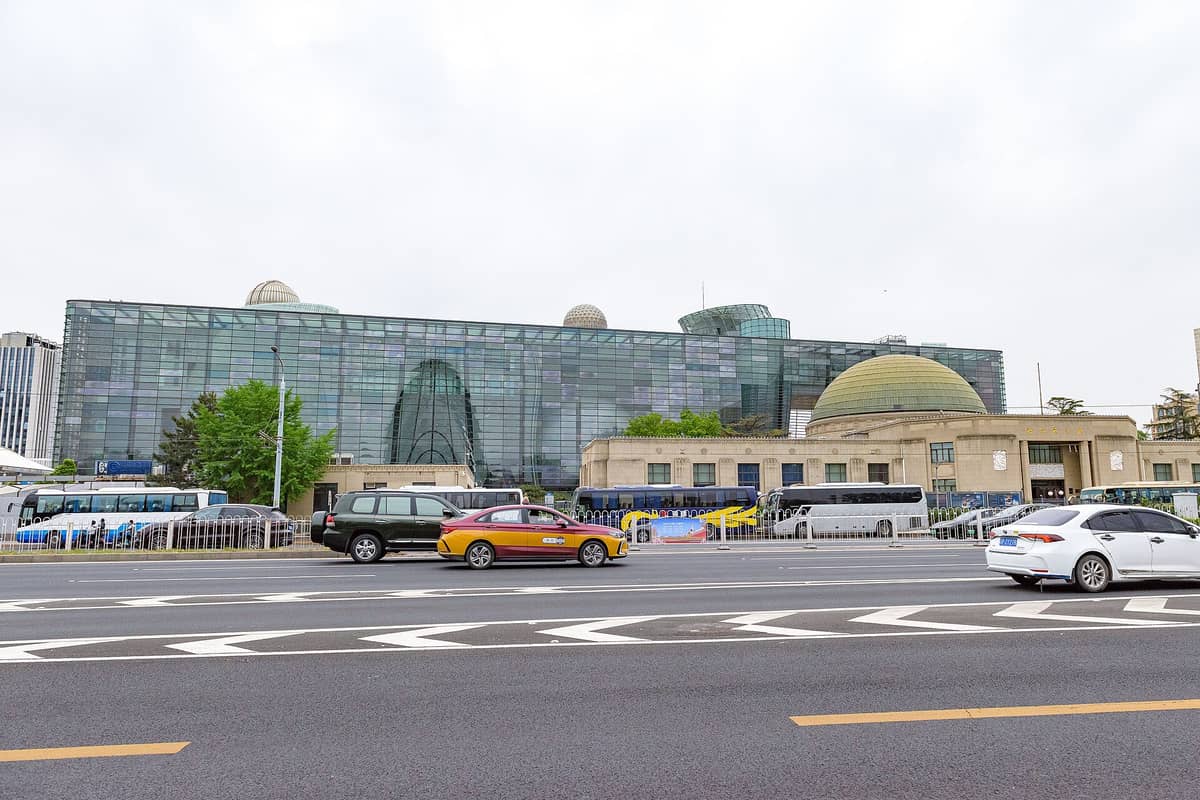
The Beijing Planetarium (北京天文馆) sits along West Xizhimen Outer Street in Xicheng District, immediately west of the Beijing Zoo compound. It was established in 1957 and has since expanded to include a newer Building B alongside the original dome structure. The two buildings share a courtyard and together house a dome theater, a digital universe theater, 3D and 4D cinemas, and several floors of permanent and rotating astronomy and space science exhibitions.
The institution also operates the Beijing Ancient Observatory in Dongcheng District as a second site, though that is a separate venue with its own admission and schedule. What you get at the Xicheng location is primarily an indoor science experience, oriented toward education and public science outreach, with a strong emphasis on school groups.
ℹ️ Good to know
The planetarium is closed every Tuesday, except during national statutory holidays. Opening hours are 09:00–16:30, with the last entry at 16:00.
Getting There and Arriving
The most straightforward route is Beijing Subway Line 4 to Beijing Zoo Station, then Exit D. Numerous bus routes also stop at the Beijing Zoo stop — lines 7, 15, 19, 27, and 102 among them — though bus travel in this corridor can be slow during morning and late-afternoon rush periods.
The planetarium has no public parking lot and actively encourages visitors to use public transport. If you plan to combine this visit with a stop at the adjacent Beijing Zoo or the nearby Beijing Aquarium, both are within easy walking distance and share the same transit stop — making a half-day itinerary in this part of Xicheng very practical for families.
Visitors enter through the east gate after security screening and exit through the north gate. The official visitor guidance does not confirm detailed step-free access, accessible toilet provision, or wheelchair loan arrangements. If mobility access is a priority, call ahead on 010-68312517 to verify current conditions before making the trip.
Tickets & tours
Hand-picked options from our booking partner. Prices are indicative; availability and final rates are confirmed when you complete your booking.
Beijing Summer Palace Entrance Ticket
From 7 €Instant confirmationFree cancellationMutianyu Great Wall and Summer Palace small-group tour from Beijing
From 171 €Instant confirmationFree cancellationPrivate Customized Beijing Tour with Local Guide and Transfer
From 53 €Instant confirmationFree cancellationLama Temple entrance tickets in Beijing
From 6 €Instant confirmationFree cancellation
The Dome Shows: The Celestial Sphere Hall
The centerpiece of any visit is the Celestial Sphere Hall (天象厅), the traditional dome theater that projects the night sky onto a curved ceiling using optical and digital equipment. Shows typically run around 40 to 50 minutes and cover topics from constellation identification to solar system exploration. The dome environment is immersive in a way that a flat screen simply cannot replicate: with the lights down and the projected sky above you, the spatial disorientation is real and genuinely affecting, even for adults who know roughly what to expect.
Tickets for the Celestial Sphere Hall cost ¥45; general exhibition admission is ¥10 for visitors who do not purchase a theater ticket. Demand is highest on weekends and during school holidays, when shows can sell out well before noon. If you are visiting on a weekend, arrive as close to the 09:00 opening as possible and purchase show tickets before doing anything else. On weekday mornings outside of holiday periods, the hall is considerably quieter, and you can usually choose your preferred show time with more flexibility.
💡 Local tip
Show narration is primarily in Mandarin. Some screenings use English subtitles or are paired with printed materials, but this varies by program. Check the current schedule on the official website (www.bjp.org.cn) before your visit if English narration is important to you.
The Other Theaters: Universe Theater, 3D, and 4D
Building B contains the Universe Theater (宇宙剧场), a digital projection cinema showing space-themed documentary films. Tickets are ¥30. The 3D and 4D theaters each cost ¥45 and tend to run shorter, more action-oriented programs, often popular with younger children. The 4D format adds physical seat movement and environmental effects, which younger visitors typically enjoy and some adults find less interesting.
If you are visiting with children aged roughly 5 to 12, the 4D theater almost always generates the most excitement. If you are visiting as an adult interested in serious astronomy content, the Celestial Sphere Hall and Universe Theater are the more rewarding options. There is no obligation to visit all four venues, and trying to do so in a single visit would feel rushed. Pick two and explore the exhibitions at a reasonable pace.
The Exhibitions: What's Actually on the Floors
General exhibition admission is ¥10 for visitors who do not purchase a theater ticket; theater-ticket holders may visit the exhibition halls free of charge on the same day. The displays span the history of astronomy in China, the solar system, stellar evolution, cosmology, and space exploration. The Chinese astronomical tradition is given particular attention: historical instruments, celestial maps, and explanations of how Chinese scholars tracked heavenly movements across centuries are presented alongside modern scientific content.
Display labeling is predominantly in Chinese, with some English translations on key panels in the main galleries. Visitors who read no Chinese will still find the visual and physical exhibits engaging, particularly the scale models and interactive stations, but the depth of information available drops considerably without language access. This is an honest limitation worth considering before visiting. Families with younger children who engage with hands-on science displays will get the most from the exhibition space.
For a complementary experience with a very different character, the Ancient Observatory in Dongcheng represents the Beijing Planetarium's second managed site. That location features actual Qing Dynasty astronomical instruments on a historic tower and suits visitors more interested in the history of Chinese science than in modern planetarium programming.
How the Experience Changes by Time of Day
Weekday mornings before 11:00 are the quietest window. School groups arrive in organized waves, typically between 09:30 and 11:00, which means the exhibition halls are calm in the first half-hour after opening, then become noticeably noisier. By early afternoon on weekdays the groups have largely cleared, and the space quiets again. On weekends the pattern is different: families arrive steadily from opening and the venue stays busy until around 15:30, when visitors begin trickling toward the exit.
Afternoon visits on weekdays outside of school holiday periods offer a relaxed pace through the exhibitions. The dome shows on those afternoons often have spare seats, which allows you to settle into a position you prefer rather than taking whatever is left. The planetarium does not have an outdoor observation area open to the public during regular hours, so the indoor character of the visit does not change with weather. This makes it a particularly good option on overcast or cold days when outdoor Beijing sites are less appealing.
⚠️ What to skip
Dome theater seats recline significantly during shows. Some visitors experience mild motion discomfort, particularly during fast-moving cosmic flythrough sequences. If you or a companion is sensitive to this, sit closer to the center of the dome rather than near the edges.
Honest Assessment: Who Will and Won't Enjoy This
The Beijing Planetarium delivers most reliably for families with children, and for adults who have a specific interest in astronomy or the history of Chinese science. The dome show is genuinely impressive as a sensory experience, and the combination of tickets and show times gives visitors enough to fill two to three hours without feeling padded.
Visitors who are already planning a full day in Xicheng might reasonably combine this with a walk around Houhai and Shichahai, which are about 3 kilometers east. For a broader sense of how to use your time across the city, the 3-day Beijing itinerary suggests how to sequence this part of Xicheng with major sites elsewhere.
Visitors who are primarily interested in Beijing's imperial history, street culture, or outdoor landscapes will likely find this a poor use of limited time. The planetarium is not a landmark experience in the way that the Forbidden City or the Temple of Heaven are. It is a competent science education venue with one genuinely excellent piece of infrastructure, namely the dome, and it works best when treated as such rather than as a primary attraction on a short Beijing trip.
Solo travelers without children, or adults seeking immersive cultural experiences specific to Beijing, will probably find other Xicheng options more memorable. That is not a criticism of the planetarium itself; it is simply accurate positioning.
Insider Tips
- Purchase theater tickets before exploring the exhibitions; theater tickets can be reserved through the Beijing Planetarium WeChat account or authorized ticketing platforms.
- The planetarium sits directly adjacent to Beijing Zoo. If you are visiting with children, buy a separate zoo ticket and plan to cross between the two venues in a single half-day. Both share the same transit stop and no additional commuting is needed.
- Show programs rotate seasonally and occasionally change without much advance notice on the English-language pages of the official site. Check the Chinese-language schedule at www.bjp.org.cn or call 010-68312517 to confirm what is screening on your intended visit date.
- The building interiors are climate-controlled, which matters: the area around Beijing Zoo is exposed and can feel cold in winter winds or uncomfortably hot in July and August. The planetarium makes a practical shelter stop regardless of whether astronomy is your primary interest.
- Afternoon light through the courtyard between Buildings A and B is pleasant, and the outdoor space between the two structures is a good spot to let children decompress between theater sessions. It is often overlooked because most visitors move directly between the two buildings indoors.
Who Is Beijing Planetarium For?
- Families with school-age children looking for a structured, indoor half-day activity
- Astronomy enthusiasts who want to experience a traditional optical dome show in a well-maintained facility
- Visitors caught out by bad weather needing a full indoor program
- Travelers combining this stop with Beijing Zoo or Beijing Aquarium in a single morning or afternoon
- Anyone interested in the history of Chinese astronomical observation, supplemented by a follow-up visit to the Ancient Observatory
Nearby Attractions
Other things to see while in Xicheng District:
- Beihai Park
Beihai Park is one of Beijing's oldest and best-preserved imperial gardens, covering roughly 69 hectares with more than half the area given over to a large lake. Dating back over a thousand years, it offers a rare mix of imperial architecture, Buddhist monuments, and open green space within walking distance of the Forbidden City.
- Beijing Zoo
Beijing Zoo is one of China's oldest and largest zoological parks, covering over 80 hectares in Xicheng District. Home to the city's most accessible giant panda viewing experience, it draws millions of visitors each year. This guide covers what to expect, when to go, and how to make the most of your time there.
- Capital Museum
The Capital Museum (首都博物馆) in Xicheng District is Beijing's premier civic museum, tracing the city's history across three millennia. Admission is free, the permanent galleries are genuinely impressive, and it rarely gets as crowded as the Forbidden City — making it one of the smartest stops in central Beijing.
- Fayuan Temple
Founded in 645 CE during the Tang dynasty, Fayuan Temple is the oldest surviving Buddhist temple in Beijing's central districts. 5 RMB to enter, rarely crowded, and steeped in over 1,300 years of religious and literary history, it rewards travelers willing to step off the tourist circuit in Xicheng.