Beijing Aquarium (北京海洋馆): The Complete Visitor Guide
Beijing Aquarium is one of the largest indoor aquariums in Asia, located within the grounds of Beijing Zoo in Haidian District. This guide covers what you'll actually see, how to plan your visit efficiently, and whether it's worth the ticket price for your specific travel style.
Quick Facts
- Location
- No. 6 Qixiang Road, Haidian District (inside Beijing Zoo grounds)
- Getting There
- Beijing Zoo Station, Line 4 — approx. 10 min walk from Exit A
- Time Needed
- 2 to 3 hours
- Cost
- CNY 175 (peak, Apr–Oct) / CNY 170 (off-season, Nov–Mar); concession rates available; children aged 6 or under, or under 1.2 m tall, free with adult
- Best for
- Families with children, marine life enthusiasts, rainy-day visits
- Official website
- www.bj-sea.com
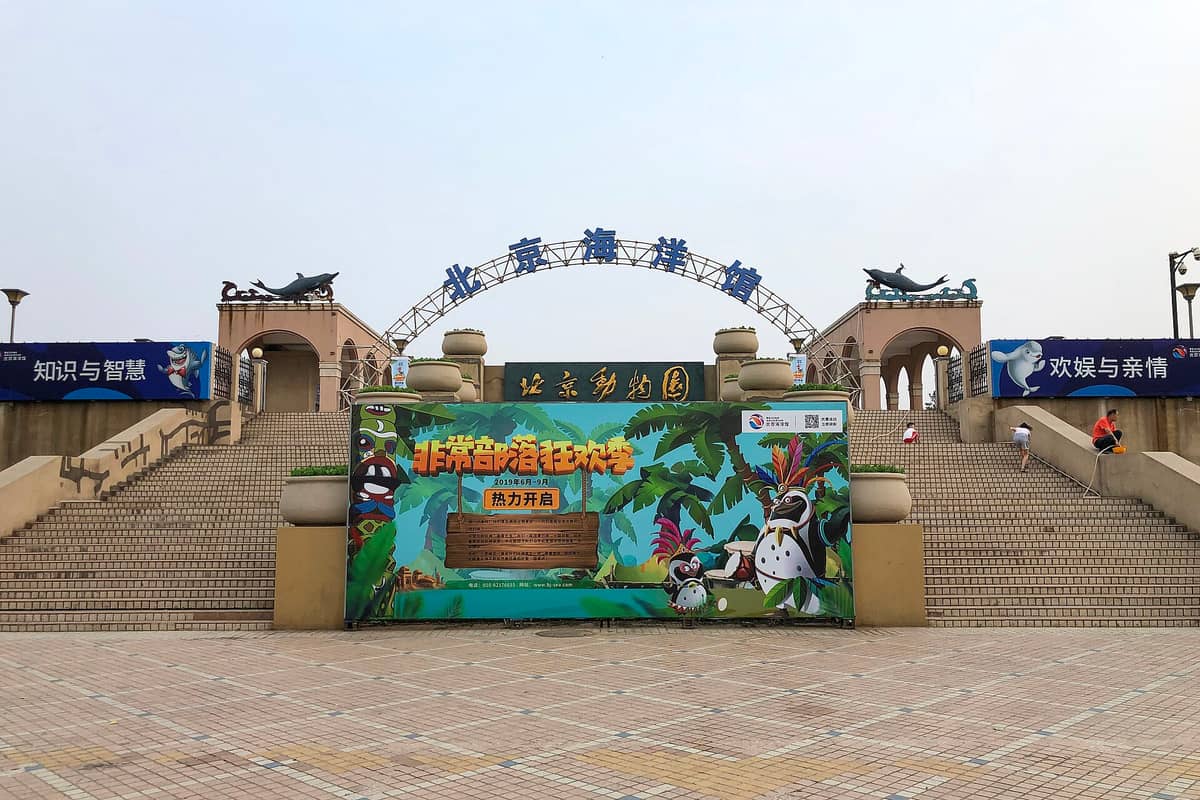
What Is the Beijing Aquarium?
The Beijing Aquarium, officially 北京海洋馆, is one of the largest inland aquariums in Asia. Unlike coastal facilities that can draw directly from the sea, everything here operates far from salt water — roughly 160 km from the nearest coastline — which makes the scale of the operation genuinely impressive on a logistical level. The facility holds a substantial variety of marine and freshwater species across purpose-built tanks, tunnels, and performance zones spread across a large indoor complex.
The aquarium sits within the western section of Beijing Zoo in Haidian District, though it operates as a separate, ticketed attraction. You can visit the aquarium without purchasing a zoo entry ticket, but if you plan to see both, budget your time accordingly; combining the two easily fills a full morning or afternoon.
Haidian is Beijing's university and research district, and the area around Beijing Zoo has long been a destination for family outings. The Beijing Zoo itself is one of China's oldest, dating to 1906. The aquarium, which opened in 1999, was built as a modern complement to the historic zoo grounds.
ℹ️ Good to know
Opening hours are seasonal. April 1 to October 31: 09:00–17:30, last entry at 17:00. November 1 to March 31: 10:00–17:00, last entry at 16:30. Verify hours on the official site before visiting, as public holidays can bring changes.
Getting There and Arrival
The most practical way to arrive is via Beijing Subway Line 4, alighting at Beijing Zoo Station and exiting from Exit A. From there, the aquarium entrance is about a 10-minute walk along a straightforward pedestrian route. Line 4 connects directly with major interchanges at Xidan and Zhongguancun, making it accessible from most parts of central Beijing without a transfer.
Taxis and ride-hailing via DiDi are also viable. The address to enter is No. 6 Qixiang Road, Haidian District (西直门外大街137号), or you can search 北京海洋馆 in the DiDi app. Traffic in the area around Beijing Zoo can be slow on weekend mornings when families converge, so allow extra buffer time if arriving by road.
If you're combining this visit with other Haidian attractions, the Beijing Planetarium is directly adjacent to the zoo grounds and makes a logical pairing for a science-and-nature day out. The Summer Palace is also within Haidian and reachable by metro, though it deserves its own separate half-day.
💡 Local tip
On weekends and during school holidays, queues form at the ticket window by mid-morning. Check whether advance online purchase is available through the official site to avoid waiting.
Tickets & tours
Hand-picked options from our booking partner. Prices are indicative; availability and final rates are confirmed when you complete your booking.
Beijing Summer Palace Entrance Ticket
From 7 €Instant confirmationFree cancellationMutianyu Great Wall and Summer Palace small-group tour from Beijing
From 171 €Instant confirmationFree cancellationPrivate Customized Beijing Tour with Local Guide and Transfer
From 53 €Instant confirmationFree cancellationLama Temple entrance tickets in Beijing
From 6 €Instant confirmationFree cancellation
The Experience: What You'll Actually See
The aquarium is divided into themed zones that move visitors through freshwater ecosystems, tropical marine environments, a coral reef section, and open ocean displays. The centrepiece is a large underwater tunnel where rays and sharks pass overhead — the kind of space that genuinely holds a child's attention for longer than expected. The glass is thick and the lighting is kept low in this section, which creates a calm, almost dim atmosphere; it can feel slightly claustrophobic if the tunnel is crowded.
One of the more popular draws is the marine mammal section, which has historically included beluga whale performances. Visitors with concerns about marine mammal performances in captivity should be aware this is a feature of the facility. The dolphin and seal shows are scheduled at fixed times throughout the day; check the board near the main entrance for the day's schedule in Chinese, or ask staff.
The freshwater galleries are often quieter and tend to hold more interest for visitors who prefer watching fish behave naturally rather than staged performances. The Amazon-themed tanks and the display of large Chinese freshwater species, some of which are rarely seen in everyday life, are worth slowing down for. Tank labels are primarily in Chinese with some English annotation.
⚠️ What to skip
Tank labels and show schedules are largely in Chinese. If you're visiting without a Mandarin reader, download a translation app before you go — Google Translate's camera function works well for reading static signage.
Best Time to Visit and Crowd Patterns
Weekday mornings are the least crowded period. Arriving at or shortly after opening means you'll have the underwater tunnel largely to yourself for the first 30 to 45 minutes, which makes a real difference to the atmosphere. By late morning on weekends, particularly during school holidays and public holidays, visitor density increases significantly and the main tank areas can feel cramped.
Seasonally, the aquarium draws larger crowds during summer school holidays (July and August) and during the major national holidays: Chinese New Year (typically late January to mid-February), the May Day Golden Week (around May 1), and National Day Golden Week (October 1 to 7). If your visit falls in these windows, earlier arrival and lower expectations for queue-free navigation are sensible.
The aquarium is one of the few attractions in Beijing that works well on a rainy day. Unlike outdoor sites where poor weather significantly diminishes the experience, the fully indoor format means precipitation has no effect. This makes it a useful option to keep in reserve if the weather turns during your trip.
For context on how to structure a multi-day Beijing itinerary that incorporates this kind of family-oriented attraction, the Beijing with Kids guide offers a practical framework for managing pace and expectations.
Tickets, Costs, and Concessions
Adult admission is CNY 175 during the peak season (April 1 to October 31) and CNY 170 during the off-season (November 1 to March 31). Concession pricing applies for eligible primary and middle school students, children above the free-entry threshold, adults aged 60 or older, and active military personnel — proof of eligibility is required at the ticket window.
Children aged six or younger, or under 1.2 metres tall, enter free when accompanied by a paying adult, under the conditions stated in the official ticket policy. The aquarium is a separate, standalone paid attraction; entry does not include access to Beijing Zoo, which sells its own ticket. If you plan to visit both, you'll need to budget for two separate admissions.
ℹ️ Good to know
Admission prices listed here were verified in late 2024. Prices are subject to change; confirm current rates at the official site (bj-sea.com) or via the Beijing Municipal Government ticketing page before your visit.
Practical Notes: What to Bring and Accessibility
The aquarium is a fully indoor venue with year-round climate control, so dress is less of a concern than at Beijing's many outdoor attractions. That said, the interior can feel cool in winter months and the lighting is deliberately subdued throughout much of the facility. Comfortable shoes matter more than specific clothing.
Photography without flash is generally permitted in the viewing galleries. The underwater tunnel and large tank areas are particularly photogenic, but low light levels mean autofocus can struggle on standard smartphone cameras. A steadier hand and a moment of patience will produce better results than rapid-fire shooting. Shows and performances may have separate photography policies.
On accessibility: the published ticket policy confirms free entry for young children under specified conditions, but detailed information about mobility access, lift availability, or sensory accommodations is not consistently published in official English-language materials. Visitors with specific accessibility requirements are advised to contact the aquarium directly at +86-10-62176655 before their visit.
If you're planning a fuller picture of Beijing's family-friendly attractions, the best museums in Beijing covers a wider range of indoor options across different districts.
Is It Worth It?
At CNY 175 per adult, the Beijing Aquarium sits at the pricier end of Beijing's family attraction market. For visitors travelling with children aged roughly 3 to 12, the underwater tunnel alone tends to justify the ticket price — the scale of the main tank is hard to replicate through a screen. Adults visiting without children may find the experience entertaining for 90 minutes but less compelling at full price compared with Beijing's major museums, many of which are free.
The facility is well-maintained and clearly invested in by its operators. It is not a cutting-edge international aquarium experience on the level of facilities in major coastal cities, but for a landlocked capital, the range and quality of exhibits are creditable. The marine mammal show element is a genuine point of difference for families but may be a reason to skip for visitors who prefer not to engage with captive performance animals.
Beijing Zoo and the aquarium together sit in a part of Haidian that rewards a longer exploration. For context on the broader district and what else is worth your time nearby, the Haidian neighborhood guide is a useful reference.
Insider Tips
- Arrive within the first 30 minutes of opening on a weekday to have the underwater tunnel almost entirely to yourself. The atmosphere at low crowd density is considerably better than during peak hours.
- The show schedule changes daily; check the large board near the main entrance immediately after arrival. Shows fill up quickly and the best viewing positions go fast, so note the times first before exploring.
- Tank labels and interactive signage are primarily in Chinese. Taking a few minutes before your visit to screenshot or save the names of exhibits you're most interested in will help you navigate more efficiently.
- If you're combining the aquarium with Beijing Zoo, buy both tickets at the main zoo entrance rather than backtracking. The aquarium entrance is located in the western section of the zoo grounds.
- The gift shop near the exit stocks reasonably priced marine animal plush toys that are popular with younger visitors. If you're trying to avoid a purchase negotiation, use a different exit or build in budget for it.
Who Is Beijing Aquarium For?
- Families with children aged 3 to 12 looking for an immersive, largely indoor activity
- Visitors caught in Beijing's summer or winter who want a weather-proof afternoon
- Travellers pairing the visit with Beijing Zoo for a full day in Haidian
- Marine biology enthusiasts curious about a large inland aquarium's approach to ocean species
- First-time visitors to Beijing who want a low-intensity, non-historical attraction to balance out a heavy sightseeing itinerary
Nearby Attractions
Other things to see while in Haidian District:
- Big Bell Temple (Dazhongsi)
Tucked along the North 3rd Ring West Road in Haidian, the Big Bell Temple Ancient Bell Museum houses one of the largest surviving bronze bells in the world. It is a serious museum experience, combining a working Qing-dynasty temple complex with a specialist collection of historic bells that draws scholars, photographers, and curious travelers in equal measure.
- Five Pagoda Temple (Wuta Temple)
Officially the Beijing Stone Carving Art Museum, the Five Pagoda Temple sits on the grounds of the former Ming-dynasty Zhenjue Temple in Haidian. It combines one of China's most distinctive Buddhist structures with an outdoor museum of stone carvings that rewards visitors who take time to look closely.
- Military Museum of the Chinese People's Revolution
The Military Museum of the Chinese People's Revolution stands at No. 9 Fuxing Road in Haidian District, presenting extensive collections across more than 40,000 square meters of exhibition space. It is one of the largest military history museums in China, admission is free, and it makes for a genuinely substantial half-day visit for anyone curious about modern Chinese history.
- Old Summer Palace (Yuanmingyuan Ruins Park)
Once the grandest imperial garden complex in the world, the Old Summer Palace was destroyed in 1860 and left as a deliberate ruin. Today its 350 hectares of fractured stonework, lotus-covered lakes, and wooded paths offer a completely different kind of Beijing experience: reflective, spacious, and quietly sobering.