Peking University Campus: History, Beauty, and How to Visit
Peking University's campus in Haidian is one of Beijing's most graceful open spaces, where classical Chinese architecture meets century-old scholarship. Entry is free but requires advance real-name reservation, and visits are generally limited to weekends, public holidays, and university vacations.
Quick Facts
- Location
- No. 5 Yiheyuan Road, Haidian District, Beijing 100871
- Getting There
- Line 4 to Peking University East Gate Station, Exit A
- Time Needed
- 2–3 hours
- Cost
- Free; advance real-name reservation required
- Best for
- Architecture lovers, history enthusiasts, peaceful walks
- Official website
- www.pku.edu.cn
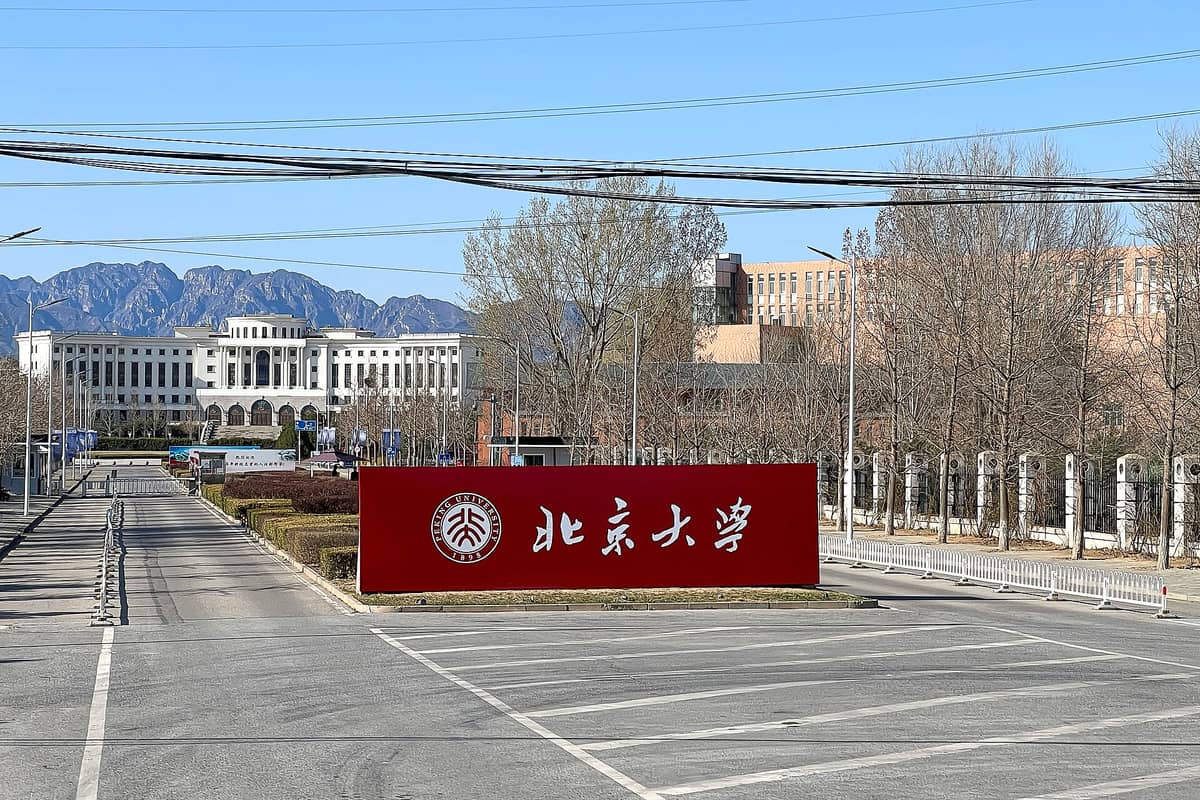
What Is Peking University Campus?
Peking University, known in Chinese as 北京大学 (Běijīng Dàxué) and officially in English as Peking University, is one of China's most historically significant and academically prestigious institutions. Its Haidian campus is not a tourist park, nor is it a museum. It is a functioning university where students cycle between lecture halls and read under willows by the lake. Yet the campus is also a place of rare architectural and natural beauty that rewards any visitor who takes the time to walk it properly.
The campus sits in northwest Beijing's Haidian District, a neighborhood dense with universities and research institutes. Its grounds incorporate parts of former imperial garden estates, which explains why the campus feels more like a classical Chinese garden than a typical academic precinct. Curved paths, ornamental rockeries, traditional pavilions, and a large central lake create an atmosphere that few university campuses anywhere in the world can match.
⚠️ What to skip
Campus visits are generally restricted to weekends, statutory holidays, and winter/summer vacation periods, although access may be adjusted or suspended for major events, course changes, or extreme weather. Entry windows are 08:00–11:00 and 13:00–16:00. All visitors must leave by 19:00 the same day. Advance real-name reservation is mandatory. Do not show up without booking.
Historical Context: Why This Campus Looks the Way It Does
Peking University was founded in 1898 as the Imperial University of Peking, making it one of the oldest modern universities in China. Its current Haidian campus, however, has a history that predates the university itself. The grounds were once part of a network of Qing dynasty imperial gardens and estates built along the same axis as the Summer Palace, just to the north. When the university relocated here in the 1950s, much of the original garden landscape was incorporated into campus planning rather than demolished.
This proximity to the old imperial estates is the reason Weiming Lake, the campus's central landmark, looks less like a university pond and more like a classical royal garden. The lake's name (未名湖) translates loosely as 'Unnamed Lake,' a deliberate bit of scholarly modesty that has since become one of Beijing's most recognized university landmarks. A stone boat, arched bridges, and lotus beds complete the scene. Visitors who have previously toured the Summer Palace will recognize the same aesthetic language, though on a quieter, more intimate scale.
The university's role in Chinese intellectual and political history is equally significant. Peking University was a center of the May Fourth Movement of 1919, a period of cultural and nationalist awakening that shaped modern China. Figures who passed through the university's lecture halls and libraries left marks on Chinese literature, philosophy, and politics that are still felt today. Walking the campus with some awareness of this history changes what you notice.
Tickets & tours
Hand-picked options from our booking partner. Prices are indicative; availability and final rates are confirmed when you complete your booking.
Small group tour of Tian'anmen Square and the Forbidden City
From 43 €Instant confirmationFree cancellationBeijing Summer Palace Entrance Ticket
From 7 €Instant confirmationFree cancellationMutianyu Great Wall and Summer Palace small-group tour from Beijing
From 171 €Instant confirmationFree cancellationPrivate Guided Tour to Temple of Heaven, Panda House and Summer Palace
From 67 €Instant confirmationFree cancellation
What to See: Weiming Lake, Pagodas, and Classical Architecture
The heart of the campus is Weiming Lake. In spring, cherry blossoms and forsythia bloom along the northern bank, and the reflections in the still water on a clear morning are as good as anything you will find at a dedicated scenic area. In summer, lotus flowers cover large sections of the lake's surface. Autumn turns the surrounding trees amber and red, making October one of the best months to visit. Winter mornings, when the lake occasionally freezes and a thin mist sits over the ice, have their own austere quality.
At the northeastern edge of Weiming Lake stands the Boya Pagoda, a thirteen-story tower built in a style that echoes older Chinese religious architecture. The pagoda is not open to climbers, but it serves as the campus's most photographed vertical element. From the southern bank of the lake, the pagoda's reflection in the water is a classic composition that draws photographers at almost any hour.
Beyond the lake, the campus contains a number of traditional-style halls with upswept tiled roofs, carved wooden eaves, and stone courtyards. These buildings were designed in the early and mid-20th century to blend with the garden setting rather than announce themselves as modern institutions. The contrast with the more recent library and science buildings on the eastern side of the campus is instructive: you can literally walk from a Qing-style courtyard into a contemporary research facility within a few minutes.
💡 Local tip
Photography tip: The best light on Weiming Lake is in the early morning, particularly during the first admission window (08:00–11:00). The lake surface is usually calmer before mid-morning, and the eastern pagoda catches the sun at a flattering angle. By mid-afternoon, the light flattens considerably.
How Visits Work: Reservation, Entry, and What Is Off-Limits
Entry to the Peking University campus is free, but it is not open in the way that a public park is open. The university operates a managed visitor system, and access is only permitted on weekends, statutory public holidays, and during university winter and summer vacations. If you are visiting Beijing during a standard weekday outside vacation periods, this campus is not accessible to the public.
Advance reservation is required for all visitors and must be made through the official system using your real name. Mainland Chinese visitors can book through the university's official WeChat mini-program ('Visit Peking University'). Hong Kong, Macao, Taiwan, and international visitors should arrange reservations by email at campus.visit@pku.edu.cn. Allow enough lead time for this, as popular periods fill quickly. All visitors must present valid identification at the gate for verification and security screening.
Once inside, be aware that teaching buildings, research facilities, offices, dormitories, the library, and sports facilities are non-public areas. The open areas for visitors are primarily the garden sections, pathways around Weiming Lake, and other landscaped zones. The campus is a working university, not a display space, so respectful behavior toward students and staff is expected. Noise, disruption near academic buildings, and wandering into restricted zones will draw attention quickly.
ℹ️ Good to know
Entry windows: 08:00–11:00 and 13:00–16:00. All visitors must leave by 19:00. The nearest subway station is Peking University East Gate on Beijing Subway Line 4, Exit A. Walk north from the exit to the east-side visitor passage.
Getting There and Getting Around the Campus
The most straightforward route is Beijing Subway Line 4 to Peking University East Gate Station (北京大学东门站). Use Exit A and walk north along Yiheyuan Road; the visitor entrance is clearly marked from street level. Journey times from central Beijing vary: from Xidan (a major interchange), the ride takes approximately 20 minutes. From the Drum Tower area, allow closer to 30–35 minutes via Line 6 with a transfer. For more on navigating Beijing's public transit system, see the guide to getting around Beijing.
Once inside, the campus is manageable on foot, though it is larger than it first appears on a map. The walk from the east gate to the far western sections of the garden can take 20 minutes at a relaxed pace. The paths are mostly flat and paved, with some gravel sections near the lake. There are no rental bicycles or golf carts for visitors; you walk.
Comfortable shoes matter here. In spring, some pathways near the lake can be damp or muddy after rain. In winter, stone paths near water features can be slippery. There are basic cafeteria facilities on campus, though these are primarily for students and may not be accessible to visitors during all periods. Bring water, particularly during summer months when temperatures can reach 30°C or above.
Pairing This Visit with the Surrounding Area
Haidian rewards a full day's exploration. The Summer Palace is roughly 2 kilometers to the northwest and makes a natural companion visit; the two sites share the same aesthetic heritage but operate on very different scales. The Summer Palace is vast and always crowded. Peking University's campus, by contrast, is measured and relatively quiet. Visiting the campus in the morning and the Summer Palace in the afternoon is a workable combination, though physically tiring.
The Old Summer Palace (Yuanmingyuan), with its famous ruins of Western-style baroque structures destroyed in 1860, is also within easy reach to the northeast of the campus. If imperial garden history is your main interest, combining all three sites gives a thorough picture of how this part of Haidian functioned as an imperial retreat zone and how it has been repurposed in the centuries since. Plan carefully: each site requires a couple of hours minimum.
For those interested in the broader arc of Beijing's imperial history, the Haidian sites offer a different chapter from the Forbidden City area. Here, the emphasis is on leisure, scholarship, and landscape rather than power projection and ceremony.
Honest Assessment: Who This Is For and Who Should Skip It
The Peking University campus is not for everyone, and the logistics alone will rule it out for many travelers. The reservation requirement means you cannot simply decide on the morning of your visit to go. The access restrictions to weekends and holidays limit when it is feasible. And if you arrive expecting a themed cultural attraction with explanatory signage, guides, or curated experiences, you will be disappointed. This is a campus, not an exhibition.
What it offers is harder to quantify: the feeling of being inside one of China's great intellectual institutions, in a landscape that preserves centuries of garden-making tradition, without the enormous crowds that follow the major imperial sites. On a clear autumn morning, walking the northern bank of Weiming Lake with the pagoda rising above the trees and students moving quietly between classes in the background, is a genuinely uncommon experience in a city where quiet and beauty rarely coincide.
Travelers on tight schedules with only two or three days in Beijing should probably focus elsewhere. The 3-day Beijing itinerary prioritizes sites with more certain and immediate impact. But for visitors with a longer stay, a genuine interest in Chinese academic or cultural history, or simply a preference for spaces that feel lived-in rather than performed, Peking University's campus is worth the effort of the reservation process.
Insider Tips
- Book your reservation in advance for major public holidays, particularly the National Day Golden Week in early October. Entry requires a successful reservation under the university’s visitor rules.
- The northern bank of Weiming Lake, between the stone boat and the Boya Pagoda, offers the best combination of shade, lake views, and architectural framing. Most visitors gravitate to the southern bank; the northern side is quieter.
- If you are visiting during the spring cherry blossom season, the western section of the campus near the older garden areas often has blooms that are slightly less crowded than the lakeside. Ask at the gate which areas are currently in bloom.
- Bring your own food and water if you are sensitive to access restrictions. Campus food service availability for visitors is not guaranteed, and the nearest commercial options outside the gate are a short walk east along Yiheyuan Road.
- International visitors should email campus.visit@pku.edu.cn several days before their intended visit date, not the day before. State your nationality, passport number, desired visit date, and the number of people in your group clearly.
Who Is Peking University Campus For?
- Architecture and garden design enthusiasts drawn to classical Chinese landscape traditions
- Travelers with an interest in Chinese intellectual and modern history
- Photographers looking for reflections, seasonal foliage, and classical structures without theme-park crowds
- Visitors with longer Beijing stays who have already covered the major imperial sites
- Families with older children or teenagers interested in Chinese university culture
Nearby Attractions
Other things to see while in Haidian District:
- Beijing Aquarium
Beijing Aquarium is one of the largest indoor aquariums in Asia, located within the grounds of Beijing Zoo in Haidian District. This guide covers what you'll actually see, how to plan your visit efficiently, and whether it's worth the ticket price for your specific travel style.
- Big Bell Temple (Dazhongsi)
Tucked along the North 3rd Ring West Road in Haidian, the Big Bell Temple Ancient Bell Museum houses one of the largest surviving bronze bells in the world. It is a serious museum experience, combining a working Qing-dynasty temple complex with a specialist collection of historic bells that draws scholars, photographers, and curious travelers in equal measure.
- Five Pagoda Temple (Wuta Temple)
Officially the Beijing Stone Carving Art Museum, the Five Pagoda Temple sits on the grounds of the former Ming-dynasty Zhenjue Temple in Haidian. It combines one of China's most distinctive Buddhist structures with an outdoor museum of stone carvings that rewards visitors who take time to look closely.
- Military Museum of the Chinese People's Revolution
The Military Museum of the Chinese People's Revolution stands at No. 9 Fuxing Road in Haidian District, presenting extensive collections across more than 40,000 square meters of exhibition space. It is one of the largest military history museums in China, admission is free, and it makes for a genuinely substantial half-day visit for anyone curious about modern Chinese history.