Best Things to Do in Beijing: The Complete 2026 Guide
Beijing rewards visitors who go beyond the headline sights. This guide covers the top things to do in Beijing, from imperial landmarks and ancient temples to hutong streets and contemporary art, with practical notes on reservations, crowds, and seasonal timing.
Plan and book this trip
Tools from our partner Travelpayouts help you compare flights and hotels. If you book through them, we may earn a commission at no extra cost to you.
Flights
Hotels map
TL;DR
- The Forbidden City, Temple of Heaven, and Summer Palace require advance real-name ticket reservations. See our Forbidden City tickets guide for the full booking process.
- The Great Wall is not a single attraction near the city center. Mutianyu (Huairou District) and Badaling (Yanqing District) are separate sections, each requiring different travel times and ticketing arrangements.
- September and October are the most reliable months for clear skies and comfortable temperatures. Check our best time to visit Beijing guide before booking flights.
- Beijing's subway (Beijing Subway) connects most major attractions cheaply and efficiently. Taxis and DiDi are practical for early-morning or late-night travel.
- Tipping is not standard practice. Carry cash (CNY/RMB) alongside a mobile payment option, as some smaller vendors and local restaurants do not accept foreign cards.
Imperial Beijing: The Landmarks You Cannot Skip
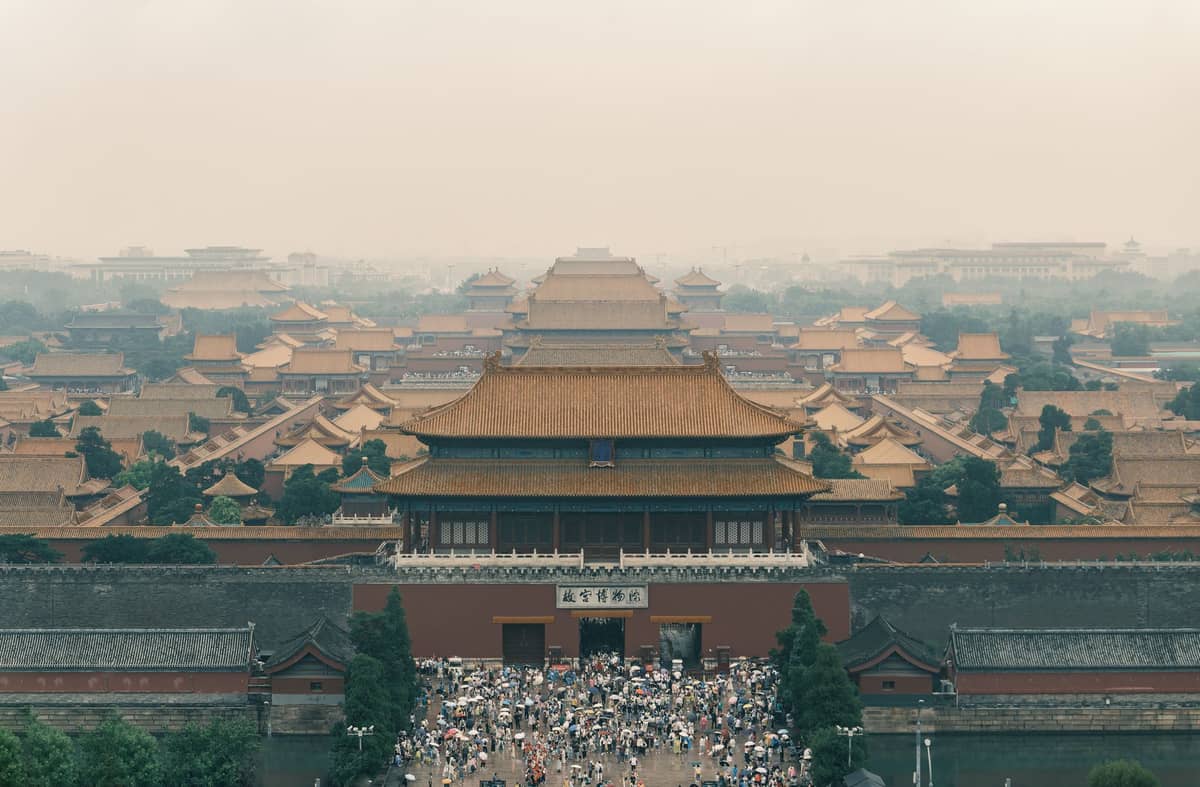
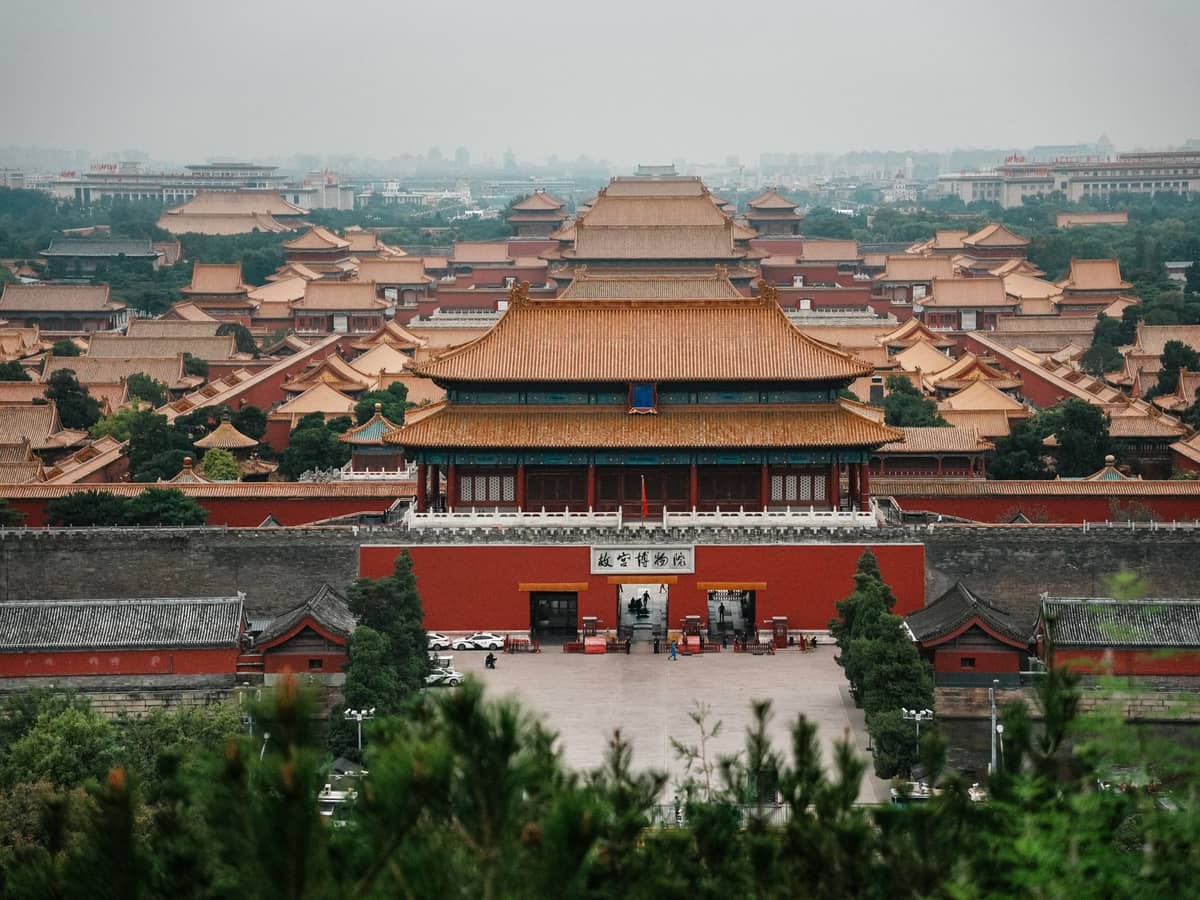
Beijing spent five centuries as the imperial capital of China, and that history is physically present in a way few cities in the world can match. The Forbidden City, formally the Palace Museum (故宫博物院), sits at the geographic and historical center of everything. General admission is CNY 60 from April 1 to October 31 and CNY 40 from November 1 to March 31, with last entry at 16:00 and the museum closed on Mondays. Tickets sell through official Palace Museum channels up to seven days in advance and must be booked under a real name with passport details. Do not rely on buying at the gate. On busy weekends and public holidays, the daily ticket quota can sell out days ahead. See the full Forbidden City booking process before you travel.
Directly south of the Forbidden City, Tiananmen Square opens daily from 5:00 to 22:00, though access procedures change around major political events. Directly north, Jingshan Park offers the single best elevated view across the Forbidden City's roofline, especially in the early morning before crowds gather. Entry is inexpensive and the park is rarely overrun before 9:00.
The Temple of Heaven (天坛) is architecturally distinct from the palace complex and worth a separate half-day. The park itself is open 6:00 to 22:00, but the separately ticketed historic buildings, including the Hall of Prayer for Good Harvests, generally open Tuesday through Sunday from 8:00 to 18:00 (last entry 17:30) and close Mondays except on statutory holidays. Real-name reservations are available one to seven days ahead through the official WeChat account. Arrive early enough to watch elderly Beijingers practicing tai chi, playing erhu, and socializing in the outer park areas before the tour groups arrive.
⚠️ What to skip
Several of Beijing's most popular attractions operate strict real-name reservation systems. Your booking must match the passport you carry on the day. Tickets bought through third-party resellers often cannot be verified at the gate, and refunds are rarely offered. Always book directly through official channels.
The Great Wall: Choosing the Right Section
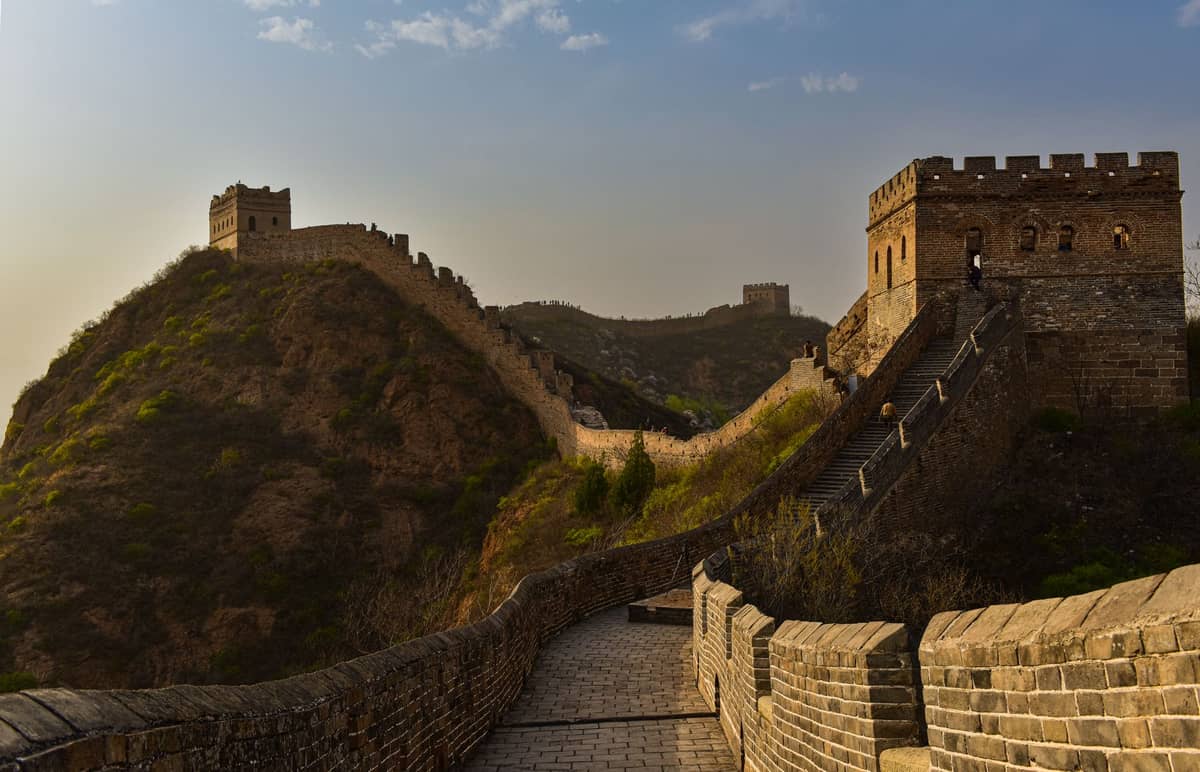
No list of things to do in Beijing would be complete without the Great Wall, but the choice of section matters enormously. The Wall is not a single attraction close to the city. It runs across Beijing's northern and northwestern mountain districts, and each section offers a different experience in terms of restoration level, crowds, scenery, and accessibility.
- Mutianyu (Huairou District) The most practical choice for most visitors. Better restored than many sections, with cable car and toboggan options. Peak-season hours are 7:30–18:00 weekdays and 7:30–18:30 weekends (March 16–November 15); off-season hours are 8:00–17:30. Around 90 minutes from central Beijing by organized transfer or taxi.
- Badaling (Yanqing District) The most visited section in China and one of the most heavily restored. Crowds on weekends and public holidays can be extreme. Accessible by high-speed train from Beijing North station. Better suited to travelers with limited mobility than wilder sections.
- Jinshanling (Miyun/Hebei border) Partially restored with original brickwork still visible. More atmospheric than Badaling for those willing to make the longer journey. Around 2.5 hours from central Beijing without a private transfer.
- Simatai (Miyun District) The only section open for authorized night visits. Adjacent to Gubei Water Town if you want to combine the day. Requires advance booking and is best reached by private transfer or organized tour.
- Huanghuacheng (Huairou District) Less visited, partially submerged in a reservoir, and more rugged. Not recommended as a first-time Wall experience, but genuinely different for repeat visitors or photography enthusiasts.
For most first-time visitors, Mutianyu Great Wall strikes the best balance between accessibility and scenery. The full breakdown of all sections, including practical logistics for each, is in our Great Wall sections guide.
✨ Pro tip
Visit the Great Wall on a weekday in late September or October. Autumn foliage on the hillsides surrounding Mutianyu and Jinshanling is genuine, not just a travel cliche, and the air quality during this period is often significantly better than summer months. Midweek crowds are a fraction of weekend numbers.
Parks, Temples, and Quieter Imperial Sites
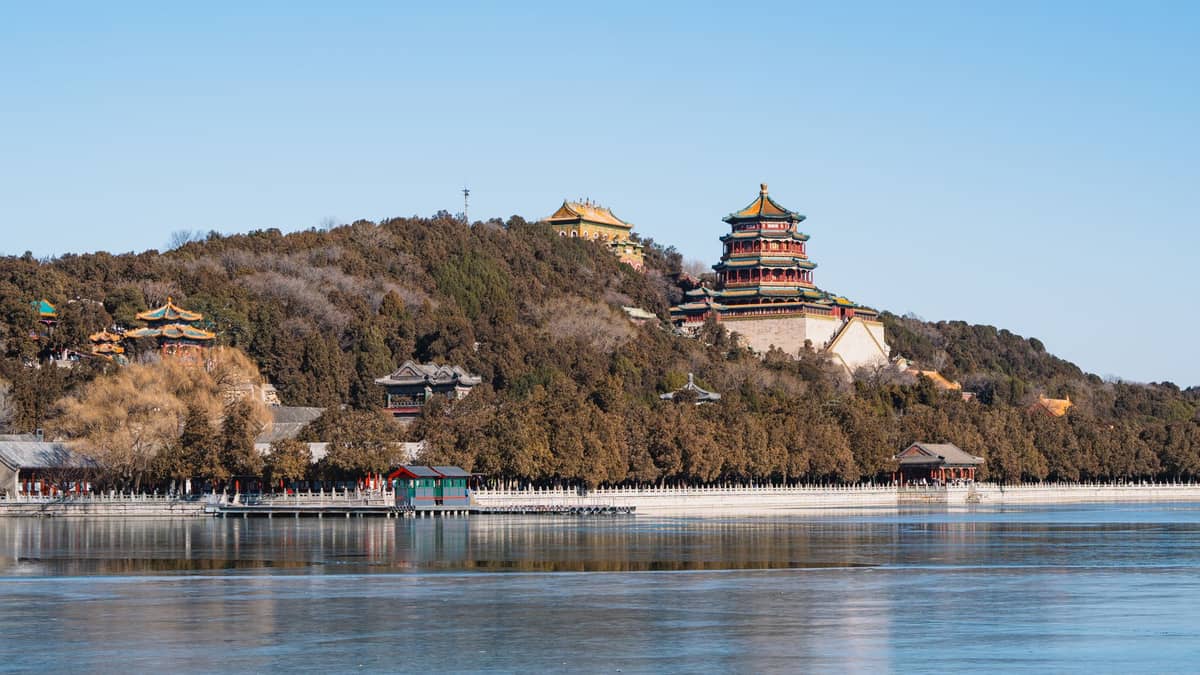
The Summer Palace (颐和园) in Haidian District is Beijing's most elaborate imperial garden, covering about 290 hectares with Kunming Lake at its center. The park opens at 6:00 and closes at 20:00 from April through October, and opens at 6:30 and closes at 19:00 from November through March; separately ticketed attractions generally open 8:00 to 17:30. Reservations through the official WeChat account are available one to seven days ahead and require the same passport used for booking. Allow at least three hours, and consider a weekday visit to avoid the volume of domestic tour groups that arrive on weekends.
Beijing's temple circuit is underrated by visitors who focus only on the headline sites. The Lama Temple (雍和宫) in Dongcheng is an active Tibetan Buddhist monastery with genuinely impressive architecture and a 26-meter sandalwood Buddha statue. The Confucius Temple and Guozijian complex nearby is far less visited and provides real historical depth on imperial examination culture. For a more meditative experience, White Cloud Temple in Xicheng is Beijing's principal Taoist site, active, atmospheric, and rarely crowded.
For an overview of which temples deserve your time and which can be skipped based on your interests, the best temples in Beijing guide covers entrance fees, opening hours, and what makes each site distinctive.
Hutong Neighborhoods, Food Streets, and Local Life
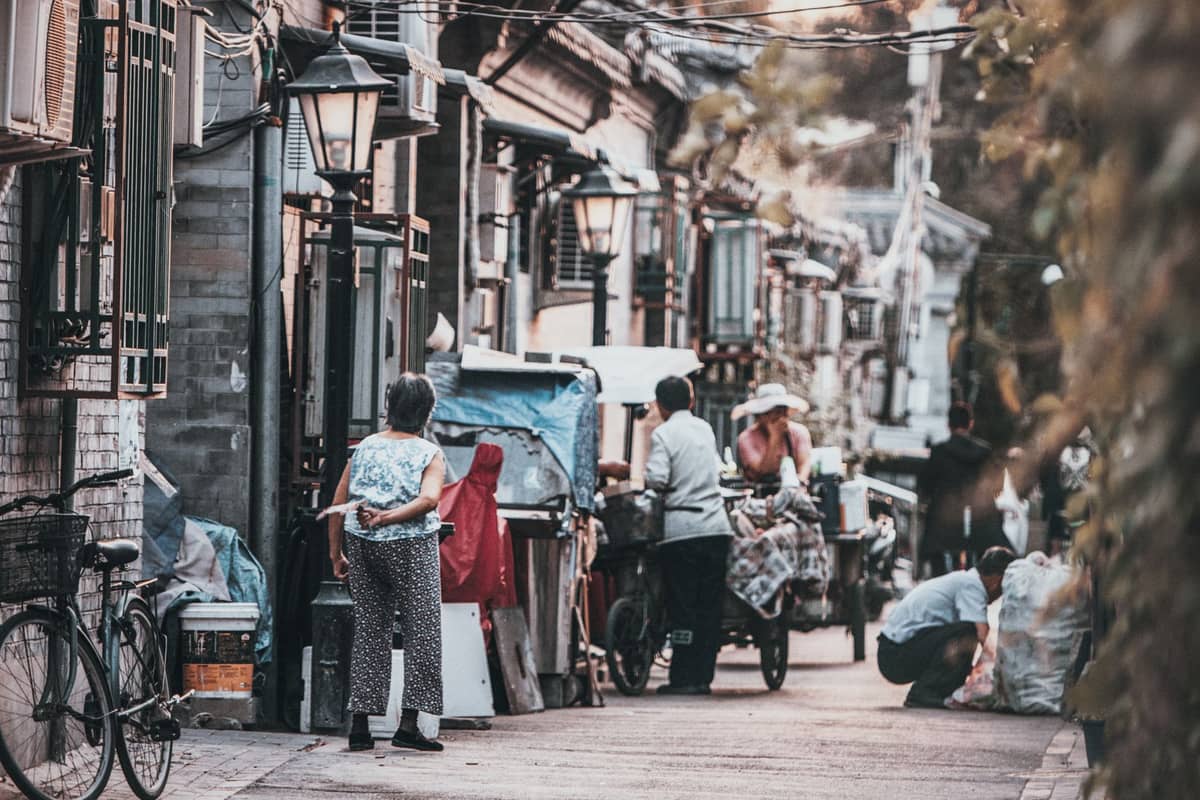
Beijing's hutong neighborhoods, the narrow alleyways and courtyard residential blocks that predate the modern city, are not a single destination but a network spread across Dongcheng and Xicheng districts. Nanluoguxiang is the most tourist-oriented and genuinely overcommercialized at this point, with snack stalls and souvenir shops. It is walkable and interesting as an introduction, but do not mistake it for authentic neighborhood life. The streets branching off it, and areas around Wudaoying Hutong and Yandaixie Street near Houhai, offer a more realistic mix of local restaurants, small cafes, and residential courtyards.
For food, Guijie (Ghost Street) in Dongcheng is a genuine local eating street that stays busy until well past midnight, specializing in Sichuan-style crayfish (especially from June to August) and hotpot. It functions primarily as a local restaurant strip, not a tourist attraction, and prices are accordingly reasonable. Wangfujing's famous snack street, by contrast, has become a performance for visitors rather than a place locals actually eat.
💡 Local tip
Peking duck is Beijing's signature dish, and not all restaurants serving it are equal. High-volume tourist-facing spots near major attractions often prioritize throughput over quality. For context on where to eat it and what to expect to pay, check the dedicated Peking duck guide.
The hutong experience is best explored on foot or by hired pedicab, ideally with someone who can navigate in Mandarin. If you want structured context, the hutong guide covers the best neighborhoods, what to look for in courtyard architecture, and how to visit respectfully in residential areas.
Museums, Art Districts, and Cultural Depth
The National Museum of China on the eastern edge of Tiananmen Square is one of the largest museums in the world by floor area and free to enter with advance registration. The permanent collection on Chinese history is genuinely comprehensive. The Capital Museum in Xicheng is more focused on Beijing-specific history and also free, with better English signage than many municipal collections.
The 798 Art District in Chaoyang occupies a former military electronics factory complex and now houses galleries, design studios, and independent cafes. It is not a conventional museum and the quality of individual exhibitions varies widely. It works best as a half-day visit combined with a meal in the area. The concentration of contemporary Chinese art here provides useful contrast to the historical focus of central Beijing.
- National Museum of China Free with advance registration. Enormous permanent collection covering Chinese history from prehistoric times to the present. Allow 2–3 hours minimum.
- Capital Museum Free entry. Strong focus on Beijing municipal history, traditional crafts, and Buddhist sculpture. Better English labeling than average.
- Palace Museum (Forbidden City) Paid entry (CNY 40–60 depending on season). The permanent collection of imperial artifacts is genuinely world-class. Allow a full half-day.
- 798 Art District Free to enter the district; individual galleries may charge separately. Contemporary Chinese and international art. Best on weekdays to avoid weekend crowds.
- Military Museum of the Chinese People's Revolution Large collection of military hardware and historical exhibitions. Free with registration. Not for everyone, but substantive if military history is an interest.
For a ranked breakdown of all major collections, the best museums in Beijing guide covers admission, opening hours, and which collections justify the time investment.
Practical Planning: Tickets, Transport, and Timing
Getting around Beijing is straightforward with the Beijing Subway, which covers most major sights and runs from around 5:00 to 23:00. Single journeys are cheap (typically CNY 3–5 for most trips within the urban core). For the Great Wall and outer district attractions, organized transfers, taxis, or DiDi (China's principal ride-hailing platform) are more practical. Note that DiDi requires a Chinese phone number or a linked international account. For a full breakdown of transport options, see the guide to getting around Beijing.
Air quality in Beijing varies significantly by season and weather conditions. Winter months (December through February) can see elevated pollution on still days; spring brings occasional dust from the north. September and October typically offer the best combination of clear skies, comfortable temperatures (around 8–25°C), and manageable crowds. April and May are also good, though spring dust storms can occur. July and August are hot and humid (22–31°C), with the highest annual rainfall, but major attractions are open longest during this period.
Beijing operates on China Standard Time (UTC+8) year-round; there is no daylight saving. The currency is the Chinese yuan (CNY/RMB). Tap water is treated but not generally recommended for drinking untreated. Carry bottled or boiled water. Tipping is not a standard or expected practice. Electricity runs at 220V/50Hz with Type A, C, and I socket types, so international travelers should verify adapter requirements. For a full budget planning breakdown, the Beijing on a budget guide covers daily costs across accommodation, food, and entry fees.
ℹ️ Good to know
Visa-free entry to China is available for nationals of specified countries for up to 30 days, and a 240-hour (10-day) visa-free transit policy applies to eligible nationalities entering through designated ports, including Beijing Capital (PEK) and Beijing Daxing (PKX) airports. Both policies have specific conditions and are subject to change. Verify your eligibility and permitted itinerary through the National Immigration Administration before booking.
FAQ
How many days do you need in Beijing to see the main sights?
Four to five days covers the Forbidden City, Temple of Heaven, Summer Palace, one Great Wall section, and time to explore hutong neighborhoods and a museum or two at a reasonable pace. Three days is doable for the absolute highlights but leaves little flexibility. A five-day itinerary allows a day trip and some breathing room.
Do I need to book Beijing attractions in advance?
Yes, for several key sites. The Forbidden City, Summer Palace, and Temple of Heaven all use real-name reservation systems that require your passport details. The Forbidden City in particular can sell out its daily ticket quota days ahead during peak seasons (April–October) and public holidays. Book through official channels only.
Which section of the Great Wall is best for first-time visitors?
Mutianyu is the most practical choice for most first-timers. It is well-maintained, offers cable car access, is less crowded than Badaling, and the surrounding scenery is strong, particularly in autumn. Badaling is more accessible by public transport but significantly more crowded on weekends.
Is Beijing safe for tourists?
Beijing is generally considered safe for tourists in terms of petty crime. Specific areas to be aware of include tea house scams near major tourist sites, where friendly locals invite visitors for tea and present an inflated bill. The government tourism area around Wangfujing and Tiananmen sees the highest concentration of these approaches. Standard urban precautions apply.
What is the best time of year to visit Beijing?
September and October offer the best overall conditions: comfortable temperatures, lower rainfall, and frequently clear skies. April and May are also good but can see spring dust. Summer (July–August) is hot and humid with the most rainfall. Winter is cold and dry, with lower ticket prices at some sites but shorter opening hours.