Confucius Temple and Guozijian Museum: Beijing's Imperial Center of Learning
The Confucius Temple and Guozijian Museum preserves two of Beijing's most historically significant sites: a Yuan dynasty Confucian temple and the Imperial College that trained China's governing elite for six centuries. Quieter than most major attractions, it rewards visitors who want genuine historical depth alongside calm, tree-shaded courtyards.
Quick Facts
- Location
- 13 Guozijian Street, Dongcheng District, Beijing
- Getting There
- Yonghegong Station, Lines 2 or 5 (5-minute walk)
- Time Needed
- 1.5 to 2.5 hours
- Cost
- ¥30 adults; ¥15 students; free for visitors 60+, under 18, and others with valid ID
- Best for
- History enthusiasts, architecture lovers, travelers seeking calm away from crowded sites
- Official website
- http://www.kmgzj.com/en
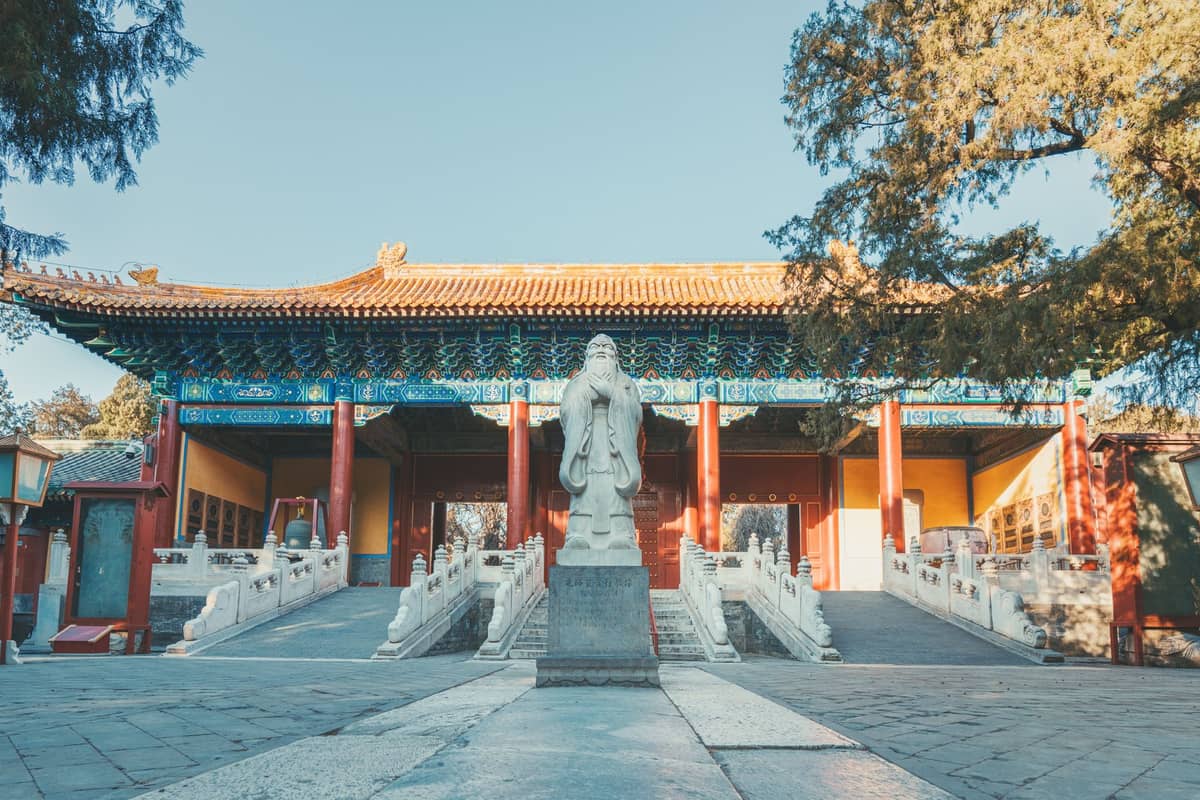
What the Confucius Temple and Guozijian Museum Actually Is
The Confucius Temple and Guozijian Museum—officially 孔庙和国子监博物馆 (Kǒngmiào hé Guózǐjiān Bówùguǎn)—occupies two distinct but connected compounds on Guozijian Street in Dongcheng District. Together they represent more than six centuries of state-sponsored Confucian education and ritual. The Confucius Temple was begun at its present site in 1302 during the Yuan dynasty and completed in 1306; the adjacent Guozijian formed the paired “temple-left, school-right” complex. Both compounds survived successive dynasties and still stand largely intact today.
The Guozijian was China's highest institution of classical learning: the place where candidates trained for the imperial examination system that staffed the entire bureaucracy. Emperors occasionally came here to lecture in person, an event of enormous symbolic weight. Walking between these two compounds, you are moving through a space where Confucian philosophy, political power, and scholarly ambition overlapped for more than five hundred years.
This is not a living religious site in the way that a Buddhist or Daoist temple is. Ceremonies do take place on Confucius's birthday (late September), but most days the atmosphere is closer to a carefully preserved academic campus than a place of active worship. That distinction shapes the experience significantly.
ℹ️ Good to know
Opening hours are 09:00–17:00, with last entry and ticket sales at 16:30. The museum is closed on Mondays, except when Monday falls during a statutory public holiday. Confirm hours before visiting, as they can change.
The Confucius Temple: Steles, Cypress Trees, and Stone Records
Enter through the main gate on Guozijian Street and the temperature drops slightly: the courtyard is shaded by ancient cypress trees that have been growing here for centuries. In summer the shade is genuinely welcome. In winter the bare branches frame the yellow-glazed roof tiles against grey Beijing skies in a way that is architecturally precise and difficult to photograph well.
The most remarkable feature of the Confucius Temple courtyard is its forest of stone steles, arranged in rows like an outdoor archive. These steles record the names of successful candidates in the imperial examinations across the Yuan, Ming, and Qing dynasties. More than 50,000 names are carved into the stone. Running your eye down a stele, you are reading the career records of men who competed in one of the most demanding examination systems in human history.
Inside the main sacrificial hall, the Hall of Great Achievement (Dacheng Dian), a statue of Confucius occupies the central position flanked by those of his principal disciples. The interior is relatively spare compared to Buddhist temple halls. Confucian ritual aesthetics tend toward restraint, and the effect here is one of formal solemnity rather than decorative richness. The incense smell is present but not overwhelming. Photography is generally permitted in the courtyards; check current rules for interior spaces.
💡 Local tip
The stele forest is easy to walk past quickly, but spend time here. Some steles are weathered enough that the characters are difficult to read; others remain remarkably sharp. The contrast between the most and least preserved stones tells its own story about six centuries of outdoor exposure.
Tickets & tours
Hand-picked options from our booking partner. Prices are indicative; availability and final rates are confirmed when you complete your booking.
Private Tour of Lama Temple, Confucius Temple and Imperial College
From 40 €Instant confirmationFree cancellationConfucius Temple and Imperial College Tickets
From 8 €Instant confirmationFree cancellationSmall group tour of Tian'anmen Square and the Forbidden City
From 43 €Instant confirmationFree cancellationBeijing Summer Palace Entrance Ticket
From 7 €Instant confirmationFree cancellation
The Guozijian: The Imperial College Compound
Pass through the connecting gate and the spatial character shifts. The Guozijian is organized around the Biyong Pavilion, a circular hall set on a raised platform surrounded by a square moat. The geometry is deliberate: the circle represents heaven, the square represents earth. Emperors would stand here to deliver lectures on the classics to assembled officials and scholars, an act framed as the sovereign embodying the Confucian ideal of the ruler-scholar.
The Biyong Pavilion's reflection in the surrounding water changes significantly across the day. Early morning light gives it a cooler, more monumental quality. By midday, when direct sun hits the yellow roof tiles, the reflection becomes almost abstract. If you arrive between 09:00 and 10:00 on a clear autumn day, you will find the courtyard quiet and the light at a low enough angle to make photography straightforward without the glare that flattens details later in the morning.
The covered walkways lining the Guozijian courtyard contain additional stone steles, some displaying the text of the thirteen Confucian classics. This is a different category of monument from the examination name-steles in the Confucius Temple: these were authoritative reference texts, carved in stone so that copies used in examinations could be checked against the official version. If you are visiting Beijing with a serious interest in the examination system or classical Chinese scholarship, this compound deserves at least as much time as the adjacent temple. See also our guide to Beijing's imperial history for broader context.
How the Experience Changes Through the Day
This site draws a noticeably different crowd from the Forbidden City or the Temple of Heaven. You will see Chinese visitors of all ages, including retired residents who come for morning walks through the cypress courtyards, school groups with teachers explaining examination history, and a smaller proportion of international tourists. Weekend mornings from around 09:30 onward are the busiest period, but even then the crowds are modest by Beijing standards.
Weekday mornings, particularly Tuesday through Thursday, offer the calmest experience. By early afternoon, school groups have typically completed their visit, and the courtyards settle into a quieter rhythm. On very hot summer days, the shade inside the compounds is genuine relief, but you will want to carry water since there are limited refreshment options inside the grounds.
Late afternoon light in autumn, roughly 15:00 to 16:30, is when the site looks its most atmospheric. The low sun catches the tile roofs at an angle that emphasizes texture and depth. Arrive by 15:30 at the latest to allow enough time before last entry, particularly in the November to April period when the gate closes earlier.
⚠️ What to skip
In winter, the site can be cold and the stone surfaces slippery after rain or light frost. Wear shoes with grip, and bring a layer even if the afternoon forecast looks mild. The courtyards are exposed and the wind can be sharp near the Biyong Pavilion moat.
Getting There and Practical Logistics
The easiest approach is the Beijing Subway to Yonghegong Station, served by Line 5. From the station, Guozijian Street is a short walk away. The street itself is worth pausing on: lined with stone archways (pailou) and framed by traditional shopfronts, it has a less commercialized atmosphere than nearby hutong tourist strips.
Several bus routes also serve the area: routes 13 and 84 stop at Guozijian Station directly, while routes 116 and 117 serve Yonghegong Station and routes 104, 108, 113, 124, and 141 serve Andingmennei Station nearby. The site is located close to the Lama Temple (Yonghegong), which makes it natural to combine both in a single half-day. Most visitors do the Lama Temple first since it is larger and typically busier, then walk to the quieter Confucius Temple for the second half of the morning.
Admission is ¥30 for adults and ¥15 for full-time university and vocational-school students with a valid student ID. Entry is free for visitors aged 60 and over, children and minors under 18, primary and secondary school students, active-duty military personnel, people with disabilities, and other listed eligible groups, each subject to presenting valid identification at the gate. Prices were verified against the official Beijing municipal listing as of September 2026; confirm before your visit as these can change.
On accessibility: the museum states that visitors with disabilities may enter free with valid certification. However, the official listings do not detail step-free routes, lift availability, accessible toilet locations, or wheelchair loan services. The stone-paved courtyards and raised thresholds common to traditional Chinese architecture may present challenges. If accessibility is a primary concern, contact the museum directly before your visit.
The Surrounding Street and What to Pair With Your Visit
Guozijian Street is one of the better-preserved historic streets in central Beijing and worth a slow walk before or after your visit. The stone pailou archways spanning the street are among the few remaining examples of this traditional urban element in the city. The street has some small cafes and snack vendors, which is useful since options inside the museum grounds are limited. For a wider look at Beijing's traditional street culture, the nearby Nanluoguxiang hutong is a short walk south and offers a very different atmosphere: busier, more commercial, and oriented toward casual snacking and browsing.
If your interest in Confucian culture or imperial history runs deep, consider pairing this visit with Beijing's broader temple circuit. Our guide to the best temples in Beijing covers the full range of options across the city, from major Buddhist complexes to smaller sites that rarely appear in itineraries.
Who Should Reconsider This Visit
This site is not the right choice for everyone. Visitors looking for spectacular visual spectacle, a lively atmosphere, or an experience that works well without historical background may find it flat. The buildings are impressive but not architecturally striking in the way the Forbidden City is. The steles require time and context to appreciate. Children under about ten years old typically find it hard to engage with here.
If your Beijing itinerary is short and heavily focused on landmark experiences, you might prioritize differently. Our three-day Beijing itinerary lays out how to sequence the city's major sites efficiently, and the Confucius Temple fits better into a four- or five-day visit where there is time for depth alongside breadth.
Insider Tips
- The examination name-steles in the Confucius Temple courtyard are labeled with dynasty and date. If you know the rough period of history you are most interested in, ask a staff member to point you toward the relevant steles rather than searching the entire forest.
- Arrive on a weekday morning between 09:00 and 10:00 for the quietest experience and the best light for photographing the Biyong Pavilion reflection. The contrast between the yellow roof tiles and the surrounding water is sharpest in clear autumn light.
- The street-facing pailou archways on Guozijian Street are free to photograph and make strong contextual shots before you enter the paid compound. Factor in ten minutes on the street before buying your ticket.
- If you are visiting during the Confucius birthday period in late September, check whether any ceremony is scheduled. These events attract larger crowds but are a genuinely rare experience at this site.
- Combine with the Lama Temple next door for a half-day that covers two very different expressions of traditional religious and institutional architecture. Buy your Confucius Temple ticket before the Lama Temple visit since the Lama Temple line can extend your schedule unpredictably.
Who Is Confucius Temple and Guozijian For?
- Travelers with a specific interest in Chinese history, classical education, or the imperial examination system
- Architecture enthusiasts interested in Yuan and Ming dynasty compound design
- Visitors who want meaningful cultural experience without large crowds
- Photographers working on Beijing's traditional architecture who want alternatives to the Forbidden City
- Anyone combining a half-day circuit of Dongcheng's northern historic sites including the Lama Temple and Guozijian Street
Nearby Attractions
Other things to see while in Dongcheng District:
- Ancient Observatory (Guguanxiangtai)
Built in 1442 during the Ming dynasty, it holds a remarkable collection of Qing-era bronze instruments and offers a rare window into imperial Chinese astronomy in central Beijing.
- Bell Tower and Drum Tower
Standing at the northern end of Beijing's ancient central axis, the Bell Tower and Drum Tower have marked time for the city since the Ming dynasty. This guide covers what to see, when to go, how to get there, and whether the climb is worth your while.
- Forbidden City (Palace Museum)
The Forbidden City, officially the Palace Museum, is the world's largest surviving imperial palace complex and Beijing's most significant cultural landmark. Built between 1406 and 1420 under Ming emperor Zhu Di, it served as the ceremonial and political heart of China for nearly five centuries. This guide covers everything you need to visit confidently.
- Guijie Ghost Street
Guijie, officially Dongzhimennei Dajie, is a 1.4-kilometer stretch of more than 100 restaurants in Dongcheng District that comes alive after dark. Known for spicy crawfish, hot pot, and hundreds of red lanterns, it is one of the few places in Beijing where serious eating happens well past midnight. Entry is free.