Best Temples in Beijing: Imperial Altars, Buddhist Monasteries & Taoist Shrines
Beijing's temples span over a thousand years of religious history, from Tang-dynasty Buddhist courtyards to Ming imperial ceremonial complexes. This guide covers the city's most significant and rewarding temples, with practical advice on when to visit, what to look for, and how to get the most from each site.
Plan and book this trip
Tools from our partner Travelpayouts help you compare flights and hotels. If you book through them, we may earn a commission at no extra cost to you.
Flights
Hotels map
Beijing holds a remarkable density of religious architecture, reflecting centuries of Buddhist, Taoist, Confucian, and Islamic practice under successive dynasties. The city's temples range from vast imperial complexes designed to impress heaven itself to intimate courtyards where incense still burns daily. If you are planning your first visit, the imperial history guide provides useful context for understanding how religion shaped the capital's urban form. For practical logistics, a three-day itinerary can help you cluster temple visits by district and avoid unnecessary backtracking. Most temples cluster in Dongcheng and Xicheng, though Haidian's western hills conceal some of the finest Buddhist architecture in the city.
💡 Local tip
Most Beijing temples are closed on Mondays or close early on weekdays. Arrive at opening time to avoid crowds, especially at the Lama Temple and Temple of Heaven, which draw the largest numbers.
Imperial Ceremonial Temples
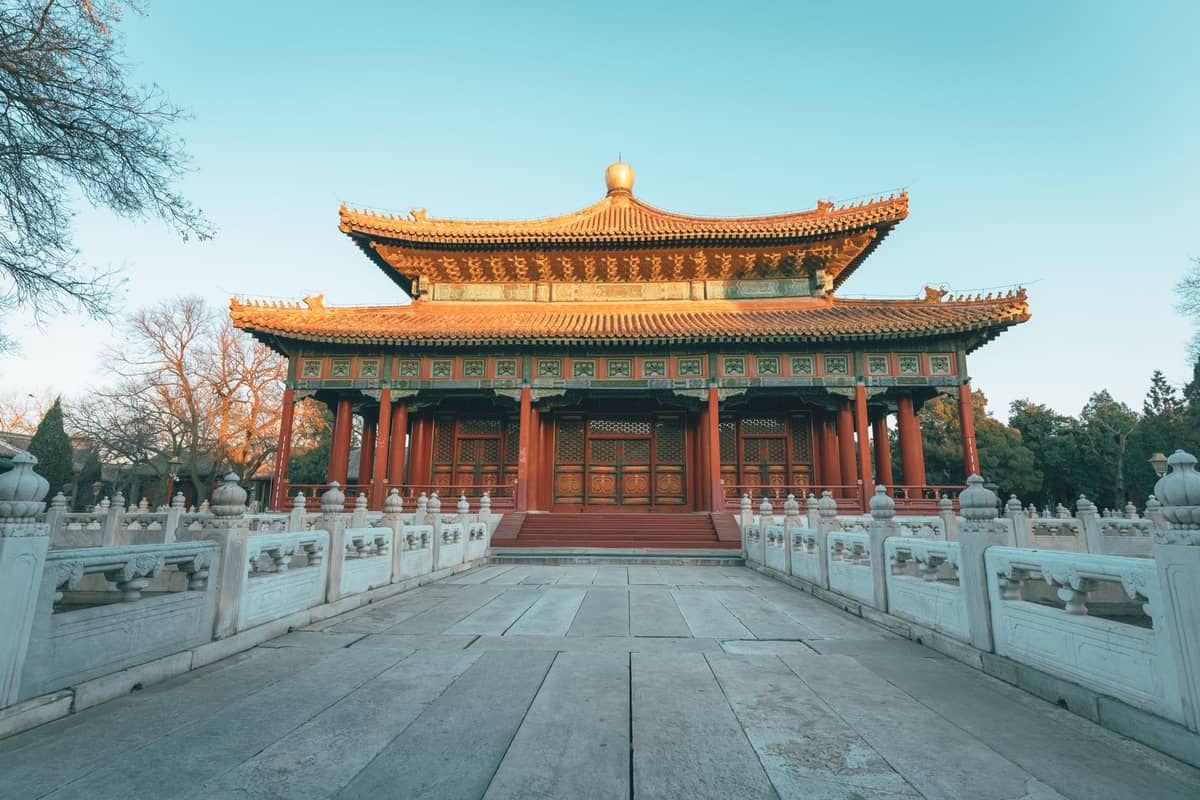
Beijing's imperial temples were not places of public worship but state infrastructure: architectural instruments through which the emperor maintained cosmic order and petitioned heaven for rain, harvests, and dynastic continuity. They are among the most geometrically precise and visually powerful buildings in China. The photography guide has specific advice on the best light and angles at the Temple of Heaven and Confucius Temple.
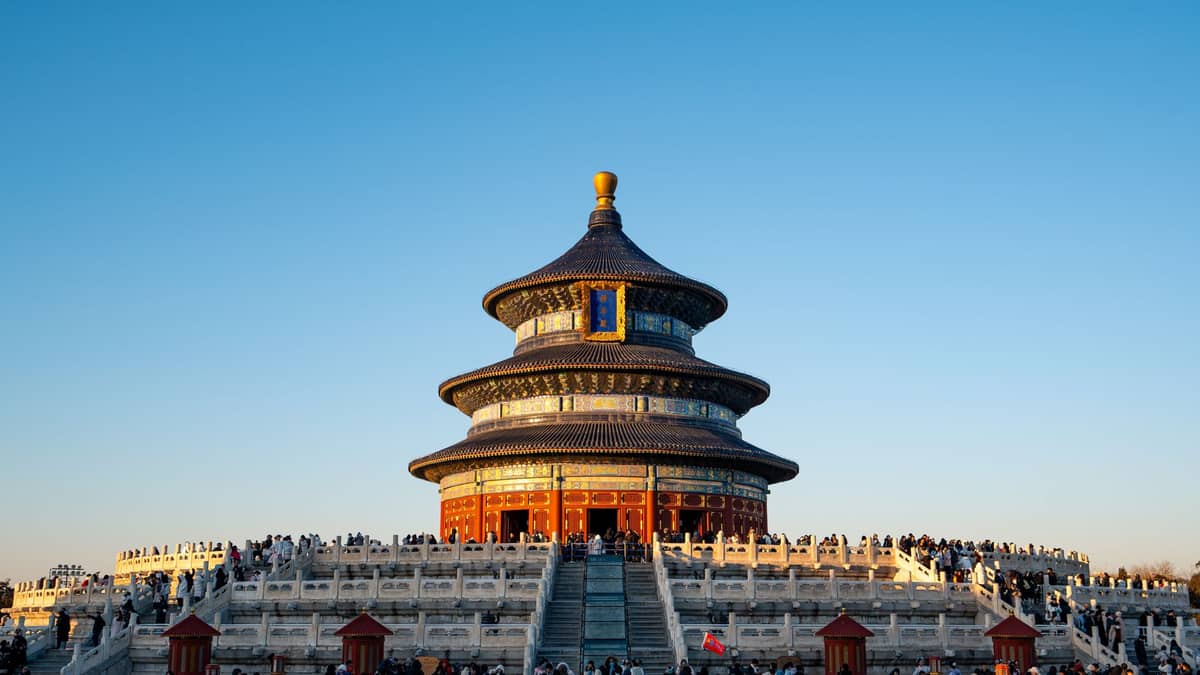
1. Witness Imperial Ritual at the Temple of Heaven
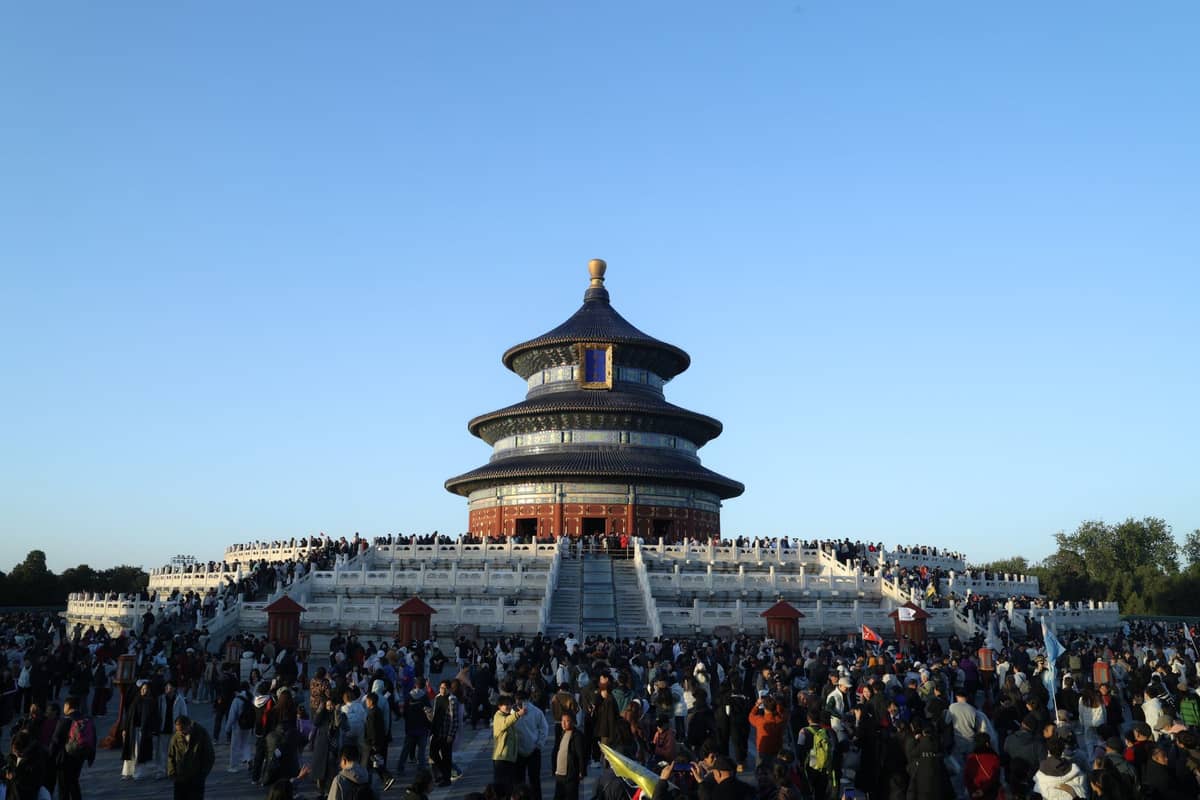
Beijing's greatest ceremonial complex, where Ming and Qing emperors prayed for harvests. The circular Hall of Prayer for Good Harvests is extraordinary. Park opens 06:00; combined ticket (CNY 34 high season) covers all major structures. Closed Mondays except holidays.
Explore1. Witness Imperial Ritual at the Temple of Heaven
Beijing's greatest ceremonial complex, where Ming and Qing emperors prayed for harvests. The circular Hall of Prayer for Good Harvests is extraordinary. Park opens 06:00; combined ticket (CNY 34 high season) covers all major structures. Closed Mondays except holidays.
Explore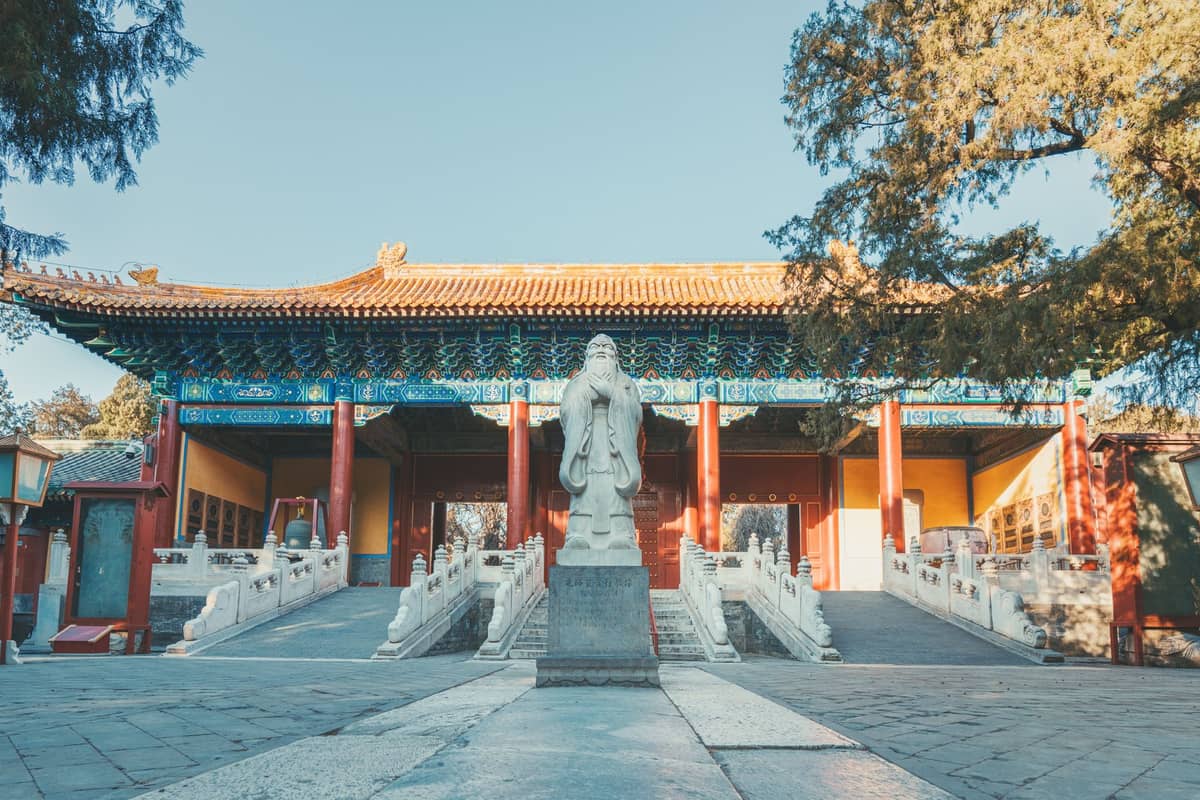
2. Explore the Confucius Temple and Imperial College
Beijing's second-largest Confucius Temple shares a walled compound with the Guozijian, the former imperial academy. Ancient cypress trees shade stele-lined courtyards that feel genuinely tranquil. Budget 90 minutes and combine it with the nearby Lama Temple on the same visit.
Explore2. Explore the Confucius Temple and Imperial College
Beijing's second-largest Confucius Temple shares a walled compound with the Guozijian, the former imperial academy. Ancient cypress trees shade stele-lined courtyards that feel genuinely tranquil. Budget 90 minutes and combine it with the nearby Lama Temple on the same visit.
ExploreTibetan Buddhist & Mahayana Buddhist Temples
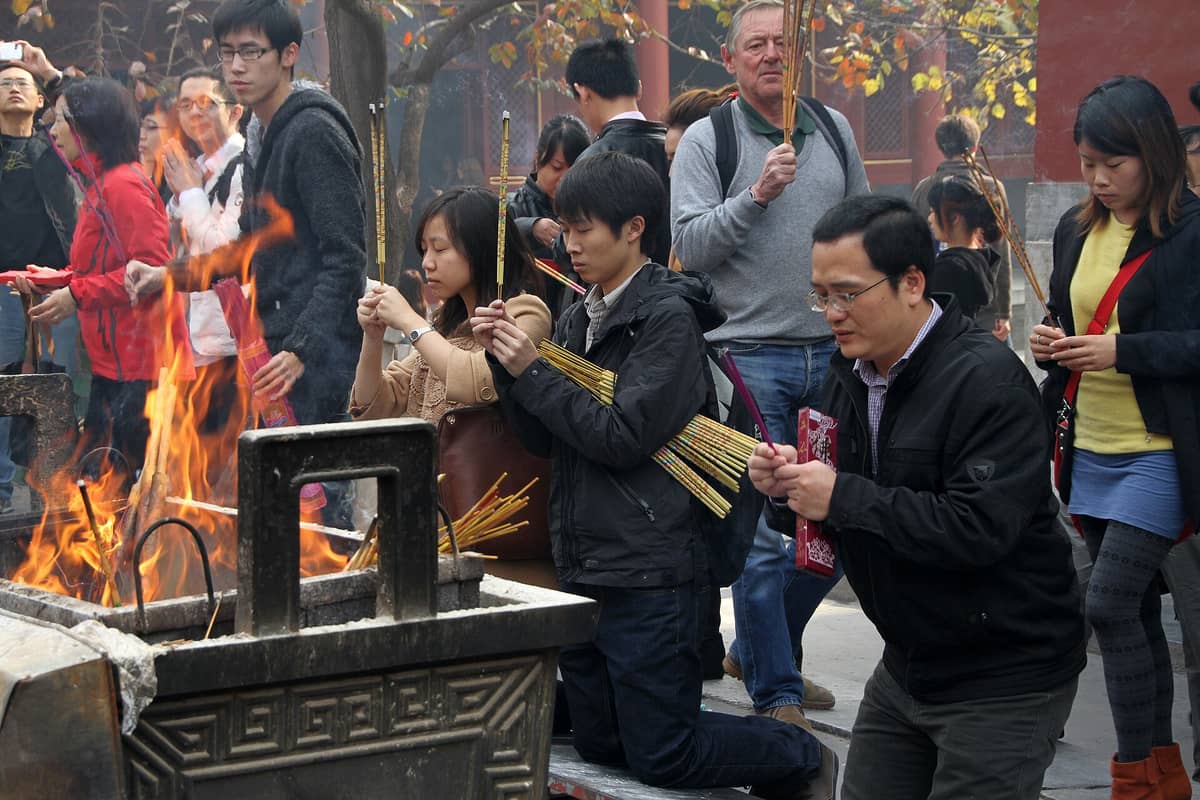
Buddhism reached Beijing via multiple routes, producing a rich variety of architectural styles from the distinctly Tibetan to the Indian-influenced. The hutong neighborhoods around the Lama Temple are excellent for a half-day walk that combines temple visits with street food and courtyard exploration. For a deeper look at Buddhist heritage across the city, the best museums guide covers the Five Pagoda Temple's stone carving collection in more detail.
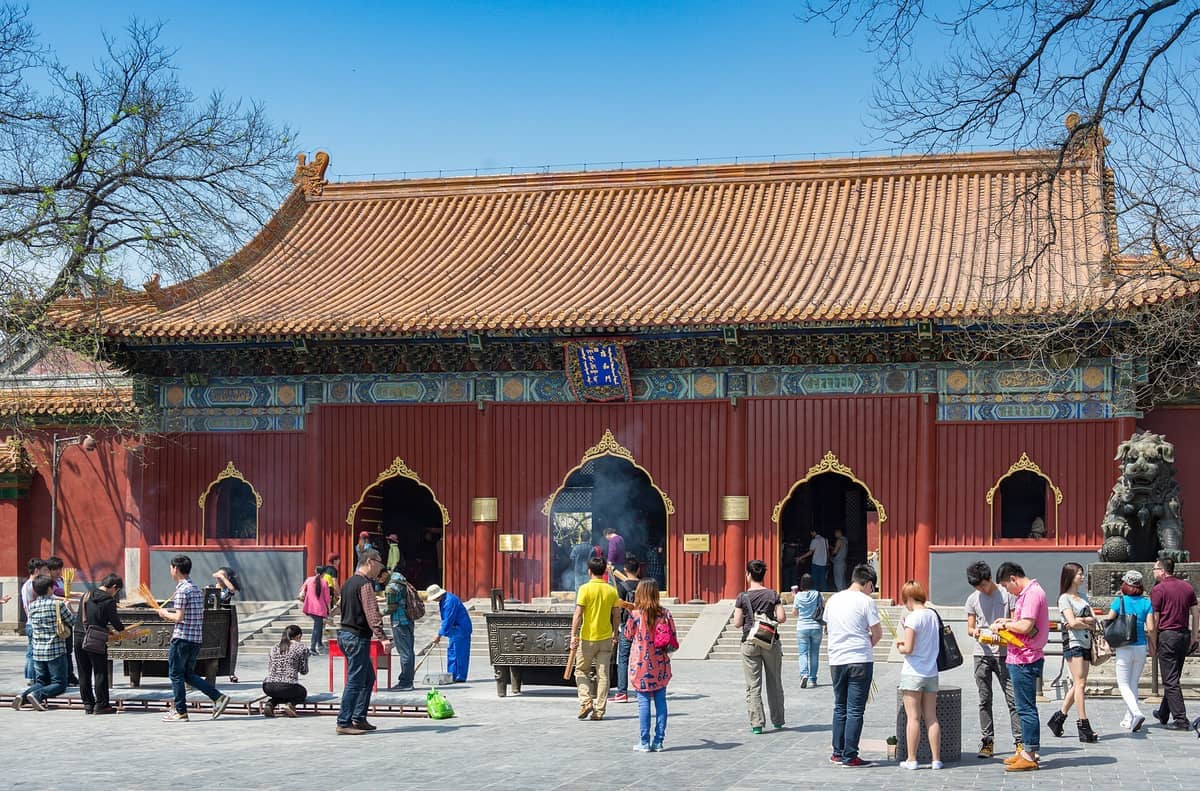
3. Marvel at the 26-Metre Buddha at the Lama Temple
The finest Buddhist temple in Beijing, a former imperial palace converted to a Tibetan monastery in 1744. Five halls lead to a 26-metre Maitreya Buddha carved from a single sandalwood tree. Arrive before 09:00 to experience it with worshippers rather than tour groups.
Explore3. Marvel at the 26-Metre Buddha at the Lama Temple
The finest Buddhist temple in Beijing, a former imperial palace converted to a Tibetan monastery in 1744. Five halls lead to a 26-metre Maitreya Buddha carved from a single sandalwood tree. Arrive before 09:00 to experience it with worshippers rather than tour groups.
Explore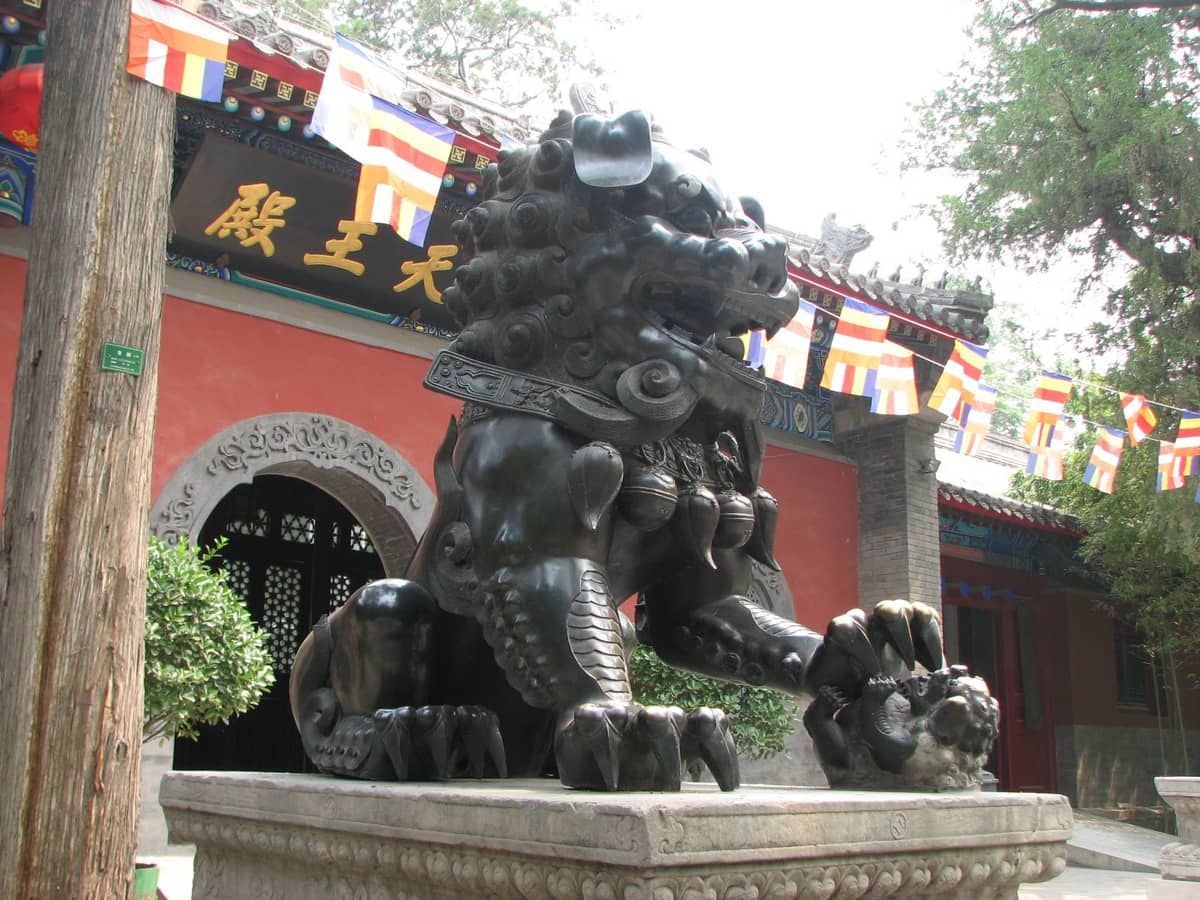
4. Find Quiet Devotion at Tang-Dynasty Fayuan Temple
Founded in 645 CE, Fayuan is one of Beijing's oldest active monasteries and home to the China Buddhism Institute. Its courtyards are shaded by ancient trees and lined with stone tablets. Far fewer visitors than the Lama Temple, making it ideal for unhurried exploration.
Explore4. Find Quiet Devotion at Tang-Dynasty Fayuan Temple
Founded in 645 CE, Fayuan is one of Beijing's oldest active monasteries and home to the China Buddhism Institute. Its courtyards are shaded by ancient trees and lined with stone tablets. Far fewer visitors than the Lama Temple, making it ideal for unhurried exploration.
Explore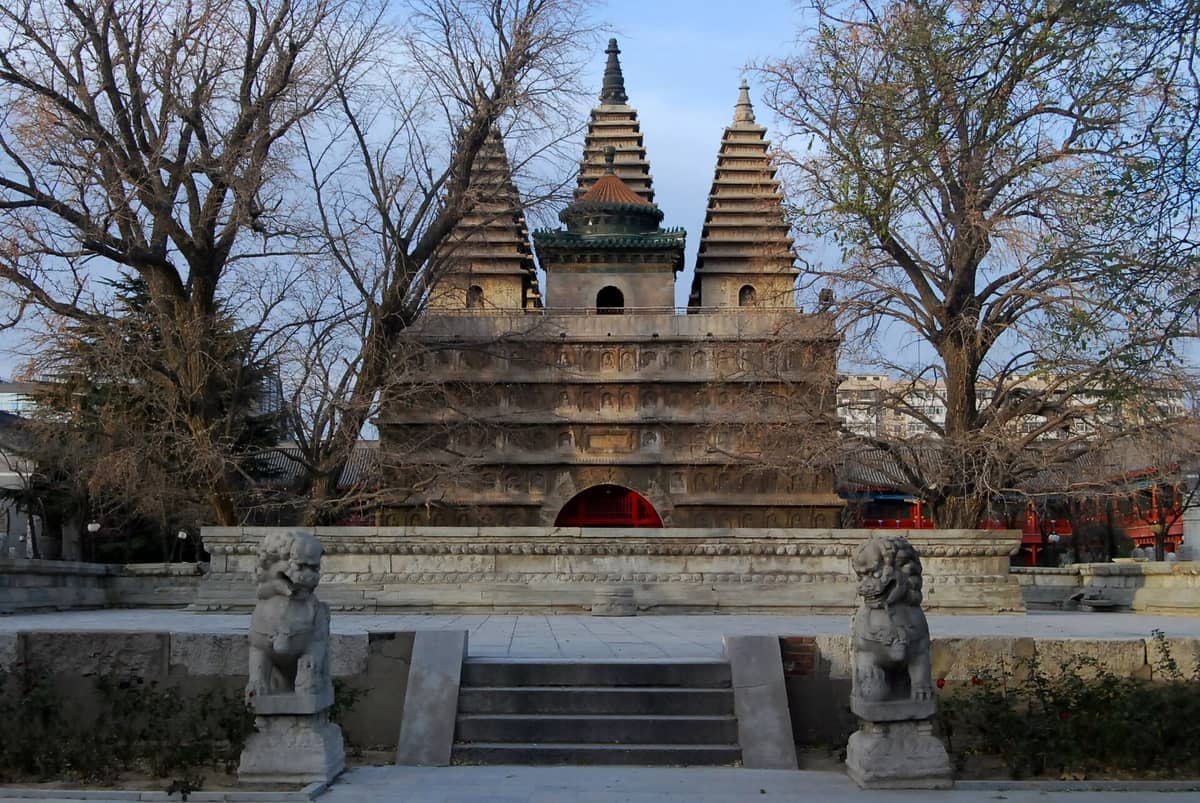
5. See Beijing's Only Indian-Style Buddhist Monument
Five stone pagodas rise from a single platform covered in dense Buddhist carvings, a rare Indian-style vajrasana form in China. Now the Beijing Stone Carving Art Museum, the site houses hundreds of inscribed steles in a garden setting. Easily missed, deeply rewarding.
Explore5. See Beijing's Only Indian-Style Buddhist Monument
Five stone pagodas rise from a single platform covered in dense Buddhist carvings, a rare Indian-style vajrasana form in China. Now the Beijing Stone Carving Art Museum, the site houses hundreds of inscribed steles in a garden setting. Easily missed, deeply rewarding.
Explore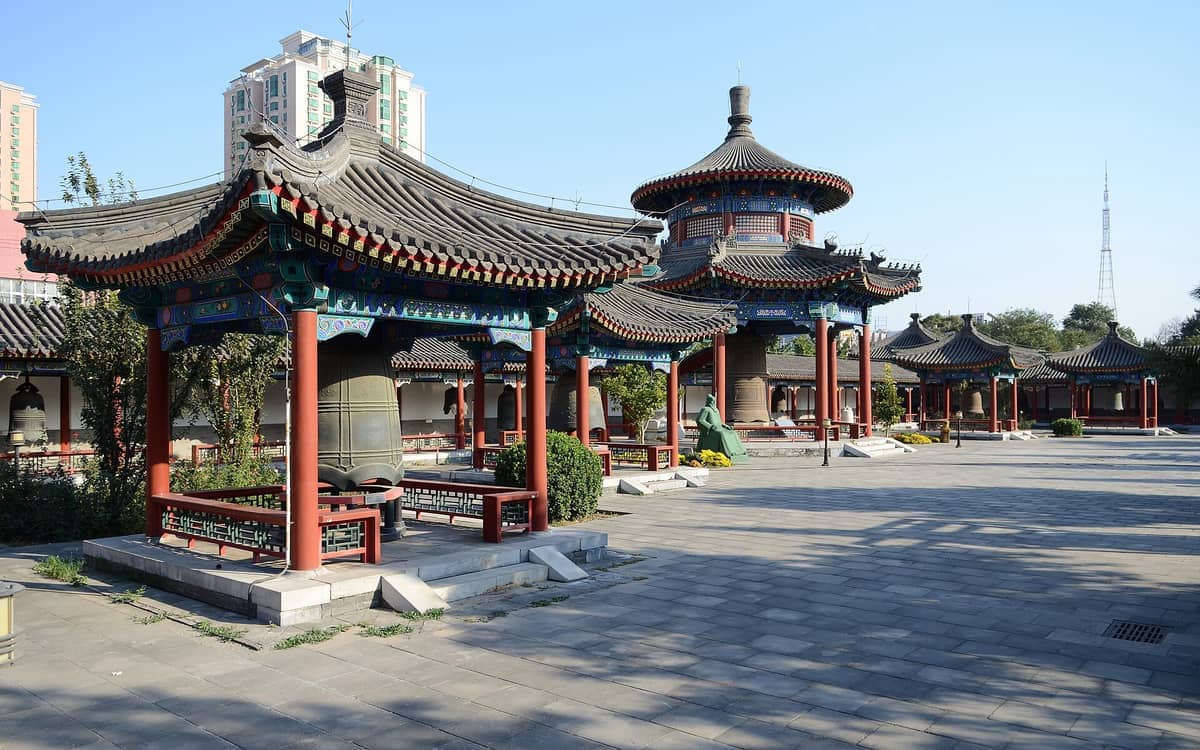
6. Hear the Silence Around China's Greatest Bell Collection
Home to the 46-tonne Yongle Bell and over 700 ancient bells spanning 4,000 years, this temple museum is one of Beijing's most distinctive religious sites. The main bell hall, where you can look directly up at the enormous Yongle Bell, is particularly impressive.
Explore6. Hear the Silence Around China's Greatest Bell Collection
Home to the 46-tonne Yongle Bell and over 700 ancient bells spanning 4,000 years, this temple museum is one of Beijing's most distinctive religious sites. The main bell hall, where you can look directly up at the enormous Yongle Bell, is particularly impressive.
Explore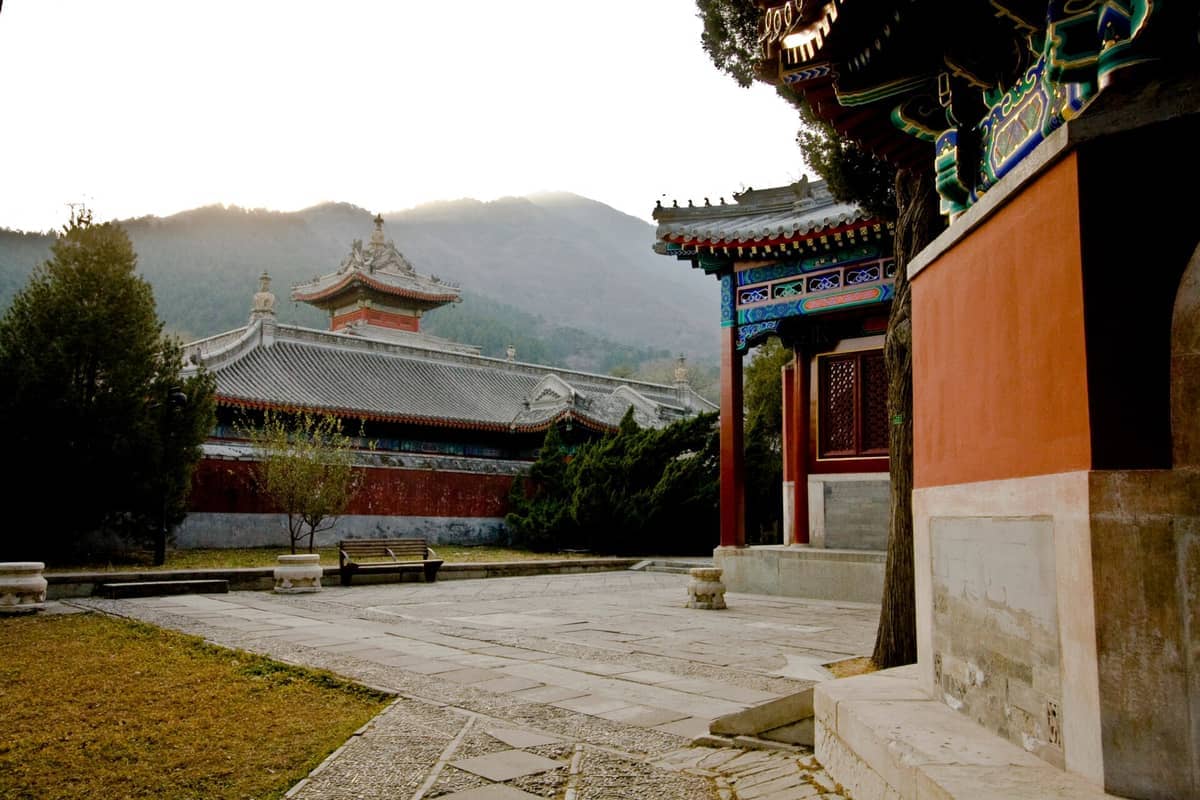
7. Climb to the Diamond Throne Pagoda at the Temple of Azure Clouds
Set within Xiangshan Park, this Ming-dynasty Buddhist complex features a striking Indian-style Diamond Throne Pagoda and the Sun Yat-sen Memorial Hall. The hillside setting among ancient cypresses gives it a character quite different from urban Beijing temples.
Explore7. Climb to the Diamond Throne Pagoda at the Temple of Azure Clouds
Set within Xiangshan Park, this Ming-dynasty Buddhist complex features a striking Indian-style Diamond Throne Pagoda and the Sun Yat-sen Memorial Hall. The hillside setting among ancient cypresses gives it a character quite different from urban Beijing temples.
ExploreTaoist Temples
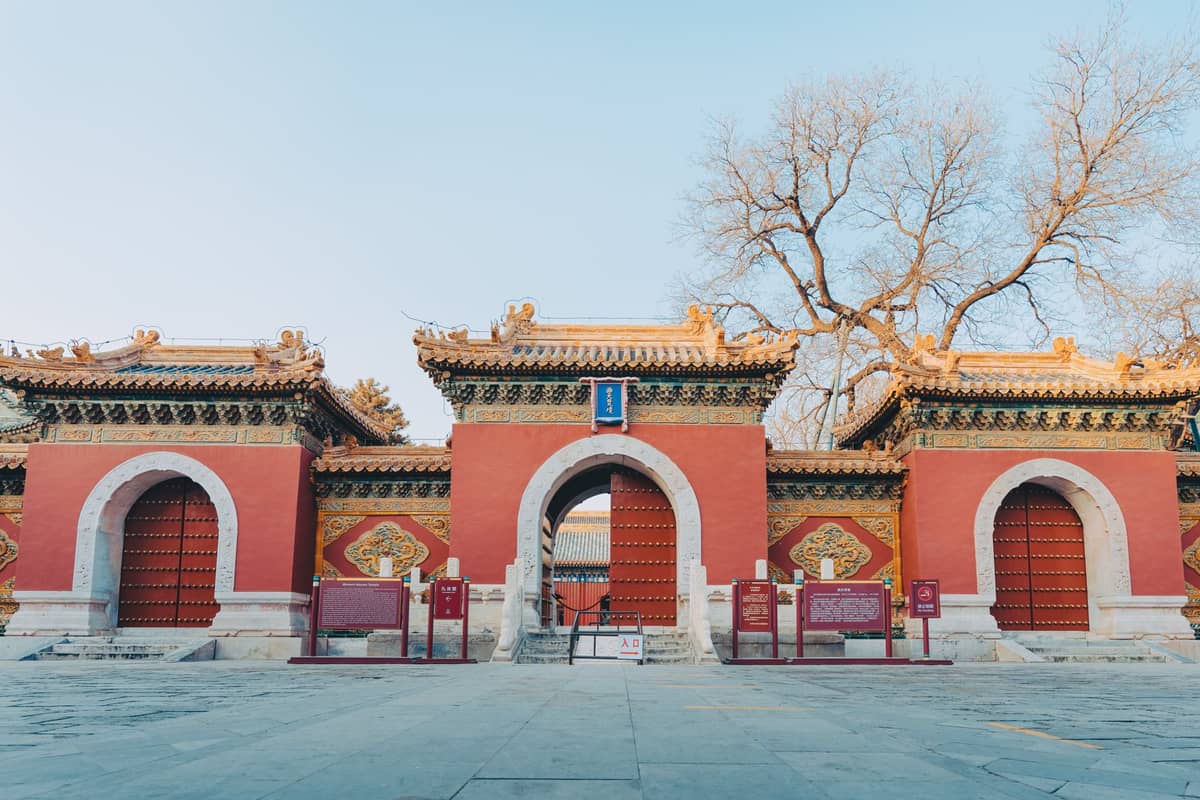
Taoism has shaped Beijing's religious landscape for centuries, and its temples tend to be more theatrically unusual than their Buddhist counterparts, filled with vivid statues, bureaucratic cosmologies, and active ritual practice. The two temples below represent the full range of the tradition: one a national headquarters, the other a neighborhood curiosity.
8. Visit the Headquarters of Chinese Taoism at White Cloud Temple
The most important Taoist site in northern China, White Cloud Temple is a living religious center with dozens of shrines, resident monks, and active pilgrimage. The complex rewards slow exploration: hunt for the three stone monkeys hidden in the carvings for good luck.
Explore8. Visit the Headquarters of Chinese Taoism at White Cloud Temple
The most important Taoist site in northern China, White Cloud Temple is a living religious center with dozens of shrines, resident monks, and active pilgrimage. The complex rewards slow exploration: hunt for the three stone monkeys hidden in the carvings for good luck.
Explore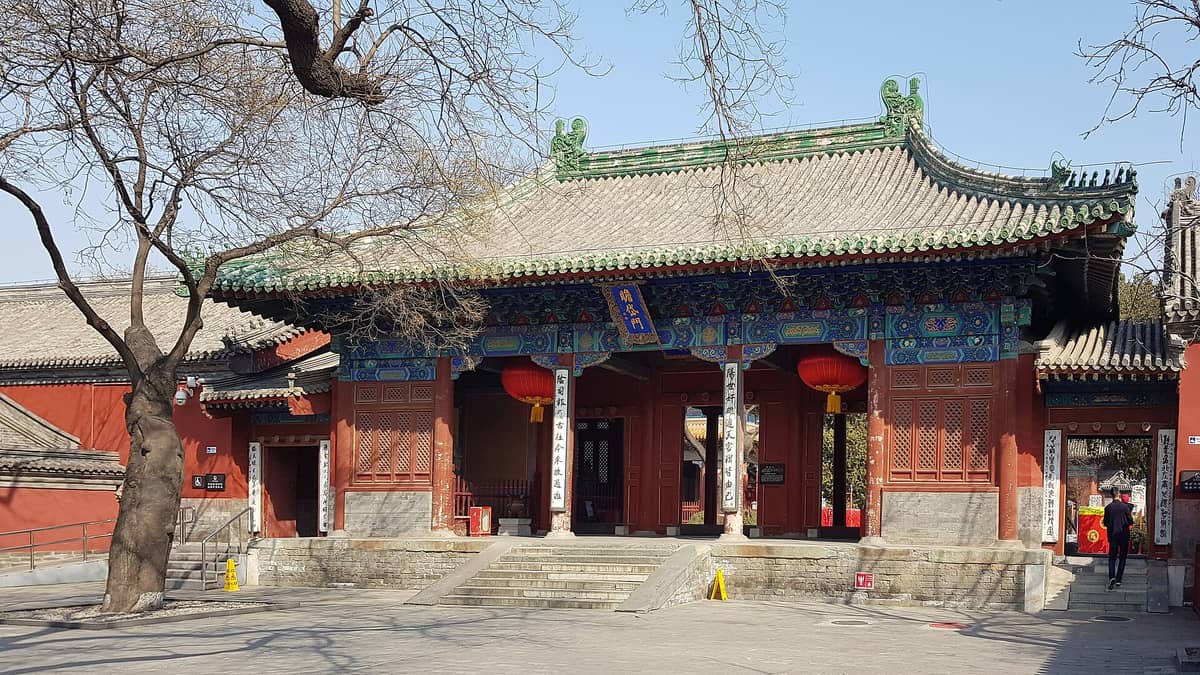
9. Confront the Afterlife Bureaucracy at Dongyue Temple
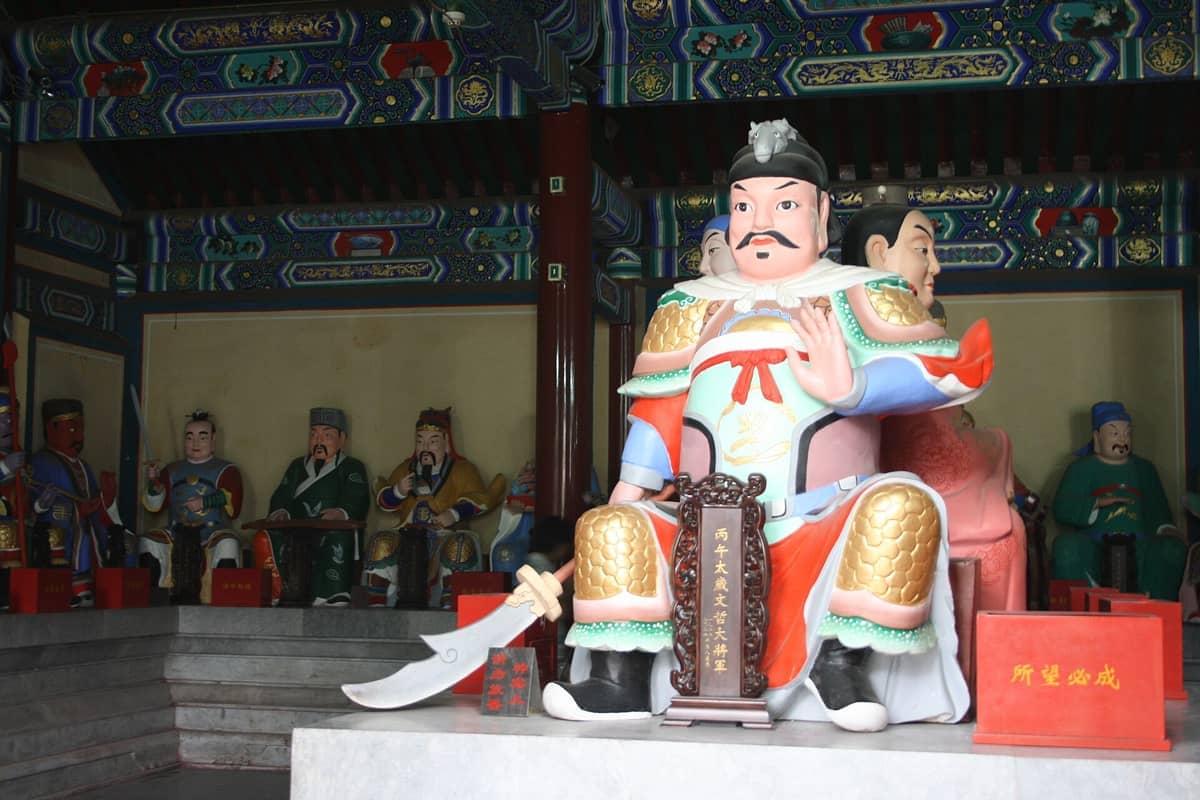
A Taoist temple unlike any other in Beijing, featuring 76 departments of the underworld staffed by life-size statues depicting the cosmic civil service. Dedicated to the God of Mount Tai, it sits incongruously amid the Chaoyang commercial district. Allow 60–90 minutes.
Explore9. Confront the Afterlife Bureaucracy at Dongyue Temple
A Taoist temple unlike any other in Beijing, featuring 76 departments of the underworld staffed by life-size statues depicting the cosmic civil service. Dedicated to the God of Mount Tai, it sits incongruously amid the Chaoyang commercial district. Allow 60–90 minutes.
ExploreMosque & Multi-Faith Temples
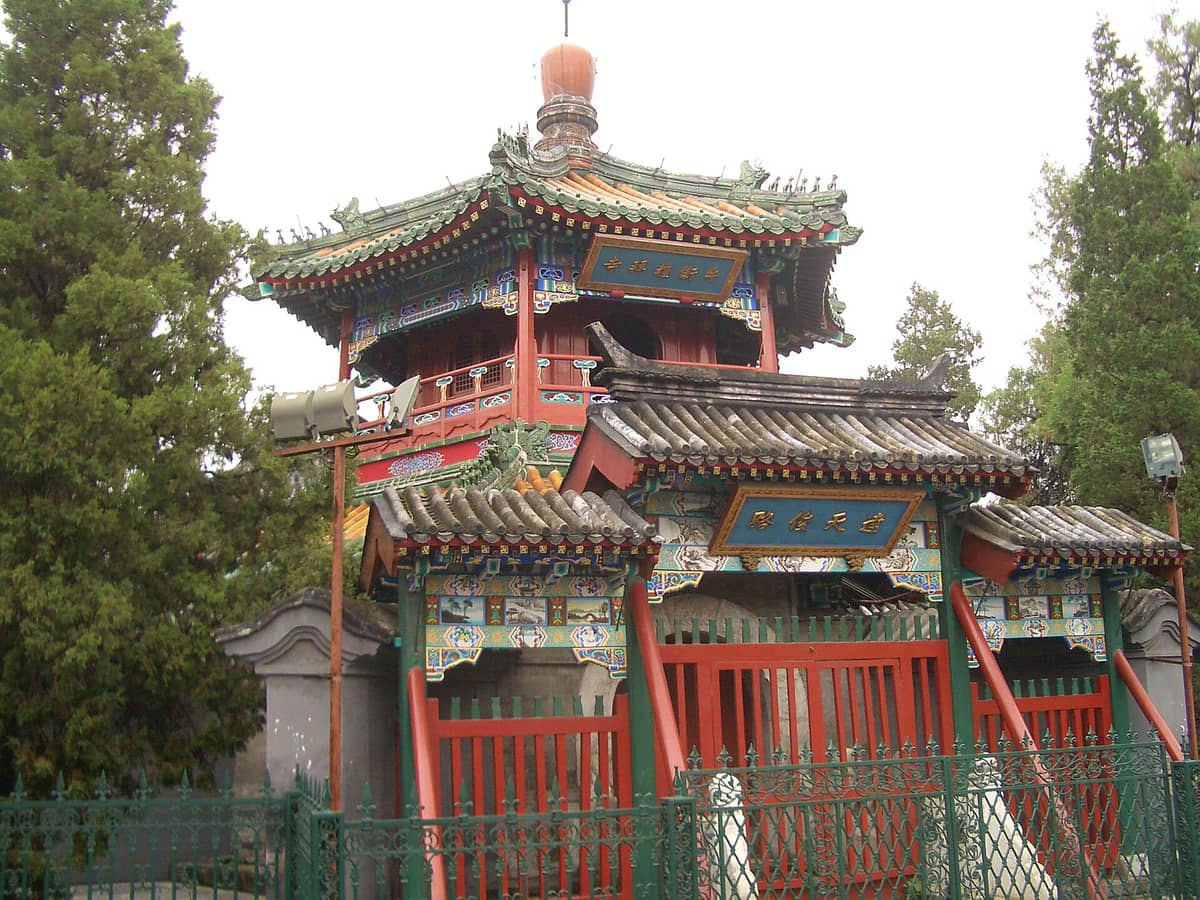
10. Explore Beijing's Oldest Mosque in the Niujie Hui Quarter
Founded in 996 CE, Niujie Mosque is built in Chinese architectural style with Arabic calligraphy and Islamic geometric ornament throughout. It remains an active place of worship for Beijing's Hui Muslim community. Non-Muslim visitors are welcome outside prayer times; dress modestly.
Explore10. Explore Beijing's Oldest Mosque in the Niujie Hui Quarter
Founded in 996 CE, Niujie Mosque is built in Chinese architectural style with Arabic calligraphy and Islamic geometric ornament throughout. It remains an active place of worship for Beijing's Hui Muslim community. Non-Muslim visitors are welcome outside prayer times; dress modestly.
ExploreTemples Set Within Parks & Hills
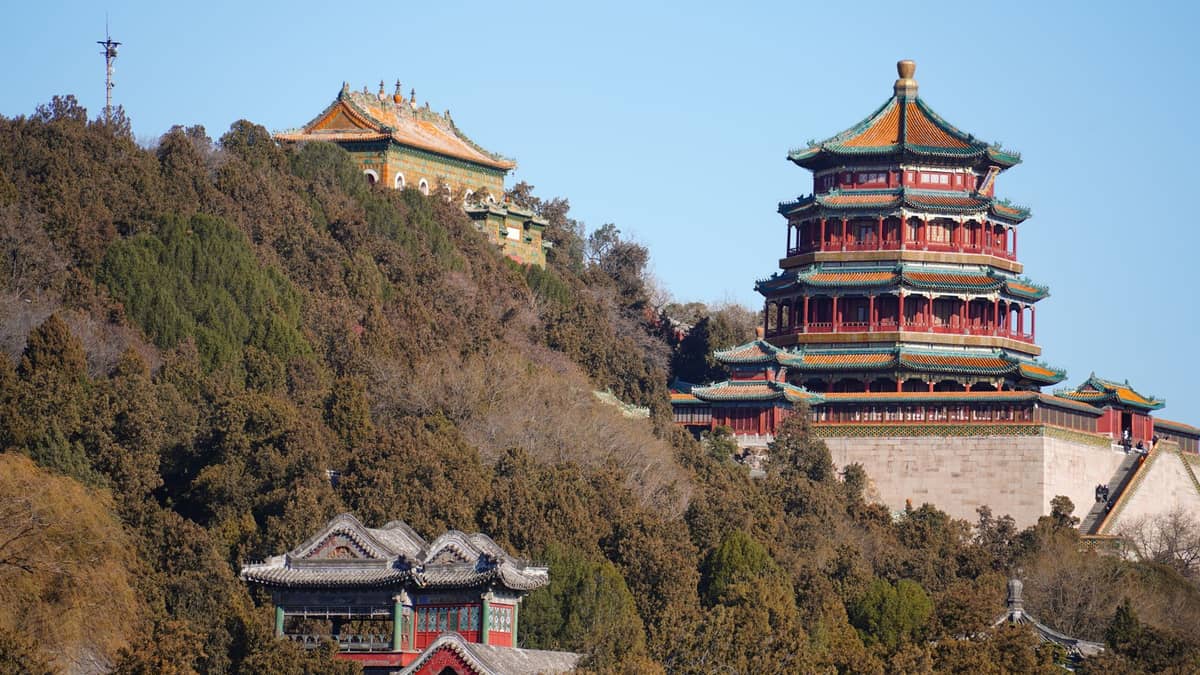
Some of Beijing's most rewarding temple visits involve a journey into the city's park landscape or western hills, where religious architecture and natural scenery reinforce each other. Xiangshan in autumn is one of the great seasonal experiences in the Beijing region. See the best time to visit Beijing for advice on timing a Xiangshan trip during the peak foliage season.
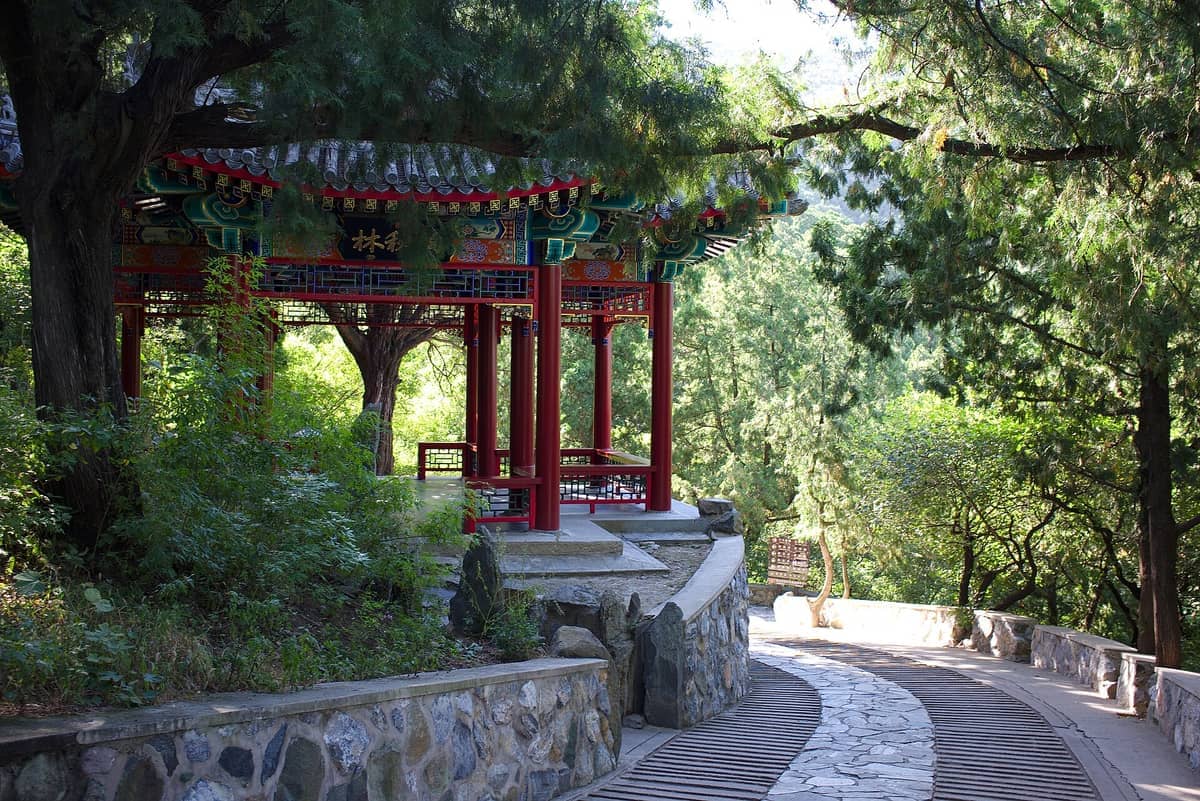
11. Combine Temple Visits with Autumn Foliage at Fragrant Hills
Xiangshan Park contains the Temple of Azure Clouds and smaller shrine complexes scattered across former imperial hunting grounds. The hillside turns crimson in October, making it the most scenic temple-and-nature day trip from central Beijing. Take the chairlift down after the climb.
Explore11. Combine Temple Visits with Autumn Foliage at Fragrant Hills
Xiangshan Park contains the Temple of Azure Clouds and smaller shrine complexes scattered across former imperial hunting grounds. The hillside turns crimson in October, making it the most scenic temple-and-nature day trip from central Beijing. Take the chairlift down after the climb.
Explore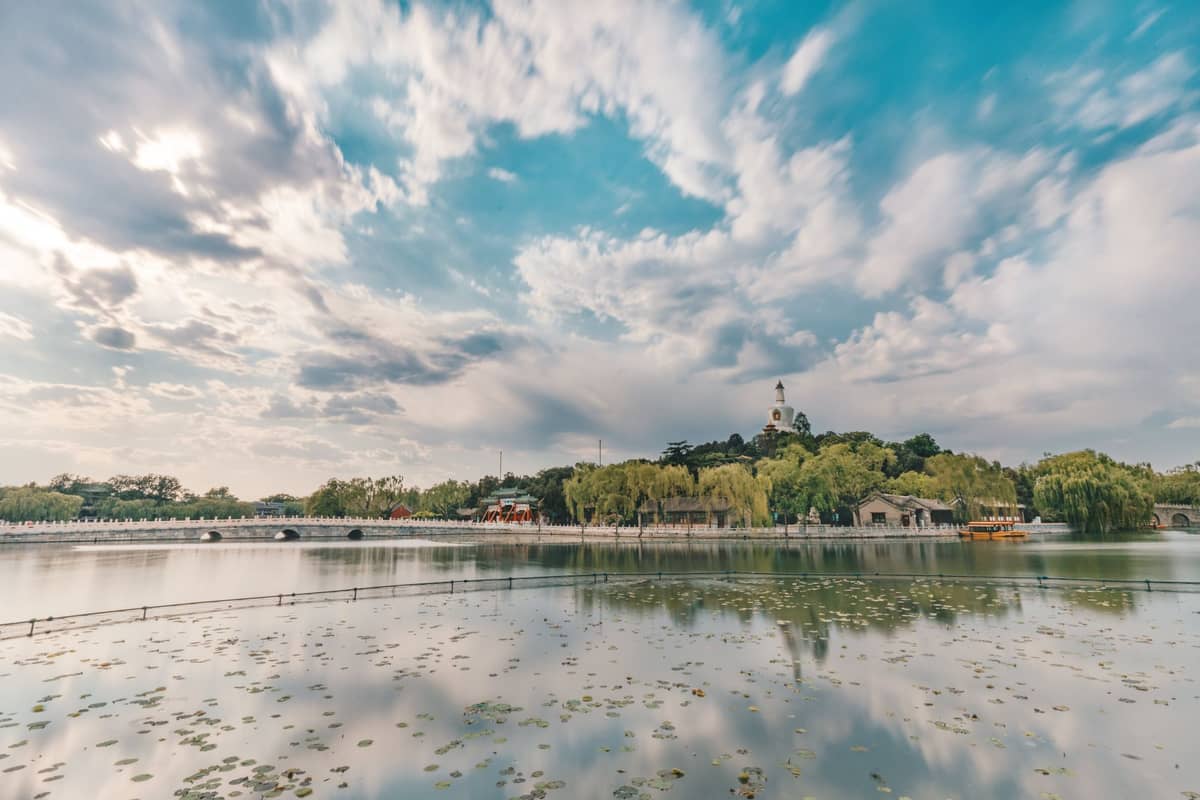
12. See the White Dagoba and Yong'an Temple in Beihai Park
Beihai's Jade Island is crowned by a white Tibetan-style dagoba built in 1651, reached by climbing through the Yong'an Temple complex. The combination of lakeside scenery, Buddhist architecture, and imperial garden design makes this one of Beijing's most atmospheric half-days.
Explore12. See the White Dagoba and Yong'an Temple in Beihai Park
Beihai's Jade Island is crowned by a white Tibetan-style dagoba built in 1651, reached by climbing through the Yong'an Temple complex. The combination of lakeside scenery, Buddhist architecture, and imperial garden design makes this one of Beijing's most atmospheric half-days.
Explore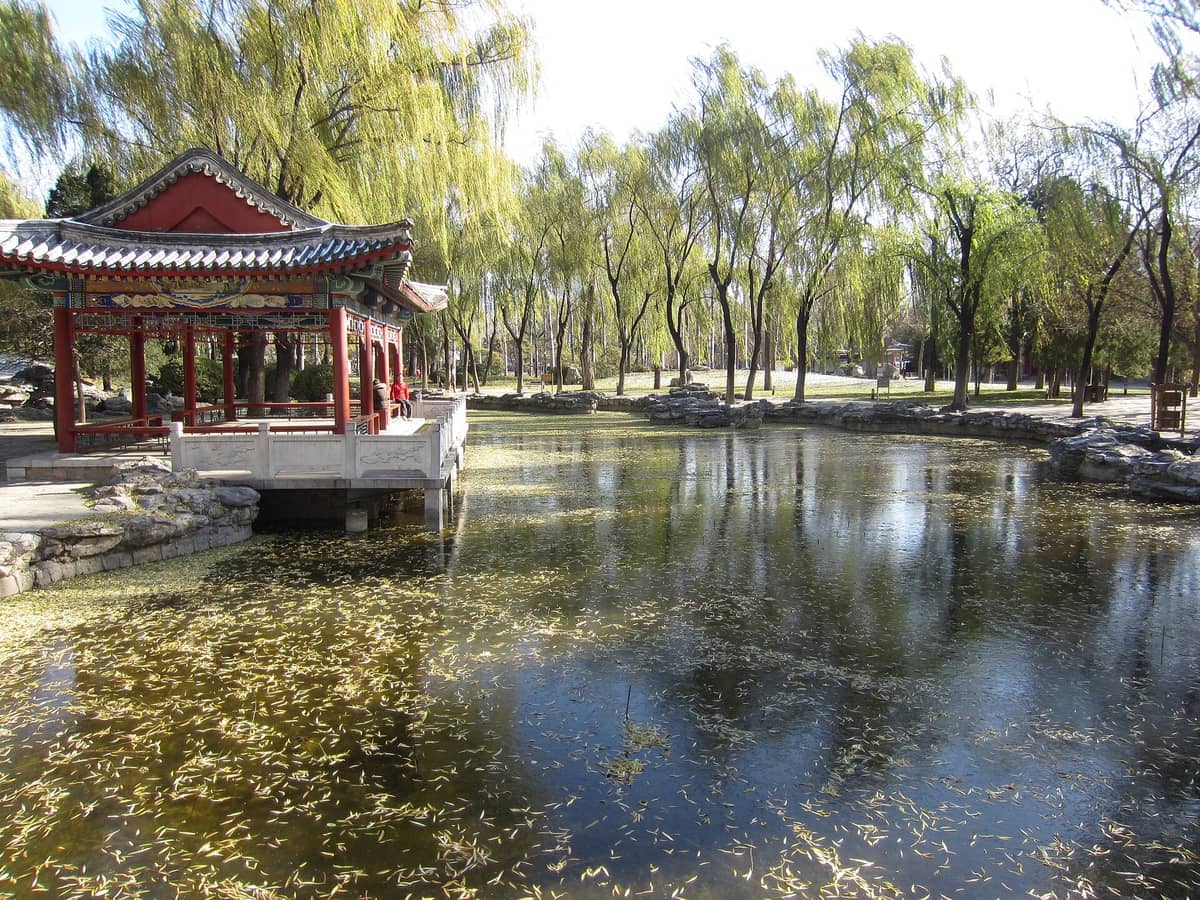
13. Find the Ancient Sun Altar Ruins at Ritan Park
Ritan, meaning Altar of the Sun, was one of the eight imperial altars used for state sacrifices. The circular altar platform survives at the park's center, quietly evocative despite its small scale. The surrounding park is a neighborhood favorite, excellent before or after visiting the nearby embassy district.
Explore13. Find the Ancient Sun Altar Ruins at Ritan Park
Ritan, meaning Altar of the Sun, was one of the eight imperial altars used for state sacrifices. The circular altar platform survives at the park's center, quietly evocative despite its small scale. The surrounding park is a neighborhood favorite, excellent before or after visiting the nearby embassy district.
Explore✨ Pro tip
At active Buddhist and Taoist temples, visiting on the 1st and 15th of the lunar calendar means witnessing far more intense worship activity, with larger crowds of worshippers and more elaborate rituals. Check a lunar calendar app before you go.
FAQ
Which Beijing temple is most worth visiting?
The Lama Temple (Yonghe Gong) is the single most impressive temple in Beijing for most visitors, combining Tibetan Buddhist architecture, an extraordinary collection of religious art, and active daily worship. For sheer architectural grandeur and scale, the Temple of Heaven is unmatched. If you only have time for one, the Lama Temple is the recommendation for first-timers.
Do I need to book Beijing temple tickets in advance?
The Temple of Heaven offers real-name advance reservations through its official WeChat ticketing channel, and foreign visitors can use a passport or permanent-residence permit. Tickets are also available at the ticket office. The Lama Temple, White Cloud Temple, and most others can be entered by purchasing tickets at the gate, though busy periods like Chinese New Year or the Golden Week holidays can create long queues. Check official channels before you visit as policies change.
What should I wear when visiting temples in Beijing?
There is no strict dress code at most Beijing temples, but modest clothing is respectful and appropriate. At the Niujie Mosque, covered shoulders and legs are expected for all visitors. At active Buddhist and Taoist temples, avoid revealing clothing as a courtesy to worshippers.
Are Beijing temples open on Mondays?
The Temple of Heaven park remains open on Mondays, but its separately ticketed attractions are closed on Mondays except statutory holidays. The Lama Temple and White Cloud Temple are generally open daily. Always verify current opening days on official sources before visiting, as schedules change around public holidays.
Can I visit multiple temples in one day in Beijing?
Yes, with good planning. The Lama Temple and Confucius Temple are a short walk apart in Dongcheng and pair naturally in a half-day. The White Cloud Temple in Xicheng can be combined with an afternoon at Beihai Park. The Haidian temples (Five Pagoda Temple, Big Bell Temple, Temple of Azure Clouds) require a full day and a car or multiple metro trips to cover efficiently.