Dongyue Temple: Beijing's Most Unusual Taoist Complex
Built in 1319 during the Yuan dynasty, Dongyue Temple sits on Chaoyangmen Outer Street in Chaoyang District and doubles as the Beijing Folk Museum. For ¥10, visitors explore the temple and Beijing Folk Museum, making it one of the most theologically intricate religious sites in the city.
Quick Facts
- Location
- No. 141 Chaoyangmen Outer Street, Chaoyang District, Beijing
- Getting There
- Line 6, Dongdaqiao Station (Exit A, 5-min walk west); or Line 2/6, Chaoyangmen Station (Exit A, 8-min walk east)
- Time Needed
- 1 to 2 hours
- Cost
- ¥10 per person (last ticket at 16:00; closed Mondays except statutory holidays)
- Best for
- Taoist culture, folk religion, uncrowded temple exploration, photography
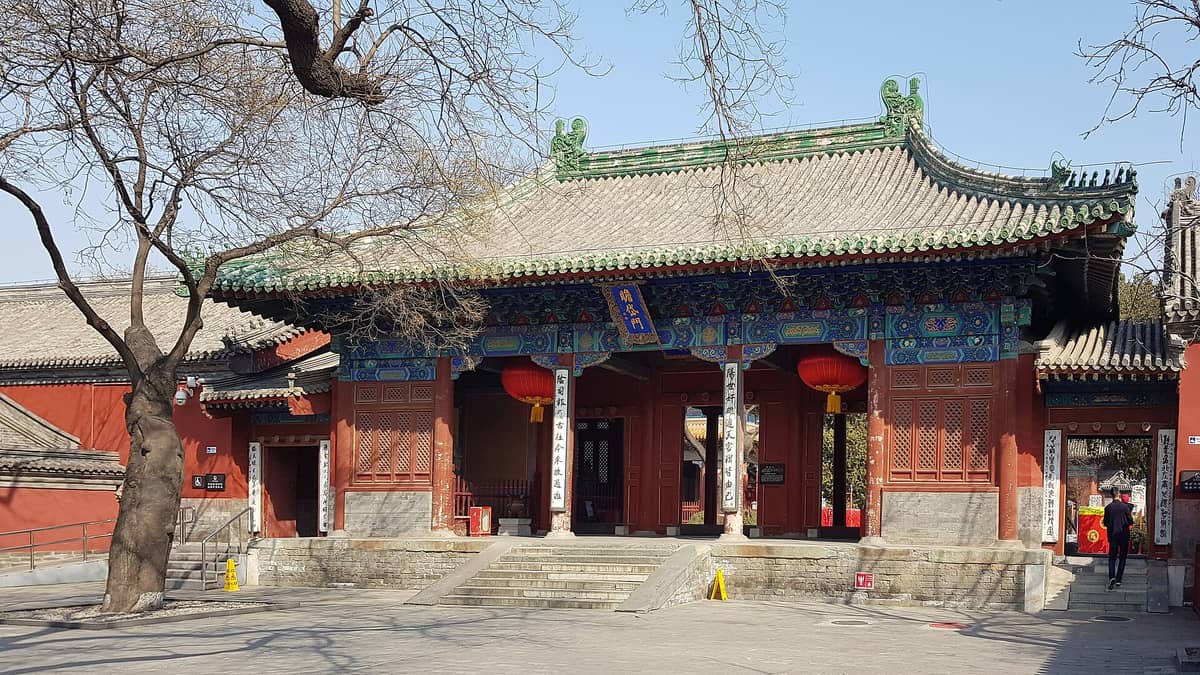
What Is Dongyue Temple?
Dongyue Temple, officially known as 北京东岳庙 (Běijīng Dōngyuè Miào), is a Taoist temple on Chaoyangmen Outer Street in Chaoyang District that dates to the Yuan dynasty. It is also home to the Beijing Folk Museum (北京民俗博物馆), which presents exhibitions alongside the temple complex.
The temple is known for its many deity figures and folk-religion imagery, which reflect traditional Taoist and popular religious ideas about morality, judgment, and the spirit world.
💡 Local tip
Buy your ticket before 16:00 as ticket sales stop then and the venue closes at 16:30. If you arrive after lunch on a weekday, the courtyards are typically quiet enough to move through at your own pace without any crowd pressure.
The Physical Experience: Courtyards, Halls, and Statuary
The entrance on Chaoyangmen Outer Street is marked by a substantial stone paifang (ceremonial gate) that interrupts the low-rise streetscape with unexpected authority. Passing through it, you enter a series of progressively enclosed courtyards that pull you away from the commercial noise of the road. The main hall, Daizong Hall, is a high-ceilinged structure where incense smoke accumulates in visible layers near the ceiling during busier periods, and the smell of sandalwood is the dominant sensory note from the first courtyard onward.
The side alcoves containing the 76 departments are the main reason to visit. Each one is a compact diorama of painted ceramic figures enacting scenes of judgment, punishment, or divine administration. The figures are not subtle: wrongdoers are shown being dragged before tribunals, good deeds are rewarded with ledger entries, and specific sins receive specific consequences. The labels are posted in both Chinese and English, which is genuinely useful given how conceptually specific each department's jurisdiction is. Read them carefully or the rooms risk blurring into a single undifferentiated sequence of figurines.
The flagstones in the older courtyards are worn smooth and slightly uneven, particularly near the eastern corridor. Wear flat-soled, comfortable footwear. Steps appear between several courtyard levels and at the entrances to side halls, so the site is not fully navigable in a wheelchair despite the main pathways being relatively flat.
Tickets & tours
Hand-picked options from our booking partner. Prices are indicative; availability and final rates are confirmed when you complete your booking.
Small group tour of Tian'anmen Square and the Forbidden City
From 43 €Instant confirmationFree cancellationBeijing Summer Palace Entrance Ticket
From 7 €Instant confirmationFree cancellationMutianyu Great Wall and Summer Palace small-group tour from Beijing
From 171 €Instant confirmationFree cancellationPrivate Guided Tour to Temple of Heaven, Panda House and Summer Palace
From 67 €Instant confirmationFree cancellation
History and Cultural Significance
Construction of Dongyue Temple began in 1319 under the Yuan dynasty and was completed in 1323. The temple is dedicated to Dongyue Dadi, the deity associated with Mount Tai, and is regarded as a major Taoist temple in northern China.
The temple suffered serious damage during the Cultural Revolution, when many of its statues were destroyed or defaced. Restoration work has been extensive since the 1980s, and the current collection of deity figures represents a combination of restored originals and newer replacements. Understanding this history matters for appreciating what you see: the site is not a pristine Ming-era interior but a carefully reconstructed one, and that reconstruction is itself part of the story of how traditional religious practice has been negotiated in contemporary China. For more background on Beijing's religious sites, the best temples in Beijing guide places Dongyue Temple in the context of the city's broader temple landscape.
The folk museum function layered over the temple adds exhibition rooms covering traditional Beijing customs: weddings, festivals, trade guilds, and seasonal rituals. These are presented with reasonable depth and the bilingual labeling is more reliable here than at some comparable sites in the city. The folk culture exhibitions make the temple a genuinely educational stop as well as a religious one.
How the Temple Changes by Time of Day
Arriving at opening time, around 08:30, gives you an early start before visitor numbers build. The atmosphere at this hour is often attentive and quiet.
By mid-morning on weekends, domestic tour groups and school parties arrive in numbers. The side halls become harder to observe at leisure, and the echoing covered corridors carry conversation at a volume that changes the atmosphere considerably. If you want the contemplative version of the experience, a weekday morning is strongly preferable to a weekend afternoon.
The light in the main courtyard is best in the late morning when it falls directly onto the carved stonework along the central axis. Photographers working in natural light should note that the side alcoves are dimly lit and glass-fronted, making reflection a persistent problem on the deity diorama rooms. A polarizing filter helps, and angling your shot from the side rather than straight-on reduces glare substantially.
ℹ️ Good to know
The temple is closed on Mondays except statutory holidays, when the schedule may differ. Verify current opening arrangements before visiting, particularly around national holidays such as Chinese New Year and National Day Golden Week.
Getting There and the Surrounding Area
The most direct approach is Beijing Subway Line 6 to Dongdaqiao Station. Take Exit A and walk west for approximately five minutes along Chaoyangmen Outer Street; the stone paifang marking the temple entrance is visible from the road. Alternatively, Chaoyangmen Station on Lines 2 and 6 is about an eight-minute walk east. The area around the temple is a dense commercial strip with little charm in itself, but the transition from that streetscape into the temple's first courtyard is part of what makes the arrival effective. Several bus routes including 75, 110, 139, and 615 stop at Shenlu Jie, which is adjacent to the entrance. For visitors staying in Chaoyang District, the temple is an easy half-day addition to a broader neighborhood circuit.
Dongyue Temple is roughly 1.5 kilometers from the Ritan Park, making a combined visit practical. Ritan Park offers a quieter, greener contrast to the temple's enclosed interior spaces and is well suited for a slower afternoon. The Sanlitun area, with its concentration of restaurants and international cafes, is about fifteen minutes on foot to the north and provides obvious options for lunch before or after your visit.
Is Dongyue Temple Worth Your Time?
At ¥10, the entry cost is effectively negligible, which removes the usual calculation about whether a site justifies its ticket price. The more relevant question is whether the subject matter interests you. Visitors who approach the 76 deity departments with genuine curiosity, reading the descriptions and considering what each jurisdiction reveals about traditional Chinese cosmology and moral philosophy, will find this one of the most intellectually engaging religious sites in Beijing. Visitors who are primarily interested in architectural grandeur should manage expectations: the complex is significant but not visually overwhelming in the way that the Lama Temple or the Temple of Heaven are.
The temple also receives a fraction of the visitors that Beijing's headline religious sites attract, which means you can move through it without the crowd management challenges that define weekends at the Lama Temple. That relative quiet is itself a reason to visit. Travelers who feel that Beijing's most famous temples have become more performance than practice will find Dongyue Temple a more direct encounter with lived religious tradition.
If you are building a broader itinerary around Beijing's Taoist and temple culture, the best temples in Beijing guide and the Beijing imperial history guide both provide useful context for placing Dongyue Temple within the city's longer religious and political history.
⚠️ What to skip
This is an active place of worship, not just a museum. Visitors should dress respectfully (covered shoulders and knees are appropriate), speak quietly in the main halls, and avoid treating the deity alcoves as pure photo opportunities when worshippers are present.
Insider Tips
- The Folk Museum exhibition rooms in the eastern wing are skipped by most visitors who follow the main courtyard axis. They contain well-labeled displays on traditional Beijing wedding customs and guild culture that add real depth to the visit and are rarely crowded.
- The glass-fronted deity alcoves cause significant reflection problems for photography. Shoot at a 45-degree angle to the glass, use a lens hood, and if the room has ambient light from a side window, position yourself so that light source is behind you.
- Weekday mornings between 09:00 and 11:00 are the quietest window. Arriving just after opening means sharing the first courtyard almost exclusively with local worshippers rather than tour groups.
- The stone paifang on Chaoyangmen Outer Street is a prominent landmark at the entrance and can make a useful orientation point when visiting.
- There are no food or drink vendors inside the complex. If you are visiting in summer, bring water; the covered corridors retain heat in the afternoon, and the site takes 90 minutes to cover thoroughly.
Who Is Dongyue Temple For?
- Travelers interested in Chinese folk religion and Taoist cosmology beyond surface-level temple tourism
- Photographers looking for atmospheric, low-competition interior subjects
- Visitors who want a genuinely uncrowded temple experience within easy reach of central Beijing
- Those building a Chaoyang itinerary who want cultural depth alongside the district's more commercial offerings
- History-focused travelers researching the Yuan and Ming dynasties in Beijing
Nearby Attractions
Other things to see while in Chaoyang District:
- 798 Art District
The 798 Art District in Chaoyang is Beijing's most concentrated hub for contemporary art, housed in a repurposed 1950s military electronics factory complex. Entry to the district is free, galleries cluster along wide concrete lanes, and the atmosphere shifts dramatically between a quiet Tuesday morning and a packed Saturday afternoon. Here is what to expect, and whether it deserves your time.
- Beijing National Stadium (Bird's Nest)
The National Stadium, universally known as the Bird's Nest, is Beijing's most recognizable piece of contemporary architecture. Built for the 2008 Summer Olympics, it now operates as a visitor attraction and events venue in the Olympic Park area of Chaoyang District. Here is everything you need to know to decide whether it belongs on your itinerary.
- Olympic Park
Beijing Olympic Park, the remains one of the city's most architecturally striking outdoor spaces. Entry to the park is free, remains one of the city's most architecturally striking outdoor spaces. Entry to the park is free, and the Bird's Nest and Water Cube stadiums stand as permanent landmarks of modern Chinese ambition. This guide covers what to see, when to go, and how to make the most of a half-day visit.
- China National Film Museum
The China National Film Museum in Chaoyang is one of the largest film museums in the world, covering approximately 38,000 square metres across 20 exhibition halls. Admission to the permanent collection is free, and the complex includes working cinema screens for classic and contemporary films. It rewards curious visitors with surprising depth on Chinese film history.