China National Film Museum: Beijing's Definitive Tribute to Cinema
The China National Film Museum in Chaoyang is one of the largest film museums in the world, covering approximately 38,000 square metres across 20 exhibition halls. Admission to the permanent collection is free, and the complex includes working cinema screens for classic and contemporary films. It rewards curious visitors with surprising depth on Chinese film history.
Quick Facts
- Location
- No. 9 Nanying Road, Chaoyang District, Beijing (北京市朝阳区南影路9号)
- Getting There
- Best reached by taxi or ride-hailing (use the Chinese address above); confirm current bus routes before travel
- Time Needed
- 2–4 hours for the permanent collection; longer if attending a cinema screening
- Cost
- Free for permanent exhibition areas; cinema screenings and special activities priced separately. Advance reservation may be required.
- Best for
- Film enthusiasts, families, architecture admirers, and anyone wanting a serious cultural institution off the imperial-site circuit
- Official website
- http://www.cnfm.org.cn
What the China National Film Museum Actually Is
The China National Film Museum (中国电影博物馆) opened to the public on 10 February 2007. It occupies a site of approximately 52 mu with a total building area of roughly 38,000 square metres, making it one of the largest dedicated film museums anywhere in the world. That scale is not incidental — it reflects China's ambition to document and celebrate over a century of domestic cinema in a format befitting a major national institution.
Spread across 20 exhibition halls, the museum covers everything from the earliest flickering footage screened in Shanghai in 1896 to the contemporary blockbuster era. There are purpose-built cinema halls showing films on rotation, display areas for original cameras, costumes, posters and projection equipment, and dedicated spaces for documentary film, animation, and the science of sound design. For visitors who associate Beijing primarily with imperial history, the museum offers a genuinely different kind of cultural encounter.
ℹ️ Good to know
Admission to permanent exhibition areas is free, but advance reservation may be required. Cinema screenings and special activities are priced separately. Confirm booking requirements on the official website before you visit, as policies can change.
The Building: Form Follows Function, Then Goes Further
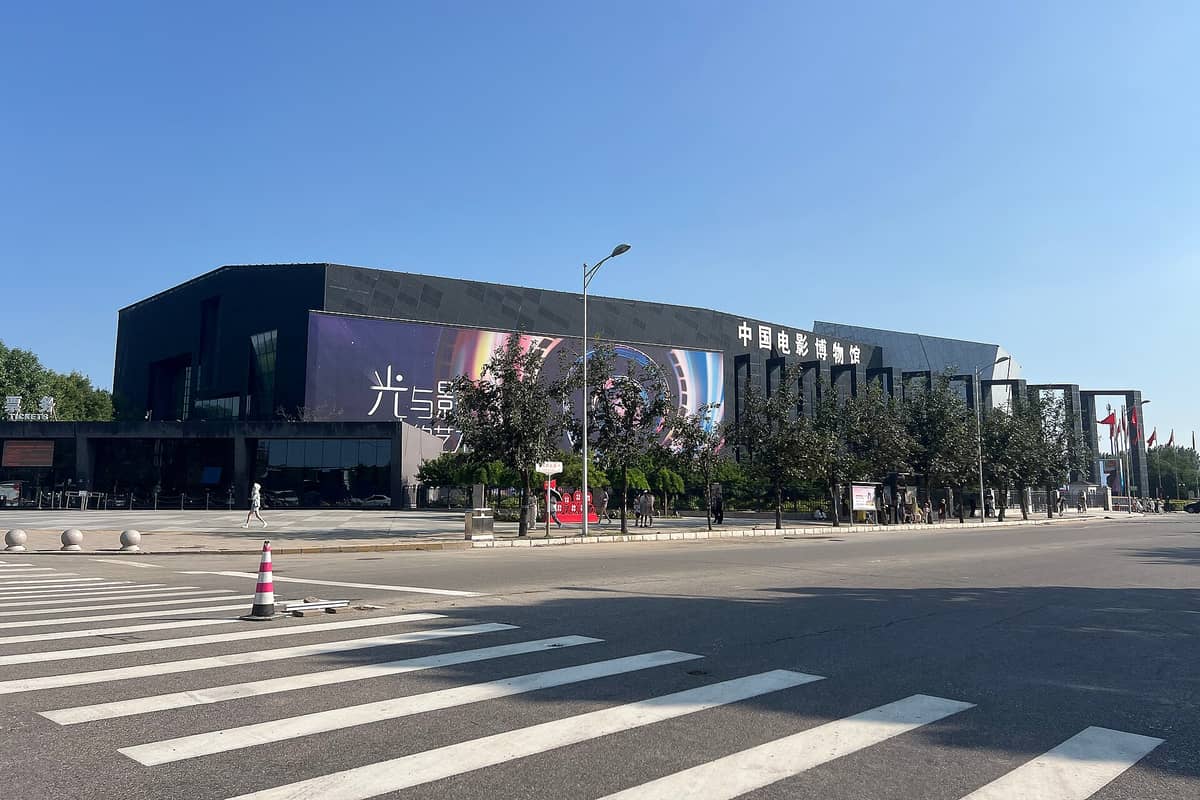
The museum's exterior is one of the more striking pieces of contemporary architecture in Chaoyang's northeastern reaches. The facade incorporates a large LED screen and reflective surfaces that change character depending on the time of day and what's being projected. In bright morning light, the building reads as a clean, assertive volume. By late afternoon, when the sun drops and screen content begins to compete with daylight, it takes on a more theatrical quality. If you're visiting primarily for photography, the approach from Nanying Road in the golden hour before dusk is worth the timing effort.
Inside, the atrium is genuinely impressive in scale, with soaring ceilings and circulation routes that encourage movement between floors without making the building feel like a maze. The architecture signals serious institutional intent rather than spectacle for its own sake, which sets an appropriate tone for what the collections ask of you.
Tickets & tours
Hand-picked options from our booking partner. Prices are indicative; availability and final rates are confirmed when you complete your booking.
Early start guided tour to the Great Wall at Mutianyu
From 355 €Instant confirmationFree cancellationIndependent tour to Jinshanling Great Wall with digital guidebook
From 237 €Instant confirmationFree cancellationOriginal section of Great Wall at Jinshanling full day tour
From 361 €Instant confirmationFree cancellationJuyongguan Great Wall and in-depth tour of Ming Tombs
From 331 €Instant confirmationFree cancellation
Navigating the Permanent Collection
The permanent galleries are organised chronologically and thematically. The early halls trace China's introduction to cinema in the late 19th century, the silent film era of the 1920s and 1930s, and the ideologically charged production landscape of the mid-20th century. The artefacts here carry real historical weight: original reels, vintage projectors, publicity materials, and equipment that once sat in actual studios. The contextual labelling is generally thorough, though much of the detailed text is in Chinese, so visitors who read Mandarin will get considerably more from these sections.
Later halls cover the reform era and the emergence of the so-called Fifth Generation directors in the 1980s, whose work drew international attention. Display materials become richer in this section, and English-language text tends to be more available. For visitors with a genuine interest in Chinese film history, this portion of the museum is where the collection earns its authority.
The technology and craft-focused halls, covering cinematography, sound design, and special effects, are accessible to visitors with no specialist background and tend to engage children well. Hands-on and interactive elements appear throughout, though the density of interactive exhibits varies by hall and some installations may be inactive on quieter visiting days.
💡 Local tip
If Chinese-language labels are a barrier, focus your time on the technology halls and the post-1980s cinema sections, which tend to have more bilingual signage. Download the museum's official app or check the website for any available audio guide options before arriving.
Cinema Screenings: The Other Reason to Come
The museum contains multiple cinema halls, including a large-format screen. Screenings rotate and may include Chinese classics, international films, documentary programming, and occasional special retrospectives tied to festivals or anniversaries. Ticket prices for screenings are separate from exhibition admission and vary by programme.
Checking the screening schedule in advance is worthwhile, both to plan your day and because popular screenings can sell out. The combination of a free gallery visit followed by a ticketed film in one of the dedicated halls makes for a genuinely full half-day programme. Note that film content and language options vary; not all screenings include subtitles.
When to Go and What to Expect by Time of Day
The museum is closed on Mondays. From 1 November to 31 March, the exhibition area is open Tuesday through Sunday, 09:00 to 17:00, with last entry at 16:00; Saturdays and statutory holidays have extended hours, with last entry at 18:00 and the central circular hall and first-floor exhibition area open until 19:00. From 1 April to 31 October, Tuesday through Thursday hours are 09:00 to 17:00 with last entry at 16:30, while Friday through Sunday and statutory holidays have extended hours, with last entry at 19:00 and the central circular hall and first-floor exhibition area open until 20:00. Cinema schedules run on a separate timetable. Verify current hours on the official website before your visit, as hours can change around public holidays.
Weekday mornings are the quietest time to visit, with school groups and domestic tourists typically arriving in larger numbers from late morning onward. Weekends and national holidays draw significantly higher attendance. If you're visiting during Golden Week or the Chinese New Year period, expect crowds throughout the day and book any cinema tickets well in advance.
The museum is entirely indoors and temperature-controlled, making it a legitimate option on days when Beijing's weather makes outdoor sightseeing uncomfortable. Heavy summer heat, winter cold, and the occasional high-pollution day all become irrelevant once you're inside.
⚠️ What to skip
Photography rules inside the exhibition halls should be verified on arrival. Some display areas containing original film materials and equipment may restrict flash photography or tripod use. When in doubt, ask staff before shooting.
Getting There and Practical Logistics
The museum is located in the northeastern part of Chaoyang District at No. 9 Nanying Road. The most reliable way to arrive is by taxi or ride-hailing app: share the Chinese address 北京市朝阳区南影路9号 with your driver or enter it into DiDi. Bus routes serve the area, but route numbers and stops are subject to change; the museum's own visitor information recommends confirming current bus connections before travel.
The Chaoyang District setting means the museum sits within reach of several other significant attractions. 798 Art District is a reasonable distance away and makes a natural pairing for a full day with cultural depth on two different registers. If you're planning your time across the district, Chaoyang's broader attractions include enough variety to fill two or three days without repetition.
Wheelchair users and visitors with mobility needs should note that wheelchairs and children's chairs are available free of charge at the Great Hall Service Centre. The building's layout is designed to be accessible across floors. If you have specific mobility requirements, contact the museum directly in advance to confirm current facilities.
Honest Assessment: Who Gets the Most From This Museum
The China National Film Museum is an institution built for depth rather than broad tourist appeal. Visitors with a serious interest in Chinese cinema, film technology, or the social history of 20th-century China will find the collection genuinely rewarding. Families with children who respond well to large-scale exhibitions and interactive technology displays will also find enough to hold attention for two to three hours.
Visitors with only two or three days in Beijing and a list focused on imperial sites may find the trip to the northeastern corner of Chaoyang harder to justify unless cinema is a specific priority. If that describes your trip, the city's more concentrated sightseeing areas around the Forbidden City and Temple of Heaven may make better use of limited time. For a broader picture of Beijing's museum landscape before you decide, the best museums in Beijing guide provides a useful comparative overview.
The language barrier is real for non-Mandarin readers. A significant portion of the exhibition text is in Chinese only, particularly in the earlier historical halls. This does not make the museum inaccessible, but it does mean a visitor without Chinese reading ability will absorb the experience more through objects and images than through contextual narrative. That's a legitimate way to engage with the collection, but it's worth knowing in advance.
If the museum sparks a broader curiosity about Beijing's contemporary cultural scene, the Beijing contemporary art guide is a useful next step. For visitors building a full itinerary, a five-day Beijing itinerary can help integrate the museum logically without doubling back across the city.
Insider Tips
- Check the cinema schedule online before your visit rather than after arriving. Popular screenings on weekends can sell out, and combining a gallery visit with a film makes the trip to northeastern Chaoyang considerably more worthwhile.
- The museum cafeteria and on-site dining options provide a convenient midday break, but quality and variety are functional rather than exceptional. If you're visiting on a full-day programme, consider eating near the 798 Art District area before or after.
- The large-format facade screen is most visually striking after dark on evenings when the museum is open late. If you're visiting on a Friday or Saturday during the April–October period when extended hours apply, arriving in the late afternoon lets you experience the building in both daylight and evening light.
- Wheelchair and children's chair loans at the Great Hall Service Centre are free, but availability isn't unlimited. For groups with accessibility needs, arriving early in the day and heading to the Service Centre first is the practical move.
- Mandarin-reading visitors should allow extra time in the early 20th-century halls, where label text is dense and the archival depth of the collection is most evident. These sections are often the least crowded and reward slow engagement.
Who Is China National Film Museum For?
- Film enthusiasts with a specific interest in Chinese cinema history from the silent era to the present
- Families with older children who engage well with technology, craft, and large-scale interactive exhibitions
- Architecture and design observers who want to see a major contemporary cultural building in Chaoyang
- Visitors with a free morning or afternoon on a high-pollution or extreme-weather day who need a fully indoor option
- Travellers on a tight budget who want a serious cultural experience without an admission fee
Nearby Attractions
Other things to see while in Chaoyang District:
- 798 Art District
The 798 Art District in Chaoyang is Beijing's most concentrated hub for contemporary art, housed in a repurposed 1950s military electronics factory complex. Entry to the district is free, galleries cluster along wide concrete lanes, and the atmosphere shifts dramatically between a quiet Tuesday morning and a packed Saturday afternoon. Here is what to expect, and whether it deserves your time.
- Beijing National Stadium (Bird's Nest)
The National Stadium, universally known as the Bird's Nest, is Beijing's most recognizable piece of contemporary architecture. Built for the 2008 Summer Olympics, it now operates as a visitor attraction and events venue in the Olympic Park area of Chaoyang District. Here is everything you need to know to decide whether it belongs on your itinerary.
- Olympic Park
Beijing Olympic Park, the remains one of the city's most architecturally striking outdoor spaces. Entry to the park is free, remains one of the city's most architecturally striking outdoor spaces. Entry to the park is free, and the Bird's Nest and Water Cube stadiums stand as permanent landmarks of modern Chinese ambition. This guide covers what to see, when to go, and how to make the most of a half-day visit.
- Chinese Ethnic Culture Park
Spread across roughly 50 hectares in Chaoyang District, the Chinese Ethnic Culture Park reconstructs the architecture, dress, and daily life of China's 56 officially recognized ethnic groups. It is one of the few places in Beijing where you can walk through a Miao stilted house, watch a Tibetan dance, and step inside a Mongolian ger within a single afternoon.