Chinese Ethnic Culture Park: Beijing's Open-Air Museum of 56 Nations
Spread across roughly 50 hectares in Chaoyang District, the Chinese Ethnic Culture Park reconstructs the architecture, dress, and daily life of China's 56 officially recognized ethnic groups. It is one of the few places in Beijing where you can walk through a Miao stilted house, watch a Tibetan dance, and step inside a Mongolian ger within a single afternoon.
Quick Facts
- Location
- No. 1 Minzuyuan Road, Chaoyang District, Beijing
- Getting There
- Beijing Subway Line 8, Olympic Sports Center Station (奥体中心)
- Time Needed
- 2–4 hours
- Cost
- Approx. ¥45 currently; listed seasonal reference prices are ¥40–¥60 (verify current prices before visiting)
- Best for
- Families, cultural travelers, photography, architecture enthusiasts
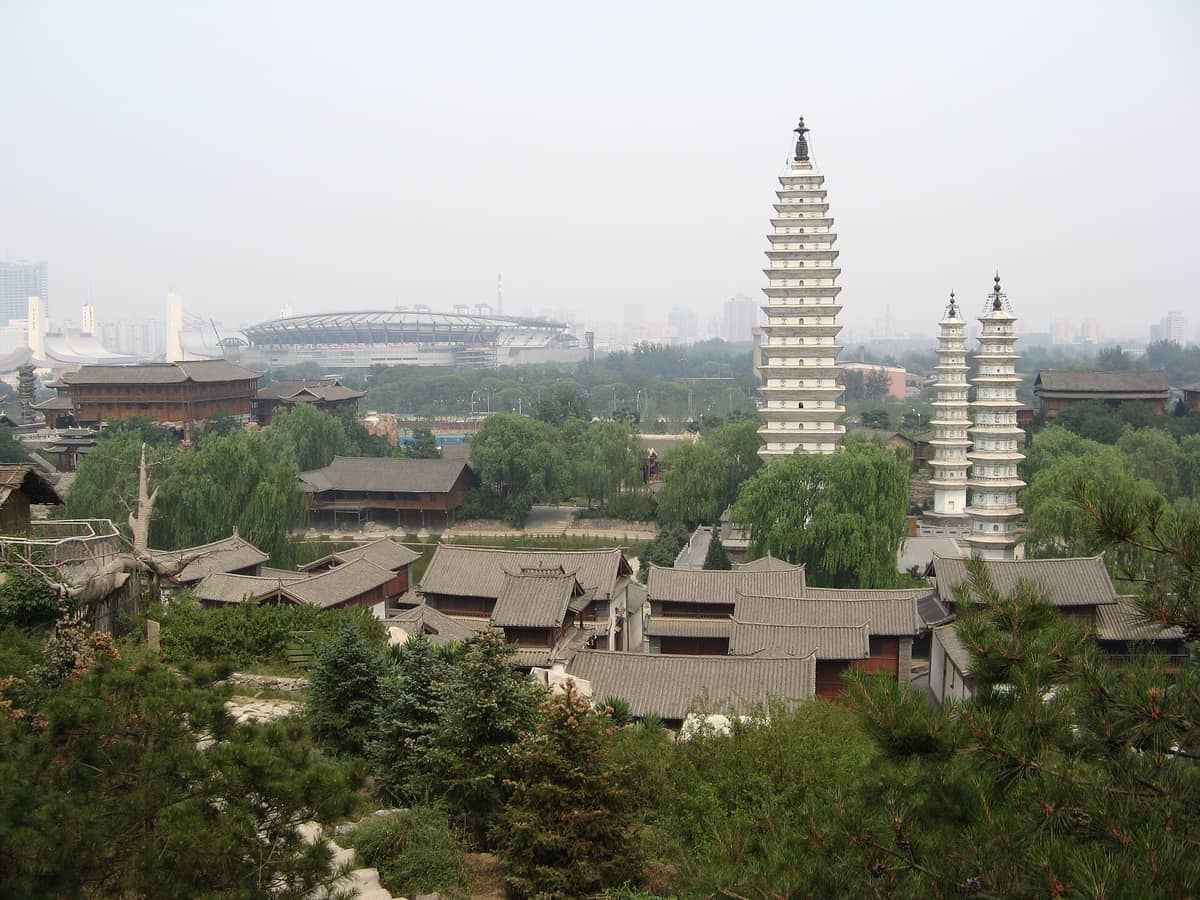
What the Chinese Ethnic Culture Park Actually Is
Officially registered as the Beijing China Ethnic Museum (北京中华民族博物院), and widely known by its shorter name Zhonghua Minzu Yuan (中华民族园), the Chinese Ethnic Culture Park is an open-air ethnographic park that opened in the 1990s as a showcase of China's ethnic diversity. The park presents life-size reconstructions of traditional village architecture, craft workshops, and ceremonial spaces representing all 56 ethnic groups recognized by the Chinese state, including the Han majority and 55 minority nationalities ranging from the Zhuang of Guangxi to the Ewenki of Inner Mongolia.
This is not a museum in the conventional sense. There are no glass cases or audio guides leading you through dim corridors. The experience is outdoors, spread across roughly 50 hectares of landscaped grounds. You walk between thatched longhouses, drum towers, pagodas, and carved gateways, all faithfully reproduced. Staff from the respective ethnic communities are sometimes present, wearing traditional dress and demonstrating weaving, embroidery, or instrument-making.
ℹ️ Good to know
Note: As of the most recent municipal listing, the South Garden was temporarily closed and some indoor venues in the North Garden were unavailable. Confirm which sections are open before your visit by calling +86 10 6206 3646 or checking the official website at http://www.emuseum.cn/.
What You Actually See Inside
The park is divided between a North Garden and a South Garden, though for now only the North Garden is reliably accessible to visitors. Even within that section, the sheer variety of structures takes time to absorb. The Dong ethnic village features a multi-tiered drum tower with dark timber joinery and upswept eaves. The Miao section includes stilted wooden houses built on sloping ground, reflecting the Guizhou highland origins of that architectural style. A Mongolian section presents a cluster of white gers on flat ground, with the faint smell of felt and timber on warm days.
Water features and bridges connect the sections, and planted gardens give the grounds a sense of landscape continuity rather than a fairground feeling. On weekdays the park is quiet enough that you can stop and study the construction details of each building without crowds pressing around you. Carved beams, painted eaves, thatched roofs laid in distinctive regional patterns, and hand-set stone walls each tell a specific story if you slow down enough to read them.
Photography conditions are good throughout the morning. The open layout means natural light hits most structures well before noon, after which some areas fall into partial shade. For serious architectural photography, the early hours produce clean light with few people in frame. If you plan to combine this visit with the nearby Olympic venues, see our guide to Olympic Park for timing and logistics.
Tickets & tours
Hand-picked options from our booking partner. Prices are indicative; availability and final rates are confirmed when you complete your booking.
Beijing culture guided tour with imperial meal
From 297 €Instant confirmationFree cancellationPrivate guided tour of Hangzhou's West Lake and cultural sites
From 319 €Instant confirmationFree cancellationZhengzhou private cultural tour to Shaolin temple and Longmen Grottoes
From 424 €Instant confirmationFree cancellationSmall group tour of Tian'anmen Square and the Forbidden City
From 43 €Instant confirmationFree cancellation
Live Performances and Cultural Programming
One of the park's more distinctive features is its schedule of live performances, staged at designated arenas and open spaces throughout the grounds. Ethnic song-and-dance routines, martial demonstrations, and ceremonial reenactments take place at scheduled times. The performances vary in quality: some are genuinely engaging, particularly the Yi fire-dance sequences and the Tibetan ritual performances, while others read more as tourist theater. The programs change seasonally, and specific showings are not guaranteed.
Visiting on a weekend or public holiday gives you the best chance of catching multiple performances in a single visit, though it also means more visitors overall. If you come during a major festival period, the park sometimes stages extended programming around events like the traditional minority New Year celebrations. Check the official site or call ahead if you are specifically targeting a performance.
💡 Local tip
Arrive by 09:00 to walk the grounds before tour groups arrive around 10:00–10:30. The quieter morning hours give you time to appreciate the architecture and photography without managing around crowds.
Historical and Cultural Context
China's policy of recognizing 56 ethnic nationalities was formalized in the 1950s following ethnographic surveys conducted after the founding of the People's Republic. The classification drew on linguistic, geographic, cultural, and self-identification criteria, though the process was complex and not without controversy among scholars. The park itself was conceived as a celebration of that official ethnic unity framework, which is worth understanding as you walk through the grounds: the representations are deliberate, curated, and designed to project a particular narrative of diversity-within-unity.
That context does not diminish the architectural interest of what you see. The craftspeople involved in building and maintaining the structures have genuine expertise, and the reconstructions reflect real vernacular building traditions. What you should not expect is the kind of critical or comparative framing you might find in an academic ethnographic museum. The park presents; it does not interrogate.
Travelers with an interest in China's broader imperial history and the role of minority cultures in shaping it may want to pair this visit with the Lama Temple, which reflects centuries of Tibetan Buddhist influence on Beijing, or with our Beijing imperial history guide.
Practical Walkthrough: Getting There and Getting Around
The park sits at No. 1 Minzuyuan Road in Chaoyang District, near Jianxiang Bridge. The most straightforward public transit option is Beijing Subway Line 8 to Olympic Sports Center Station (奥体中心), south of the park. Check the current walking route from the station exit before setting out.
Taxis and DiDi are practical alternatives if you are coming from central Beijing or from another Chaoyang attraction. The park's proximity to the Olympic venues means it fits naturally into a north Chaoyang itinerary. The grounds are large enough that comfortable walking shoes are necessary; the paths are mostly paved, but uneven in a few of the reconstructed village sections. Shade is limited in midsummer, so carry water and sun protection if you visit between June and August, when temperatures regularly reach 30°C or above.
Opening hours are 08:30 to 18:00, with last admission at 17:00. Seasonal reference prices are ¥40 in low season and ¥60 in peak season; a unified preferential rate of ¥45 is currently listed for both gardens. Verify current pricing directly before purchasing. Reduced or free entry may apply under the venue’s current rules.
⚠️ What to skip
The South Garden has been temporarily closed, and some indoor venues in the North Garden were unavailable as of the most recent municipal update. Do not plan your visit around full access to both sections without confirming current status in advance.
Who Will Get the Most From This Park, and Who Might Not
Families with children aged roughly 5 to 14 tend to respond well to the park's scale and variety. The outdoor setting, the visual drama of large wooden towers, and the occasional live performance hold attention in a way that conventional museums often cannot. Children who have studied Chinese geography or ethnic cultures at school will recognize names and details that make the visit more meaningful.
Travelers with a serious academic or scholarly interest in ethnography should approach with calibrated expectations. This is a state-curated cultural park, not a research institution, and the framing of each ethnic group's identity is shaped by official categories. That said, the quality of architectural reconstruction is often genuinely high, and for anyone trying to understand what the concept of minority cultural identity means within the Chinese national context, a visit here is instructive in ways that go beyond the displays themselves.
Visitors who have already spent significant time in Beijing's primary historical core, including the Forbidden City and Temple of Heaven, and who are looking for something that steps outside the Han imperial narrative will find this park genuinely different in character and worth the time.
Those who prefer compact, high-density attraction experiences may find the park's spread and pace too loose for a short Beijing itinerary. If you only have two or three days in the city, prioritize accordingly. The park also has limited English-language signage in some sections, which reduces the contextual depth available to non-Mandarin readers.
Combining This Visit With the Surrounding Area
The Chinese Ethnic Culture Park sits in northern Chaoyang, a district that also contains the Beijing National Stadium and the broader Olympic zone. A combined visit covering the park in the morning and the Olympic venues in the afternoon is a logical pairing for travelers based in this part of the city. For those staying in Sanlitun or the embassy quarter, both destinations are reachable without crossing central Beijing. Our guide to getting around Beijing covers the most efficient transit routes across the district.
Insider Tips
- Arrive at opening (08:30) on a weekday. By 10:30, organized tour groups begin filling the main pathways, and the performance arenas become considerably more crowded. The first 90 minutes belong to early risers.
- The Dong drum tower and the Miao stilted-house complex in the North Garden are the most architecturally significant structures in the park. Budget time specifically for these rather than trying to cover every section equally.
- English signage is sparse in several sections. Download a basic Mandarin translation app or carry a phrasebook if you want to read the interpretive panels, which contain useful details about construction techniques and regional origins.
- The park's food stalls serve snacks associated with specific ethnic cuisines, ranging from Xinjiang flatbread to Yunnan rice noodles. These are worth trying as a low-cost complement to the cultural walk, but opening hours and stall availability vary by season.
- Accessibility information is not comprehensively published. If you are traveling with a wheelchair user or someone with mobility requirements, call the park directly at +86 10 6206 3646 before your visit to confirm current access routes.
Who Is Chinese Ethnic Culture Park For?
- Families with school-age children looking for an engaging outdoor cultural experience
- Architecture and photography enthusiasts interested in vernacular building traditions across China
- First-time visitors to Beijing who want cultural context beyond the Han imperial narrative
- Travelers combining a visit with the nearby Olympic Park venues in north Chaoyang
- Anyone with a specific interest in China's ethnic minority cultures and regional diversity
Nearby Attractions
Other things to see while in Chaoyang District:
- 798 Art District
The 798 Art District in Chaoyang is Beijing's most concentrated hub for contemporary art, housed in a repurposed 1950s military electronics factory complex. Entry to the district is free, galleries cluster along wide concrete lanes, and the atmosphere shifts dramatically between a quiet Tuesday morning and a packed Saturday afternoon. Here is what to expect, and whether it deserves your time.
- Beijing National Stadium (Bird's Nest)
The National Stadium, universally known as the Bird's Nest, is Beijing's most recognizable piece of contemporary architecture. Built for the 2008 Summer Olympics, it now operates as a visitor attraction and events venue in the Olympic Park area of Chaoyang District. Here is everything you need to know to decide whether it belongs on your itinerary.
- Olympic Park
Beijing Olympic Park, the remains one of the city's most architecturally striking outdoor spaces. Entry to the park is free, remains one of the city's most architecturally striking outdoor spaces. Entry to the park is free, and the Bird's Nest and Water Cube stadiums stand as permanent landmarks of modern Chinese ambition. This guide covers what to see, when to go, and how to make the most of a half-day visit.
- China National Film Museum
The China National Film Museum in Chaoyang is one of the largest film museums in the world, covering approximately 38,000 square metres across 20 exhibition halls. Admission to the permanent collection is free, and the complex includes working cinema screens for classic and contemporary films. It rewards curious visitors with surprising depth on Chinese film history.