5 Days in Beijing: The Definitive Extended Itinerary
Five days is enough time to move beyond Beijing's headline sights and get a real feel for the city: imperial history, Great Wall day trips, traditional neighborhoods, and contemporary culture. This itinerary is structured to minimize backtracking, front-load booking requirements, and leave room to breathe.
Plan and book this trip
Tools from our partner Travelpayouts help you compare flights and hotels. If you book through them, we may earn a commission at no extra cost to you.
Flights
Hotels map
TL;DR
- Book the Forbidden City in advance — daily capacity is capped and same-day tickets regularly sell out.
- A 5-day beijing itinerary works best when grouped by geography: central imperial sights first, then the Great Wall, then outer neighborhoods. See our transport guide to plan your routes.
- September and October offer the best combination of clear skies, moderate temperatures (roughly 8–25°C), and manageable crowds.
- The Beijing Subway covers almost everything on this itinerary; taxis and DiDi fill the gaps for early Great Wall starts.
- Budget travelers can keep daily costs around ¥200–300; see Beijing on a budget for specific strategies.
Before You Arrive: Booking, Timing, and Practical Setup
Five days in Beijing requires more pre-planning than most Chinese cities. Three attractions have strict entry rules: the Forbidden City caps daily visitors and closes on Mondays (except public holidays); the Temple of Heaven historic buildings also close Mondays outside public holidays; and popular Great Wall sections like Mutianyu book out on weekends during autumn. Three attractions have strict entry rules: the caps daily visitors and closes on Mondays (except public holidays); the historic buildings also close Mondays outside public holidays; and popular Great Wall sections like Mutianyu book out on weekends during autumn.
Check visa eligibility carefully. China operates a unilateral visa-exemption for nationals of specified countries (generally up to 30 days on an ordinary passport) and a separate 240-hour visa-free transit policy for eligible nationalities. The rules change, so verify directly with China's National Immigration Administration before booking. Beijing Capital International Airport (PEK) and Beijing Daxing International Airport (PKX) are both designated entry ports for the transit policy, but they use completely different rail connections to the city, so confirm which airport your flight uses.
⚠️ What to skip
Prices, opening hours, and ticketing rules at Beijing's major attractions change seasonally and without much notice. Cross-check everything on the Beijing Municipal Government's centralized ticketing page (english.beijing.gov.cn) before each visit, not just before you leave home.
For accommodation, staying in Dongcheng District puts you within walking distance or a short subway ride of Days 1, 2, and 5 of this itinerary. Xicheng is a solid alternative with better access to the hutong neighborhoods around Shichahai. Sanlitun in Chaoyang suits travelers who want more nightlife and international dining but adds commute time to most imperial sights.
Day 1: The Imperial Core — Tiananmen, Forbidden City, and Jingshan
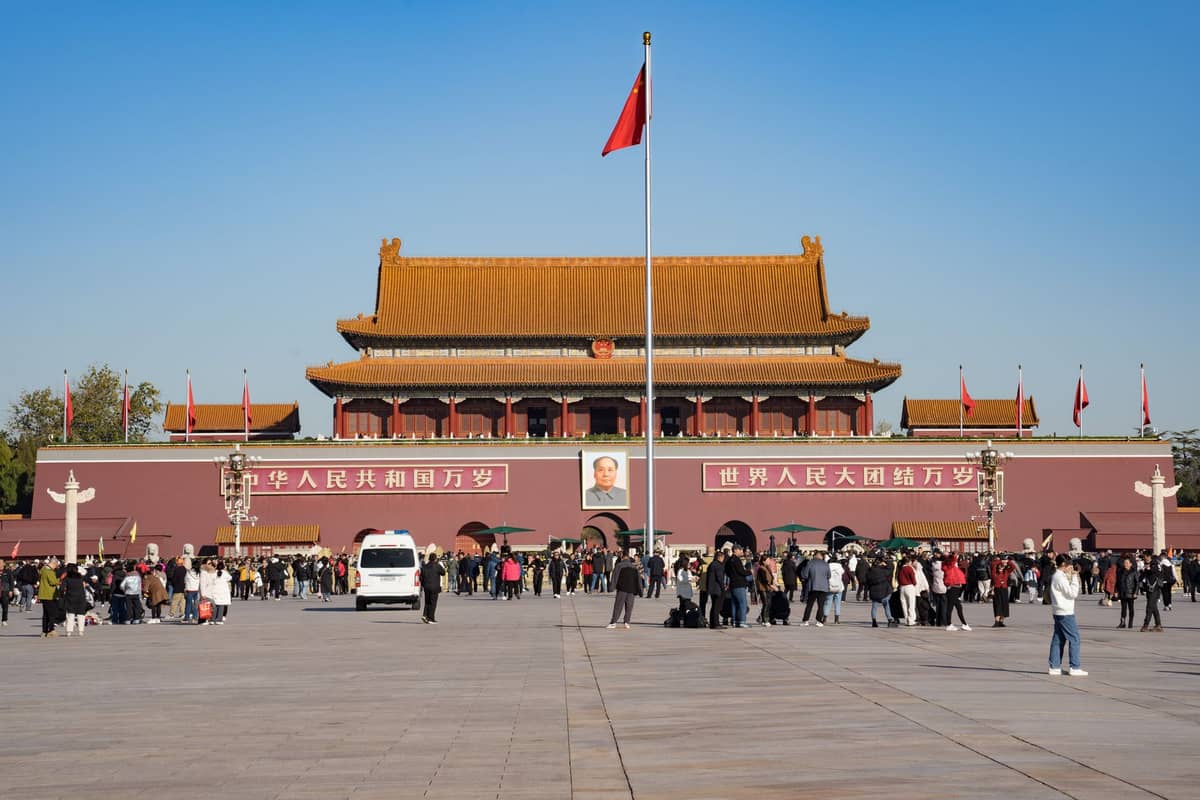
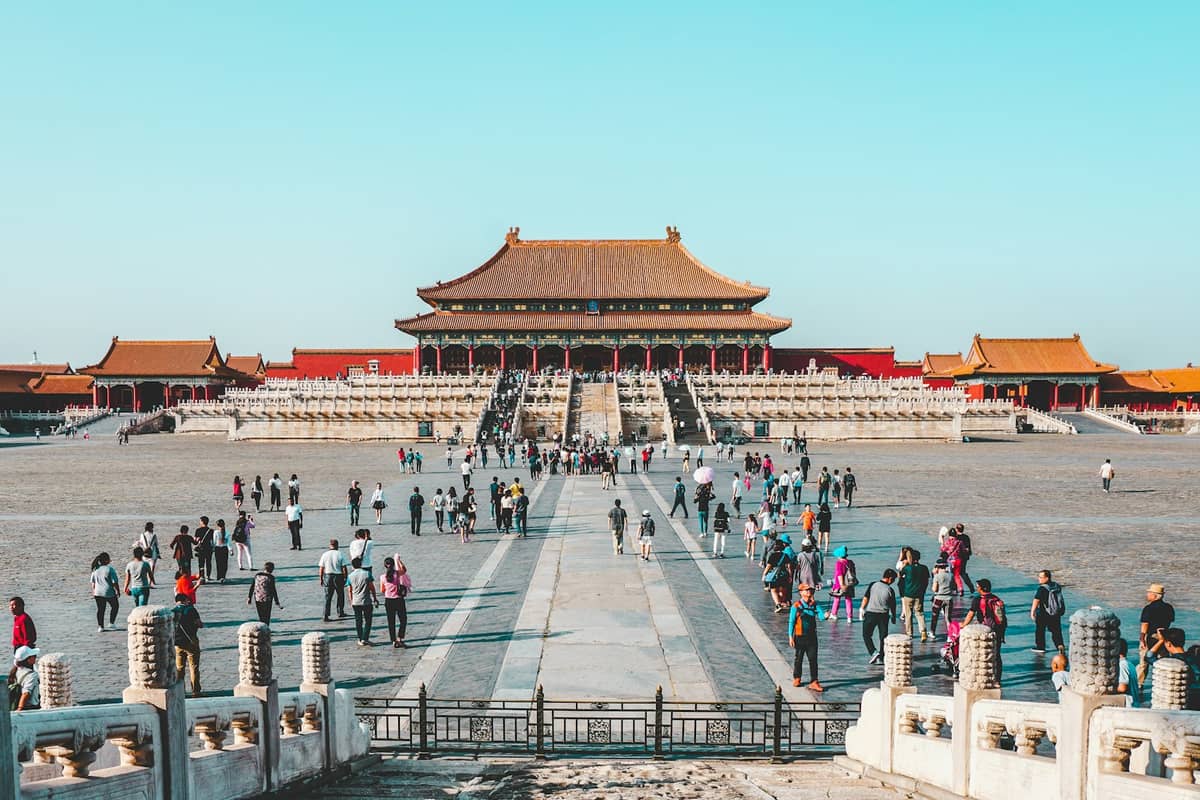
Start at Tiananmen Square by 8:00. The square is large, exposed, and best seen before the midday heat in summer or the thickest tourist waves in autumn. Note that photography restrictions apply around government buildings in this area. From Tiananmen, cross north through the Meridian Gate into the Forbidden City, where you should plan 3–4 hours minimum. The palace complex covers 72 hectares and 980 buildings; most visitors only scratch the surface. Focus on the central axis first, then detour into the western palaces if time allows.
After the Forbidden City, exit through the north gate and climb Jingshan Park immediately opposite. The hilltop pavilion delivers the single best elevated view of the Forbidden City's golden rooflines — arrive before 15:00 for the best light. The park admission is minimal compared to most Beijing sights. Finish the afternoon with a walk along Wangfujing for orientation: it is a commercial street rather than a traditional one, but useful for pharmacies, convenience stores, and a sense of central Beijing's scale.
💡 Local tip
The Forbidden City's ticket system uses a real-name registration requirement. Book through the official Palace Museum channel (pm.cn) in advance — particularly during peak season (April–May, September–October). Admission is generally open Tuesday–Sunday, 8:30–16:30, with last entry at 16:00.
Day 2: Temple of Heaven and the Hutongs of Qianmen
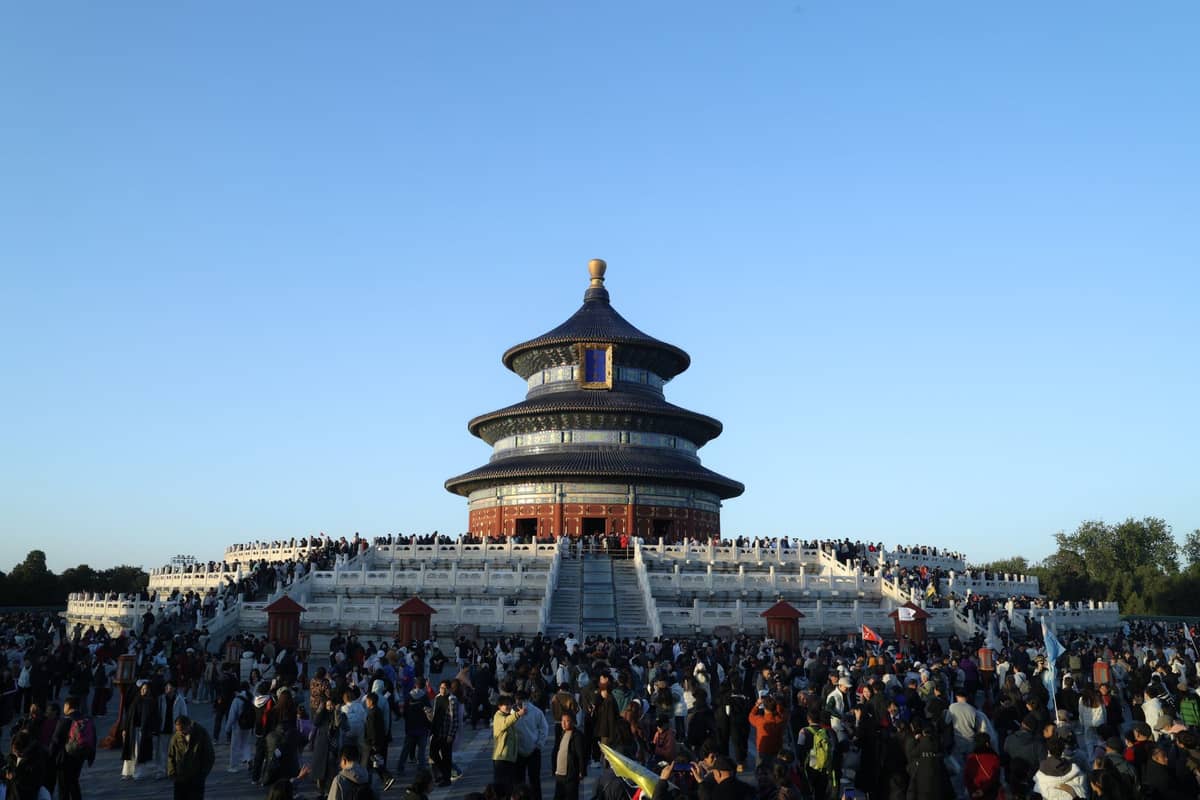
The Temple of Heaven park opens at 6:00 and the early morning hours are when Beijing residents use it for tai chi, badminton, and group exercise. This is worth the early start. The historic buildings — the Hall of Prayer for Good Harvests, the Circular Mound Altar — have separate admission and shorter hours than the park itself, generally closing on Mondays outside public holidays. Plan 2–2.5 hours for the full complex, then walk north toward Qianmen Street and the surrounding Qianmen-Dashilar area.
Qianmen Street itself is a reconstructed pedestrian zone — polished, photogenic, and fairly commercial. The real texture is in the side alleys of Dashilar to the west, where old shopfronts and traditional trades survive alongside newer boutiques. This area rewards slow walking more than any pre-planned route. End the afternoon at a Peking duck restaurant nearby: the Qianmen area has several historic duck specialists, and this is the logical night for the city's most iconic dish. Check our Peking duck guide for specific recommendations and what to order beyond the duck itself.
Day 3: Great Wall — Choosing the Right Section for Five Days
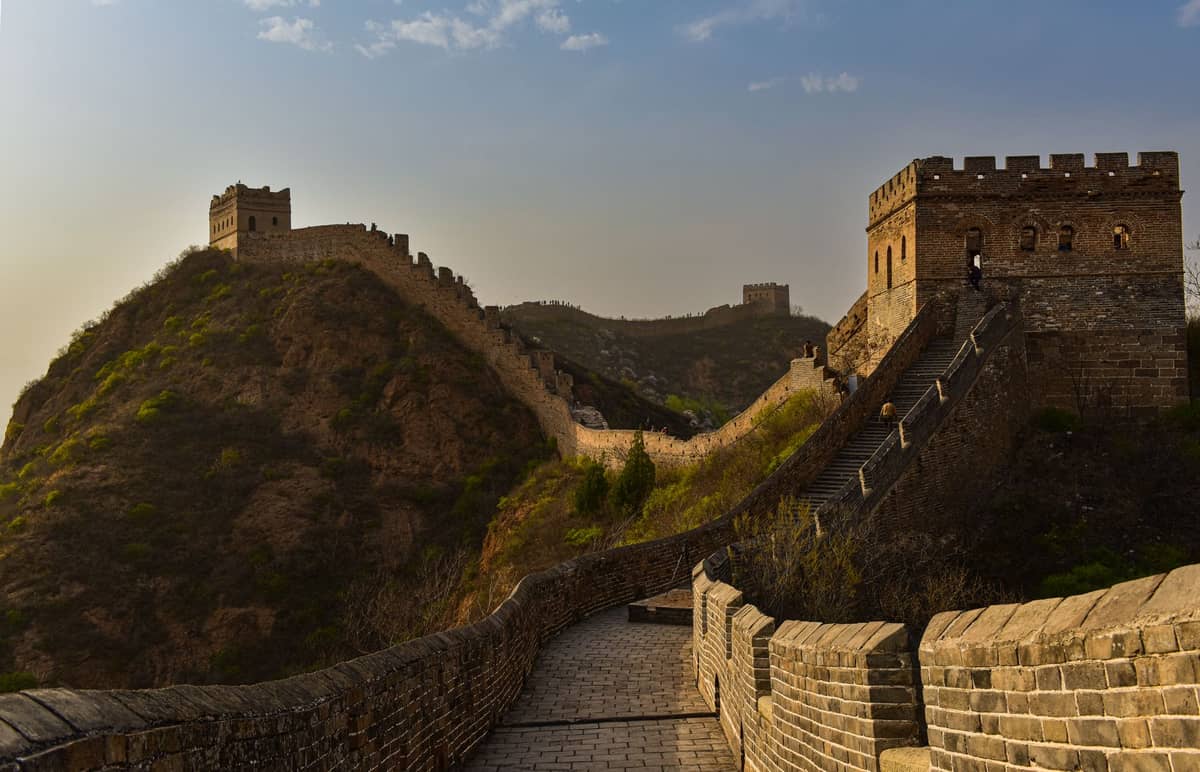
A five-day stay justifies one full Great Wall day and possibly a half-day at a second section. The choice of which section matters significantly. Mutianyu (Huairou District, roughly 70 km north of central Beijing) is the most practical choice for most independent travelers: restored but not overcrowded by Badaling standards, accessible by a combination of subway and shuttle bus or direct tourist bus, and equipped with a cable car and toboggan run that suits families and those not looking for a demanding hike.
Badaling (Yanqing District, about 75 km northwest) is the most visited section in China. The infrastructure is excellent, but weekend and holiday crowds make it difficult to walk freely on the wall itself. If you go, book tickets well ahead and aim to arrive at opening. Jinshanling and Simatai offer less-restored, more dramatic wall experiences and suit hikers comfortable with uneven terrain. See the full Great Wall sections guide for a complete comparison with transport logistics.
- Mutianyu Best all-rounder. Cable car available. 70 km from central Beijing, roughly 1.5–2 hours each way by bus. Peak season weekends get busy but manageable.
- Badaling Best infrastructure, worst crowds. Yanqing District. Accessible by high-speed train to Badaling station or tourist bus. Book at least a week ahead in October.
- Jinshanling Best for hikers and photographers. Partially unrestored. About 120 km from Beijing; requires a longer journey or a booked tour. Less accessible by public transport alone.
- Simatai The only section open for night tours. More dramatic and rugged than Mutianyu. Entry is through Gubei Water Town, which adds cost if you are not staying there.
✨ Pro tip
For Mutianyu, take subway Line 2 to Dongzhimen, then Bus 916 Express toward Huairou, and transfer to a local shuttle to the wall. Total journey is around 1.5–2 hours. Depart by 7:30 to reach the wall before the tour groups. The cable car up, toboggan down is a genuine time-saver and more enjoyable than it sounds.
Day 4: Lama Temple, Hutongs, and Houhai
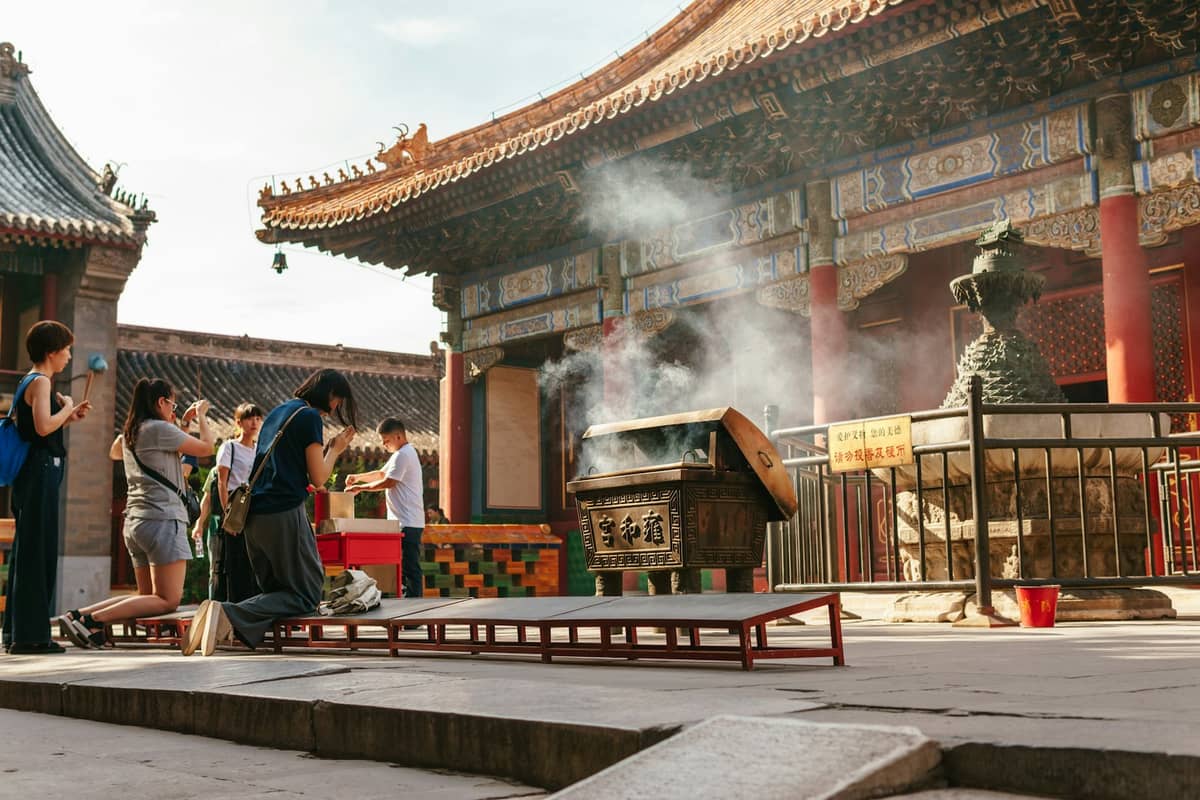
Day 4 slows down the pace and focuses on the areas that explain how Beijing actually functions as a living city rather than a museum. Start at the Lama Temple (Yonghe Gong) in Dongcheng, one of the most important Tibetan Buddhist temples outside Tibet. It is an active place of worship, so dress modestly and avoid blocking worshippers. Incense smoke, gilt statues, and the 18-meter sandalwood Maitreya Buddha are genuinely remarkable. Budget 1–1.5 hours.
Walk or take a short taxi ride to the hutong neighborhoods around Nanluoguxiang. The main lane is now heavily commercialized with snack stalls and souvenir shops. The surrounding alleys — particularly Mao'er Hutong and Ju'er Hutong — are quieter and show the courtyard house (siheyuan) architecture more honestly. Afternoon: head west to Houhai and Shichahai. The lakeside area has cafes, bike rentals, and pedal boats in summer; in winter it sometimes freezes enough for skating. The Bell Tower and Drum Tower stand just north and are worth climbing for their views over the surrounding hutongs.
For the evening, this is a good night for a different cuisine experience. The Guijie (Ghost Street) restaurant strip on Dongzhimennei Street specializes in spicy crayfish and hotpot and operates late into the night. Alternatively, the Wudaoying Hutong near the Lama Temple has a concentration of independent cafes and smaller restaurants that suit a quieter dinner.
Day 5: Summer Palace, Then Contemporary Beijing
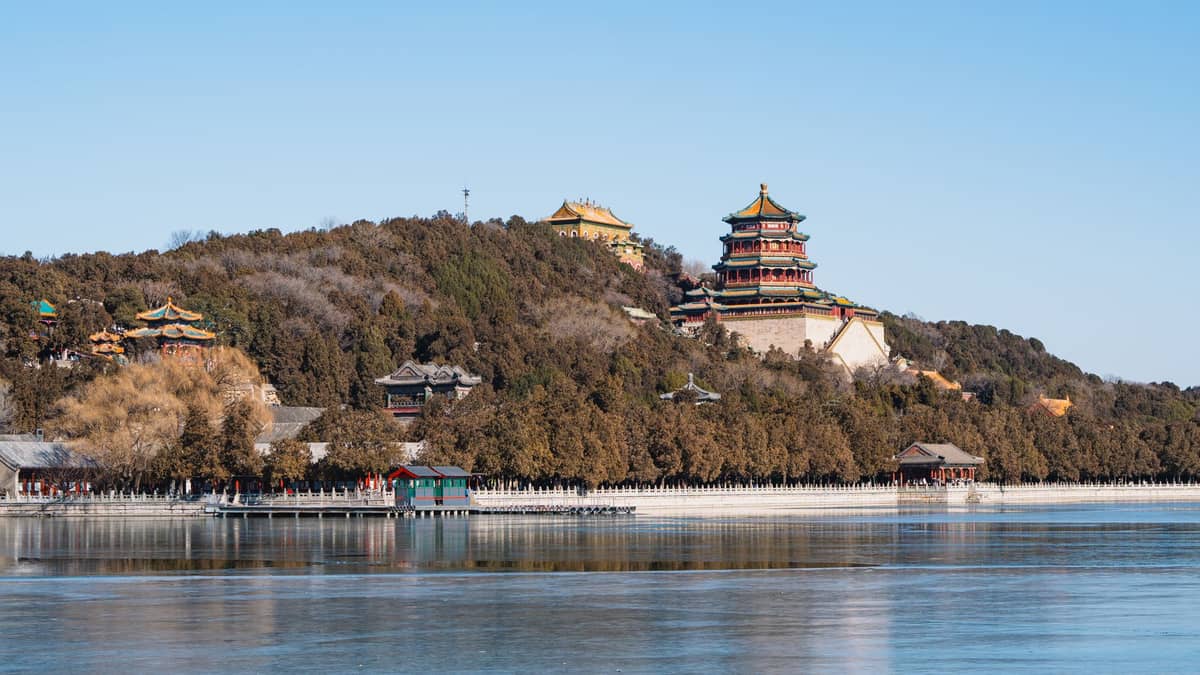
The Summer Palace in Haidian District is Beijing's most elaborate surviving imperial garden: 2.9 square kilometers of lakes, pavilions, and covered walkways. From April 1 to October 31, the park opens at 6:00 and the entrance gate closes at 19:00 — the early morning is the best time, when mist sits on Kunming Lake and the tour buses have not yet arrived. Plan at least 2.5–3 hours. Combine subway Line 4 directly to Beigongmen station for the north gate entrance.
After the Summer Palace, travel east to the 798 Art District in Chaoyang for a different kind of Beijing entirely. The former military electronics factory complex now houses contemporary galleries, studios, design shops, and cafes. It is not a 'hidden' discovery — 798 is well established on the tourist circuit — but it is genuinely interesting, particularly for visitors who want to see Chinese contemporary art beyond the imperial frame. Some galleries charge admission; others are free. Budget 2 hours.
ℹ️ Good to know
Beijing's air quality varies significantly by season and weather conditions. Autumn (September–October) generally sees cleaner air than summer or winter, but check a current monitoring source before outdoor-heavy days, especially for the Great Wall where effort and dust both increase. The Beijing Municipal Ecology and Environment Bureau publishes real-time data.
- Carry a transit card (Yikatong) or use Alipay/WeChat Pay for subway and bus — cash is accepted but slower.
- Download the DiDi app before arrival and link a payment method; this covers most transport gaps the subway misses.
- Tap water is treated but not recommended for drinking untreated; buy bottled or use a filter.
- Electricity is 220V, 50Hz, with Type A, C, and I sockets; bring a universal adapter.
- Tipping is not standard practice in mainland China and is not expected in most restaurants or transport.
- Emergency numbers: 110 (police), 119 (fire), 120 (ambulance). Most major hotels can assist with translation.
If Day 5 energy allows, a final evening at the National Centre for Performing Arts — the titanium-and-glass egg west of Tiananmen — closes the trip on a high note. Evening performances range from Western classical concerts to Chinese opera. Check the schedule at least a week ahead and book online. For those who prefer something more traditional, the Lao She Teahouse near Qianmen offers nightly variety shows combining Peking opera excerpts, acrobatics, and folk music in a format designed for international visitors.
FAQ
Is 5 days enough time to see Beijing properly?
Five days is enough to cover the major imperial sights, one Great Wall section, the main hutong areas, and a taste of contemporary Beijing without rushing. You will not exhaust the city — Beijing rewards multiple trips — but five days gives real depth compared to the standard two- or three-day sprint through the Forbidden City and Great Wall.
What is the best time of year for a 5-day Beijing visit?
September and October are widely considered the best months: temperatures are moderate (roughly 8–25°C), rainfall is low, and the city is past the summer heat. Spring (April–May) is also good but can bring dust and wind. Summer (June–August) is hot, humid, and sees the most domestic tourists. Winter (December–February) is cold and dry but has fewer crowds and lower prices.
Do I need to book the Forbidden City in advance?
Yes. The Forbidden City operates a capped daily visitor quota and uses a real-name registration system. Book through the official Palace Museum ticketing platform (pm.cn) well in advance, especially for weekends and the peak autumn season. The palace is closed on Mondays except during public holidays, opening Tuesday–Sunday from 8:30 with last entry at 16:00.
Which Great Wall section is best for a day trip from Beijing?
Mutianyu is the most practical choice for independent travelers: accessible by public transport, less crowded than Badaling, and equipped with a cable car. Badaling has the best infrastructure but the heaviest crowds. Jinshanling and Simatai suit experienced hikers who want a more dramatic, less-restored experience and are willing to accept a longer, more complex journey.
How should I get around Beijing during a 5-day stay?
The Beijing Subway covers the majority of sights on this itinerary efficiently and cheaply. Load a Yikatong transit card or link Alipay/WeChat Pay for seamless travel. DiDi (China's main ride-hailing app) is useful for early morning Great Wall departures, reaching the 798 Art District, and anywhere the subway does not go directly. Taxis are available but require either Mandarin communication or a written destination address.