Beijing on a Budget: How to Visit Without Breaking the Bank
Beijing is one of Asia's most rewarding cities to explore on a tight budget. With free parks, cheap metro fares, and world-class sights that cost less than a coffee back home, careful planning can stretch every yuan further than you'd expect.
Plan and book this trip
Tools from our partner Travelpayouts help you compare flights and hotels. If you book through them, we may earn a commission at no extra cost to you.
Flights
Hotels map
TL;DR
- Beijing's metro costs ¥3–¥6 per journey and covers almost every major sight — skip taxis unless you're in a group.
- Top attractions like the Temple of Heaven and Beihai Park cost under ¥35; several major parks charge nothing to enter the grounds.
- Visiting in winter (November to March) cuts admission prices at most parks by 30–50% and means shorter queues, though temperatures can drop below -5°C.
- Book train tickets on the official 12306.cn platform in English — it avoids third-party markups and is fully refund-capable.
- For a broader plan, pair this guide with a 3-day Beijing itinerary to structure your days efficiently.
Getting In and Around Without Overspending
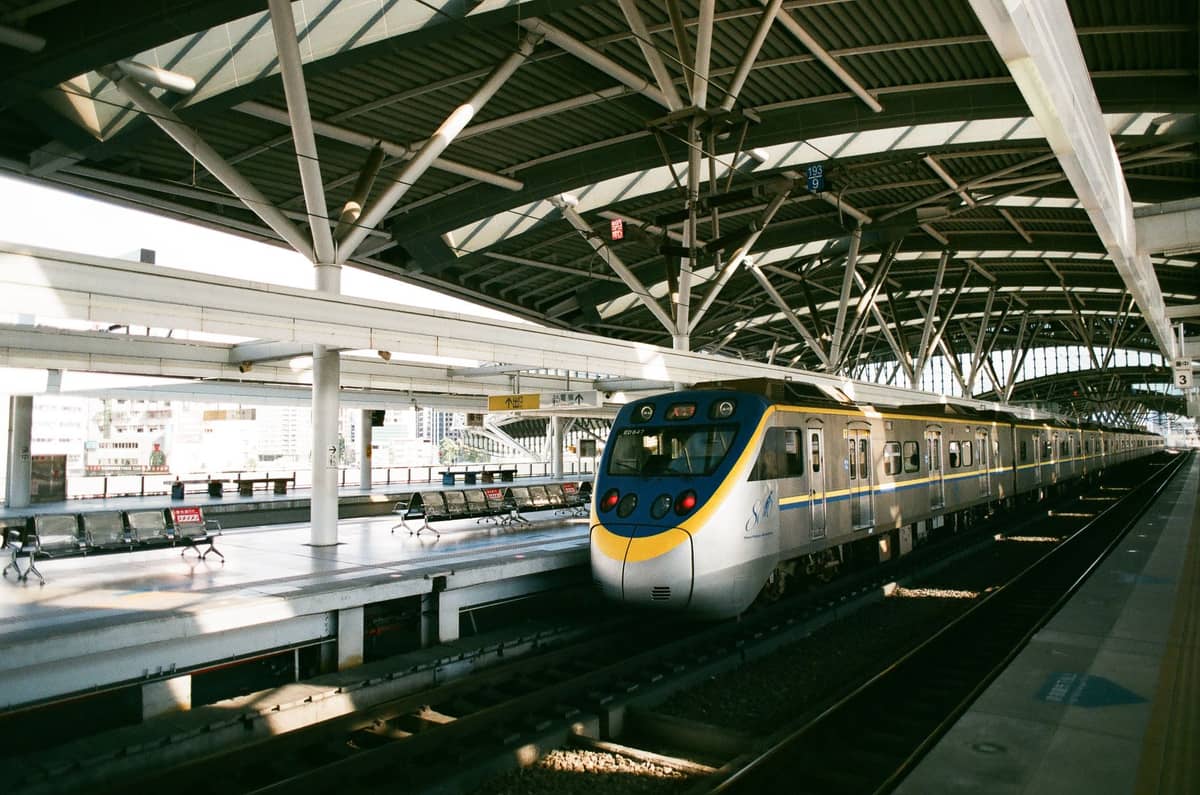
The single biggest budget decision on arrival is how you get into the city. From Beijing Capital International Airport (PEK), the Airport Express train runs directly to Dongzhimen station for around ¥25 — fast, fixed-price, and immune to traffic jams. A taxi or DiDi ride covering the same 25–30 km northeast corridor typically costs ¥100–¥150 before tolls and will run higher during rush hour. If you're arriving at Beijing Daxing International Airport (PKX), the Daxing Airport Express connects to Caoqiao station on the subway for a similarly reasonable fare. Check current fares on the official Beijing government travel page before you travel, as these are periodically revised. For a full breakdown of options, see our Beijing airport transport guide.
Once in the city, the Beijing Subway is your best tool for budget travel. Fares are distance-based and typically fall between ¥3 and ¥6 for most central journeys. The network connects all the major tourist zones: Tiananmen, Wangfujing, the Lama Temple, Olympic Park, and Sanlitun are all within a short walk of subway exits. Load an IC card (交通一卡通, Jiaotong Yika Tong) from any staffed station window or machine — it gives a small discount over single-journey tickets and works on buses too. Bus fares run as low as ¥1–¥2 per ride, though navigating routes is harder without Chinese-language literacy.
💡 Local tip
DiDi (China's main ride-hailing app) is available in English and accepts international credit cards through its international version. For short cross-city trips with luggage or late-night returns, splitting a DiDi between two or three people is often cheaper than the airport express and almost as fast as the subway.
Admission Prices: What Things Actually Cost
Beijing's iconic sights are, by global capital standards, remarkably affordable. The confusion for many first-timers is that most major parks and palaces sell two types of tickets: a basic park admission (which covers the grounds and gardens) and a combined or through-ticket (联票, liánpiào) that adds access to interior halls, exhibition spaces, or specific pavilions. Buying only the park ticket and then discovering you need a separate hall ticket is a common frustration — and an avoidable extra cost if you plan ahead.
- Temple of Heaven (天坛) Park entry: ¥15 (peak) / ¥7.50 (off-season discount). Combined ticket: ¥34 / ¥17. Hours: 06:00–22:00 peak, 06:30–22:00 off-season. If you want to see the Hall of Prayer for Good Harvests up close, the combined ticket is worth it.
- Beihai Park (北海公园) Admission: ¥10 (April–October) / ¥5 (November–March). Through-ticket: ¥20 / ¥15. Hours: 06:30–21:00 summer, 06:30–20:00 winter. The basic ticket gets you the lake and grounds, which is plenty for a half-day visit.
- Summer Palace (颐和园) Admission: ¥30 (April 1–October 31) / ¥20 (November 1–March 31). Combined tickets: ¥60 / ¥50. The grounds alone are vast — most visitors do not need the combined ticket unless they specifically want the Suzhou Street area or interior halls.
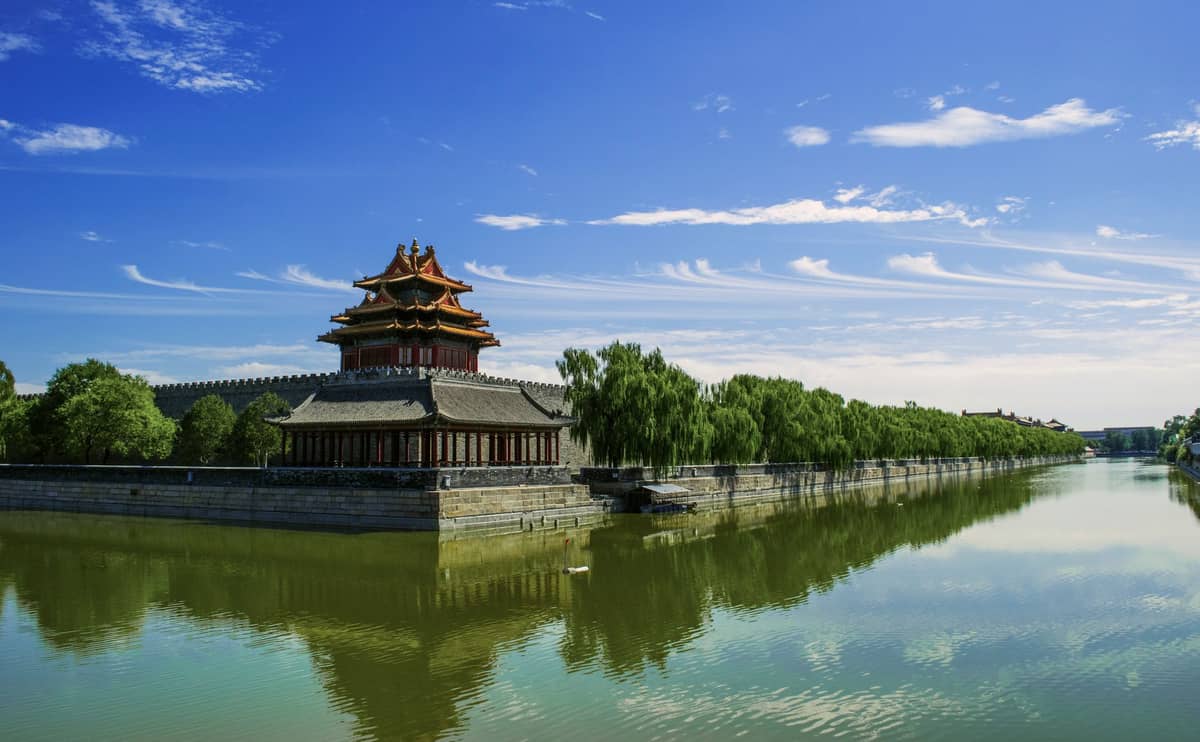
- Jingshan Park (景山公园) Admission is typically just a few yuan — one of the best viewpoints over the Forbidden City for virtually no cost. Check current pricing at the gate.
- Forbidden City (Palace Museum) Around ¥60 (peak) / ¥40 (off-season). Advance online booking is required and slots fill quickly — free entry on specific cultural heritage days each year, but these dates are not always announced far in advance.
ℹ️ Good to know
Peak season for most Beijing parks runs April 1 through October 31; off-season is November 1 through March 31. Prices drop by roughly 30–50% in winter — and the parks do not close for the season. Beihai and the Temple of Heaven both publish winter opening hours and are well worth visiting in the cold months, especially on clear-sky days.
Free entry is more common than many visitors realize. Tiananmen Square itself is free to walk through (the Forbidden City beyond the gate is not). Olympic Park and the exterior of the National Stadium are free to visit. The 798 Art District charges no entrance fee, though individual gallery exhibitions may cost extra. For a fuller list of what you can do without spending a yuan, our free things to do in Beijing guide covers parks, temples, hutongs, and cultural spaces.
Eating Well for Less
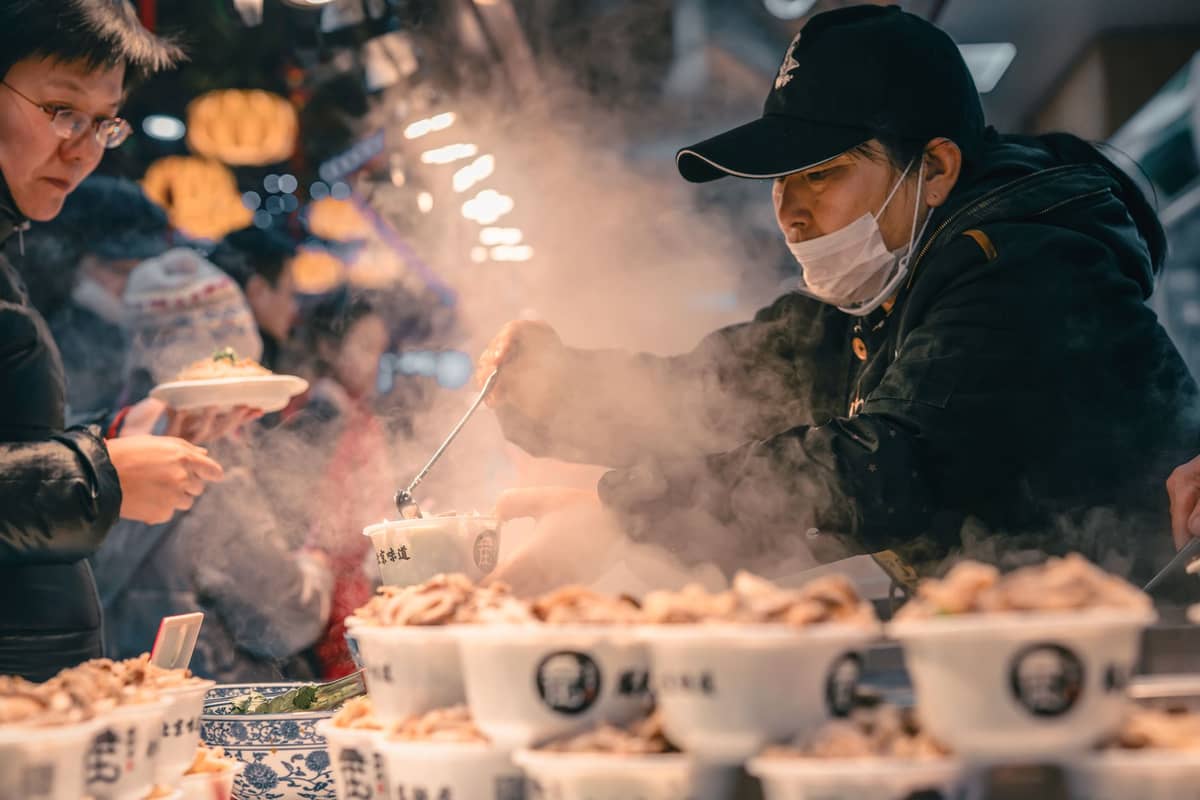
Food is where Beijing genuinely rewards budget travelers. Street-level eating in this city is a serious culinary tradition, not a fallback. A bowl of zhajiang mian (noodles with fermented soybean paste and pork) at a neighborhood noodle shop runs ¥15–¥25. Jianbing (savory crepes cooked to order on a griddle) cost ¥8–¥15 from a street cart and are filling enough for a full breakfast or a fast lunch. Baozi (steamed buns) from a storefront counter are typically ¥2–¥4 each.
The area around Wangfujing has a pedestrian snack street that draws tourists, but prices there are inflated and the quality is variable. Better value is found by walking one or two blocks away from the tourist spine into the surrounding hutong lanes. Lunchtime set menus (套餐, tào cān) at sit-down local restaurants frequently include a main dish, rice or noodles, and a drink for ¥20–¥40. For a deep dive into what and where to eat, the Beijing food guide covers regional specialties and neighborhood recommendations.
- Peking duck doesn't have to be expensive: smaller roast duck restaurants (not the famous tourist chains) serve half a duck with pancakes for around ¥80–¥120 — split between two people, it's a genuinely affordable meal.
- Convenience stores (7-Eleven, FamilyMart, and local chains) sell decent hot food, dumplings, and baked goods for ¥5–¥15, useful for early mornings before attractions open.
- Avoid restaurants with picture menus directly facing major tourist sights — menus are often priced 2–3× higher than comparable food a block away.
- Supermarkets like Wumart or Carrefour (where they remain) are good for bottled water, snacks, and breakfast items. A 500ml bottle of water costs ¥1–¥2 in a supermarket versus ¥5–¥8 near attractions.
Budget Accommodation: Where to Sleep Without Wasting Money
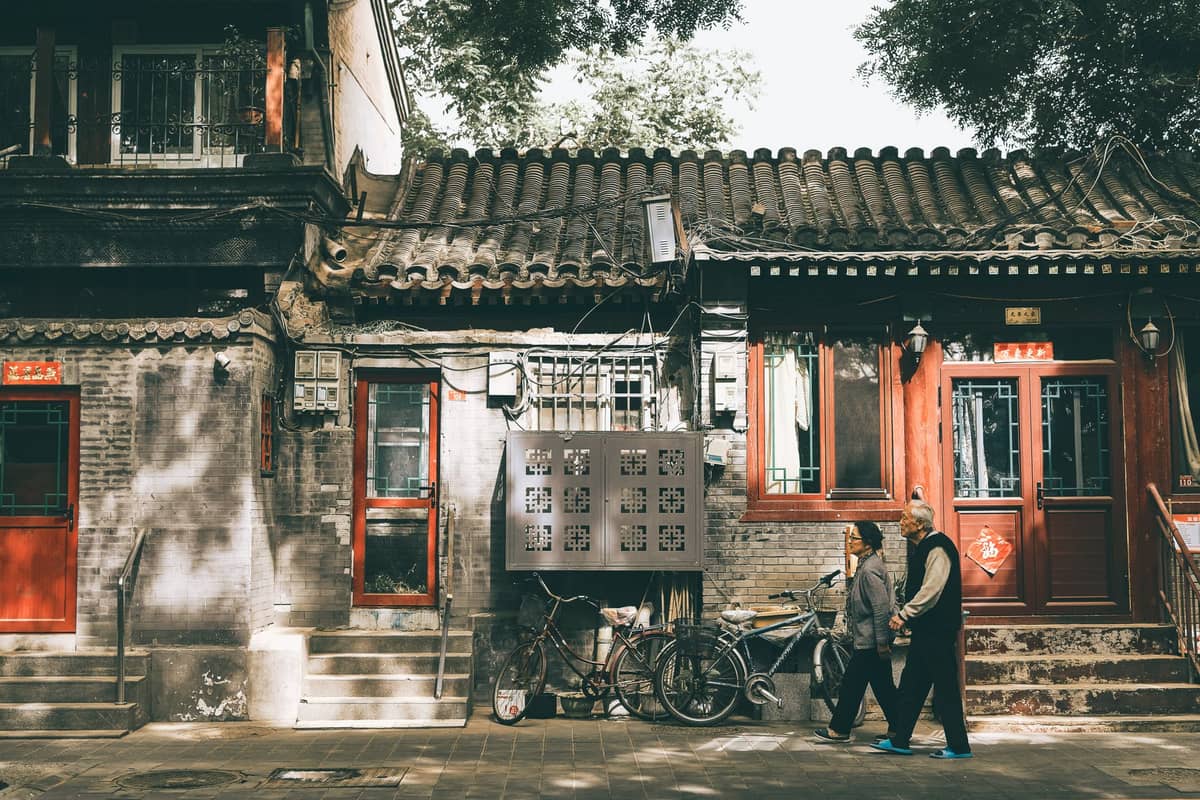
Accommodation is usually the largest line item on a Beijing budget. The good news is that the city has a wide spread of hostel dorms (¥60–¥120 per bed per night), budget guesthouses in hutong courtyards (¥150–¥300 for a private room), and reliable mid-range business hotels (¥300–¥600 per night) that offer clean, functional rooms near metro stations. The hutong neighborhoods of Dongcheng and Xicheng are the most convenient districts for budget travelers — you can walk to multiple major sights and save the metro fare. Staying in Chaoyang near the CBD or Sanlitun puts you near nightlife but farther from historical sights, meaning more metro time. See our guide to where to stay in Beijing for neighborhood comparisons and specific recommendations.
⚠️ What to skip
Not all accommodation in Beijing can legally host foreign nationals — guesthouses and small courtyard hotels sometimes cannot. If you book and then arrive to find they cannot register you, you may need to find an alternative at short notice. Book through established platforms that display whether a property accepts foreign passport holders, and always verify this in advance.
Booking Trains and Day Trips on a Budget
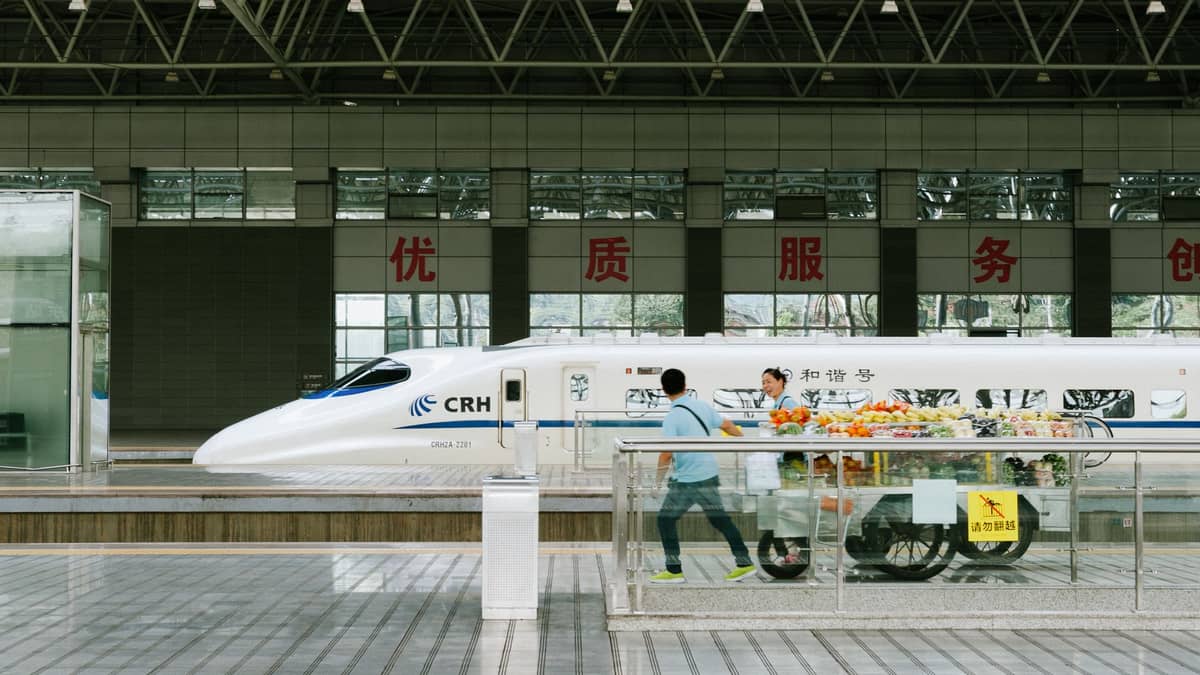
High-speed rail connects Beijing to Shanghai, Xi'an, Chengdu, and other major cities at prices that undercut flights once you factor in airport time and transport costs. The official English-language platform at 12306.cn handles ticket purchases, changes, and refunds directly. Booking opens 15 days before departure for most routes. The platform operates from 05:00 to 01:00 the following day (with shorter hours on Tuesdays), and payment works with international Visa and Mastercard cards, though some travelers report occasional card issues — having a backup payment method helps.
For day trips, cost-conscious travelers should know that the most famous Great Wall sections vary significantly in price and crowdedness. Mutianyu is the most visitor-friendly: admission around ¥65 plus a cable car or toboggan option, reachable by public bus from Dongzhimen for roughly ¥25–¥30 each way. Badaling is the most visited section and requires advance online booking — it's efficient but crowds at peak times make it feel less rewarding. For a full comparison of which section fits your budget and style, see the Great Wall sections guide.
Money, Payments, and Common Budget Mistakes
China's payment ecosystem is built around WeChat Pay and Alipay. As of 2024, both platforms have expanded international card linking, allowing visitors to connect a foreign Visa or Mastercard and pay with QR codes at most shops, restaurants, and metro ticket machines. This is worth setting up before you arrive — it avoids the need to carry large amounts of cash and gets you the same prices locals pay. Where mobile payment isn't set up, ATMs in major banks (Bank of China, ICBC, China Construction Bank) reliably accept foreign cards, though fees apply. Budget around ¥20–¥30 per ATM withdrawal in bank charges plus your own bank's foreign transaction fee.
- Currency exchange at airports is convenient but uses poor rates — exchange only enough for your first day, then use ATMs or mobile payments.
- Tipping is not standard or expected anywhere in Beijing, including restaurants, taxis, and hotels. Do not feel obligated.
- Tourist-targeted souvenir prices at places like the Silk Market or Wangfujing are heavily inflated — negotiation is expected and starting offers are often 5–10× the fair price.
- Bottled water from a supermarket costs ¥1–¥2; the same bottle at a scenic attraction costs ¥5–¥8. Fill a reusable bottle from the free boiled water dispensers available in most hotels.
- Beware of 'art student' approaches near tourist sites — the classic scam involves being led to a gallery and pressured to buy overpriced artwork. This is covered in more detail in the Beijing scams guide.
For a thorough breakdown of scams to avoid and how to stay safe without being paranoid, the Beijing scams and safety tips guide is worth reading before your trip.
✨ Pro tip
The best budget window in Beijing is late October to mid-November. Summer heat and humidity have passed, autumn foliage is at its peak, crowds are lighter than Golden Week (early October), and admission prices drop to off-season rates from November 1. Pack layers — temperature swings between day and night can exceed 10°C.
FAQ
How much does a day in Beijing cost on a budget?
A genuine budget day — subway transport, one or two park admissions, street food for all meals, and a hostel dorm bed — can come in under ¥200–¥250 (roughly $28–$35 USD) per person. Add a major museum or the Forbidden City and you're looking at ¥300–¥400. Costs rise quickly if you take taxis, eat at tourist restaurants, or book a private hotel room.
Is Beijing cheaper in winter?
Yes, in two specific ways. First, most major parks and palaces drop admission prices by 30–50% between November 1 and March 31. Second, accommodation rates typically fall during the low season, particularly in January and February outside of Chinese New Year. The trade-off is cold, dry weather (temperatures regularly below 0°C) and shorter daylight hours. Air quality can also vary more in winter — check monitoring data before planning outdoor-heavy days.
Can I visit the Forbidden City for free?
Entry to the Forbidden City (Palace Museum) is not free as standard, but China does hold designated cultural heritage days on which free or discounted admission is offered. These dates are not always announced far in advance and ticket slots are limited. Tiananmen Square itself, directly in front of the gate, is free to enter and worth visiting regardless.
What is the cheapest way to get from Beijing Capital Airport to the city?
The Airport Express train to Dongzhimen is the most cost-effective fixed option at around ¥25 — fast and predictable. Airport buses to various city districts are slightly cheaper on some routes. A taxi or DiDi will cost ¥100–¥200+ depending on destination and traffic. Avoid unlicensed 'black car' drivers who approach you in the arrivals hall — they charge well above market rates and provide no recourse if something goes wrong.
Do I need to book Beijing attractions in advance?
For some, advance booking is mandatory and cannot be bypassed at the gate. The Forbidden City requires prior online reservation. Badaling Great Wall also requires advance booking. For most other parks — Temple of Heaven, Summer Palace, Beihai — you can buy tickets at the gate, though popular summer weekends can mean queues. Booking ahead where possible also lets you lock in the ticket price and plan your day around timed entry slots.