Where to Stay in Beijing: Best Areas & Hotels for Every Traveler
Beijing has 16 districts and two international airports, which makes choosing accommodation more complicated than it first looks. This guide cuts through the noise with district-by-district breakdowns, realistic price ranges, and the seasonal timing details that booking platforms won't tell you.
Plan and book this trip
Tools from our partner Travelpayouts help you compare flights and hotels. If you book through them, we may earn a commission at no extra cost to you.
Flights
Hotels map
TL;DR
- Dongcheng and Xicheng are the best districts for first-timers: closest to the Forbidden City, Tiananmen, and the historic hutongs. See our Beijing first-timer guide for the full picture.
- Chaoyang is the top pick for business travelers and nightlife seekers, with the best concentration of international hotels near the embassy district and Sanlitun.
- Beijing has two airports: Capital (PEK) is ~25-30 km northeast of the center; Daxing (PKX) is ~45 km south. Staying near either airport adds significant travel time to sightseeing.
- Hotel prices range from roughly US$14-26/night for budget options to US$92/night average for four-star and US$156/night for five-star properties. Rates spike sharply during May Day (May 1-5) and National Day Golden Week (October 1-7).
- Book well ahead for September-October, the most popular travel window. Prices and availability shift significantly by season.
How to Choose Your Beijing Base
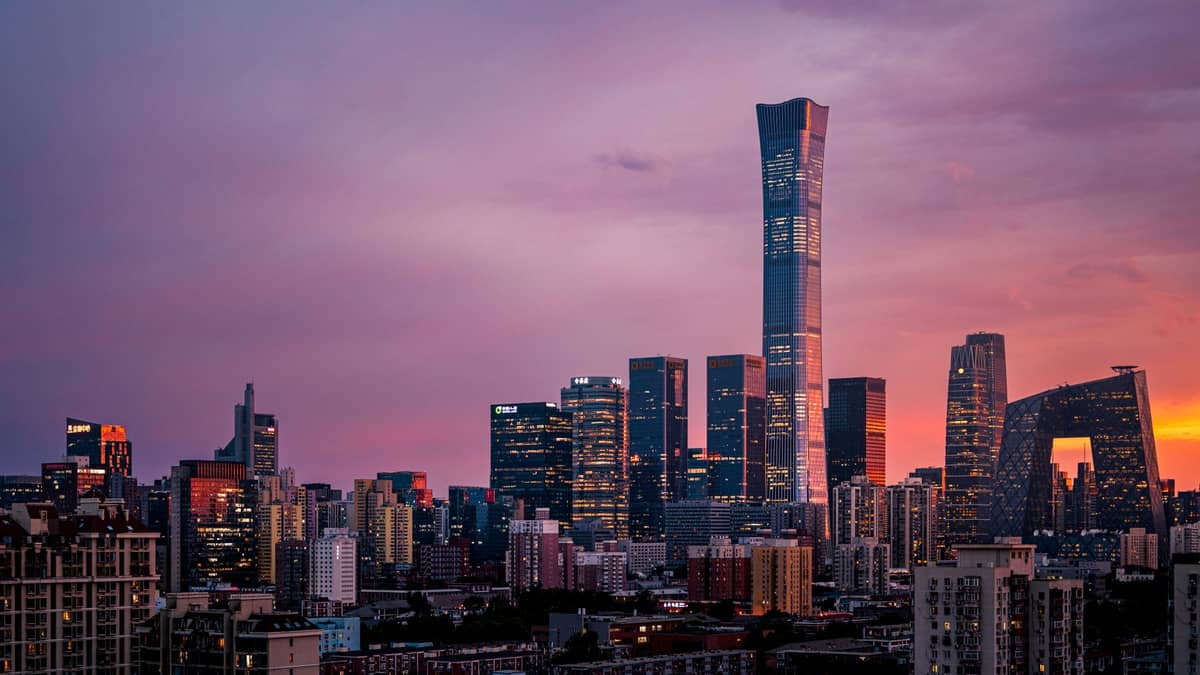
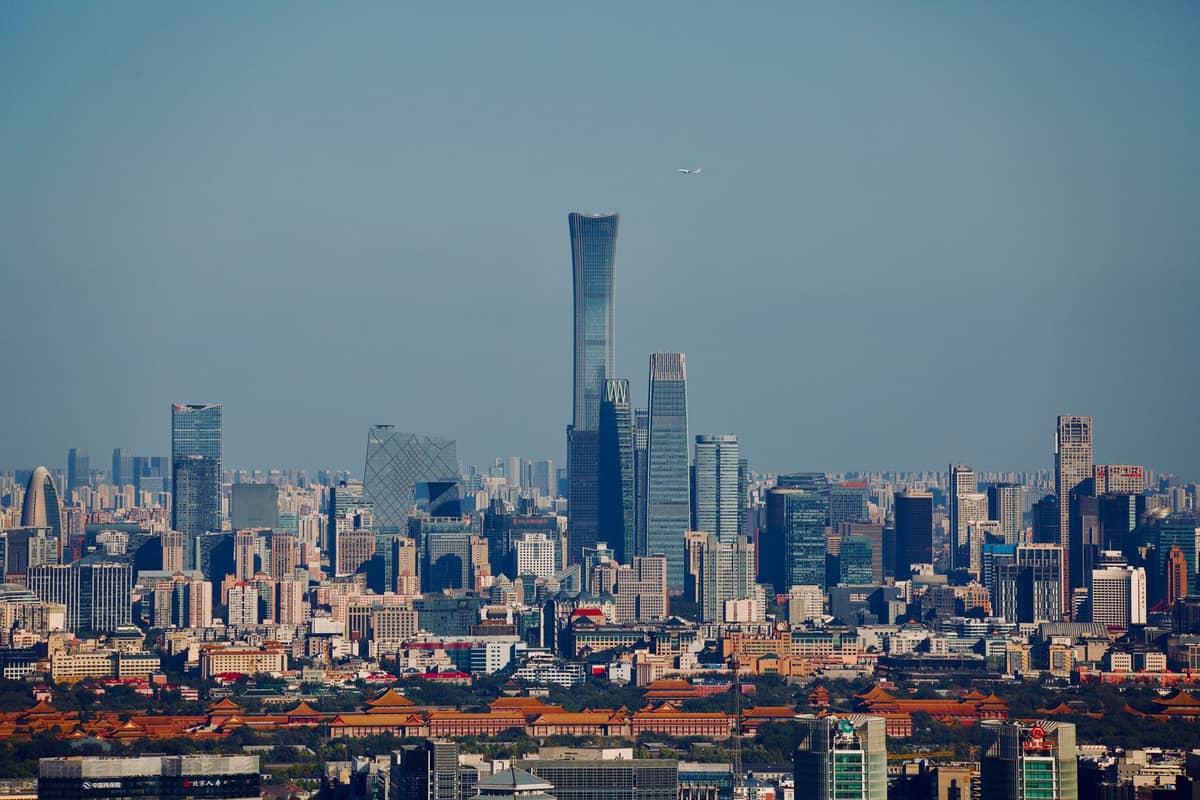
Beijing is a municipality of 16,410 km² with 21.8 million permanent residents, so the question of where to stay in Beijing isn't trivial. A hotel that looks central on a map can still be a 40-minute subway ride from the Forbidden City. The key is matching your neighborhood to your priorities: sightseeing convenience, nightlife, business connections, or airport access.
The city's subway system covers central districts well, but Beijing is genuinely large. For most tourists, staying within the Second or Third Ring Road in Dongcheng or Xicheng maximizes walking access to the major imperial sights while keeping metro connections to the rest of the city. If you're primarily in Beijing for business or plan to spend evenings in bars and restaurants, Chaoyang is a more logical base.
⚠️ What to skip
Do not conflate airport proximity with convenience. Beijing Capital Airport (PEK) is in Shunyi District, northeast of the city — staying there saves you on flight days but adds 45-60+ minutes to any central sightseeing trip. Daxing Airport (PKX) is even further south. Airport hotels are only worth it for very early departures or long layovers.
Best Districts to Stay In
- Dongcheng District The historic heart of the city. Walking distance to Tiananmen Square, the Forbidden City, Wangfujing, the Lama Temple, and some of Beijing's best-preserved hutong alleyways. The highest concentration of tourist-oriented mid-range and luxury hotels. Best choice for first-timers.
- Xicheng District West of the central axis, home to Shichahai lake, Xidan shopping street, and the Drum and Bell Towers. A quieter, more local-feeling alternative to Dongcheng, with good metro access. Slightly fewer hotel options but excellent value at the mid-range tier.
- Chaoyang District Beijing's largest urban district, stretching from the Third to the Fifth Ring Road. Sanlitun is the international dining and nightlife hub; the Central Business District (CBD) has the highest density of five-star chain hotels. Longer subway rides to imperial sights, but great infrastructure and English-language services.
- Haidian District University and tech district in the northwest. Good base if you're visiting Peking University, Tsinghua, or the Summer Palace. Not convenient for central tourist sights — expect 45-60 minutes to the Forbidden City by transit.
- Airport Areas (Shunyi / Daxing) Practical for one-night layovers or early-morning flights. Shunyi near PEK has shuttle-accessible airport hotels from around ¥350 for budget chains to ¥1,200+ for upscale properties. Not suitable as a sightseeing base.
Dongcheng and Xicheng: The Imperial Core
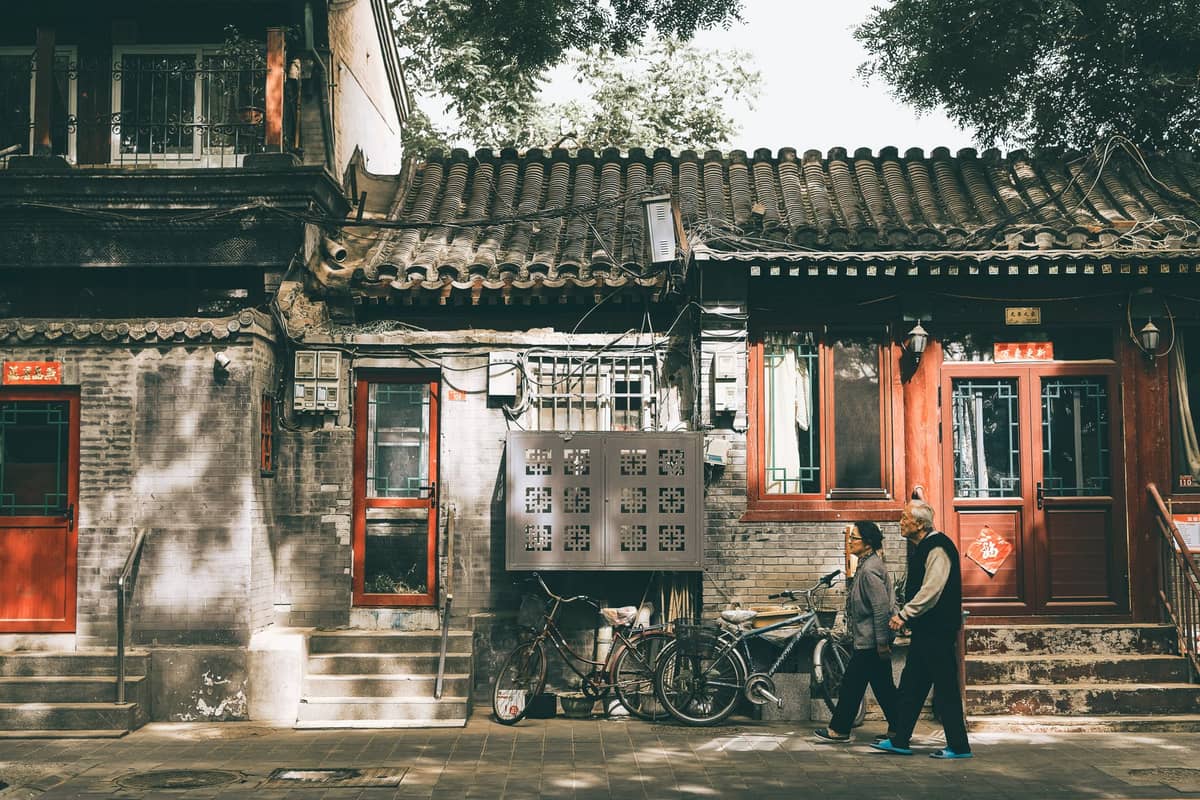
If this is your first trip to Beijing and you want to see the major imperial sites without fighting the subway at rush hour, Dongcheng is the answer. The district puts you within walking distance of the Forbidden City, Tiananmen Square, and Wangfujing. The area also sits at the edge of Beijing's most atmospheric hutong neighborhoods, so you can explore alleyways and courtyard houses on foot.
Xicheng offers a slightly different character. The area around Houhai and Shichahai has lakeside bars and traditional courtyard hotels (known as siheyuan guesthouses) that give a more intimate sense of old Beijing. The Bell Tower and Drum Tower are a short walk north. Prices in Xicheng can run slightly lower than equivalent Dongcheng addresses, though quality varies more at the budget tier.
Both districts are well-served by multiple subway lines. The Line 1 and Line 2 loops connect the entire imperial axis, and Line 5 cuts north-south through Dongcheng. Mid-range hotels in these districts typically run ¥400-900/night (roughly US$55-125). Luxury properties — including several internationally recognized five-star hotels near Wangfujing — start around ¥1,500/night and rise sharply.
💡 Local tip
Boutique courtyard hotels in the hutongs offer one of Beijing's most distinctive accommodation experiences, but verify practical details before booking: some historic lane properties have access restrictions for vehicles, so luggage handling and accessibility can be awkward. Read recent reviews carefully.
Chaoyang: Business Travelers and International Visitors
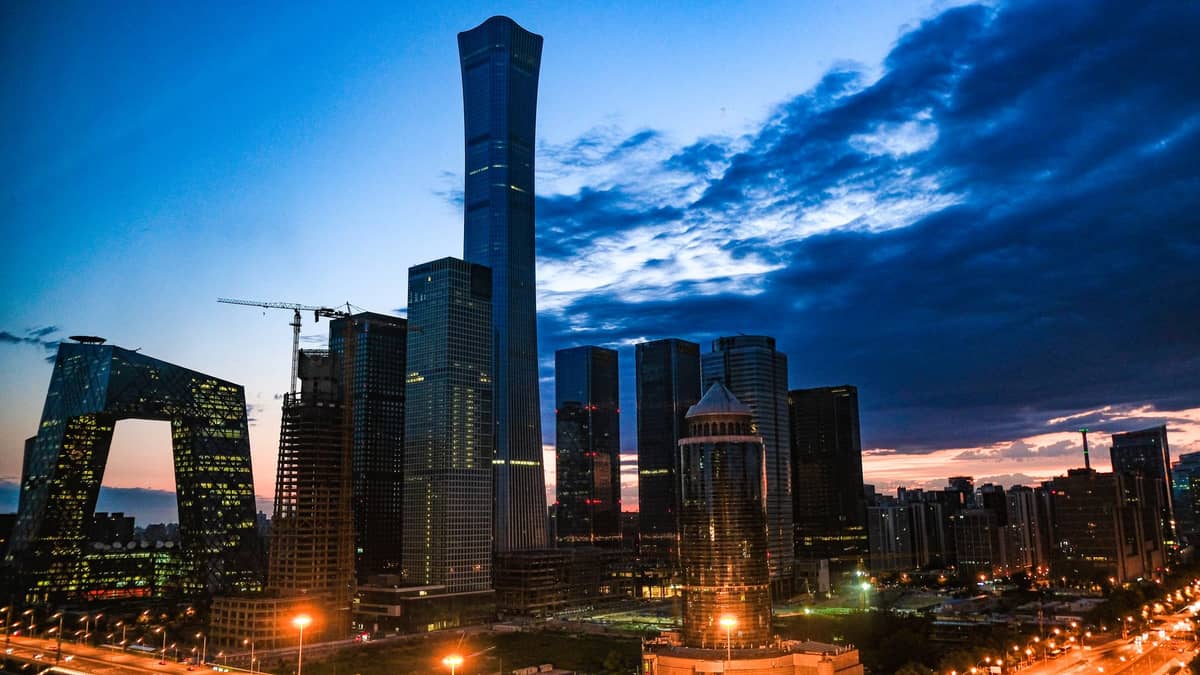
Chaoyang is where the majority of Beijing's five-star international chain hotels are concentrated, particularly in the CBD and around Sanlitun. The district houses the embassy quarter, the 798 Art District, major shopping malls, and Beijing's densest cluster of international restaurants and bars. If you're on a business trip or want Western amenities within easy reach, Chaoyang is a logical base.
The tradeoff is distance from the historical core. From most Chaoyang hotels, reaching the Forbidden City requires a 30-50 minute subway journey. That's manageable for a few days, but if the imperial sights are your main reason for visiting, Dongcheng is more practical. For visitors spending a week or more in Beijing, a five-day Beijing itinerary can show you how to balance time between these districts.
Chaoyang's hotel market has the widest range at the upper end. The major international brands — Park Hyatt, St. Regis, Rosewood, and others — are mostly positioned here. KAYAK data puts four-star averages around US$92/night and five-star averages around US$156/night across Beijing generally, but Chaoyang CBD properties often run higher. Budget and mid-range options exist in Chaoyang too, particularly further east toward the Fourth Ring Road, though these are less conveniently located.
Airport Hotels: PEK and PKX
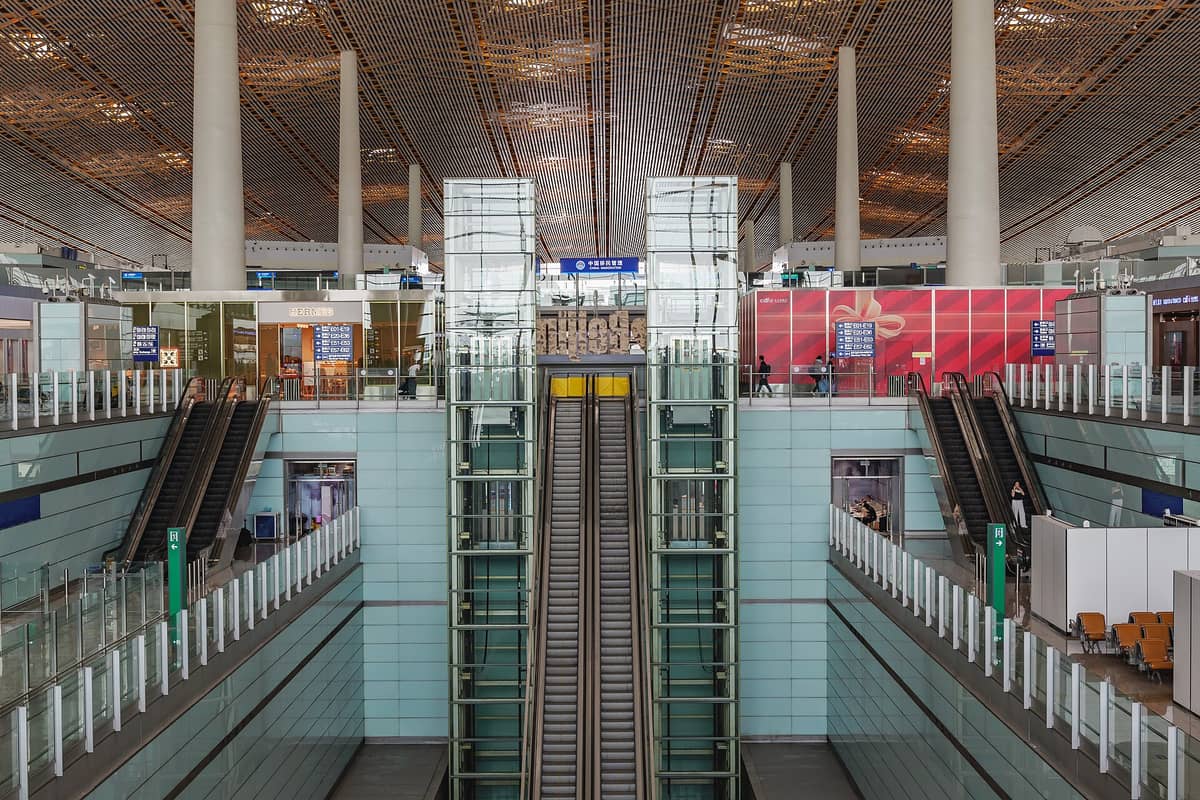
Beijing Capital International Airport (PEK) in Shunyi District is roughly 25-30 km northeast of central Beijing. The Airport Express train connects PEK to Dongzhimen station in about 30-40 minutes for approximately ¥25, making it feasible to stay centrally and reach the airport by express rail. For those who genuinely need an airport hotel, shuttle-accessible properties near PEK range from around ¥350-450/night at budget and mid-range level up to ¥1,200+ for upscale options. Check shuttle operating hours and confirm booking — some budget properties in this area have inconsistent service standards.
Beijing Daxing International Airport (PKX) is a more significant distance proposition, sitting roughly 45 km south of the city center near the Beijing-Hebei boundary. The Daxing Airport Express connects PKX to Caoqiao station in about 19-20 minutes for approximately ¥35, where passengers can transfer to the Beijing Subway network. However, Caoqiao to central Beijing still requires additional transit time. Hotels immediately adjacent to Daxing are aimed squarely at layover passengers and transit travelers, not sightseers.
ℹ️ Good to know
China's 240-hour (10-day) visa-free transit policy applies at both Beijing Capital (PEK) and Beijing Daxing (PKX) airports for eligible nationalities transiting to a third country or region. If you qualify, this can open up a longer Beijing stopover. Verify your nationality's eligibility with the National Immigration Administration before making plans, as conditions and eligible countries change.
Seasonal Pricing and When to Book
Beijing's best travel windows, April-May and September-October, are also its most competitive for accommodation. The best time to visit Beijing aligns almost exactly with the periods when hotels fill up fastest. This isn't a coincidence: autumn in particular brings ideal temperatures (around 8-25°C), lower humidity after the summer monsoon season, and clear skies that make sightseeing genuinely pleasant.
Two national holidays create genuine demand spikes that push prices significantly higher and cause popular hotels to sell out weeks in advance. May Day (May 1-5, known as the Labor Day holiday) and National Day Golden Week (October 1-7) see massive domestic travel volumes across China. During these windows, not only do hotel rates increase, but major attractions including the Forbidden City operate at capacity limits and require advance ticket purchases.
- Book 4-8 weeks ahead for September-October visits, especially around National Day (Oct 1-7)
- May Day (May 1-5) fills up fast: book early and expect rates 20-40% above shoulder season
- Winter (December-February) offers the lowest hotel prices but cold, dry conditions and potential pollution episodes
- Summer (June-August) is hot and humid with the highest rainfall; prices are moderate but crowds at major sites remain heavy
- Chinese New Year (January-February, date varies) brings mixed conditions: many Beijingers leave the city, so attractions are quieter, but some restaurants and services close
For budget-conscious travelers, winter stays can deliver good value on accommodation, though you should check air quality conditions before committing — Beijing's air quality varies considerably by season, weather, and location, and winter can produce periods of elevated pollution. See the Beijing on a budget guide for more practical cost-saving strategies.
Practical Booking Checklist
Beijing hotels at all price levels require guests to register their passport details upon check-in, as required by Chinese law. This is standard and applies to both international chains and guesthouses. Allow a few extra minutes at check-in and have your passport accessible.
- Verify metro or transport access from your hotel to the Forbidden City or your main sightseeing targets before booking
- Confirm airport shuttle schedules, operating hours, and pick-up points directly with airport-area hotels
- Check cancellation policies carefully — Chinese national holidays often come with stricter non-refundable rate conditions
- For hutong courtyard hotels, read recent reviews about vehicle access, luggage handling, and bathroom facilities
- Prices listed on booking platforms are dynamic; verify your exact dates on Trip.com, Expedia, or KAYAK before comparing
- Budget hotels in Beijing can start around US$14-26/night, but verify current conditions and recent reviews — the lower end of the market varies in quality
- Electricity is 220V/50Hz with Type A, C, and I sockets — bring a universal adapter
✨ Pro tip
If you're spending more than three days in Beijing, a Dongcheng base for the first half and a Chaoyang base for the second half isn't unusual among repeat visitors. It lets you walk to the imperial sights while fresh, then shift to the more restaurant and nightlife-heavy east side. That said, moving hotels mid-trip adds friction. One central Dongcheng location with good subway access serves most itineraries more efficiently.
For travelers combining Beijing with other Chinese cities, accommodation near a major rail hub can be practical. Beijing South station, the main high-speed rail hub for services to Shanghai and other eastern cities, sits in Fengtai District, south of the historic core. Staying near Beijing South isn't ideal for sightseeing, but if you're catching a morning high-speed service, it avoids a long early-morning commute. See the Beijing to Shanghai travel guide for rail and connection details.
FAQ
What is the best area to stay in Beijing for tourists?
Dongcheng District is the most practical base for most tourists. It puts you within walking distance of the Forbidden City, Tiananmen Square, Wangfujing, and the historic hutong neighborhoods. Xicheng is a good alternative with a slightly quieter character around the Shichahai lake area. Both districts have strong subway connections to the rest of the city.
How far are Beijing's hotels from the airports?
Beijing Capital Airport (PEK) is roughly 25-30 km northeast of central Beijing. The Airport Express train takes about 30-40 minutes to Dongzhimen for approximately ¥25. Beijing Daxing Airport (PKX) is roughly 45 km south of the center, with its own express rail connecting to the subway network at Caoqiao. Staying centrally and using the Airport Express is practical for most travelers — airport-area hotels mainly make sense for very early departures or layovers.
When should I book a Beijing hotel in advance?
Book 4-8 weeks ahead for September-October (the most popular travel season) and well ahead of May Day (May 1-5) and National Day Golden Week (October 1-7). These two national holidays create sharp price spikes and fast sellouts at popular properties. Winter offers the most available inventory and lowest prices, though conditions are cold and dry.
How much do hotels in Beijing cost?
The range is wide. Budget accommodation can start around US$14-26/night, though quality at the lower end varies. Four-star hotels average around US$92/night according to aggregator data, and five-star properties average around US$156/night. Luxury international brand hotels in Chaoyang's CBD often exceed these averages. Prices are dynamic, so check your exact dates on booking platforms. The two national holiday periods (May Day and National Day) typically push rates significantly higher.
Is it worth staying in a hutong courtyard hotel in Beijing?
For many visitors, yes. Siheyuan guesthouses in the hutong neighborhoods of Dongcheng and Xicheng offer a genuinely different experience from standard hotel rooms, with traditional courtyard architecture and a sense of old Beijing that high-rise hotels cannot replicate. However, verify practical details before booking: narrow lanes can limit vehicle access, room sizes and bathroom facilities vary considerably, and soundproofing in older structures is often minimal. Read recent guest reviews and confirm check-in logistics directly with the property.