What to Eat in Beijing: The Essential Food Guide
Beijing food is far more than Peking duck. This guide covers the dishes you should not leave the city without trying, where to find the best versions, what things actually cost, and a few traps worth sidestepping.
Plan and book this trip
Tools from our partner Travelpayouts help you compare flights and hotels. If you book through them, we may earn a commission at no extra cost to you.
Flights
Hotels map
TL;DR
- Peking duck is the headline dish, but expect to pay ¥160–¥400 for a whole duck depending on the restaurant tier.
- Beijing's food scene spans imperial-era banquet dishes, hand-pulled noodles, lamb hotpot, and some of China's best street food — see our Peking duck guide for deep restaurant-level detail.
- Night markets and hutong street stalls offer the cheapest eats, often ¥10–¥30 per item, but quality varies sharply.
- Tipping is not expected anywhere in Beijing, from street stalls to fine dining.
- For budget planning across meals and transport, the Beijing on a budget guide has full breakdowns.
The Non-Negotiables: Dishes Every Visitor Should Try
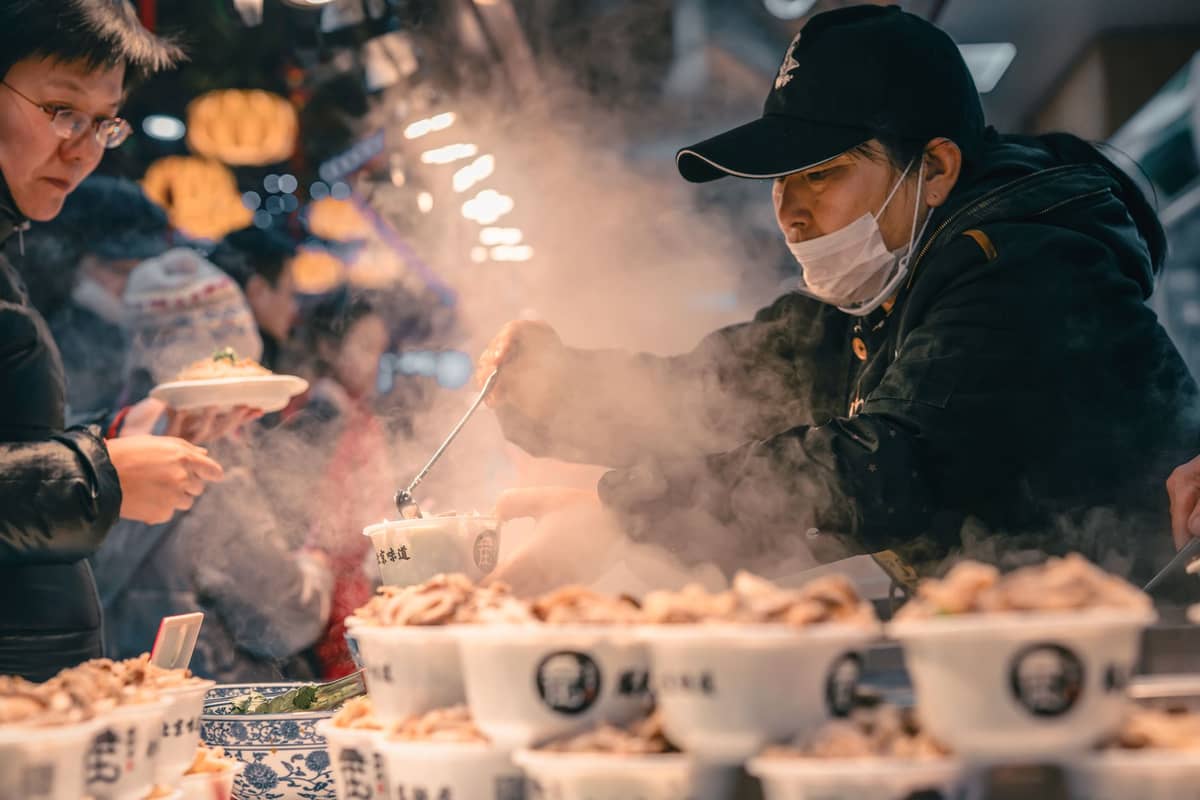
Beijing food draws from centuries of imperial cooking, northern Chinese wheat traditions, and the influence of Muslim Hui communities who have lived in the city for generations. What that means in practice: you will eat a lot of duck, lamb, and noodles, and far less rice than you might expect. This is wheat country.
Peking duck (北京烤鸭, Běijīng kǎoyā) is the obvious starting point. The dish is served in three stages at serious restaurants: thin-sliced duck skin and meat eaten with pancakes, spring onion, cucumber, and sweet bean sauce; a second course using the carcass in soup or stir-fries; and sometimes a third course of duck bones fried with salt. A whole duck at a mid-range restaurant runs about ¥160–¥250 and serves two to four people. At upscale spots like Dadong or the original Quanjude branches, prices push ¥300–¥400. Budget operators in tourist zones often undercut on price but also on quality: the skin should be lacquered and crackle when bitten, not chewy or greasy.
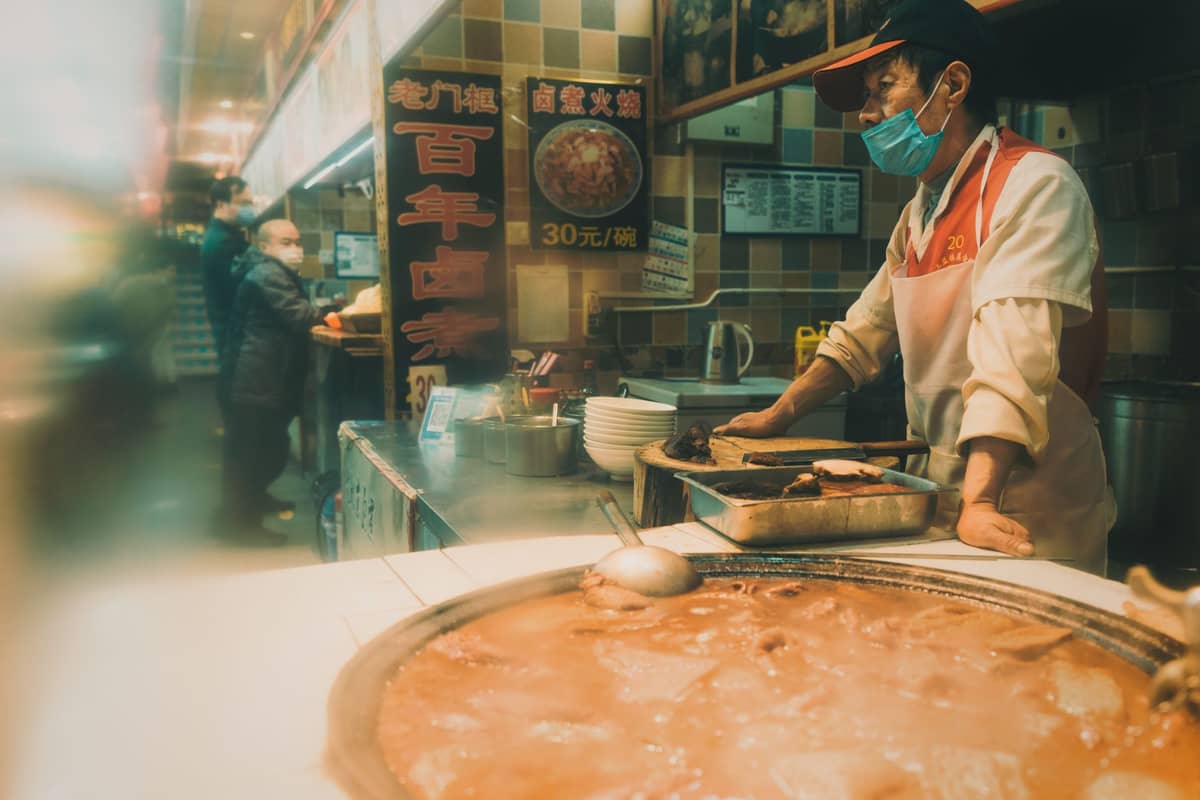
Zhajiangmian (炸酱面) is Beijing's other signature dish and far cheaper. Thick wheat noodles topped with a slow-cooked fermented soybean and pork paste, served with julienned cucumber, bean sprouts, and radish. A bowl costs ¥15–¥35 in most noodle shops. Instant or pre-mixed versions sold to tourists in Wangfujing snack shops are a pale imitation — seek out a local canteen in a residential hutong instead.
- Peking Duck (北京烤鸭) Slow-roasted over fruit wood, served with pancakes and condiments. Whole duck ¥160–¥400 depending on restaurant grade.
- Zhajiangmian (炸酱面) Thick noodles with fermented pork and soybean paste. The city's everyday comfort dish, ¥15–¥35 per bowl.
- Lamb hotpot (涮羊肉) Thinly shaved mutton cooked in a clear broth, dipped in sesame paste. A Hui Muslim-influenced staple, especially popular in winter.
- Jianbing (煎饼) A savory crepe cooked on a griddle with egg, scallion, chili paste, and a crispy wonton cracker. The definitive Beijing breakfast, ¥8–¥15.
- Douzhi (豆汁) Fermented mung bean milk, served hot with pickled vegetables. An acquired taste that locals swear by and most visitors struggle with.
- Candied hawthorn skewers (糖葫芦) Sugar-coated hawthorn berries on a bamboo skewer, sold for ¥5–¥15. Winter staple, though sold year-round in tourist areas.
⚠️ What to skip
The fried scorpions, starfish, and silkworm larvae sold on Wangfujing Snack Street are real, but they exist primarily to photograph and shock tourists. Locals do not eat them regularly. If you want authentic Beijing street food, head to a morning market or a residential hutong alley instead.
Where to Actually Eat: Neighborhoods by Food Type
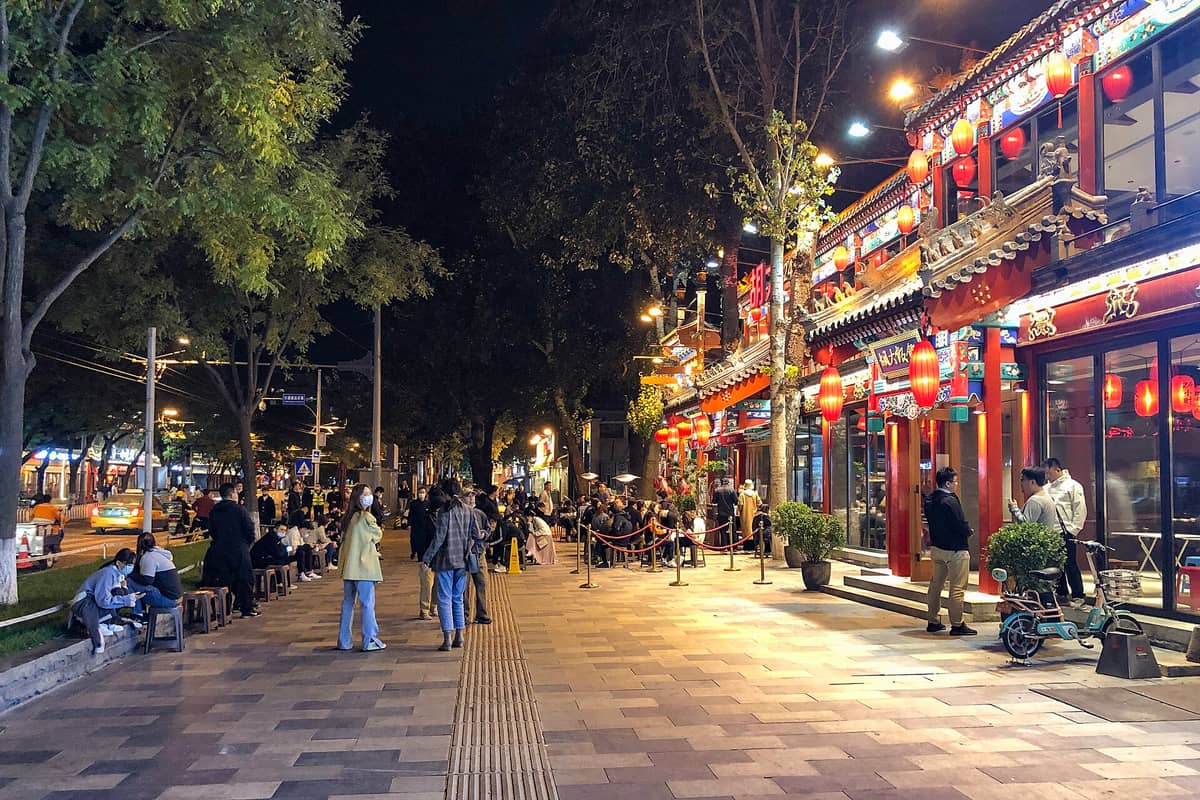
The Guijie (Ghost Street) strip in Dongcheng runs about 1.4 km along Dongzhimennei Dajie and is the city's most concentrated cluster of restaurants open late. It specializes in spicy crayfish (小龙虾) and malatang hotpot, and most kitchens stay open past midnight. Prices are reasonable: a crayfish feast for two with beer typically runs ¥150–¥250 total.
For lamb hotpot with proper Hui Muslim credentials, the area around Niujie in Xicheng District has been Beijing's Muslim quarter for over a thousand years. Restaurants here use halal-certified lamb, and you will also find excellent sesame flatbreads (shaobing), lamb skewers, and fried dough rings (youxuan). It is not a tourist-polished destination, which is exactly why the food is better.
The hutong alleys around Nanluoguxiang and Wudaoying Hutong offer a mix of traditional snack vendors and independent cafes. Nanluoguxiang itself has become heavily commercialized, so the better eating is on the quieter cross-alleys rather than the main pedestrian strip.
Sanlitun and the surrounding Chaoyang District have the widest range of international dining: Korean, Japanese, Thai, and Western restaurants cluster here, largely serving the expat community and business travelers. If you need a break from Chinese food mid-trip, this is where to go. Prices tend to run 30–50% higher than equivalent local spots.
💡 Local tip
Beijing's food markets open early and close earlier than you expect. Sanyuanli Market, one of the city's best fresh produce markets, runs 09:00–19:00 daily. Zuojiazhuang Shengfu Market closes at 14:00. If you are cooking or want to browse ingredients, plan for a morning visit. Night markets typically open from 17:00 to midnight.
Peking Duck: How to Navigate the Restaurants
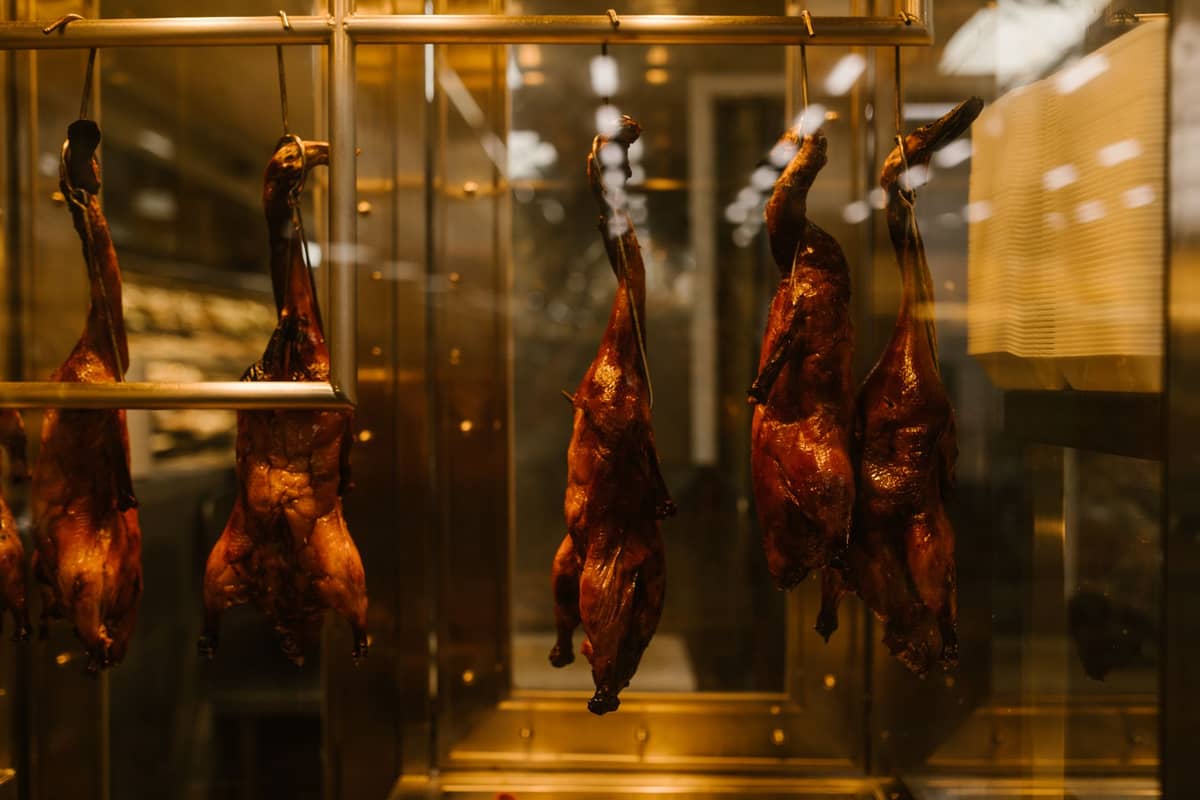
Three restaurant names dominate the Peking duck conversation: Quanjude, Bianyifang, and Dadong. They represent meaningfully different experiences and are not interchangeable.
Quanjude (全聚德), founded in 1864, is the most famous and the most uneven. The roasting method uses hung ovens and fruit wood, producing a distinct char and aroma. Quality at the flagship Qianmen branch is generally reliable; quality at smaller branches varies. Lunch and dinner may be served in split sittings; for example, the Qianmen branch lists 11:00–13:30 and 16:30–20:00, though hours change by branch and season, so always verify. Quanjude appeals to visitors who want the historical credential; locals often find it overpriced relative to newer spots.
Bianyifang (便宜坊) is associated with a tradition dating to the 1400s, while the restaurant was founded in 1885, and it uses a closed-oven method that produces a softer skin. It is less internationally famous but frequently preferred by Beijing residents for its more consistent quality and slightly lower prices. Dadong (大董) is the modern fine-dining option: artistic plating, leaner ducks bred specifically for lower fat content, and prices to match. A meal for two at Dadong commonly exceeds ¥600.
✨ Pro tip
Book Peking duck restaurants in advance, especially on weekends and national holidays. Quanjude and Dadong both accept online reservations. Arriving without a booking at peak times often means a 45-minute to 90-minute wait, and the waiting area at tourist-adjacent branches is not comfortable.
Street Food and Breakfast Culture
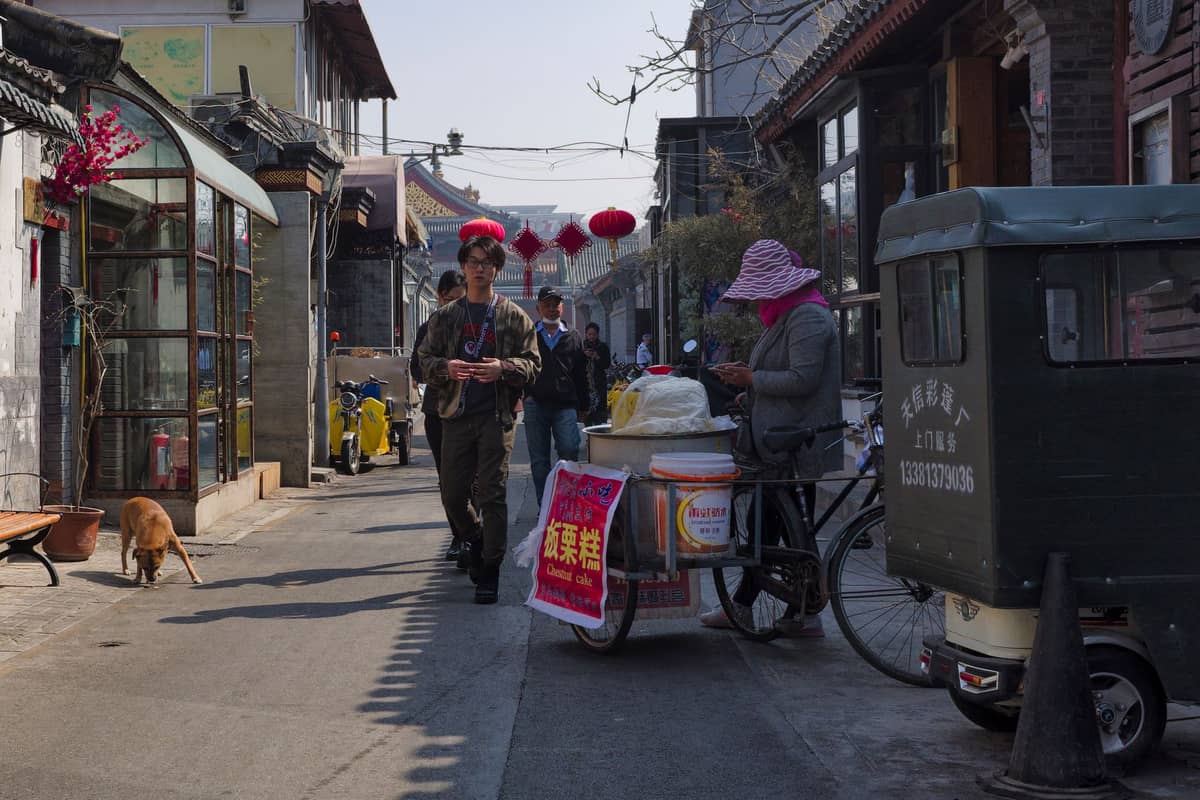
Beijing has a serious breakfast culture that tourists almost entirely miss by eating at their hotels. By 07:30 on any weekday morning, residential streets near subway exits have vendors selling jianbing (savory crepes), baozi (steamed filled buns), congee, soy milk, and fried dough sticks (youtiao). Prices are ¥5–¥15 per item. Most vendors pack up by 09:30.
Jianbing deserves specific attention. A skilled vendor makes each one to order on a flat griddle: a thin batter of mung bean and wheat flour spread in a circle, one or two eggs cracked and spread over the top, a sprinkle of scallion and sesame seeds, a smear of chili paste and sweet bean sauce, and a crispy wonton cracker folded inside. The whole process takes under two minutes. It is filling, cheap, and deeply local. The best ones come from established vendors with a regular neighborhood clientele, not from tourist-zone stalls charging ¥20–¥25 for the novelty.
- For jianbing: find a street cart near a residential subway exit between 07:00 and 09:00.
- For baozi: look for steamer baskets in front of small shops — pork and cabbage (猪肉白菜) is the Beijing classic filling.
- For douzhi: this fermented mung bean drink is sold at traditional snack shops and some morning markets. Try it with jiaoqian (crispy fried rings) on the side.
- For candied hawthorn skewers: winter is the best season, though vendors operate year-round near major sights.
- For night market food: Beijing's government-listed night markets vary by venue and season; check the individual market's hours and stall offerings, as quality and authenticity vary by stall.
Regional Influences and What Else Belongs on Your List
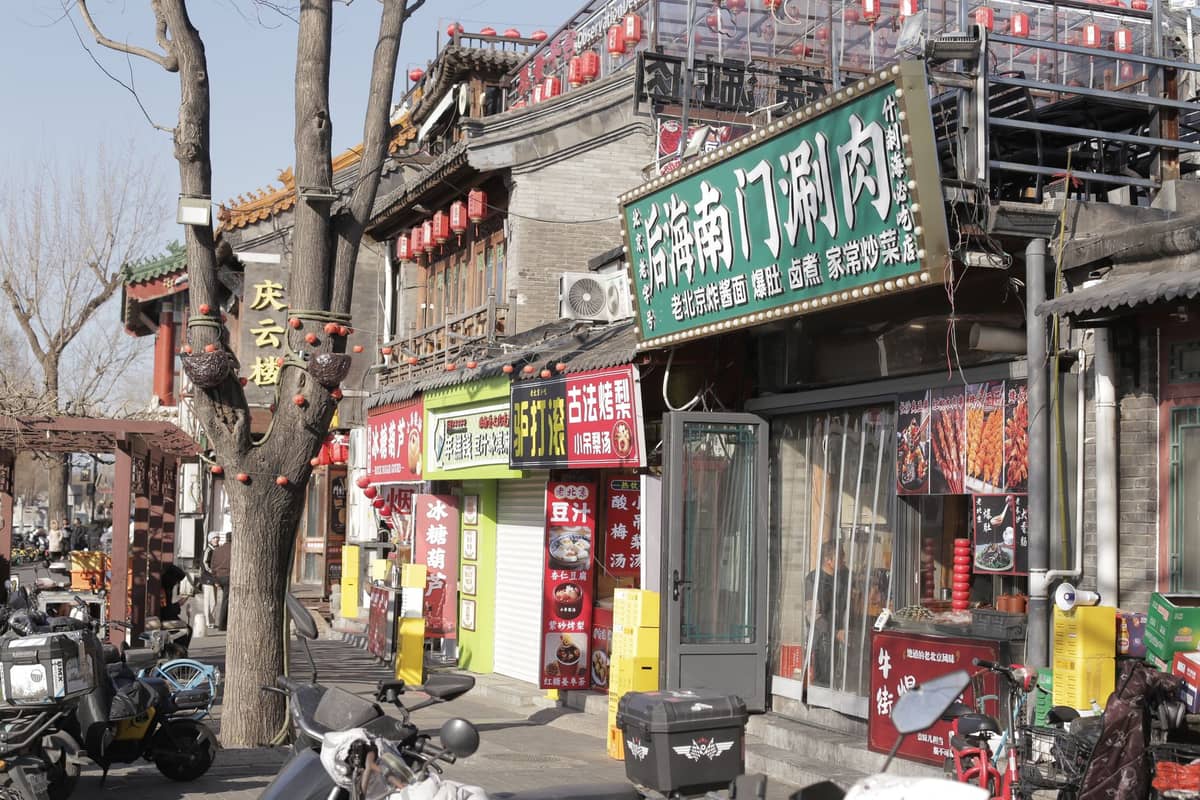
Beijing is not a sealed culinary bubble. The city has absorbed cooking from across China through centuries of migration, and some of the best food in the city technically originates elsewhere but has been adapted into the local diet.
Instant-boiled mutton hotpot (涮羊肉, shuàn yángrǒu) is Beijing's winter answer to Sichuan hotpot. The broth is kept simple and clear, and the focus is entirely on the quality of the lamb, shaved paper-thin and swished through the pot for seconds before eating. The sesame dipping sauce, mixed at the table with fermented tofu liquid, chive flower paste, and chili oil, is what makes it distinct. Donglaishun in Wangfujing is the most famous name; smaller Muslim hotpot restaurants near Niujie are cheaper and often better.
For visitors spending several days in the city, it is worth planning at least one meal in each of the major food zones: a duck restaurant, a hutong street breakfast, a hotpot dinner, and a bowl of zhajiangmian from a neighborhood noodle shop. The 3-day Beijing itinerary maps these out alongside sightseeing, and the 5-day itinerary adds time for exploring food markets and lesser-known neighborhood spots.
Families should note that Beijing food is generally more accessible to children than spicy Sichuan or Hunanese food: noodles, dumplings, and steamed buns tend to be crowd-pleasers. The Beijing with kids guide has specific restaurant suggestions for family meals.
Practical Eating Logistics: Payment, Language, and Ordering
Most Beijing restaurants now primarily accept payment via WeChat Pay or Alipay, with QR-code menus replacing printed menus in many casual spots. Foreign visitors who cannot link a Chinese bank account to WeChat Pay should carry cash (CNY) as a reliable backup. Credit cards are accepted at upscale hotels and fine-dining restaurants but are often not accepted at noodle shops, street stalls, or small local restaurants.
English menus exist at tourist-oriented restaurants and international chains, but are rare at the local spots where the food is most interesting. A translation app with a camera function (Google Translate or Baidu Translate both work on photo mode) is the most practical tool for ordering. Point-and-order by looking at neighboring tables or at dishes displayed near the kitchen works surprisingly well for breakfast and lunch spots.
Tipping is genuinely not expected at any level of restaurant in Beijing. Service charges are sometimes added at upscale establishments and will be itemized on the bill. If you leave cash on the table, staff will likely chase you down the street to return it.
FAQ
What is the most important food to eat in Beijing?
Peking duck is the dish most associated with the city, but zhajiangmian (thick noodles with fermented pork paste) and jianbing (savory breakfast crepes) are equally essential and far cheaper. For a complete picture of Beijing food, try all three during your stay.
How much does Peking duck cost in Beijing?
A whole duck at a casual mid-range restaurant typically costs ¥160–¥250 and serves two to four people. At high-end restaurants like Dadong, expect ¥300–¥400 for the duck alone, with a full meal for two often exceeding ¥600. Avoid restaurants offering duck for under ¥100 — the quality is usually poor.
Where is the best street food in Beijing?
The best street food is found in residential neighborhoods near subway exits, particularly in the morning between 07:00 and 09:30. Night markets (typically open 18:00–midnight) offer variety and atmosphere. Avoid the tourist-facing Wangfujing Snack Street for anything beyond novelty purposes — prices are inflated and most items are not representative of Beijing's actual food culture.
Can vegetarians eat well in Beijing?
Vegetarians can manage but need to be proactive. Buddhist temple restaurants (the Fayuan Temple area has options) offer fully vegetarian menus. Many noodle and dumpling dishes can be ordered without meat, but cross-contamination is common in kitchens and broths are often meat-based. Being explicit about dietary needs using a written Chinese translation card is the most reliable approach.
Do I need to book restaurants in advance in Beijing?
For Peking duck restaurants (especially Quanjude, Dadong, and Bianyifang), booking at least a day ahead is strongly recommended on weekends and during national holidays like Golden Week. Casual noodle shops, street stalls, and most local lunch spots do not take reservations. Note that many restaurants use split lunch and dinner sittings, so check operating hours before going — for example, Quanjude's Qianmen branch lists 11:00–13:30 and 16:30–20:00, though this varies by branch.