Beijing Airports: The Complete Guide to Getting To and From the City
Beijing has two major international airports: Capital (PEK) to the northeast and Daxing (PKX) to the south. This guide covers every transport option between both airports and the city center, with current fares, journey times, and straightforward guidance on which option suits your trip.
Plan and book this trip
Tools from our partner Travelpayouts help you compare flights and hotels. If you book through them, we may earn a commission at no extra cost to you.
Flights
Hotels map
TL;DR
- Beijing has two airports: Capital International (PEK), about 25-30 km northeast of the city center, and Daxing International (PKX), about 45 km to the south.
- The PEK Airport Express costs CNY 25 and runs to Dongzhimen; the PKX Daxing Airport Express costs CNY 35 and connects to Caoqiao for subway transfers.
- Taxis are available 24 hours and cost roughly CNY 60-200 depending on distance, traffic, and tolls — always use the official taxi queue.
- Always confirm your airport code (PEK or PKX) before booking transport — the two airports are entirely separate systems. See our getting around Beijing guide for city-wide transport tips.
- Visa-free entry is available to nationals of certain countries for up to 30 days, or 240 hours transit — verify eligibility with the National Immigration Administration before traveling.
Beijing's Two Airports: PEK vs. PKX
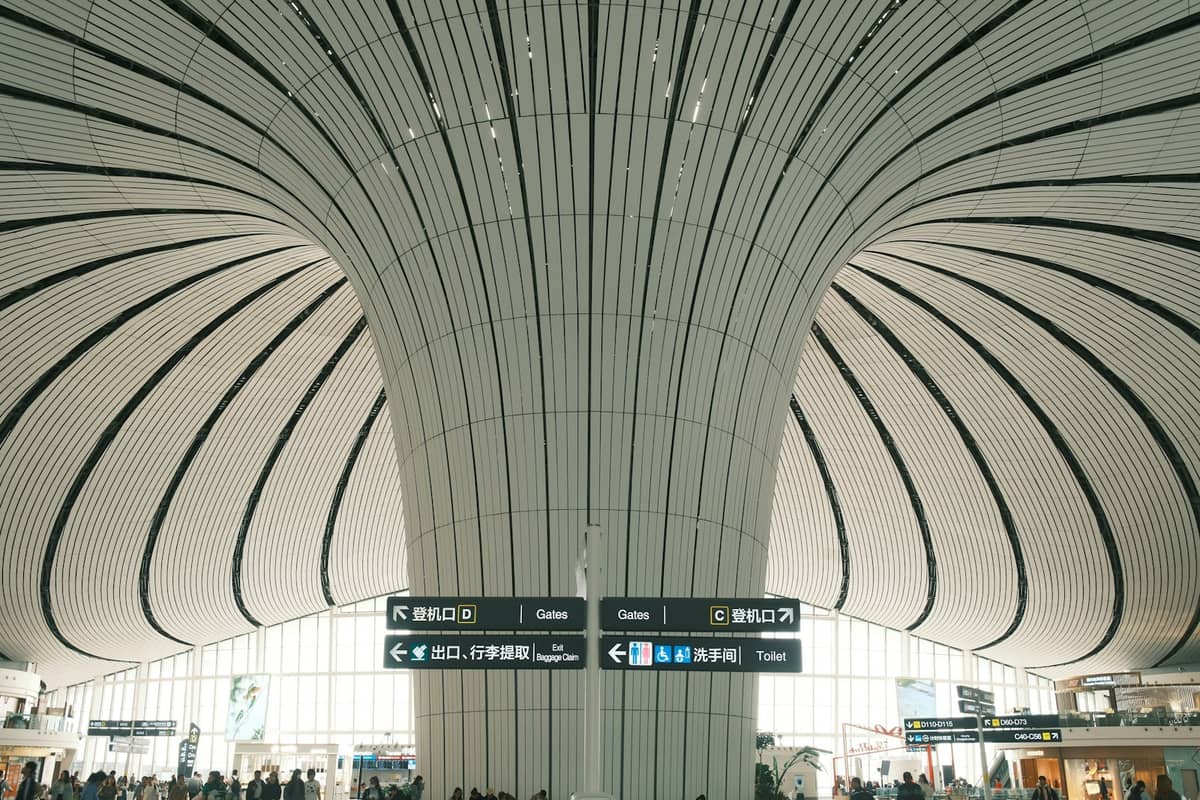
Beijing is served by two international passenger airports with different locations, airline networks, and transport connections. The most important thing to establish before you land is which airport you're actually using, because PEK and PKX are not interchangeable. Their rail links, bus routes, and taxi journey times are entirely separate, and confusing them at the booking stage causes real problems.
Beijing Capital International Airport (PEK) is the older and historically dominant hub, located in Shunyi District roughly 25-30 km northeast of central Beijing. It handles the bulk of international traffic and all three of its terminals are connected by a dedicated airport rail link into the city. Terminal 3, opened in 2008 for the Olympics, is one of the largest airport buildings in the world by floor area.
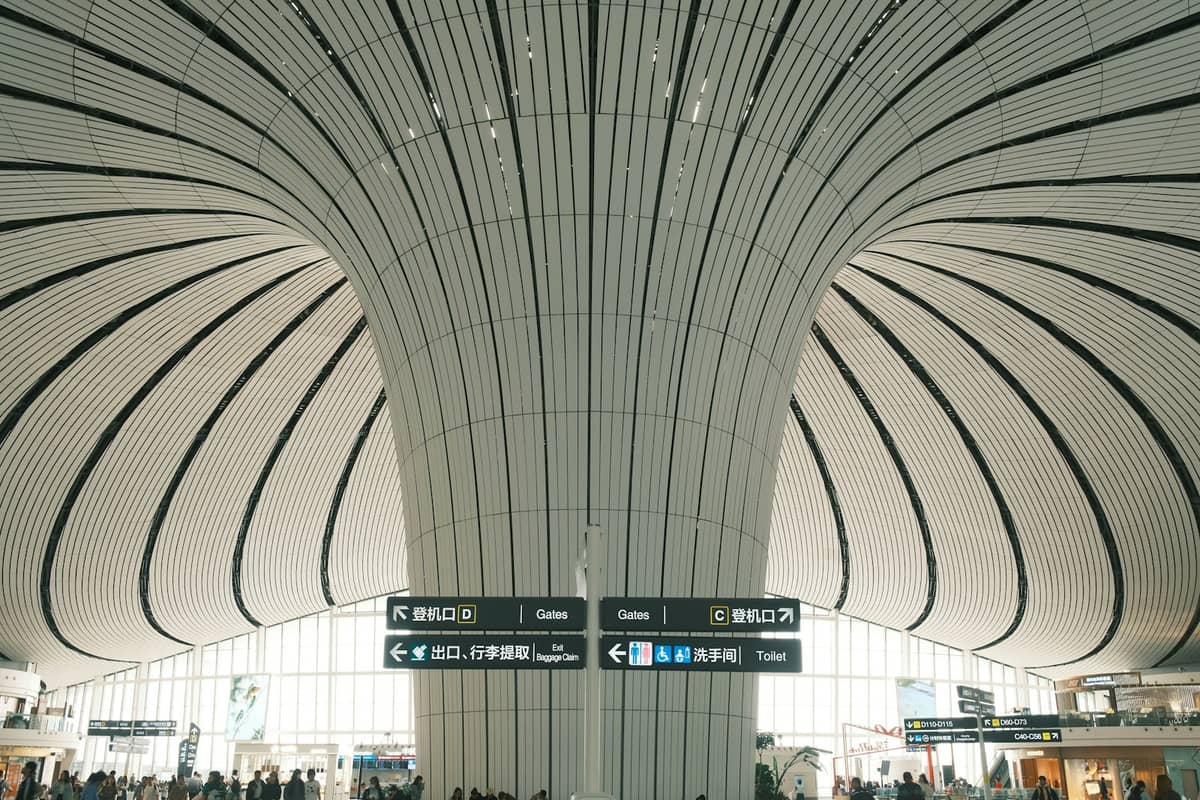
Beijing Daxing International Airport (PKX) opened in September 2019 and sits approximately 45 km south of central Beijing, near the boundary with Hebei Province. Designed by Zaha Hadid Architects, the terminal is architecturally striking but the greater distance from the city center means transfer times are longer. Daxing is the base for certain Chinese carriers and a growing number of international routes, so always check your ticket carefully.
⚠️ What to skip
Double-check your airport code every time you book transport. PEK = Capital Airport (northeast); PKX = Daxing Airport (south). The rail lines, bus routes, and even taxi fares are completely different. Booking the wrong transfer is a common and costly mistake.
Getting From PEK (Capital Airport) to the City
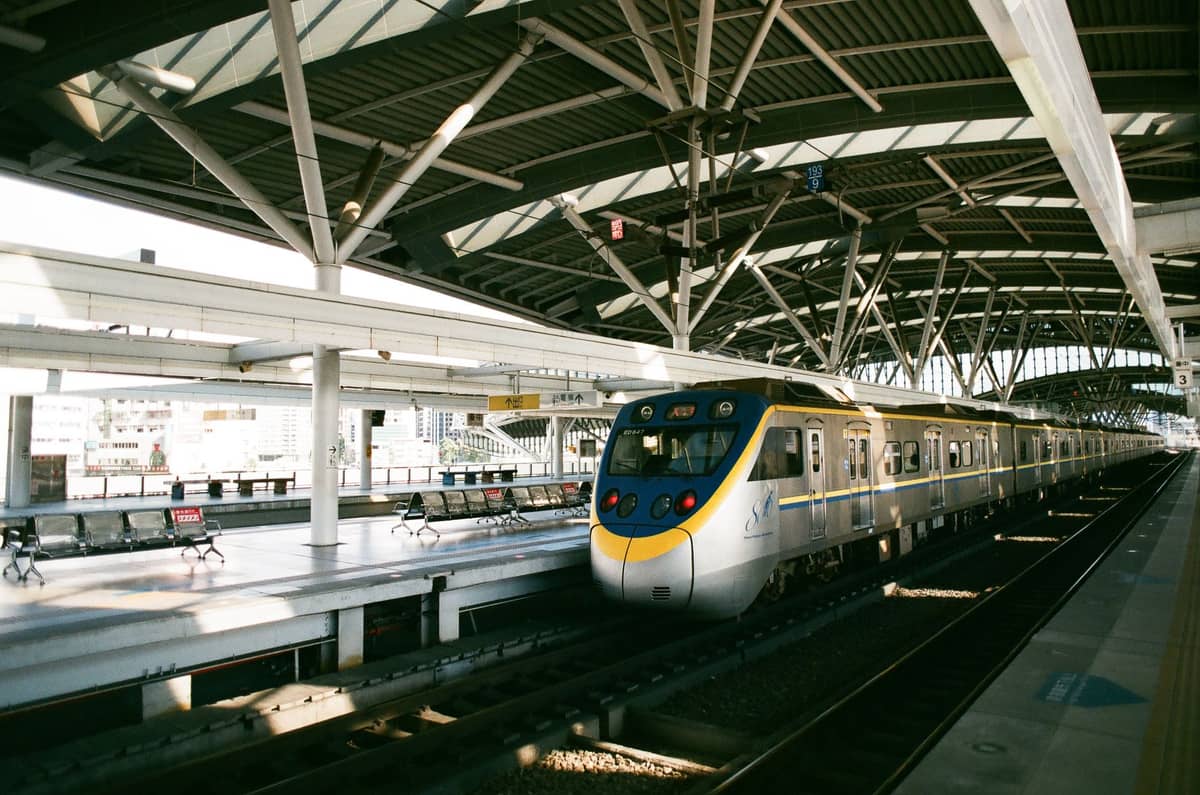
The Airport Express is the fastest and most reliable option from PEK on most days. The dedicated rail line connects Terminals 2 and 3 with Sanyuanqiao and Dongzhimen stations in central Beijing. The fare is CNY 25 per person, the journey takes around 20-25 minutes to Dongzhimen, and the service generally runs from approximately 06:20 to 23:10, though first and last train times vary slightly by terminal. At Dongzhimen, you can transfer directly onto Lines 2 and 13 of the Beijing Subway, which puts most central neighborhoods within reach. Buy tickets at self-service machines or the staffed Beijing Service counters using valid identification.
Airport shuttle buses are a cheaper but slower alternative. Routes serve multiple city destinations including Zhongguancun, Xidan, Beijing Railway Station, and the CBD. Fares generally run CNY 20-55 depending on the route. Buses can be significantly delayed during peak commuting hours, public holidays, heavy rain, or snowfall. If you're staying in Chaoyang District near Sanlitun or the embassy area, a bus or taxi may get you closer to your hotel door than the Airport Express, which deposits you at Dongzhimen.
Taxis operate 24 hours from PEK. The official guidance puts typical city-center fares at roughly CNY 60-200, though the actual cost depends on your destination, traffic conditions, highway tolls, and any nighttime surcharges. Always use the designated taxi queue outside the arrivals hall. Drivers soliciting fares inside the terminal are unlicensed and frequently overcharge. The metered fare, plus tolls, is what you should pay.
💡 Local tip
If you arrive late at night or have heavy luggage, the Airport Express to Dongzhimen followed by a short taxi or DiDi ride is usually faster than a direct taxi during peak periods, and cheaper than hiring a private transfer. Check your hotel's location relative to Dongzhimen before you arrive.
- Airport Express (recommended) CNY 25 | 20-25 min to Dongzhimen | Runs approx. 06:20-23:10 | Buy at self-service machines or Beijing Service counters
- Airport Shuttle Bus CNY 20-55 depending on route | 45-90 min depending on traffic | Multiple city destinations | Slower during rush hour and bad weather
- Taxi (metered) CNY 60-200+ | 40-80 min depending on traffic | Available 24 hours | Use official queue only; tolls and nighttime surcharges apply
- DiDi Ride-Hailing Similar pricing to taxis | Requires Chinese mobile number and payment setup | Can be pre-arranged through some hotel apps or international travel platforms
- Private Transfer Variable pricing, typically higher than taxis | Fixed price agreed in advance | Useful for groups or travelers with complex routing
Getting From PKX (Daxing Airport) to the City
The Daxing Airport Express is the core transport link between PKX and the city. The line runs between Daxing Airport and Caoqiao station, where passengers transfer to Line 10 of the Beijing Subway for onward connections across the city. A standard economy ticket costs CNY 35; a business-class seat costs CNY 50. The journey time to Caoqiao is roughly 20-30 minutes on the express service, but getting from Caoqiao to central Beijing by subway adds further time. For destinations in Dongcheng or near Tiananmen, factor in at least an additional 30-40 minutes on the metro.
Because PKX sits further from central Beijing than PEK, taxis and ride-hailing services cost more and take longer. City-center trips from Daxing typically fall toward the higher end of the CNY 60-200 range, and traffic on the southern expressways during rush hour can push journey times past 90 minutes. If you're heading to Dongcheng or Xicheng for sightseeing near the Forbidden City or historic hutong neighborhoods, the Daxing Airport Express plus a subway transfer is the most predictable option.
✨ Pro tip
Caoqiao station can be confusing for first-time arrivals because the transfer between the Daxing Airport Express and Line 10 involves a platform change. Follow the English-language signage, which is clear in this station, and allow extra time if you have large bags or are traveling with children.
Practical Considerations: Timing, Crowds, and Disruptions
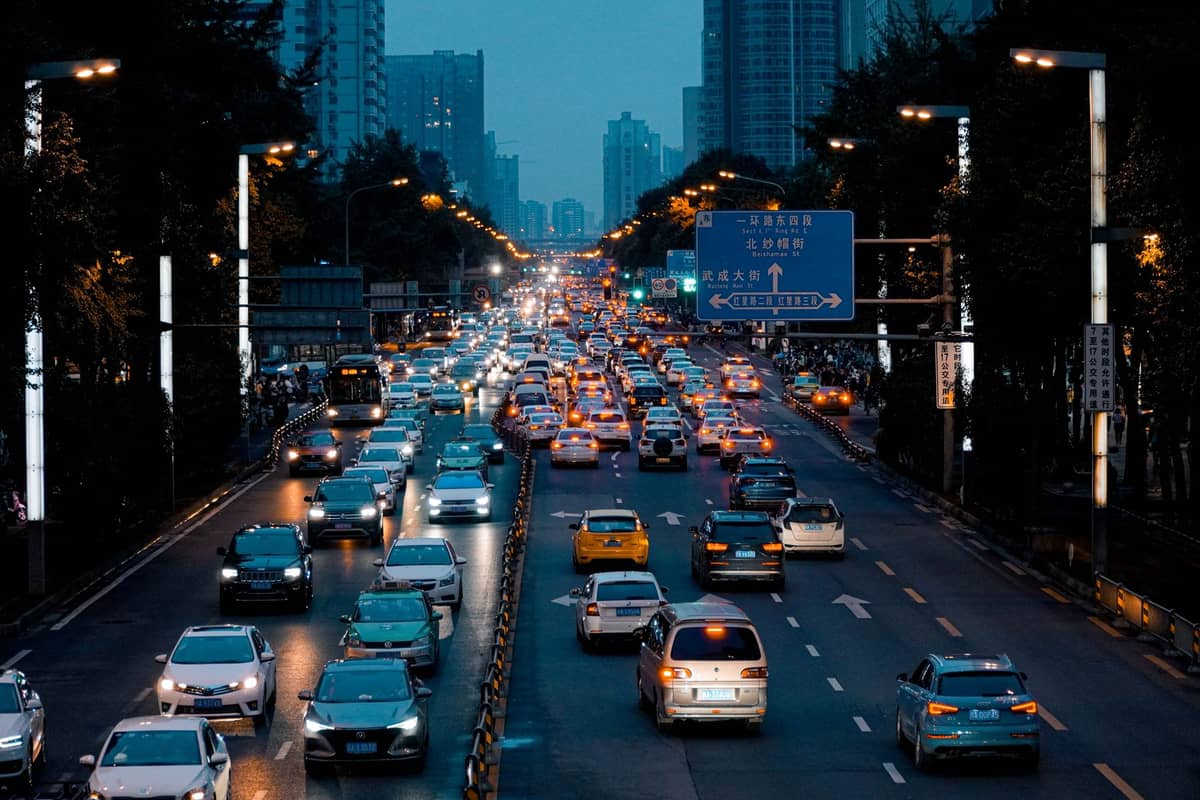
Road journeys between both airports and the city can become significantly slower during morning and evening peak commuting hours (roughly 07:30-09:30 and 17:30-20:00 on weekdays). National holidays, particularly Chinese New Year (Spring Festival), National Day Golden Week in early October, and the May Day holiday, see extremely high traffic across the city and at both airports. If you're traveling during these periods, book transport in advance and build extra time into your schedule.
Weather is a real factor. Beijing's summers bring heavy rainstorms that slow road traffic considerably. Winter brings occasional snowfall and icy conditions that affect taxis and buses far more than rail services. Air quality also varies by season: winter and early spring can see pollution events that reduce visibility but do not significantly affect airport rail operations. For a full picture of seasonal conditions, the best time to visit Beijing guide covers this in detail.
Both the PEK and PKX airport express services have fixed operating windows and do not run through the night. If your flight arrives after approximately 23:00, you will need a taxi, DiDi, or pre-booked private transfer. The last Airport Express from PEK runs at around 23:10, and the last train from PKX operates on a similar schedule. Check the official airport websites on the day of travel for any timetable adjustments.
Visas, Entry, and the 240-Hour Transit Policy
China has expanded its visa-free access in recent years. Nationals of certain countries can enter visa-free for up to 30 days for qualifying purposes, including tourism. Separately, eligible foreign nationals transiting through Beijing to a third country or region can stay up to 240 hours (10 days) without a visa under the transit exemption. Both Beijing Capital and Beijing Daxing are designated ports for this policy. The specific list of eligible nationalities and conditions changes, so verify your status directly with China's National Immigration Administration before booking.
On arrival, all passengers pass through standard immigration and customs procedures. Having your hotel address in Beijing written in Chinese characters is useful, as not all immigration officers speak English. If you're planning your first trip and want a broader orientation, the Beijing first-timer guide covers what to expect from arrival through your first few days.
Payment, SIM Cards, and Connectivity at the Airport
Paying for airport transport in cash (Chinese yuan, CNY) is always an option and avoids complications. Many self-service ticket machines also accept international bank cards, but acceptance is inconsistent and depends on the machine and your card issuer. Mobile payment via WeChat Pay or Alipay is widespread in Beijing, including at airport counters and many transport terminals. Setting up one of these apps before you travel, or at the airport arrivals hall, will make paying for transport, food, and shopping significantly easier throughout your trip.
Both PEK and PKX have SIM card counters in the arrivals area where you can purchase a Chinese mobile data SIM. This is worth doing early because DiDi, map apps, and translation tools all require mobile data. Note that many Western apps and services, including Google Maps, are blocked in mainland China. Download offline maps (such as Maps.me or Amap's international version) before you fly. For transport around the rest of the city once you've settled in, see our guide to getting around Beijing.
- Bring CNY cash for your first taxi or bus fare in case card payment fails at the machine
- Set up WeChat Pay or Alipay before or immediately after arrival for smooth payments throughout the city
- Buy a local SIM card at the arrivals hall — essential for DiDi, navigation, and translation apps
- Download offline maps before flying: Google Maps does not work in mainland China
- Have your hotel address saved in Chinese characters, not just pinyin or English
- Check the airport website on the day of travel for last-minute timetable or operational changes
ℹ️ Good to know
Beijing operates on China Standard Time (UTC+8) year-round. China does not observe daylight saving time, which simplifies scheduling but means you should double-check local times if booking transport or tours across time zones.
Once you're in the city and settled, Beijing's subway network is the most efficient way to reach major attractions. The Forbidden City, Tiananmen Square, and the Temple of Heaven are all within easy reach of central subway stations. If you're planning a multi-day visit, our 3-day Beijing itinerary gives a practical framework for making the most of your time.
FAQ
Which Beijing airport should I fly into?
This depends on which airlines serve your route. PEK (Capital Airport) handles more international flights overall and has a faster, cheaper direct rail link to central Beijing. PKX (Daxing Airport) is newer and architecturally impressive but is 45 km south of the city, making transfers longer. Check your airline's operating airport on your booking — you have limited choice in most cases.
How long does it take to get from Beijing Capital Airport (PEK) to the city center?
The Airport Express takes around 20-25 minutes to Dongzhimen. From there, a subway connection adds 15-30 minutes depending on your destination. A taxi takes 40-80 minutes in normal traffic but can be much longer during rush hour, bad weather, or public holidays.
Can I take the subway from Beijing Daxing Airport (PKX) to the city?
Yes. The Daxing Airport Express runs between PKX and Caoqiao, where you transfer to Line 10 of the Beijing Subway. A standard ticket costs CNY 35. From Caoqiao, most central destinations are another 30-45 minutes by metro. The total journey to central Beijing typically takes 60-90 minutes.
Is it safe to take a taxi from Beijing airports?
Metered taxis from the official queue are safe and regulated. The risk comes from unlicensed drivers who solicit passengers inside terminal buildings. Always exit to the designated taxi stand, join the queue, and confirm the driver uses the meter. Typical fares run CNY 60-200 depending on distance and traffic. DiDi is also a reliable alternative if you have a working Chinese number and payment method.
Do I need a visa to transit through Beijing?
Eligible foreign nationals can transit through Beijing Capital or Daxing airports for up to 240 hours (10 days) without a visa, provided they are continuing to a third country or region. Other visa-free entry policies may apply to specific nationalities or purposes, but eligibility conditions change over time. Check the National Immigration Administration website before booking.