Simatai Great Wall: Where the Wall Gets Serious After Dark
Simatai Great Wall, in Miyun District, is the only section of the Great Wall open for night visits in Beijing. With steep, largely unrestored ramparts, a reservoir-edge setting, and a glowing resort town below, it delivers a dramatically different experience from the more popular day-trip sections.
Quick Facts
- Location
- Simatai Village, Gubeikou Town, Miyun District, Beijing
- Getting There
- Bus Miyun 51 (密51路) to Beijing WTown / Simatai Great Wall stop
- Time Needed
- 3–5 hours for day visit; night session ticket checking 18:00–21:40 (May–October)
- Cost
- ¥40 (standard day ticket); ¥20 (concession). Night tour: ¥200. Cable car and Beijing WTown access priced separately. Verify before visiting.
- Best for
- Serious hikers, photographers, repeat Great Wall visitors, couples
What Makes Simatai Different
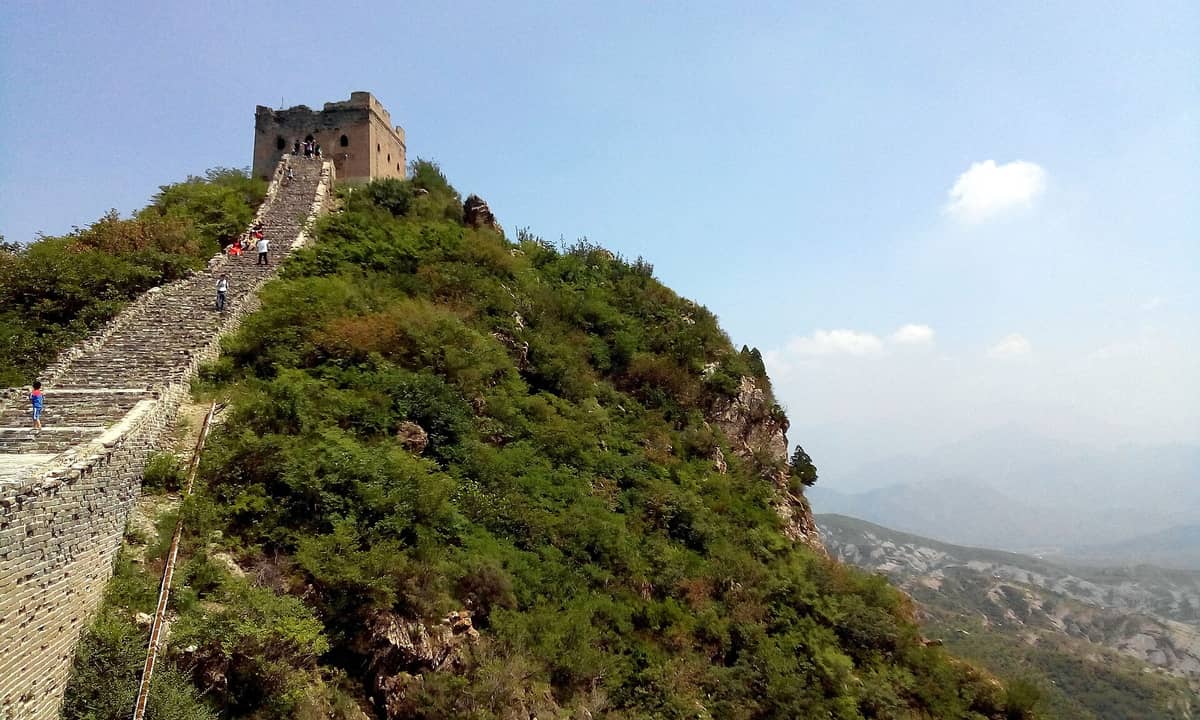
Most first-time visitors to Beijing's Great Wall sections go to Badaling or Mutianyu. Both are fine choices. But the Simatai Great Wall (司马台长城, Sīmǎtái Chángchéng) in Miyun District operates in a different register entirely. The terrain is steeper, the restoration is minimal, and the atmosphere is quieter on most days. More significantly, Simatai is the only Great Wall section near Beijing with an official night tour, which transforms the whole visit into something closer to a theatrical experience.
The wall here runs along a ridge above Miyun Reservoir, so the views on a clear day combine stone ramparts, blue water, and forested hills. The section is part of the Ming-dynasty construction phase that fortified northern approaches to Beijing. The towers are irregular in size and spacing, reflecting terrain that the wall-builders had to work around rather than over.
ℹ️ Good to know
Simatai has two separate sessions: a day session (09:00–15:00 ticket checking) and a night session (18:00–21:40 ticket checking from May to October, with clearance by 22:40). These are ticketed separately. If you want both, you would need to plan your day around staying in the area between sessions, or staying overnight in Beijing WTown.
The Day Visit: Ridgeline Hiking With Real Elevation Gain
The day experience at Simatai is physically demanding by Great Wall standards. The ridge is narrow in places, and the path climbs steeply. Some sections require using hands on the stone. This is not the flat, crowd-managed promenade you find at Badaling. Wear proper footwear with grip, not sandals or flat-soled shoes, and expect to use your legs.
In the morning, before 10:00, the light comes from the east and falls obliquely across the battlements, creating strong shadows in the crenellations. This is when the wall looks most photogenic and when the crowds are thinnest. By midday, the sun is overhead and the stone reflects harshly, so photography becomes less rewarding and the heat in summer can be significant. Afternoon light from the west restores some visual texture, but the wall fills with more visitors through the early afternoon.
A cable car is available and reduces the uphill climb, though it comes at an additional cost beyond the wall entrance ticket. For those who want the full ridge experience, walking up is recommended. If you are also planning to visit Mutianyu Great Wall or Jinshanling Great Wall on other days, note that Simatai is the most physically demanding of the three, so plan your itinerary accordingly.
Tickets & tours
Hand-picked options from our booking partner. Prices are indicative; availability and final rates are confirmed when you complete your booking.
Private Guided Tour to Gubei Water Town and Simatai Great Wall
From 111 €Instant confirmationFree cancellationMutianyu Great Wall and Summer Palace small-group tour from Beijing
From 171 €Instant confirmationFree cancellationSmall Group Tour to Mutianyu Great Wall with Lunch
From 101 €Instant confirmationFree cancellationPrivate day tour at Mutianyu Great Wall with VIP perks
From 220 €Instant confirmationFree cancellation
The Night Session: Lanterns, Reflection, and Silence
The night visit is the signature offering at Simatai and the main reason many visitors choose this section over others. After dark, portions of the wall are illuminated with warm lighting, and the path to the base of the wall runs alongside the reservoir, where the lit wall reflects on the water. The effect is genuinely striking on a calm night with good air quality.
The night session covers a shorter stretch of the wall than the day session. It is less about hiking and more about the visual experience from specific vantage points. Sound carries differently at night, and the absence of daytime ambient noise means you hear the wind, your own footsteps on stone, and occasionally the water below. The resort town of Beijing WTown glows to one side, which some visitors find charming and others find distracting from the historical atmosphere.
⚠️ What to skip
Night visits are weather-dependent. Heavy rain, strong winds, or poor air quality can significantly reduce the experience or lead to closures. Always check conditions before making the trip out to Miyun. The drive from central Beijing takes roughly 1.5 to 2 hours depending on traffic, so an unexpected closure is a serious inconvenience.
Photography during the night session requires a tripod for any meaningful long-exposure work. The wall illumination is warm-toned and directional, so handheld shots tend to produce blurred or noisy results. Tripods are permitted, but confirm current rules at the entrance. The reservoir reflection shot requires a calm night with little wind. In practice, the best conditions occur on dry autumn evenings.
Historical and Architectural Context
Simatai's wall dates from the Ming dynasty, the same construction phase responsible for most of the iconic imagery of the Great Wall in popular memory. The Ming court invested heavily in fortifying the northern border against incursions, and the Gubeikou area, where Simatai sits, was a strategically important pass. The wall here was built to a high standard given its defensive significance.
The watch towers at Simatai vary noticeably in design. Some are single-story, others double. The spacing and construction quality change as the wall negotiates the ridge. This variation is not accidental; different sections were built or rebuilt by different garrison units over the course of the dynasty, each with slightly different resources and priorities. The result is an architectural record of Ming-dynasty military organization written in stone across a mountain ridge.
Simatai lies in Miyun District, one of Beijing's northern mountain districts. Miyun is also home to Beijing's largest reservoir and several other historically significant Wall sections. For travelers building a broader picture of the Wall's diversity, the Great Wall sections guide compares Simatai alongside Badaling, Mutianyu, Jinshanling, and Huanghuacheng in useful detail.
Getting There and Practical Logistics
Simatai is approximately 120 km from central Beijing, and the journey requires real planning. The public bus option is the Miyun 51 route (密51路), which serves the Beijing WTown and Simatai Great Wall stop. Bus services from the city require checking current routes and schedules before travel, as they can change seasonally. Many visitors arrange transport through their hotel, a day-tour operator, or a private driver hired for the day, which gives flexibility if the night session is on the agenda.
For visitors combining a day and night session, staying at Beijing WTown, the resort development adjacent to the wall, removes the two-hour return journey entirely. This is a purpose-built tourism complex with accommodation, dining, and retail. It is designed for visitors who want more than a day trip, and its presence explains why Simatai has developed the night tour infrastructure that other sections lack.
💡 Local tip
If you are traveling independently without a private vehicle, check the Miyun 51 bus schedule carefully. The last bus back may not align with the end of the night session. Arranging a return ride-hail through DiDi from the Simatai area is possible, but rural coverage and driver availability at 22:30 can be inconsistent. Confirming your return transport before entering the night session is strongly advised.
For those building a multi-day itinerary in the northern mountain areas, the Gubei Water Town is adjacent to the Simatai site and can be combined on the same trip. It is a reconstructed traditional water town rather than a historical site, but it adds a full day of activity to the area.
What Weather Does to the Experience
Simatai sits at elevation in a northern mountain district. Miyun is generally cooler than central Beijing, sometimes by 3 to 5 degrees Celsius. In winter, temperatures on the ridge can drop well below freezing, the stone becomes icy, and some access points may be restricted for safety. The night session in winter runs in conditions that require serious cold-weather gear. The cold also affects camera batteries, so spare batteries are worth carrying.
Autumn, from late September through late October, is widely considered the best period for Simatai. Temperatures are manageable, the foliage on the surrounding hills turns orange and red, the air quality tends to be better than summer, and the light is lower in the sky, giving the stone ramparts more visual depth across the day. Spring brings the risk of dust storms from the northwest, which can reduce visibility substantially.
For a broader overview of seasonal timing, the best time to visit Beijing guide covers seasonal conditions across the city and surrounding areas in more detail.
Who This Is Right For, and Who Should Look Elsewhere
Simatai suits travelers who have already seen or deliberately want to avoid the more crowded mainstream Wall sections, who are comfortable with steep terrain, or who specifically want the night experience. It also works well for photographers who find Badaling too busy for the kind of images they want. Repeat visitors to Beijing who have done the standard itinerary and want something less polished will find Simatai rewarding.
Families with young children, travelers with mobility limitations, or anyone visiting Beijing for the first time who simply wants to say they have walked on the Great Wall should consider Mutianyu instead. Mutianyu has more accessible infrastructure, a toboggan descent, and a gentler gradient. Simatai's terrain and longer travel time are not well-matched to a first-timer's checklist visit.
If you are still weighing your options across different Wall sections, the Beijing photography guide has specific notes on the Wall for photographers, including the trade-offs between accessibility and dramatic composition.
Insider Tips
- Book the night session on a weekday if possible. Weekend nights bring noticeably more visitors, and the narrow illuminated path sections can feel congested.
- Bring a headlamp or torch for the night session. The lit sections are well-illuminated, but transitions between zones and the path back to the entrance area can be darker than expected.
- The reservoir reflection is best seen from the lower approach path before ascending the wall, not from the wall itself. Spend a few minutes here before heading up.
- The daytime entrance ticket is ¥40, while the night-tour ticket is ¥200; cable car fees and any Beijing WTown resort access fees are additional. Price out your full day before arriving to avoid surprises at the gate.
- Cold-weather layers are worthwhile even in early autumn. The ridge sits exposed to northern winds, and the temperature difference from the base to the top of the climb can be several degrees.
Who Is Simatai Great Wall For?
- Repeat Beijing visitors seeking a less-visited, more physically engaging Wall experience
- Photographers targeting both the reservoir reflection shot and the night illumination
- Couples looking for a more atmospheric evening outing beyond the city center
- Serious hikers who want genuine elevation gain rather than a managed walkway
- Travelers staying multiple nights in the Miyun or Beijing WTown area
Nearby Attractions
Other things to see while in Great Wall Area:
- Badaling Great Wall
The Badaling Great Wall is the most visited section of the Great Wall near Beijing, sitting in Yanqing District about 80 km northwest of the city center. Fully restored, highly accessible, and genuinely impressive in scale, it rewards early arrivals and punishes late ones. Here is everything you need to visit well.
- Gubei Water Town
Gubei Water Town (古北水镇) is a large resort village built around Mandarin Duck Lake Reservoir at the foot of the Simatai Great Wall in Miyun District, roughly 120 km northeast of central Beijing. Covering around 9 square kilometres, it blends reconstructed Qing-era canal architecture with modern hotels and evening light shows, making it a popular overnight destination for city residents who want Wall access combined with water scenery.
- Huanghuacheng Lakeside Great Wall
At Huanghuacheng, sections of a Ming-dynasty Great Wall built in 1404 descend directly into a reservoir, creating a landscape found nowhere else on the wall. This guide covers what to expect on the ground, how to get there, and whether it belongs on your Beijing itinerary.
- Jinshanling Great Wall
Jinshanling Great Wall is one of the best-preserved and least-crowded sections of the Ming-dynasty wall. Located in Hebei's Luanping County and easily reached from Beijing, it rewards those willing to make the journey with dramatic ridge-top scenery, original battlements, and a genuine sense of the wall's scale and age.