Beijing Nightlife: The Complete Guide to Bars, Clubs & Evening Entertainment
Beijing at night is a different city entirely. This guide covers every layer of the evening scene, from rooftop cocktail bars in Chaoyang to hutong speakeasies, live music venues, cultural performances, and summer night markets, with practical logistics for getting home safely when the subway stops running.
Plan and book this trip
Tools from our partner Travelpayouts help you compare flights and hotels. If you book through them, we may earn a commission at no extra cost to you.
Flights
Hotels map
TL;DR
- The main nightlife clusters are Sanlitun (international clubs and bars), Houhai (lakeside bars, more relaxed), and the Workers' Stadium area (large-format clubs).
- Beijing subway runs roughly 05:00–23:00 but last trains vary by line, station, and direction. Check the timetable at your departure station before you go out.
- Club cover charges typically run around ¥50–¥200, with minimum spends common on weekends. Verify current prices with the venue directly.
- Evening culture options, including Peking Opera, teahouse performances, and Guijie night dining, offer a genuine alternative to conventional bars.
- Summer brings night markets, outdoor concerts, and riverside events that make Beijing's late evenings worth exploring beyond the club circuit.
Where Beijing's Nightlife Actually Happens
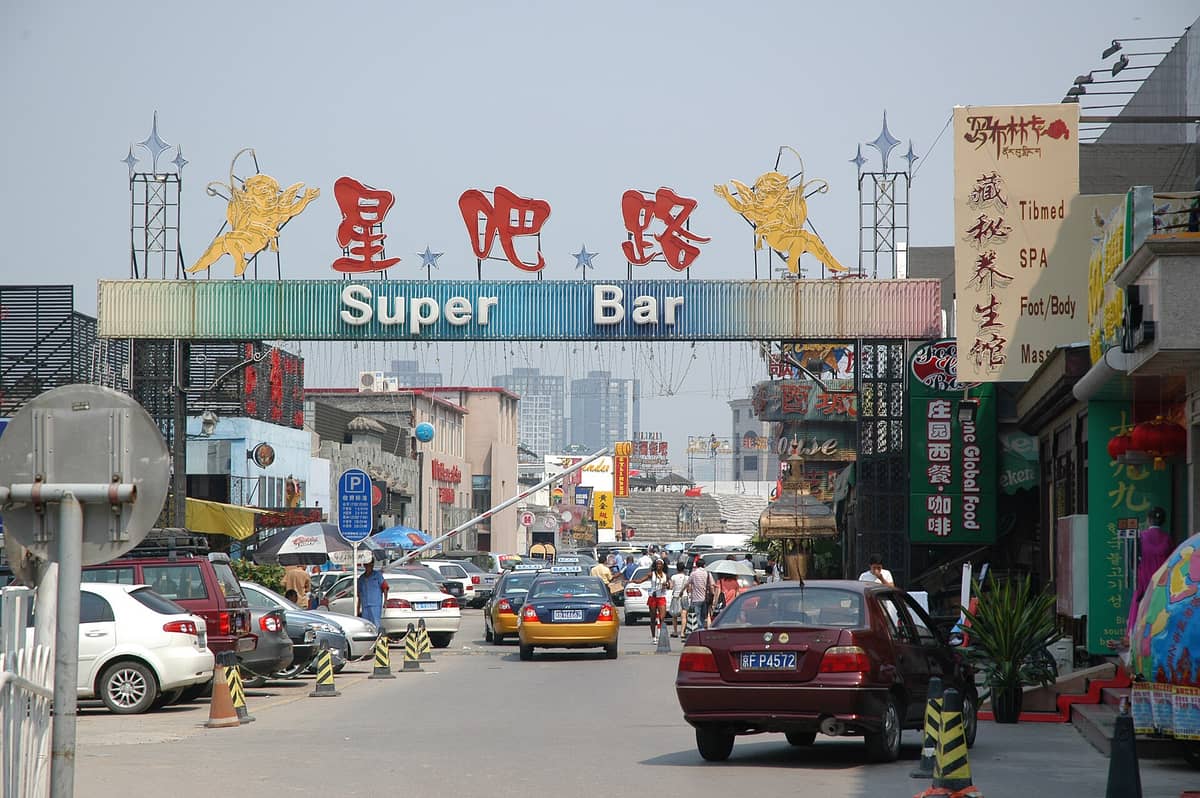
Beijing's evening scene is spread across several distinct zones, each with its own character and crowd. Understanding which area suits you will save time and prevent the disappointment of landing in the wrong neighborhood. The epicenter for most international visitors is Sanlitun in Chaoyang District, home to the city's biggest clubs, rooftop bars, and the dense strip of venues around the Taikoo Li complex and the Workers' Stadium.
For a slower, more local atmosphere, Houhai and Shichahai in Xicheng District offer lakeside bars and live music venues where the crowd leans more local and less scene-conscious. Expect to pay tourist prices near the water, but walk two or three streets back and the value improves sharply. The Xicheng neighborhood also connects this lake area to the drum tower corridor, which has a concentration of independent bars and small live venues in converted hutong buildings.
- Sanlitun / Workers' Stadium The loudest, most international zone. Large clubs, recognized brands, and the highest cover charges. Best for those who want a conventional club night.
- Houhai / Shichahai Lakeside bars with live bands, often playing Chinese pop or easy listening. Popular with couples and older locals. Closes earlier than Sanlitun on average.
- Gulou / Bell Tower area Small, independent, often craft-focused bars in hutong courtyards. The most interesting zone for anyone who finds Sanlitun exhausting.
- Chaoyang CBD / Dongcheng Upscale hotel bars, rooftop terraces, and whisky lounges. More expensive, quieter, and better suited to business travelers and those who prefer conversation over bass.
- Guijie (Ghost Street) Not a nightlife district in the club sense, but Beijing's most famous late-night eating strip. The crayfish and hotpot restaurants here run until 04:00, making it the natural endpoint for a long night out.
💡 Local tip
Beijing does not have a single universal last-call time. Individual venues set their own closing hours, which vary by day of the week, season, and local events. Do not assume any bar or club is open past midnight on a weeknight without checking first.
Bars: From Hutong Speakeasies to Hotel Rooftops
Beijing's bar scene has matured significantly over the past decade. The era of cheap expat bars serving watery beer has largely given way to craft cocktail programs, serious wine lists, and imported spirits at prices that, while not cheap, are not unreasonable by major-city standards. Cocktails at mid-range bars typically run ¥60–¥120. Hotel bars and rooftop venues push ¥100–¥200 per drink, though the view at some of the Dongcheng and Chaoyang properties justifies the premium for a one-drink occasion.
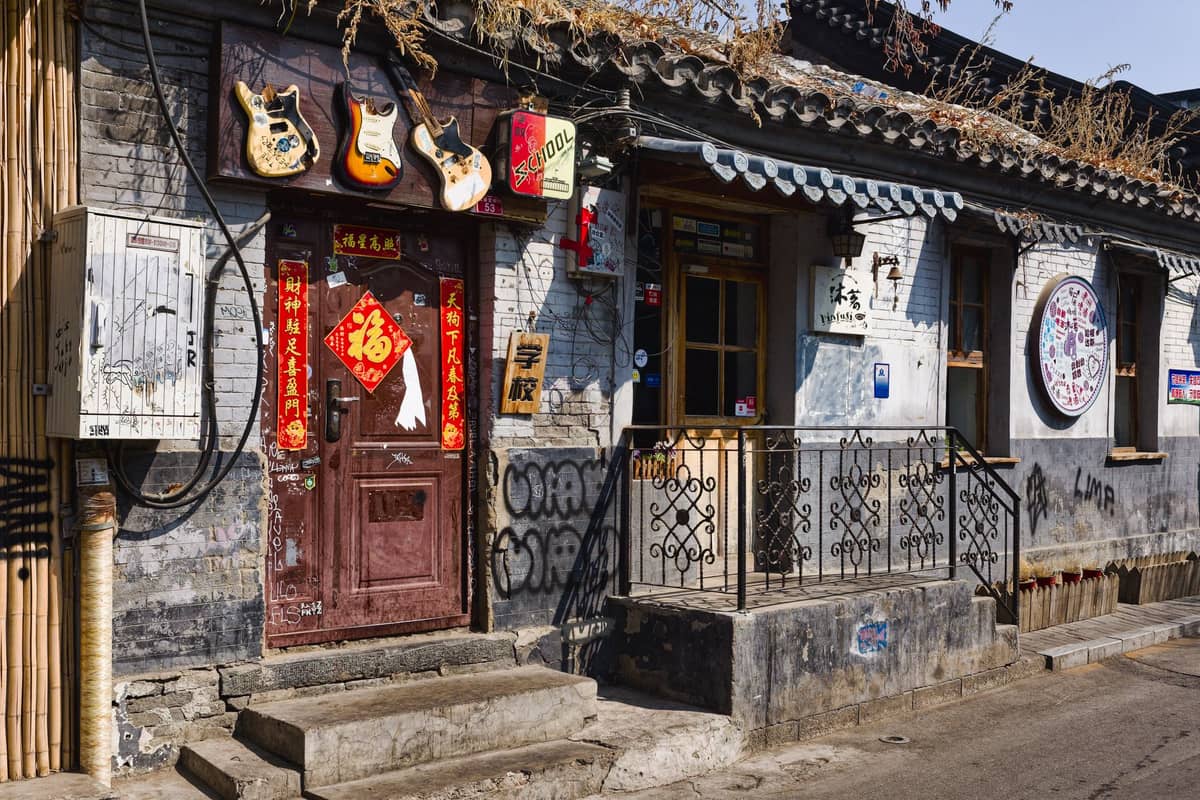
The Gulou area, accessible from the Bell Tower and Drum Tower, has the city's best concentration of independent bars. Many occupy courtyard buildings along hutong lanes, which makes them easy to miss but worth tracking down. The neighborhood also contains some of Beijing's better live music rooms, with programming that leans toward jazz, blues, and indie acts. Check venue social media accounts or local listings sites for current schedules, since programming shifts frequently.
If craft beer is the priority, Beijing has a domestic craft brewing scene that has expanded quickly. Several taprooms operate in Chaoyang and around the university districts in Haidian, pouring locally brewed IPAs, stouts, and seasonal releases. Prices are competitive with imported bottles and the quality is generally higher than what you will find in a generic sports bar.
⚠️ What to skip
Some bars near Houhai lake and in the Sanlitun backstreets operate without clear menus or with prices that only appear on the bill. Always ask for a written menu before ordering, and confirm prices for table service. This is not universal, but it is common enough to warrant the habit.
Clubs and Late-Night Venues
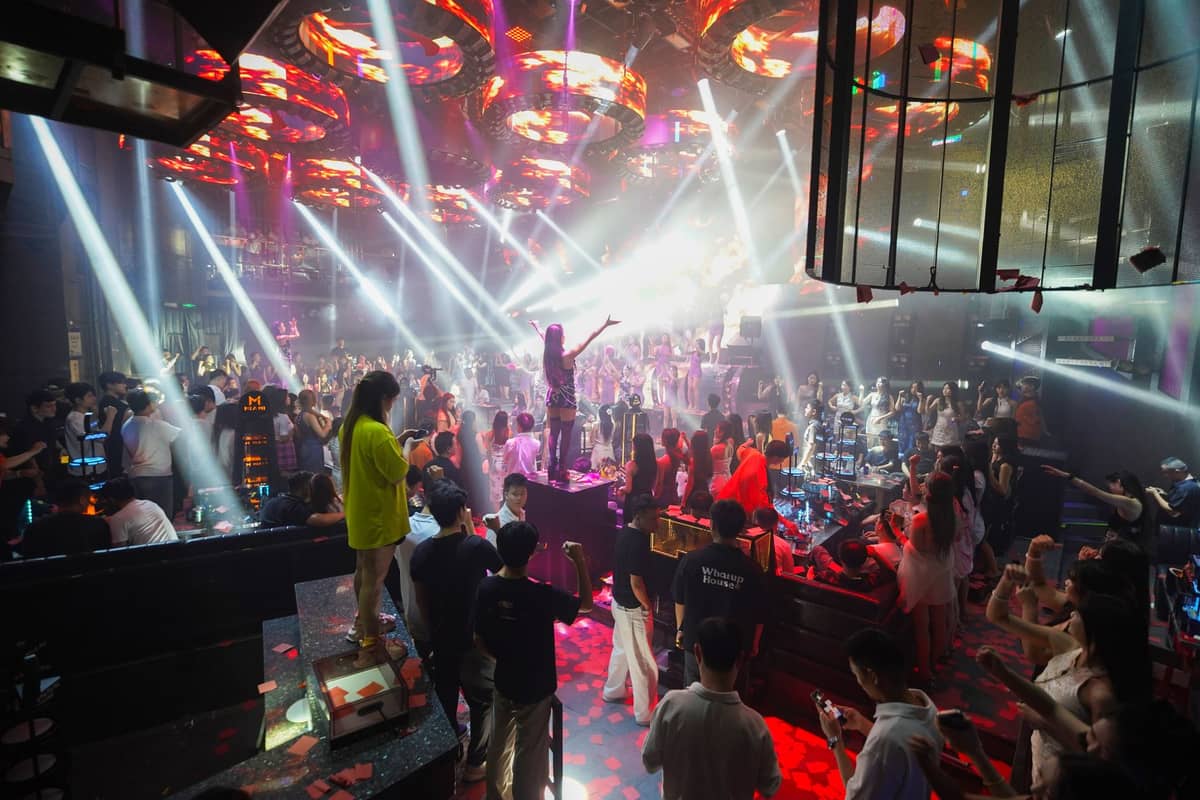
Beijing's club scene is concentrated around Sanlitun and the Workers' Stadium. The large-format venues here book international DJs on weekends, operate multiple floors with different genres, and impose the kind of door policies typical of major city clubs worldwide. Cover charges for weekend nights at established venues typically fall in the ¥100–¥200 range, though events with international headliners push significantly higher. Many clubs offer free or discounted entry before a certain time, usually around 22:00 or 23:00, which is worth knowing if you want to avoid the queue and the full cover.
Minimum spend policies are standard on weekends at the larger clubs. A table booking often requires a bottle purchase, with minimums that can run ¥800–¥2,000 or more depending on the venue tier and evening. If you are not booking a table, most clubs allow standing or bar access separately. Verify current policies directly with the venue, as they change regularly.
For those who find the major club circuit too formulaic, the city has a smaller network of underground and alternative venues running electronic music, experimental nights, and international acts. These are less visible online and tend to use Chinese social platforms for promotion. If this is your preference, connecting with local music communities through WeChat groups or Douyin before arrival will give you access that a general search cannot.
✨ Pro tip
Clubs in Beijing generally do not fill until after midnight. Arriving before 23:00 on a Friday or Saturday night, while good for avoiding the full cover charge, means you will be in a largely empty room. The real crowd arrives between midnight and 01:00.
Evening Culture: Peking Opera, Teahouses, and Performances
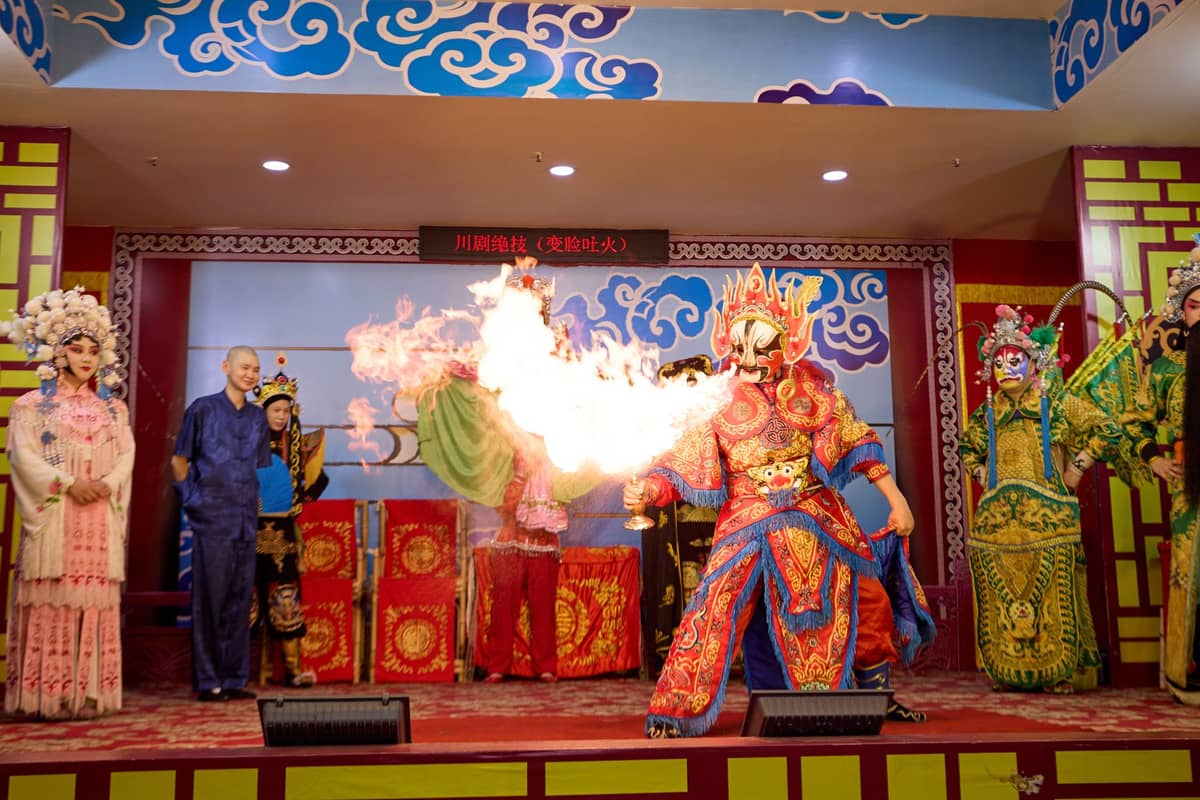
Beijing at night is not only about bars and clubs. The city has a rich offering of evening cultural performances that are genuinely worth attending, not as tourist box-ticking exercises but as experiences that can be the highlight of a trip. The most accessible entry point is the Lao She Teahouse near Qianmen, which combines traditional tea service with variety performances including excerpts from Peking Opera, acrobatics, and folk arts. Shows run most evenings and last around two hours; tickets should be booked in advance.
Full Peking Opera performances are staged at several dedicated theaters. These are longer, more demanding experiences than a teahouse variety show, but they provide an entirely different sense of the art form. For context on what you are watching, the Beijing opera guide covers the major venues, how to choose between them, and how to follow a performance without Chinese language. The National Centre for the Performing Arts programs Western classical music, opera, ballet, and contemporary performances throughout the year, with tickets available online.
Night Markets, Food Streets, and Summer Events
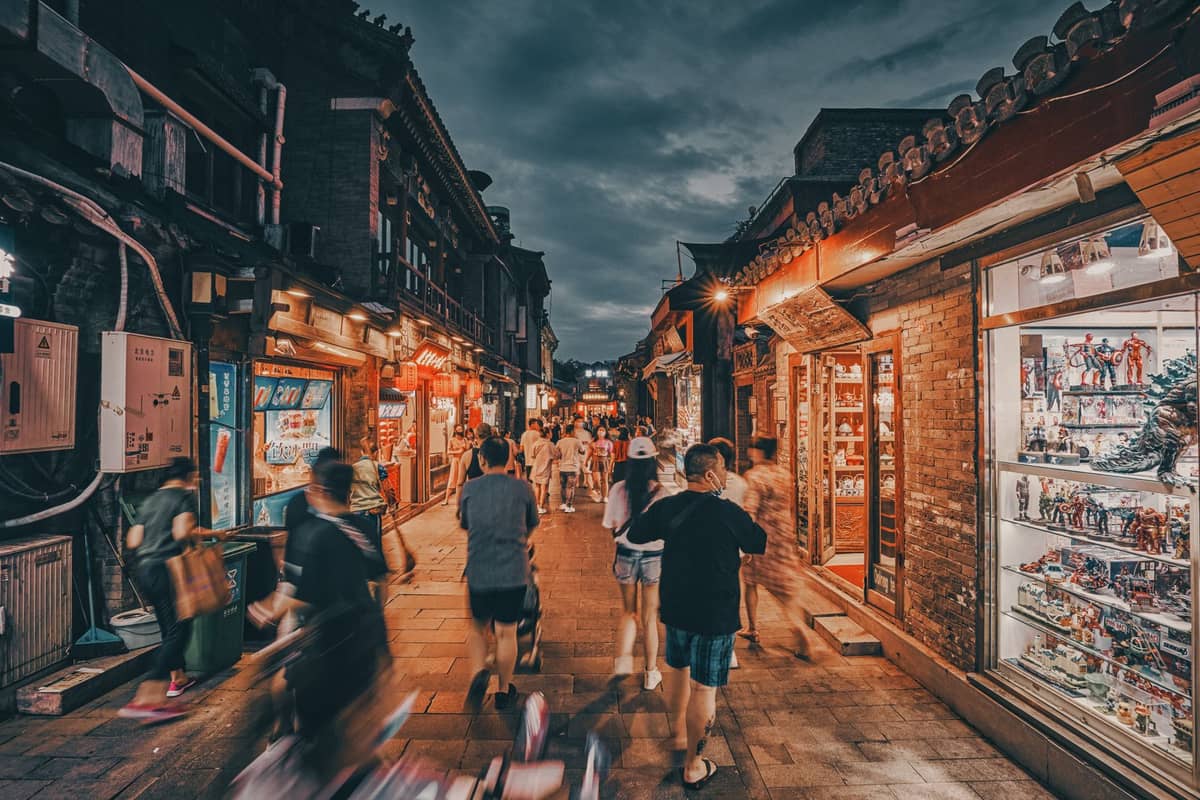
Beijing's late-night food scene deserves its own section. Guijie (Ghost Street) in Dongcheng is the city's most famous late-night dining strip: a one-kilometer stretch of hotpot restaurants, crayfish specialists, and Sichuan joints that stays open until the early hours. The 2026 Guijie Night Carnival is scheduled from May 29 through August 31, adding a street-festival dimension to the regular dining strip. Even outside that period, Guijie is reliably open and packed on weekend nights.
Summer brings a genuine expansion of evening options across the city. The municipal government runs a night-economy program from roughly June through October that includes outdoor markets, riverside performances, and evening events in parks and cultural venues. Longfu Temple's summer night market includes weekend hours of 17:00 to 21:00 during its initial run. A music program at Olympic Forest Park lists Saturday performances from 18:30 to 21:00. These schedules are confirmed for 2026 but should be verified for future seasons, as dates and times change year to year.
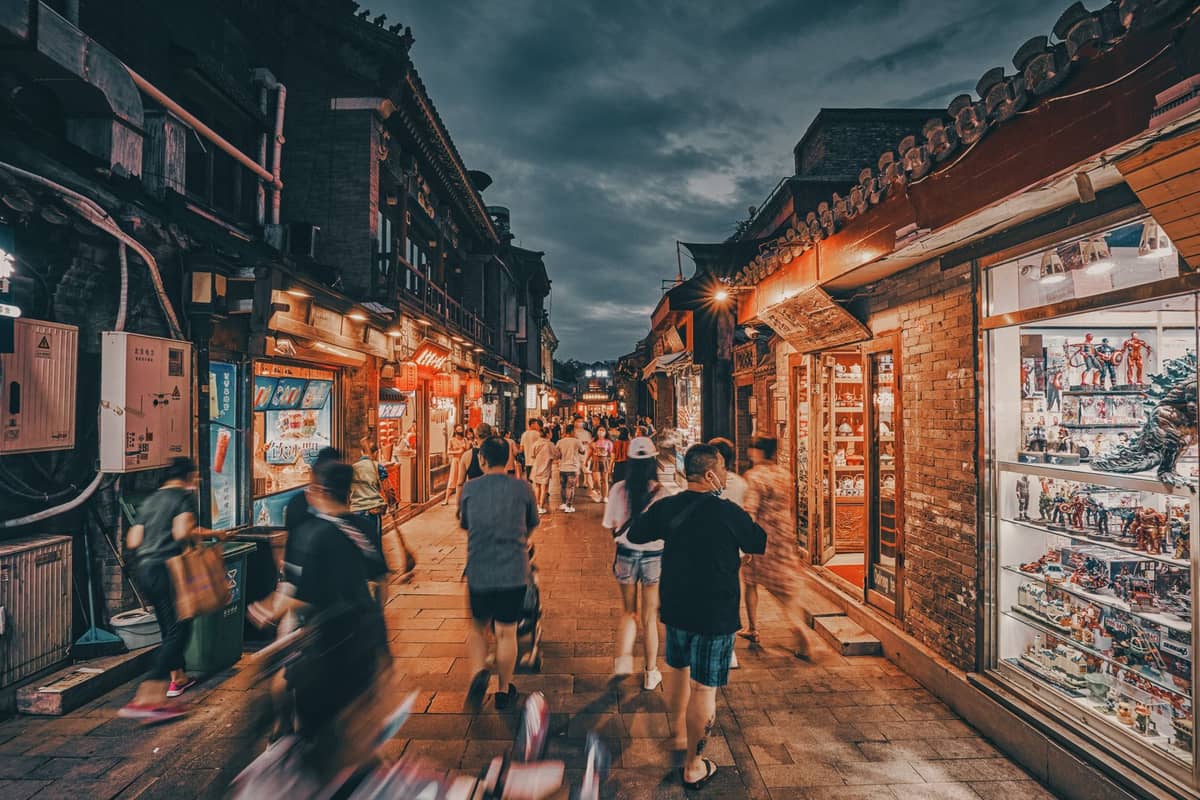
The area around Nanluoguxiang and the adjacent hutong lanes is worth visiting in the evening rather than during the day. The daytime crowds thin out after 20:00, the light improves for photography, and several of the better bars and small restaurants only come alive in the evening. The same applies to Wudaoying Hutong near the Lama Temple, which has a quieter, more neighborhood feel after dark.
Getting Home: Transport After Dark
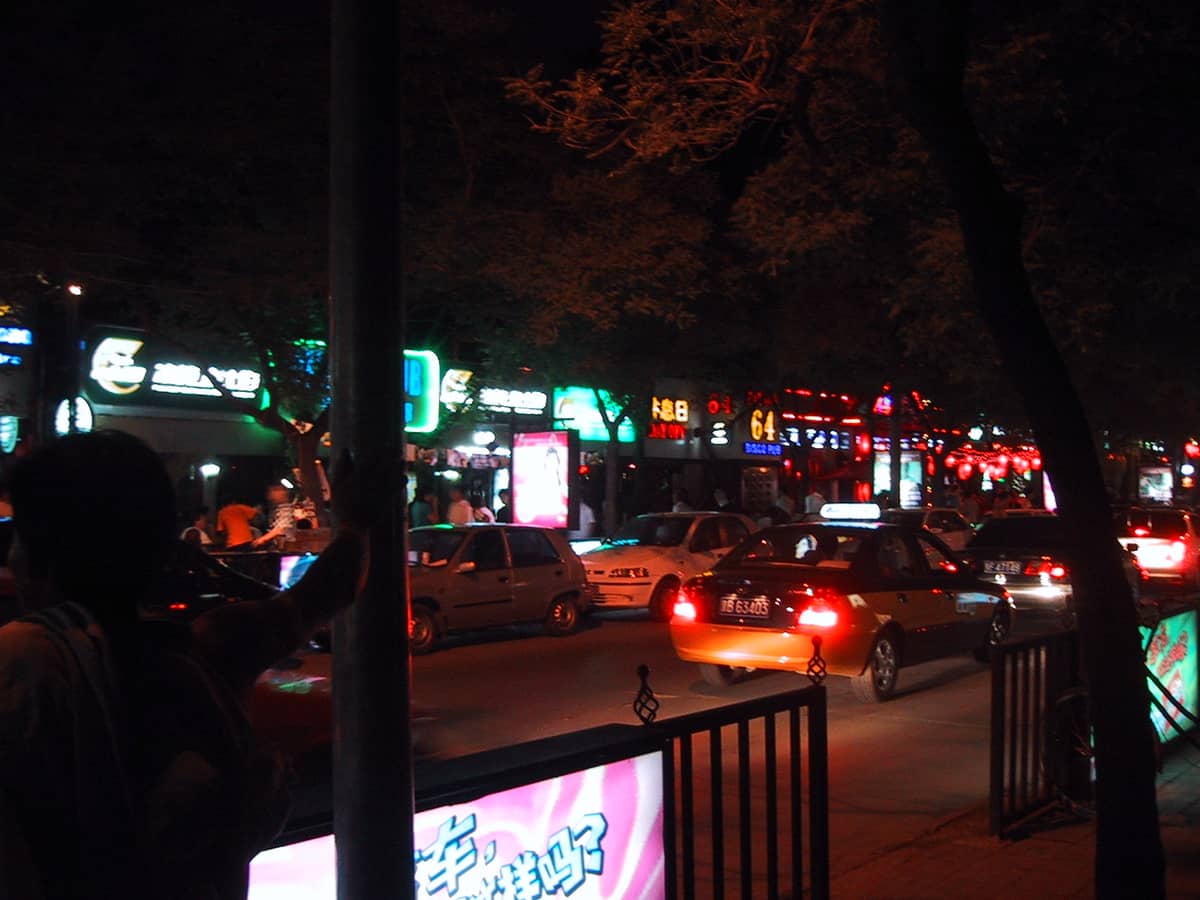
This is the practical question that most guides gloss over, and it matters more in Beijing than in cities with 24-hour transit. The Beijing Subway runs from approximately 05:00 to 23:00, but the last train time varies by line, station, direction, and day. The variation is not trivial: on some lines and stations, the last train leaves before 23:00. Check the timetable posted at your departure station or on the official Beijing Subway app before you commit to a plan.
After the subway closes, the options are taxis and DiDi, the dominant Chinese ride-hailing platform. DiDi requires a Chinese mobile number for registration, so set up the app and payment method before you go out, not at 02:00 on a street corner. Payment is through WeChat Pay or Alipay; international cards are not accepted within the app, though this situation has been changing. Confirm your payment options work before relying on them. Taxi availability near major club areas after 01:00 can be limited; having DiDi as a backup is advisable.
Subway service is occasionally extended for major national holidays and large events, but this is not a nightly guarantee and cannot be relied upon for ordinary planning. For full transport context, the getting around Beijing guide covers subway lines, taxi etiquette, and DiDi setup in more detail.
- Download DiDi and link a payment method before your first night out, not after.
- Check the last train time at your specific departure station, not just the general network closing time.
- Sanlitun to the Gulou area or Dongcheng by DiDi at night typically takes 15–30 minutes depending on traffic.
- Tipping is not standard practice in China; round up if you wish, but it is not expected.
- Have your hotel address saved in Chinese characters on your phone for showing taxi drivers.
ℹ️ Good to know
Beijing uses CNY (Chinese yuan, also called RMB or ¥) exclusively. Card acceptance varies widely at bars and smaller venues. Carry some cash, and ensure your WeChat Pay or Alipay account is funded and linked before going out. Most mid-range and upscale venues accept cards, but do not assume.
Practical Notes Before You Go Out
Beijing's nightlife scene operates on Chinese social platforms. WeChat is the primary communication tool: venues post cancellations, lineup changes, and event details there rather than on international apps. If you are serious about not missing something specific, following venue accounts on WeChat is more reliable than checking English-language listings. For broader trip planning, the Beijing first-timer guide covers app setup, payment systems, and local digital infrastructure.
For seasonal timing, the best months for outdoor evening activities are April–May and September–October, when temperatures are mild and the summer humidity has not set in or has passed. Summer evenings (June–August) are warm enough for outdoor events but can be humid, and the city's air quality varies by day and season, so check current conditions before committing to an outdoor evening. Winter nights are cold but the bar scene does not slow down significantly. For more on seasonal planning, the best time to visit Beijing guide provides a month-by-month breakdown.
If your interest is in photography rather than nightclubs, Beijing at night offers some of its most rewarding conditions. The Jingshan Park north of the Forbidden City provides an elevated view of the palace complex lit up after dark, and the hutong lanes around the Drum Tower photograph well in the evening light. The Beijing photography guide covers the best evening locations and the access rules that apply.
FAQ
What time do clubs close in Beijing?
There is no single closing time. Most large clubs in Sanlitun and around the Workers' Stadium stay open until 04:00–06:00 on weekends. Smaller bars and live music venues in the Gulou area often close between midnight and 02:00. Always check the specific venue's current hours, especially on weeknights, when many places close significantly earlier.
Is Beijing nightlife safe for foreign visitors?
Generally yes. The main tourist nightlife zones are heavily policed and broadly safe by the standards of any major city. The primary risks are the same as anywhere: overpriced drinks, scams near heavily touristed lake bars, and drink-spiking concerns at very crowded venues. Keep your group together, do not leave drinks unattended, and use DiDi or a registered taxi rather than unlicensed drivers offering rides outside clubs.
How do I get home after the subway closes?
DiDi is the standard option. Download and set up the app before you go out, with a linked payment method (WeChat Pay or Alipay). Taxis are available but harder to find near major club areas late at night. The subway typically runs until around 23:00, but the exact last train varies by line, station, and direction, so check the timetable at your specific departure station.
What is the drinking age in China?
The legal drinking age in China is 18. ID checks at venue doors are inconsistent at smaller bars but more common at larger clubs, particularly those with international management or regular foreign clientele. Carry your passport or a copy when going out.
Are there evening activities in Beijing that are not bars or clubs?
Yes, and they are genuinely worth considering. Options include Peking Opera performances, teahouse variety shows, evening visits to illuminated landmarks, summer night markets in parks and cultural venues, live jazz, and late-night dining on Guijie. Several parks and the Olympic site area have organized evening events in summer that are free or low-cost.