Chunxi Road: Chengdu's Central Shopping District Explained
Chunxi Road Pedestrian Street (春熙路步行街) is the commercial heart of central Chengdu, stretching roughly 1,840 metres through Jinjiang District. Free to enter and open around the clock, it combines flagship department stores, street food stalls, local fashion brands, and one of the city's most photographed squares. Whether you have two hours or a full afternoon, here is exactly what you will find.
Quick Facts
- Location
- Jinjiang District, central Chengdu
- Getting There
- Chunxi Road Station, Metro Lines 2 & 3
- Time Needed
- 2–4 hours (longer if dining)
- Cost
- Free to enter; shops and restaurants charge separately
- Best for
- Shopping, people-watching, street food, evening atmosphere
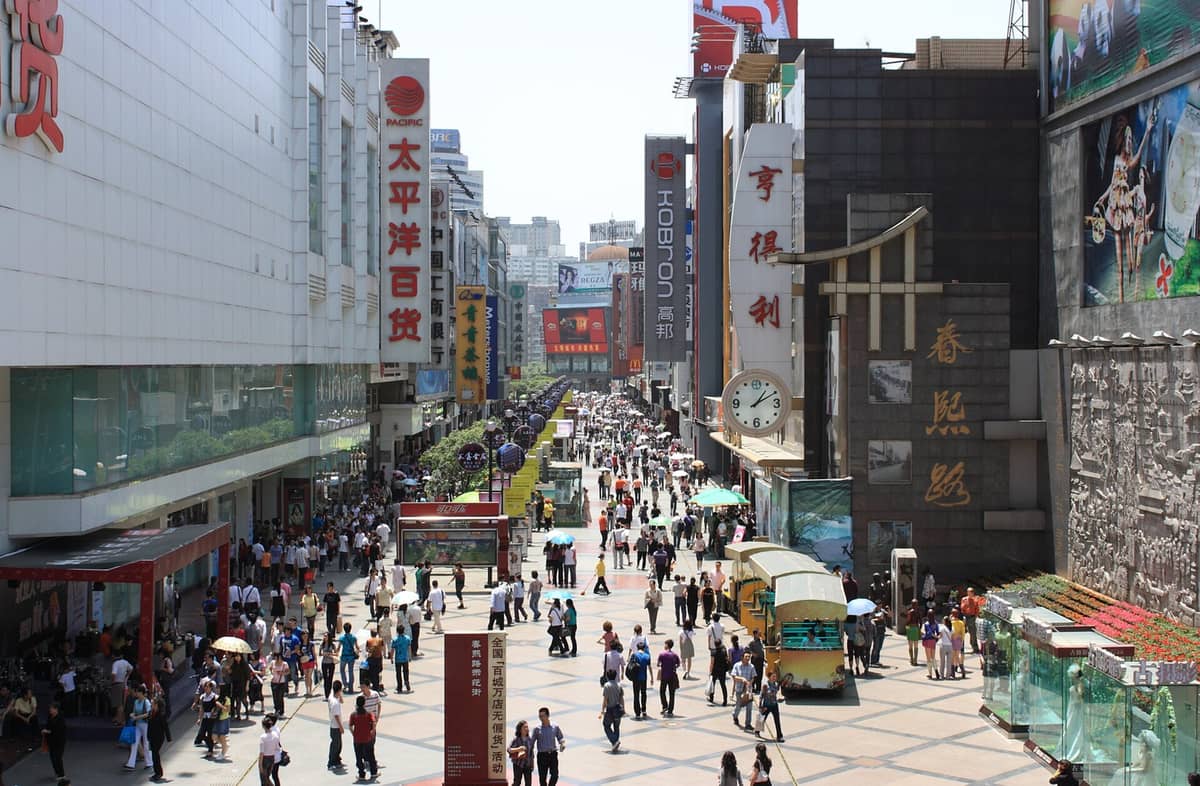
What Chunxi Road Actually Is
Chunxi Road Pedestrian Street (春熙路步行街, Chūnxīlù Bùxíngjiē) is a pedestrianised commercial precinct in Jinjiang District, established in 1924. Its principal walking routes total approximately 1,840 metres, and the full designated district covers around 274,000 square metres. That makes it one of the larger pedestrian commercial zones in inland China, though it does not feel overwhelming because it is organised around a relatively legible grid of connected lanes.
The street itself is free to enter at any hour. The pedestrian area never formally closes, though most shops operate roughly 10:00 to 22:00. That distinction matters: arriving before 10:00 or after 22:00 means you walk a well-lit, quiet street with shuttered storefronts, which has its own appeal but is not the full experience most visitors are after.
💡 Local tip
The most useful Metro exits for first-timers are at Chunxi Road Station on Lines 2 and 3. Exit B or C provides convenient access to the IFS tower and the Taikoo Li courtyard development.
A Brief History of the Street
Chunxi Road was laid out in 1924 during the Republican era, when the local military governor commissioned the demolition of older buildings to create a modern commercial street. The name translates roughly as 'Spring Radiance Road,' a deliberately optimistic choice that has aged reasonably well. For most of the twentieth century it served as the principal retail spine of the city, home to state-owned department stores and fabric shops.
The contemporary street is a product of successive redevelopments from the 1990s onward, the most significant of which brought international luxury brands, the IFS mall with its rooftop giant panda sculpture, and the Taikoo Li open-plan retail complex. Today it functions as the city's most commercially intensive district, a role it has held, in various forms, for a century.
For a broader picture of how Chunxi Road fits into Chengdu's commercial geography, the Chengdu shopping guide covers the full range of retail districts across the city, from wholesale markets to boutique lanes.
Tickets & tours
Hand-picked options from our booking partner. Prices are indicative; availability and final rates are confirmed when you complete your booking.
Panda Base and city highlights private day tour in Chengdu
From 302 €Instant confirmationFree cancellationFull day private tour Giant Panda Base and city highlights
From 365 €Instant confirmationFree cancellationChengdu to Yibin private tour with Wuliangye Liquor Museum visit
From 300 €Instant confirmationChengdu private evening tour with hot pot dinner
From 247 €Instant confirmationFree cancellation
How the Street Changes Through the Day
Before 10:00, Chunxi Road is a good place to walk without crowds. The granite paving is still damp from overnight cleaning vehicles, delivery trucks are parked at side-street loading bays, and a handful of breakfast stalls operate near the metro exits. The scale of the architecture reads more clearly at this hour: the IFS tower reflects pale morning light, and the older mid-rise department stores along the southern stretch look more worn than they do when backlit at night.
From around 11:00 the street fills steadily. Weekday midday crowds are manageable; weekend afternoons from 13:00 onward become genuinely dense, particularly around the Taikoo Li square and the entrance to Chengdu IFS. If you dislike being in slow-moving foot traffic and want to browse shops comfortably, a weekday morning is significantly more pleasant than a Saturday afternoon.
The evening shift, roughly 19:00 to 22:00, is when Chunxi Road makes its strongest visual case. Neon and LED signage, many of the signs in both Chinese characters and stylised English, reflects off the paving after rain. Street performers appear near the central plaza. The food options shift toward grilled skewers, cold noodles, and sweet taro milk tea. It is loud, bright, and photogenic, particularly looking north from the Taikoo Li end. This is the version of Chunxi Road that appears in most travel photography.
ℹ️ Good to know
Public holidays, particularly Chinese New Year (Spring Festival), Labour Day, and National Day, bring some of the highest foot traffic of the year. Expect significant congestion and plan accordingly.
Key Zones and What You Will Find
The northern cluster around Chunxi Road Station is anchored by Chengdu IFS (International Finance Square), a multi-storey mall carrying international luxury and mid-market brands. The rooftop installation of a giant clinging panda sculpture has become one of the most photographed objects in the city. The mall connects internally to the Taikoo Li development, which is a lower-rise, open-air retail precinct built around a series of courtyards and glass-and-steel lanes. Taikoo Li has a noticeably different atmosphere: less enclosed, more design-conscious, with a mix of cafes, designer brands, and the courtyard of Daci Temple visible through its eastern edge.
Daci Temple itself, a Tang-dynasty Buddhist temple now surrounded by the Taikoo Li development, is worth a brief visit. It is an unusual combination of working religious site and upscale retail context. The Daci Temple page covers what to expect if you decide to go inside.
Moving south from the IFS-Taikoo Li cluster, the street becomes more varied. You pass local fashion chains, cosmetics retailers, several mid-range department stores, and the older Renhe Spring plaza. Street food carts concentrate near side-street intersections, particularly along the lane running parallel to the west. The southern end transitions into a broader commercial neighbourhood with fewer designated pedestrian sections.
If shopping is your primary reason for visiting Chengdu, also consider Taikoo Li Chengdu on its own terms, and Chengdu IFS for a sense of what each offers independently.
Food and Drink on Chunxi Road
The eating options range from street-level snacks to full sit-down restaurants. The side lanes off the main pedestrian spine, particularly toward the west, are where you find the more affordable Sichuan food: mapo tofu restaurants, cold noodle shops selling liangmian with chilli oil and sesame paste, and stalls doing dan dan noodles or spicy skewers. The smell of doubanjiang, the fermented chilli-bean paste that defines much of Sichuan cooking, is present throughout the evening.
The mall food courts in IFS and the cafes within Taikoo Li offer a different register: bubble tea brands, Japanese ramen chains, Sichuan hotpot restaurants aimed at the mid-budget tourist, and several internationally recognised coffee chains. Prices in the malls run noticeably higher than in the street-level snack lanes.
For a more systematic approach to eating well in this part of the city, the Chengdu street food guide identifies specific dishes and where to find them, including options near Chunxi Road.
Practical Considerations
Getting There
Metro Lines 2 and 3 both stop at Chunxi Road Station, making it one of the most accessible points in the city. From the central Tianfu Square Station (Lines 1 and 2), Chunxi Road is one stop east on Line 2. City buses including routes 16, 42, and 55 also serve the area, with a stop near the south entrance. Given parking constraints in this part of Jinjiang District, the metro is by far the most practical approach.
Footwear and Comfort
The paving is smooth granite tile, which looks elegant but becomes slippery when wet. Comfortable flat shoes are the right call. You will cover more distance than you expect: even a focused two-hour visit involves considerable walking once you factor in moving between malls and exploring the side lanes.
Photography
The rooftop panda sculpture on IFS is most effectively photographed from street level looking up, or from the upper floors of the adjacent Taikoo Li buildings. Evening light, particularly 30 to 60 minutes after sunset when the sky is still dark blue and the signage is at full brightness, gives the most dramatic street photographs. The Taikoo Li courtyard photographs well at any hour, but the temple-adjacent sections benefit from morning light before the crowds arrive.
Accessibility
The pedestrian street itself is largely flat and wide. Chunxi Road Metro Station has elevator access at certain exits, but coverage across all exits varies. Individual shops and malls vary in their step-free provision. Anyone with specific mobility requirements should check the relevant mall's accessibility information before visiting.
⚠️ What to skip
Chunxi Road draws a high volume of pedestrian traffic on weekends and public holidays. Pickpocketing in dense crowds is an occasional issue in any major commercial district. Keep bags zipped and valuables in front pockets or a secure crossbody bag. Review standard precautions in the Chengdu safety guide before you go.
Who Should Reconsider This Visit
Chunxi Road is primarily a commercial street, not a heritage or nature experience. Travellers visiting Chengdu specifically for Sichuan history, temple architecture, or green space will not find much of that here. The street's appeal is contemporary urban life, retail, and food, and it rewards visitors who engage with it on those terms.
If you find dense retail environments draining, especially at peak hours, a short targeted visit of under an hour to see the Taikoo Li courtyard and the IFS panda sculpture will give you the visual highlights without committing to a full afternoon. The street is rarely worth treating as a primary destination for first-time Chengdu visitors with only two or three days; it works better as a late-afternoon or evening add-on to a day centred on something like Wenshu Monastery, the Sichuan Provincial Museum, or People's Park.
If you are planning your first trip and want to allocate time wisely, the 3-day Chengdu itinerary explains how Chunxi Road fits alongside the city's higher-priority attractions.
Insider Tips
- The Taikoo Li development includes a walkable section directly adjacent to Daci Temple's outer wall. Most visitors move through quickly, but pausing here — particularly on a quiet weekday morning — gives you an unusual juxtaposition of Tang-dynasty stonework and contemporary retail glass that is genuinely distinctive.
- If you want to eat well for under ¥30 CNY per person, leave the main pedestrian spine and walk one or two blocks west into the side lanes. Prices drop significantly once you are off the primary tourist path, and the food quality is comparable.
- The rooftop public terrace on IFS provides a useful elevated view over the street and surrounding district. Access details may vary, but it has historically been accessible without a purchase during regular mall hours.
- Rain transforms the granite paving into a reflective surface that makes evening photography significantly more interesting. A light rain after 18:00 is actually a better condition for street photography than a clear evening, given the neon and LED density.
- For Chinese New Year on Chunxi Road, expect very high crowds but also seasonal decorations, lion dances, and a concentrated atmosphere that is worth experiencing briefly, even if extended shopping is impractical.
Who Is Chunxi Road For?
- Visitors who want to experience contemporary Chengdu urban culture alongside its historical attractions
- Shoppers looking for a mix of international brands, local fashion labels, and street-level retail in one walkable zone
- Travellers interested in street food and casual evening dining in a central, walkable location
- Anyone wanting a convenient late-afternoon or evening activity near central Chengdu, easily reached by Metro Lines 2 or 3
- Photography enthusiasts interested in urban nighttime scenes, architecture contrasts, and Chinese commercial streetscapes
Nearby Attractions
Other things to see while in Jinjiang District:
- Anshun Bridge
Anshun Bridge (安顺廊桥) is a roofed corridor bridge crossing the Jinjiang River in Jinjiang District, rebuilt in 2003 in the style of a Qing dynasty original. Free to walk across at any hour, it draws the most visitors at night when the lantern lighting reflects across the water. This guide covers what you'll actually see, when to go, and how it fits into a broader Jinjiang itinerary.
- IFS Chengdu (International Finance Square)
Chengdu IFS, officially Chengdu International Finance Square, is the city's most prominent luxury retail and dining complex, sitting at the heart of Jinjiang District. The flagship shopping mall spans roughly 210,000 square metres within a development whose overall gross floor area exceeds 760,000 square metres, alongside Grade-A office buildings, a hotel, and residences., it draws shoppers, diners, and architecture enthusiasts in equal measure. Whether you are here for international flagship stores, Sichuan cuisine, or simply the spectacle of urban Chengdu at full volume, IFS delivers.
- Daci Temple
With major construction during the Tang dynasty in 757 CE, Daci Temple is one of Chengdu's oldest surviving Buddhist institutions. Located steps from Chunxi Road and Taikoo Li in Jinjiang District, it offers free admission, incense-scented courtyards, and a genuine sense of calm that the surrounding commercial district does not.
- Taikoo Li Chengdu
Taikoo Li Chengdu is an open-air mixed-use development in Jinjiang District that wraps around the ancient Daci Temple. Spanning roughly 114,000 square metres of retail space, it brings together international flagship stores, local designer boutiques, and some of Chengdu's most sought-after restaurants across a low-rise, lane-style layout that genuinely rewards slow walking.