La Cartuja is Seville's most unusual district: a river island shaped by a world expo, home to a 15th-century monastery, a theme park, university faculties, and sprawling business parks. It sits between two arms of the Guadalquivir and occupies a strange, fascinating space between history and post-industrial reinvention.
La Cartuja, or Isla de la Cartuja, is a river island in the Guadalquivir that spent centuries in near-isolation before hosting the 1992 World Exposition and transforming into one of Seville's most architecturally eclectic districts. The same island that once sheltered Carthusian monks now contains a theme park, technology campuses, and one of Andalusia's best ceramics museums. It doesn't feel like the rest of Seville, which is precisely the point.
Orientation: Where La Cartuja Sits
Isla de la Cartuja is formed by two branches of the Guadalquivir River, creating a elongated island that runs north to south through the western edge of Seville. Isla de la Cartuja is formed by two branches of the Guadalquivir River, creating a long island that runs north to south through the western edge of Seville. Its southern boundary begins near the Puente de la Barqueta, which connects the island to the Triana district on the southern bank. To the north, the island extends toward the Ronda Supernorte area, near Santiponce.
The island sits across the Guadalquivir from Triana to the south-east and from the city's historic core to the east. In practical terms, it is not far at all: from the Puente de Triana (Triana Bridge), the western shore of the island is barely five minutes on foot. Yet the character shifts immediately. Where Triana has narrow streets, ceramic-fronted tapas bars, and centuries of dense urban life, La Cartuja opens into wide avenues, green spaces, and large-footprint institutions.
The island is part of the municipality of Seville. Its main arteries are Avenida de los Descubrimientos, Camino de los Descubrimientos, and Avenida Américo Vespucio, which connect many of the Expo '92 legacy sites and the main campus and business areas.
Character and Atmosphere
La Cartuja resists easy categorization. It is not a residential neighborhood in any conventional sense. There are no corner grocery shops, no rows of apartment balconies strung with laundry, no old men playing dominoes outside a bar. What it has instead is a particular kind of urban quietness that comes from spaces built for large-scale events and then adapted, imperfectly, to everyday use. Walk along Avenida de los Descubrimientos on a weekday morning and you will pass university students cycling to the engineering school, delivery vans servicing the office parks, and the occasional tourist heading for the monastery, almost all in relative silence.
In the early morning, the riverbank paths along the island's eastern edge catch the first light off the Guadalquivir. This is when the island is at its most peaceful: joggers follow the waterfront trail, herons stand motionless in the shallows, and the outline of Triana's church towers is reflected in the water. The atmosphere is genuinely calm, removed from the noise of central Seville despite the short distance.
By mid-morning on weekends and school holidays, the Isla Mágica theme park shifts the energy considerably. Families converge from the bus stops on Avenida de los Descubrimientos, the queues form at the park gates, and the sound of water rides and recorded music bleeds across the open ground. This side of La Cartuja is unapologetically aimed at families with children, and it draws large crowds in summer when the park's water attractions are at their most popular.
After dark, much of the island goes quiet. The business parks empty, the university buildings close, and outside of occasional concerts or events at the Teatro Central or other Expo-era venues, there is very little street life. This is not the Seville of late-night tapas and flamenco. Visitors looking for evening entertainment will find the walk back across the Puente de Triana, or a bus back to the historic centre, to be the natural end of a day on the island.
⚠️ What to skip
La Cartuja is not a neighborhood to base yourself in for nightlife or evening dining. Its restaurants and cafés mostly serve daytime visitors, and the area becomes very quiet after 9pm. Plan to return to Triana or the historic centre for dinner.
What to See and Do
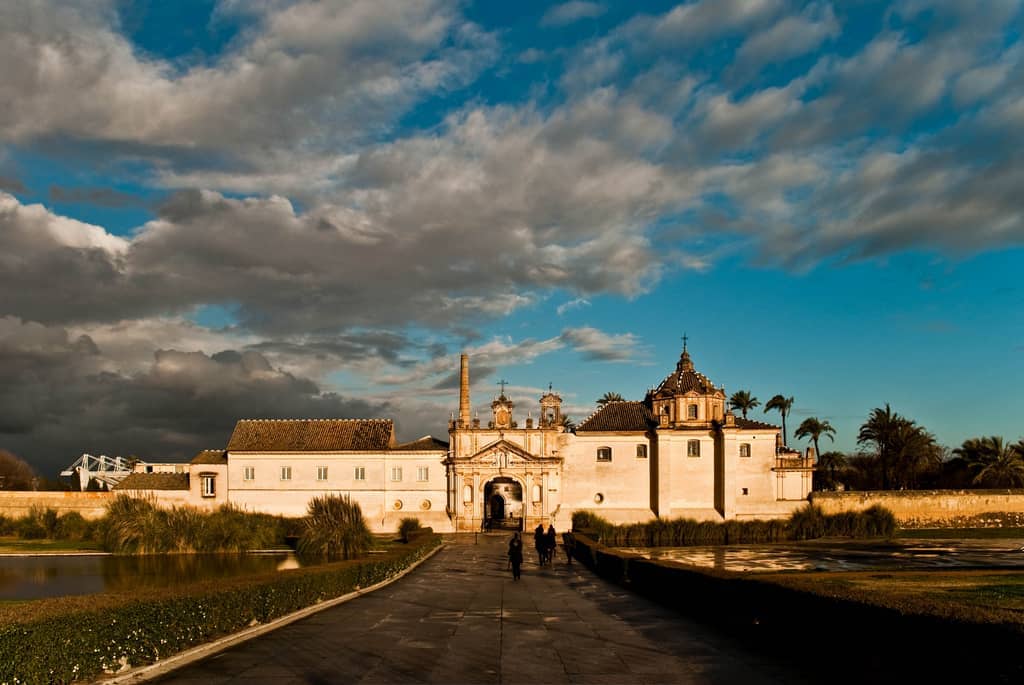
The undisputed centrepiece of the island is the Monasterio de la Cartuja, a Carthusian monastery founded in the early 15th century and dedicated to Santa María de las Cuevas. This is the institution that gave the island its name, and its history is as layered as the building itself. The monastery was used by Christopher Columbus as a base and resting place; his remains were kept here for several years before their eventual transfer to the Americas and later to Seville Cathedral. In the 19th century, the building was converted into a ceramic factory, which operated under the Pickman & Co. brand for over a century, leaving industrial kilns alongside Gothic chapels. Today the complex functions as the Centro Andaluz de Arte Contemporáneo (CAAC), housing a significant collection of contemporary art within the monastery's restored cloisters and industrial structures. Few buildings in Seville carry as many historical strata in a single place.
Directly adjacent to the monastery is the Centro Cerámica Triana, which, while technically located on the Triana side of the river, is closely connected thematically to the ceramic heritage of this part of the city. On the island itself, the legacy of the ceramic factory period is visible throughout the monastery complex, with the preserved kilns and industrial structures forming an unusual dialogue with the medieval architecture.
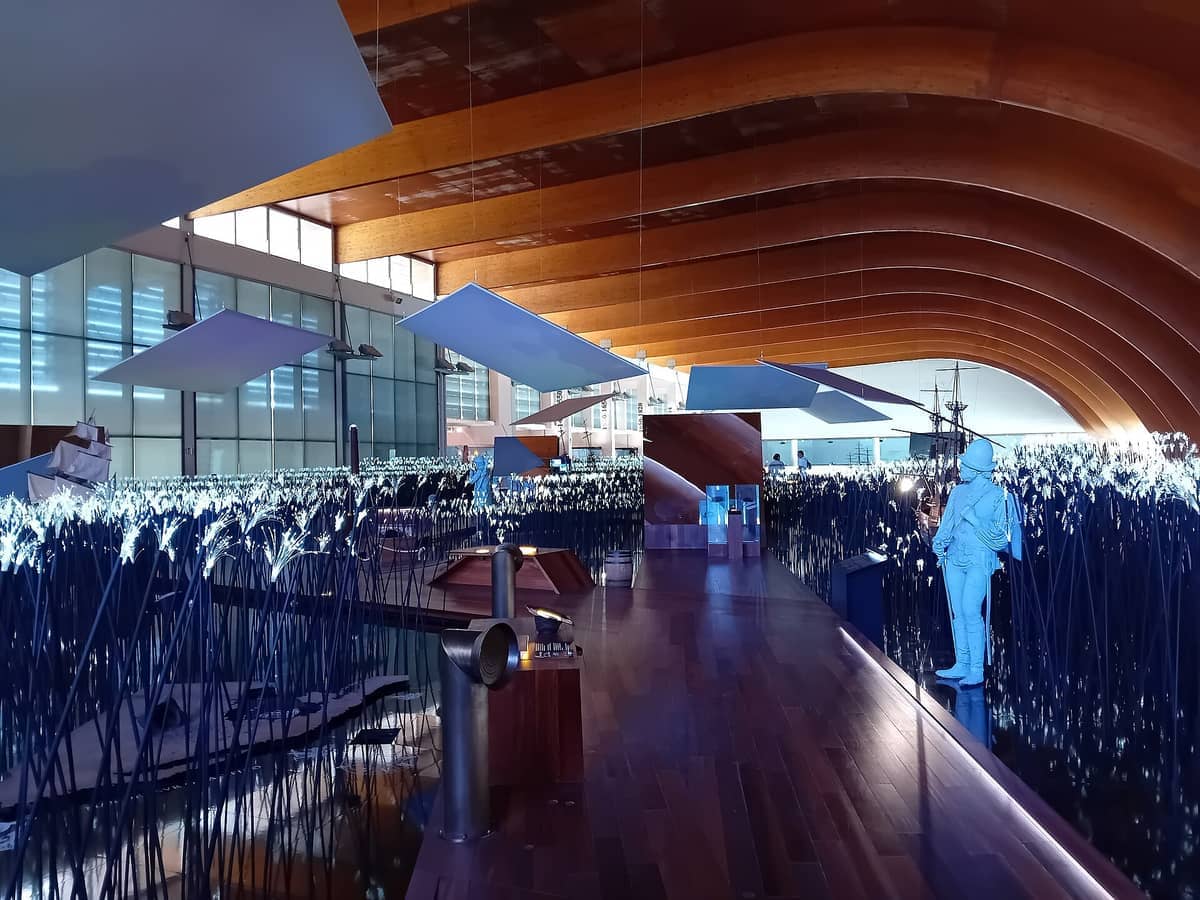
The Pabellón de la Navegación is one of the most striking Expo '92 structures to have found a permanent use. The building now functions as a museum dedicated to the history of Spanish maritime navigation and the era of Atlantic exploration.
For families, Acuario de Sevilla is one of the island's most visited attractions, located within the Expo-era pavilion zone. For families, is one of the island's most visited attractions, located within the Expo-era pavilion zone. The aquarium focuses on marine ecosystems and exploration themes. It is a well-designed facility that works particularly well for children and makes a logical pairing with the Pabellón de la Navegación nearby.
Centro Andaluz de Arte Contemporáneo (CAAC) in the Monasterio de la Cartuja: contemporary art in a medieval-industrial complex
Pabellón de la Navegación: maritime history museum with a river-view observation tower
Acuario de Sevilla: ocean ecosystems and Atlantic exploration themes
Isla Mágica: a theme park built around the Age of Discovery, with water rides and seasonal events
Riverbank walking and cycling paths along the Guadalquivir's western channel
Expo '92 architectural heritage: several pavilions and public spaces from the 1992 World Exposition remain accessible
💡 Local tip
The Centro Andaluz de Arte Contemporáneo (CAAC) is free on Sundays and during its free-entry hours, making it one of the better free cultural experiences in Seville. Check their website for current opening hours before visiting, as they vary seasonally.
Eating and Drinking
The food scene on La Cartuja is functional rather than memorable. The island's restaurants and cafés are concentrated around the main visitor attractions and the university campus, and they are geared toward feeding people between activities rather than being destinations in their own right. Expect café bars serving standard Spanish lunches, bocadillos (filled rolls), and set menus at around 12 to 15 euros, rather than the kind of tapas culture you find in Triana or the Alfalfa area of the historic centre.
The Isla Mágica park has its own internal food options, as expected from a theme park, and the Pabellón de la Navegación has a café with terrace views over the river. The university campus area supports a cluster of informal cafés and sandwich shops catering to students, which are your best bet for cheap and genuine daytime eating.
For anyone serious about food, the honest advice is to cross back to Triana before or after your visit to the island. The Mercado de Triana on the Triana side of the Puente de Isabel II is a covered market with food stalls and a good bar scene, and it is less than ten minutes' walk from the island's southern entrance. The streets around Calle Betis in Triana are lined with restaurants with river views, and that is where you should plan any proper meal before or after a day on La Cartuja.
ℹ️ Good to know
If you are visiting La Cartuja for a full day, consider bringing your own food or packing lunch. The on-site café options are limited and prices at the theme park are high. A picnic on the riverbank paths is entirely realistic in the cooler months.
Getting There and Around
Several TUSSAM bus lines serve the island, and this is the most straightforward way to reach it from the historic centre. Lines C1, C2, and 02 all stop on or near the island, with stops along Avenida Américo Vespucio serving the monastery area and points further north. Isla Mágica is directly served by lines 05, C3, C4, and several M-prefix regional services. Journey times from the city centre are generally 15 to 25 minutes depending on the specific stop. For full route planning, see the getting around Seville guide covers the TUSSAM network in detail.
Metro Line 1 (L1) of Metro de Sevilla does not have a station on the island itself, but stations such as Plaza de Cuba or Puerta Jerez place you within a reasonable walk or short bus connection to the island's main attractions. From the Puente de Triana, you can walk onto the island's southern end in under ten minutes.
Cycling is a practical and pleasant way to arrive. Seville has an extensive cycling infrastructure, and the riverbank paths connect La Cartuja to the Triana waterfront and from there to the city centre without requiring any road cycling. The Sevici public bike-share scheme operates across the city, with docking stations on the Triana side of the river. The island itself has wide paths suitable for cycling between the main sites.
Walking across the bridges from Triana takes about 10 to 15 minutes to reach the island's southern attractions. The Puente del Cristo de la Expiración (Puente del Cachorro) at the island's southern tip and the Puente de la Barqueta further north are both accessible on foot and offer good views of the river and island from mid-span. Taxis and ride-hailing apps (Uber and Cabify both operate in Seville) can drop you at any of the main attractions on the island without difficulty.
Where to Stay
There is very little accommodation on the island itself, and what exists is aimed at business travellers rather than tourists. La Cartuja is not a practical base for exploring Seville. The island's limited evening life, sparse food options, and distance from the city's social core make it a poor choice for most visitors. For a full overview of where to stay in Seville, the where to stay in Seville guide covers all the main neighborhoods, including Triana, which sits immediately across the river and is a far more rewarding base.
Staying in Triana gives you easy access to La Cartuja while putting you within a 20-minute walk of the Seville Cathedral and the historic centre. The same is true of the historic centre itself, where Santa Cruz and the surrounding streets have the widest range of hotels at all price points. Visitors whose primary purpose is the Expo '92 sites or a specific event at one of the island's venues might consider it, but for general tourism in Seville, there are better-located options.
Practical Notes for Visitors
La Cartuja rewards planning more than most Seville neighborhoods. The sites are spread out, there are few incidental pleasures to stumble upon between them, and the distances can be deceptive on a map. A visit to the CAAC monastery, the Pabellón de la Navegación, and the Acuario in a single day is achievable on foot, but you will cover meaningful ground. Bring comfortable shoes, water, and sunscreen in the summer months when the open, treeless sections of the Expo grounds offer little shade and temperatures regularly exceed 35°C. For timing your visit to Seville around the best weather, the best time to visit Seville guide explains the seasonal trade-offs.
The island is used for occasional large-scale events, concerts, and cultural festivals, particularly in spring and early autumn. During these periods, access routes and bus services can change and the normally quiet island becomes genuinely crowded. If you are in Seville for Feria de Abril or Semana Santa, check whether any La Cartuja events overlap with your dates, as they can affect transport across the bridges.
Safety on the island is not a concern in any significant way. The area is standard urban Seville, accessible by regular city buses and visited by families, students, and tourists throughout the day. The main practical caution is simply that after dark, outside of event nights, the island is very quiet and not particularly well lit in the less-developed northern sections. There is no specific official safety warning for the area, but visitors without a reason to be there after nightfall will likely find it unrewarding.
TL;DR
La Cartuja is a river island district in the Guadalquivir, best known for hosting the 1992 World Exposition and for the historic Monasterio de la Cartuja, now the Centro Andaluz de Arte Contemporáneo.
Key draws include the CAAC contemporary art museum, the Pabellón de la Navegación, Acuario de Sevilla, and Isla Mágica theme park; it is especially strong for culture, families, and architecture.
The food scene is limited and functional; visitors should plan to eat in nearby Triana before or after visiting the island.
Not recommended as a base for tourists: accommodation options are sparse and the neighborhood lacks the evening life and walkable density of Triana, Santa Cruz, or the historic centre.
Best suited to travellers interested in contemporary art, Expo '92 architecture, maritime history, or families visiting Isla Mágica; easily reached by bus from the centre or on foot from Triana.
Top Attractions in La Cartuja (Isla de la Cartuja)
Three days is enough time to cover Seville's greatest landmarks, explore its best neighbourhoods, and eat and drink well without rushing. This day-by-day itinerary gives you practical routes, current ticket prices, and the kind of logistical detail that makes the difference between a smooth trip and a frustrating one.
Seville makes an ideal home base for a week in Andalusia. With high-speed rail to Córdoba in under 45 minutes and buses to Granada in 3 hours, you can cover the region's highlights without changing hotels. This guide breaks down exactly how to structure 7 days, what to prioritize, and what to skip.
The journey from Barcelona to Seville covers roughly 830 km across Spain. This guide breaks down every transport option, from the high-speed AVE train to budget flights, with practical tips on cost, comfort, and what awaits you in Andalusia's capital.
Seville's skyline is defined by bell towers, domes, and gilded facades accumulated over eight centuries of Christian, Moorish, and Renaissance building. This guide covers the city's finest religious architecture, from UNESCO-listed giants to intimate neighbourhood churches that most visitors walk straight past.
Seville delivers more than its size suggests when it comes to museums. From world-class fine art and Moorish palaces to ceramics, naval history, and flamenco, this guide covers the best museums in Seville across every interest and budget.
Seville's climate is one of the most extreme in Western Europe for a major city. This guide breaks down every month by temperature, rainfall, crowds, and events so you can choose the timing that actually fits your trip.
Seville rewards those who look up and climb high. This guide covers the city's best panoramic viewpoints, from iconic tower climbs to riverside vantage points and rooftop terraces with sweeping skyline views.
Seville sits at the heart of Andalusia, putting some of Spain's most compelling destinations within easy reach. This guide breaks down the best day trips from Seville by travel time, transport options, and what you actually get for the effort — including which ones are genuinely worth the journey and which ones need an overnight.
Seville's Feria de Abril is one of Europe's great street festivals: six days of flamenco dresses, horses, sherry, and late nights on a purpose-built fairground. This guide covers everything from how to get in without an invitation to what things actually cost, when to go, and what to wear.
Seville is the spiritual home of flamenco, and navigating its shows requires more than a hotel concierge recommendation. This guide breaks down the best tablaos, what to expect, how much to pay, and how to avoid the tourist traps, so you leave with a genuine experience of one of Spain's most powerful art forms.
Seville is one of Europe's most rewarding cities to explore on a tight budget. Many of its greatest sights offer free entry on specific days, and its parks, plazas, churches, and neighbourhoods reward hours of walking without spending a cent.
Seville is one of southern Spain's most walkable cities, but knowing which transport option to use, and when, can save you real time and money. This guide covers everything from landing at SVQ airport to hopping trams through the historic centre.
Seville is the capital of Andalusia and one of Spain's most architecturally rich cities, but it's not right for every traveller or every season. This guide breaks down what the city genuinely delivers, where it falls short, and exactly when and how to visit to get the most from it.
The Madrid to Seville route is one of Spain's most travelled corridors, and three competing high-speed rail operators now make it faster and cheaper than ever. This guide breaks down every option, from budget OUIGO tickets to overnight buses, with practical tips on timing, pricing, and what to expect on arrival.
Seville's Semana Santa is one of the most intense religious spectacles in the world, drawing hundreds of thousands of visitors each spring. This guide covers the full schedule, the key brotherhoods, how to secure Carrera Oficial seats, when to go for smaller crowds, and everything else you need to experience Holy Week properly.
Attending a Sevilla FC home match is one of the most authentic experiences Seville, Spain offers. This guide covers how to buy tickets, get to the stadium, pick the right seat, and make the most of match day — without the rookie mistakes.
Seville rewards those who look beyond the Cathedral and Alcázar. These 18 off-the-beaten-path experiences reveal aristocratic palaces, forgotten Roman cities, local markets, and baroque masterpieces that most visitors walk straight past.
Autumn is arguably Seville's most underrated season. Temperatures drop from summer extremes, crowds thin out after peak season, and the city's streets become walkable again. This guide breaks down exactly what to expect each month, from weather data to practical tips.
Spring is Seville's most dramatic season, combining mild weather with two of Europe's biggest festivals. This guide breaks down exactly what to expect each month, when to book, and how to navigate the crowds.
July and August in Seville mean scorching temperatures regularly above 35°C, occasional heatwaves above 40°C, and almost zero rain. This guide gives you the strategies, timing, and specific attractions to make summer work in your favor rather than against you.
Seville in winter is mild, uncrowded, and genuinely good for sightseeing. This guide covers the real weather, the seasonal events worth planning around, what to pack, and how to make the most of Andalusia's capital between December and February.
Seville nightlife runs on Andalusian time: dinner at 22:00, bars at midnight, clubs after 02:30. This guide covers the best neighborhoods, rooftop bars, nightclubs, flamenco shows, and practical details on dress codes, pricing, and the noise regulations that shape the scene.
Seville (Sevilla) is one of southern Spain's most rewarding city breaks, and it doesn't have to be expensive. This guide breaks down real daily costs, free entry windows at major monuments, the cheapest ways to get around, and the exact seasons when prices drop significantly.
Seville is lined with tens of thousands of bitter orange trees, yet almost no one eats the fruit. This guide explains the history, seasonality, and surprising uses of the Seville orange, plus what visitors actually experience walking beneath these famous trees.
Seville rewards shoppers who know where to look. This guide covers the best shopping streets, markets, and authentic products to buy in Sevilla, from azulejos and flamenco accessories to olive oil and vintage finds at El Jueves.
The journey from Seville to Córdoba is one of Andalusia's easiest and most rewarding travel connections. This guide covers every option: high-speed trains that take under an hour, budget buses, and guided day trips, with practical tips on costs, booking, and what to do once you arrive.
The journey from Seville to Málaga is one of the most popular routes in Andalusia, with trains taking as little as 2 hours. This guide breaks down every option — train, bus, and car — with real prices, scheduling advice, and the honest tradeoffs between each.
Both Seville and Granada rank among Spain's most compelling cities, but they offer very different experiences. This guide breaks down the key differences across sightseeing, atmosphere, budget, logistics, and timing so you can choose the right destination or plan both.
From a world-class aquarium and a theme park with a water area to horse-drawn carriage rides and riverfront parks, Seville rewards families who plan well. This guide covers the top kid-friendly attractions, current pricing, seasonal timing, and practical logistics so you can skip the guesswork.
Seville, the capital of Andalusia, packs more history, architecture, and street life into a walkable city than almost anywhere in Spain. This guide covers the essential things to do in Seville, with accurate ticket prices, seasonal advice, neighborhood breakdowns, and clear assessments of what's worth your time.
Seville is one of the most walkable cities in southern Spain, with its major monuments clustered within a compact historic core. This guide covers the best self-guided walking routes by neighbourhood, current entry prices for the Alcázar and Cathedral, seasonal timing advice, and the practical details most visitors overlook.
Seville has one of Spain's most distinctive food cultures: paid tapas ordered gradually, cold soups in summer, and markets that close by mid-afternoon. This guide covers the dishes you need to try, where to find them, how much to pay, and what to skip.
Choosing where to stay in Seville shapes your entire trip. This guide breaks down every major neighbourhood by location, atmosphere, price range, and who it suits best — so you can book with confidence.