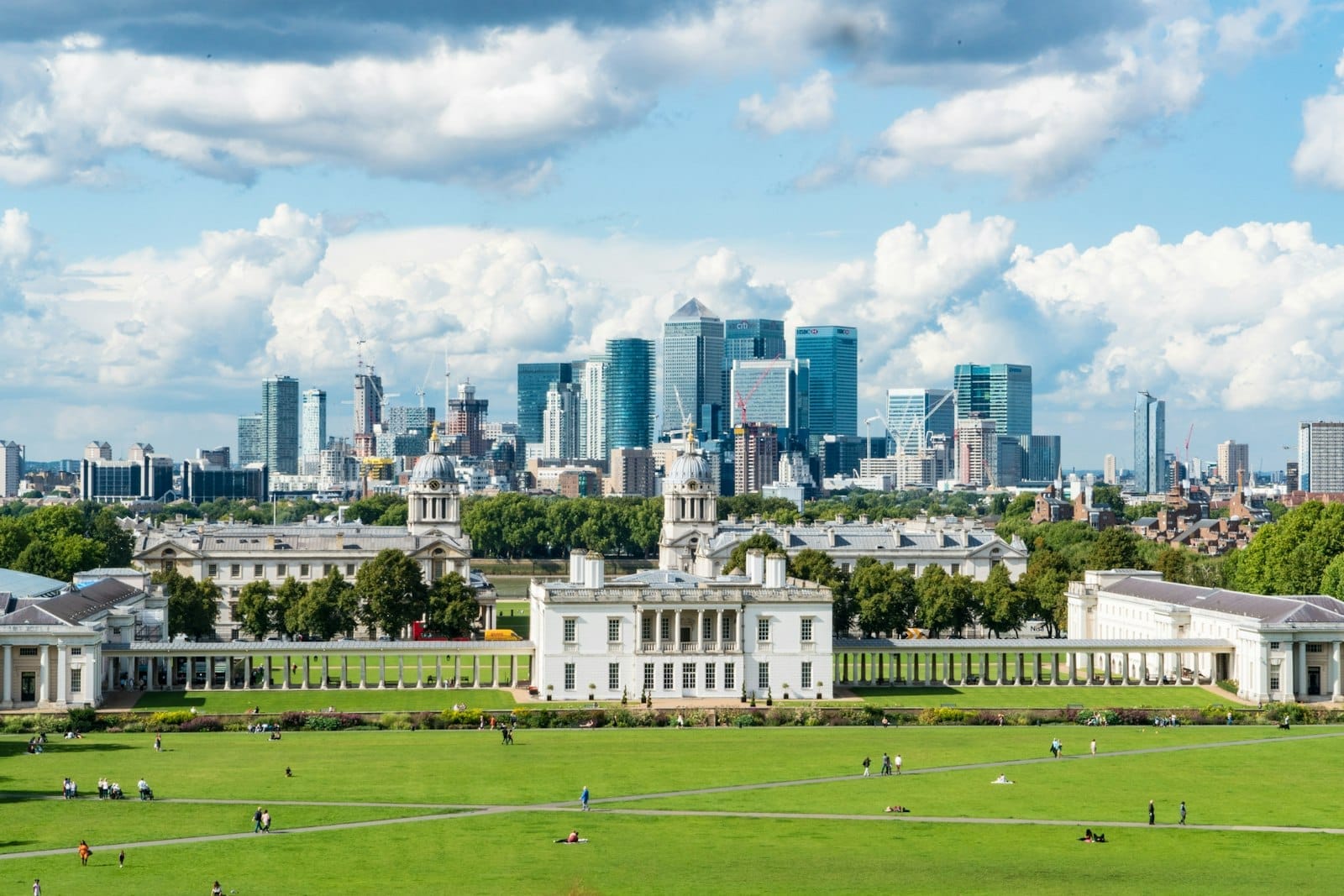
Greenwich is south-east London's most historically layered neighbourhood, where a UNESCO World Heritage Site, the world's Prime Meridian, and one of the finest riverside parks in the city occupy the same hillside. It rewards slow exploration: walk the formal grounds of the Old Royal Naval College, stand astride the Meridian Line at the Royal Observatory, and settle into a riverside pub as the afternoon light fades over the Thames.
Greenwich occupies a bend in the River Thames about five miles south-east of central London, and few neighbourhoods in the city carry as much historical weight in such a compact area. The Old Royal Naval College, the National Maritime Museum, the Royal Observatory, and Cutty Sark are all within easy walking distance of each other, set immediately beside Greenwich Park's 183 acres of formal gardens and open heath. Come for the history, stay for the views from the hilltop, and leave via the river for a perspective the Tube simply cannot offer.
Orientation
Greenwich sits on the south bank of the River Thames in the Royal Borough of Greenwich, roughly four miles east-south-east of London Bridge. The River Thames defines the northern edge, with the wide stretch of Deptford and the Isle of Dogs visible across the water. To the south, Greenwich Park rises steeply up to the hilltop where the Royal Observatory stands. Blackheath lies just beyond the park's southern gates, while Charlton and Woolwich extend further east along the riverside.
The neighbourhood centres on a triangle formed by Greenwich Church Street, College Approach, and the riverfront. This is a walkable area: the DLR station at Cutty Sark drops you practically at the riverside, while Greenwich mainline station (served by National Rail from London Bridge and Cannon Street) sits a few minutes' walk south of the centre. The Thames Clipper pier at Greenwich Pier offers a scenic alternative arrival point from central London and the Docklands.
Greenwich is easy to combine with neighbouring areas. Canary Wharf and the Docklands are just minutes away by DLR, making Greenwich a natural extension of an east London day. The London Cable Car at the Emirates Air Line crosses the Thames from Royal Docks to the Greenwich Peninsula, connecting Greenwich loosely with that newer part of east London that includes the O2 Arena.
Character & Atmosphere
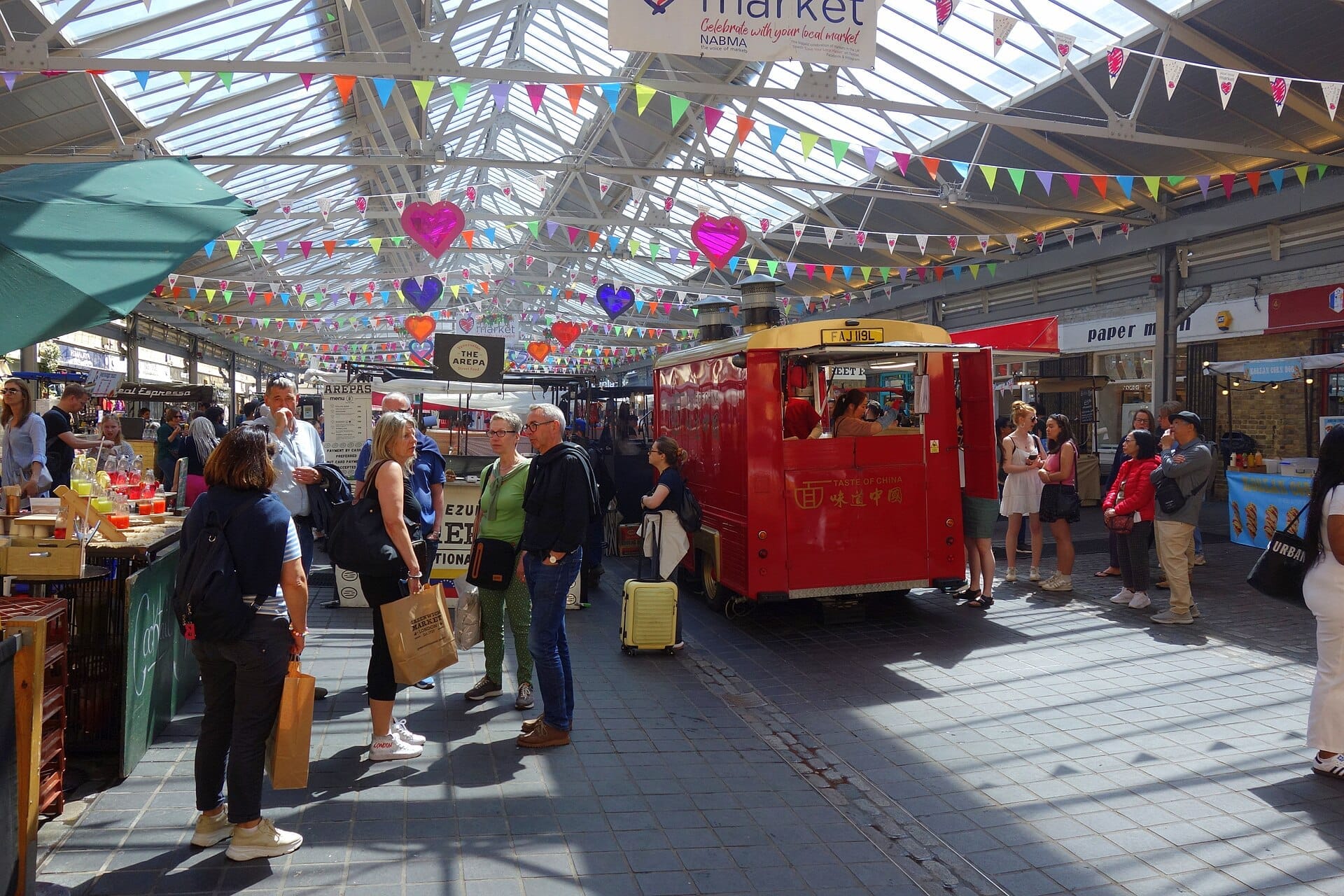
Greenwich has the texture of a market town that happens to have been overtaken by one of the world's great cities. The streets around Greenwich Market and the covered food hall retain a human scale that central London mostly lost long ago. On weekend mornings, the smell of coffee and grilling food drifts from the market stalls along College Approach, and the queue for the Cutty Sark already begins to form before 10am. Families with pushchairs, history enthusiasts in sensible shoes, and the occasional cruise ship passenger on a group tour all converge on a small area.
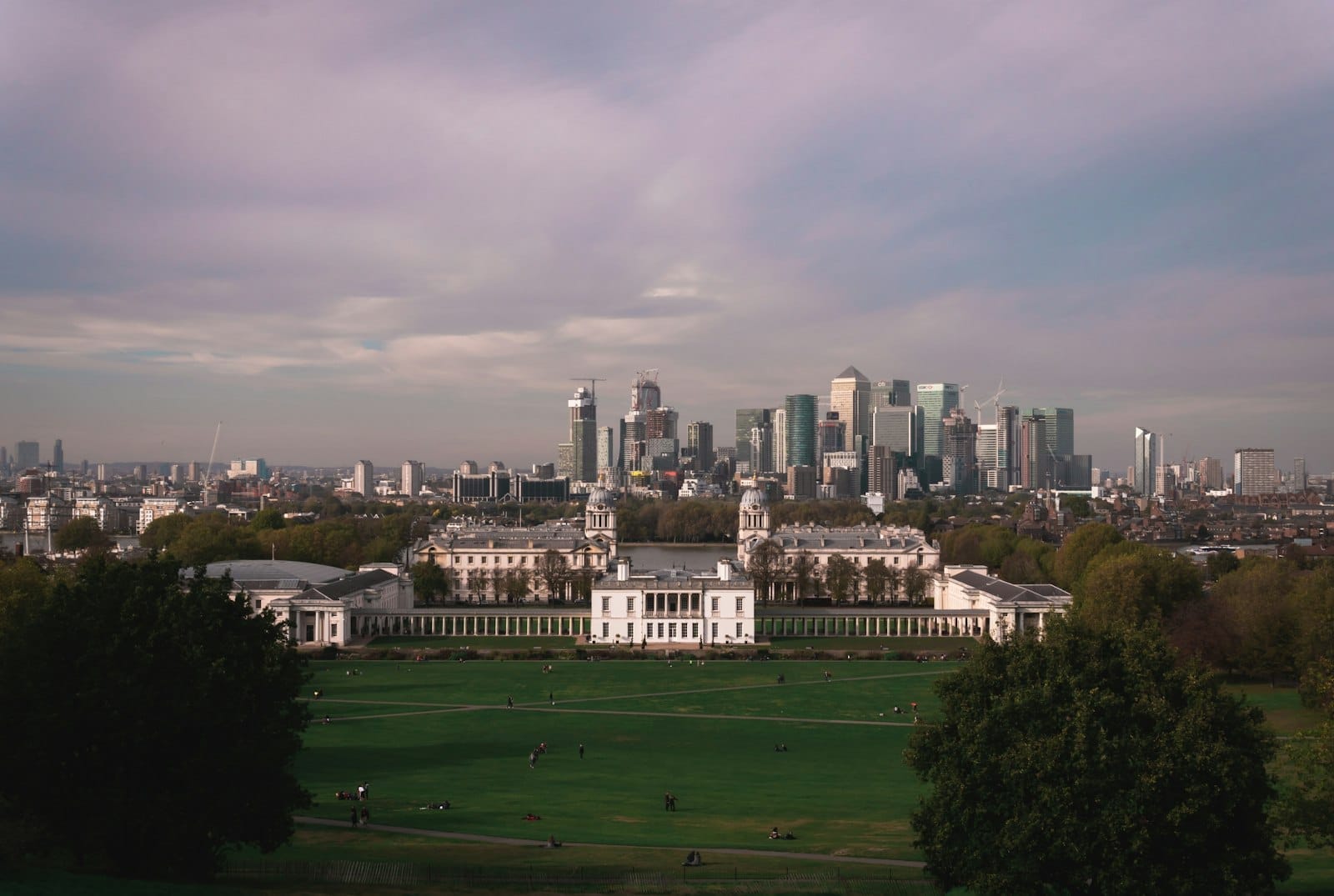
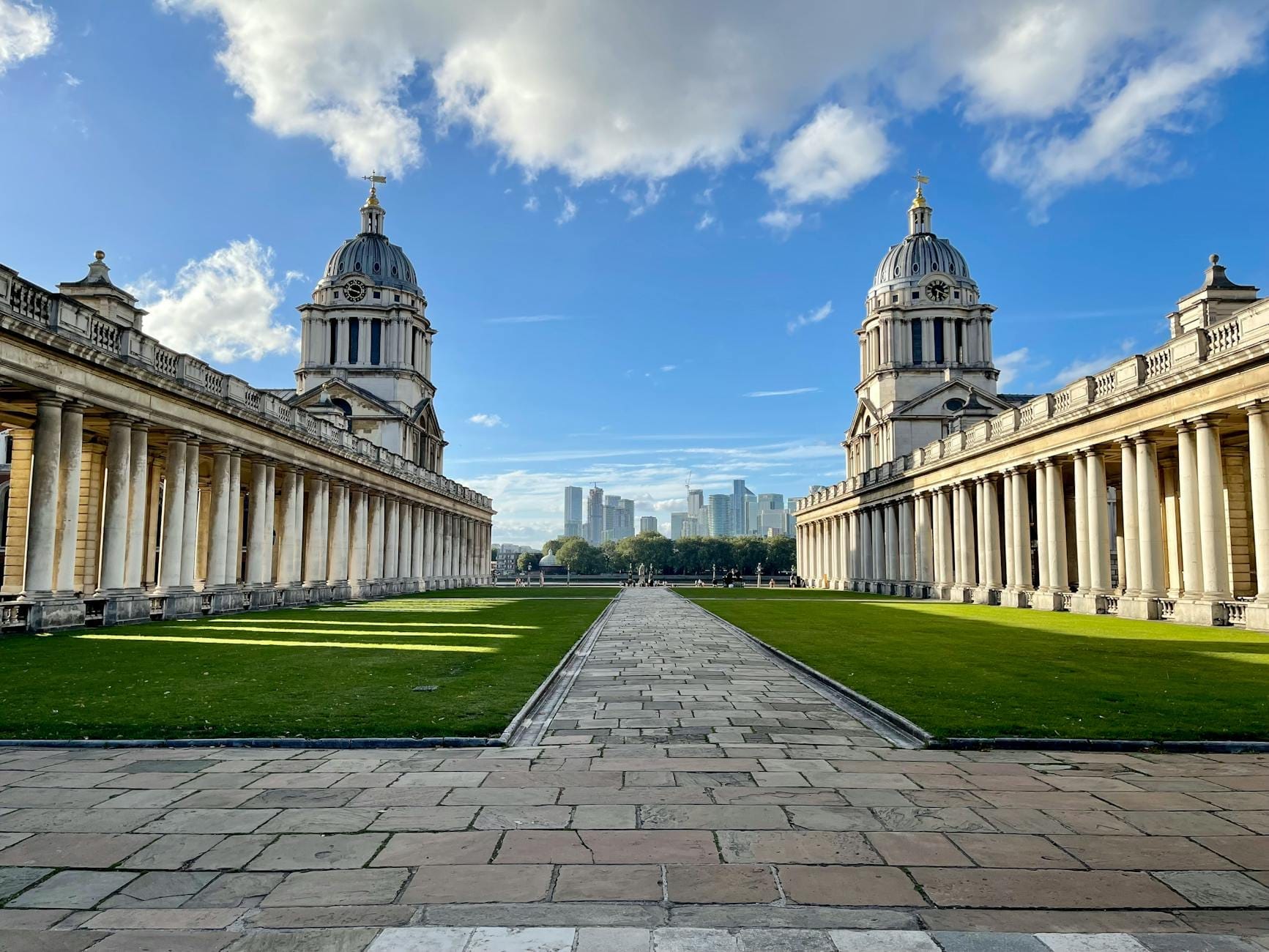
Weekday mornings feel different. The riverside walk between the Cutty Sark and the Old Royal Naval College is quiet enough to hear the Thames slapping against the embankment walls. The formal Baroque architecture of the Naval College, designed by Christopher Wren and completed in the early eighteenth century, commands the waterfront in a way that photographs don't fully capture: the twin domes frame a view of the Queen's House and the park rising behind it that has barely changed since Canaletto painted it in the 1750s.
By early afternoon the pace picks up as coach parties arrive and the market reaches full capacity. The hill up through Greenwich Park rewards those willing to leave the crowds behind: the further up you walk, the quieter it gets, until you reach the observatory plateau where the views north across the Thames to Canary Wharf and the City are panoramic. Late afternoon is the best time to make this climb, when the light comes in low from the west and the river takes on a pewter quality that is distinctly London.
After dark, Greenwich settles into a local neighbourhood rhythm. The tourist footfall drops sharply once the major sites close, and the pubs and restaurants around Greenwich Church Street and the covered market area serve primarily locals and visitors who have chosen to stay. The area feels safe and well-lit along the main routes, though the quieter streets east of Greenwich Church Street and west towards Deptford and along the riverbank paths are more isolated after dark, so it is worth sticking to the main thoroughfares.
💡 Local tip
Visit on a Thursday or Friday morning if you want the major sites without the full weekend crowds. The market operates Thursday to Sunday, but Greenwich Park and the Royal Observatory are accessible and noticeably quieter mid-week.
What to See & Do
The Old Royal Naval College is the logical starting point for any visit. Entry to the grounds is free, but there is a charge to enter the Painted Hall itself — sometimes called the 'Sistine Chapel of the UK' for James Thornhill's extraordinary ceiling. The scale of the complex only becomes apparent once you are inside: this is a working UNESCO World Heritage Site, home to the University of Greenwich and Trinity Laban Conservatoire, which gives it a livelier atmosphere than a pure museum.
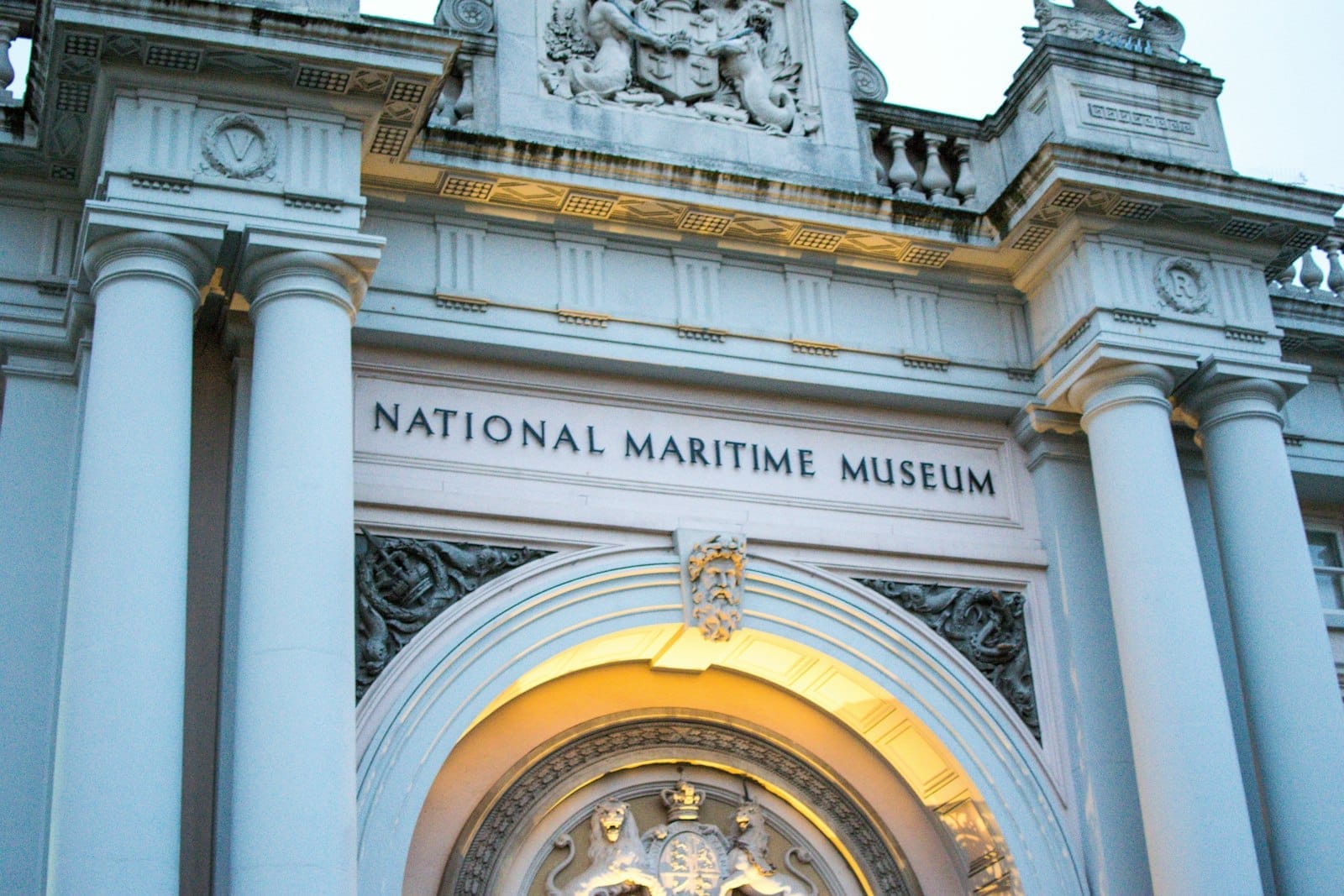
From the Naval College, walk south to the Queen's House — Inigo Jones's 1635 Palladian villa, the first deliberately classical building in England — and into the National Maritime Museum which occupies the buildings on either side. The museum covers four centuries of British sea power, trade, and exploration with an impressive collection of ship models, navigational instruments, and Nelson's uniform from Trafalgar. Admission is free.
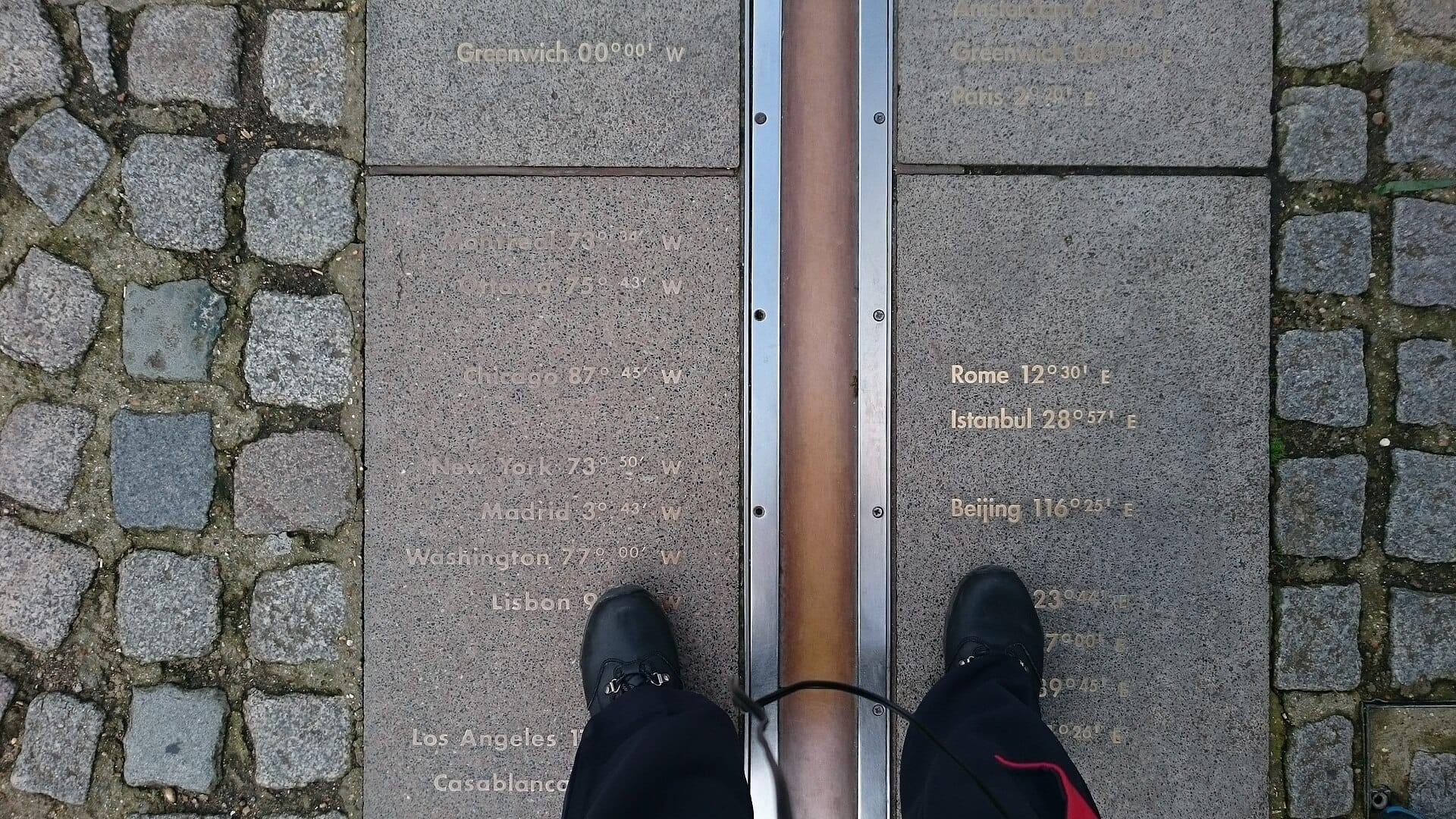
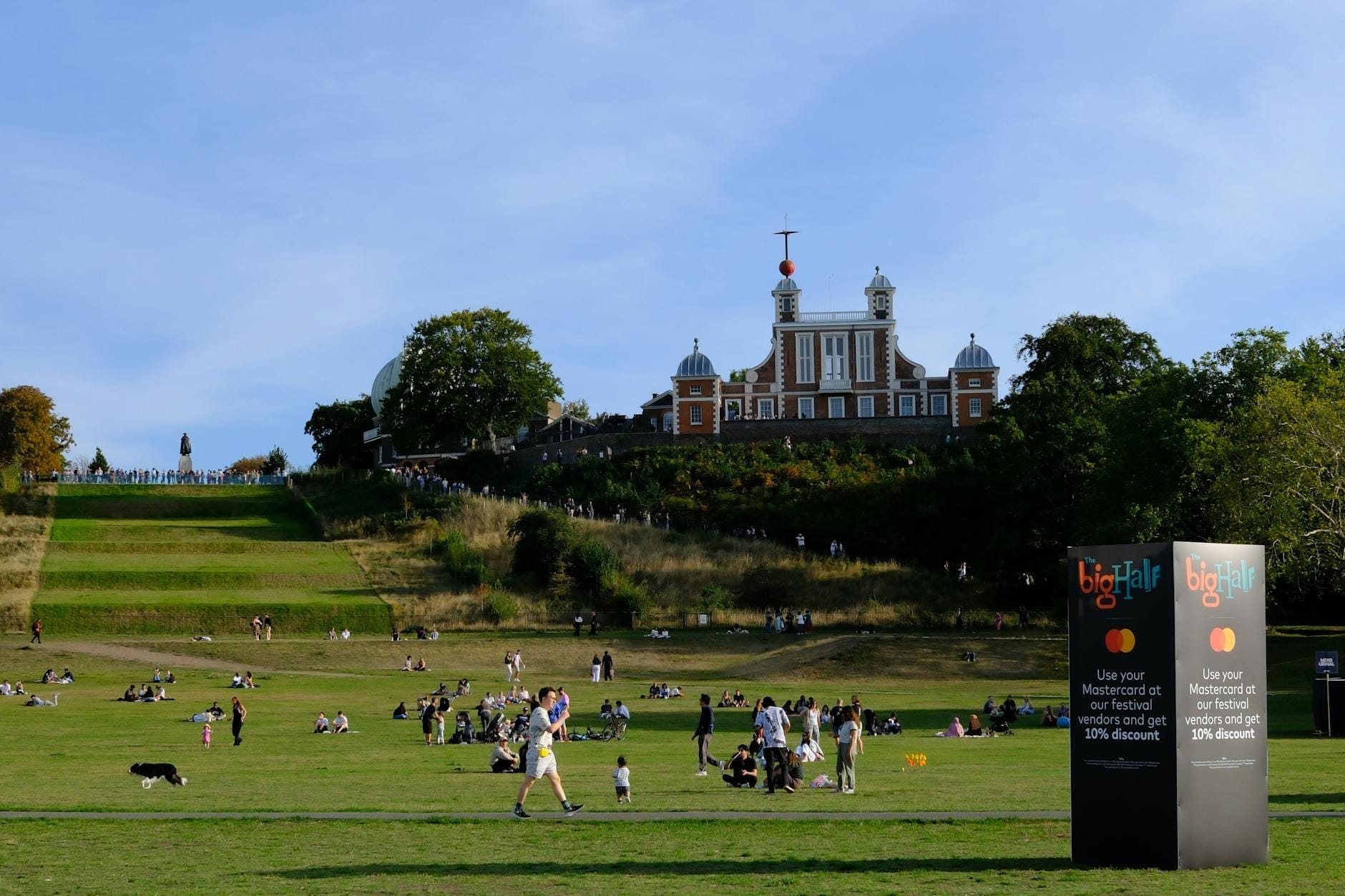
The climb through Greenwich Park to the Royal Observatory Greenwich takes about fifteen minutes at a moderate pace. The observatory was founded by Charles II in 1675 to solve the problem of longitude, and the story of how that problem was eventually solved — through the invention of accurate marine chronometers — is told well in the on-site Flamsteed House. The Greenwich Meridian Line at 0° longitude runs through the courtyard: standing astride it puts you literally in two hemispheres at once, and the photograph of doing so has become something of a Greenwich rite of passage. Note that visiting the observatory requires a paid ticket.
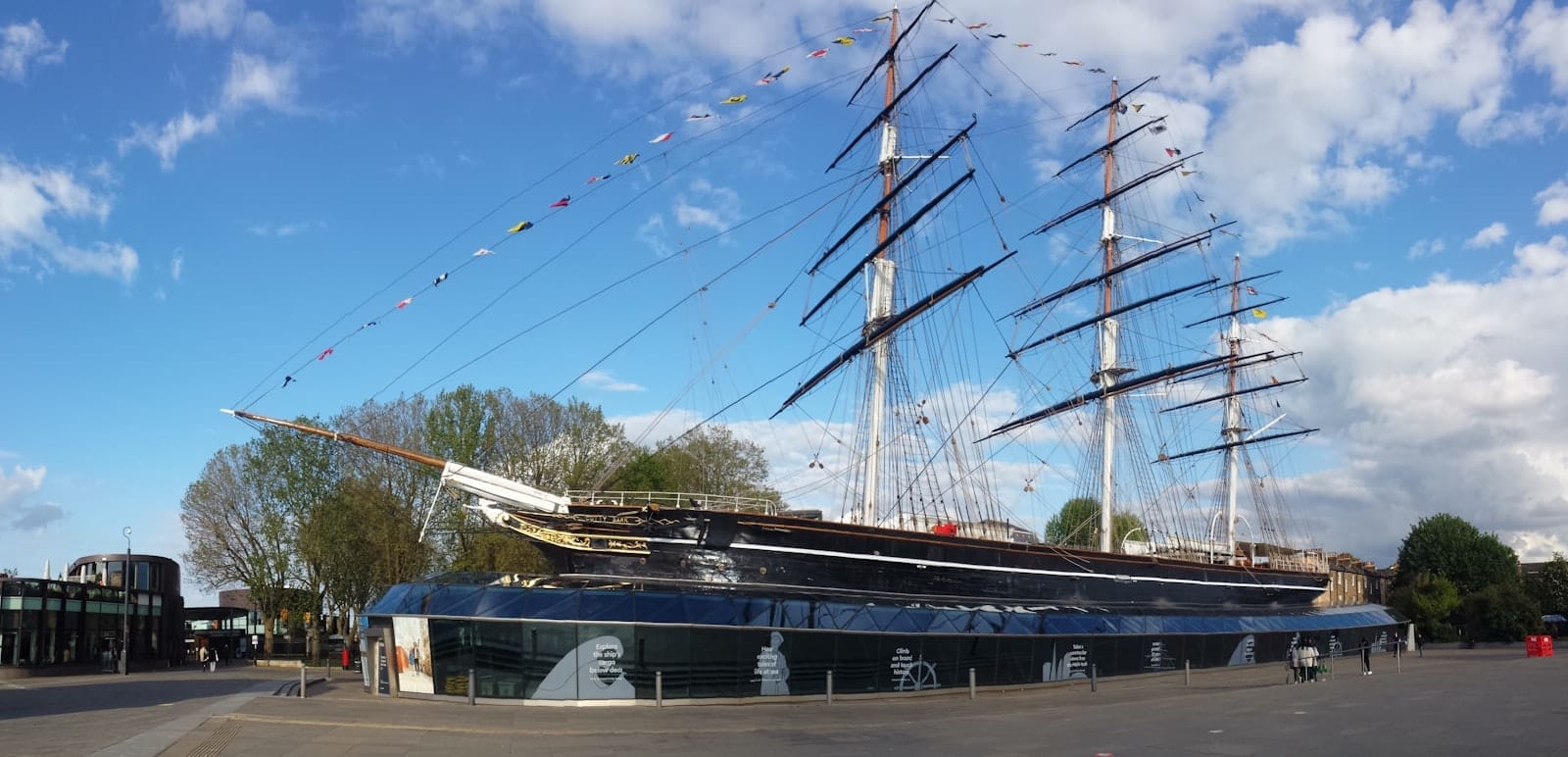
Back near the riverfront, the Cutty Sark is one of the last surviving tea clippers from the era of sail, permanently dry-docked and open as a museum ship. The glass-and-steel structure around it was added during renovation, creating an unusual space beneath the hull. It is an impressive engineering object to stand beneath, though the interior experience feels more suited to children than serious maritime history enthusiasts. Admission is paid and it is popular with school groups on weekday mornings.
The Greenwich Park itself deserves more than a transit route to the observatory. The formal gardens near the Queen's House, the deer park in the south-eastern corner (a small herd of fallow and red deer), and the wide open space of the hilltop all justify time. The park hosted equestrian events during the 2012 Olympics. The southern gates lead out onto Blackheath, a flat expanse of common land where one of the Peasants' Revolt armies mustered in 1381 and where, slightly less dramatically, London's first golf club was established in the nineteenth century.
Old Royal Naval College and Painted Hall — free entry to grounds, paid ticket for the Painted Hall interior
National Maritime Museum — free entry
Royal Observatory and Meridian Line — paid entry
Queen's House — free entry
Cutty Sark museum ship — paid entry
Greenwich Park and Deer Park — free, open year-round
Greenwich Market — Thursday to Sunday, mix of food, antiques, and crafts
Greenwich Foot Tunnel — free pedestrian crossing under the Thames to Island Gardens
ℹ️ Good to know
The Greenwich Foot Tunnel connects the south bank at Cutty Sark to Island Gardens on the Isle of Dogs. The walk takes about five minutes and offers a view back across the river to the Naval College that is one of the finest in London. Island Gardens is also a DLR station, so you can return to central London without retracing your steps.
Eating & Drinking
The Greenwich Marketis the centre of the food scene from Thursday to Sunday. The covered market is compact but varied: traders rotate but typically include Korean fried chicken, Argentinian empanadas, Ethiopian injera platters, wood-fired pizza, and several good coffee stands. It is an affordable and sociable way to eat, with benches and communal tables inside the market hall. Arrive before 12:30pm on weekends to avoid the longest queues.
Outside market days, Greenwich Church Street and the surrounding streets offer a range of restaurants and cafés covering most bases. The street has independent cafés, a smattering of chain coffee shops, and several restaurants running from mid-range Italian and modern European to Thai and Indian. Prices are generally moderate, lower than you would pay for equivalent food in central London. The area around Nevada Street and College Approach has some of the more interesting independent options.
For a drink, the riverside pubs near the Cutty Sark are the obvious choice, and several of them have genuine historic character along with good Thames views from their terraces. Expect these to be busy on any sunny weekend afternoon. Further from the tourist core, the pubs near Blackheath and along Royal Hill tend to serve a more local clientele and are worth the short walk if you prefer a less crowded atmosphere.
⚠️ What to skip
The riverfront area directly adjacent to the Cutty Sark and the main market has a high concentration of tourist-oriented restaurants with menus pitched at visitors rather than locals. Quality and value vary significantly. Walking one or two streets back from the river usually improves both.
Getting There & Around
Greenwich is well connected from central London, and there are three distinct ways to arrive, each offering a different experience of the approach. The DLR is the fastest and most convenient option for most visitors. Take the DLR from Bank or Tower Gateway toward Lewisham or Woolwich Arsenal (changing at Poplar or Westferry if required) and alight at Cutty Sark for Maritime Greenwich: the journey from Bank takes around 15-20 minutes. The station surfaces directly in the riverside area, steps from the Naval College and the Cutty Sark.
National Rail services from London Bridge and Cannon Street run to Greenwich station, which sits about five minutes' walk south of the town centre via Greenwich Church Street. London Bridge to Greenwich typically takes around 12-15 minutes. This is also a useful option if you are approaching from south London rather than the City.
The most atmospheric arrival is by river. Uber Boat by Thames Clippers runs regular services from Embankment, Waterloo, and Canary Wharf piers to Greenwich Pier, with the journey from Waterloo taking around 35-45 minutes. The views of the City and Tower Bridge from the water are excellent, and arriving at Greenwich from the Thames rather than from a tube station gives you the same perspective that travellers arriving by boat would have had for centuries. See the London River Thames guide for more on using the Thames as a transport route.
Within Greenwich, walking is the practical choice. The core area is compact and mostly flat along the riverfront, with the significant exception of the hill up through Greenwich Park to the observatory: that climb is unavoidable if you want to visit the Royal Observatory, though the gradient is reasonable and the path is well maintained. Cycling is possible along National Cycle Route 1, which passes through the area, and on designated routes in Greenwich Park. There is no cycling through the Greenwich Foot Tunnel.
All public transport in the area operates on the standard TfL Oyster card and contactless payment system. If you are planning a wider London itinerary, check the getting around London guide for advice on zone pricing and day caps.
Where to Stay
Greenwich is not a primary accommodation hub, and hotel options within the neighbourhood itself are limited compared to central London. The neighbourhood makes the most sense as a base for travellers who specifically want to be near the maritime sites, prefer a quieter residential feel, or are visiting for events at the O2 Arena on the Greenwich Peninsula.
The area around Greenwich town centre and the riverside has a small number of hotels and guest houses, typically in the mid-range tier, along with some serviced apartments suited to longer stays. Blackheath, a short walk south of the park, is a quieter and more residential alternative with good connections back into central London via National Rail.
Most visitors to Greenwich stay in central London and make a day trip out. The transport connections are good enough that this is perfectly practical: a day in Greenwich fits comfortably into a broader London itinerary without requiring an overnight stay. For general accommodation guidance across London, the where to stay in London guide covers all major areas with clear assessments of each.
Practical Tips & Considerations
Greenwich is suited to a full day rather than a half-day visit, especially if you plan to visit the Royal Observatory, walk through the park, and spend time in the market. The major paid attractions (Royal Observatory, Cutty Sark, Painted Hall) each take 60-90 minutes. The National Maritime Museum and Queen's House are free and could easily absorb another two to three hours between them. Factor in the walk up the hill and a proper lunch, and a six-hour visit goes quickly.
If you are visiting London with children, Greenwich scores well: the Cutty Sark, the park's open space, the deer, and the novelty of the Meridian Line all work for younger visitors. The London with kids guide includes Greenwich among the better family destinations in the city, alongside recommendations for how to structure a day with mixed-age groups.
For visitors building a broader London itinerary, Greenwich fits naturally into a south-east London day that also takes in the South Bank by arriving or leaving via the river. The contrast between the cultural concentration of the South Bank and the historic, open-air character of Greenwich makes for a full and varied day. Check the 3-day London itinerary for practical advice on combining neighbourhoods.
💡 Local tip
The Royal Observatory and several other Greenwich attractions are included in the London Pass, which can represent good value if you are planning to visit multiple paid attractions. Check current inclusion lists before purchasing, as they change.
TL;DR
Greenwich is south-east London's most historically significant neighbourhood, combining a UNESCO World Heritage Site, the Prime Meridian, and royal parkland in a compact and walkable area.
Best for: history enthusiasts, families, first-time London visitors, and anyone who wants to experience the city from the river rather than the Underground.
Allow a full day: the major sites (Royal Observatory, National Maritime Museum, Old Royal Naval College, Cutty Sark) together with the park justify six hours minimum.
Getting there is part of the experience: arriving by Thames Clipper from central London offers views and context that the DLR or National Rail cannot match.
Not ideal for: visitors primarily interested in nightlife, contemporary culture, or shopping — Greenwich closes early and the evening offer is limited compared to Shoreditch, the West End, or South Bank.
Weekend crowds around the market and Cutty Sark can be significant; mid-week visits offer a noticeably different, quieter experience.
Afternoon tea in London ranges from grand hotel rituals at £95 per person to relaxed neighbourhood spreads under £50. This guide covers the top venues across every budget, how to book, what to wear, and which hyped spots are actually worth it.
London has more world-class museums than almost any city on Earth, and the majority are free. This guide covers the essential institutions across art, history, science, design, and beyond, helping you plan your visits with confidence.
London has more parkland per capita than almost any major world city, and its eight Royal Parks alone cover just under 4,900 acres of public green space. This guide covers the finest parks across the city, from the grand central Royal Parks to wilder escapes on the edges of Greater London.
London rewards visitors in every season, but the experience shifts dramatically depending on when you go. This guide breaks down crowd levels, weather, prices, and key events month by month so you can plan a trip that matches exactly what you want from the city.
London's skyline is one of the world's great visual spectacles, mixing centuries-old domes with glass towers and royal parks. This guide covers the best places to see it all — free rooftop gardens, paid observation decks, hilltop parks, and river vantage points that reward at any time of day.
London is perfectly placed for world-class day trips. Whether you want a Tudor palace on the Thames, a city of dreaming spires, or a prehistoric stone circle, all of it is within two hours. This guide covers the best options, how to get there, and what to prioritise.
London is one of the world's great free cities. From world-class museums and contemporary art galleries to royal parks, iconic walks, and spectacular viewpoints, this guide covers the best experiences in London that are completely free to enjoy.
London has one of the most comprehensive urban transport networks in the world, covering 9 million residents across 1,572 km² of Greater London. This guide breaks down every option, from the Tube to river buses, with fare details, airport transfer routes, and insider tips to save time and money.
London gave the Wizarding World its real-world addresses, from the glass-roofed arcade that stood in for Diagon Alley to the Islington townhouses of Grimmauld Place. This guide covers every major filming location, the Warner Bros. Studio Tour, how to get there, and what to skip — with practical advice on crowds, costs, and what each spot actually looks like in person.
London has six airports, and choosing the wrong one can add hours and serious cost to your journey. This guide breaks down Heathrow, Gatwick, Stansted, Luton, City, and Southend with practical advice on every transport option, realistic fares, and which airport actually suits your trip.
London's food scene is one of the most diverse and underrated in the world. This guide cuts through the noise to tell you what to actually eat, which neighbourhoods to target, what things cost, and how to avoid the tourist traps.
London is one of the world's great cities, spanning 1,572 km² across 32 boroughs with 9.1 million residents and over 300 languages spoken. This guide covers everything a first-time visitor needs: how to get in, how to get around, which neighborhoods to prioritize, what to book in advance, and the practical details that make the difference between a stressful trip and a great one.
London rewards those who look beyond the headline attractions. From ruined churches turned secret gardens to world-class free museums tucked down side streets, these are the places locals love and most visitors miss entirely.
London's hop-on hop-off buses are everywhere, but are they the smartest way to see the city? This guide breaks down the main operators, what you get for your money, who benefits most, and when to skip the pass entirely.
December transforms London into one of Europe's most atmospheric winter destinations. From Hyde Park Winter Wonderland to the South Bank's riverside market stalls, this guide covers everything you need to plan a memorable Christmas visit, including what to skip, what to book in advance, and how to get around without the crowds.
Summer in London runs from late June through August and delivers a different city: long daylight hours, royal parks at their peak, and a packed calendar of festivals, sporting events, and outdoor culture. This guide covers what to expect, what to book in advance, and what to skip.
Three days in London is enough to cover the essential sights, explore a couple of neighbourhoods, and get a real feel for the city. This itinerary is built around practical logistics, clear priorities, and current ticket prices so you can spend less time planning and more time exploring.
Five days in London is enough to cover the iconic landmarks, explore distinct neighbourhoods, and still have time to eat and drink well. This day-by-day guide cuts through the noise with specific recommendations, realistic timings, and practical advice on what is worth your time.
London's market scene spans 1,000-year-old food halls, world-famous antiques rows, and creative street markets under Victorian ironwork. This guide covers the best across every category, with practical tips on when to go and what to expect.
London's nightlife spans everything from underground warehouse raves in Greenwich to velvet-rope cocktail bars in Mayfair. This guide breaks down the best areas, top clubs, practical costs, and the timing tricks that separate a great night from an expensive disappointment.
London has a reputation for expense, but a well-planned trip can be surprisingly affordable. From world-class free museums to discount West End seats and Oyster card tricks, this guide covers every practical angle for stretching your pounds in one of Europe's great capitals.
The London Pass promises access to 100+ attractions for a flat daily fee. But does it actually save you money? This guide breaks down the real costs, the best use cases, and who should skip it entirely.
The River Thames is the backbone of London, stretching 215 miles through southern England and shaping the city's history, skyline, and daily life. This guide covers sightseeing cruises, the Thames Path, riverside eating and drinking, water sports, and the key landmarks you'll pass along the way, with practical advice on what's worth your time and what to skip.
London is a remarkably safe city for its size, but petty theft and tourist-targeted scams are real risks. This guide covers the most common threats, where they happen, and exactly what to do to protect yourself and your belongings.
London's shopping scene spans everything from 300-store Oxford Street to Sunday flower markets in the East End. This guide covers the best streets, markets, and stores by category, with practical advice on timing, crowds, and where your money actually goes furthest.
Getting from London to Amsterdam is one of Europe's most popular city-to-city trips. This guide breaks down every option — Eurostar, budget flights, overnight ferry, and long-distance coach — with realistic journey times, current price ranges, and advice on which suits your trip.
Covering every way to travel between London and Edinburgh, this guide breaks down real journey times, current price ranges, and which option makes sense depending on your budget, schedule and priorities. The answer is not always what you expect.
There are three realistic ways to get from London to Paris: the Eurostar train, a short-haul flight, or an overnight coach. This guide breaks down journey times, realistic fares, booking strategy, and the practical details that trip-planning sites usually skip.
London rewards walkers more than almost any other city. From the medieval lanes of the Square Mile to the riverbanks of the South Bank, the best way to understand this city is on foot. This guide covers guided group tours, official City of London walks, tip-based 'free' options, and self-guided routes, with practical advice on pricing, booking, and when to show up.
London is one of the world's great family destinations, with free world-class museums, royal parks, river adventures, and enough child-friendly attractions to fill a week. This guide cuts through the noise with practical advice on what's worth booking in advance, what's actually free, and how to keep the whole family sane on the Tube.
From Mayfair's grand hotels to Knightsbridge's world-class restaurants and private cultural experiences, this guide covers everything you need to plan a high-end stay in London. Expect specific neighbourhood advice, booking strategies, and clear assessments of where the money is well spent.
London is one of the world's great photography cities, with iconic landmarks, colourful streets, and unexpected architectural gems around every corner. This guide covers the 20 most photogenic spots, from the obvious classics to the lesser-known spaces that will make your feed stand out.
Notting Hill Carnival is Europe's largest street festival, drawing over a million visitors to west London every August Bank Holiday weekend. This guide covers the 2026 schedule, the full route, how to get there, what to eat, and what to expect on each day.
Open House Festival is London's annual architecture celebration, opening over 800 buildings, tours, and talks across all 33 boroughs — most of them free. This guide covers dates, booking strategy, neighbourhood planning, and which events fill up fastest.
London rewards couples who know where to look. This guide covers the most romantic experiences in the city — from sunset river cruises and West End theatre to free viewpoints and atmospheric parks — with practical advice on what's worth the price and what you can enjoy for nothing.
From the Ceremony of the Keys at the Tower of London to the summer opening of Buckingham Palace's State Rooms, London's royal sites are more accessible than most visitors realize. This guide covers what to see, when to go, what to book in advance, and what to skip.
London rewards visitors who go beyond the obvious. This guide covers the best things to do in London across culture, history, food, and neighbourhoods, with practical tips on what's worth your time, what to skip, and how to do it all without overpaying.
London's West End is one of the world's great theatre destinations, with around 40 major venues and over 17 million audience visits a year. This guide covers everything from buying tickets and finding discounts to getting there, picking the right seat, and knowing what to expect on the night.
Choosing where to stay in London shapes your entire trip. This guide breaks down the city's best neighbourhoods by location, transport access, price range, and atmosphere, so you can book with confidence rather than guesswork.
Getting into Wimbledon is more accessible than most people think — if you know the system. This guide covers every official ticket route, real price ranges, The Queue strategy, and practical tips for making the most of your day at the world's most famous tennis tournament.