Notting Hill Carnival: The Complete Visitor Guide
Notting Hill Carnival is Europe's largest street festival, drawing over a million visitors to west London every August Bank Holiday weekend. This guide covers the 2026 schedule, the full route, how to get there, what to eat, and what to expect on each day.
Plan and book this trip
Tools from our partner Travelpayouts help you compare flights and hotels. If you book through them, we may earn a commission at no extra cost to you.
Flights
Hotels map
TL;DR
- Notting Hill Carnival runs across the UK August Bank Holiday weekend (Saturday to Monday) in postcodes W10 and W11 — the main street carnival on Sunday and Monday is free to attend; some Saturday events, such as the Panorama steelband competition, are ticketed.
- For 2026, the dates are 29–31 August: Steel Band Competition (ticketed, 29 Aug), Families Day (30 Aug), and Adults' Day (31 Aug, Bank Holiday Monday).
- Road closures make driving impossible — use the Tube, targeting stations like Queen's Park, Paddington, or Shepherd's Bush. See our guide to getting around London for full transport advice.
- Over 300 food stalls serve Caribbean and international food — jerk chicken, roti, and pepper pot are the classics. Bring cash.
- Tourists make up only around 20% of attendees — this is primarily a community celebration with deep Caribbean roots, not a tourist attraction.
What Is Notting Hill Carnival?
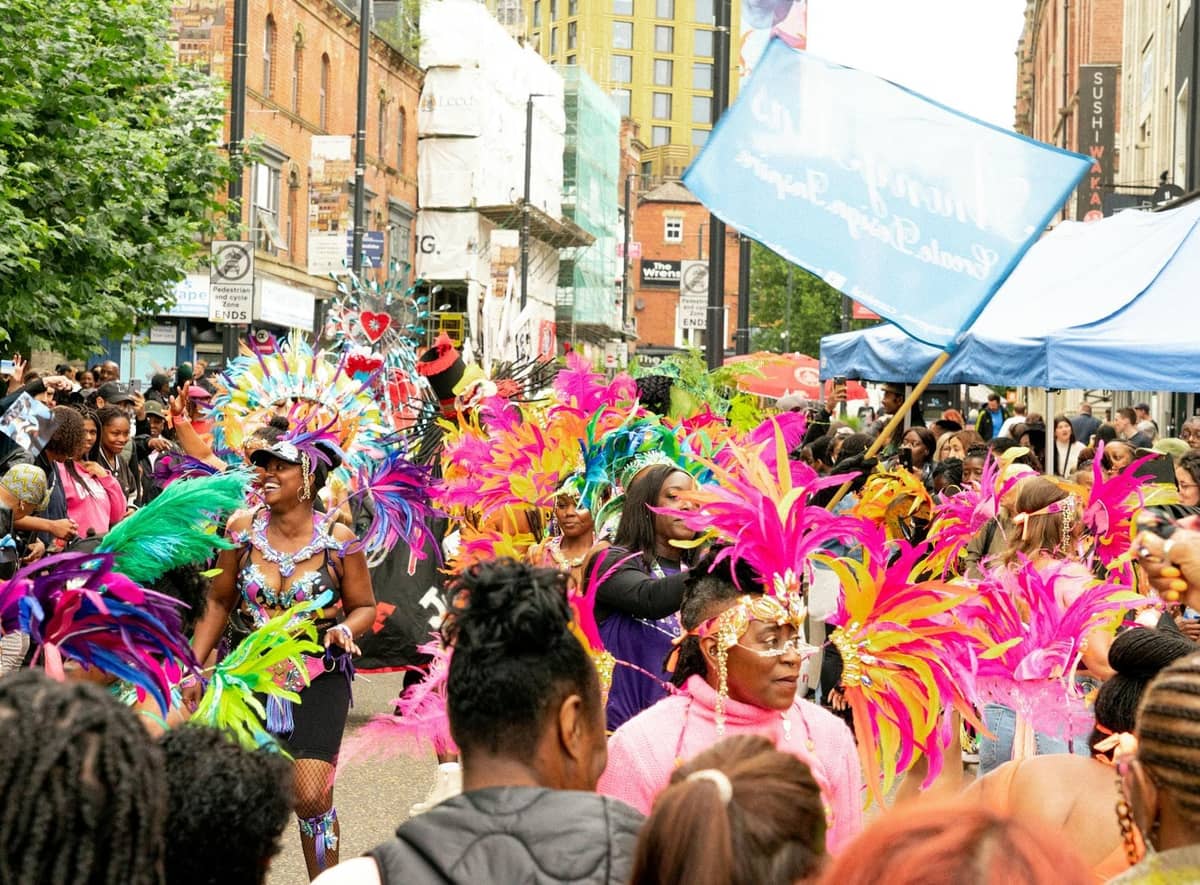
Notting Hill Carnival is the largest street festival in Europe and one of the biggest carnivals in the world, attracting between one and two million visitors across its three-day run. It began in 1966 as a celebration of Caribbean culture in west London, rooted in the Trinidadian and Jamaican communities that settled in Notting Hill and the surrounding areas in the post-war decades. Six decades on, it remains a living expression of that heritage, not a nostalgic reconstruction of it.
The carnival takes place entirely on the streets of Notting Hilland the surrounding area, covering postcodes W10 and W11 — Ladbroke Grove, Westbourne Grove, Westbourne Park Road, and Kensal Road form the backbone of the route. Steel bands, costumed masquerade troupes (called 'mas' bands), sound systems, and food vendors fill streets that are otherwise lined with pastel-painted terraced houses. It is unlike anything else in London's event calendar.
ℹ️ Good to know
The carnival's origins predate 1966 slightly — indoor Caribbean community events were held in the late 1950s, but the outdoor street carnival format that defines the event today is generally dated to 1966. The London Museum has detailed archival material on its history if you want the full picture.
2026 Dates and Day-by-Day Schedule
The 2026 Notting Hill Carnival runs from Saturday 29 August to Monday 31 August. Each day has a distinct character and a different crowd profile, so knowing which day suits you matters.
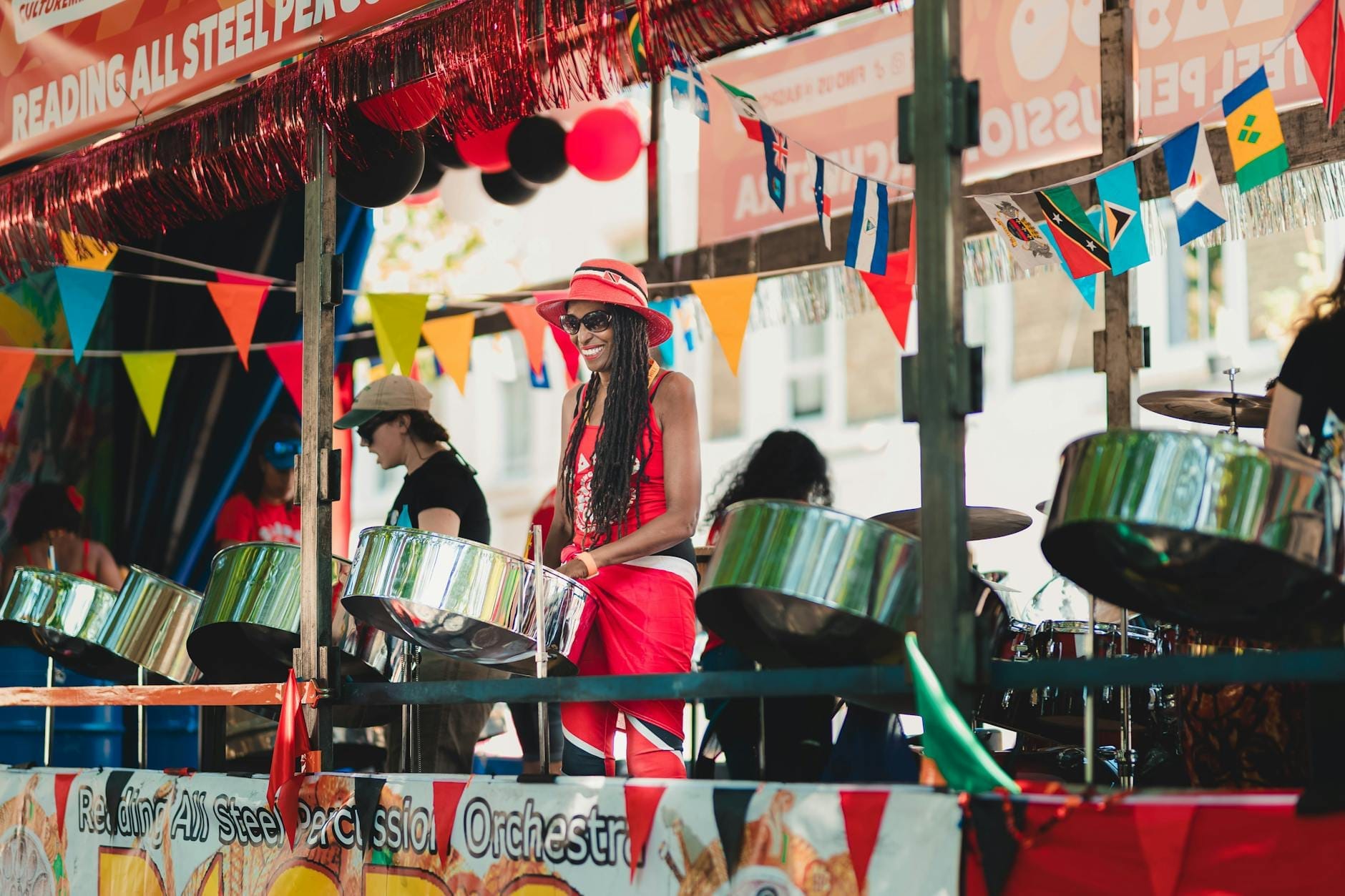
- Saturday 29 August — UK National Panorama Steel Band Competition Held at Emslie Horniman's Pleasance Park, this is the only ticketed element of the weekend. Steel bands compete in one of the most technically demanding musical competitions in the Caribbean diaspora. Tickets are sold through the official Notting Hill Carnival website and affiliated partners. Crowd sizes are significantly smaller than Sunday and Monday — it's a better choice if you want to experience the music seriously without the intense crowds.
- Sunday 30 August — Families and Children's Day Free to attend. This day features J'ouvert (a dawn celebration with paint and powder), the Children's Parade, and the broader family-oriented carnival. It's noticeably more relaxed than Monday, with more space to move and a broader age range in the crowd. 'Dutty Mas' — the informal, paint-covered street parade — also happens on Sunday.
- Monday 31 August — Adults' Day (Bank Holiday Monday) Free to attend. The main event. The Adults' Parade features the most elaborate masquerade costumes and the largest sound systems. The Judging Zone, where mas bands are officially scored on their costumes and choreography, draws the biggest crowds. Expect the streets to be at full capacity by early afternoon. If you're coming for one day, this is it — but arrive early.
⚠️ What to skip
Carnival dates shift year to year because they follow the UK August Bank Holiday, which always falls on the last Monday of August. Always verify the exact dates for your year on the official Notting Hill Carnival website (nhcarnival.org) before making travel plans.
The Route: What to Expect and Where to Stand
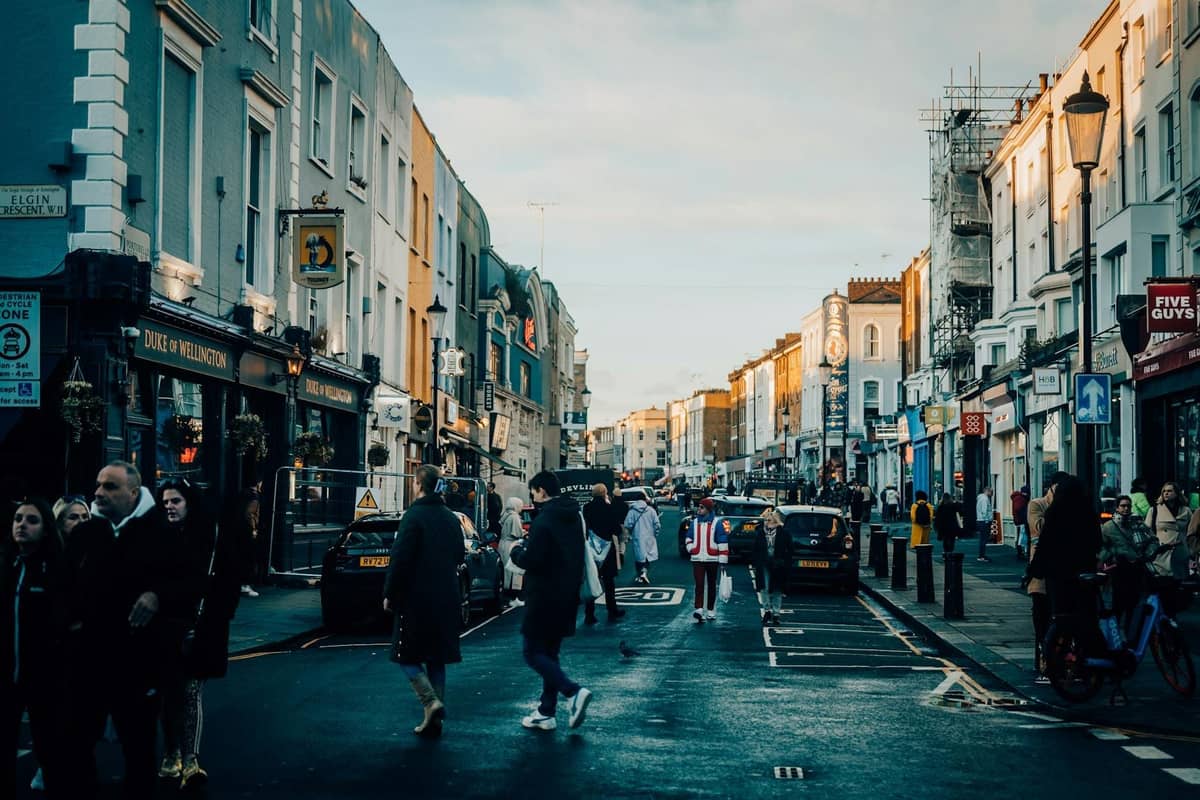
The parade route loops through W10 and W11, broadly following Ladbroke Grove as its central artery. The official map is published on the Notting Hill Carnival website each year, and it's worth downloading before you go — mobile signal in the area becomes unreliable once crowds build up.
The Judging Zone, where bands are formally assessed, is typically located on a fixed section of the route and draws the thickest crowds. If your priority is seeing the costumes up close, get to the Judging Zone early — by mid-afternoon on Monday it can be nearly impossible to move. For a better overall experience with more breathing room, position yourself on a side street that feeds into the main route, where the procession passes at a slower pace and there's room to step back.
Sound systems are scattered across the area and operate mostly independently of the parade. These are fixed rigs playing reggae, soca, dancehall, and Afrobeats at considerable volume, often with DJs and live MCs. If you wander away from the main parade route, you'll find clusters of people gathered around individual sound systems in side streets — this is where the more relaxed, spontaneous atmosphere tends to live.
✨ Pro tip
Arrange a specific meeting point with your group before you enter the carnival area. Phone signal is heavily congested across W10 and W11 on Saturday, Sunday, and especially Monday. A fixed landmark — a specific pub entrance or street corner — is far more reliable than trying to coordinate by text or call.
Getting There: Transport and Road Closures
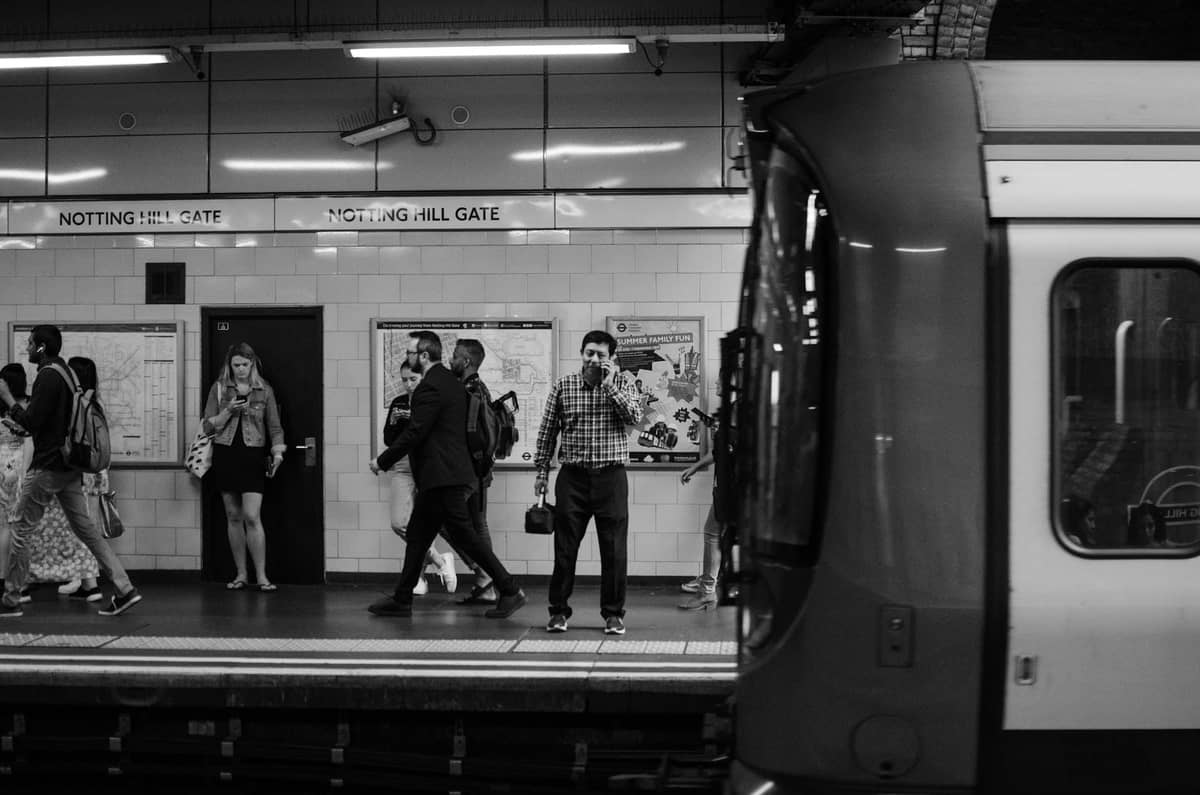
Driving to Notting Hill Carnival is not viable. Extensive road closures cover the W10 and W11 postcodes across the full weekend, and parking is effectively nonexistent in the surrounding streets. Public transport is the only sensible option.
- Queen's Park (Bakerloo line / London Overground) One of the least congested entry points, dropping you at the northern edge of the carnival area. Useful for avoiding the densest crowds near Ladbroke Grove station.
- Shepherd's Bush (Central line / London Overground) Good for approaching from the south and west. The walk into the carnival area takes around 10–15 minutes.
- Paddington (Elizabeth line, Bakerloo line, Circle/District) A major interchange about 20 minutes' walk from the carnival. Useful if you're arriving from Heathrow or central London.
- Bayswater and High Street Kensington (Circle/District line) Both stations are within walking distance but may operate as exit-only or have restricted access during peak carnival hours. Check TfL's travel advisories for the specific weekend.
- Avoid Ladbroke Grove and Notting Hill Gate stations These are the closest stations to the route and consequently the most overcrowded. TfL frequently makes them exit-only or temporarily closes them during the busiest periods.
TfL publishes specific carnival travel advice on its website in advance of the weekend, including which stations will be affected and any bus route diversions. Check tfl.gov.uk in the week before you go. For broader context on navigating London by public transport, the getting around London guide covers Oyster cards, contactless payment, and which zones are relevant.
Food, Drink, and What to Budget
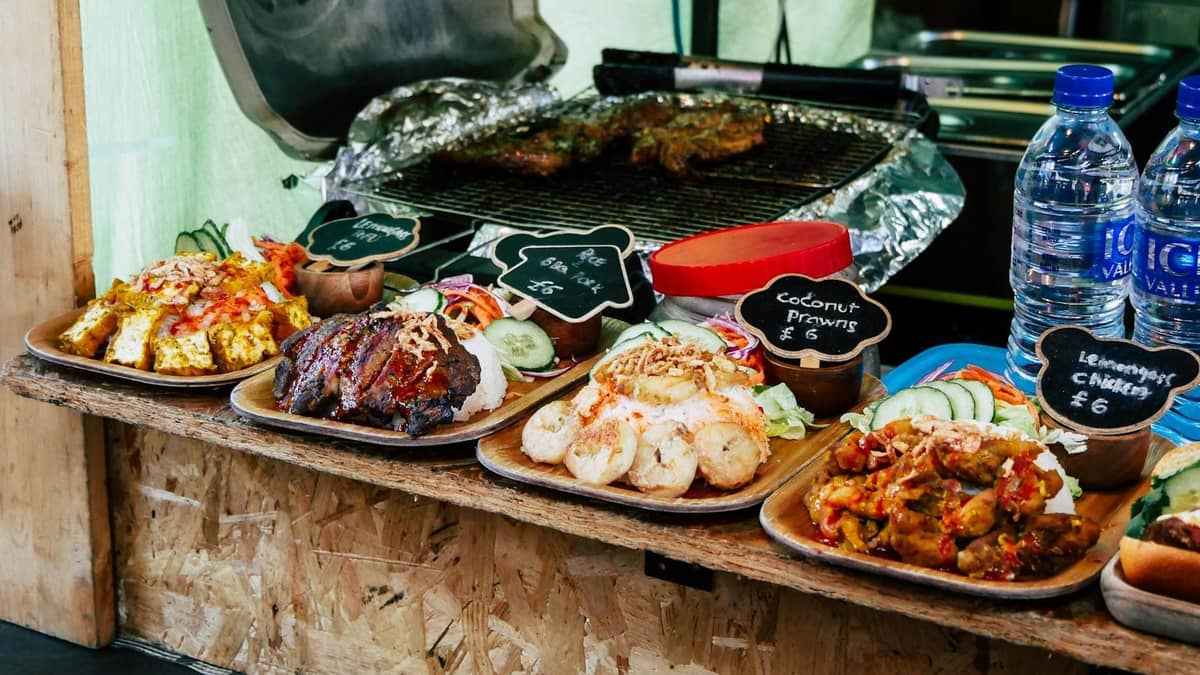
Food is one of the most compelling reasons to attend the carnival. Hundreds of stalls line the streets across the weekend, with Caribbean cooking at the centre: Jamaican jerk chicken cooked on oil-drum grills, Trinidadian roti filled with curry goat or chickpea, Guyanese pepper pot, fried plantain, rice and peas, and oxtail. Beyond Caribbean food, you'll find Afro-Brazilian, West African, and South American stalls filling the gaps.
Cash is strongly recommended. While some stalls accept card payments, many do not, and queues at nearby ATMs get extremely long by late morning on Monday. Withdraw cash before you arrive. Budget around £10–20 per person for a solid meal, more if you're grazing across multiple stalls — which is the best approach. Drinks (rum punch, sorrel, soft drinks) are typically priced separately at £3–6 per cup.
💡 Local tip
Stalls on the side streets away from the main parade route tend to have shorter queues and occasionally lower prices than those positioned directly on the procession path. If you see a long line forming at a specific stall, it's usually worth the wait — the most popular vendors have earned their reputation.
Practical Advice: What to Wear, Carry, and Watch Out For
Late August in London averages around 20–22°C during the day, but the weather is not guaranteed. The carnival has run in both baking sunshine and persistent drizzle — sometimes on the same day. Dress for warmth in layers if rain is forecast, or light clothing if it's sunny, but always assume you'll be standing and walking for several hours. Comfortable shoes are not optional; you will cover significant ground.
Bring a refillable water bottle — dehydration in large crowds is a genuine risk even on overcast days. The carnival is a densely packed environment, so keep bags small and secure (front-facing where possible). Pickpocketing does occur in very crowded events of this scale. London's overall safety profile is reasonable, and the carnival has substantial police and security presence, but standard precautions apply. For more on staying safe in the city, see the London safety tips guide.
- Wear comfortable, closed-toe shoes — the streets are uneven and crowded
- Bring cash in small denominations (£5 and £10 notes are most useful at food stalls)
- Charge your phone fully before leaving and consider a portable battery pack
- Download the route map offline before you arrive — mobile signal degrades significantly in the area
- Agree on a physical meeting point with your group in case you get separated
- Sunscreen and a light rain layer are worth the bag space, even if the forecast looks clear
- Avoid bringing large rucksacks — they're impractical in the crowds and attract friction
If you're bringing children, Sunday's Families Day is the right choice. The atmosphere is more contained, the Children's Parade is specifically designed for younger audiences, and the crowd density is lower than Monday. Notting Hill is also worth visiting outside of carnival season — Portobello Road Market runs year-round on Saturdays and gives a sense of the neighbourhood's character without the scale of the carnival. For families looking at the wider London picture, the London with kids guide covers age-appropriate options across the city.
Common Misconceptions Worth Correcting
Several persistent myths about the carnival are worth addressing directly. First: it is not primarily a tourist event. According to Time Out's research, tourists account for approximately 20% of attendees — the vast majority of the one to two million people there are London residents or UK-based visitors. The carnival is a community event that happens to welcome outsiders, not the other way around.
Second: it is not a one-day event. The full programme runs across Saturday, Sunday, and Monday, with meaningfully different experiences on each day. Treating it as a single-day affair means missing both the Steel Band Competition and the contrast between Families Day and Adults' Day. Third: attendance figures of one to two million are not an exaggeration — the event consistently ranks among the largest annual gatherings in the world. Crowd management is a serious logistical operation, and the area becomes difficult to navigate after midday on Monday.
Finally, while Notting Hill has a reputation as an affluent neighbourhood today, the carnival's roots are in the working-class Caribbean communities who settled there in the 1950s and 1960s. The event has cultural and political weight that goes beyond the spectacle. If you want to understand the area more broadly, both its present character and its history, it's worth reading up before you go. The Notting Hill neighbourhood guide covers the full picture.
FAQ
Is Notting Hill Carnival free to attend?
The main street carnival on Sunday and Monday is completely free. The only ticketed element is the UK National Panorama Steel Band Competition held on Saturday at Emslie Horniman's Pleasance Park. Tickets for the Saturday event are sold via the official Notting Hill Carnival website (nhcarnival.org).
When is Notting Hill Carnival 2026?
Notting Hill Carnival 2026 runs from Saturday 29 August to Monday 31 August. Saturday is the ticketed Steel Band Competition; Sunday (30 August) is Families and Children's Day; Monday (31 August) is Adults' Day — the main parade. Dates shift each year to align with the UK August Bank Holiday, so always confirm on nhcarnival.org.
Which Tube station is best for Notting Hill Carnival?
Queen's Park (Bakerloo line and London Overground) and Shepherd's Bush (Central line) are generally the least congested options. Avoid Ladbroke Grove and Notting Hill Gate on carnival days as they become extremely crowded and may be exit-only. TfL publishes specific travel advice ahead of the weekend at tfl.gov.uk.
Is Notting Hill Carnival safe?
The carnival has a substantial police and security presence, and the overwhelming majority of the one to two million attendees have an incident-free experience. Standard precautions apply in any very large crowd: keep bags small and secure, be aware of your surroundings, and agree on a meeting point with your group before you enter the area. Mobile signal is unreliable during peak hours.
What should I eat at Notting Hill Carnival?
Jamaican jerk chicken cooked on oil-drum grills is the signature dish, but the 300-plus food stalls cover a wide range of Caribbean and international cooking: Trinidadian roti with curry goat or chickpea, Guyanese pepper pot, fried plantain, oxtail, and rice and peas. Bring cash — many stalls do not accept card payments, and nearby ATMs run out quickly on Monday.