Portobello Road Market: The Real Guide to Notting Hill's Famous Street
Portobello Road Market stretches across one of London's most photogenic neighbourhoods, drawing antique hunters, vintage fashion lovers, and food seekers from around the world. Free to enter, open most days, and far more layered than its tourist reputation suggests, it rewards those who know which section to visit and when.
Quick Facts
- Location
- Portobello Road, Notting Hill, West London
- Getting There
- Ladbroke Grove (Hammersmith & City, Circle lines) – 5-min walk; Notting Hill Gate (Central, District, Circle lines) – 10-min walk
- Time Needed
- 1.5 to 3 hours depending on how deep you go
- Cost
- Free to enter; budget for what you buy or eat
- Best for
- Antique collectors, vintage clothing fans, food lovers, weekday strollers
- Official website
- visitportobello.com
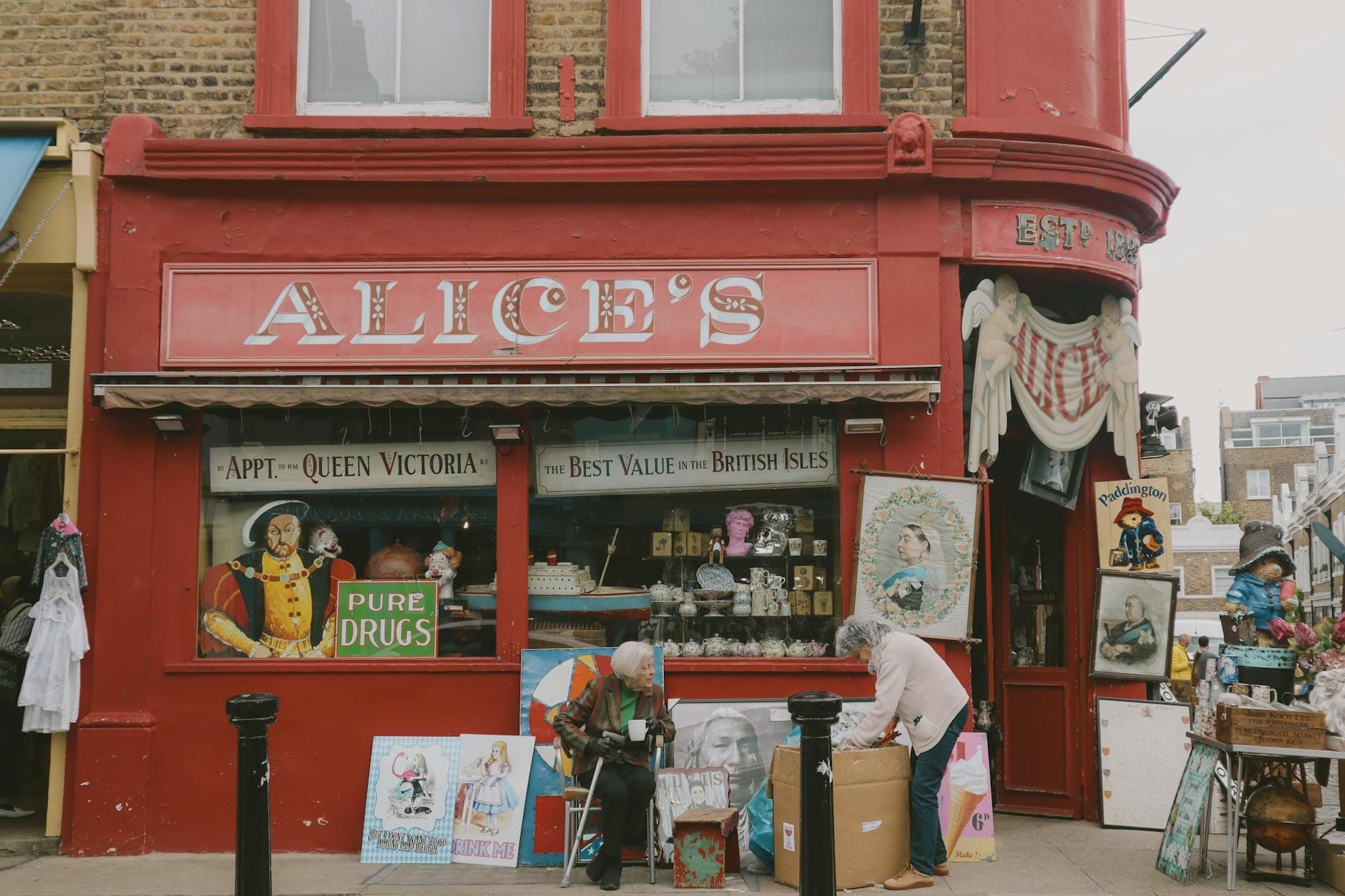
What Portobello Road Market Actually Is
Portobello Road Market is not a single market — it is an entire street that shifts character block by block as you walk north. Starting near Westbourne Grove and running up through Ladbroke Grove toward Golborne Road, the market dates to around 1863 and has grown into what many consider the world's largest antiques market, though that label only captures one section of it. The rest encompasses fresh produce, vintage clothing, street food, bric-a-brac, and a weekly surge of second-hand stalls that transforms the street on Saturdays.
The market is generally active Monday to Sunday, with most traders operating roughly between 8:30 am and 6:00 pm. Hours contract noticeably in winter, when most stalls don't open until 9:00 or 10:00 am and start packing down around 4:00 or 5:00 pm. Thursday is a partial day, with most activity concentrated in the morning and fewer stalls later in the day. Saturday is when the full market fires on all cylinders — antique dealers, vintage vendors, food trucks, and street musicians all operating at once.
💡 Local tip
Saturday is the day most people know, but it is also when the street becomes difficult to move through by mid-morning. If you are primarily interested in antiques, arriving by 9:00 am on a Saturday gives you first pick and room to actually stop at stalls without being jostled.
The Street Section by Section
Walking north from Notting Hill Gate, the first stretch near Chepstow Villas is the most curated. This is where established antique galleries and silver dealers operate from covered arcades — indoor spaces off the main road where jewellery, vintage watches, silverware, maps, and prints are laid out on velvet under proper lighting. Prices here are not bargain-bin, and vendors know exactly what they have.
As you pass the junction with Lonsdale Road, the character loosens. Stalls spread across both sides of the pavement, and the range broadens to include ceramics, vintage photography, militaria, taxidermy, mid-century furniture, and objects that resist easy categorisation. The smell of frying onions from food vendors starts appearing around here, mixing with the faint mustiness of old fabrics and aged paper that defines the antiques stretch.
North of the Westway overpass, the market shifts again. The covered area under the elevated road at Thorpe Close draws the vintage clothing crowd — racks of denim jackets, band tees, leather coats, and deadstock trainers. This section tends to skew younger, and the music tends to be louder. Prices vary wildly depending on whether the seller is a savvy reseller or someone clearing out a flat. Keep walking and you reach Golborne Road, a quieter stretch with a Portuguese community feel, a good coffee shop or two, and a noticeably lower tourist-to-local ratio.
Tickets & tours
Hand-picked options from our booking partner. Prices are indicative; availability and final rates are confirmed when you complete your booking.
Soho Instagram a self-guided walking tour to top photo spots
From 6 €Instant confirmationFree cancellationTootbus London by Night: Bus tour
From 32 €Instant confirmationFree cancellationIFS Cloud Cable Car Ride and Uber Boat Hop-on Hop-off 1 Day Ticket
From 38 €Instant confirmationFree cancellationThe Making of Harry Potter Guided Tour of London Warner Bros. Studio
From 201 €Instant confirmationFree cancellation
How the Market Changes Through the Day
Early morning — before 9:30 am on a Saturday — has a different energy entirely. Traders are still unfolding tables and laying out stock, conversations are unhurried, and the street smells of fresh bread from nearby bakeries rather than fried food. Serious buyers use this window deliberately. Dealers will negotiate more readily before the crowds arrive, partly because they haven't yet been asked the same question by fifty people.
By 11:00 am on a Saturday, the main antiques stretch is shoulder-to-shoulder. Navigating with a large bag or a pushchair becomes difficult. The energy is high and the atmosphere is undeniably good fun if you're not in a hurry, but browsing becomes almost impossible in the most congested blocks. The street-food stalls are at full volume by now, and you can eat your way through a remarkably varied late breakfast or lunch.
Mid-week visits — Monday through Thursday in particular — offer a stripped-back version of the market. The permanent shops and some produce stalls are open, but the flea market and vintage sections are minimal. This is useful if you want to walk the street at pace, photograph the painted terraces and pastel facades, or browse the permanent antique shops without pressure. It is not the right day if you came specifically for the market spectacle.
ℹ️ Good to know
Portobello Road's famous painted house fronts — the candy-coloured stucco terraces that most people photograph — look best on dry mornings when the light hits them from the east. The most photographed stretch is roughly between Elgin Crescent and Lancaster Road.
Historical and Cultural Context
Portobello Road takes its name from the Battle of Portobello, fought in 1739 when British naval forces captured the town of Porto Bello in present-day Panama. The road itself developed through the mid-19th century, and by around 1863 a market was already operating here. The area around it remained predominantly working-class well into the 20th century.
Notting Hill's transformation into one of London's most expensive postcodes came gradually. In the 1950s and 1960s, the neighbourhood was home to a large Caribbean immigrant community, many of whom had arrived from the Windrush generation. The tensions of that era, including the Notting Hill race riots of 1958, are part of the local history that sits beneath the glossy surface visitors see today. The Notting Hill Carnival, held each August Bank Holiday weekend, was born directly from that community's response to hostility, and it remains Europe's largest street festival.
The antiques trade at Portobello expanded significantly in the 1960s when dealers began gathering here after the closure of the Caledonian Market in Islington. By the 1970s, the market had established the reputation it still carries today. The 1999 film Notting Hill brought a wave of new visitors and contributed to a gentrification that had already been underway for decades.
Food, Drink, and What to Eat
On Saturdays, the food offering along Portobello Road is good. The stalls under and around the Westway serve everything from Jamaican jerk chicken and Ethiopian injera to Spanish churros and Sri Lankan kottu roti. The smells layer unpredictably as you walk — charred meat, ground spices, fried dough — and eating while moving is standard practice.
For something more structured, the permanent cafes and restaurants on the side streets off Portobello Road (particularly around Westbourne Grove and Blenheim Crescent) offer a break from the crowds. The Electric Diner on Portobello Road itself is a well-known neighbourhood institution. For provisions, the produce section in the lower half of the market has fresh fruit, vegetables, and flowers at prices notably lower than local supermarkets.
Practical Information for Your Visit
Getting here is straightforward on the Tube. Ladbroke Grove Station on the Hammersmith & City and Circle lines puts you at the northern end of the market, a five-minute walk away — this is a useful entry point if you want to start at the vintage clothing section and work south. Notting Hill Gate Station, served by the Central, District, and Circle lines, is a ten-minute walk to the southern, antiques-heavy end. For broader neighbourhood context, the guide to getting around London covers Oyster card and contactless payment in full — use either to tap in and out, and avoid buying single tickets at the machine.
Entry to the market is free. What you spend depends entirely on what you buy and eat. Cash is useful for smaller stalls, many of which don't accept cards — bring a mix. Wear comfortable shoes, as the pavement is uneven in places and you will cover more distance than you expect. On rainy days the market still operates, but the experience is less pleasant; the antique arcades provide some shelter, and the permanent shops are unaffected.
Pickpocketing is a known issue on busy Saturday mornings when the crowd density is highest. Keep bags zipped and on your front, particularly in the Westway underpass section where visibility is lower. This is not a reason to avoid the market, just a routine precaution worth stating.
Accessibility is limited by the nature of a street market: cobbles, pavement stalls, and weekend crowds create genuine challenges for wheelchair users and those with pushchairs. The road itself is flat, which helps, but navigating between stalls on a packed Saturday requires patience. If accessibility is a priority, a mid-week visit when the street is less congested is a better option. Portobello Road sits within the wider Notting Hill neighbourhood, which has good pavement infrastructure on its main roads.
⚠️ What to skip
The market's reputation attracts reproductions and overpriced items alongside genuine finds. If you're buying antiques with the intention of reselling, or spending serious money, ask the dealer directly for provenance information. Established arcade dealers typically carry more documentation than pavement vendors.
Who Might Not Enjoy This
Portobello Road Market has a loyal following, but it is not the right choice for every visitor. If you dislike crowds, avoid Saturday mornings between 10:00 am and 1:00 pm — the main antiques stretch becomes overwhelming, and moving at your own pace is difficult. If you're visiting mid-week expecting the full market experience, you will find a quieter street that captures only a fraction of what the Saturday market offers.
Travellers looking for budget shopping should note that Portobello Road's antiques market is not cheap. The prices reflect London, the location, and in many cases genuine rarity. For affordable shopping in the city, the London markets guide covers alternatives across the city that are better suited to casual or budget browsing.
Insider Tips
- The antique arcades just south of Elgin Crescent are easy to miss because their entrances are narrow and unmarked. These indoor spaces often have the highest-quality stock and the most knowledgeable dealers — step inside even if nothing in the window catches your eye.
- Golborne Road at the northern end is where locals actually shop. The stalls here are less curated, prices are lower, and the atmosphere is noticeably more relaxed. The Portuguese bakeries on this stretch serve some of the best pastéis de nata in West London.
- Saturday morning before 9:30 am is different from Saturday at noon. If your priority is finding something specific or having actual conversations with dealers, arrive as early as the market allows.
- The produce stalls on the lower section of Portobello offer fresh fruit and vegetables at prices well below local supermarkets. If you're self-catering anywhere in West London, this is worth factoring into your visit.
- Avoid bringing a large rolling suitcase or oversized backpack on a Saturday — you will block narrow stall aisles and frustrate other visitors. A cross-body bag or tote is all you need.
Who Is Portobello Road Market For?
- Antique collectors and dealers looking for silverware, jewellery, prints, and ceramics
- Vintage clothing enthusiasts, particularly those seeking 80s and 90s pieces in the Westway section
- Food-focused visitors who want to eat their way through an eclectic range of street food on a Saturday
- Architecture and photography fans drawn to Notting Hill's painted terraces and residential streets
- Travellers who want a neighbourhood market experience rather than a curated retail environment
Nearby Attractions
Other things to see while in Notting Hill:
- Museum of Brands
Tucked into a quiet stretch of Lancaster Road in Notting Hill, the Museum of Brands takes visitors on a decade-by-decade journey through British consumer life, from Victorian tins and wartime rations to 1980s cereal boxes and early mobile phones. With over 12,000 original objects, it is an unexpectedly moving record of everyday life.