Museum of Brands: A Time Tunnel Through 200 Years of British Consumer Culture
Tucked into a quiet stretch of Lancaster Road in Notting Hill, the Museum of Brands takes visitors on a decade-by-decade journey through British consumer life, from Victorian tins and wartime rations to 1980s cereal boxes and early mobile phones. With over 12,000 original objects, it is an unexpectedly moving record of everyday life.
Quick Facts
- Location
- 111–117 Lancaster Road, Notting Hill, London W11 1AT
- Getting There
- Ladbroke Grove (Circle & Hammersmith & City lines), 2–3 min walk
- Time Needed
- 1–2 hours
- Cost
- Adults from £9.00 | Concessions from £7.00 | Children from £5.00 | Family from £25.00 (verify on official site)
- Best for
- Design lovers, social historians, nostalgic Brits, curious travellers
- Official website
- museumofbrands.com
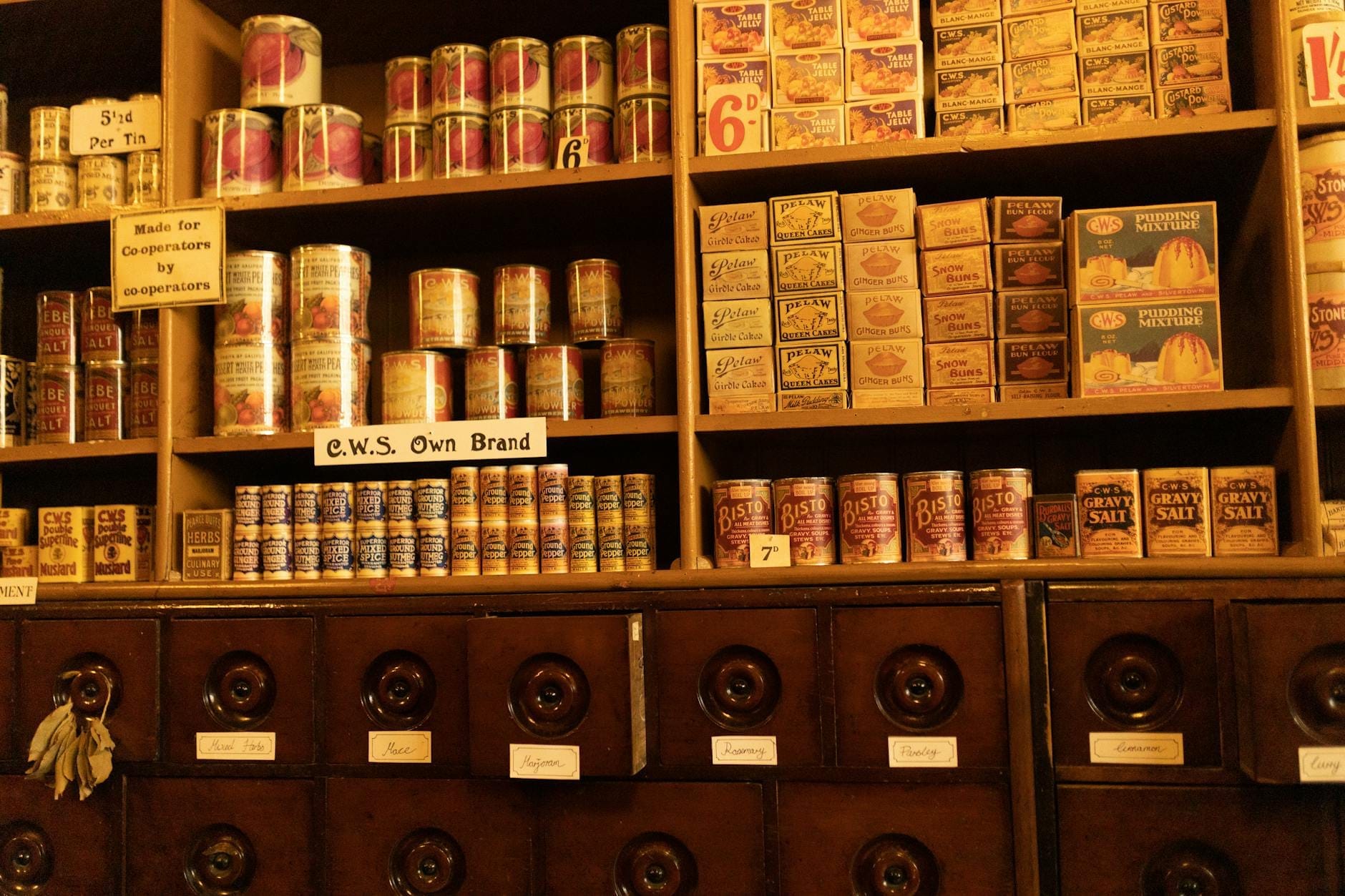
What the Museum of Brands Actually Is
The Museum of Brands, Packaging and Advertising sits on a residential side street in Notting Hill, announced by little more than a small sign above the door. From the outside, nothing prepares you for the density of material inside. The collection, assembled over decades by consumer historian Robert Opie, contains more than 12,000 original objects spanning approximately 200 years of British commercial and domestic life.
The core experience is the Time Tunnel, a long, corridor-like display arranged chronologically from the Victorian era to the present day. Shelves on both sides are packed floor to ceiling with real, original packaging and objects: biscuit tins with ornate lithography from the 1880s, wartime utility products stripped of colour and branding, 1950s washing powder boxes in optimistic yellows, and gradually the unmistakable shapes of brands that are still alive today. The effect is part archive, part nostalgia machine, and surprisingly emotional for many visitors.
ℹ️ Good to know
Opening hours changed from 1 January 2025. From 1 January 2025 the museum closes on Sundays and is also closed on Notting Hill Carnival weekend and 24–26 December. Always check museumofbrands.com before visiting.
Walking Through the Time Tunnel: What to Expect
You enter the Time Tunnel at the Victorian end and walk forward in time. The early decades feel foreign: patent medicines with near-fantastical claims, hand-illustrated tins for cocoa and tobacco, the first mass-produced soap brands. Pears, Bovril, and Rowntree's appear early, their original packaging remarkably similar to what persisted for another century.
The Edwardian and wartime sections are among the most historically dense. Ministry of Food leaflets, ration books, dried egg packets, and utility furniture sit alongside propaganda posters, all original. The contrast between pre-war commercial abundance and wartime austerity is impossible to miss and needs no caption to land.
Moving through the 1950s, 1960s, and 1970s, the display shifts toward colour television, pop culture, and the arrival of supermarket own-brands. By the 1980s section, the shelves feel more familiar to most adult visitors, and this is where the social dimension deepens. Cornflakes boxes, yoghurt pots, toy packaging, and TV listings magazines from your own childhood carry a weight that purely historical objects cannot. The museum seems to understand this: it does not rush you.
The collection does not stop at packaging. Motor cars, music memorabilia, early computers, sports equipment, children's toys, and fashion items all appear at relevant points. It is broad without feeling unfocused.
Tickets & tours
Hand-picked options from our booking partner. Prices are indicative; availability and final rates are confirmed when you complete your booking.
Soho Instagram a self-guided walking tour to top photo spots
From 6 €Instant confirmationFree cancellationTootbus London by Night: Bus tour
From 32 €Instant confirmationFree cancellationIFS Cloud Cable Car Ride and Uber Boat Hop-on Hop-off 1 Day Ticket
From 38 €Instant confirmationFree cancellationThe Making of Harry Potter Guided Tour of London Warner Bros. Studio
From 201 €Instant confirmationFree cancellation
Visiting by Time of Day: How the Experience Changes
The museum opens at 10:00 Monday through Saturday (until 17:00 from 1 January 2025). Arriving close to opening is the clearest practical advice: the Time Tunnel is a narrow space and even modest crowd numbers make it difficult to linger at the shelves, read the smaller labels, or take photographs without waiting. The corridor layout means there is no easy way to double back, so if the flow is crowded, you lose the ability to set your own pace.
Mid-morning on a weekday is the quietest window. School groups do visit, and when they arrive the sound level changes noticeably. If you arrive after 13:00 on a weekend or during school holidays, expect a busier experience. The museum is compact enough that crowd differences matter more here than at a large gallery where you can always find space.
💡 Local tip
Weekday mornings between 10:00 and 12:00 are your best bet for a calm, unhurried visit. The museum's total footprint is small, so timing affects quality of experience.
The Garden and Café: Slower Spaces Worth Using
Beyond the Time Tunnel, the museum has an award-winning garden that is free to enter during normal opening hours, even without a museum ticket. It is a well-maintained, quiet courtyard space that works as a place to decompress after the density of the collection, and as a practical spot for a break mid-visit.
The on-site café serves breakfast and lunch. The quality is decent for a museum café, and it is a calmer alternative to heading back out onto Lancaster Road. If you are combining the museum with a walk through Notting Hill, there is no shortage of independent coffee shops and restaurants within five minutes, so you have options either way.
Historical and Cultural Context: Why This Collection Matters
Robert Opie began collecting consumer packaging as a teenager in 1963. What started as a personal obsession became an archive that historians, designers, and sociologists now use as a primary source. The objects in the collection are not reproductions: they are the real thing, which gives the museum a material authenticity that digital or reconstructed displays cannot replicate.
British consumer culture from the Victorian period onward intersects with industrialisation, two world wars, the welfare state, the postwar boom, and late-twentieth-century globalisation. The Time Tunnel captures those shifts not through explanation but through the objects themselves. A tin of Heinz tomato soup on a shelf in the 1950s section tells you something a textbook entry on postwar Britain cannot. Visitors interested in social history will find the collection surprisingly rich. For context on the neighbourhood around the museum, the Notting Hill area guide covers the wider district, from Portobello Road to the carnival.
The museum also runs a programme of temporary exhibitions and events that rotate the collection's deeper archives into public view. If you have a specific interest in a period or category, it is worth checking the museum's current programme before visiting.
Getting There and Practical Logistics
The museum is at 111–117 Lancaster Road, London W11 1AT. The nearest Underground station is Ladbroke Grove, served by the Circle and Hammersmith and City lines, about two to three minutes' walk away. Bus routes 7, 23, 52, 70, 228, 452, and N7 also stop at or near Ladbroke Grove, making the museum accessible without the Tube if you prefer.
There is no dedicated car park. Notting Hill has controlled parking zones, so driving is not recommended. If you are travelling from further across London, the Transport for London network connects to Ladbroke Grove from most parts of the city, though you will likely need to change lines.
Accessibility information is not fully detailed on publicly available listings. Visitors with specific mobility or access requirements are advised to contact the museum directly before visiting. The building is a converted space, and it is worth confirming step-free access to the specific areas you plan to use.
Tickets are priced from approximately £9.00 for adults, £7.00 for concessions, £5.00 for children, and £25.00 for a family ticket, based on current listings. These are from-prices and can change; verify at museumofbrands.com before purchasing. Art Fund cardholders may be eligible for reduced admission.
Photography, What to Wear, and Practical Tips
Photography is generally permitted for personal use. The Time Tunnel's lighting is warm and consistent, well-suited to close-up shots of packaging and labels. A phone camera handles the low-contrast conditions well. Wide-angle shots of full shelf sections are harder because the corridor is narrow, but individual objects photograph cleanly. Tripods are not practical and almost certainly not permitted.
The museum is fully indoors and the temperature is controlled. Dress casually; there is nothing in the environment that requires special clothing. The walk from Ladbroke Grove station is short and flat. If you are combining the visit with a longer walk around Notting Hill or toward Portobello Road, comfortable footwear matters more for the surrounding streets than for the museum itself.
Notting Hill is worth exploring before or after your visit. Portobello Road Market runs on Saturdays and is a short walk from Lancaster Road. The combination of market and museum makes a strong half-day itinerary, though the market draws large crowds on Saturdays, which is worth factoring into your timing.
Who This Museum Is and Is Not For
The Museum of Brands has a reputation for producing strong reactions in British visitors of a certain age, many of whom find the experience unexpectedly affecting. For international visitors with no connection to British brands, the experience is interesting as social history, but the emotional register is different. The collection is still worth visiting for the quality of the objects and the insight into consumer culture, but you will get less from it if British packaging history means nothing to you personally.
Young children can engage with the toys, television, and food sections, but the Time Tunnel's format is primarily text-and-object rather than interactive. It is not designed as a hands-on family experience in the way that the Natural History Museum or the Science Museum are. Older children and teenagers with an interest in design or advertising will find more to hold their attention.
Visitors looking for large-scale, immersive installations or contemporary art will find the museum too archival for their tastes. This is a collection of real objects on shelves, carefully curated and contextualised, but the presentation is traditional. That is precisely the point, and for the right visitor, it is exactly what makes the place work.
Insider Tips
- The Time Tunnel moves in one direction, so if you know a specific decade is most important to you, pace yourself from the entrance. It is easy to spend too long in the Victorian section and rush through the mid-twentieth century.
- The museum's garden is free to enter without a ticket during normal opening hours. If you are passing through the neighbourhood and want a quiet outdoor space in Notting Hill, it is a low-key option that most people do not know about.
- If you hold an Art Fund card, check your membership benefits before buying a standard ticket. Art Fund members may qualify for a reduced admission rate.
- The museum is closed on Notting Hill Carnival weekend. If you are visiting London specifically for the carnival, plan the Museum of Brands visit for a different day.
- Labels and text panels are small and detailed throughout the collection. Reading glasses are useful, not just comfortable, in the Time Tunnel.
Who Is Museum of Brands For?
- Design and branding professionals interested in the history of visual communication
- British visitors and expats who grew up with the brands on display and want a deliberately nostalgic experience
- Social historians and anyone researching how ordinary domestic life has changed across the twentieth century
- International visitors curious about British commercial culture and how consumer identity formed in the UK
- Couples or solo travellers looking for a low-key, interesting alternative to London's major museums
Nearby Attractions
Other things to see while in Notting Hill:
- Portobello Road Market
Portobello Road Market stretches across one of London's most photogenic neighbourhoods, drawing antique hunters, vintage fashion lovers, and food seekers from around the world. Free to enter, open most days, and far more layered than its tourist reputation suggests, it rewards those who know which section to visit and when.