Notting Hill is a west London neighborhood in the Royal Borough of Kensington and Chelsea, known for its pastel-painted terraces, Portobello Road Market, and the Notting Hill Carnival. It sits at an interesting crossroads between well-heeled residential streets and a working-class Caribbean heritage that still shapes its culture today.
Notting Hill occupies a unique position in London's geography and imagination: a neighborhood where Victorian townhouses in cream and pastel pink line streets that, for one weekend every August bank holiday, become the stage for Europe's largest street festival. It is simultaneously a wealthy residential enclave, a Saturday antiques market destination, and a place with genuine multicultural depth that the 1999 Hugh Grant film only partially captured.
Orientation
Notting Hill sits in the northern part of the Royal Borough of Kensington and Chelsea, in west London. Its southern boundary is roughly Kensington Gardens and Bayswater Road, with Notting Hill Gate station marking the transition into the more formal streets of Kensington. From there, the neighborhood extends northward through the residential grid of Ladbroke Grove and Pembridge Road, past Portobello Road itself, continuing through North Kensington until it reaches the Grand Union Canal and eventually Wormwood Scrubs. To the east, Holland Park separates Notting Hill from Kensington and Holland Park proper; to the north, the streets gradually shift into the Paddington and Bayswater territories.
Portobello Road is the central spine, running roughly north to south through the district's heart. Most visitors orient themselves along this single street, which changes character almost block by block: antique dealers and tourist stalls in the south, fruit and vegetable traders in the middle, and a younger, more market-stall-oriented scene further north near Golborne Road. That northern stretch around Golborne Road and Trellick Tower, the brutalist landmark designed by Erno Goldfinger, is a distinct sub-neighborhood within Notting Hill that most tourists never reach.
Notting Hill connects easily to central London and makes a good base for exploring Kensington and Chelsea to the south. The major museums on Exhibition Road are around 25–30 minutes on foot or two stops by tube, and Hyde Park's western edge is within easy walking distance. For travelers exploring west London more broadly, Notting Hill is a logical anchor point.
Character & Atmosphere
On a weekday morning, Notting Hill is one of the more quietly residential parts of inner London. The streets around Pembridge Villas and Ladbroke Grove are calm enough that you can hear pigeons on the chimney pots. Dog walkers use the garden squares; local cafes fill slowly with people who look like they work from home. The streets are mostly clean, the stucco facades freshly painted, and the whole area carries the particular stillness of serious money at rest.
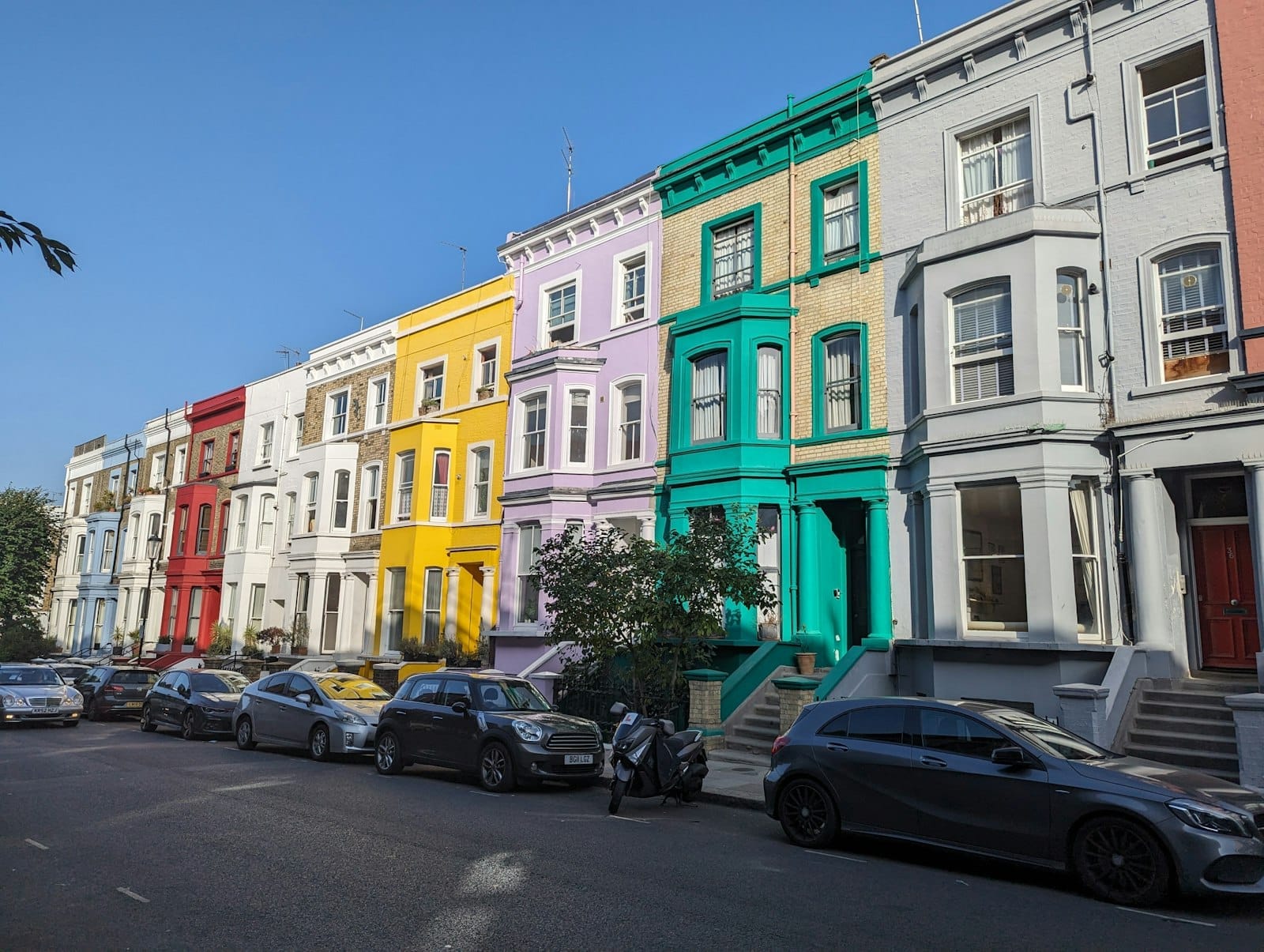
Saturday transforms everything. From around 9am, Portobello Road begins filling as antique dealers set up their stalls in the southern section near Chepstow Villas. By 11am the street is hard to navigate, especially between Elgin Crescent and Lonsdale Road. The light on a clear Saturday morning catches the pastel house fronts in the kind of way that explains why every travel photographer has come here at some point. The smell shifts between fresh flowers, fried food from street vendors, and coffee from the independent cafes on Blenheim Crescent and Elgin Crescent.
By late afternoon the antique traders have packed up, and Portobello Road takes on a different personality: bars and restaurants fill, and the weekend crowd shifts from tourists carrying paper bags of old silverware to locals settling in for the evening. After dark, the streets around Notting Hill Gate tube are lively but not rowdy. The neighborhood is not a nightlife destination in the way that Shoreditch or Soho are, but it has a comfortable after-dinner rhythm that suits it well.
ℹ️ Good to know
The Notting Hill Carnival takes place every August bank holiday weekend (Sunday and Monday). Around one million people attend across the two days, making the streets around Ladbroke Grove and Westbourne Grove effectively impassable unless you plan your route carefully. Tube and rail stations in the area often operate as exit-only or close at times during peak hours in line with the official Carnival travel plan. It is an extraordinary event, but it requires preparation.
The neighborhood's multicultural character is often mentioned in tourist guides but deserves more than a passing note. Notting Hill's Caribbean community, which settled here primarily in the 1950s and 1960s, gave the area much of the cultural energy it still carries. The Carnival was born from that community's presence, growing out of Claudia Jones’s indoor Caribbean carnival events of the late 1950s and a 1966 street event into the street festival it is today. Gentrification has shifted the demographics significantly since then, but the Carnival, certain community institutions, and the visual legacy of that era remain tangible parts of the neighborhood's identity.
What to See & Do
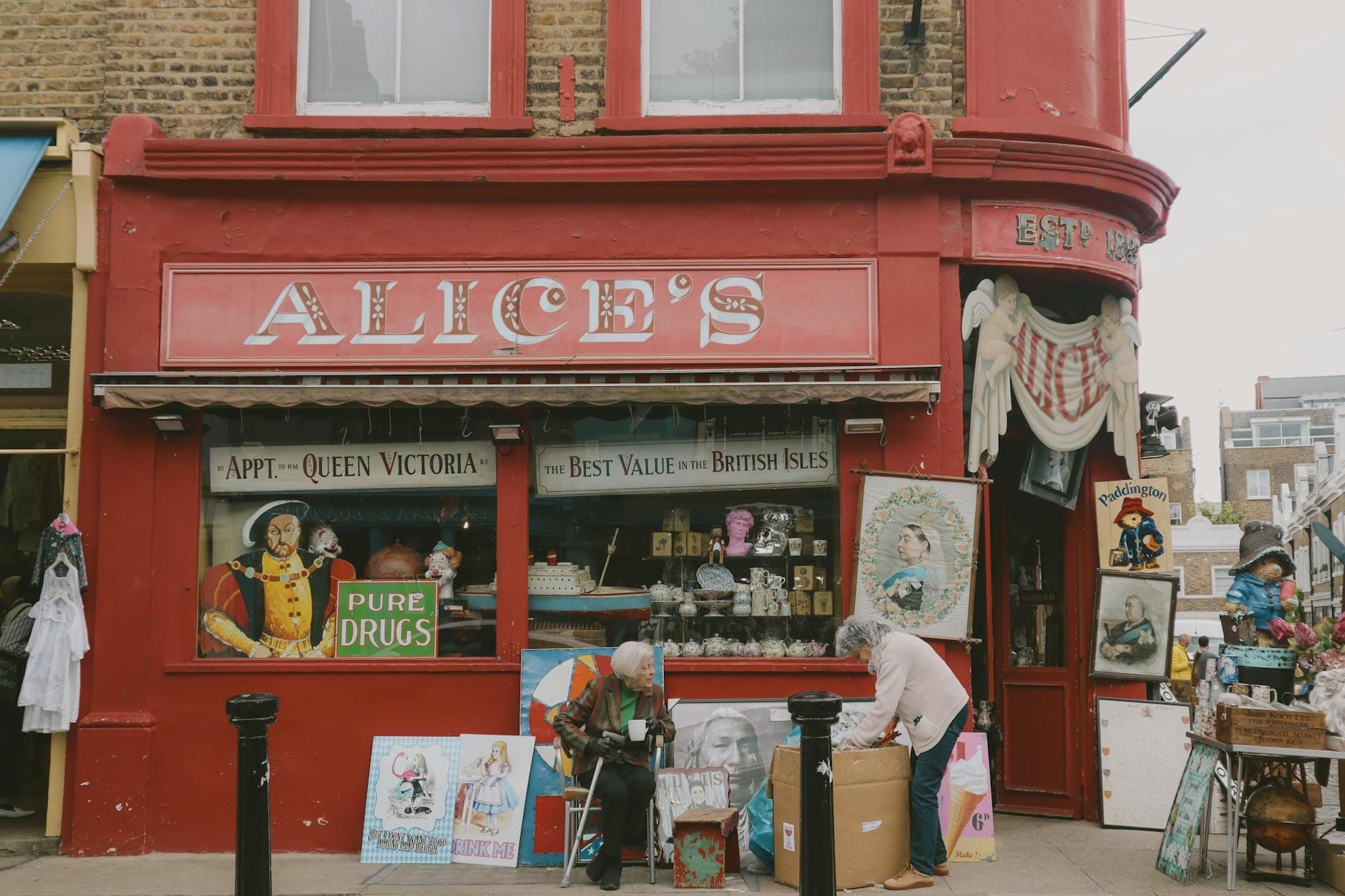
Portobello Road Marketis the obvious starting point and worth a Saturday morning visit. The antique section runs from the junction with Chepstow Villas northward, and the quality varies enormously: serious dealers selling Georgian silver sit alongside stalls with vintage postcards and 1970s kitchenware. The fruit and vegetable market runs most days in the central section, with the full market operating on Saturdays. Arriving before 10am gives you a chance to look properly; arriving after noon on a Saturday means working through crowds that make browsing difficult.
Electric Cinema on Portobello Road: one of London's oldest working purpose‑built cinemas, with armchairs and footstools instead of standard seats
The Tabernacle on Powis Square: a Victorian Gothic church converted into a community arts venue with a good cafe
Trellick Tower on Golborne Road: Erno Goldfinger's Grade I listed brutalist tower, worth viewing from street level
The Notting Hill Bookshop on Blenheim Crescent: the real-world inspiration for the bookshop in the 1999 film
Portobello Road and the surrounding side streets such as Lancaster Road and Denbigh Terrace: the streets that best represent the classic pastel-terrace aesthetic
Golborne Road: a quieter, more local market strip with Moroccan and Portuguese food shops at the northern end of the district
Film tourists looking for locations from the 1999 Hugh Grant and Julia Roberts film tend to gravitate toward Blenheim Crescent for the bookshop and Westbourne Park Road, where the blue door featured in the film was located at number 280 (though the current door is no longer blue). The area around Portobello Road used in several scenes is easily walked. Worth knowing: the neighborhood has largely absorbed its cinematic fame without turning it into a theme park, so the locations feel like actual streets rather than set pieces.
For those interested in the Carnival itself, the Notting Hill Carnival guide covers the route, sound systems, and what to expect in detail. If you are visiting at any other time of year, All Saints Road, just off Westbourne Park Road, is worth a walk for its independent shops and cafes. Avondale Park, tucked between the terraces south of Ladbroke Grove, is a small but well-kept local green space.
Eating & Drinking
Notting Hill has a good density of independent restaurants and cafes, concentrated mainly on Westbourne Grove, Ledbury Road, and the side streets around Portobello Road. The price range is broadly mid-to-upper: this is an affluent neighborhood and the restaurant scene reflects that, but there are affordable options, particularly around the market itself and on Golborne Road.
Westbourne Grove is the main dining strip, with a range of cuisines from Japanese to Italian to modern British. Ledbury Road leans toward upscale dining and the kind of independent boutiques that share a certain aesthetic with expensive restaurants. For a more relaxed meal, the cafes and delis around Blenheim Crescent and Elgin Crescent offer good coffee and food that doesn't require a reservation.
Golborne Road at the far north end of the district is a different proposition entirely. The street has a significant Moroccan and North African community presence, and the food shops, cafes, and patisseries here are some of the most interesting in the area. Portuguese custard tarts from the bakeries on this stretch are a local institution. It is about 15 minutes' walk from Portobello Road's antique section and most visitors never make it this far, which is precisely why it is worth the walk.
💡 Local tip
On Saturday market days, street food stalls set up along Portobello Road itself, particularly in the covered arcade sections further north. Quality varies but there are usually good options for quick, affordable eating without needing a restaurant booking.
For a broader view of the London food scene and how Notting Hill fits into it, the London food guidecovers the wider picture across neighborhoods. Notting Hill is not in the same league as Borough Market or the East End for sheer food variety, but its independent cafe culture is strong and the quality of produce in the market itself is good.
Getting There & Around
Notting Hill Gate station is the main underground hub for the area, served by three lines: Central, District, and Circle. It sits at the southern edge of the neighborhood and is well connected to the rest of London. From the West End (Oxford Circus), it is around 10 minutes by Central line. From Paddington, it is four stops on the Circle line via Bayswater and Notting Hill Gate, or a short bus or walk. From central areas east of the city, the Central line provides a direct and fast connection.
For the northern parts of the district, particularly the market area and Golborne Road, Westbourne Park and Ladbroke Grove stations on the Hammersmith & City and Circle lines are more useful. Westbourne Park station on Great Western Road puts you about five minutes' walk from the northern end of Portobello Road. Ladbroke Grove station is useful for the area around Trellick Tower and the carnival route.
Buses are a practical option along Ladbroke Grove and Westbourne Grove, with several routes connecting the neighborhood to Paddington, Shepherd's Bush, and the West End. From Heathrow, the Elizabeth line to Paddington and then onward by tube or taxi is the most straightforward route, taking around 35 to 45 minutes in total. For general transport advice across the city, the getting around London guide covers Oyster cards, fare zones, and navigating the network.
Within Notting Hill itself, the area is best explored on foot. Portobello Road from south to north is about 15–20 minutes' walk end to end without stopping, and the interesting side streets run off it on both sides. Walking from Notting Hill Gate station to the Golborne Road end of the market takes around 25 minutes at a relaxed pace. Holland Park is about a 10-minute walk east from Notting Hill Gate, and the Kensington High Street shops are roughly 10 minutes south.
⚠️ What to skip
On Saturdays, Portobello Road south of Elgin Crescent becomes very congested between 11am and 2pm. If you are trying to reach a specific address in this section by car or taxi, allow significant extra time or walk the last stretch from a drop-off point on a side street.
Where to Stay
Notting Hill is a reasonable base for west London exploration, though hotel options are more limited than in the West End or South Kensington. Most accommodation consists of boutique hotels, guesthouses, and serviced apartments rather than large chain hotels. For the full picture of where accommodation clusters in the city, the where to stay in London guide provides a neighborhood-by-neighborhood comparison.
The most desirable area to stay within Notting Hill itself is the stretch between Notting Hill Gate and Pembridge Road, close to the tube and within easy walking distance of both the market and the shops on Westbourne Grove. Staying further north, around Westbourne Park Road, puts you closer to the market atmosphere but requires a bus or longer walk to the tube. For families or groups, the self-catering apartment market in the neighborhood is well developed, and there are numerous period townhouse conversions offering larger spaces than a standard hotel room.
Notting Hill works well as a base for travelers focused on west London: Kensington and Chelsea museums are 20 minutes away, Hyde Park is walkable, and Paddington station, for Elizabeth line connections east and west, is two tube stops or a 25-minute walk. It is a quieter base than the West End, which can be a genuine advantage or a drawback depending on what you prioritize.
Worth Knowing: Who Notting Hill Is For
Notting Hill is a neighborhood that delivers well on a specific kind of London visit: Saturday morning markets, good independent cafes, photogenic streets, and a relaxed afternoon pace. It is not the place to come for major museums (those are in South Kensington and Bloomsbury), late-night options, or budget eating. The tourist infrastructure around Portobello Road is real: on a summer Saturday, the antique section between Chepstow Villas and Westbourne Grove is crowded with visitors, and prices in market-adjacent cafes and restaurants reflect that.
If you are planning a broader London itinerary, Notting Hill fits well as a half-day excursion from a West End base, or as a weekend morning side-trip combined with an afternoon in Kensington. For first-time visitors to London trying to cover the major sights, it is an enjoyable addition but probably not worth making your base unless you specifically want the west London residential atmosphere. The London for first-timers guide puts Notting Hill in context alongside the city's other priorities.
For photographers and those interested in the visual texture of London's streets, Notting Hill has genuine rewards: the painted stucco houses on the residential streets west of Ladbroke Grove, particularly around Elgin Crescent and Blenheim Crescent, are some of the most architecturally distinctive in the city. The most photographed spots in London guide includes several Notting Hill locations alongside entries from across the capital.
TL;DR
Best for: Saturday market visits, independent cafes, photogenic street architecture, and west London exploration.
Portobello Road Market runs daily but is at its fullest and most varied on Saturdays; arrive before 10am to browse without crowds.
Three tube lines serve Notting Hill Gate station, making connections to the West End, Paddington, and the rest of central London straightforward.
The Notting Hill Carnival in August is a major event requiring advance planning; the neighborhood becomes entirely transformed for the bank holiday weekend.
Not ideal for: travelers focused on major museums, budget accommodation, or nightlife, though the neighborhood has solid restaurants and a comfortable evening atmosphere.
The Golborne Road end of the district, with its Moroccan and Portuguese food culture and view of Trellick Tower, offers a side of Notting Hill that feels different from the tourist-oriented market area.
Afternoon tea in London ranges from grand hotel rituals at £95 per person to relaxed neighbourhood spreads under £50. This guide covers the top venues across every budget, how to book, what to wear, and which hyped spots are actually worth it.
London has more world-class museums than almost any city on Earth, and the majority are free. This guide covers the essential institutions across art, history, science, design, and beyond, helping you plan your visits with confidence.
London has more parkland per capita than almost any major world city, and its eight Royal Parks alone cover just under 4,900 acres of public green space. This guide covers the finest parks across the city, from the grand central Royal Parks to wilder escapes on the edges of Greater London.
London rewards visitors in every season, but the experience shifts dramatically depending on when you go. This guide breaks down crowd levels, weather, prices, and key events month by month so you can plan a trip that matches exactly what you want from the city.
London's skyline is one of the world's great visual spectacles, mixing centuries-old domes with glass towers and royal parks. This guide covers the best places to see it all — free rooftop gardens, paid observation decks, hilltop parks, and river vantage points that reward at any time of day.
London is perfectly placed for world-class day trips. Whether you want a Tudor palace on the Thames, a city of dreaming spires, or a prehistoric stone circle, all of it is within two hours. This guide covers the best options, how to get there, and what to prioritise.
London is one of the world's great free cities. From world-class museums and contemporary art galleries to royal parks, iconic walks, and spectacular viewpoints, this guide covers the best experiences in London that are completely free to enjoy.
London has one of the most comprehensive urban transport networks in the world, covering 9 million residents across 1,572 km² of Greater London. This guide breaks down every option, from the Tube to river buses, with fare details, airport transfer routes, and insider tips to save time and money.
London gave the Wizarding World its real-world addresses, from the glass-roofed arcade that stood in for Diagon Alley to the Islington townhouses of Grimmauld Place. This guide covers every major filming location, the Warner Bros. Studio Tour, how to get there, and what to skip — with practical advice on crowds, costs, and what each spot actually looks like in person.
London has six airports, and choosing the wrong one can add hours and serious cost to your journey. This guide breaks down Heathrow, Gatwick, Stansted, Luton, City, and Southend with practical advice on every transport option, realistic fares, and which airport actually suits your trip.
London's food scene is one of the most diverse and underrated in the world. This guide cuts through the noise to tell you what to actually eat, which neighbourhoods to target, what things cost, and how to avoid the tourist traps.
London is one of the world's great cities, spanning 1,572 km² across 32 boroughs with 9.1 million residents and over 300 languages spoken. This guide covers everything a first-time visitor needs: how to get in, how to get around, which neighborhoods to prioritize, what to book in advance, and the practical details that make the difference between a stressful trip and a great one.
London rewards those who look beyond the headline attractions. From ruined churches turned secret gardens to world-class free museums tucked down side streets, these are the places locals love and most visitors miss entirely.
London's hop-on hop-off buses are everywhere, but are they the smartest way to see the city? This guide breaks down the main operators, what you get for your money, who benefits most, and when to skip the pass entirely.
December transforms London into one of Europe's most atmospheric winter destinations. From Hyde Park Winter Wonderland to the South Bank's riverside market stalls, this guide covers everything you need to plan a memorable Christmas visit, including what to skip, what to book in advance, and how to get around without the crowds.
Summer in London runs from late June through August and delivers a different city: long daylight hours, royal parks at their peak, and a packed calendar of festivals, sporting events, and outdoor culture. This guide covers what to expect, what to book in advance, and what to skip.
Three days in London is enough to cover the essential sights, explore a couple of neighbourhoods, and get a real feel for the city. This itinerary is built around practical logistics, clear priorities, and current ticket prices so you can spend less time planning and more time exploring.
Five days in London is enough to cover the iconic landmarks, explore distinct neighbourhoods, and still have time to eat and drink well. This day-by-day guide cuts through the noise with specific recommendations, realistic timings, and practical advice on what is worth your time.
London's market scene spans 1,000-year-old food halls, world-famous antiques rows, and creative street markets under Victorian ironwork. This guide covers the best across every category, with practical tips on when to go and what to expect.
London's nightlife spans everything from underground warehouse raves in Greenwich to velvet-rope cocktail bars in Mayfair. This guide breaks down the best areas, top clubs, practical costs, and the timing tricks that separate a great night from an expensive disappointment.
London has a reputation for expense, but a well-planned trip can be surprisingly affordable. From world-class free museums to discount West End seats and Oyster card tricks, this guide covers every practical angle for stretching your pounds in one of Europe's great capitals.
The London Pass promises access to 100+ attractions for a flat daily fee. But does it actually save you money? This guide breaks down the real costs, the best use cases, and who should skip it entirely.
The River Thames is the backbone of London, stretching 215 miles through southern England and shaping the city's history, skyline, and daily life. This guide covers sightseeing cruises, the Thames Path, riverside eating and drinking, water sports, and the key landmarks you'll pass along the way, with practical advice on what's worth your time and what to skip.
London is a remarkably safe city for its size, but petty theft and tourist-targeted scams are real risks. This guide covers the most common threats, where they happen, and exactly what to do to protect yourself and your belongings.
London's shopping scene spans everything from 300-store Oxford Street to Sunday flower markets in the East End. This guide covers the best streets, markets, and stores by category, with practical advice on timing, crowds, and where your money actually goes furthest.
Getting from London to Amsterdam is one of Europe's most popular city-to-city trips. This guide breaks down every option — Eurostar, budget flights, overnight ferry, and long-distance coach — with realistic journey times, current price ranges, and advice on which suits your trip.
Covering every way to travel between London and Edinburgh, this guide breaks down real journey times, current price ranges, and which option makes sense depending on your budget, schedule and priorities. The answer is not always what you expect.
There are three realistic ways to get from London to Paris: the Eurostar train, a short-haul flight, or an overnight coach. This guide breaks down journey times, realistic fares, booking strategy, and the practical details that trip-planning sites usually skip.
London rewards walkers more than almost any other city. From the medieval lanes of the Square Mile to the riverbanks of the South Bank, the best way to understand this city is on foot. This guide covers guided group tours, official City of London walks, tip-based 'free' options, and self-guided routes, with practical advice on pricing, booking, and when to show up.
London is one of the world's great family destinations, with free world-class museums, royal parks, river adventures, and enough child-friendly attractions to fill a week. This guide cuts through the noise with practical advice on what's worth booking in advance, what's actually free, and how to keep the whole family sane on the Tube.
From Mayfair's grand hotels to Knightsbridge's world-class restaurants and private cultural experiences, this guide covers everything you need to plan a high-end stay in London. Expect specific neighbourhood advice, booking strategies, and clear assessments of where the money is well spent.
London is one of the world's great photography cities, with iconic landmarks, colourful streets, and unexpected architectural gems around every corner. This guide covers the 20 most photogenic spots, from the obvious classics to the lesser-known spaces that will make your feed stand out.
Notting Hill Carnival is Europe's largest street festival, drawing over a million visitors to west London every August Bank Holiday weekend. This guide covers the 2026 schedule, the full route, how to get there, what to eat, and what to expect on each day.
Open House Festival is London's annual architecture celebration, opening over 800 buildings, tours, and talks across all 33 boroughs — most of them free. This guide covers dates, booking strategy, neighbourhood planning, and which events fill up fastest.
London rewards couples who know where to look. This guide covers the most romantic experiences in the city — from sunset river cruises and West End theatre to free viewpoints and atmospheric parks — with practical advice on what's worth the price and what you can enjoy for nothing.
From the Ceremony of the Keys at the Tower of London to the summer opening of Buckingham Palace's State Rooms, London's royal sites are more accessible than most visitors realize. This guide covers what to see, when to go, what to book in advance, and what to skip.
London rewards visitors who go beyond the obvious. This guide covers the best things to do in London across culture, history, food, and neighbourhoods, with practical tips on what's worth your time, what to skip, and how to do it all without overpaying.
London's West End is one of the world's great theatre destinations, with around 40 major venues and over 17 million audience visits a year. This guide covers everything from buying tickets and finding discounts to getting there, picking the right seat, and knowing what to expect on the night.
Choosing where to stay in London shapes your entire trip. This guide breaks down the city's best neighbourhoods by location, transport access, price range, and atmosphere, so you can book with confidence rather than guesswork.
Getting into Wimbledon is more accessible than most people think — if you know the system. This guide covers every official ticket route, real price ranges, The Queue strategy, and practical tips for making the most of your day at the world's most famous tennis tournament.