London in Summer: The Complete Guide to June, July & August
Summer in London runs from late June through August and delivers a different city: long daylight hours, royal parks at their peak, and a packed calendar of festivals, sporting events, and outdoor culture. This guide covers what to expect, what to book in advance, and what to skip.
Plan and book this trip
Tools from our partner Travelpayouts help you compare flights and hotels. If you book through them, we may earn a commission at no extra cost to you.
Flights
Hotels map
TL;DR
- Summer (June–August) brings London's best daylight, with sunsets after 9pm in June and average highs of about 23°C in July and August.
- Major events include Wimbledon, the BBC Proms, Pride in London, and the Notting Hill Carnival — most require advance booking or early queuing.
- Parks, lidos, and outdoor theatres are the seasonal highlights — check our guide to London's best parks for the top green spaces to visit.
- UK school holidays (roughly late July to early September) push prices up and crowds higher — plan accommodation early.
- Pack a light waterproof regardless: London summer weather is famously changeable, and a cool, rainy July day is not unusual.
What London's Summer Weather Actually Looks Like
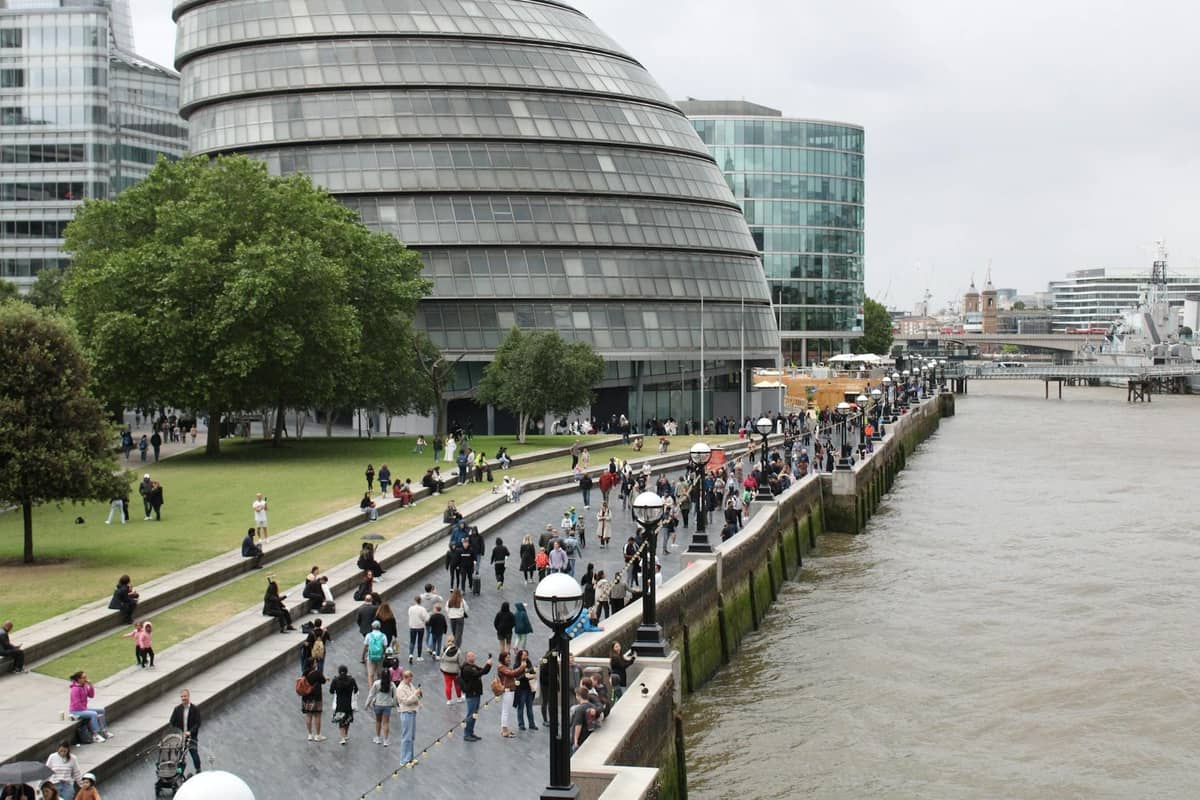
London has a temperate oceanic climate, which means summer is pleasant rather than scorching. According to Met Office averages from the Heathrow monitoring station (1991–2020), mean daily highs in June sit around 21°C, rising to roughly 23°C in July and August, with overnight lows between 13–15°C. The city operates on British Summer Time (BST, UTC+1) from late March through late October, meaning you get extraordinary evening light: sunset falls after 9pm around the summer solstice in late June, and still after 8pm through most of August.
Rain does not disappear in summer. London typically sees 40–60mm of rainfall per month year-round, with around 11–13 rainy days even in July and August. The famous heatwaves do happen, but so do cool, grey weeks that feel more like April. A compact umbrella and a light layer are not optional packing — they are useful. Indoor backup plans for outdoor activity days are worth having.
⚠️ What to skip
London's air-conditioning infrastructure is limited compared to many European cities. The Tube can be extremely uncomfortable on hot days (some deep-level lines regularly exceed 30°C in carriages). If temperatures spike, plan journeys for early morning or evening, and carry water.
The Summer Events Calendar: What to Prioritise
London's summer event calendar is world-class, but several headline events require significant advance planning. Here is what to know about the major fixtures.
- Wimbledon Championships (late June–early July) Held at the All England Lawn Tennis Club in SW19, Wimbledon runs for two weeks from late June into early July. Tickets are allocated via a public ballot that opens months in advance. A limited number of same-day tickets for outer courts are available via the famous in-person queue at Wimbledon Park — arriving by 7am is realistic for outer courts, much earlier for show courts. Do not expect to simply buy tickets online at the last minute; it rarely works.
- BBC Proms (mid-July to mid-September) The Royal Albert Hall hosts daily orchestral concerts from mid-July through mid-September as part of this beloved classical music festival. The most accessible entry point is a standing 'Promming' ticket, which typically costs around £8 and goes on sale 45 minutes before each performance. Seats at the Royal Albert Hall sell out quickly for popular nights — book as soon as programmes are announced.
- Pride in London (early July) The main Pride parade runs through central London in early July, attracting enormous crowds. Free outdoor stages are set up across the West End. Tube stations around Soho and Trafalgar Square become severely congested — walking between areas is often faster than any transport.
- Notting Hill Carnival (August Bank Holiday weekend) Europe's largest street festival, held on the August Bank Holiday Sunday and Monday in Notting Hill and surrounding streets. The Sunday is traditionally Panorama day (steel bands); Monday is the main parade. Entry is free, but crowds of over a million people make the area extremely dense. Come early, wear comfortable shoes, and expect to queue significantly for food.
- West End LIVE (June) Usually a free weekend of West End musical performances in Trafalgar Square in June. Tickets (often free but requiring registration) go via Official London Theatre. It is excellent value and draws big crowds — arrive early for good positioning.
- Buckingham Palace State Rooms (summer only) The State Rooms open to paying visitors only during the summer — the only period each year when the public can access much of the palace interior. Adult tickets have previously been priced from around £32; check the Royal Collection Trust website for current-year pricing and exact dates.
✨ Pro tip
The Greenwich + Docklands International Festival (GDIF) in late June is one of London's best-kept seasonal secrets: free outdoor theatre, circus, and large-scale installations across Greenwich, Docklands, and East London. No tickets needed for most shows, and the quality is impressive.
Parks, Lidos, and Outdoor London
London's royal and public parks transform in summer. Hyde Park becomes a hub of outdoor activity, from paddleboarding on the Serpentine to free outdoor concerts at the Bandstand. Regent's Parkhosts the Open Air Theatre from May through September — Shakespeare productions and musicals in a beautiful setting, with tickets selling out weeks in advance for popular shows.Greenwich Park offers riverside views and picnic-perfect slopes below the Royal Observatory.
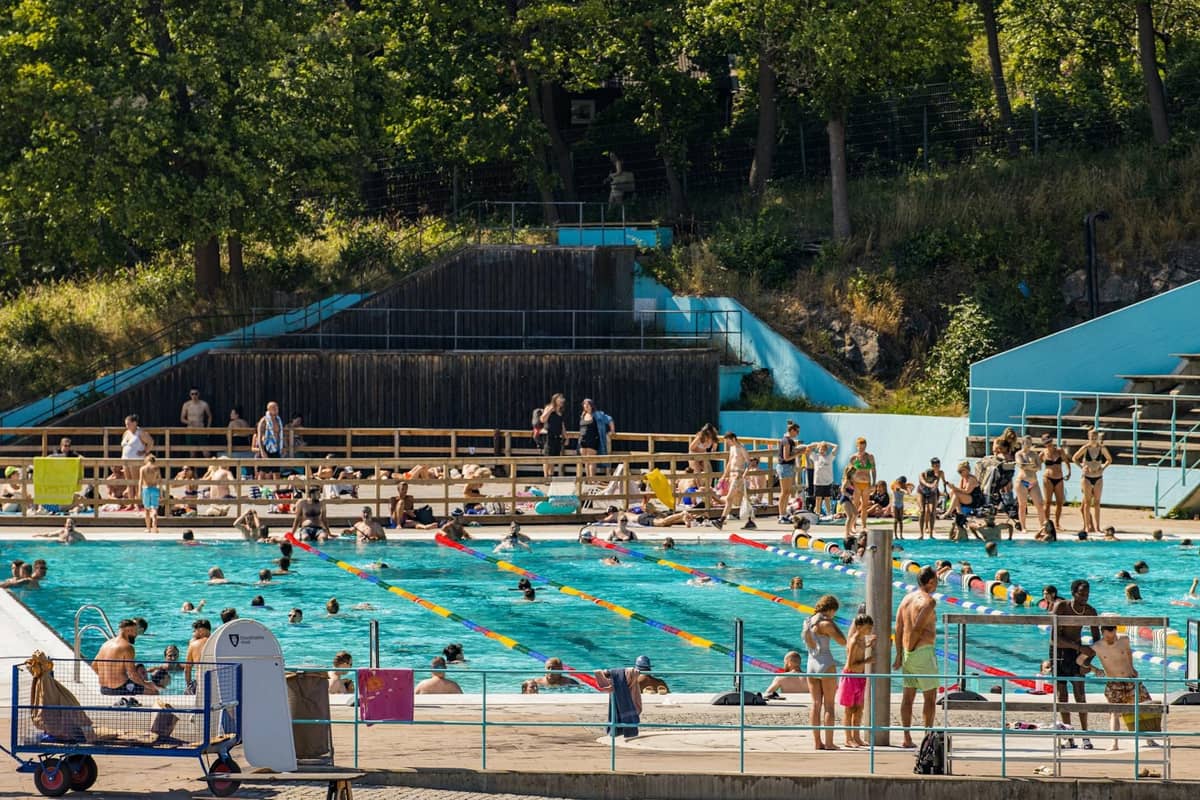
Outdoor swimming is a serious summer activity in London. Parliament Hill Lido on Hampstead Heath, London Fields Lido in Hackney, and the Serpentine Lido in Hyde Park are the headline options. All are popular and, during hot spells, can book out rapidly — online advance booking is essential for Parliament Hill and London Fields. The Serpentine Lido operates seasonally (typically late May to early September). For the wild swimming experience that Londoners quietly love, the Hampstead Heath Ponds (separate facilities for men, women, and mixed) offer open-water swimming in a more natural setting, with a small entry fee.
Richmond Park, at 2,500 acres one of London's largest Royal Parks, is home to around 650 free-roaming deer and reaches its most photogenic in summer when the herds are active and the bracken is green. It is further out (served by rail to Richmond, then a walk or cycle), but worth the journey for anyone wanting genuine open space. Kew Gardens nearby is another strong summer choice, with outdoor events, rose gardens at peak bloom in June, and long opening hours.
💡 Local tip
St James's Park, directly between Westminster and Buckingham Palace, is arguably the prettiest of London's central parks and free to enter. The pelicans on the lake are fed at around 2:30pm daily — a surprisingly enjoyable spectacle that requires no booking.
Crowds, Costs, and Practical Planning
Summer is London's peak tourist season, particularly from late July when UK school holidays begin in most areas. This creates two distinct sub-seasons: June and early July, which offer warm weather and long days with slightly more manageable crowds; and late July through August, when visitor numbers and domestic tourists both peak simultaneously. Accommodation prices rise noticeably in August, and popular attraction queues (the Tower of London, the London Eye, Madame Tussauds) can be significant without pre-booked timed entry tickets.
Pre-booking timed entry tickets for major paid attractions is not optional in peak summer — it is the difference between an enjoyable visit and a wasted afternoon in a queue. TheTower of London, British Museum, and Natural History Museum all see their highest annual footfall in summer. Free attractions like the Natural History Museum do not require tickets but can have substantial entry queues at peak times (10am–2pm on weekends). Arriving when doors open — typically 10am — or after 3pm gives a meaningfully different experience.
- Book accommodation at least 6–8 weeks ahead for August stays, particularly in central London boroughs
- Pre-purchase Oyster cards or use contactless payment for all TfL transport — cash is not accepted on buses
- Restaurants in tourist areas (Covent Garden, South Bank) fill early on summer evenings — book tables for dinner, especially Friday and Saturday nights
- Many free outdoor events and festivals are announced on Time Out London and the official VisitLondon events calendar — worth checking weekly during summer
- If travelling on a budget, June is the best summer month: events are strong, weather is good, and school holiday pricing has not yet kicked in
Neighbourhood Highlights Worth Prioritising in Summer
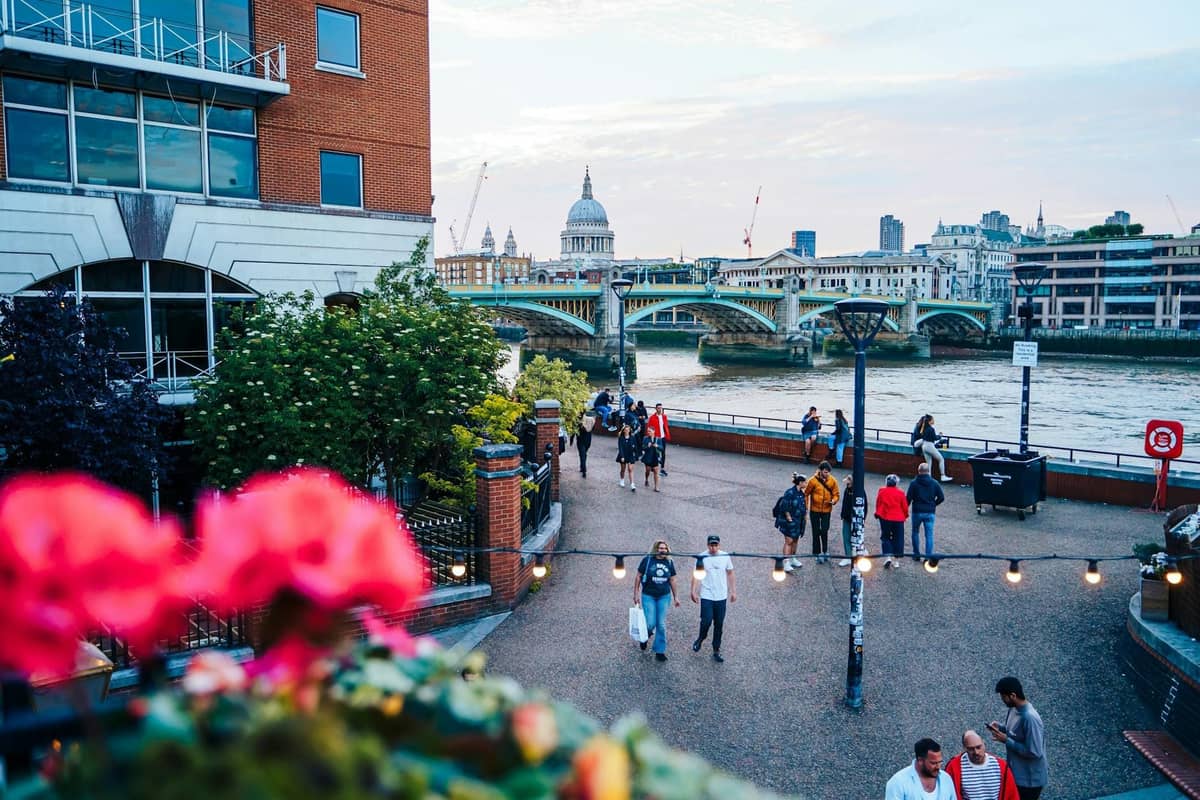
The South Bank is at its best in summer. The riverside walkway between Westminster Bridge and Tower Bridge is a genuine pleasure on a warm evening, and the area's street food stalls, outdoor bars, and free cultural spaces make it one of the most enjoyable parts of the city to simply walk through. The Southbank Centre hosts outdoor programming throughout summer, and the free beach (a sand installation beneath the Festival Hall) is a reliably popular spot.
Notting Hill is worth visiting even outside Carnival weekend: Portobello Road Market runs every Saturday, and the neighbourhood's painted terraces are at their most colourful against summer light. Shoreditch rewards summer visits for its outdoor drinking culture and weekend markets, while Greenwich makes an excellent half-day trip via the Thames Clipper river service, combining the Royal Observatory, the Cutty Sark, and one of London's best markets.
For those visiting London for the first time in summer, the challenge is usually prioritisation rather than finding things to do. Our 3-day London itinerary and guide for first-time visitors both factor in the seasonal context and help structure a visit without over-scheduling.
What Summer in London Does Not Guarantee
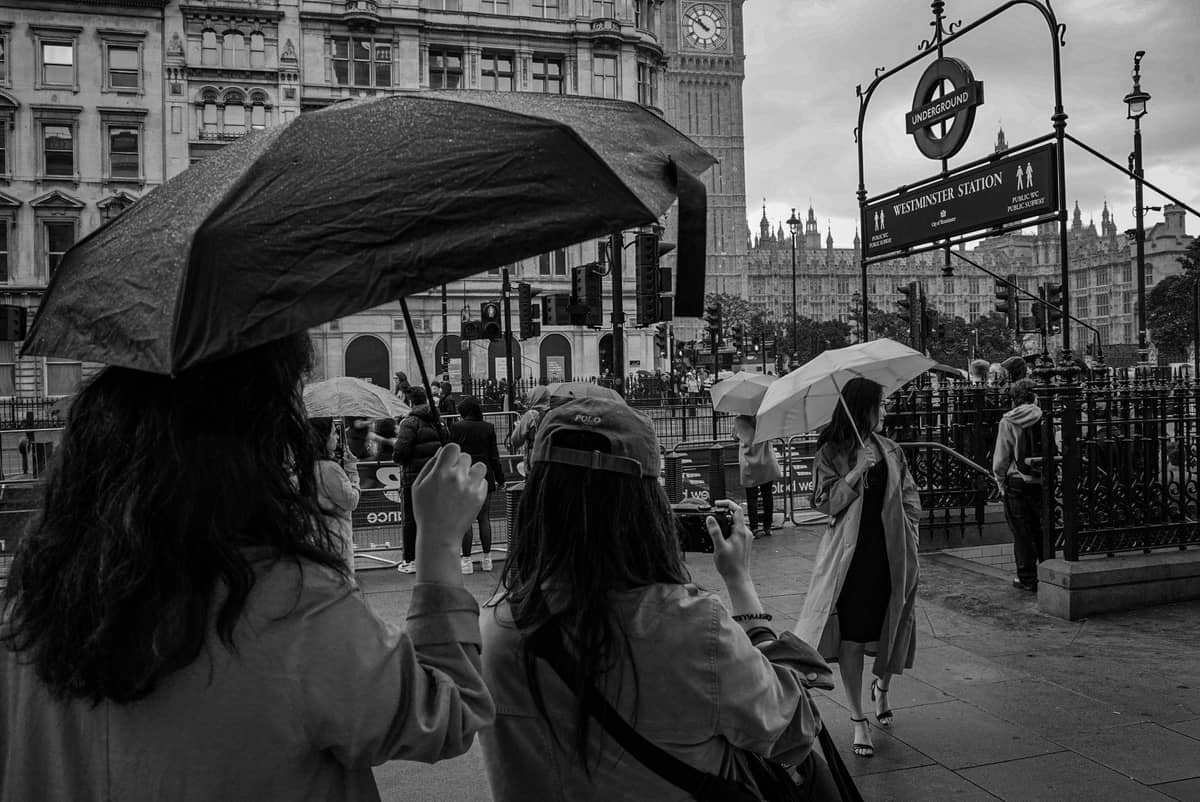
A few clarifications are worth stating plainly. London's summer is not reliably hot and sunny. The city sits at roughly 51.5°N latitude, and its Atlantic-influenced climate means that a week of 28°C sunshine can be followed by ten days of 17°C and overcast skies. Visitors planning a beach-style holiday will be disappointed; visitors planning a city break with outdoor elements as a bonus tend to be well-served.
The Tube does not become easier to use in summer — if anything, the combination of tourist volumes and the lack of air conditioning on most deep-level lines (Bakerloo, Central, Northern, Piccadilly, Victoria, and others) makes it more taxing. The Elizabeth line, London Overground, and buses are generally cooler alternatives for non-central journeys. Walking and cycling are worth considering for trips under 2–3 miles: central London is more compact than it looks on the Tube map, and surface-level navigation gives a much richer sense of the city.
Finally, summer is not cheap. London is an expensive city year-round, and peak-season demand adds to accommodation, event, and dining costs. The good news is that a significant proportion of London's excellent cultural offering remains free: the British Museum, National Gallery, Natural History Museum, Tate Modern, andVictoria and Albert Museum all have free permanent collections. Our guide to free things in London covers the full range of cost-free options, many of which are excellent in summer.
FAQ
Is summer a good time to visit London?
Yes, for most visitors — particularly June and early July, before UK school holidays push crowds and prices higher. You get the longest daylight hours, the best outdoor event calendar, and parks at their peak. The trade-off is higher costs and larger crowds than spring or autumn, and no guarantee of warm weather.
How hot does London get in summer?
Average daily highs in July and August sit around 22–24°C based on Met Office data. Heatwaves pushing above 30°C do occur, sometimes dramatically, but are not the norm. Cool, grey days in the high teens are equally common. Pack light layers and a compact waterproof rather than assuming consistent heat.
How do I get Wimbledon tickets?
Most tickets are allocated via the Wimbledon public ballot, which opens in the preceding autumn. A limited number of show court and centre court tickets are released via the official resale programme (Wimbledon Debenture Holders resale). Same-day tickets for outer courts are available via the in-person queue at Wimbledon Park — the queue forms overnight for the most popular days. Buying through unofficial third-party sellers risks receiving invalid tickets.
When are UK school holidays in summer?
School summer holidays in England (including London) typically run from approximately late July to early September, though exact dates vary by school. This period sees the highest domestic visitor numbers and generally higher accommodation prices. If you can travel in June or early July, crowds at attractions are noticeably lower.
What free outdoor events happen in London in summer?
Several worthwhile free events run annually: West End LIVE in Trafalgar Square (June), the Greenwich + Docklands International Festival (late June), outdoor Bandstand concerts in Hyde Park and other parks, and the Notting Hill Carnival on the August Bank Holiday weekend. The BBC Proms at the Royal Albert Hall also offer standing tickets (Promming) from around £8, making it one of the most affordable classical music experiences in Europe.