Hyde Park: London's Royal Park Worth Every Minute
Hyde Park is one of London's eight Royal Parks, covering 142 hectares in the heart of the city. Free to enter, open until midnight, and rich in history stretching back to a Tudor hunting ground, it rewards visitors who pace themselves and explore beyond the obvious.
Quick Facts
- Location
- City of Westminster, central London — bordered by Park Lane/Mayfair to the east and Kensington Gardens to the west
- Getting There
- Hyde Park Corner (Piccadilly line), Marble Arch (Central line), Lancaster Gate (Central line), Knightsbridge (Piccadilly line)
- Time Needed
- 1–3 hours for a proper visit; a full day if you include Kensington Gardens
- Cost
- Free entry. Some events and seasonal attractions charge separately.
- Best for
- Morning runners, families with young children, picnic-goers, history enthusiasts, anyone needing a break from the city
- Official website
- www.royalparks.org.uk/visit/parks/hyde-park
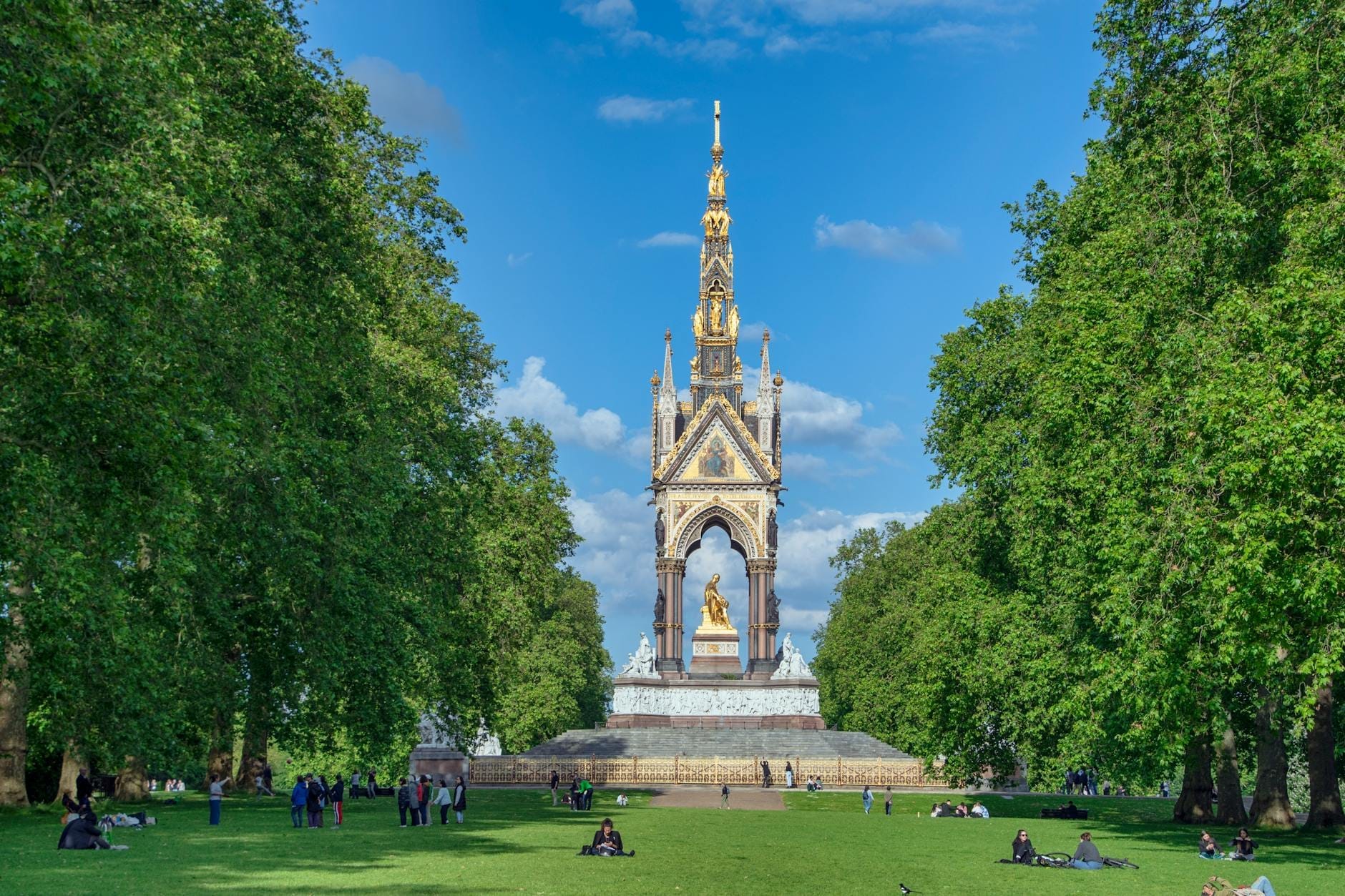
What Hyde Park Actually Is
Hyde Park is a 142-hectare Royal Park sitting squarely in central London, managed by the Royal Parks charity on behalf of the Crown. It is free to enter, open from 05:00 to midnight every day of the year, and draws an extraordinary range of visitors — morning joggers at first light, office workers eating lunch on the grass, tourists from every continent, and Londoners who treat it as their back garden.
It borders Kensington Gardens to the west, making the combined green corridor across central London feel much larger than either park individually. The two parks share a similar landscape but have distinct characters: Hyde Park is looser, more democratic, and more event-prone. Kensington Gardens is quieter and more formal, home to Kensington Palace. Knowing the boundary helps, because the parks close at different times — Hyde Park stays open until midnight while Kensington Gardens closes at dusk.
ℹ️ Good to know
Hyde Park covers 142 hectares. Combined with Kensington Gardens, the continuous green space totals 253 hectares — a substantial central London green space, though smaller than many major urban parks in Europe. Both parks are free to enter.
History: From Royal Hunting Ground to Public Space
The land that became Hyde Park was seized by Henry VIII from Westminster Abbey in 1536 and converted into a royal hunting ground. For more than a century it was exclusively a space for the monarchy and their guests, stocked with deer, boar, and game birds. It was opened to the public in 1637 by Charles I, making it one of the earlier large public parks in England.
The park's most significant historical moment came in 1851, when it hosted the Great Exhibition — the world's first international trade fair — held inside the Crystal Palace, a vast prefabricated iron and glass structure designed by Joseph Paxton. The exhibition drew more than 6 million visitors across five months, showcasing industrial and cultural achievements from around the globe. The Crystal Palace was later dismantled and moved to south London, but its legacy shaped the cultural institutions that now cluster nearby, including the Victoria and Albert Museum and the Natural History Museum in South Kensington.
Speakers' Corner, in the northeast corner of the park near Marble Arch, has been a site for public oratory and protest since the 19th century. It became an official free-speech space after the Parks Regulation Act of 1872 and remains in use today — particularly animated on Sunday mornings. Karl Marx, George Orwell, and Marcus Garvey have all reportedly spoken here. For anyone interested in how London thinks about civic life, it connects naturally with a visit to nearby sites covered in our Royal London guide.
Tickets & tours
Hand-picked options from our booking partner. Prices are indicative; availability and final rates are confirmed when you complete your booking.
Soho Instagram a self-guided walking tour to top photo spots
From 6 €Instant confirmationFree cancellationTootbus London by Night: Bus tour
From 32 €Instant confirmationFree cancellationIFS Cloud Cable Car Ride and Uber Boat Hop-on Hop-off 1 Day Ticket
From 38 €Instant confirmationFree cancellationThe Making of Harry Potter Guided Tour of London Warner Bros. Studio
From 201 €Instant confirmationFree cancellation
The Serpentine: Water at the Centre of Everything
The Serpentine is an artificial lake running through the middle of the park, created in 1730 on the orders of Queen Caroline (wife of George II) by damming the River Westbourne. It stretches across both Hyde Park and Kensington Gardens — the Hyde Park section is called the Serpentine, while the western portion is known as the Long Water.
In warmer months, the Serpentine becomes the park's social hub. The Lido at the eastern end offers swimming, pedalo hire, and rowboat rentals. The water itself is a grey-green, and the ducks, geese, and occasional swans give the shoreline a chaotic, cheerful energy. On a summer Saturday, the area around the Lido café fills fast — arrive before noon if you want a lakeside table.
The Serpentine Galleries occupy two buildings in the park: the original Serpentine Gallery near Kensington Gardens, and the Serpentine North Gallery (formerly the Sackler Gallery) across the bridge. Both host contemporary art exhibitions throughout the year, free of charge. The annual Serpentine Pavilion — a temporary structure commissioned from a world-renowned architect each summer — draws architecture enthusiasts from around the world.
💡 Local tip
The Serpentine Lido swimming season typically runs from June to September. Open-water swimming here is subject to water quality testing — check the Royal Parks website before going if swimming is your main reason for visiting.
How the Park Changes Through the Day
Hyde Park is one of those places where the hour you arrive determines what you experience. At 06:00 on a weekday, it belongs almost entirely to runners. The pathways around the Serpentine make a popular 4-kilometre loop, and the early light on the water, before the city noise has fully started, is peaceful. There is a low mist on the grass on cool mornings, and the park smells of wet soil and cut grass — the kind of air London usually hides behind exhaust and coffee.
By mid-morning, dog walkers take over. Hyde Park allows dogs off-lead across most of its grassland, and on weekday mornings the park can feel like an informal dog club. Between 12:00 and 14:00 on weekdays, office workers from Mayfair and Knightsbridge spill in, many heading straight for the grass with takeaway food. On sunny summer afternoons, the meadow areas near the Diana Memorial Fountain fill with sunbathers and families.
Late evenings are underrated. The park stays open until midnight and, from about 20:00, it quiets considerably. The Serpentine at dusk has a completely different quality — the water catches the last light, and the park's scale becomes more apparent without crowds filling the sightlines. It is also cooler, which matters in summer. For safety awareness, the park is generally well-lit near main paths, but quieter interior areas have less lighting at night.
⚠️ What to skip
During major events — concerts at the Great Oak Stage, Hyde Park Winter Wonderland (November–January), and seasonal festivals — large sections of the park close to general visitors. Check the Royal Parks events calendar before planning a specific visit, especially between November and January.
Key Features and Where to Find Them
Speakers' Corner
Located in the northeast corner of the park, near Marble Arch Tube station. Most active on Sunday mornings from around 10:00 onwards. Speakers range from passionate political commentators to religious preachers to people with unusual views on the world. The crowd gathers and heckles freely. It is participatory, occasionally chaotic, and one of the more distinctly London experiences available for free.
Diana, Princess of Wales Memorial Fountain
Opened in 2004 and designed by Kathryn Gustafson, the memorial is a large oval channel of flowing water cut from Cornish granite, set into an open meadow. Water enters at the top and flows down both channels, meeting at the base. Children wade in the shallower sections. It is not quite a fountain in the traditional sense — more a kinetic water feature built for interaction. The surrounding meadow is one of the better picnic spots in the park.
Rose Garden and Italian Gardens
The formal rose garden near the Serpentine Gallery is at its best in June and July, when several thousand rose bushes are in bloom. The fragrance on a warm morning is strong enough to be noticeable from the path. The Italian Gardens at the northern end of the Long Water are a more ornamental feature, with four stone basins and fountains commissioned by Prince Albert in the 1860s.
The Great Oak Stage and Events
Hyde Park has hosted major outdoor concerts since the 1960s, and the modern venue in the park's west section puts on large-scale events through the summer season, often running as part of British Summer Time (BST) Hyde Park. Previous performers have included the Rolling Stones (their famous 1969 free concert drew an estimated 250,000 people), and more recently the park has hosted headline names across pop, rock, and classical music. If you are planning a trip around a concert, note that the surrounding neighborhood gets significantly busier — our guide to London in summer covers what to expect during event season.
Getting There and Getting Around
Hyde Park has multiple entry points, and the one you use will shape your visit. Hyde Park Corner station (Piccadilly line) drops you at the southeastern corner, close to Apsley House and the Wellington Arch. Marble Arch station (Central line) puts you at the northeast corner, steps from Speakers' Corner. Lancaster Gate (Central line) gives access to the north side near the Italian Gardens. Knightsbridge (Piccadilly line) is best for entering from the south, near the Serpentine Gallery.
All of these stations are on the Tube, making the park easy to reach from anywhere in central London. If you are combining Hyde Park with a broader walk through the area, our guide to London's best parks outlines routes connecting the Royal Parks on foot — it is possible to walk from St James's Park through Green Park, across Hyde Park, and into Kensington Gardens in a single afternoon without using any public transport.
Within the park, paths are wide and surfaced, making them accessible for pushchairs and most wheelchairs. The Royal Parks provides accessibility information on its website including details of step-free routes and facilities. The park is large enough that comfortable shoes matter — a full circuit of the Serpentine covers approximately 4 kilometres.
Weather, Seasons, and What to Bring
Hyde Park changes more dramatically with the seasons than most indoor attractions, and it is worth being clear about this. In winter — December through February — the park can be grey and cold, with temperatures averaging around 8–9°C during the day. The bare trees open up long sightlines across the meadows, which has a spare beauty, but it is not a picnic destination. Winter Wonderland, held in the park from November to January, brings a large seasonal fairground to the northeast section — enjoyable for some, a reason to avoid the area for others.
Spring and early summer are the strongest seasons. From April onwards, the park fills with blossom, and by June the temperature, the open water, and the long daylight hours (London averages around 16–17 hours of daylight in June) make the Serpentine area lovely. Rain is possible year-round, with roughly 11–13 rainy days per month on average. A waterproof layer is worth carrying regardless of the forecast.
Autumn, from September to November, brings colour to the trees along the southern edge and around the Serpentine, and the park tends to be less crowded than in peak summer. For a broader overview of how London's climate affects outdoor plans, our best time to visit London guide gives a month-by-month breakdown.
Insider Tips
- The cycling lane along the south edge of the park (Rotten Row, a historic 17th‑century bridle path) is a dedicated cycle path — pedestrians should stay off it, and cyclists should note it is one of the few places in the park where cycling is officially permitted.
- For the Diana Memorial Fountain at its quietest, go on a weekday morning before 10:00. By early afternoon on weekends, the surrounding meadow becomes very crowded and the water channels fill with children — which is fine, but not reflective of the memorial's intended atmosphere.
- The Serpentine Lido's solar-heated changing rooms and café are open to non-swimmers for a small fee, making it a useful stop for coffee or a meal with a decent lake view without committing to a swim.
- If you enter from Hyde Park Corner, turn left immediately after the gate to find a relatively overlooked section of formal garden near the police house — much quieter than the main Serpentine path and worth ten minutes of exploration.
- Hyde Park Corner station exit 1 puts you directly at the park gate and also within sight of Apsley House, the former London residence of the Duke of Wellington, which is worth adding to any visit to this part of the park.
Who Is Hyde Park For?
- Families with young children who need outdoor space without entrance fees or structured itineraries
- Runners and cyclists looking for a safe, traffic-free route in central London
- First-time visitors who want to understand London's civic and royal character without going indoors
- Visitors combining the park with a South Kensington museum day — the park sits between major museums and the West End
- Anyone visiting in summer who wants outdoor swimming, boat hire, or a proper picnic with real space
Nearby Attractions
Other things to see while in Kensington & Chelsea:
- Chelsea Physic Garden
Founded in 1673 by the Worshipful Society of Apothecaries, Chelsea Physic Garden is a four-acre walled enclosure in the heart of Chelsea containing over 4,500 medicinal, edible, and historically significant plants. It is the second-oldest botanic garden in Britain and one of the quietest places you will find in central London.
- The Design Museum
Housed in the dramatically restored former Commonwealth Institute building on Kensington High Street, the Design Museum is one of Europe's most respected institutions dedicated to design, architecture, fashion, and product innovation. Entry to the permanent collection is free, while rotating exhibitions draw on names from global creative culture.
- Harrods
Founded in 1849 and occupying over a million square feet in Knightsbridge, Harrods is as much a London spectacle as it is a shop. Whether you're browsing the Food Halls or shopping the designer floors, here's exactly what to expect.
- Kensington Palace
Kensington Palace is a working royal residence and public attraction set within Kensington Gardens. From its origins as a 17th-century country house to Queen Victoria's birthplace and home to the Princess of Wales today, it offers a more intimate royal experience than Buckingham Palace — with state rooms, fashion exhibitions, and one of London's finest garden approaches.