Tower of London: The Complete Visitor Guide
Nearly a thousand years of history compressed into one riverside fortress. The Tower of London holds the Crown Jewels, tells stories of royal imprisonment and execution, and remains one of Britain's most significant historic sites. Here is everything you need to know before you go.
Quick Facts
- Location
- Tower of London, London EC3N 4AB — on the north bank of the River Thames, on the border of the City of London and the London Borough of Tower Hamlets
- Getting There
- Tower Hill (District & Circle lines, 5-min walk); Tower Gateway DLR (7-min walk); Tower Pier for river boats
- Time Needed
- 2.5 to 4 hours for a thorough visit; allow a full half-day if you want to join a Yeoman Warder tour and linger at the Crown Jewels
- Cost
- Adults £37, children (5–15) £18.50, concessions £29.50 (standard prices excluding donation; verify on hrp.org.uk before booking)
- Best for
- History enthusiasts, families with older children, architecture lovers, first-time London visitors
- Official website
- www.hrp.org.uk/tower-of-london
What the Tower of London Actually Is
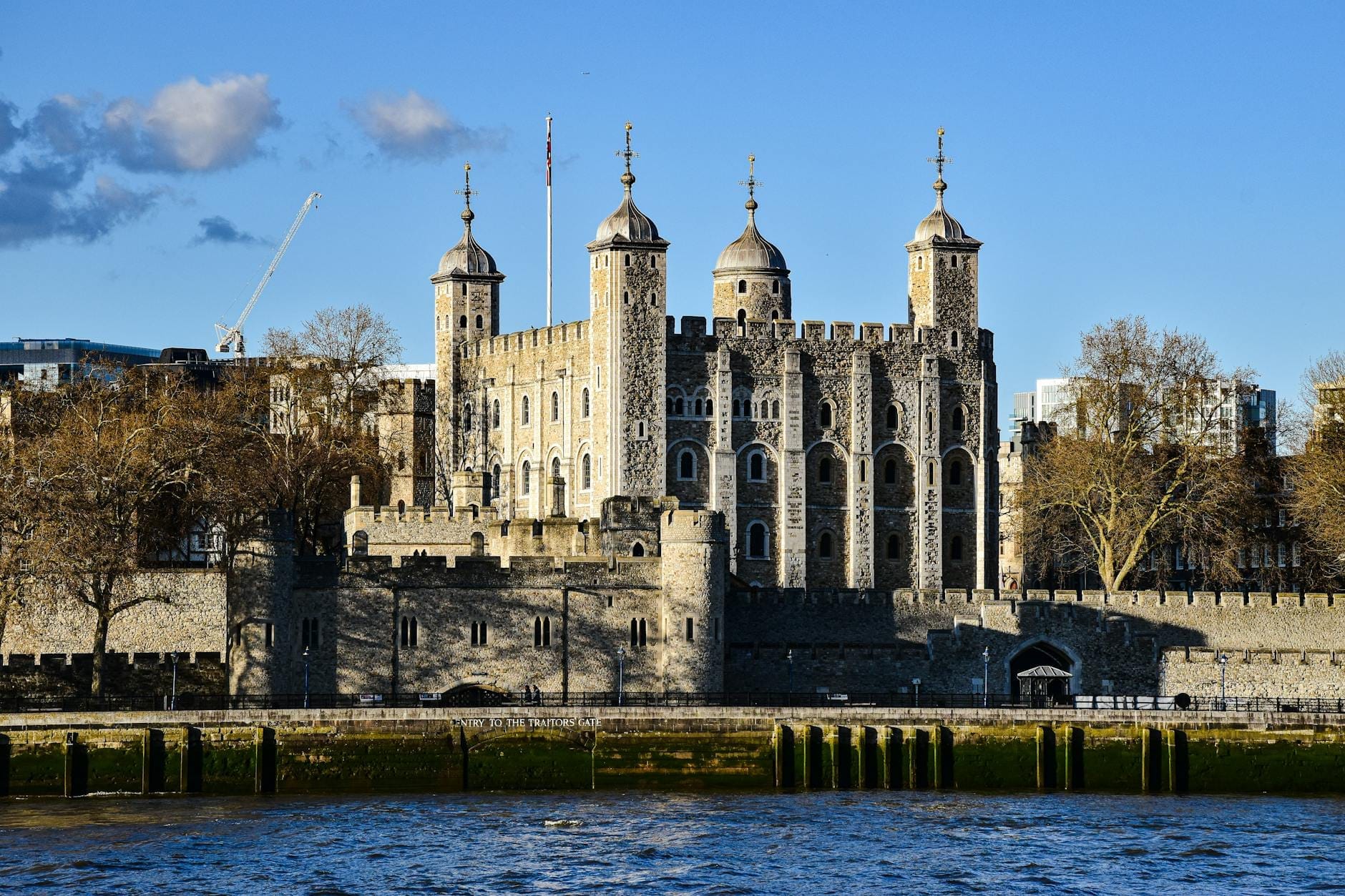
HM Tower of London, to use its full official name, is not a single tower. It is a complex of roughly 20 towers, walls, courtyards, and buildings clustered along the north bank of the River Thames, just east of the City of London's financial core. From the outside, standing on the cobbled approach near Tower Hill, the scale is striking: the massive stone walls rise above a dry moat, the White Tower's four turrets visible above the battlements.
The White Tower at the heart of the complex was begun by William the Conqueror after the Norman conquest in 1066, with the main structure built in the late 1070s. What stands today is a UNESCO World Heritage Site that has served, across its nearly thousand-year history, as a royal palace, a treasury, a menagerie, an armory, a place of imprisonment, and a site of execution. That layered history is what makes it worth the substantial entrance fee for the right kind of traveler.
💡 Local tip
Book tickets online in advance at hrp.org.uk. Walk-up queues on summer weekends can exceed 45 minutes and on-the-door prices are higher than advance rates. Tickets are timed-entry, so choose your slot carefully.
Opening Hours and Getting There
Opening hours follow a seasonal pattern. From March to October, the Tower opens daily from 09:00, with last admission at 16:00 and closing at 17:30. From November to February, hours tighten: opening is at 09:00 on weekdays and 10:00 on Sundays and Mondays, with last admission at 15:30 and closing at 16:30. The last Yeoman Warder tour of the day typically departs at 15:15. These hours are subject to change around public holidays, so always verify on the Historic Royal Palaces website before you go.
The most straightforward approach is by Tube. Tower Hill station on the District and Circle lines puts you about five minutes' walk from the main entrance. From Tower Gateway on the DLR, add a couple more minutes. If you are arriving by boat, Tower Pier sits immediately outside the walls and is served by Uber Boat by Thames Clippers from Westminster Pier, London Eye Pier, and other stops along the Thames. Arriving by river gives you an approach that echoes how state prisoners once arrived, carried by barge through the Traitors' Gate.
The Tower sits on the edge of the City of London and the London Borough of Tower Hamlets, which means it is well-connected but also surrounded by heavy weekday foot traffic from nearby offices. On weekdays, the area around Tower Hill fills with office workers at lunch; on weekends, it is almost entirely tourists. The Tower Bridge entrance is just a short walk to the east, making it easy to combine both in a single morning if you move efficiently.
Tickets & tours
Hand-picked options from our booking partner. Prices are indicative; availability and final rates are confirmed when you complete your booking.
Early access Crown Jewels and Tower of London guided tour
From 120 €Instant confirmationFree cancellationGuided tour of Westminster, river cruise and tickets to The Tower of London
From 118 €Instant confirmationFree cancellationWindsor Castle and optional Tower of London tour with entry tickets
From 103 €Instant confirmationFree cancellationTower of London and Private Audience with Beefeater
From 85 €Instant confirmationFree cancellation
The Crown Jewels: Managing Expectations and the Queue
For most visitors, the Crown Jewels are the headline attraction, and they deliver. The collection is housed in the Waterloo Barracks and includes the Imperial State Crown, the Sovereign's Sceptre with Cross, the Sovereign's Orb, and other regalia used at coronations and state occasions. The diamonds are enormous and clearly real, which sounds obvious until you are standing in front of them.
The queue system uses a slow-moving travelator past the most important pieces, meaning you cannot stop and stare as long as you might like during peak hours. If you want unhurried time in front of the jewels, arrive when the Tower opens and go directly to the Waterloo Barracks before the queues build. By 11:00 on a summer weekend, waits of 30 minutes or more are common inside the building. Photography without flash is generally permitted, though this can change, so check signage on the day.
⚠️ What to skip
The Crown Jewels gallery occasionally closes for state occasions or maintenance. Historic Royal Palaces announces planned closures in advance. If the jewels are a priority reason for your visit, check the official website in the week before you travel.
The Yeoman Warder Tours: Worth Prioritising
The Yeoman Warders, popularly known as Beefeaters, are not decorative. They are retired senior non-commissioned officers from the British Armed Forces who live inside the Tower walls and serve as ceremonial guardians. Their free guided tours, included with admission, run throughout the day from the main entrance and last approximately an hour. The last tour is at 15:15.
The tours are entertaining. Yeoman Warders are trained storytellers, and they deliver a version of Tower history that covers executions, imprisonments, royal intrigue, and folklore around the Tower's famous ravens with real color and occasional dark humor. The tour does not cover every corner of the site, but it provides context that makes the rest of your visit substantially more coherent. If you have limited time, joining a tour and then exploring the Crown Jewels and White Tower independently covers the essentials.
The ravens themselves are part of the Tower's identity. A tradition holds that if the ravens leave, the Tower and the Crown will fall, a superstition Charles II is said to have formalized. There are currently several ravens in residence, cared for by the Ravenmaster, a Yeoman Warder role that has generated significant media attention in recent years. The birds move freely within the grounds during the day and are often visible near the green in front of the White Tower.
The White Tower and the Medieval Palace
The White Tower is the oldest and most architecturally significant structure on the site. Its thick Caen stone walls, imported from Normandy, give the interior an immediate sense of weight and age. Inside, the Royal Armouries display, which covers medieval arms, armor, and weapons from across the centuries, is organized across multiple floors. The collection is detailed enough to hold the attention of anyone with an interest in military history, and the sheer scale of the suits of armor on display makes an impression on visitors of almost any age.
The Chapel of St John the Evangelist on the upper floor of the White Tower is one of the best-preserved Norman chapels in England, small and austere, with rounded arches and thick columns. It is easy to walk through quickly, but spending five minutes in this room, relatively quiet compared to the rest of the site, is worth it for the sense of scale and age it conveys.
The Medieval Palace, built by Henry III and Edward I in the 13th century, has been partially reconstructed with period furnishings and painted walls to give a sense of how royal apartments looked. It is modest by later palatial standards but historically significant. If you are interested in how medieval monarchy actually functioned day-to-day, it rewards close attention. For context on other sites from this era, Westminster Abbey and Banqueting House offer further layers of royal London history.
Tower Green and the Scaffold Site
Tower Green, the grassy area inside the inner ward, is where some of the Tower's most famous executions took place. Among those who died here were Anne Boleyn (1536), Catherine Howard (1542), and Lady Jane Grey (1554). A glass and stone memorial, designed by artist Brian Catling and installed in 2006, now marks the approximate execution site. It is understated and easy to miss, which is arguably appropriate given how the site is otherwise crowded with visitors.
The Scaffold Site and Tower Green are outdoors and fully exposed to London weather. In winter, the grey stone, bare trees, and low light give the space a somber quality that photographs rarely capture. In summer, the green fills with visitors eating packed lunches, which creates a jarring contrast that some find disrupts the atmosphere. This is not a criticism of the site; it simply reflects what a major tourist attraction looks and feels like at peak times.
Practical Details: What to Wear, Carry, and Know
The site involves a significant amount of walking on uneven cobblestones and stone stairs. Comfortable, flat shoes are strongly advisable. Many of the medieval stairwells are narrow and steep, particularly in the towers along the outer wall. The site is partially accessible: step-free routes and accessible toilets are available at Brick Tower, Cradle Tower, and the New Armouries. Wheelchair hire is available, and a Changing Places toilet can be accessed via RADAR key from the café. A digital British Sign Language guide is also available. Visitors with mobility concerns should check the Historic Royal Palaces accessibility page for current route details before visiting.
There is a café and a restaurant on site, both operated under the Historic Royal Palaces umbrella. Food quality and value are serviceable but unremarkable. If cost is a consideration, eating before you arrive or after at one of the surrounding streets is a better option. The Tower sits within easy walking distance of Borough Market and Leadenhall Market for good food alternatives.
Photography across the site is generally permitted, with the exception of some areas near the Crown Jewels. The exterior of the White Tower against the sky, the view of Tower Bridge from the outer walls, and the Traitors' Gate from ground level are all consistently strong shots. Early morning light in March and October catches the stone in warm tones. Summer midday light is flat and harsh; plan accordingly if photography is a priority.
ℹ️ Good to know
The London Pass includes entry to the Tower of London. If you plan to visit multiple paid attractions in a short trip, it may offer savings. Check current prices against individual ticket costs to verify whether it is worth it for your itinerary before purchasing.
Who Should Skip, and Honest Limitations
The Tower of London is significant, but it is also expensive and crowded. At peak times in summer, it can feel more like a theme park queue than a historic site. Visitors who prioritize peaceful immersion in history over the spectacle of the Crown Jewels may find that the experience does not match the price. Those with very young children should consider that long queues and narrow medieval staircases make the visit physically demanding and potentially frustrating.
Travelers on a tight budget should know that several of London's finest historic and cultural institutions are free. The British Museum and the National Maritime Museum in Greenwich both offer world-class collections without admission charges. The Tower is worth the cost if you have a genuine interest in British royal history, the Crown Jewels, or medieval architecture. If you are visiting primarily because it appears on a list, think carefully about whether your time and money might go further elsewhere.
Insider Tips
- Arrive at opening time on a Tuesday or Wednesday morning. These are consistently the quietest weekdays. By 09:30 on a summer weekend the inner ward is already dense with tour groups.
- The outer wall walk, running between the towers along the top of the curtain wall, is often overlooked by visitors focused on the Crown Jewels and White Tower. The views of the Thames and Tower Bridge from the battlements are among the best at ground level in this part of London, and the wall walk is rarely congested.
- The last Yeoman Warder tour departs at 15:15. If you arrive mid-afternoon, this is your only option for the free guided experience. Plan accordingly rather than discovering you have just missed it.
- The Tower closes in stages from the closing time, and staff begin moving visitors toward the exit fairly firmly in the final 30 minutes. If you want unhurried time in the Medieval Palace or the Chapel of St John, build in buffer time rather than saving these for last.
- River access via Tower Pier gives a different arrival experience from the Tube. An Uber Boat from Westminster Pier takes around 20 minutes on the water, passes several landmark buildings, and deposits you directly at the Tower entrance. It costs more than the Tube but less than a cab, and the perspective of the fortress from the river is worth experiencing once.
Who Is Tower of London For?
- First-time visitors to London who want to understand British royal history in a single afternoon
- History enthusiasts with a particular interest in the medieval period, Tudor monarchy, or British military heritage
- Families with children aged 8 and above who can manage cobblestones, stairs, and a full half-day on their feet
- Architecture lovers interested in Norman and medieval construction at significant scale
- Travelers who want to see the Crown Jewels and understand the context behind them, rather than simply photograph them
Nearby Attractions
Other things to see while in The City of London:
- Leadenhall Market
Leadenhall Market is a Grade II-listed Victorian covered market in the heart of the City of London, built in 1881 over a site used for commerce since Roman times. With its ornate wrought-iron and glass roof, cobbled walkways, and mix of wine bars, restaurants, and independent shops, it's one of the Square Mile's most atmospheric stops — and it won't cost you a penny to walk through.
- Millennium Bridge
The London Millennium Footbridge is a sleek steel pedestrian span linking the City of London to Bankside, connecting St Paul's Cathedral on the north bank to Tate Modern and Shakespeare's Globe on the south. Free to cross at any hour, it offers some of the most photographed views of the Thames and a front-row look at two of London's most contrasting skylines.
- Sky Garden
Perched 155 metres above the City of London inside the Walkie Talkie building, Sky Garden offers panoramic views across the Thames, St Paul's, and the surrounding skyline — at no cost to visitors. The catch: tickets must be booked in advance, and they go fast.
- St Bartholomew the Great
Founded in 1123 by a courtier of King Henry I, St Bartholomew the Great in Smithfield is London's oldest surviving parish church. It offers free entry, extraordinary Norman architecture, and an atmosphere of genuine antiquity that few places in the capital can match.