Westminster Abbey: Inside Britain's Most Storied Church
Westminster Abbey has stood at the heart of British history since the 11th century, hosting every coronation since 1066 and serving as the final resting place of monarchs, poets, and scientists. This guide covers what to expect inside, when to visit, how to get there, and whether the ticket price is worth it.
Quick Facts
- Location
- Dean's Yard, Westminster, London SW1P 3PA — near Parliament Square
- Getting There
- Westminster station (Jubilee, District, Circle lines) — about a 5–10 min walk; St James's Park station (District, Circle) — 5 min walk
- Time Needed
- 2–3 hours for a thorough visit; allow more if attending a service
- Cost
- Adults £31, children (6–17) £14 (tourist admission); worship services are free — verify current prices at westminster-abbey.org
- Best for
- History enthusiasts, architecture lovers, royal watchers, first-time visitors to London
- Official website
- www.westminster-abbey.org
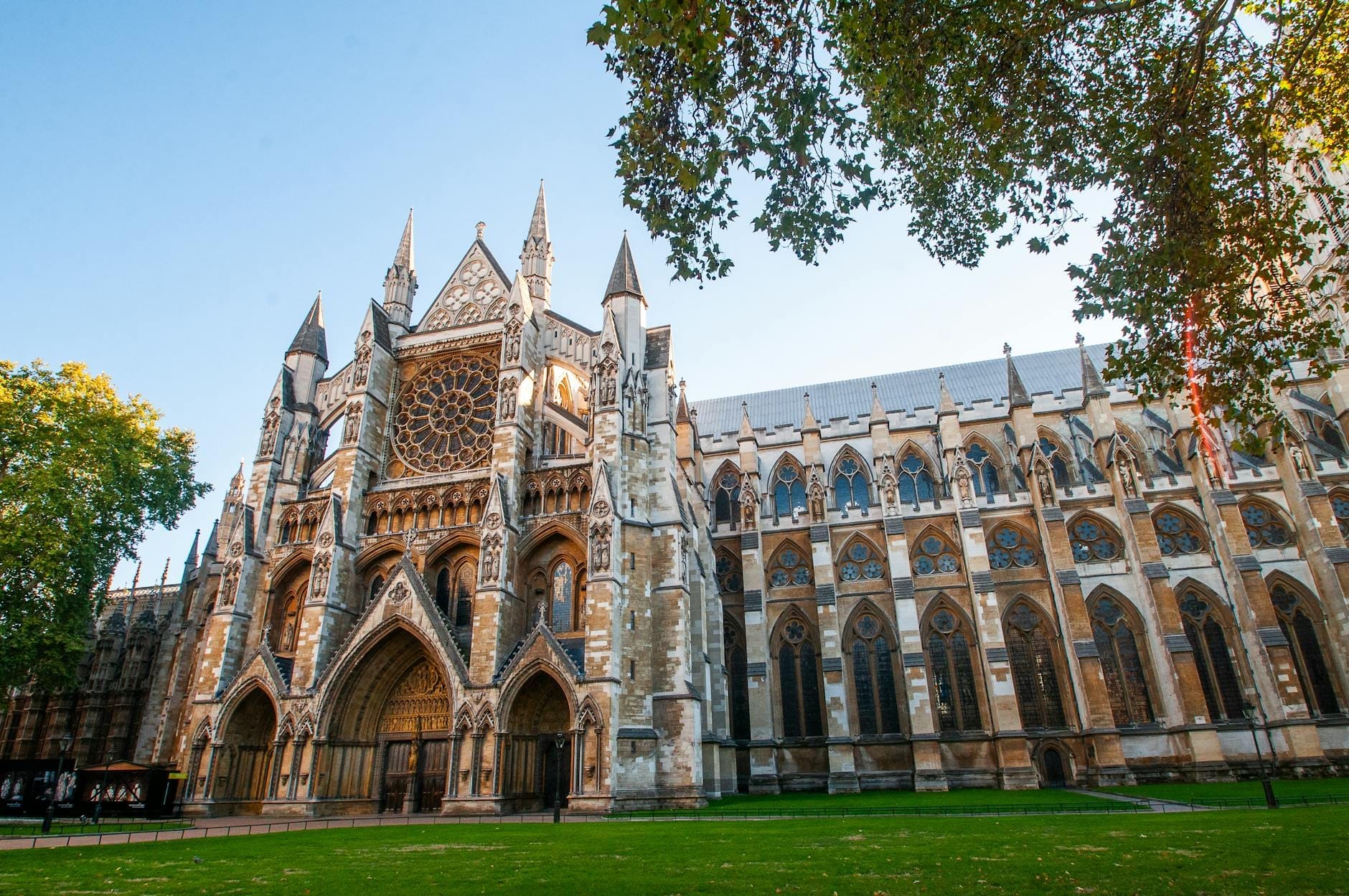
What Westminster Abbey Actually Is
Westminster Abbey, formally known as the Collegiate Church of Saint Peter at Westminster, is not a cathedral and not a parish church. It is a Royal Peculiar, meaning it falls directly under the jurisdiction of the British sovereign rather than any diocese or archbishop. That distinction matters more than it sounds: it means the Abbey answers to the Crown alone, which is why it has been the setting for every English and British coronation since William the Conqueror in 1066, and the burial place of 17 monarchs.
The building you see today is largely the product of a major Gothic rebuilding ordered by Henry III in the 13th century. The current church was consecrated on 13 October 1269, and its soaring nave, pointed arches, and elaborate fan vaulting represent some of the finest Gothic architecture surviving in England. The whole complex stretches approximately 530 feet (161 metres) from the Great West Door to the far end of the Lady Chapel, enclosing around 32,000 square metres of interior space.
It also holds UNESCO World Heritage Site status as part of the Palace of Westminster and Westminster Abbey designation, which it shares with its immediate neighbours. If you are planning a broader Westminster itinerary, the Abbey pairs naturally with the Houses of Parliament, the Churchill War Rooms, and St James's Park — all within a short walk.
ℹ️ Good to know
The Abbey is a working church. On Sundays and many religious holidays, tourist admission is not available — the building opens only for worship, which is free to attend. Check the Abbey's official daily schedule before you go, as hours vary by date and special events.
The Experience: What You Will Actually See
Entering through the Great North Door, the first impression is scale. The nave rises to about 102 feet (31 metres), one of the tallest Gothic naves in England, and the effect is immediate: voices drop, footsteps slow. The stone is cool and slightly damp even on warm days, and the light filtering through the stained glass windows shifts from gold to grey depending on the weather outside.
The floor itself is a map of British history. You cannot walk ten steps without crossing a memorial slab or grave marker. Poets' Corner, in the south transept, is where literary pilgrims tend to linger longest: the tombs and memorials of Geoffrey Chaucer, Charles Dickens, Thomas Hardy, and Rudyard Kipling are clustered here, alongside a floor stone marking the grave of George Frideric Handel. The density of names is almost overwhelming.
The Henry VII Lady Chapel at the far east end is the architectural highlight for most visitors. Built in the early 16th century, its pendant fan vaulting is extraordinary — a filigree of carved stone that appears almost impossibly delicate for a structure nearly 500 years old. The carved oak stalls below, used by Knights of the Bath at their installations, add another layer of ceremonial history. This chapel alone rewards close, unhurried attention.
The Coronation Chair, dating from around 1300 and used at every coronation since 1308, sits in a dedicated space near the high altar. It is older than much of what surrounds it, and the graffiti scratched into its wood by Westminster schoolboys over the centuries makes it feel unexpectedly human.
Tickets & tours
Hand-picked options from our booking partner. Prices are indicative; availability and final rates are confirmed when you complete your booking.
Guided tour inside Westminster Abbey and outside the Houses of Parliament
From 103 €Instant confirmationFree cancellationLondon Top Sights Guided Tour with Entrance to Westminster Abbey
From 81 €Instant confirmationFree cancellationLondon top sights tour with Westminster Abbey and Churchill War Rooms
From 115 €Instant confirmationFree cancellationHouses of Parliament and Westminster Abbey guided tour
From 149 €Instant confirmationFree cancellation
How the Experience Changes by Time of Day
Arriving when the doors open for tourist visits (typically mid-morning on weekdays) gives you the best chance of a relatively quiet first hour. Tour groups tend to arrive in force from late morning onwards, and the nave becomes congested enough that the audio guide commentary competes with the noise of shuffling feet and hushed conversations in a dozen languages.
Midday is the busiest window. If you are visiting on a weekday and want to experience the space with some sense of its original contemplative character, aim to arrive early. Late afternoon, as the tourist crowds thin before closing time, offers a noticeably calmer atmosphere, though some areas may have restricted access as the Abbey prepares for evening services.
Attending a choral service — Evensong is held most evenings and entry is free — is a different experience from the tourist visit. The Abbey's choir is one of the finest in England, and the sung liturgy in that acoustic space, with the nave lit more softly in the evening, carries a weight that no amount of sightseeing can replicate. It is not a performance; it is a working service, and visitors are expected to participate respectfully.
💡 Local tip
Evensong at Westminster Abbey is free to attend and one of the finest musical experiences in London. Check the Abbey's schedule for exact times — services run most evenings but not every day. Arrive at least 20 minutes early to be seated before the service begins.
Historical and Cultural Significance
A Benedictine monastery occupied this site by around 960 AD. The scale and ambition of the current Gothic structure reflects Henry III's determination to create a building worthy of Edward the Confessor, whose shrine remains at the Abbey's heart. Edward was canonised in 1161, and Henry's rebuilding from 1245 onwards was designed in part as an act of devotion to his royal predecessor.
The succession of royal events staged here gives the Abbey a civic weight that few buildings anywhere can match. Coronations, royal weddings (most recently the marriage of Prince William and Catherine Middleton in 2011), and state funerals have all taken place within these walls. The funerals of Diana, Princess of Wales in 1997 and Queen Elizabeth II in 2022 drew global television audiences of hundreds of millions, making the Abbey's interior recognisable to people who have never visited London.
For visitors with a specific interest in the monarchy's history and the buildings associated with the Crown, the Abbey works well as part of a day that also takes in Buckingham Palace and Horse Guards Parade. The Royal London guide covers this circuit in detail.
Practical Walkthrough: Getting There and Getting Around Inside
Westminster station on the Jubilee, District, and Circle lines deposits you directly at Parliament Square, with the Abbey visible as you exit. St James's Park station on the District and Circle lines is an equally short walk from the south side. From Victoria station (mainline rail and Underground), it is roughly a 15–20-minute walk or a short Tube or bus ride. The area is easily walkable from multiple points in central London, and several bus routes stop at Parliament Square.
Timed entry tickets are available via the Abbey's official website and are worth booking in advance during peak season (roughly April through October) and around school holidays. Walk-up tickets are sometimes available but not guaranteed. The audio guide, included with admission, is useful: the Abbey's layout is not always intuitive, and certain chapels and side aisles are easy to miss without direction.
Photography without flash is permitted in most areas, though specific chapels and the high altar area may restrict this. The Abbey's floor is uneven in places and some areas involve steps; the official accessibility page covers step-free routes and mobility support in detail. The cloisters are accessible from the main building and offer a quieter, less trafficked space — worth seeking out even if you are not specifically looking for respite from the crowds.
⚠️ What to skip
The Abbey charges a significant tourist admission fee (currently £31 for adults and £14 for children aged 6–17 — verify current prices at westminster-abbey.org before visiting). Unlike most major London museums, this is not a free attraction. Factor the cost into your planning, particularly if visiting with a family. The London Pass includes Westminster Abbey, which may represent value if you are visiting multiple paid attractions.
Worth Knowing: Worth Your Time?
Westminster Abbey is not overhyped. The architecture is exceptional, the history is tangible in a way that photographs and documentaries cannot fully convey, and the density of significant memorials and graves makes it one of the most information-rich interiors in Europe. Two to three hours is the minimum needed to do it proper justice; visitors who rush through in under an hour consistently report feeling they missed most of it.
That said, it is not for everyone. Visitors primarily interested in contemporary culture, street food, or nightlife will find little here. The crowds during peak hours detract from the experience, and the admission cost is substantial by London standards. If you are on a tight budget, attending a free service rather than paying tourist admission is a legitimate alternative that provides a different but arguably more authentic encounter with the building.
For first-time visitors to London who want to understand the city's relationship with its own history, Westminster Abbey is close to essential. It belongs on any 3-day London itinerary alongside the nearby Churchill War Rooms, which make a natural pairing on the same day.
Insider Tips
- Attend Evensong rather than (or in addition to) the tourist visit. Entry is free, the Abbey's choir is world-class, and the experience of the space under candlelight during a sung service is different from a daytime sightseeing visit. Arrive at least 20 minutes before the service starts to guarantee a seat.
- The cloisters, accessible from inside the Abbey, are included in your admission and are typically far less crowded than the main nave. The garden within the cloister garth is one of the quietest green spaces in central Westminster and worth a few minutes of calm.
- Book timed-entry tickets online before you arrive, especially if visiting between April and October or during UK school holidays. Walk-up availability is not guaranteed and queuing without a ticket in high season can waste a significant portion of your day.
- The Abbey's own museum, now presented as the Queen’s Diamond Jubilee Galleries high above the nave, contains royal effigies and historical artefacts rarely seen in guidebooks. It is included in your admission and is skipped by a large proportion of visitors — which means it is consistently quieter and more contemplative than the nave above.
- If the ticket price gives you pause, note that attending a Sunday morning service is free and open to all. The Abbey is in full ceremonial use on Sundays, and the public is welcome to join the congregation. This is not the same as a tourist visit, but it is a genuine way to experience the building without the admission charge.
Who Is Westminster Abbey For?
- History enthusiasts who want to stand in a space that has witnessed over 900 years of British national life
- Architecture lovers with an interest in Gothic design, specifically the Henry VII Lady Chapel's fan vaulting
- First-time visitors to London building a foundational understanding of the city and its royal heritage
- Travellers interested in choral music who can time a visit to coincide with Evensong
- Families with older children studying British history — the density of named graves and memorials makes abstract history concrete
Nearby Attractions
Other things to see while in Westminster:
- Apsley House
Known as 'Number 1 London', Apsley House at Hyde Park Corner was the London residence of the Duke of Wellington after his victory at Waterloo. Today it holds one of the finest private art collections in Britain, including old masters, Napoleonic silverware, and the famous colossal nude statue of Napoleon himself.
- Banqueting House
Banqueting House is the sole surviving structure of the vast Palace of Whitehall, designed by Inigo Jones in 1622 and home to the finest painted ceiling in England. It is also the spot where King Charles I was executed in 1649. Admission is just £7.50 for adults, but opening is seasonal — check dates before you go.
- Big Ben & the Houses of Parliament
Few sights in London carry the weight of Big Ben and the Palace of Westminster. The Gothic clock tower rising above the Thames is instantly recognisable, but the complex behind it holds over nine centuries of British political history. Here is everything you need to plan a worthwhile visit.
- Buckingham Palace
Buckingham Palace is the official London residence and administrative headquarters of the UK's sovereign, serving that role since 1837. Whether you are watching the Changing of the Guard from the forecourt railings or touring the lavish State Rooms in summer, this guide covers everything you need to plan a worthwhile visit.