Buckingham Palace: What to Expect Before You Go
Buckingham Palace is the official London residence and administrative headquarters of the UK's sovereign, serving that role since 1837. Whether you are watching the Changing of the Guard from the forecourt railings or touring the lavish State Rooms in summer, this guide covers everything you need to plan a worthwhile visit.
Quick Facts
- Location
- Buckingham Palace, London SW1A 1AA — City of Westminster, near St James's Park and Green Park
- Getting There
- Green Park (Jubilee, Piccadilly, Victoria lines) or St James's Park (District, Circle lines) — both are a short walk
- Time Needed
- 30–45 min for the exterior and forecourt; 2–3 hours if visiting the State Rooms
- Cost
- Free to view from outside. State Rooms entry is ticketed (seasonal); check Royal Collection Trust for current prices
- Best for
- Royal history enthusiasts, first-time London visitors, families, and architecture lovers
- Official website
- www.rct.uk/visit/buckingham-palace
What Buckingham Palace Actually Is
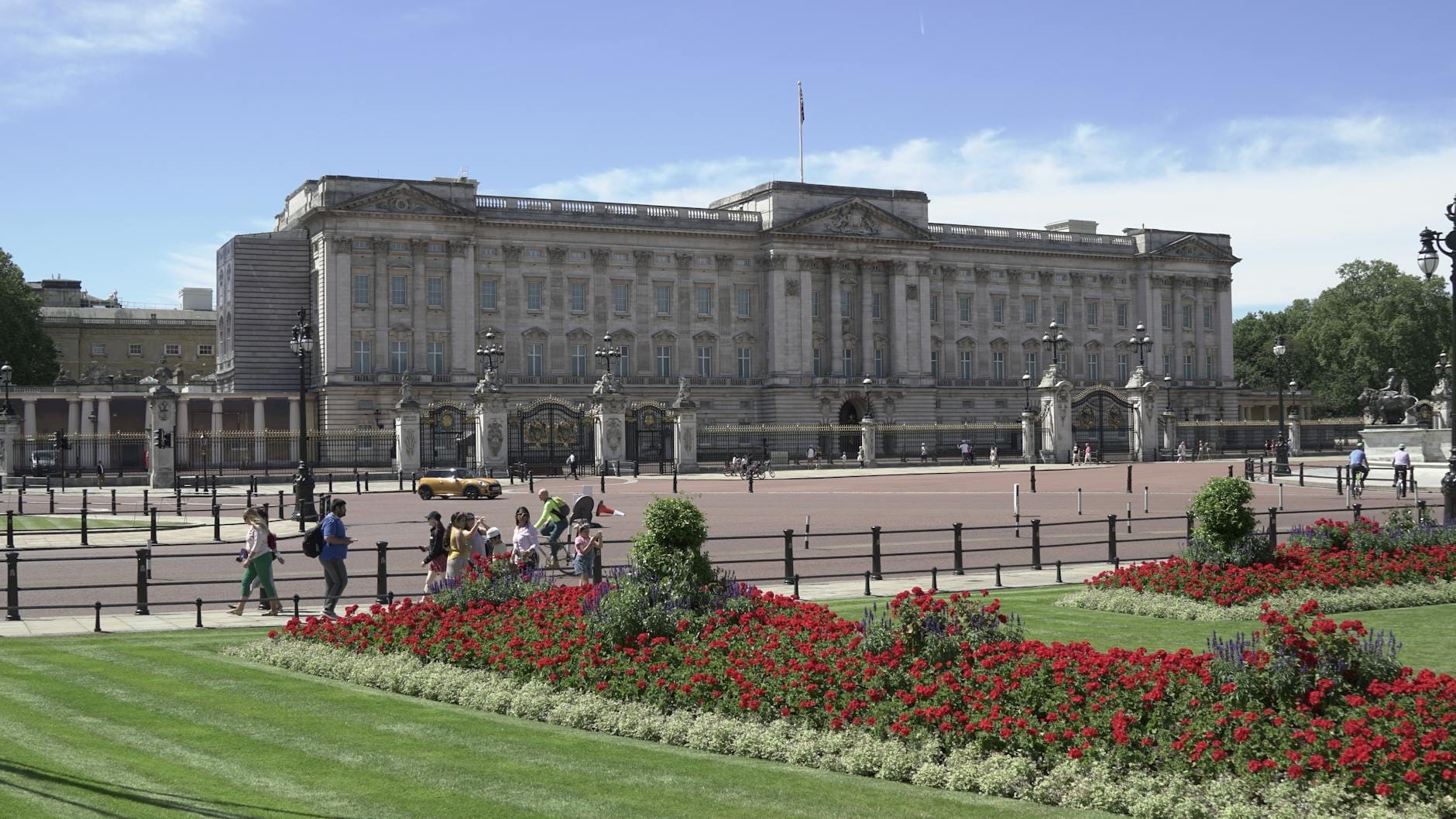
Buckingham Palace is not just a landmark you photograph from behind a fence. It is the working official London residence of the UK's sovereign, a functioning administrative centre, and one of the few royal palaces in the world that opens its doors to the public, even if only on a seasonal basis. The palace has served as the monarch's official London home since 1837, when Queen Victoria became the first sovereign to take up residence there.
The scale is extraordinary and easy to underestimate from photographs. The main building stretches roughly 108 metres across its east-facing front facade, rises 24 metres high, and extends about 120 metres deep when you include the central quadrangle. Inside, 775 rooms are distributed across that footprint — 19 State Rooms open to summer visitors, 52 royal and guest bedrooms, 188 staff bedrooms, 92 offices, and 78 bathrooms. It is less a house than a small town operating as a palace.
The building's origins are older than most visitors realise. What stands today began as Buckingham House, a private mansion completed around 1705 for John Sheffield, Duke of Buckingham. The Crown purchased it in 1761, and successive architects — most notably John Nash and then Edward Blore — transformed it in the 19th century into the palace configuration we recognise now. The familiar east wing, which forms the main public facade, was added in 1850 and refaced in Portland stone in 1913.
The Exterior Experience: What You See from the Forecourt
Most visitors never set foot inside and still come away with something meaningful. The area in front of the palace — the broad gravel forecourt behind the ceremonial railings, with the Victoria Memorial at the far end of The Mall — is publicly accessible at any time, free of charge. This is where the Changing of the Guard takes place, where crowds gather at moments of national significance, and where the palace feels most alive as a symbol rather than a building.
Arrive in the early morning, before 9am, and the forecourt area is almost calm. You can study the architecture without jostling, photograph the Victoria Memorial with no one in frame, and watch the small details: the standard flying above the roof (the Royal Standard when the monarch is in residence, the Union Flag otherwise), the sentries at the gate in their distinctive bearskin caps, the slow rhythm of a ceremonial institution at rest.
By mid-morning, particularly between 10am and noon, the crowds build significantly. Tour groups arrive from coaches parked along Birdcage Walk, families with pushchairs line the railings, and the noise level rises. If you are visiting on a Changing of the Guard day — the ceremony typically takes place on selected days; check the official schedule in advance as it varies seasonally — the forecourt and surrounding streets become very congested. Position yourself early, as close to the railings on the Buckingham Palace Road side as possible for a reasonable sightline.
💡 Local tip
The Victoria Memorial, directly in front of the palace at the junction of The Mall, gives you an elevated vantage point and a wider view of the facade than you get at the railings. Arrive before 9am on any day for the most peaceful photographs.
Tickets & tours
Hand-picked options from our booking partner. Prices are indicative; availability and final rates are confirmed when you complete your booking.
London sightseeing guided walking tour with 30 sights
From 17 €Instant confirmationFree cancellationLondon City Pass Top Attractions, Guided Tours and Hop-on Hop-off Bus
From 129 €Instant confirmationFree cancellationChanging of the Guard semi-private walking tour
From 59 €Instant confirmationFree cancellationThe British Royalty Tour with Changing of The Guard Ceremony
From 30 €Instant confirmationFree cancellation
Inside the State Rooms: The Seasonal Opening
Buckingham Palace is not open to the public year-round. The State Rooms, which represent the showpiece of any interior visit, open for a concentrated period each summer. There are also limited tours available at certain other points in the year — around Easter and during the winter months — though dates and formats vary annually. Always verify the current schedule directly with the Royal Collection Trust before making any plans around an interior visit.
Tickets are managed exclusively by the Royal Collection Trust. Prices vary by ticket type (adult, child, concession, family) and by the specific tour format. Because these figures are updated regularly, no specific price is quoted here — check the official booking page for what applies at the time of your visit. Demand is high during peak summer weeks, and timed entry slots can sell out well in advance, particularly in July and August.
The 19 State Rooms on the visitor route include some of the most formally decorated interiors in Britain. The Throne Room, with its crimson and gold canopied chairs used for official portraits and investitures, is often the image people carry away. The Picture Gallery — a 50-metre-long top-lit room running through the centre of the palace — contains works by Rembrandt, Rubens, Van Dyck, and Vermeer drawn from the Royal Collection, one of the largest and most significant art collections in the world. The Blue Drawing Room and the Music Room are both visually dense with gilded decoration, and the garden exit lets you walk through the 16-hectare grounds behind the palace, which are otherwise entirely private.
⚠️ What to skip
The State Rooms are not open year-round. If your trip falls outside the summer season, check the Royal Collection Trust website carefully — there are limited winter and Easter openings, but they require advance booking and are not guaranteed every year.
Getting There and Around the Area
Green Park station on the London Underground is a convenient starting point. From there, Constitution Hill runs directly to the palace in a ten-minute walk through the edge of Green Park itself. Alternatively, St James's Park station on the District and Circle lines puts you at the other end of St James's Park, with a pleasant walk along the lake to reach the palace from the east. Both approaches are easy and scenic.
The palace sits at the western end of The Mall, the ceremonial route that leads through St James's Park toward Trafalgar Square. This corridor is one of the most architecturally coherent ceremonial landscapes in Europe, and walking it in either direction adds context that you lose if you simply arrive at the gates by bus. If you plan a longer walk, Trafalgar Square is approximately 1 kilometre to the east along The Mall.
Multiple bus routes stop along Buckingham Palace Road and Victoria Street, making connections to Victoria station straightforward. Taxis and ride-hailing services (Uber, Bolt, Free Now) can drop you on the surrounding streets, though road closures are common on ceremonial occasions and during the Changing of the Guard.
How the Palace Fits into a Westminster Day
Buckingham Palace makes most sense as part of a broader Westminster itinerary rather than a standalone destination — at least for the exterior visit. The surrounding area is extraordinarily rich. Westminster Abbey is a 20-minute walk away, and the Churchill War Rooms are tucked beneath the Treasury building on King Charles Street, about 15 minutes on foot. Horse Guards Parade sits at the northern end of St James's Park, where the mounted sentries of the Household Cavalry stand guard at Whitehall — a quieter, more accessible version of the ceremonial experience many visitors seek at the palace gates.
If you are planning a full day in the area, the Royal London guide covers how to sequence these sites efficiently. For visitors on a tighter schedule, the 3-day London itinerary shows how the palace fits alongside the city's other major draws.
Photography, Crowds, and Practical Realities
The most photogenic angle of the palace facade is from the Victoria Memorial, looking west along the forecourt. Late afternoon light in summer hits the Portland stone facade well, though by that point the crowds have thinned only slightly from the midday peak. Overcast days actually suit photography here — the pale stone reflects too much direct sunlight in harsh conditions, and the even grey light brings out the architectural detail more clearly.
Security screening is in place for interior visits, and bags will be checked. Photography inside the State Rooms is not permitted — check current rules when you book. The palace gardens, visited at the end of the summer tour route, allow photography freely.
Accessibility arrangements for visitors with disabilities are detailed on the Royal Collection Trust website and vary depending on the specific tour type. The forecourt area and The Mall are generally accessible at street level. Visitors requiring step-free access or other assistance for interior tours should contact the Royal Collection Trust directly in advance to confirm current provisions.
ℹ️ Good to know
The palace is not worth a dedicated trip if you are not visiting during the State Rooms opening and have already seen the exterior from The Mall. In that case, your time may be better spent at nearby Westminster Abbey or the Churchill War Rooms, both of which offer a richer experience for the entry price.
Who Should Manage Their Expectations
Visitors who arrive expecting to see much of the palace's 775 rooms, get close to working royal life, or tour the building freely outside the summer season will be disappointed. The public access is deliberately limited, and outside the State Rooms opening period, the experience is essentially an exterior one — impressive, certainly, but not fundamentally different from what you can see in a photograph. The Changing of the Guard, while visually striking, is conducted at a distance and can be obscured by crowd depth on busy days.
Visitors looking for in-depth royal history will find Windsor Castle (accessible as a day trip) offers a more complete experience, with interiors open for longer periods across more of the year. That said, Buckingham Palace's location at the heart of central London means it rarely requires a dedicated journey — it slots naturally into any Westminster walk, and the forecourt experience is free.
Insider Tips
- Walk down The Mall from Trafalgar Square rather than arriving directly by Tube — the approach through St James's Park gives you the ceremonial perspective the palace was designed to project, and it is one of the more impressive urban arrivals in London.
- The standard flying above the roof tells you whether the monarch is in residence: the Royal Standard (quartered red, gold, and blue) means the King or Queen is there; the Union Flag means they are not. This is a small but satisfying detail to notice.
- For State Rooms visits, book timed entry for a morning slot if available. The later afternoon slots tend to see more visitor fatigue and more groups moving through at the same time.
- The garden exit at the end of the summer State Rooms tour takes you through the 16-hectare private grounds — this is the only way most people will ever see the back of the palace and the garden facade, which looks nothing like the front.
- If the Changing of the Guard is your main goal, arrive at least 45 minutes early and position yourself at the railings on the Buckingham Palace Road side (south side) rather than directly front-centre, where the depth of crowd often makes it hard to see anything below chest height.
Who Is Buckingham Palace For?
- First-time visitors to London who want to see the city's ceremonial landmarks in context
- Royal history and architecture enthusiasts, particularly those booking State Rooms access in summer
- Families with children who will enjoy the pageantry of the Changing of the Guard
- Art lovers visiting for the Royal Collection works in the Picture Gallery
- Walkers combining the palace with a full Westminster day along The Mall and St James's Park
Nearby Attractions
Other things to see while in Westminster:
- Apsley House
Known as 'Number 1 London', Apsley House at Hyde Park Corner was the London residence of the Duke of Wellington after his victory at Waterloo. Today it holds one of the finest private art collections in Britain, including old masters, Napoleonic silverware, and the famous colossal nude statue of Napoleon himself.
- Banqueting House
Banqueting House is the sole surviving structure of the vast Palace of Whitehall, designed by Inigo Jones in 1622 and home to the finest painted ceiling in England. It is also the spot where King Charles I was executed in 1649. Admission is just £7.50 for adults, but opening is seasonal — check dates before you go.
- Big Ben & the Houses of Parliament
Few sights in London carry the weight of Big Ben and the Palace of Westminster. The Gothic clock tower rising above the Thames is instantly recognisable, but the complex behind it holds over nine centuries of British political history. Here is everything you need to plan a worthwhile visit.
- Churchill War Rooms
Buried beneath Whitehall, the Churchill War Rooms preserve the underground bunker where Winston Churchill and his War Cabinet directed Britain's Second World War effort. The rooms have been left largely untouched since 1945, making this one of the most atmospheric and moving historical sites in London.