Horse Guards Parade: London's Royal Ceremonial Heart
Horse Guards Parade is Westminster's grand open-air stage, where centuries of royal pageantry meet daily military precision. From the Changing of The King's Life Guard to the annual spectacle of Trooping the Colour, this free-entry parade ground earns its place on any serious London itinerary.
Quick Facts
- Location
- Horse Guards Parade, Whitehall, London SW1A 2AX
- Getting There
- Westminster, Embankment, or Charing Cross (all ~5–6 min walk); buses 3, 11, 12, 24, 88 on Whitehall
- Time Needed
- 30–60 min for the parade ground and guard change; longer if combining with nearby sights
- Cost
- Free to enter the parade ground. Household Cavalry Museum: adults £11. Trooping the Colour tickets: around £30 (ticketed separately)
- Best for
- Royal ceremony enthusiasts, history buffs, families, photographers, and first-time London visitors
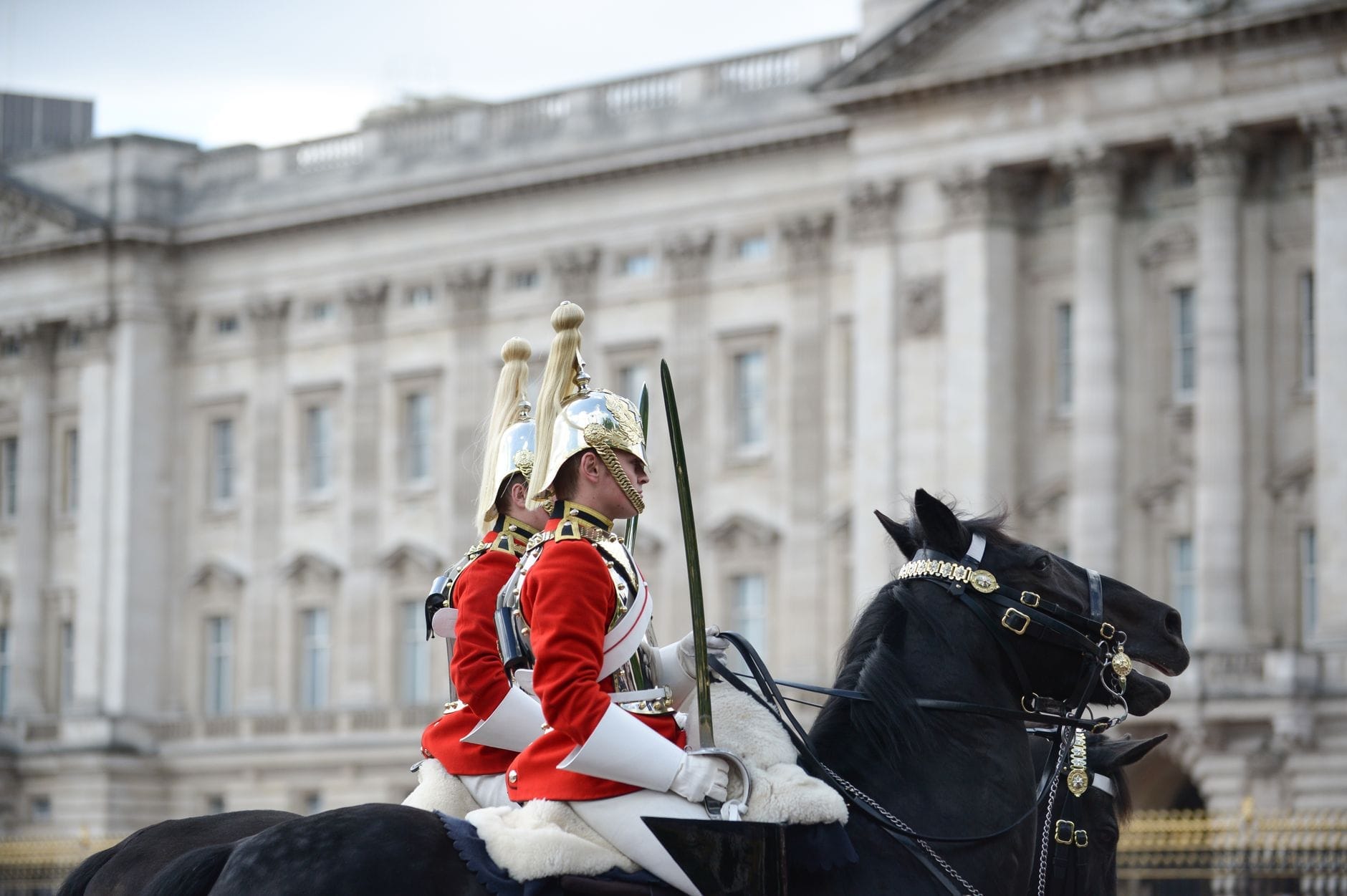
What Is Horse Guards Parade?
Horse Guards Parade is the broad ceremonial parade ground sandwiched between the rear of the Horse Guards building on Whitehall and the eastern edge of St James's Park. It is the venue for Trooping the Colour, Beating Retreat, and the daily Changing of The King's Life Guard, and has served as a formal assembly point for royal and military ceremony since the Tudor period. The surrounding space is technically part of St James's Park, managed by the Royal Parks, which means it is open to the public at no charge on ordinary days.
The Horse Guards building that frames the Whitehall approach dates from the mid-18th century, designed by William Kent as Chief Architect to George II, with construction completed around 1753. Its arched passageway through to the parade ground is one of the few public routes from Whitehall to St James's Park, making the whole site a genuine working thoroughfare as much as a tourist destination. Foot traffic is constant, and the mounted sentries standing inside the arch are among the most-photographed figures in all of London.
💡 Local tip
The Changing of The King's Life Guard takes place at 11:00 on Monday, Wednesday, and Friday, with the guard riding from Hyde Park Barracks beforehand. On Tuesday and Thursday the patrol inspection runs between roughly 10:30 and 11:15. Saturday and Sunday feature the Duty Officer's Inspection at 11:00. Arrive 10–15 minutes early to secure a good viewing position near the arch.
The Architecture and Setting
Approach from Whitehall and the Palladian facade of the Horse Guards building gives little away about what lies beyond. The central arch, flanked by two smaller pedestrian arches, channels you through to an entirely different scale: an open parade ground roughly the size of several football pitches, framed by the park's plane trees to the west and St James's Park lake in the middle distance. On a clear morning, the view from the central arch toward the park is one of the finest unobstructed perspectives in central London.
The building itself is a restrained, elegant piece of mid-Georgian architecture, its clock tower a recognisable fixture on the Whitehall skyline. Stone-coloured in dull light, it takes on a warmer tone in the low sun of early morning or late afternoon. The clock face is worth looking at closely: a black oval marks the hour at which King Charles I was executed in 1649, a detail that rewards the attentive visitor. The interior courtyards visible through the arches show a working military building, not a museum piece.
The parade ground's position makes it a natural waypoint on a longer Westminster walk. It connects seamlessly to St James's Park on one side and Whitehall's political corridor on the other, meaning you can thread Horse Guards into a route that takes in Buckingham Palace and the broader ceremonial core of Westminster without backtracking.
Tickets & tours
Hand-picked options from our booking partner. Prices are indicative; availability and final rates are confirmed when you complete your booking.
Changing of the Guards experience
From 20 €Instant confirmationChanging the Guard Ceremony guided walking tour
From 23 €Instant confirmationFree cancellationChanging of the Guard semi-private walking tour
From 59 €Instant confirmationFree cancellationThe British Royalty Tour with Changing of The Guard Ceremony
From 30 €Instant confirmationFree cancellation
The Ceremonies: What You Will Actually See
The daily guard change is more intimate and accessible than the more famous Changing of the Guard at Buckingham Palace. Because the space is open rather than gated, you can get much closer to the proceedings, and the ceremony itself — horseback soldiers in full dress uniform, the formal handover conducted with strict military precision — is visually striking even on a grey weekday morning.
Mounted sentries of the Household Cavalry stand duty at the Whitehall entrance from 10:00 to 16:00 daily, one on each side of the passage. They stand motionless on horseback for two-hour stretches, and the horses are calm and well-trained rather than skittish, which makes for steadier photography. At 16:00 there is a dismounted inspection of the guard, a quieter event that draws far fewer onlookers than the morning change and offers a surprisingly unobstructed view.
Trooping the Colour, held in June to mark the monarch's official birthday, is the ceremony that fills the parade ground completely. Thousands of troops, horses, and military bands assemble here in a display of coordinated pageantry that has no equivalent in the civilian world. Tickets are required and sell out well in advance, with prices around £30 for the King's Birthday Parade itself and lower amounts for rehearsal reviews earlier in June. For most visitors, the rehearsal reviews offer a genuine version of the spectacle at reduced cost and with slightly more comfortable viewing.
ℹ️ Good to know
Beating Retreat is a separate evening ceremony, also held at Horse Guards Parade in June, featuring massed bands of the Household Division. It runs across two evenings and is ticketed. Check the Household Division website for dates, as they vary each year.
How the Experience Changes by Time of Day
Early morning is the best time to visit if your aim is photography or simple contemplation of the space. Before 09:00, the parade ground is nearly empty, the gravel surface undisturbed, and the Horse Guards building lit at a low angle that flatters its Georgian stonework. Dog walkers cut across from the park, and occasionally a single mounted soldier moves through the arch during a routine patrol. The absence of crowds makes the scale of the space more apparent.
By 10:30 on ceremony days, a crowd begins to build at the Whitehall arch, particularly in summer. The compression of people around the narrow archway can make the experience feel claustrophobic if you arrive late. Tour groups position themselves in front of the sentries for photographs, and there is a low but constant buzz of dozens of languages around you. If you are visiting with young children, get here early and claim a front position on the low railing on the arch's inner side.
Midday to early afternoon is the busiest stretch for general footfall, as this is when the parade ground sits squarely on the route between the political sights on Whitehall and the leisure of St James's Park. By 15:30, foot traffic starts to thin, and the 16:00 dismounted inspection takes place in front of a much smaller audience than the morning ceremony. Late afternoon light also bounces off the stone facade in a way that midday sun does not.
Practical Information for Visitors
The parade ground is reached via the arch on Whitehall or directly from St James's Park to the west. Westminster Underground station (Circle and District lines) is the most direct approach from the south. Charing Cross station (National Rail and the Bakerloo and Northern lines) puts you on the Strand, a five-minute walk north of the arch. Embankment station is slightly closer to the Thames end of Whitehall. Multiple bus routes run along Whitehall directly, including the 3, 11, 12, 24, 53, 87, 88, 159, and 453.
There are no bag lockers or facilities on the parade ground itself, so carry only what you need. The nearest public toilets are in St James's Park, a short walk through the park gates. Cafes and kiosks in the park can cover basic refreshments; more substantial options are along Whitehall or in the streets around Trafalgar Square.
Accessibility is reasonably good on ordinary days. The parade ground itself is a large, level gravel surface, and the arched passage through the Horse Guards building has no steps. During major ticketed events such as Trooping the Colour, crowd barriers and managed entry points are established, which can affect movement for visitors with mobility requirements. Check the Royal Parks website for event-specific access guidance before attending.
The adjacent Household Cavalry Museum, situated within the Horse Guards building itself, provides context on the regiment's history with working stables visible through a glass screen. Entry is separate (adult ticket currently £11). For a deeper look at how this ceremony fits into London's royal geography, the Royal London guide covers the full circuit of ceremonial sites across Westminster.
Photography and What to Expect on the Ground
The mounted sentries are tolerant of close photography, but touching the horses or making sudden movements near them is not appropriate. A medium telephoto lens (equivalent to around 85–135mm on a full-frame camera) captures the faces under the helmets well without requiring you to push through the crowd. The deep shine of the cuirasses and helmets can blow out highlights in direct noon sun; softer morning light or overcast conditions produce more detailed shots.
During the actual guard change ceremony, the movement of horses through the arch and across the gravel provides natural motion in the frame. Position yourself at the parade ground side of the arch rather than the Whitehall side for the best view of the arriving guard forming up. The formal inspection moment, when the outgoing officer addresses the incoming guard, is brief but photogenic.
For wider views of the parade ground and the London skyline framed by trees, the path through St James's Park behind the guard house gives an angle that most visitors never find. This same path offers one of the best views in London: Buckingham Palace at one end, the Foreign Office and Cabinet Office towers at the other, with the park lake in the foreground.
Is It Worth Your Time? An Worth Knowing
Horse Guards Parade is worth 30 to 60 minutes for most visitors to Westminster, and the combination of free entry, central location, and daily ceremony means it rarely disappoints on a practical level. The architecture is significant, the ceremonies are authentic rather than staged for tourists, and the setting within St James's Park gives it a calm backdrop unusual for such a central London location.
That said, the site is not without limitations. On days without a morning ceremony, the mounted sentries standing in the arch provide a photo opportunity but not much else, and the parade ground itself is an expanse of flat gravel without intrinsic drama when empty. Visitors who have already seen the Buckingham Palace guard change may find the experience repetitive rather than complementary; the two ceremonies are similar in character, though Horse Guards tends to feel more accessible.
Those visiting London primarily for museums, food, or nightlife may find the time better spent elsewhere. But for anyone interested in British history, monarchy, or military tradition, and especially for first-time visitors to London trying to understand how the city's ceremonial life actually works, Horse Guards Parade is one of the most efficient and cost-effective stops in Westminster.
It combines naturally with a walk through Westminster that takes in the Houses of Parliament, Westminster Abbey, and the full sweep of Whitehall in under two hours. If you are building a first-day itinerary, the 3-day London itinerary places Horse Guards logically within a broader morning in the royal core.
Insider Tips
- The 16:00 dismounted inspection draws a fraction of the crowd that the morning ceremony attracts. If you want a close, unobstructed view of the guard without wrestling for position, this is the one to catch.
- Trooping the Colour rehearsal reviews (often held on the two Saturdays before the main parade in June) offer almost the same visual spectacle as the King's Birthday Parade at a significantly lower ticket price and with slightly less competition for seats.
- Enter the parade ground from the St James's Park side rather than the Whitehall arch. This gives you the full panoramic view of the ground before the crowd condenses around the arch, and you can find a position without being pressed against barriers.
- Look closely at the clock on the Horse Guards tower: the black oval mark on the clock face indicates the hour of King Charles I's execution in 1649, a detail hidden in plain sight that most visitors walk past without noticing.
- On ceremony days, the mounted troops ride through the arch from the Whitehall side onto the parade ground. Positioning yourself on the park-facing side of the arch puts the horses moving toward you rather than away, which makes for a much more dynamic sequence of photographs.
Who Is Horse Guards Parade For?
- First-time visitors to London wanting to see royal ceremony without paying admission fees
- Families with children who are captivated by horses, uniforms, and military precision
- History and architecture enthusiasts interested in Georgian London and the ceremonial geography of Westminster
- Photographers looking for strong light and iconic subjects, especially in early morning
- Travellers building a full Westminster walking day who want to connect Whitehall to St James's Park
Nearby Attractions
Other things to see while in Westminster:
- Apsley House
Known as 'Number 1 London', Apsley House at Hyde Park Corner was the London residence of the Duke of Wellington after his victory at Waterloo. Today it holds one of the finest private art collections in Britain, including old masters, Napoleonic silverware, and the famous colossal nude statue of Napoleon himself.
- Banqueting House
Banqueting House is the sole surviving structure of the vast Palace of Whitehall, designed by Inigo Jones in 1622 and home to the finest painted ceiling in England. It is also the spot where King Charles I was executed in 1649. Admission is just £7.50 for adults, but opening is seasonal — check dates before you go.
- Big Ben & the Houses of Parliament
Few sights in London carry the weight of Big Ben and the Palace of Westminster. The Gothic clock tower rising above the Thames is instantly recognisable, but the complex behind it holds over nine centuries of British political history. Here is everything you need to plan a worthwhile visit.
- Buckingham Palace
Buckingham Palace is the official London residence and administrative headquarters of the UK's sovereign, serving that role since 1837. Whether you are watching the Changing of the Guard from the forecourt railings or touring the lavish State Rooms in summer, this guide covers everything you need to plan a worthwhile visit.