Apsley House: Inside the Duke of Wellington's London Home
Known as 'Number 1 London', Apsley House at Hyde Park Corner was the London residence of the Duke of Wellington after his victory at Waterloo. Today it holds one of the finest private art collections in Britain, including old masters, Napoleonic silverware, and the famous colossal nude statue of Napoleon himself.
Quick Facts
- Location
- 149 Piccadilly, Hyde Park Corner, London W1J 7NT
- Getting There
- Hyde Park Corner (Piccadilly line) — the house is a short walk from the station exit
- Time Needed
- 1.5 to 2.5 hours for a thorough visit
- Cost
- Adults from £15.50, children from £9.50, free for English Heritage members. Book online for 15% off.
- Best for
- History enthusiasts, art lovers, Napoleonic era buffs, and anyone interested in Regency-era interior decoration
- Official website
- www.english-heritage.org.uk/visit/places/apsley-house
What Is Apsley House?
Apsley House stands at the southeastern corner of Hyde Park, directly opposite the Wellington Arch at one of London's most historic road junctions. It earned the nickname 'Number 1 London' not from vanity but from geography: when Hyde Park Corner was still a toll gate marking the western edge of the city, this was literally the first house you reached after passing through it. The name stuck, and it still appears on the building's stonework today.
The house was designed by the neoclassical architect Robert Adam and built between 1771 and 1778 for Henry Bathurst, 1st Baron Apsley. It became the London residence of the Dukes of Wellington from 1817, when the 1st Duke acquired it in the aftermath of his victory at Waterloo. Arthur Wellesley, the Duke who defeated Napoleon, lived here until his death in 1852, and successive generations of the family continued to use it as a home well into the twentieth century. It is now managed by English Heritage as a museum while part of the building remains in private use by the current Duke.
💡 Local tip
English Heritage members enter free. Non-members should book tickets online in advance to save 15% on the standard admission price.
The Art Collection: Better Than It Looks on Paper
The collection inside Apsley House is exceptional. Many visitors arrive expecting a decorative period house and leave having seen some of the finest old master paintings in London outside the National Gallery. The reason the collection is so remarkable has an unusual origin: most of it was captured from Joseph Bonaparte's baggage train after the Battle of Vitoria in 1813. The paintings had been looted from the Spanish royal collection by Napoleon's brother, and after the battle, the Duke of Wellington found himself in possession of them. King Ferdinand VII of Spain subsequently offered the entire collection to Wellington as a gift, which is why a London house contains works by Velázquez, Goya, Rubens, Jan Steen, and Correggio.
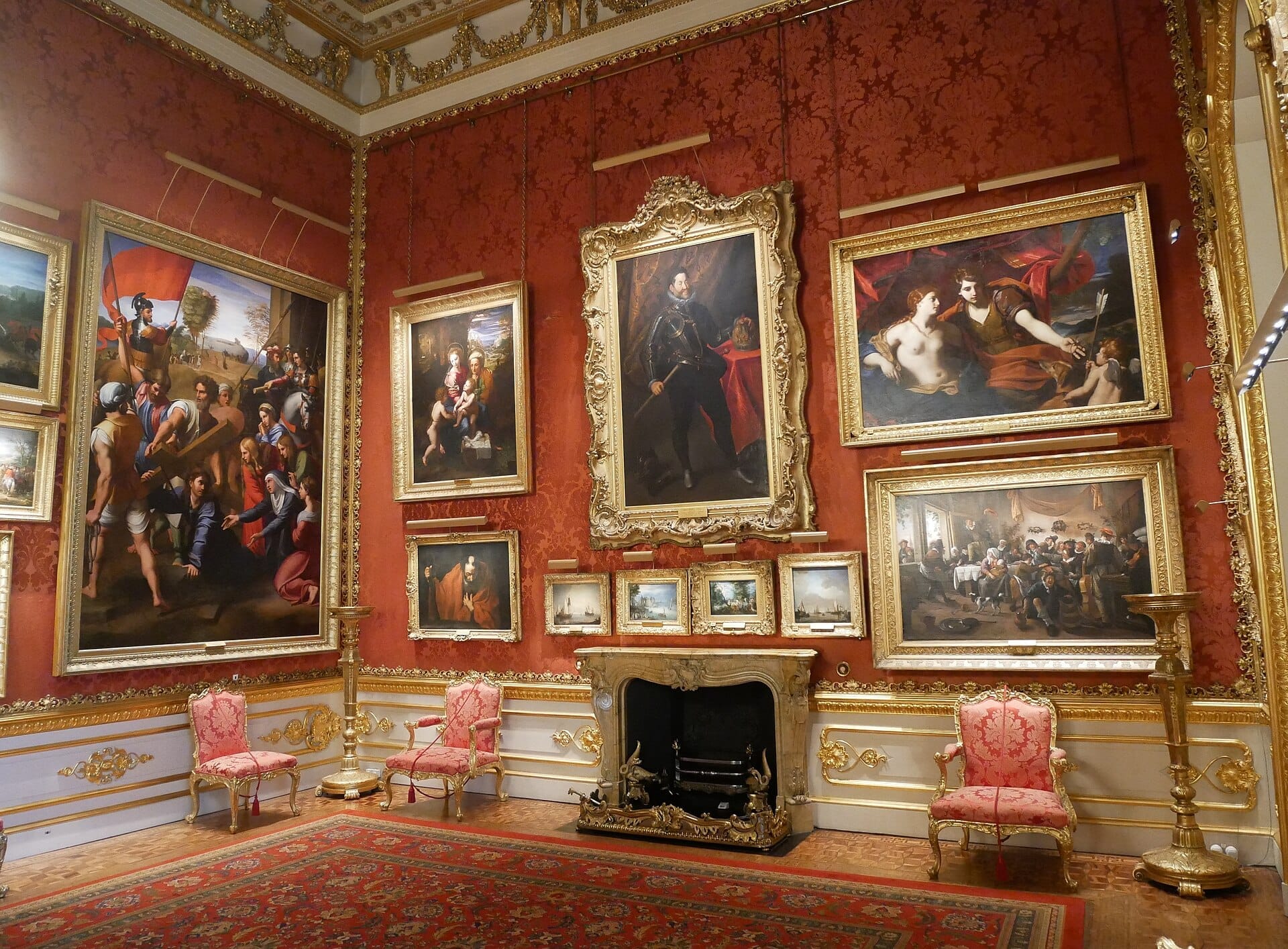
The Waterloo Gallery on the first floor is the centrepiece. It is a long, gilded room hung with paintings on yellow silk damask walls, arranged in the dense, floor-to-ceiling style typical of early nineteenth-century display. Velázquez's portrait of Pope Innocent X and Goya's equestrian portrait of Wellington himself hang here. The room was designed specifically for the annual Waterloo Banquet, which Wellington hosted every year on 18 June to mark the anniversary of the battle, a tradition that continues today within the Wellington family.
Beyond the paintings, the house contains an extraordinary collection of Napoleonic objects and plate. The Portuguese Silver Service, presented to Wellington by the government of Portugal, is one of the largest surviving silver-gilt services in the world. The dining room table can be set with it, and seeing several hundred pieces arranged together has a theatrical quality unlike anything in a typical museum display. For more context on London's wider museum scene, the best museums in London guide covers how Apsley House compares to the city's other great collections.
Tickets & tours
Hand-picked options from our booking partner. Prices are indicative; availability and final rates are confirmed when you complete your booking.
Guided tour inside Westminster Abbey and outside the Houses of Parliament
From 103 €Instant confirmationFree cancellationHouses of Parliament and Westminster Abbey guided tour
From 149 €Instant confirmationFree cancellationLondon Main Sights Guided Tour with Visit to The Houses of Parliament
From 110 €Instant confirmationFree cancellationHouses of Parliament and Westminster Walking Tour
From 110 €Instant confirmationFree cancellation
The Napoleon Statue: The Room You Will Not Forget
At the foot of the main staircase stands Antonio Canova's colossal marble statue of Napoleon Bonaparte, standing over three and a half metres tall. Napoleon commissioned it himself but reportedly rejected it on delivery, considering the heroic nude figure unflattering. After Napoleon's defeat, the British government purchased the statue and presented it to Wellington. The irony of displaying a giant nude sculpture of your defeated enemy at the bottom of your staircase is not lost on the house's curators, and the positioning feels deliberately pointed.
The statue dominates the staircase hall in a way that photographs do not quite convey. The ceiling of the hall rises above it and morning light falls in from the upper windows, giving the marble a warm, almost luminous quality. Arriving early on a weekday, before the first group tours arrive around noon, means you can spend several minutes alone with it, which is an experience worth engineering if you can manage it.
Moving Through the House: Room by Room
The house is arranged over three main floors. The ground floor contains the Inner Hall, the Plate and China Room, and a series of smaller reception rooms. These spaces feel more like a private house than a museum, with personal objects, correspondence cases, and the accumulation of a long life in public service. There are Wellington's field despatches, presentation swords, and orders of chivalry from across Europe. The detail is dense, and visitors who move too quickly through these rooms miss the texture of the place.
The first floor is where the grandeur concentrates. The Piccadilly Drawing Room overlooks the busy junction below, and the contrast between the noise visible through the windows and the stillness of the yellow-silk interior is quietly strange. The Striped Drawing Room contains more paintings and a series of family portraits. The Waterloo Gallery, at the far end of the first floor, is the largest and most impressive room in the house.
The house is not large by the standards of a country estate. Most visitors cover the publicly accessible rooms in around 90 minutes. Taking two hours allows for reading the interpretation panels, which are well-written and add genuine depth to the objects on display. Audio guides are available and worth picking up if you want the military and political backstory in fuller detail.
ℹ️ Good to know
Opening hours are Wednesday to Sunday, 11:00–17:00 (last entry 16:30), with Bank Holiday Mondays also open. The house typically closes from January through to early March. Always confirm current hours on the English Heritage website before visiting.
When to Visit and What to Expect
Apsley House is one of London's less crowded major attractions, which is one of its genuine strengths. Even on busy summer weekends, the rooms feel relatively calm compared to the queues outside the nearby Wellington Arch or the crowds in Hyde Park. Weekday mornings between opening time and around noon are the quietest periods. Weekend afternoons, particularly on Saturdays in July and August, bring more visitors, but the house rarely feels packed in the way that larger institutions can.
The light in the Waterloo Gallery is best in the afternoon, when it falls more directly onto the paintings. If photography is a priority, afternoon visits produce better results in that room. Morning visits are preferable for the Canova statue and the ground-floor rooms, where the softer early light suits the materials.
Hyde Park Corner is one of the noisiest road junctions in central London, and the sound of traffic is audible outside the house. Once inside, the thick walls reduce it to a low background hum. The exterior, flanked by the Wellington Arch and overlooking the park, makes for a strong arrival impression. The Westminster area offers several other significant sites within walking distance, including Buckingham Palace to the southwest and Green Park immediately adjacent.
Getting There and Practical Logistics
The Hyde Park Corner Underground station on the Piccadilly line places you very close to the house. It is one of the most straightforward journeys to any London attraction: exit the station and the building is immediately visible nearby to your left. Numerous bus routes serve Hyde Park Corner, including services along Piccadilly, Knightsbridge, and Grosvenor Place. A Santander Cycles docking station at Wellington Arch provides an alternative for visitors cycling across the parks.
There is no car parking immediately adjacent to the house, and Hyde Park Corner is not practical to reach by car. Public transport is the only sensible option for most visitors.
Accessibility at Apsley House is limited. The building has only one lift and no ramps, making independent access difficult for wheelchair users or visitors with significant mobility impairments. The English Heritage and Wellington Collection websites advise visitors with mobility needs to contact the house in advance. Staff can provide folding stools on request. This is an straightforward limitation of a historic building, and visitors who require step-free access throughout should check in detail before making a specific journey.
Who This Attraction Suits — and Who Might Be Disappointed
Apsley House rewards visitors who come with some prior interest in the Napoleonic period, British military history, or old master painting. The collection makes most sense with a little context, and the house's significance as a document of how nineteenth-century power dressed and lived is not immediately self-evident. Visitors who prefer interactive exhibits, multimedia displays, or a more dynamic visitor experience may find the presentation traditional. The interpretation is good but the format is conventional: room cards, labels, and an optional audio guide. For families with young children, the house lacks the hands-on elements of nearby attractions like the Natural History Museum or the Science Museum, though older children with an interest in military history often find the Napoleonic objects and weapons engaging.
For those combining the visit with a broader day in this part of London, Hyde Park is directly accessible from Hyde Park Corner, and Buckingham Palace is a short walk through Green Park. The Royal London guide maps out several of these connections in one itinerary.
Insider Tips
- The Waterloo Gallery is occasionally closed or rearranged for the annual Waterloo Banquet dinner, held by the Wellington family on 18 June. If you are visiting around that date, check whether the gallery will be accessible.
- The house's exterior is viewable for free at any time, and the position at Hyde Park Corner between Wellington Arch and the park entrance makes it one of the more photogenic spots in this part of London, particularly in the early morning before traffic builds.
- Book tickets through the English Heritage website in advance rather than paying on the door. The 15% online discount is consistent and reduces the adult ticket price meaningfully.
- The Portuguese Silver Service laid out on the dining room table is often overlooked by visitors rushing toward the paintings, but it is one of the most remarkable objects in the house. Allow time to read the display explanation, which covers how the service was made and transported.
- If you are an English Heritage member, this is an easy addition to a day that includes other English Heritage properties in or near London, as your membership covers entry to all of them.
Who Is Apsley House For?
- History enthusiasts with an interest in the Napoleonic Wars and Regency-era Britain
- Art lovers seeking old master paintings in a domestic rather than museum context
- Visitors interested in architecture and interior decoration from the late eighteenth and early nineteenth centuries
- Travellers following a royal or ceremonial London itinerary through Westminster
- English Heritage members looking for a well-curated afternoon that avoids the crowds of the larger central London institutions
Nearby Attractions
Other things to see while in Westminster:
- Banqueting House
Banqueting House is the sole surviving structure of the vast Palace of Whitehall, designed by Inigo Jones in 1622 and home to the finest painted ceiling in England. It is also the spot where King Charles I was executed in 1649. Admission is just £7.50 for adults, but opening is seasonal — check dates before you go.
- Big Ben & the Houses of Parliament
Few sights in London carry the weight of Big Ben and the Palace of Westminster. The Gothic clock tower rising above the Thames is instantly recognisable, but the complex behind it holds over nine centuries of British political history. Here is everything you need to plan a worthwhile visit.
- Buckingham Palace
Buckingham Palace is the official London residence and administrative headquarters of the UK's sovereign, serving that role since 1837. Whether you are watching the Changing of the Guard from the forecourt railings or touring the lavish State Rooms in summer, this guide covers everything you need to plan a worthwhile visit.
- Churchill War Rooms
Buried beneath Whitehall, the Churchill War Rooms preserve the underground bunker where Winston Churchill and his War Cabinet directed Britain's Second World War effort. The rooms have been left largely untouched since 1945, making this one of the most atmospheric and moving historical sites in London.