Churchill War Rooms: Inside Britain's Secret WWII Headquarters
Buried beneath Whitehall, the Churchill War Rooms preserve the underground bunker where Winston Churchill and his War Cabinet directed Britain's Second World War effort. The rooms have been left largely untouched since 1945, making this one of the most atmospheric and moving historical sites in London.
Quick Facts
- Location
- Clive Steps, King Charles Street, Westminster, London SW1A 2AQ
- Getting There
- Westminster (Circle, District, Jubilee lines) or St James's Park (District, Circle lines)
- Time Needed
- 2 to 3 hours for a thorough visit
- Cost
- £34 standard adult admission; £17 with National Art Pass. Children under 16 free.
- Best for
- History enthusiasts, WWII buffs, adults and older teenagers
- Official website
- www.iwm.org.uk/visits/churchill-war-rooms
What the Churchill War Rooms Actually Are
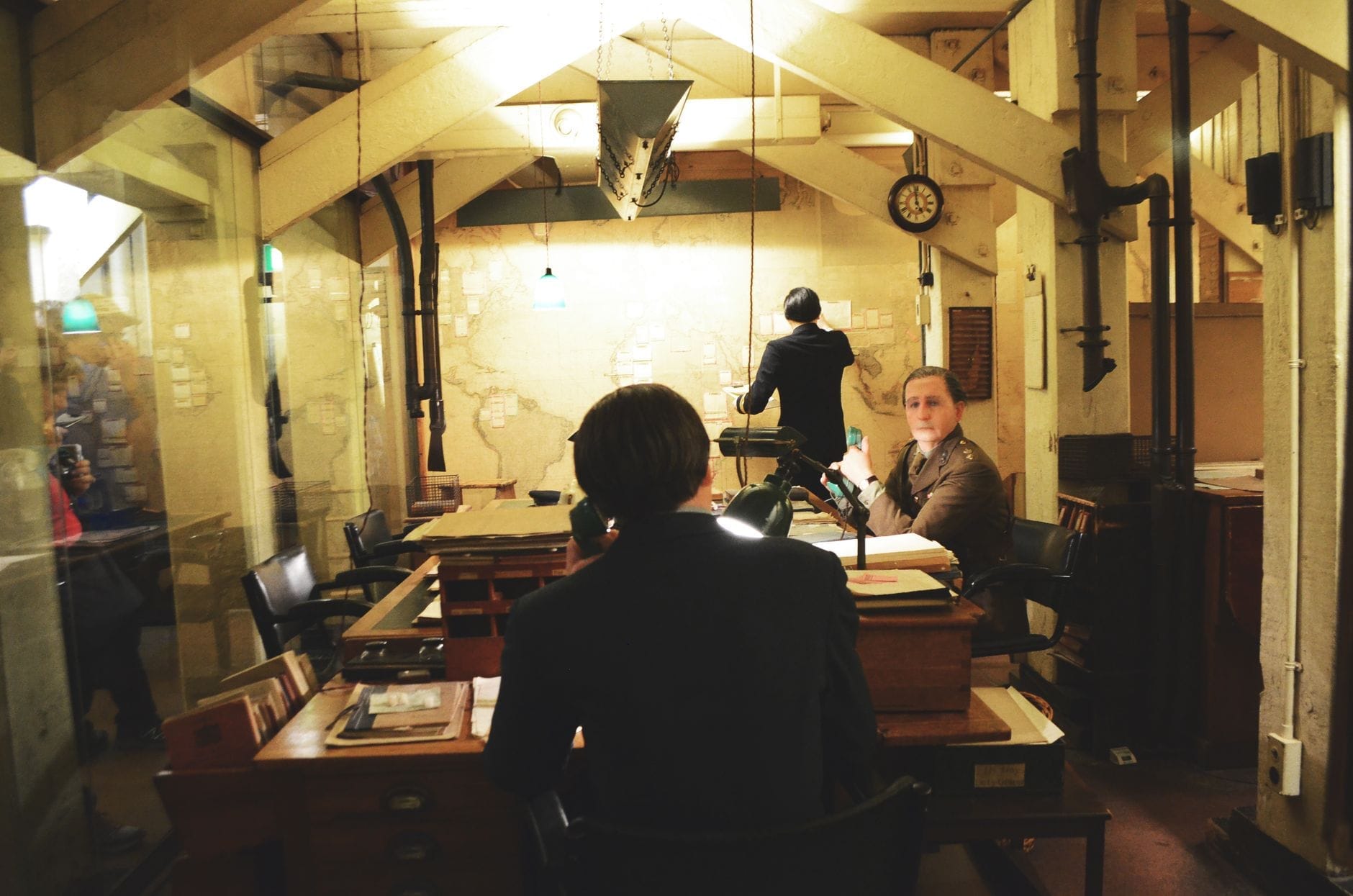
The Churchill War Rooms are not a reconstruction. That is the single most important thing to understand before you go. The subterranean complex beneath the government offices of Whitehall was operational from 27 August 1939, used throughout the war, and then largely mothballed when peace was declared in 1945. When the site opened to the public in 1984, many of the rooms had remained unchanged for nearly four decades. The maps on the walls, the telephones on the desks, the pins in the charts: much of it is where it was left.
The attraction today comprises two distinct parts: the historic Cabinet War Rooms, which formed the original bunker, and the Churchill Museum, a more conventional exhibition space dedicated to Churchill's life and political career that was added in 2005. The two sit under the same admission fee and occupy different physical areas of the complex, so expect to spend time in both.
ℹ️ Good to know
The site is managed by Imperial War Museums (IWM), the same organisation behind the IWM London and the HMS Belfast. Membership or a National Art Pass can significantly reduce the £34 standard admission.
The Cabinet War Rooms: Walking Through the Bunker
You descend into the bunker via a staircase from the main entrance on Clive Steps, just off King Charles Street. The drop is modest, perhaps two or three storeys, but the shift in atmosphere is immediate. The air feels heavier. The ceilings are low. Exposed pipes and reinforced walls replace the Georgian stonework above.
The Cabinet Room is the centrepiece: a long, dimly lit room set up exactly as it would have appeared during a wartime meeting. Churchill's chair sits at the head of the table, distinguished from the others by its wooden armrests. The room reportedly remains exactly as it was during the war, with original furniture and fittings. Visitors are guided through on a self-directed route using an audio guide included in admission. The audio content is thorough without being exhausting, and the physical layout means you are never far from a original detail.
The Map Room is the other standout space. It was staffed around the clock throughout the war, and the walls are still covered in the original charts used to track Allied shipping, troop movements, and bombing campaigns. There is something striking about standing in front of a map that was consulted during active combat decisions. The lighting is deliberately low to protect the paper, which adds to the sense of stepping into a preserved moment rather than a display.
Other rooms include Churchill's private bedroom (barely larger than a cupboard, containing a single camp bed and a chamber pot), a transatlantic telephone room disguised to staff as a toilet, and various administrative offices. Each one reinforces the same point: this was a working space, not a grand headquarters. The conditions were cramped, often uncomfortable, and sometimes dangerous.
Tickets & tours
Hand-picked options from our booking partner. Prices are indicative; availability and final rates are confirmed when you complete your booking.
Churchill War Rooms tickets and political London audio tour
From 53 €Instant confirmationFree cancellationPrivate espionage tour in London with Churchill War Rooms tickets
From 298 €Instant confirmationFree cancellationChurchill War Rooms and Westminster Guided Tour
From 87 €Instant confirmationFree cancellationLondon top sights tour with Westminster Abbey and Churchill War Rooms
From 115 €Instant confirmationFree cancellation
The Churchill Museum: A Different Kind of Exhibition
After the bunker, the Churchill Museum occupies a larger, more brightly lit space and takes a chronological approach to Churchill's long public life. It covers his early military career, his turbulent political trajectory through the 1930s, his wartime leadership, and his post-war years. The exhibition uses original documents, photographs, personal objects, and interactive displays.
The centrepiece of this section is a 15-metre interactive timeline table that allows visitors to scroll through Churchill's life in detail. It is impressive in scale and content. For visitors who already know Churchill's history well, some of the contextual material here will feel familiar. For those who do not, it provides essential grounding that makes the bunker experience more meaningful.
💡 Local tip
Visit the Cabinet War Rooms first, then the Churchill Museum. The bunker sets the emotional tone for the rest of the site, and moving from wartime context into biography works better than the reverse.
Practical Walkthrough: Getting There and Getting In
The entrance is on Clive Steps, a short staircase on King Charles Street in Westminster. It is an easy walk from Westminster Tube station (Circle, District, and Jubilee lines) in about five minutes. St James's Park station (District and Circle lines) is a slightly longer walk. Both routes take you through the heart of the government district, past the Foreign, Commonwealth and Development Office building and within sight of the Houses of Parliament.
The site is open daily from 9:30am to 6:00pm, with last entry at 5:00pm. It is closed on 24, 25, and 26 December. Standard adult admission is £34. Visitors who hold a National Art Pass pay £17. Under-16s enter free. Booking in advance online is advisable, particularly during school holidays and summer months, when queues at the door can be significant. Check the London Pass if you are planning multiple paid attractions in the same trip, as it includes entry to several IWM sites.
The audio guide is included in the admission price and is worth using. It runs to around 45 minutes for the Cabinet War Rooms section alone. Take your time. The rooms are small and there is often a bottleneck of visitors in the most famous spaces, particularly the Cabinet Room and Map Room.
When to Visit and What to Expect at Different Times
The Churchill War Rooms attract a mix of domestic and international visitors, school groups, and serious history enthusiasts. Weekday mornings, particularly Tuesday to Thursday, tend to be quietest. If you arrive close to opening at 9:30am, you can often move through the first section of the bunker before the main crowds arrive.
Weekend afternoons are noticeably more crowded. The confined space of the original rooms means that congestion affects the experience considerably. When the Cabinet Room or Map Room fills up, it becomes difficult to pause and read the interpretive panels or listen to the audio guide at your own pace. If your schedule only allows a weekend visit, Saturday morning is preferable to Sunday afternoon.
School group visits are most common on weekday mornings from September through June. If you are visiting outside those hours or during school holidays, the composition of the crowd shifts noticeably toward adults and family groups.
⚠️ What to skip
The bunker has limited accessibility. Much of the route involves narrow corridors and uneven surfaces. Wheelchair access is available for parts of the site but not all of it. Contact IWM directly before visiting if mobility is a concern.
Historical and Cultural Context
The Cabinet War Rooms were built inside a basement of the Office of Works in Westminster beginning in 1938, as war with Germany became increasingly likely. The structure was reinforced with a concrete slab above to offer some protection from bombing, though Churchill himself was reportedly sceptical about how effective it would actually be. By the time Germany invaded Poland on 1 September 1939, the rooms were ready. Cabinet meetings were held here throughout the most critical periods of the war, including the months after the fall of France in 1940 when Britain stood largely alone.
Westminster as a district carries enormous weight in British history, and the Churchill War Rooms sit at the centre of it. Within a ten-minute walk you can reach Westminster Abbey, Big Ben, and the Houses of Parliament. The war rooms existed in deliberate contrast to those grand above-ground symbols: they were functional, urgent, and hidden.
After the war ended in August 1945, the rooms were vacated and locked. The decision to leave them intact rather than convert the space to other uses proved historically significant. When the Cabinet War Rooms were opened to the public in 1984 under the management of what was then the Imperial War Museum, they became one of the first and most complete examples of a preserved wartime operational site in the world.
Photography, Accessibility, and Practical Notes
Photography is permitted throughout the site, including in the Cabinet War Rooms. The lighting in the original bunker areas is deliberately kept low to protect original materials, which means smartphone photography produces mixed results. A camera with decent low-light performance will do significantly better. Flash photography is not appropriate and likely not permitted in the most fragile spaces.
The gift shop at the exit is well-stocked with Churchill-related books, prints, and museum-quality reproductions. It is not a souvenir trap. If you have any interest in the period, it is worth browsing.
There is no cafe inside the Churchill War Rooms themselves, but the surrounding area offers options. The South Bank is a short walk across Westminster Bridge, or you can head toward St James's Park for outdoor seating. For a full day of Westminster-area attractions, consider pairing this visit with the nearby Horse Guards Parade or the Banqueting House on Whitehall, both of which are free or low-cost entries.
Insider Tips
- The audio guide is included in your ticket and covers material not written on the interpretive panels. Do not skip it, especially in the Map Room, where the commentary explains the specific campaigns being tracked on each chart.
- Churchill's private bedroom in the bunker is one of the most arresting spaces in the whole site, precisely because of how ordinary it is. Spend more time there than you think you need to.
- The Churchill Museum section gets significantly less foot traffic than the Cabinet War Rooms. If the bunker is crowded when you arrive, head to the museum first and return to the rooms later in your visit when congestion typically eases.
- Book tickets in advance through the IWM website. Walk-in tickets are often available, but timed entry slots fill up on busy days, and booking also saves you time at the entrance.
- If you hold a National Art Pass, your entry costs £17 rather than £34. An annual National Art Pass costs around £70 and grants free or half-price entry to hundreds of UK museums, so it pays for itself quickly if you visit several attractions.
Who Is Churchill War Rooms For?
- History enthusiasts and WWII researchers who want to engage with a preserved operational site
- Adult visitors and older teenagers with an appetite for detailed, immersive museum experiences
- Travellers on a Westminster itinerary who want substantive content alongside the area's landmark sights
- Visitors interested in political and military history beyond the usual parade of royal palaces
- Those who prefer indoor, weather-independent attractions with original artefacts
Nearby Attractions
Other things to see while in Westminster:
- Apsley House
Known as 'Number 1 London', Apsley House at Hyde Park Corner was the London residence of the Duke of Wellington after his victory at Waterloo. Today it holds one of the finest private art collections in Britain, including old masters, Napoleonic silverware, and the famous colossal nude statue of Napoleon himself.
- Banqueting House
Banqueting House is the sole surviving structure of the vast Palace of Whitehall, designed by Inigo Jones in 1622 and home to the finest painted ceiling in England. It is also the spot where King Charles I was executed in 1649. Admission is just £7.50 for adults, but opening is seasonal — check dates before you go.
- Big Ben & the Houses of Parliament
Few sights in London carry the weight of Big Ben and the Palace of Westminster. The Gothic clock tower rising above the Thames is instantly recognisable, but the complex behind it holds over nine centuries of British political history. Here is everything you need to plan a worthwhile visit.
- Buckingham Palace
Buckingham Palace is the official London residence and administrative headquarters of the UK's sovereign, serving that role since 1837. Whether you are watching the Changing of the Guard from the forecourt railings or touring the lavish State Rooms in summer, this guide covers everything you need to plan a worthwhile visit.