Big Ben & the Houses of Parliament: What to See, When to Go, and How to Get Inside
Few sights in London carry the weight of Big Ben and the Palace of Westminster. The Gothic clock tower rising above the Thames is instantly recognisable, but the complex behind it holds over nine centuries of British political history. Here is everything you need to plan a worthwhile visit.
Quick Facts
- Location
- Westminster, London SW1A 0AA
- Getting There
- Westminster station (Circle, District, Jubilee lines)
- Time Needed
- 30 min (exterior) to 2 hours (guided interior tour)
- Cost
- Exterior: free. Interior tours: ticketed (check parliament.uk for current prices)
- Best for
- History enthusiasts, first-time London visitors, architecture lovers
- Official website
- www.parliament.uk/visiting
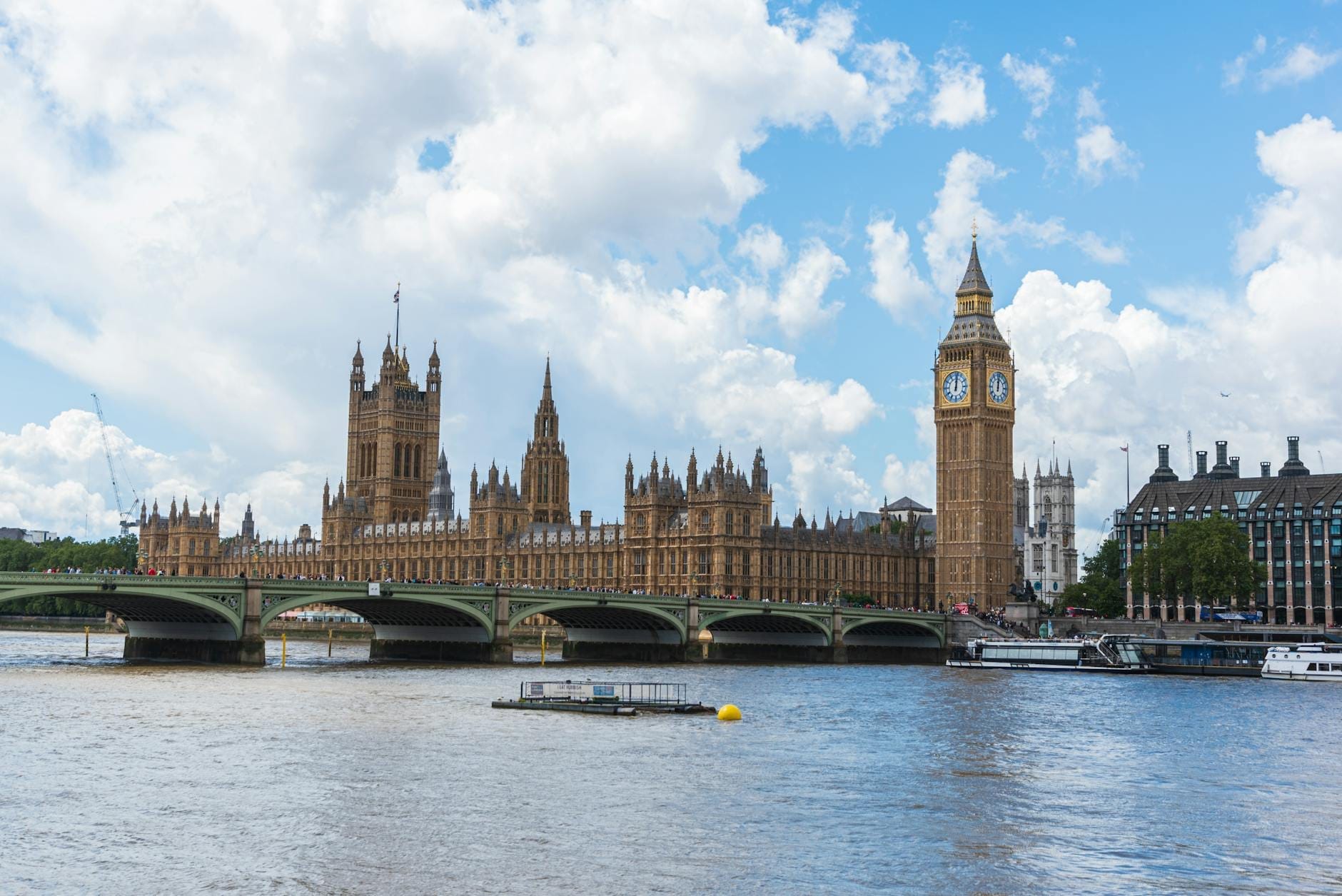
What You Are Actually Looking At
Most visitors call the whole structure Big Ben, but that name belongs specifically to the Great Bell housed inside the Elizabeth Tower, the tall Gothic tower at the north end of the Palace of Westminster. The tower itself stands more than 96 metres tall and anchors one of the most photographed riverfront views in the world. The Palace of Westminster, which houses the two chambers of the UK Parliament, the House of Commons and the House of Lords, stretches along the north bank of the River Thames across a site that has been in continuous political use since at least the early 11th century.
The bell first chimed on 31 May 1859, and the clock faces, each one about seven metres in diameter, have been marking Westminster time ever since. The tower was renamed Elizabeth Tower in 2012 to mark the Diamond Jubilee of Queen Elizabeth II, though virtually everyone still calls it Big Ben without confusion.
ℹ️ Good to know
The Elizabeth Tower and the rest of the Palace of Westminster form part of a UNESCO World Heritage Site, shared with Westminster Abbey and St Margaret's Church. The designation reflects the complex's outstanding universal value as a seat of parliamentary democracy.
A Short History Worth Knowing Before You Go
Westminster Hall, the oldest surviving part of the Palace, was built in 1097 under King William II. Its hammer-beam roof, added in the late 14th century, remains one of the finest medieval timber roofs in Europe. For centuries the Hall served as a court of law; it was here that figures including Sir Thomas More and King Charles I faced trial.
A catastrophic fire in October 1834 destroyed most of the medieval palace. The rebuilding commission went to architect Charles Barry, who worked with Augustus Pugin to produce the Gothic Revival structure you see today. Construction ran from the 1840s through the 1870s, making the building feel ancient to the eye while being relatively modern in historical terms. The Great Bell was cast in 1858 and installed the following year. It cracked early in its life, was rotated, and has been ringing ever since in its distinctive, slightly imperfect tone.
The Palace sits within the Westminster neighbourhood, a district defined by political and royal power. Within a short walk you will find Westminster Abbey, St James's Park, and the approach to Buckingham Palace, making this corner of London one of the densest concentrations of historic significance in the country.
Tickets & tours
Hand-picked options from our booking partner. Prices are indicative; availability and final rates are confirmed when you complete your booking.
Guided Tour of Westminster Abbey, Big Ben and Buckingham
From 82 €Instant confirmationFree cancellationWestminster Abbey, Big Ben and Buckingham guided tour in London
From 73 €Instant confirmationFree cancellationHighlights of Royal London bike tour with river cruise
From 65 €Instant confirmationFree cancellationLondon audio guide with TravelMate app
From 5 €Instant confirmation
The Exterior Experience: Viewing Big Ben from Outside
Most visitors never go inside, and the exterior alone justifies the trip. The classic vantage point is Westminster Bridge, just south of the Palace, where the tower reflects in the Thames on calm mornings and the full gothic facade of the building stretches away behind it. Arrive before 8 a.m. and the bridge is quiet enough to stand in the middle without anyone elbowing past you. By 9 a.m. on a weekday, the pavement along the bridge fills with commuters and tour groups moving in opposite directions.
The view from Victoria Embankment, on the opposite bank from Lambeth, offers the tower framed by the Thames with the South Bank in the background. This is a longer shot but works particularly well in the late afternoon when the setting sun catches the golden stonework of the tower. The sandstone-coloured facade, technically a limestone called Anston from Yorkshire quarries, takes on a warm amber tone in that light.
For a perspective few visitors bother with, walk around to the east side of the Palace toward Abingdon Street Gardens. The Victoria Tower, the southern counterpart to the Elizabeth Tower, looms over this quieter stretch, and the scale of the whole building becomes clear without the crowds. This side also puts you directly adjacent to Westminster Abbey, which is worth visiting on the same trip if your schedule allows.
💡 Local tip
Photography tip: For the iconic tower-and-bridge composition, shoot from Westminster Bridge in the early morning facing northeast. The clock face on the north side of the tower is the one that catches better light in the morning hours. Bring a longer lens if you want to fill the frame with the clock face itself.
Going Inside: Tours of the Palace of Westminster
The Houses of Parliament are open for public tours on a ticketed basis. Both audio tours and guided tours are available. The guided tour gives you access to rooms that the audio tour version may handle differently, so if you want context from a knowledgeable guide, it is worth the extra attention to which format you book.
Tour schedules follow the Parliamentary calendar, meaning sessions are often available on weekdays and Saturdays when Parliament is not sitting, with additional availability during recess periods. An example schedule (which can change) may include morning and afternoon departures such as 9:00, 11:00 and 14:00, with extra later slots in busier months; tours usually pause over the Christmas and New Year period. These hours change, so checking the official UK Parliament website before booking is essential rather than optional.
Inside, you move through spaces that include the medieval Westminster Hall, the House of Lords chamber with its red leather benches and elaborate gilded throne, the Central Lobby where constituents traditionally come to meet their Members of Parliament, and the House of Commons. The contrast between the ornate Lords and the comparatively understated Commons chamber, rebuilt after being bombed in 1941, tells its own story about how each institution understands itself.
Tickets can be bought online in advance through the UK Parliament website, or in person at the Ticket Office on Victoria Embankment in front of Portcullis House. Booking ahead is strongly recommended during peak tourist months from June through August, when same-day availability is often limited.
⚠️ What to skip
Tour availability depends entirely on the Parliamentary sitting schedule. If Parliament is in session, public tours are restricted or unavailable on certain days. Always verify your chosen date on the official Parliament visitor page before making travel plans around this visit.
Getting There and Moving Around Once You Arrive
Westminster Underground station sits directly across Bridge Street from the Palace entrance, making it one of the most straightforward journeys to any major London attraction. The Circle, District, and Jubilee lines all stop here. From the station exit you turn left and the Elizabeth Tower is immediately visible above the treeline. The walk takes under two minutes.
If you are arriving by bus, several routes stop on Parliament Street and Bridge Street. The area is also on several walking tour circuits through Westminster and the South Bank. For a broader orientation to getting around the city by public transport, the getting around London guide covers Oyster cards, contactless payment, and how to navigate the Underground network.
The pavement around Parliament Square gets congested during the middle of the day, particularly around the square itself, which is often occupied by demonstration groups exercising their right to protest opposite the seat of government. This adds to the atmosphere but makes it slower to move between viewing angles during peak hours. Step off the main circuit onto the Embankment side or toward the north end of Abingdon Street if you want breathing room.
What to Expect by Time of Day and Season
Early morning, from around 7 to 9 a.m., is the best time to photograph and absorb the exterior without competing for space. The light is soft, the bridge is passable, and the bells marking each quarter-hour feel more present without traffic noise swamping them. By mid-morning, coaches begin depositing large groups along Victoria Embankment, and by midday the whole area around Westminster Bridge and Parliament Square is at its most crowded.
Evening visits, particularly around sunset in late spring and summer, offer a different quality. The illuminated clock face glowing against a darkening sky is one of the more atmospheric sights in London after dark, and the tourist volume drops noticeably after 6 p.m. The bells still chime on the hour, and hearing them in quieter surroundings makes the experience considerably more affecting.
Weather shapes the visit more than most guidebooks acknowledge. On rainy days the stonework darkens and the views from the bridge can close in, though rain also keeps the crowds thinner. London's climate is temperate and overcast for much of the year. For planning around weather and seasonal considerations, the best time to visit London guide is a useful reference.
Practical Notes: What to Bring and What to Know
There is no admission charge to view the exterior from public streets, bridges, or the riverbank, so this is one of the more significant free experiences in London. Interior tours are ticketed, and pricing changes periodically. Check the official parliament.uk visitor page for current fees rather than relying on any third-party figure, including this one.
Security screening is in place for all interior tours. You will pass through airport-style security before entering the Palace, so factor an additional 10 to 15 minutes into your schedule. Large bags and certain items may not be permitted inside. Wear comfortable shoes: the interior tour covers a substantial amount of ground across a very large building, and the floors are almost entirely stone or marble.
Accessibility arrangements for the Palace of Westminster are managed by the UK Parliament visitor services team. If you have specific access requirements, contact them directly via the official visiting page before booking. The Westminster area itself is largely flat and has some step-free routes from Westminster station, including step-free access from the street to all platforms but not between platforms. For a broader view of Westminster's surroundings and what else the area contains, exploring St James's Park or Horse Guards Parade on the same visit makes good use of the geography.
💡 Local tip
If you want to watch Parliament in session rather than tour the empty chambers, you can attend as a member of the public from the public galleries when Parliament is sitting. This is free but requires a different booking process through the UK Parliament website. Watching a debate in the Commons chamber is a different experience from a tourism tour.
Insider Tips
- The clock face on the north side of the Elizabeth Tower faces Parliament Square and catches the best light in the morning hours. The river-facing west side is better in late afternoon. Most photographers default to the bridge view but miss the north face entirely.
- Westminster Bridge is not the only bridge with a view of the tower. Lambeth Bridge, a short walk south, gives you the full length of the Palace facade from a quieter vantage point and is almost never crowded with tourists.
- If you are inside the Palace for a tour, Westminster Hall is the space to pay closest attention to. The 14th-century hammer-beam roof is considered one of the finest surviving medieval timber roofs in Europe, and most visitors walk through it without looking up.
- To hear the bells clearly, move away from the traffic on Bridge Street and stand on the south side of Westminster Bridge during the run-up to a full hour. The acoustic environment is noticeably better without the engine noise of the embankment road.
- The Ticket Office on Victoria Embankment in front of Portcullis House sometimes has same-day tour availability when the online system shows full capacity. It is worth checking in person if you have not booked ahead.
Who Is Big Ben & the Houses of Parliament For?
- First-time London visitors who want to ground themselves in the city's political and architectural history
- History enthusiasts interested in British parliamentary democracy and medieval architecture
- Photographers working in the early morning or around sunset, when the light and crowd levels both cooperate
- Travellers with limited time who want a high-impact free experience from the exterior alone
- Those interested in attending a live parliamentary debate as a free public gallery visitor
Nearby Attractions
Other things to see while in Westminster:
- Apsley House
Known as 'Number 1 London', Apsley House at Hyde Park Corner was the London residence of the Duke of Wellington after his victory at Waterloo. Today it holds one of the finest private art collections in Britain, including old masters, Napoleonic silverware, and the famous colossal nude statue of Napoleon himself.
- Banqueting House
Banqueting House is the sole surviving structure of the vast Palace of Whitehall, designed by Inigo Jones in 1622 and home to the finest painted ceiling in England. It is also the spot where King Charles I was executed in 1649. Admission is just £7.50 for adults, but opening is seasonal — check dates before you go.
- Buckingham Palace
Buckingham Palace is the official London residence and administrative headquarters of the UK's sovereign, serving that role since 1837. Whether you are watching the Changing of the Guard from the forecourt railings or touring the lavish State Rooms in summer, this guide covers everything you need to plan a worthwhile visit.
- Churchill War Rooms
Buried beneath Whitehall, the Churchill War Rooms preserve the underground bunker where Winston Churchill and his War Cabinet directed Britain's Second World War effort. The rooms have been left largely untouched since 1945, making this one of the most atmospheric and moving historical sites in London.