St James's Park: one of London's oldest Royal Parks
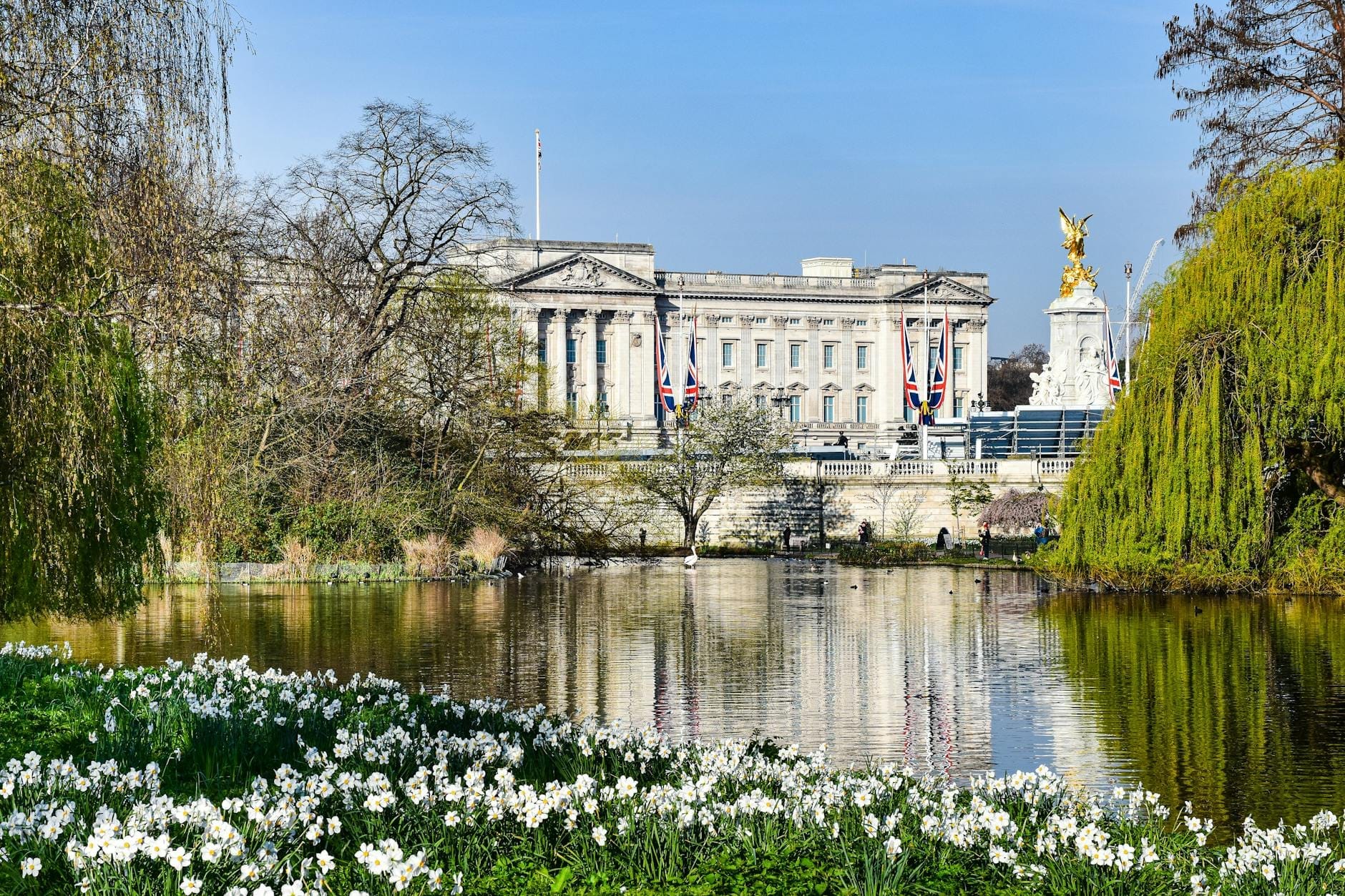
Stretching across 57 acres in the heart of Westminster, St James's Park is one of London's oldest Royal Parks, free to enter, open from 5am to midnight, and packed with surprises including resident pelicans and one of the best views of Buckingham Palace anywhere in the city.
Quick Facts
- Location
- Horse Guards Road, London SW1A 2BJ — bordered by Buckingham Palace and The Mall, Westminster
- Getting There
- St James's Park station (District & Circle lines), 5-min walk; also Westminster, Green Park, and Charing Cross
- Time Needed
- 45 minutes to 2 hours depending on pace
- Cost
- Free admission, open daily 5:00am–midnight
- Best for
- Morning walkers, families, first-time visitors, photography, picnics
- Official website
- www.royalparks.org.uk/visit/parks/st-jamess-park
What St James's Park Actually Is
St James's Park is the oldest of London's eight Royal Parks, covering 57 acres (roughly 23 hectares) right in the centre of the capital. It sits between Buckingham Palace to the west, Horse Guards Parade to the east, The Mall to the north, and Birdcage Walk to the south. That geography alone makes it remarkable: few city parks in the world have this density of historic significance on every side.
The park is managed by The Royal Parks charity and is entirely free to enter, with pedestrian gates open from 5:00am to midnight every day of the year. There are no barriers, no timed entry slots, and no booking required. This accessibility, combined with its central location, makes it one of the most frequently visited green spaces in Europe.
For a first-time visitor trying to see central London efficiently, St James's Park fits naturally into any 3-day London itinerary without requiring dedicated time — you walk through it on the way to everything else, and it rewards the detour.
History: From Royal Hunting Ground to Public Park
The land was originally marshland, drained and enclosed by Henry VIII in 1532 as a deer park attached to the Palace of Whitehall. It remained a private royal hunting ground until Charles II redesigned it in the early 1660s following his return from exile in France, creating formal avenues and a long canal in the French style he had admired at Versailles. It was Charles II who also introduced the park's most famous living residents: a group of pelicans gifted by the Russian Ambassador in 1664. Pelicans have been resident in the park ever since, making this one of the longest-running wildlife traditions in any urban park in the world.
The park was opened to the public during Charles II's reign, though under strict etiquette. The more formal transformation into a naturalistic landscape came under John Nash's redesign in the 1820s, when he converted the straight French canal into the curving lake you see today. Nash also built The Mall as a ceremonial route, which shaped the park's northern edge as a processional corridor rather than a public thoroughfare — a function it still serves during state occasions.
Tickets & tours
Hand-picked options from our booking partner. Prices are indicative; availability and final rates are confirmed when you complete your booking.
Uncover James Bond's London on a self-guided audio tour
From 6 €Instant confirmation007 James Bond's London private half day tour
From 39 €Instant confirmationJames Bond walking tour of London
From 17 €Instant confirmationFree cancellationSoho Instagram a self-guided walking tour to top photo spots
From 6 €Instant confirmationFree cancellation
The Lake, the Wildlife, and the Pelicans
The central lake runs roughly east to west through the park and is the single best reason to slow down here. Ducks, geese, swans, and cormorants move across the water throughout the day, and the bird population is diverse. The Pelican Rock — on the south side of the lake near Duck Island — is where the park's famous pelicans can be found. The birds are typically fed by park staff around 2:30pm on most days, which is the best time to see them active. Outside feeding time, they often stand motionless on their rock or paddle close to the bank, where they have a disconcerting habit of staring down tourists.
Duck Island itself is a nature reserve within the park, managed for nesting birds and not publicly accessible. From the Blue Bridge — the footbridge spanning the middle of the lake — you get the park's most photographed view: looking west, Buckingham Palace sits framed by trees at the far end of the water. Looking east from the same bridge, you see the rooftops of the Foreign, Commonwealth and Development Office and Horse Guards. This is one of the more unusual aspects of the park: almost every sightline lands on something architecturally significant.
💡 Local tip
The Blue Bridge is the best photography spot in the park. For the classic Buckingham Palace-over-water shot, go early in the morning when the light is behind you (facing west) and the crowds are thin. In summer, this means arriving before 8am.
How the Park Changes by Time of Day
Early morning, from opening at 5am until around 8am, the park is quiet in a way that feels surprising given its location. Joggers use the paths as a circuit, and the lake takes on a flat, grey-green calm. The smell is cut grass, damp earth, and something faintly brackish from the water. Birdsong is conspicuous, and for a few minutes you can forget you are surrounded by government buildings and major roads.
From 9am onwards, the park fills with commuters cutting through on their way to Whitehall and Westminster, mixed with the first wave of tourists. By mid-morning on any warm day — and certainly on weekends — the grassy areas fill fast. The park gets congested between 11am and 3pm in summer, especially along The Mall side and around the lake. Lunchtime on a weekday brings office workers from the nearby government district, spreading across the grass with sandwiches.
Late afternoon, once school groups and tour buses begin to clear, is another good window. The light in summer hits the lake surface at a low angle from around 5pm, which makes the water glow. On autumn evenings, the park acquires a different texture entirely — fallen leaves on the paths, the pelicans hunched against the cold, and a stillness that contrasts sharply with the surrounding city.
⚠️ What to skip
In peak summer (July–August), the park lawn areas fill completely on warm weekends. If you want peaceful walking, aim for weekday mornings or evenings after 6pm. Avoid the Buckingham Palace gate end entirely between 10am–noon on days with the Changing of the Guard, when the crowds become very dense.
What to See and How to Walk It
The park is small enough to cross in ten minutes at a brisk pace, but it rewards a slower circuit of 45 minutes to an hour. The most logical route for a visitor starts at the St James's Park Tube station exit on Broadway, enters via the Birdcage Walk gate, walks west along the lake's south bank to the pelican viewing area near Duck Island, crosses the Blue Bridge to the north bank, and then follows The Mall east back toward Trafalgar Square, or west toward Buckingham Palace.
This connects naturally to the wider Westminster circuit: Buckingham Palace is a two-minute walk from the park's western gate, and Horse Guards Parade is immediately east. The park is also the most pleasant pedestrian connection between Westminster Abbey and the National Gallery, avoiding the traffic on the Embankment entirely.
Inside the park, there are two cafes and four refreshment kiosks. The Inn The Park cafe, positioned on the north bank of the lake, has outdoor terrace seating with direct lake views and serves food and drinks throughout the day. It is a popular spot and fills quickly in good weather — worth knowing if you are planning a lunch break here.
Royal Ceremonies and Special Events
The park's position between Buckingham Palace and Horse Guards means it plays a direct supporting role in several of London's major royal ceremonies. The Changing of the Guard procession passes along The Mall bordering the park's north side, and St James's Park is often the overflow viewing area for crowds who cannot get close to Buckingham Palace itself. Trooping the Colour, which takes place in June, routes through The Mall and into Horse Guards, turning the park's edges into informal grandstands.
If you are timing a visit around royal events, the Royal London guide covers the full calendar and crowd dynamics in detail. During major ceremonies, the park fills very fast and exits can become crowded.
Practical Information for Visitors
Getting here is straightforward. St James's Park Underground station (District and Circle lines) is approximately a five-minute walk from the park's southern entrance on Birdcage Walk. Alternatively, Westminster station (Jubilee, District, and Circle lines) adds about ten minutes on foot but brings you past the Houses of Parliament, which many visitors prefer. Green Park station (Jubilee, Victoria, and Piccadilly lines) accesses the northwest corner via The Mall. Buses along Victoria Street and Birdcage Walk stop close to the southern edge.
The park's paths are paved and suitable for pushchairs and wheelchairs throughout the main circuits, though some grass areas and the more informal paths near Duck Island can become muddy after rain. Comfortable, flat shoes are fine for most visits. If you are coming in winter or autumn, the paths near the lake can be slippery after frost or rain, so grip matters.
There are public toilets within the park, near the cafe on the north bank of the lake. Dogs are permitted in the park but must be kept on leads in certain areas — signs are posted. Cycling is not permitted within the park, though Birdcage Walk alongside the southern perimeter has a dedicated cycle lane.
ℹ️ Good to know
The park is free year-round and needs no advance planning. However, if you are visiting London in winter, note that low cloud and fog can add atmosphere to a morning walk here in a way that summer cannot match — and the pelicans are far easier to photograph without a ring of tourists around them.
Insider Tips
- The pelican feeding is usually around 2:30pm near Duck Island on the south bank of the lake. This is the best chance to see them at close range, but the crowd that gathers is significant on warm days — arrive ten minutes early to get a clear view.
- For the classic framed-palace photograph from the Blue Bridge, face west. In summer, late afternoon light (around 5–6pm) hits the palace facade directly and eliminates the harsh midday glare. In winter, morning light works better because the sun stays low all day.
- The park connects to Green Park seamlessly via The Mall, which means you can walk from Buckingham Palace all the way to Trafalgar Square through continuous green space — a route that barely touches a main road and shows a side of central London many visitors miss entirely.
- If you want to avoid the Changing of the Guard crowds entirely but still see something ceremonial, the daily flag-raising at Horse Guards on the park's eastern edge involves mounted cavalry and draws far smaller crowds.
- The grassy bank directly opposite Duck Island on the north side of the lake is one of the better picnic spots in central London — shaded by mature plane trees, with lake views and away from the main pedestrian flow. It fills up by noon on weekdays in summer, so arrive before 11am.
Who Is St James's Park For?
- First-time visitors to London wanting a free, central green space that connects multiple major sights on foot
- Families with young children: flat paths, open grass, visible wildlife, and no admission cost
- Morning joggers or walkers looking for a calm circuit before the city wakes up
- Photography enthusiasts targeting the Blue Bridge view of Buckingham Palace reflected in the lake
- Anyone building a walking route through Westminster who wants to avoid traffic and add coherent green space to the journey
Nearby Attractions
Other things to see while in Westminster:
- Apsley House
Known as 'Number 1 London', Apsley House at Hyde Park Corner was the London residence of the Duke of Wellington after his victory at Waterloo. Today it holds one of the finest private art collections in Britain, including old masters, Napoleonic silverware, and the famous colossal nude statue of Napoleon himself.
- Banqueting House
Banqueting House is the sole surviving structure of the vast Palace of Whitehall, designed by Inigo Jones in 1622 and home to the finest painted ceiling in England. It is also the spot where King Charles I was executed in 1649. Admission is just £7.50 for adults, but opening is seasonal — check dates before you go.
- Big Ben & the Houses of Parliament
Few sights in London carry the weight of Big Ben and the Palace of Westminster. The Gothic clock tower rising above the Thames is instantly recognisable, but the complex behind it holds over nine centuries of British political history. Here is everything you need to plan a worthwhile visit.
- Buckingham Palace
Buckingham Palace is the official London residence and administrative headquarters of the UK's sovereign, serving that role since 1837. Whether you are watching the Changing of the Guard from the forecourt railings or touring the lavish State Rooms in summer, this guide covers everything you need to plan a worthwhile visit.