St Bartholomew the Great: London's Oldest Parish Church
Founded in 1123 by a courtier of King Henry I, St Bartholomew the Great in Smithfield is London's oldest surviving parish church. It offers free entry, extraordinary Norman architecture, and an atmosphere of genuine antiquity that few places in the capital can match.
Quick Facts
- Location
- West Smithfield, London EC1A 9DA (Barbican / Smithfield area, City of London)
- Getting There
- Barbican (approx. 5 min walk) or Farringdon (approx. 10 min walk), Circle, Metropolitan, Hammersmith & City lines
- Time Needed
- 30–60 minutes
- Cost
- Free admission
- Best for
- History lovers, architecture enthusiasts, anyone wanting real quiet in the City
- Official website
- www.greatstbarts.com
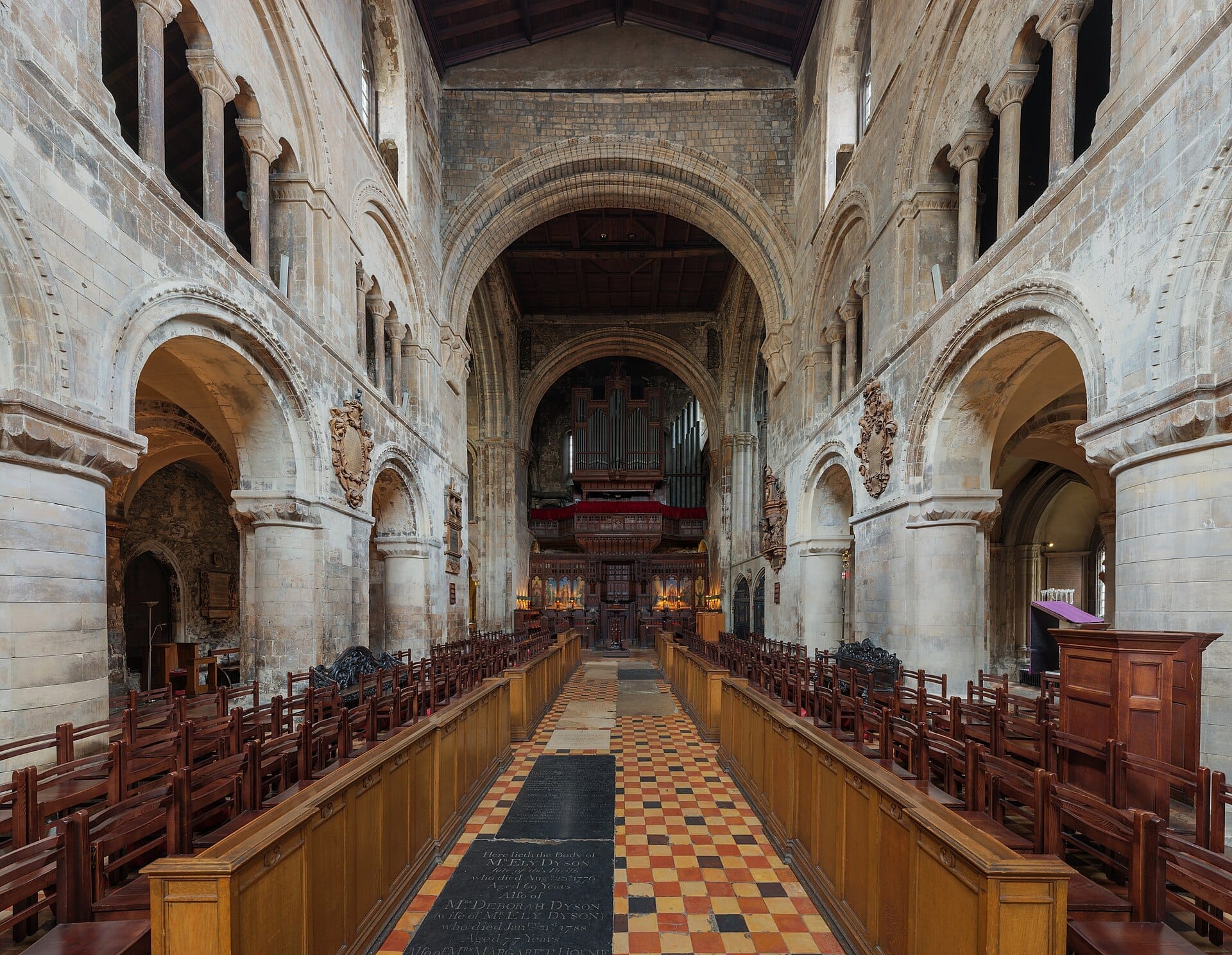
What Is St Bartholomew the Great?
The Priory Church of St Bartholomew the Great stands on West Smithfield in the City of London and holds a singular distinction: it is London's oldest parish church, with a continuous history of Christian worship stretching back over 900 years. Founded in 1123 by Rahere, a courtier of King Henry I (son of William the Conqueror), the church predates much of London's medieval fabric and survived the Great Fire of 1666, Zeppelin raids during World War I, and the Blitz in World War II. Walking through its doors feels less like entering a tourist attraction and more like stepping into a building that has simply refused to stop being used.
Unlike many London churches that were rebuilt after 1666 by Christopher Wren, St Bartholomew the Great retains substantial Norman stonework from the twelfth century. The rounded arches, the massive drum piers, the layered triforium gallery above the nave: all of it is medieval. For a city that often wears its history as a decorative overlay, this is the real thing.
💡 Local tip
The church is entered through a Tudor gatehouse on the Smithfield Rotunda, not through a grand west front. The gatehouse itself is fifteenth century and easy to miss if you're walking quickly. Look for the half-timbered structure on West Smithfield.
Arriving at Smithfield: First Impressions
Smithfield is one of London's oldest market districts. The area still hosts Smithfield Meat Market, which means that early-morning visitors (before 9am) will find the surrounding streets busy with wholesale traders, refrigerated lorries, and the particular brisk energy of people who have been at work since 4am. By 10am, when St Bartholomew the Great opens, the market trade is winding down and the area takes on a calmer character.
The approach to the church is through a narrow Tudor gatehouse that leads into a small churchyard. The transition is sudden: within a few steps of passing through the gate, the noise of the City drops away. The churchyard smells of stone and old grass. The exterior of the church is modest in scale compared to St Paul's Cathedral a few hundred metres to the southeast, but it has a weight and solidity that large Gothic structures rarely possess. The Norman stonework is rough and darkened by centuries of London air.
Smithfield sits at the edge of the City of London's financial core. If you're planning a broader day in the area, St Paul's Cathedral is a short walk south, and the narrow lanes around the City of London reward slow exploration on foot.
Tickets & tours
Hand-picked options from our booking partner. Prices are indicative; availability and final rates are confirmed when you complete your booking.
London history tour with The Great Plague Exploration Game
From 10 €Instant confirmationFree cancellationTickets for Come Alive, the greatest showman circus spectacular London
From 98 €Instant confirmationThe Monument of the Great Fire of London audio-guided tour
From 5 €Instant confirmationSoho Instagram a self-guided walking tour to top photo spots
From 6 €Instant confirmationFree cancellation
Inside the Church: Architecture and Atmosphere
The interior is dominated by the Norman nave, which feels proportionally different from later Gothic work. The arches are round rather than pointed, the piers are thick and circular, and the overall effect is of mass and enclosure rather than vertical aspiration. Sunlight enters through relatively small windows, giving the interior a quality of light that changes significantly through the day: warmer and more golden in the morning when the sun reaches the south windows, cooler and more diffuse by mid-afternoon.
The choir, which dates largely to the twelfth and early thirteenth centuries, is the oldest surviving part of the original Augustinian priory church. Rahere's tomb stands here, a fifteenth-century structure that marks the founder's resting place with painted effigies. The Lady Chapel at the east end has its own quiet character, and the oriel window on the north side of the choir, added in the sixteenth century, is an unusual intrusion of domestic architecture into a religious space.
The acoustics deserve mention. Even with a handful of visitors present, sound behaves differently here than in modern buildings. Footsteps, whispered conversation, the creak of a wooden chair: all carry with a slight resonance that gives the space a quality of attentive silence. If you arrive on a weekday morning shortly after opening, you may have the nave almost entirely to yourself.
ℹ️ Good to know
St Bartholomew the Great has been used as a film location, most notably in Four Weddings and a Funeral (1994) and Shakespeare in Love (1998). The film recognition occasionally brings visitors who are more interested in the on-screen association than the history, but the church absorbs this quietly.
Historical Depth: Nine Centuries in One Building
Rahere founded the church in 1123 as part of an Augustinian priory, reportedly after a vision during a pilgrimage to Rome. The priory was dissolved during Henry VIII's Reformation in the sixteenth century, and much of the original complex was demolished or repurposed. The nave of the priory church, which was open to lay worshippers, became the parish church that survives today. The Lady Chapel was used as a printing house for a period, and Benjamin Franklin reportedly worked as a printer's apprentice in the building during the early eighteenth century, though the specific details of this association are often repeated without precise sourcing.
The church's survival through the Great Fire of 1666 was largely a matter of geography: the fire's main path ran to the south and east of Smithfield. Its survival through two World Wars reflects both its solid Norman construction and a degree of luck. The building that visitors enter today is not a Victorian restoration or a modern reconstruction. It is substantially the building that Rahere's community raised in the twelfth century, altered and repaired over the centuries but never fundamentally rebuilt.
For context on how this church fits into London's broader medieval and post-medieval religious history, Temple Church (founded by the Knights Templar in 1185) and Southwark Cathedral are both worth visiting on the same day.
Visiting in Practice: Hours, Access, and What to Expect
The church is open Monday to Saturday from 10:00 to 17:00, and on Sundays between services (approximately 12:30 to 16:00 according to current visitor information, though this can shift around service times). There is no admission charge for general visitors. As an active parish church, services are held regularly, and parts of the building may be closed during worship. The church's official website lists current service times and any closures.
For step-free access, use the path to the west door from the Tudor gatehouse on West Smithfield, rather than the main entrance. The interior has uneven stone flooring in some sections, so footwear with grip is sensible in wet weather. The church is not a large building and does not require extensive planning: most visitors cover the full interior in 30 to 45 minutes, though those with a strong interest in medieval architecture or church history may spend longer.
⚠️ What to skip
The church is closed to general visitors during services and on some special occasions. It is worth checking the official website at greatstbarts.com before visiting, especially around bank holidays and religious festivals.
Photography is generally permitted inside for personal use, but the interior is relatively dim. A camera that handles low-light conditions well will produce significantly better results than a standard phone camera in the nave and choir. Flash is not appropriate in an active place of worship.
When to Visit and How to Combine with Nearby Attractions
Weekday mornings between 10:00 and 12:00 are consistently the quietest time to visit. Weekend afternoons bring more foot traffic, partly from tourists covering the nearby Barbican or St Paul's, and partly from film-location enthusiasts. Midweek visits in autumn and winter offer the most atmospheric experience: low light through the Norman windows, few other visitors, and the sound of the City entirely absent inside the walls.
St Bartholomew the Great sits within easy walking distance of several other significant sites. The Barbican complex is a few minutes north. Charterhouse, another medieval foundation with a similarly long history, is nearby. Borough Market and the South Bank are a 15-20 minute walk across the river.
If you are building a day around historic London on foot, consider pairing this with the Museum of London Docklands or a walk through Leadenhall Market to cover different layers of the City's history. For a broader itinerary, the London 3-day itinerary places St Bartholomew the Great well within a City-focused day.
Insider Tips
- Arrive within the first 20 minutes of opening on a weekday and you will often have the Norman choir entirely to yourself. This is rare for any significant historic building in central London.
- The Tudor gatehouse on West Smithfield is the main entrance, but it blends into the surrounding streetscape. Look for the half-timbered upper storey above an archway, not a grand church portal.
- The church hosts lunchtime and evening concerts periodically. The Norman acoustics make these exceptional value, and many are free or low-cost. Check the events calendar on the official website before your visit.
- Smithfield Meat Market is adjacent and operational from the early hours of the morning. If you want to combine a market visit with the church, arrive at the market before 7am and return to St Bartholomew the Great when it opens at 10am.
- The churchyard between the gatehouse and the west door is a genuine patch of calm in one of London's most pressured financial districts. It is accessible even when the church interior is closed, and worth a few minutes' pause on its own terms.
Who Is St Bartholomew the Great For?
- History and architecture enthusiasts who want genuine medieval fabric rather than Victorian restoration
- Visitors looking for silence and contemplative space in the middle of the City of London
- Photographers interested in Norman Romanesque interiors and low-light ecclesiastical subjects
- Anyone building a walking itinerary through the historic City combining religious, financial, and cultural heritage
- Travellers who have already covered the major tourist churches (Westminster Abbey, St Paul's) and want something less crowded and more ancient in character
Nearby Attractions
Other things to see while in The City of London:
- Leadenhall Market
Leadenhall Market is a Grade II-listed Victorian covered market in the heart of the City of London, built in 1881 over a site used for commerce since Roman times. With its ornate wrought-iron and glass roof, cobbled walkways, and mix of wine bars, restaurants, and independent shops, it's one of the Square Mile's most atmospheric stops — and it won't cost you a penny to walk through.
- Millennium Bridge
The London Millennium Footbridge is a sleek steel pedestrian span linking the City of London to Bankside, connecting St Paul's Cathedral on the north bank to Tate Modern and Shakespeare's Globe on the south. Free to cross at any hour, it offers some of the most photographed views of the Thames and a front-row look at two of London's most contrasting skylines.
- Sky Garden
Perched 155 metres above the City of London inside the Walkie Talkie building, Sky Garden offers panoramic views across the Thames, St Paul's, and the surrounding skyline — at no cost to visitors. The catch: tickets must be booked in advance, and they go fast.
- St Dunstan in the East
St Dunstan-in-the-East Church Garden is one of the City of London's most quietly extraordinary spaces: a free public garden growing inside the roofless ruins of a medieval church, framed by a surviving Christopher Wren steeple and walls draped in ivy and climbing plants. It takes less than an hour to visit, costs nothing to enter, and offers a rare kind of stillness in one of the world's densest financial districts.