Southwark Cathedral: One of London's Oldest Gothic Churches
Standing beside London Bridge on the South Bank, Southwark Cathedral is one of London's oldest and most atmospheric places of worship. Entry is free, the architecture spans nearly a millennium, and the surrounding streets put you steps from Borough Market and the Thames.
Quick Facts
- Location
- London Bridge, London SE1 9DA — south end of London Bridge, South Bank
- Getting There
- London Bridge (Jubilee & Northern lines, National Rail) — 3-minute walk
- Time Needed
- 45 minutes to 1.5 hours depending on depth of interest
- Cost
- Free entry; donations welcomed. Check the official site for any ticketed events.
- Best for
- Architecture lovers, history enthusiasts, quiet reflection away from South Bank crowds
- Official website
- cathedral.southwark.anglican.org
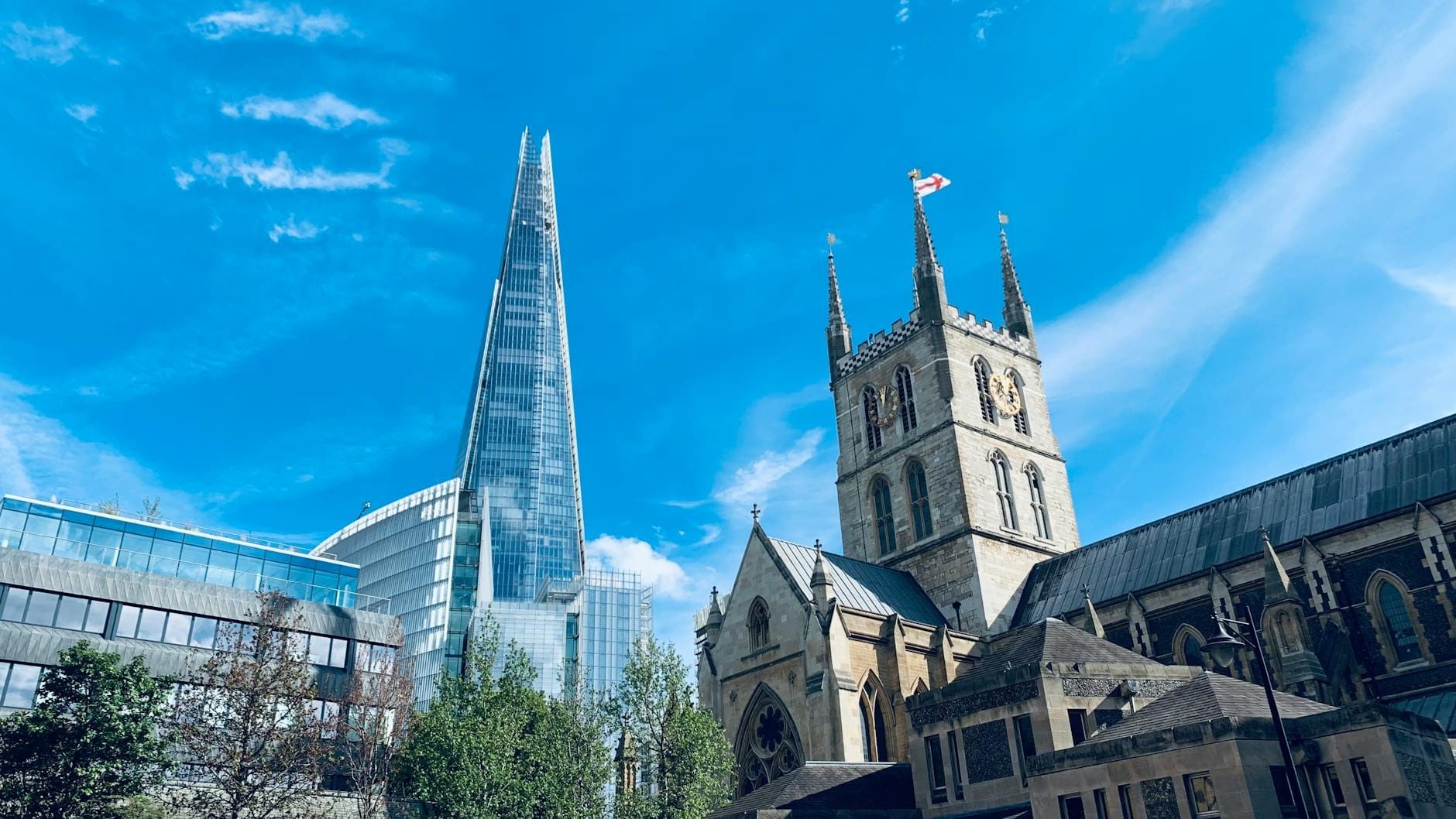
What Southwark Cathedral Actually Is
The Cathedral and Collegiate Church of St Saviour and St Mary Overie — known universally as Southwark Cathedral — is one of the oldest Gothic church buildings in London and the Mother Church of the Diocese of Southwark. It stands at the southern end of London Bridge, on the site of a religious community that has existed here since at least the early 12th century. The priory of St Mary Overie was founded on this spot in 1106, making the ground beneath your feet nearly a thousand years of continuous sacred use.
Despite its age, Southwark Cathedral rarely appears on London's front-page attraction lists. That's partly because it earned cathedral status only in 1905, when the Diocese of Southwark was created, and partly because it sits in the shadow of bigger draws: the Shard a few hundred metres away, Borough Market immediately beside it, and Tower Bridge visible from the churchyard. For the observant traveller, this is an advantage. You can explore one of the city's most architecturally rich religious buildings at a measured pace, without the queues or crowds that besiege Westminster Abbey or St Paul's.
💡 Local tip
Entry is free, but the Cathedral is also an active place of daily worship. Parts of the nave may be cordoned off during morning and midday services. Check the Cathedral's website for the day's schedule before you arrive.
A Brief History Worth Knowing Before You Enter
The site's first recorded priory burned down in the Great Fire of Southwark in 1212 — a separate catastrophe from the more famous 1666 Great Fire that destroyed much of the City to the north. The church was rebuilt, modified through the medieval period, and survived the Dissolution of the Monasteries under Henry VIII, after which it became the parish church of St Saviour's. For centuries it served as the spiritual centre of a riverside community that included Elizabethan theatres, plague pits, and the workshops of the medieval city.
The Shakespeare connection is one of the cathedral's most-cited selling points, and it holds up. John Harvard, who emigrated to Massachusetts and whose bequest helped found Harvard College, was baptised here in 1607. Edmund Shakespeare, younger brother of William, was buried here in 1607. There is a memorial to William Shakespeare himself inside, making Southwark Cathedral an authentic literary landmark rather than a manufactured one. The theatrical link is no coincidence: the Globe Theatre and the Rose Theatre operated barely a street away during the Elizabethan era, and many of their players, patrons, and writers lived, worked, and died in this parish.
The building was elevated to cathedral status in 1905, and underwent a significant renovation and expansion completed in 2000, which added a visitor centre, refectory, library, and shop along its northern flank. These modern additions are thoughtfully integrated and do not undermine the medieval core.
Tickets & tours
Hand-picked options from our booking partner. Prices are indicative; availability and final rates are confirmed when you complete your booking.
London Top Sights Walking Tour with Visit to St Paul's Cathedral
From 110 €Instant confirmationFree cancellationSt Paul's Cathedral and London Top Sights Private Tour
From 148 €Instant confirmationFree cancellationSt Paul's Cathedral and Westminster Private Tour
From 148 €Instant confirmationFree cancellationHarry Potter Guided Tour with Thames Cruise and St Paul's Cathedral
From 106 €Instant confirmationFree cancellation
The Architecture: What to Look For Inside
The nave is the most immediately striking space. The Gothic vaulting overhead is relatively modest in scale compared to the great English cathedrals at Canterbury or York, which actually works in its favour: the proportions feel human and coherent rather than overwhelming. The stone retains a coolness even in summer, and the light filters in at angles that shift noticeably through the day.
Look for the Harvard Chapel, dedicated to John Harvard, with stained glass depicting scenes from early colonial Massachusetts. The Shakespeare Memorial — a reclining alabaster figure of the playwright set against a backdrop of scenes from his plays — sits in the south aisle. It was installed in 1915 and is surprisingly affecting: not a grandiose monument, but a carefully considered tribute in a place that actually knew the man's family.
The retrochoir, at the east end beyond the choir screen, is among the finest Early English Gothic interiors in London, dating primarily to the early 13th century. The columns here are slender clusters of Purbeck marble, polished dark grey against pale stone, and they give the space an elegance that the larger nave lacks. If you only have twenty minutes, spend most of them here.
ℹ️ Good to know
Photography is generally permitted in the Cathedral. If you plan to purchase a souvenir guide, a small charge may apply — check on arrival. Tripods and flash photography during services are not appropriate.
How the Experience Changes Through the Day
Mornings, particularly on weekdays, are the quietest time to visit. By 9am the Cathedral is open and mostly attended by people seeking a few minutes of quiet before the working day. The light through the east window at this hour is direct and warm, landing across the choir stalls in a way that afternoon light does not replicate. If you want the retrochoir to yourself, arrive before 10am.
Late morning and lunchtime bring a surge of visitors from Borough Market, which operates just outside the cathedral wall. The smell of coffee and bread drifts in through the north entrance when the doors are open. This is a pleasant combination for some people; for others seeking silence and contemplation, it's a reminder that Southwark Cathedral exists in busy urban surroundings rather than in a cloistered precinct.
Afternoons see the highest footfall, particularly on weekends. The cathedral manages this relatively well: the space is large enough that it rarely feels claustrophobic, and the layout means visitors naturally disperse across different chapels and aisles. Late afternoon light from the west is the most atmospheric for photography of the nave. By early evening, the building quietens again, and if there is a choral evensong scheduled — which does happen on certain days — it is one of the better free musical experiences available in London.
Getting There and the Surrounding Area
London Bridge station is the obvious arrival point: it serves both the Jubilee and Northern lines on the Underground, plus a large number of National Rail services from South London and beyond. The walk from the main station exit to the cathedral takes about three minutes, passing the south end of London Bridge itself. If you are already walking London Bridge, the cathedral is the natural first stop on the south bank side.
The immediate neighbourhood rewards time on foot. Borough Market operates directly outside the cathedral's north and west entrances, and on market days (Thursday through Saturday primarily, with limited trading on other days) the streets smell of cheese, bread, coffee, and spices. This proximity makes it easy to combine a visit to the Cathedral with an hour at the market — or to use the Cathedral as a quiet retreat from the market's noise.
Walking west along the South Bank from the cathedral takes you past the Shakespeare's Globe and Tate Modern within about fifteen minutes. This stretch of riverside is one of London's most rewarding walks and requires no planning beyond comfortable shoes. For a broader picture of how to spend time in this area, the South Bank neighbourhood guide covers what else is nearby.
Practical Considerations
Opening hours vary by day and can be affected by services, private events, and seasonal schedules. The Cathedral publishes its current hours on its official website, and checking before you visit is worthwhile rather than just a precaution: arriving during a closed period is more likely here than at larger attractions with extended commercial hours.
The Cathedral is an active place of worship, not a museum. Services take place daily, and during these times access to parts of the building is restricted or requires quiet and respectful behaviour. If you arrive during a service, you are generally welcome to remain in the nave but should not wander through restricted areas. This is not a limitation so much as a reminder of what the building is actually for.
For visitors with mobility concerns, the Cathedral states it offers an open and inclusive welcome. Specific accessibility requirements, including step-free access details and accessible toilet availability, should be confirmed directly with the Cathedral ahead of your visit, as arrangements can change.
⚠️ What to skip
The area around London Bridge station and Borough Market is one of the busiest pedestrian zones in London on Friday and Saturday afternoons. If you have limited mobility or are travelling with young children, plan your visit for a weekday morning to avoid congestion.
Visitors spending a full day on the South Bank may find the 3-day London itinerary a useful framework for fitting Southwark Cathedral into a broader schedule without backtracking.
Insider Tips
- Attend choral evensong on days when it is scheduled — it is free, lasts under an hour, and the acoustic quality in the choir and retrochoir is exceptional. Check the Cathedral's events calendar in advance.
- The Cathedral garden on the east side offers a bench-lined courtyard that is peaceful even when Borough Market is at full noise. Most visitors walk straight past it.
- The refectory cafe inside the Cathedral serves straightforward food and coffee at reasonable prices. On crowded market days, it is often less busy than the Borough Market stalls immediately outside.
- The retrochoir dates to the early 13th century and is among the oldest surviving parts of the building. Most visitors spend their time in the nave and miss it entirely — walk past the choir screen.
- If you are visiting on a clear day, exit via the north door after your visit and walk the short distance to the Thames riverbank. The view back toward the Cathedral with the Shard rising behind it is one of the more striking urban compositions on this stretch of the river.
Who Is Southwark Cathedral For?
- Architecture and medieval history enthusiasts who want depth without queues
- Travellers combining a morning at Borough Market with a cultural visit
- Visitors seeking free, substantive cultural experiences on a budget
- Literature and Shakespeare fans following Elizabethan London's geography
- Anyone wanting a quiet space close to the South Bank's busiest streets
Nearby Attractions
Other things to see while in South Bank:
- Battersea Park
Battersea Park is a 200-acre Victorian park on the south bank of the River Thames, offering free entry, formal gardens, a children’s zoo, riverside paths, and a notable Buddhist Peace Pagoda. Less crowded than Hyde Park yet surprisingly rich in things to do, it rewards a slow, unhurried visit at any time of year.
- Battersea Power Station
Once derelict for nearly three decades, Battersea Power Station reopened in October 2022 as one of London's most dramatic mixed-use destinations. Entry to the main building and public spaces is free, while the glass chimney lift, Lift 109, offers one of the city's most unusual viewpoints. Here is everything you need to plan a visit.
- Borough Market
Borough Market has stood near London Bridge for around 1,000 years, making it one of the oldest food trading sites in Britain. Today it draws traders selling everything from aged cheeses and cured meats to freshly baked bread and street food from around the world. Entry is free, and the Victorian market buildings add a sense of occasion that most food halls simply cannot match.
- Imperial War Museum London
The Imperial War Museum London is one of the city's most thoughtfully constructed free attractions, covering conflict from the First World War to the present day. Housed in a former psychiatric hospital, it combines large-scale hardware, deeply personal testimony, and unflinching Holocaust galleries into an experience that is hard to shake.