Battersea Power Station: The Complete Visitor Guide
Once derelict for nearly three decades, Battersea Power Station reopened in October 2022 as one of London's most dramatic mixed-use destinations. Entry to the main building and public spaces is free, while the glass chimney lift, Lift 109, offers one of the city's most unusual viewpoints. Here is everything you need to plan a visit.
Quick Facts
- Location
- Circus Road West, Nine Elms, London SW11 8DD
- Getting There
- Battersea Power Station station (Northern line, Zone 1) — directly on-site. River bus: Uber Boat by Thames Clippers to Battersea Power Station Pier.
- Time Needed
- 2–4 hours for the main building, longer if dining or riding Lift 109
- Cost
- Free entry to public areas and shops. Lift 109 and some events are ticketed — check the official site for current prices.
- Best for
- Architecture enthusiasts, shoppers, design lovers, families, and anyone who wants a river walk with real industrial history
- Official website
- batterseapowerstation.co.uk
What Battersea Power Station Actually Is
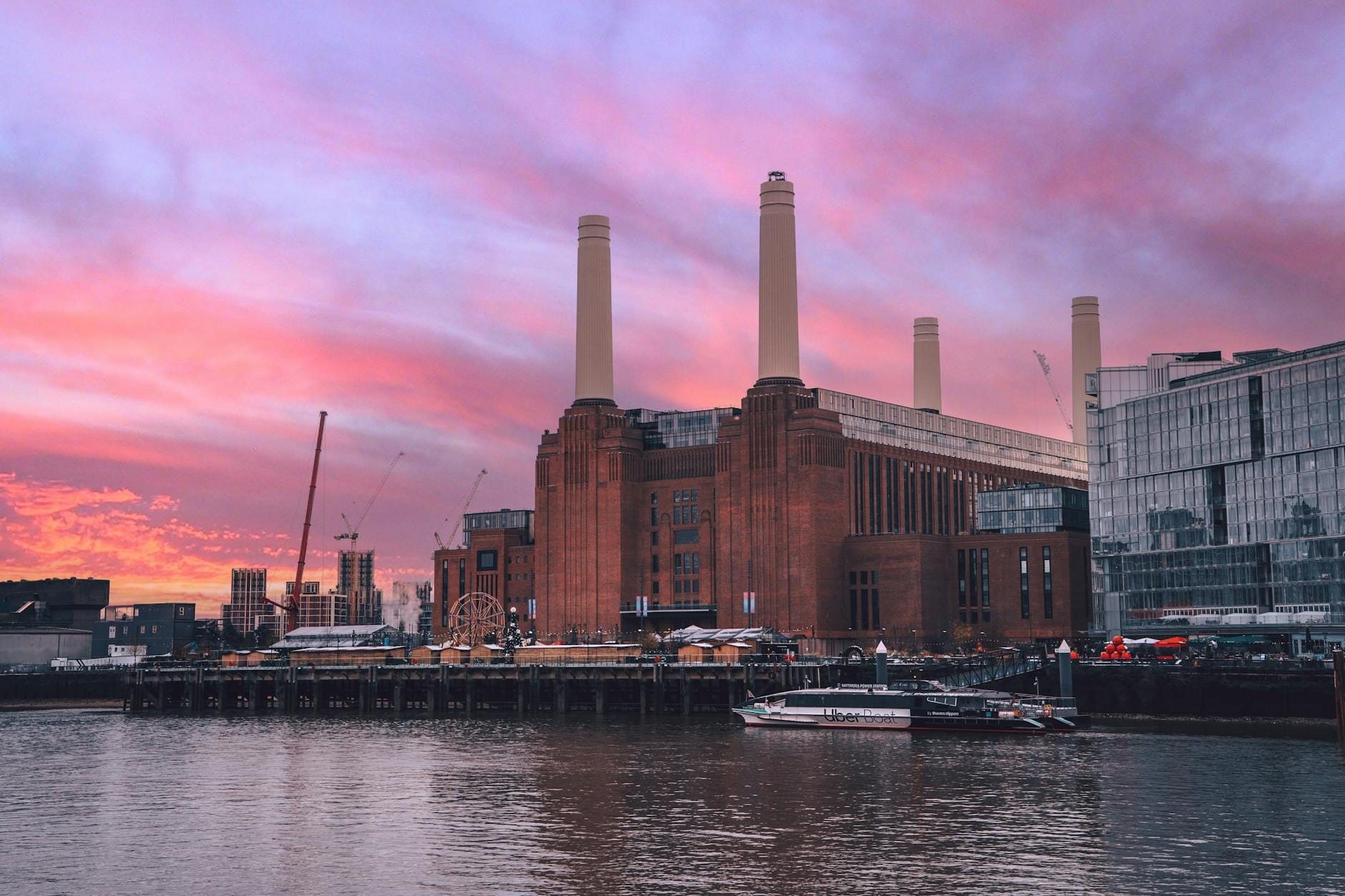
Battersea Power Station is a Grade II* listed former coal-fired electricity generating station on the south bank of the River Thames. It is one of the largest brick buildings in Europe and, with its four distinctive white chimneys rising about 50 metres above the riverbank, one of the most recognisable industrial structures anywhere in the world. At its peak, it supplied roughly one fifth of London's electricity, powering the Houses of Parliament and Buckingham Palace among many other buildings.
The station was built in two phases: Battersea A between 1929 and 1935, and Battersea B between 1937 and 1955, giving the building its distinctive symmetrical profile. The architect Giles Gilbert Scott — who also designed Waterloo Bridge and the iconic red telephone box — oversaw the art deco detailing, including the fluted chimneys and the intricate interior brickwork that makes the turbine hall feel more like a cathedral than a factory floor. The station was decommissioned in 1983 and sat largely unused for nearly thirty years, surviving several failed redevelopment attempts before a Malaysian-led consortium finally delivered a full restoration. On 14 October 2022, it opened to the public as a mixed-use destination combining shops, restaurants, offices, event spaces, and apartments.
ℹ️ Good to know
Entry to the Power Station building and its public spaces is free. You do not need a ticket to walk in, browse the shops, or explore the turbine hall. Only specific experiences like Lift 109 are ticketed.
The Turbine Hall: The Architectural Heart of the Visit
Walking into the main turbine hall for the first time is arresting. The space is enormous — ceilings soar overhead, original control panels line the walls in dark green enamel and chrome, and the scale of the industrial infrastructure that once hummed with electricity is still palpable despite the gleaming new retail units below. The hall has been carefully restored rather than hollowed out: exposed brickwork, original machinery, and period signage have been retained alongside the contemporary fit-out.
The sound inside the turbine hall is distinctive. There is a low ambient echo from the hard surfaces that makes conversations carry, and during busy weekend afternoons the background hum of the crowd fills the space differently from any conventional shopping centre. Early on a weekday morning, before the retail units hit full stride, the scale of the architecture becomes even more apparent — you can stand in relative quiet and take in the engineering without the weekend foot traffic.
Photography here is rewarding at any time, but the best light enters through the high south-facing windows in the mid-morning. If you are interested in the broader context of London's industrial and architectural heritage, the Museum of London Docklands offers a useful counterpart further east along the river.
Tickets & tours
Hand-picked options from our booking partner. Prices are indicative; availability and final rates are confirmed when you complete your booking.
Battersea Power Station chimney lift experience
From 0 €Instant confirmationBattersea Power Station chimney lift experience
From 0 €Instant confirmationBattersea Power Station chimney lift experience
From 0 €Instant confirmationWarner Bros. Studio Tour London - The Making of Harry Potter and Oxford guided tour
From 157 €Instant confirmationFree cancellation
Lift 109: Riding to the Top of a Chimney
Lift 109 is the standout ticketed experience inside the building. A glass elevator travels up through one of the north-facing chimneys to an open-air viewing platform 109 metres above ground level, giving a panorama that encompasses central London to the north, the river curving toward Chelsea Bridge and Vauxhall, and the wider spread of south London stretching away behind you. On a clear day the view extends to the City's cluster of towers and beyond.
The ride itself is short — the ascent takes under two minutes — and the platform at the top is exposed to the elements, so wind and cold can be factors even in summer. Bring an extra layer if you are visiting outside of July and August. The queue for Lift 109 builds noticeably from late morning on weekends; booking a timed slot online in advance avoids the wait. Check current ticket prices and availability at the official site, as they vary by time slot and season.
💡 Local tip
For the clearest London skyline view from Lift 109, visit on a morning with good visibility rather than after rain, when haze often lingers. Weekday slots in the late morning tend to be quieter than weekend afternoons.
Shops, Food, and the Wider Development
The retail mix inside Battersea Power Station leans toward premium and independent. You will find design-led homeware, fashion, and food alongside a handful of well-known international names. The ground floor of the turbine hall hosts the densest concentration of outlets, while upper levels contain restaurants, a cinema, and a rooftop terrace. Shops are typically open Monday to Saturday 10:00 to 21:00, and Sunday 12:00 to 18:00, though individual cafes, bars, and restaurants frequently open earlier or close later than the retail hours.
The Circus West Village, on the river-facing western side of the site, predates the main power station opening and has a more settled neighbourhood feel. Its ground-floor restaurants face the Thames path, and on warm evenings the riverside terrace fills with people eating and watching the river traffic. This stretch of the Thames Path connects directly westward toward Chelsea Bridge and eastward toward Vauxhall, making the site a natural stop on a longer riverside walk.
If you are building a wider day around the river, the River Thames guide covers the best walking routes and riverboat connections in both directions.
How to Get There
Getting to Battersea Power Station is now straightforward thanks to the Northern line extension that opened in 2021. Battersea Power Station station sits directly beneath the development and is in Zone 1, meaning it costs the same to reach as any Zone 1 tube station using an Oyster card or contactless payment. From central London, the journey from Bank takes around 20 minutes. From King's Cross St Pancras, allow roughly 25–30 minutes with a change at Kennington.
The river bus is the most scenic option. Uber Boat by Thames Clippers serves Battersea Power Station Pier at Circus West Village, and the journey from Embankment takes approximately 20 minutes. This route offers a proper view of the power station from the water — the approach from the Thames gives you the full four-chimney elevation that photographs so well. Bus routes 156, 344, and 436 also stop at the development, and Battersea Park and Queenstown Road National Rail stations are each within a 10-minute walk.
💡 Local tip
Arrive by river bus if your schedule allows. The approach from the Thames gives you the full architectural elevation of all four chimneys before you step ashore — a very different arrival from the Tube.
When to Visit and What to Expect at Different Times
Weekday mornings before 11:00 are the quietest window. The turbine hall and riverside areas feel spacious, the cafes are uncrowded, and the building's scale registers more clearly without the weekend volume of visitors. If Lift 109 is on your list, a midweek morning slot is the most relaxed way to do it.
Weekend afternoons, particularly on Saturdays between noon and 17:00, are the busiest period. The development draws a large local crowd from the surrounding residential neighbourhoods alongside tourists, and the main food and retail areas can feel congested. That said, the overall footprint of the site is large enough that you can usually find quieter corridors and external walkways even when the central areas are at capacity.
The site hosts regular events — markets, pop-ups, film screenings, and seasonal installations — that change the atmosphere considerably. Checking the events calendar on the official site before you visit is worthwhile, both to catch something interesting and to avoid unexpectedly large crowds on particular evenings.
If you are planning a broader trip and weighing up how this fits into a longer London itinerary, the 3-day London itinerary includes practical sequencing advice for combining Battersea with other major sites.
Worth Knowing: Is It Worth Your Time?
Battersea Power Station is worth visiting for its architecture alone. The turbine hall restoration is impressive, and the building's history — supplying electricity to London's most famous institutions for half a century, then standing derelict for three decades before this transformation — gives it a weight that a conventional shopping destination simply does not have. As a piece of adaptive reuse, it is one of the most ambitious projects completed in London in recent years.
That said, it is primarily a retail and dining destination, and if that is not what you are looking for, the experience is thinner than the architecture promises. The shops skew expensive, and outside of Lift 109 there are no dedicated museum-style exhibits about the station's history (though heritage information is woven into display panels throughout the building). Visitors who want a deep dive into the history may leave wanting more narrative context than the format currently provides.
Families with children generally find it well-suited to a visit: the riverside space is open and walkable, the indoor areas are sheltered on wet days, and Lift 109 tends to be a genuine hit with older children. Those looking for a purely cultural or museum experience should calibrate expectations accordingly. The power station is not a museum — it is a building that has become a neighbourhood, and it works best when you approach it on those terms.
For a more curated museum experience in the surrounding area, the Tate Modern is a 20-minute river bus ride away and offers free entry to its permanent collection.
Insider Tips
- The Northern line platforms at Battersea Power Station station are worth a look even if you arrive by another route — they are among the deepest and most visually striking on the entire Underground network, lined with art deco-inspired copper tiling.
- The riverside walkway on the western edge of the development (along Circus West Village) is publicly accessible at all hours, not just during shop opening times. An early-morning or evening walk along the Thames path here, with the illuminated chimneys reflected in the water, is a very different experience from the daytime retail atmosphere.
- Some upper levels of the power station include publicly accessible terraces with river views that can be less crowded than Lift 109 and are generally free to access during opening hours — worth checking whether it is open on the day you visit.
- If you are arriving by river bus, sit on the port (left) side of the boat traveling westward from central London for the best approach views of all four chimneys.
- Weekday lunch slots at the Circus West Village restaurants are noticeably easier to book at short notice than weekend dinner tables — the local office worker crowd thins out by around 14:00.
Who Is Battersea Power Station For?
- Architecture and design enthusiasts interested in one of Europe's great industrial buildings
- First-time visitors to London wanting an accessible, free-entry destination with strong visual impact
- Families looking for a weather-proof indoor space with good food options and a memorable height experience via Lift 109
- Shoppers seeking a premium retail environment with a very different atmosphere from Oxford Street
- Anyone building a Thames riverside walk into their itinerary, as the site connects naturally to the river path in both directions
Nearby Attractions
Other things to see while in South Bank:
- Battersea Park
Battersea Park is a 200-acre Victorian park on the south bank of the River Thames, offering free entry, formal gardens, a children’s zoo, riverside paths, and a notable Buddhist Peace Pagoda. Less crowded than Hyde Park yet surprisingly rich in things to do, it rewards a slow, unhurried visit at any time of year.
- Borough Market
Borough Market has stood near London Bridge for around 1,000 years, making it one of the oldest food trading sites in Britain. Today it draws traders selling everything from aged cheeses and cured meats to freshly baked bread and street food from around the world. Entry is free, and the Victorian market buildings add a sense of occasion that most food halls simply cannot match.
- Imperial War Museum London
The Imperial War Museum London is one of the city's most thoughtfully constructed free attractions, covering conflict from the First World War to the present day. Housed in a former psychiatric hospital, it combines large-scale hardware, deeply personal testimony, and unflinching Holocaust galleries into an experience that is hard to shake.
- London Bridge
London Bridge is the oldest river-crossing site in London, with roots stretching back to Roman times. Free to walk, open to traffic and pedestrians at all hours, and flanked by some of the city's best riverside attractions, it rewards those who pause long enough to understand what they're standing on.