Shakespeare's Globe: The Complete Guide to London's Living Theatre
Shakespeare's Globe is a faithful reconstruction of the 1599 open-air playhouse where Shakespeare's company performed, sitting on Bankside about 230 metres from the original site. Today it operates as both a working theatre and a cultural education centre, offering performances from late April through October in the open-air Globe and winter seasons in the indoor Sam Wanamaker Playhouse. Whether you are coming to stand in the yard as a groundling or to watch from a cushioned gallery seat, this guide covers everything you need to know before you go.
Quick Facts
- Location
- 21 New Globe Walk, Bankside, London SE1 9DT
- Getting There
- London Blackfriars, Southwark, London Bridge (all within ~15 min walk); Bankside Pier for river boat
- Time Needed
- 1.5–2 hrs for a tour; 2.5–3.5 hrs for a full performance
- Cost
- Ticket prices vary by production and seating; yard (standing) tickets are the most affordable option. Check the official site for current prices.
- Best for
- Theatre lovers, history enthusiasts, architecture fans, literary travellers
- Official website
- www.shakespearesglobe.com
What Shakespeare's Globe Actually Is
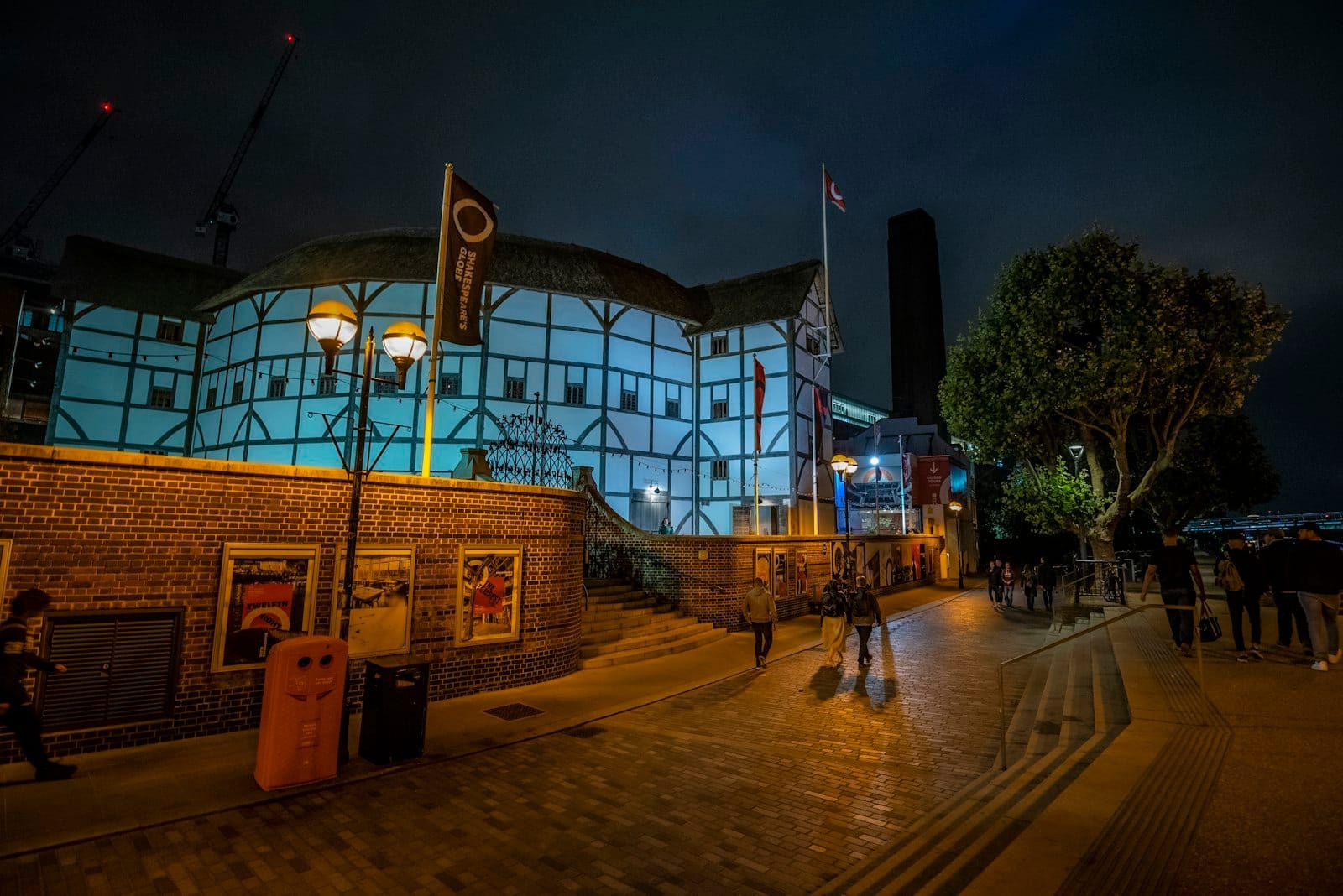
Shakespeare's Globe is not a museum pretending to be a theatre. It is a working, producing theatre that stages full professional productions every season in a building constructed to the same principles as the original 1599 Globe. That original playhouse, built by the Lord Chamberlain's Men on Bankside, was where plays including Hamlet, Othello, and King Lear were first performed. It burned down in 1613 when a stage cannon misfired during a performance of Henry VIII, was rebuilt, and was eventually closed by the Puritans in 1642.
The modern reconstruction opened in 1997, sited approximately 230 metres from where the original stood. It was the life's work of American actor and director Sam Wanamaker, who began campaigning for its revival in the 1970s. The result is a roofless, open-air, circular wooden theatre with a thatched roof over its galleries and an uncovered yard where around 700 groundlings stand for each performance. Total capacity is 1,500.
Alongside the main Globe Theatre, the site includes the indoor Sam Wanamaker Playhouse, a candlelit Jacobean-style theatre that runs its own separate season from late October to early April. The two venues give the organisation a year-round programme, and together they represent the most significant attempt anywhere in the world to understand Shakespeare through performance rather than scholarship alone.
ℹ️ Good to know
The Globe Theatre performance season runs late April to October. The Sam Wanamaker Playhouse season runs late October to early April. Check the official website for the current programme before booking.
The Building: What Makes It Remarkable
From the outside, the Globe looks quietly anachronistic among the concrete and glass of the South Bank. The white lime-washed walls, dark timber frame, and deep thatch of water reed sit directly beside the Thames path. It is one of only two thatched buildings permitted in London, given a special exemption because of its historical significance. The thatch required specific fire-suppression measures to be approved by the City of London.
Step inside and the scale surprises most visitors. The yard is more intimate than photographs suggest, roughly 30 metres in diameter. The three tiers of covered galleries wrap around three sides of the stage, which thrusts out into the yard with no proscenium arch separating performers from the audience. The stage ceiling, called the Heavens, is painted in vivid celestial iconography. During matinees, the whole interior is flooded with natural light from the open roof, which changes the quality of the performance entirely compared to an evening show.
The construction used green oak, lime plaster, and traditional joinery techniques wherever possible, informed by archaeological and documentary research. The first phase of excavation in 1989 revealed remnants of the original Rose Theatre nearby, adding fresh data to the project. The building is both a working hypothesis about Elizabethan theatre architecture and, judged on its own terms, a beautiful structure.
Tickets & tours
Hand-picked options from our booking partner. Prices are indicative; availability and final rates are confirmed when you complete your booking.
Snow globe climb
From 51 €Instant confirmationFree cancellationTour Shakespeare's London with The Secret Society Exploration Game
From 10 €Instant confirmationFree cancellationSoho Instagram a self-guided walking tour to top photo spots
From 6 €Instant confirmationFree cancellationTootbus London by Night: Bus tour
From 32 €Instant confirmationFree cancellation
How a Performance Feels: Morning, Afternoon, and Evening
Matinee performances at the Globe are unlike anything else in London theatre. The open roof means that sunlight shifts during the show, sometimes moving directly across the stage, and clouds can alter the mood of a scene independent of the director's intentions. You hear the city: a river bus passes with a low horn, pigeons land on the thatching, the distant noise of Bankside drifts in. None of this is a problem. It is, in fact, the point. The plays were written for this kind of ambient reality.
Evening performances feel noticeably different. As daylight fades, the stage lanterns take over, giving a warmer, more enclosed atmosphere even though the sky above is still visible. The yard fills with the smell of damp wood and, if the weather has turned, the collective warmth of 700 people standing shoulder to shoulder. On a clear summer evening, it can be lovely. On a wet, cold night in September, it can be uncomfortable.
⚠️ What to skip
The yard is exposed to the weather. Even in summer, bring a light waterproof layer. The Globe does not cancel performances due to rain, and yard tickets do not include shelter. If you want a guaranteed dry seat, book a gallery position.
Standing in the yard as a groundling is the affordable option and also, for many visitors, the most memorable. You are on the same level as the stage and close to the action. Actors frequently step into the yard, address the audience directly, and on some productions involve groundlings in crowd scenes. The social dynamic in the yard is also more relaxed than in seated galleries. People shift, laugh audibly, and react more openly. It feels closer to what the original audience experience might have been than anything you can get from a red velvet seat.
The Sam Wanamaker Playhouse: A Second Theatre Worth Seeking Out
Many visitors to the South Bank do not realise the Sam Wanamaker Playhouse exists as a distinct venue. It is an indoor, candlelit theatre modelled on Jacobean indoor playhouses of the early seventeenth century, with four tiers of wooden galleries and a stage lit by beeswax candles and period-style chandeliers. When the candles are burning and the house lights are low, the atmosphere is extraordinary. Shadows flicker across the carved wooden galleries. The acoustic is tight and dry. The experience is intimate in a way the open-air Globe cannot be.
The Playhouse stages its own productions from late October to early April, often focusing on works by Shakespeare's contemporaries: Webster, Middleton, Ford, Jonson. This is where the organisation takes some of its most interesting programming risks, and where audiences who know the Globe primarily as a summer venue are often surprised by what they find. Capacity is smaller and tickets sell out faster, so advance booking is particularly important here.
Tours, Talks, and the Exhibition
If you are not attending a performance, Shakespeare's Globe offers guided tours of the theatre. Tours run daily subject to rehearsal and performance schedules, so availability varies. The experience gives access to the stage and galleries with commentary on the building's construction, the history of the original Globe, and how the modern company works. On performance days, tours of the Globe Theatre itself may be replaced by tours of the Sam Wanamaker Playhouse, so check the schedule before visiting.
The on-site exhibition, included with theatre tours, covers the archaeology and historical evidence for the original Globe, the campaign to build the reconstruction, and the wider story of Elizabethan theatre in Southwark. It is well designed without being excessive and takes about 45 minutes to move through thoughtfully. For context before a performance, it is worth arriving early to spend time here.
The Globe sits in one of London's most concentrated areas for cultural institutions. Tate Modern is a five-minute walk west along the Thames path, Southwark Cathedral is ten minutes east, and the whole stretch of the South Bank from Waterloo to London Bridge is walkable in under 30 minutes. It rewards combining with a longer riverside day.
Getting There and Practical Logistics
The Globe is accessible from several directions. London Blackfriars station (National Rail and London Underground District and Circle lines) puts you on the north side of the river, with a five-minute walk across the Millennium Bridge. London Bridge station (Northern and Jubilee lines) is about a 10-minute walk west along the Bankside path. Southwark station on the Jubilee line is also within 15 minutes on foot. For a more scenic approach, Uber Boat by Thames Clippers stops at Bankside Pier, which is directly outside the theatre entrance.
If you are combining the Globe with other South Bank attractions, the walk from the London Eye to the Globe along the river takes about 20 minutes and passes Southbank Centre and Tate Modern. The Millennium Bridge, immediately north of the Globe, offers one of the better photo positions of St Paul's Cathedral reflected in the Thames, and is worth a brief detour.
Box office hours vary by day; confirm current hours on the official website. On performance days, the box office opens earlier; confirm hours on the official website. Booking in advance is strongly advised for popular productions and weekend performances, particularly yard tickets for summer Shakespeare, which sell out weeks ahead.
Accessibility provision includes step-free routes into the site, wheelchair-accessible viewing positions, companion seating, hearing enhancement systems, and relaxed and captioned performances for some productions. The Globe publishes detailed access guides on its website, and the box office can advise on specific requirements. The yard is on flat ground but is uncovered and can be physically demanding for a three-hour standing performance.
💡 Local tip
Hire a cushion from the Globe for gallery seats. The wooden benches are hard and a long performance without one is uncomfortable. Cushions are available to hire for a small fee.
Who Should Reconsider This Visit
Shakespeare's Globe is one of London's most rewarding experiences, but it is not the right fit for everyone. If you have limited mobility or cannot stand for long periods, yard tickets are not a practical option. Gallery seats solve this, but bear in mind that sightlines from the upper galleries can be oblique and some benches are narrow. If you have no interest in theatre or literary history and are visiting purely because it appears on a top-ten list, a tour without a performance will likely feel dry. The exhibition is informative, but without seeing a production it is hard to grasp what makes the place significant.
Young children who are not accustomed to live theatre may find three-hour performances, especially in verse, difficult to follow. The Globe does run specific family and education programming, and some productions are more accessible than others. For a family-focused London itinerary, the London with Kids guide has more appropriate starting points for younger visitors.
Insider Tips
- Yard (groundling) tickets are the most affordable way to see a full production and also the most atmospheric. Buy them as early as possible for summer Shakespeare, as they sell out significantly ahead of seated gallery tickets.
- The Sam Wanamaker Playhouse is often overlooked by first-time visitors. If you cannot get tickets to the Globe, or if your visit falls between October and April, the Playhouse is frequently the more interesting theatrical experience of the two.
- Arrive at least 30 minutes before a performance and walk through the free exhibition space if you have not been before. The context it provides makes the production considerably richer.
- The food and drink stands within the yard allow you to eat and drink during performances, which is intentional and period-appropriate. The pre-theatre dining options in the adjacent Bankside area range from quick bites to sit-down restaurants along the river.
- Photography in the yard during performances is generally permitted for personal use without flash. Some productions restrict this, so check the ticketing terms. The pre-show stage in afternoon light, before the house fills, is one of the better architectural photography opportunities in London.
Who Is Shakespeare's Globe For?
- Theatre enthusiasts who want a performance experience unlike any conventional London stage
- Literary and history travellers with a specific interest in the Elizabethan period
- Architecture and craftsmanship visitors interested in traditional building techniques
- Travellers on the South Bank who want to combine a cultural venue with the riverside walk
- Anyone looking for a distinctive London evening or afternoon that goes beyond standard sightseeing
Nearby Attractions
Other things to see while in South Bank:
- Battersea Park
Battersea Park is a 200-acre Victorian park on the south bank of the River Thames, offering free entry, formal gardens, a children’s zoo, riverside paths, and a notable Buddhist Peace Pagoda. Less crowded than Hyde Park yet surprisingly rich in things to do, it rewards a slow, unhurried visit at any time of year.
- Battersea Power Station
Once derelict for nearly three decades, Battersea Power Station reopened in October 2022 as one of London's most dramatic mixed-use destinations. Entry to the main building and public spaces is free, while the glass chimney lift, Lift 109, offers one of the city's most unusual viewpoints. Here is everything you need to plan a visit.
- Borough Market
Borough Market has stood near London Bridge for around 1,000 years, making it one of the oldest food trading sites in Britain. Today it draws traders selling everything from aged cheeses and cured meats to freshly baked bread and street food from around the world. Entry is free, and the Victorian market buildings add a sense of occasion that most food halls simply cannot match.
- Imperial War Museum London
The Imperial War Museum London is one of the city's most thoughtfully constructed free attractions, covering conflict from the First World War to the present day. Housed in a former psychiatric hospital, it combines large-scale hardware, deeply personal testimony, and unflinching Holocaust galleries into an experience that is hard to shake.