London with Kids: The Complete Family Guide to Activities, Tips & Saving Money
London is one of the world's great family destinations, with free world-class museums, royal parks, river adventures, and enough child-friendly attractions to fill a week. This guide cuts through the noise with practical advice on what's worth booking in advance, what's actually free, and how to keep the whole family sane on the Tube.
Plan and book this trip
Tools from our partner Travelpayouts help you compare flights and hotels. If you book through them, we may earn a commission at no extra cost to you.
Flights
Hotels map
TL;DR
- Many of London's best museums, including the Natural History Museum, Science Museum, and British Museum, are free for general entry, but timed tickets are strongly recommended.
- Children under 11 travel free on London buses and trams, and on the Tube, DLR, Overground, and Elizabeth line they usually travel free when accompanied by an adult using Oyster or contactless payment.
- Top paid attractions like the Tower of London, London Eye, and Warner Bros. Studio Tour must be pre-booked online; walk-up availability is limited or nonexistent.
- Visit during term time (not UK school holidays) for shorter queues and, at many attractions, lower prices.
- London's royal parks offer free playgrounds, open space, and wildlife year-round; the Diana Memorial Playground in Kensington Gardens is a standout for younger children.
Free Museums That Will Actually Impress Your Kids
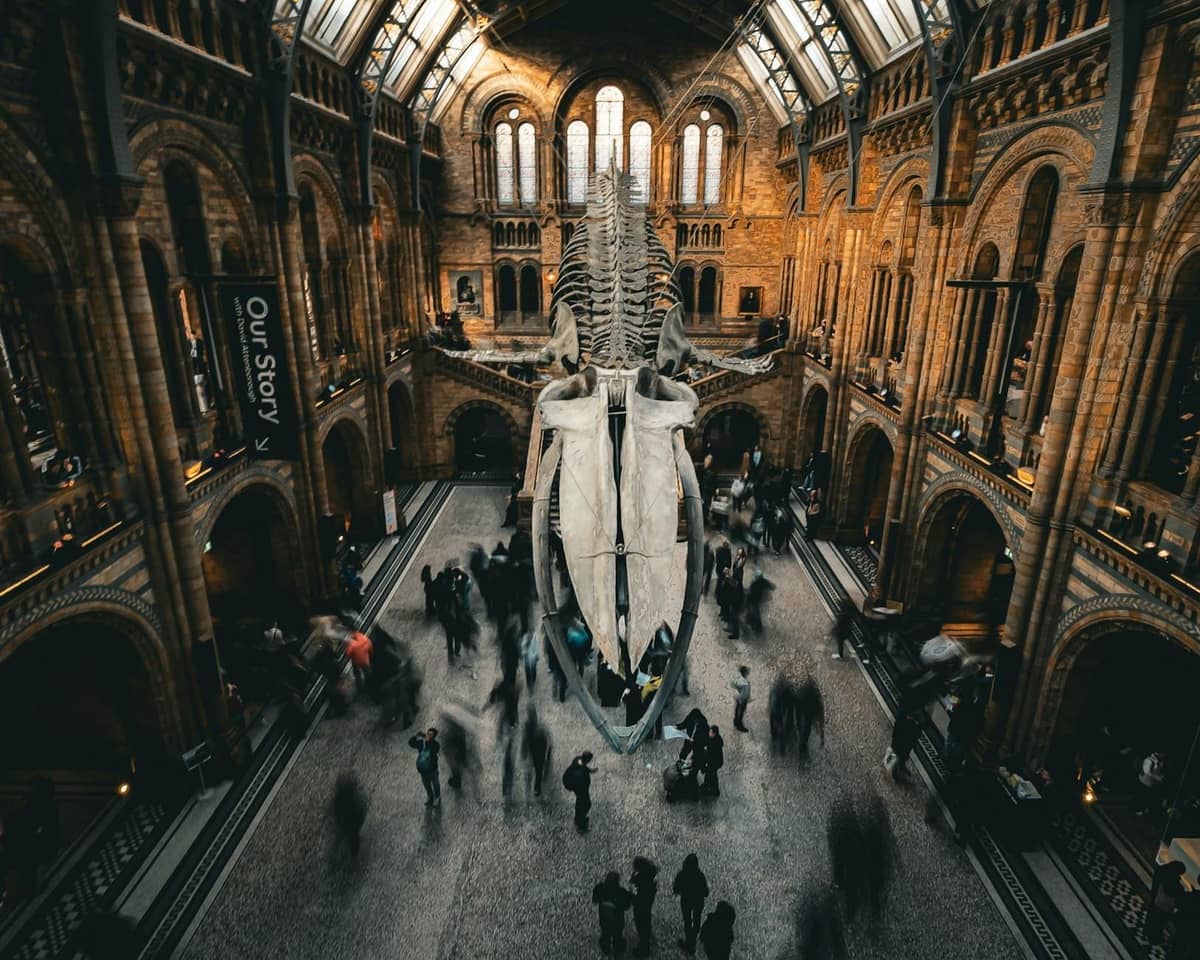
London's concentration of free, world-class museums is unmatched, and several of them are specifically brilliant for children. The cluster in South Kensington is the obvious starting point. TheNatural History Museum has a full-scale blue whale skeleton suspended in the entrance hall, dinosaur fossils, animatronic displays, and an interactive earthquake and volcano exhibit. It attracts enormous crowds year-round, so book timed entry slots online before you go, even though admission itself is free.
Next door, the Science Museum is arguably even better for kids aged 5 and up. The Wonderlab interactive gallery (paid, around £12 per person on top of free entry) is worth every penny for younger children. The ground floor has hands-on engineering exhibits and a working Babbage engine. Note that IMAX screenings carry a separate charge. The V&A next door skews older but has excellent craft workshops and a permanent fashion collection that teens often find surprisingly engaging.
In Bloomsbury, the British Museum covers everything from Egyptian mummies to the Rosetta Stone. For children who have studied ancient history at school, it delivers real recognition moments. The Great Court is also a spectacular space on its own. Across Trafalgar Square, the National Gallery is free and has family trails available at the information desk, though it tends to engage children aged 8 and older more than younger ones.
⚠️ What to skip
Do not assume you can just turn up. The Natural History Museum, Churchill War Rooms, and the British Museum can see busy periods and timed entry slots may book out during school holidays and summer weekends. Book as far in advance as possible, especially if visiting between late July and August.
Top Paid Attractions Worth Booking in Advance
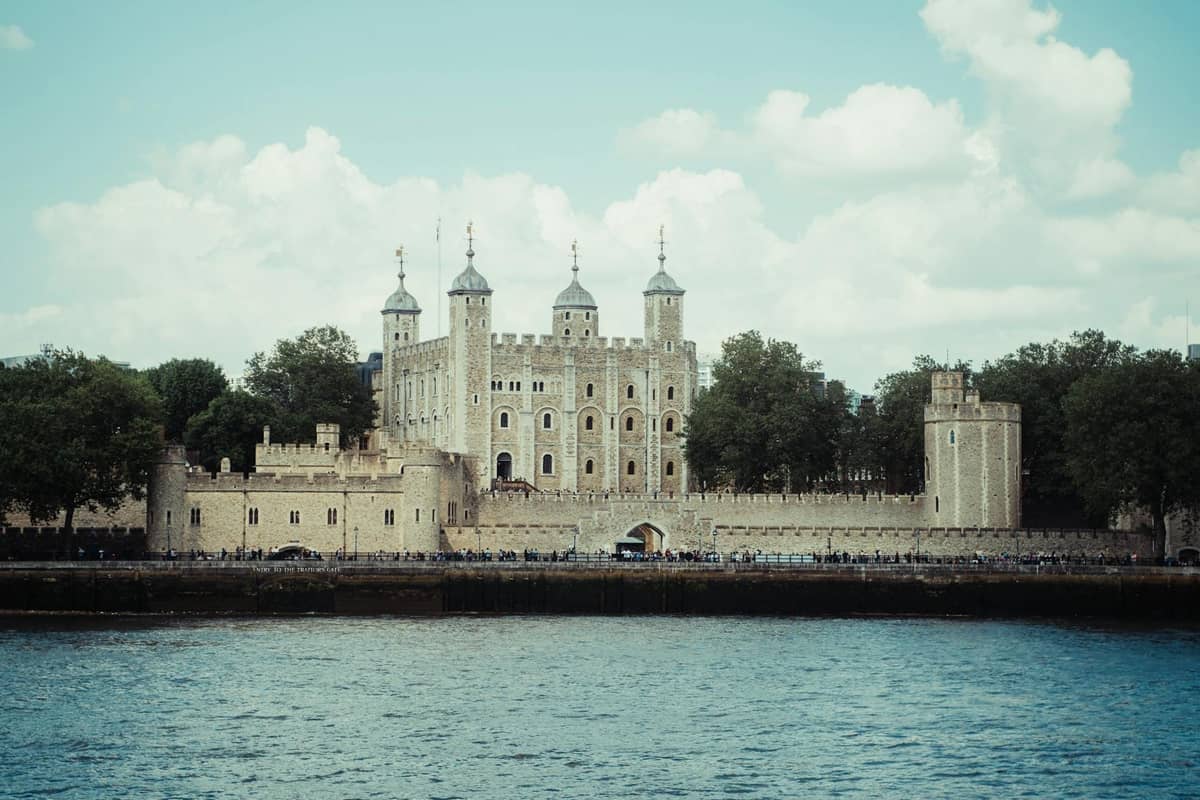
The Tower of Londonis expensive but delivers for families. Crown Jewels, ravens, Beefeater tours (included with entry), medieval armour, and enough dark history to keep older children riveted for half a day. Adult tickets are £37 and child tickets £18.50 (standard admission; verify at hrp.org.uk), with family tickets available. Buy online to avoid queues. Allow at least three hours.
- Tower of London Adult tickets £37 / child £18.50 (standard admission). Family tickets available. Pre-book via Historic Royal Palaces. Best for ages 6 and up.
- London Eye Online from around £33 adult / £29.50 child. Dynamic pricing applies; buy early and avoid peak times. The 30-minute rotation gives strong views when clear. Under 3s free.
- ZSL London Zoo (Regent's Park) Online saver tickets from around £35 adult / £23 child. A full day out. Penguin and gorilla enclosures are highlights. Book in advance, especially summer weekends.
- Warner Bros. Studio Tour – The Making of Harry Potter From around £53.50 adult / £43 child. Located in Leavesden, 20 miles northwest of London. Pre-booking is essential; there are no walk-up sales. Minimum 3-4 hours; most families spend longer.
- SEA LIFE London Aquarium Located on the South Bank. Online advance tickets recommended. Good for younger children; shark walkthrough is a highlight. Allow 1.5-2 hours.
✨ Pro tip
If you plan to visit multiple paid attractions, run the numbers on the London Pass. It includes the Tower of London, the Cutty Sark, and other paid sites. It is not automatically worth it; calculate based on the specific attractions your family plans to visit on a per-day basis.
Parks, Playgrounds, and Free Outdoor Activities
London's Royal Parks are some of the best free family spaces in any major city. Hyde Park and the adjoining Kensington Gardens together cover about 625 acres in central London. The Diana Memorial Playground in Kensington Gardens, themed around Peter Pan with a large wooden pirate ship as its centerpiece, is one of the best free playgrounds in the city. It is enclosed and staffed during opening hours, which makes it particularly manageable for families with young children. There is usually a short queue during peak summer days.
St James's Park is ideal for a post-sightseeing wind-down. The pelican feeding (generally around 14:30 on most days, weather and animal conditions permitting) is a consistently popular spectacle for children. Regent's Park has an Open Air Theatre (summer productions often include family shows), the boating lake, and London Zoo on its northern edge.
Coram's Fields, tucked behind the British Museum near Russell Square, is a dedicated 7-acre children's park. Adults are only admitted when accompanying a child. It has playgrounds, a sandpit, sports pitches, and a small urban farm. Free entry and relatively uncrowded by London standards, making it a reliable fallback near the museum district.
For urban farm experiences, Vauxhall City Farm and Mudchute Park and Farm on the Isle of Dogs are both free (donations welcome). Mudchute is particularly large and surreal, with goats, pigs, and horses against a backdrop of Canary Wharf towers. Access via the DLR makes it easy to combine with a visit to Greenwich.
💡 Local tip
The fountain plaza on the South Bank near the Southbank Centre operates as a splash zone for children in summer (roughly May to September). It costs nothing and burns energy before or after a museum visit. Bring a change of clothes if your children are younger than about 10.
Getting Around London with Children
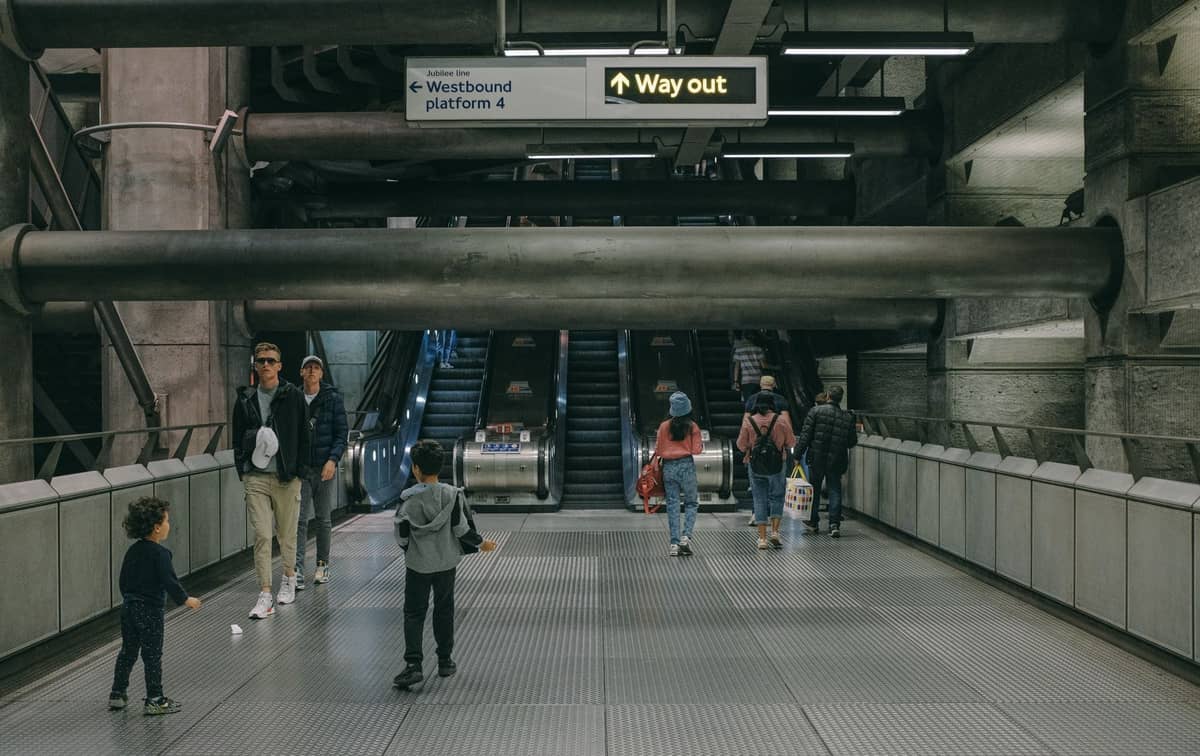
The single most useful transport fact for families: children under 11 travel free on London buses and trams, and can usually travel free on the Tube, DLR, London Overground, and the Elizabeth line when accompanied by a fare-paying adult using Oyster or contactless payment. Up to four children per adult qualify. This makes public transport dramatically cheaper than in most cities. For a full breakdown of how the network works, the guide to getting around London covers routes, Oyster setup, and the best options by zone.
Buggies and pushchairs are permitted on most of the network. The Underground has significant accessibility gaps: around a third of Tube stations have step-free access, primarily on the newer or recently upgraded lines like the Elizabeth line and the Jubilee line. If travelling with a buggy you cannot fold, the DLR and Elizabeth line are the most practical options. All London bus routes are operated with low-floor, wheelchair-accessible buses and often easier for short hops, though slower.
For a memorable journey that doubles as an activity, the Uber Boat by Thames Clippers river service is worth considering for routes between Westminster and Greenwich. Children pay reduced fares (contactless and Oyster are accepted on the piers but tickets are not part of the standard TfL pay-as-you-go capping), and the views of Tower Bridge, St Paul's, and the City skyline from the water are excellent. The journey from Westminster Pier to Greenwich takes around 50 minutes on the slower boat services.
Family-Friendly Neighbourhoods and Day Itineraries
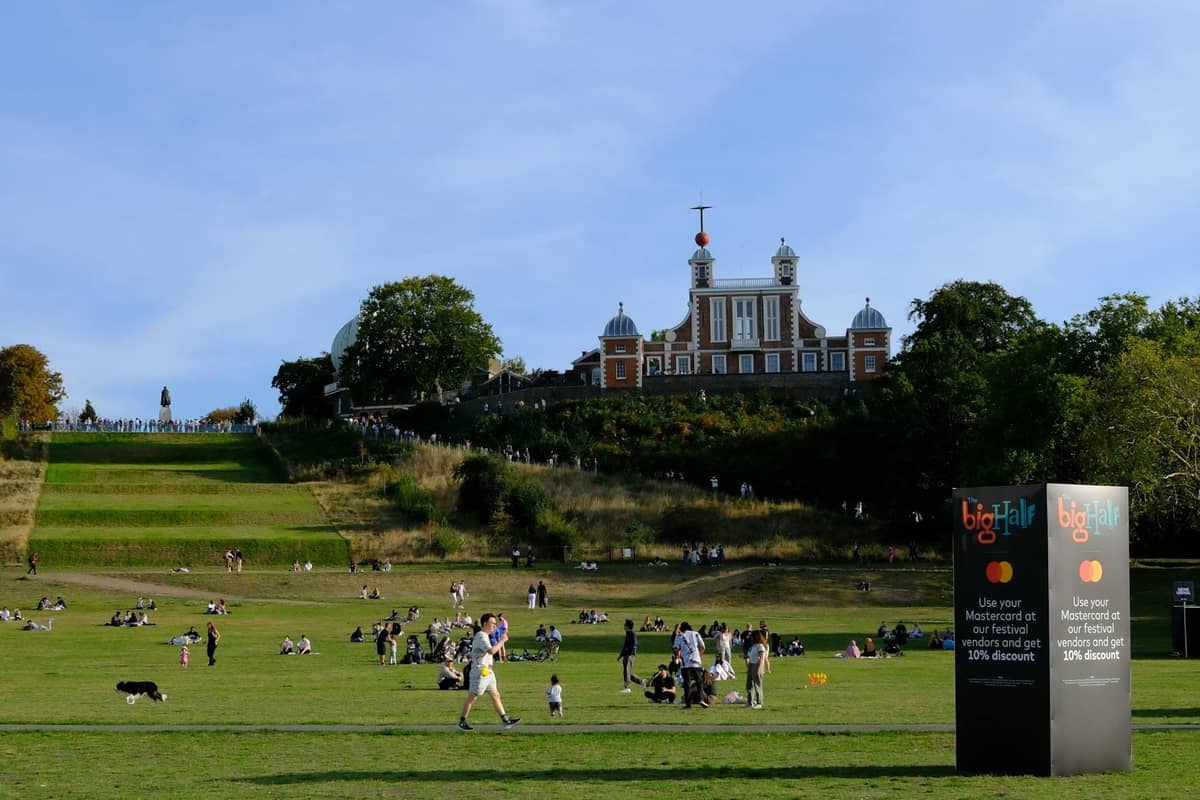
Greenwich is the single best day trip for families within London. Combine the free National Maritime Museum (interactive exhibits on seafaring and navigation), the Cutty Sark (the world's last surviving tea clipper, you can walk below the hull), and Greenwich Park for a full day. The Royal Observatory and the Prime Meridian line carry a charge but are worth it for older children interested in history or astronomy. Getting there by river from central London turns the journey into an experience.
South Kensington remains the most efficient family zone in central London. Three major free museums within 10 minutes' walk, a Tube station directly underneath, and several cafés and restaurants on Cromwell Road. Combine the Natural History Museum in the morning with the Science Museum after lunch for a full and enriching day. TheKensington and Chelsea area adds Hyde Park and Kensington Gardens within walking distance.
The South Bank between Westminster Bridge and London Bridge is ideal for an afternoon with children. Walk across the Millennium Bridge, look into the Tate Modern's turbine hall (free), visit the riverside market at Borough, and watch street performers near the Southbank Centre. The SEA LIFE Aquarium and the London Eye are both here if you want to add a paid attraction. This stretch stays lively into the evening. Check what's on across the South Bank before you visit.
When to Visit: School Holidays vs Term Time
This matters more in London than in almost any other city. UK state school holidays generate enormous peaks at attractions: late July through August, a week in mid-February, a week around late May/early June, a week in late October, and the Christmas period from late December. During these windows, queues at popular sites are longer even with advance tickets, and accommodation prices increase significantly.
If you have flexibility, late May or June (after the spring half-term) offers good daylight hours, generally mild temperatures with highs around 18-22°C, and noticeably shorter queues than the summer peak. Early September, after the UK returns to school, is another strong window: summer temperatures often linger, crowds thin quickly, and prices drop.
- Best months for families with flexibility: late May or June (avoiding the late May/early June half-term), and early September
- Avoid late July and all of August if possible; it is the most crowded and expensive period
- December has excellent festive programming but is cold (average highs around 8-9°C) and busy around school Christmas holidays
- Winter visits (January-March) offer the shortest queues and best hotel value, but some outdoor activities and seasonal attractions are limited
- Always check UK school holiday dates before finalising travel plans, as exact dates vary by region and year
FAQ
Is London worth visiting with young children under 5?
Yes, though the experience looks different than with older children. The royal parks, free museums with impressive visuals (the blue whale at the Natural History Museum, the Egyptian mummies at the British Museum), river boat trips, and urban farms all work well for under-5s. Logistics require more planning: check step-free Tube access in advance, bring a foldable buggy if possible, and build in more rest time than you think you need.
Do children really travel free on the London Underground?
Children under 11 travel free on the Tube, buses, DLR, Overground, Elizabeth line, and trams when accompanied by a fare-paying adult using Oyster or contactless payment. Up to four children per adult qualify. Children aged 11-15 can get a Zip Oyster card for discounted travel, but this requires an application in advance. Always check current TfL conditions before travel, as rules and age thresholds can be updated.
Which London museum is best for children?
The Science Museum edges ahead for most age ranges because of its hands-on exhibits and dedicated interactive galleries. The Natural History Museum is the top choice for dinosaur and wildlife enthusiasts. For a broader answer broken down by age, the Natural History Museum wins for ages 4-8 (visual impact, dinosaurs), the Science Museum for ages 7-14 (interactive and engaging), and the British Museum for ages 10 and up with an interest in history.
Do I need to book London attractions in advance when visiting with children?
For most major attractions, yes. The Warner Bros. Studio Tour has no walk-up sales and must be pre-booked. The Natural History Museum, Churchill War Rooms, London Eye, and Tower of London all strongly recommend advance booking, especially during school holidays. Free museums like the British Museum do not always require booking outside peak periods, but timed entry slots are advisable in summer. Booking ahead also typically saves money versus door prices.
What is the most family-friendly area of London to stay in?
South Kensington and the surrounding area gives the best access to the free museum cluster, Hyde Park, and the Tube. Bloomsbury is convenient for the British Museum and Central London. The South Bank has excellent family programming but fewer affordable hotels directly on it. For families prioritising value and Tube access, areas like Earls Court, Bayswater, or Southwark offer reasonable rates and good connections to major attractions.