National Gallery London: What to See, When to Go, and Why It Earns Its Reputation
Sitting at the northern edge of Trafalgar Square, the National Gallery holds one of the finest collections of Western European painting anywhere in the world. Entry to the permanent collection is free, the hours are generous, and the building itself is hard to miss. But with over 1,000 paintings on display at any given time, knowing how to approach a visit makes a real difference.
Quick Facts
- Location
- Trafalgar Square, London WC2N 5DN
- Getting There
- Charing Cross (approx. 2 min walk), Leicester Square (approx. 4 min walk)
- Time Needed
- 2–3 hours for highlights; a full day for thorough exploration
- Cost
- Free (permanent collection); special exhibitions charge separately
- Best for
- Art lovers, culture seekers, rainy-day visits, first-time London visitors
- Official website
- www.nationalgallery.org.uk
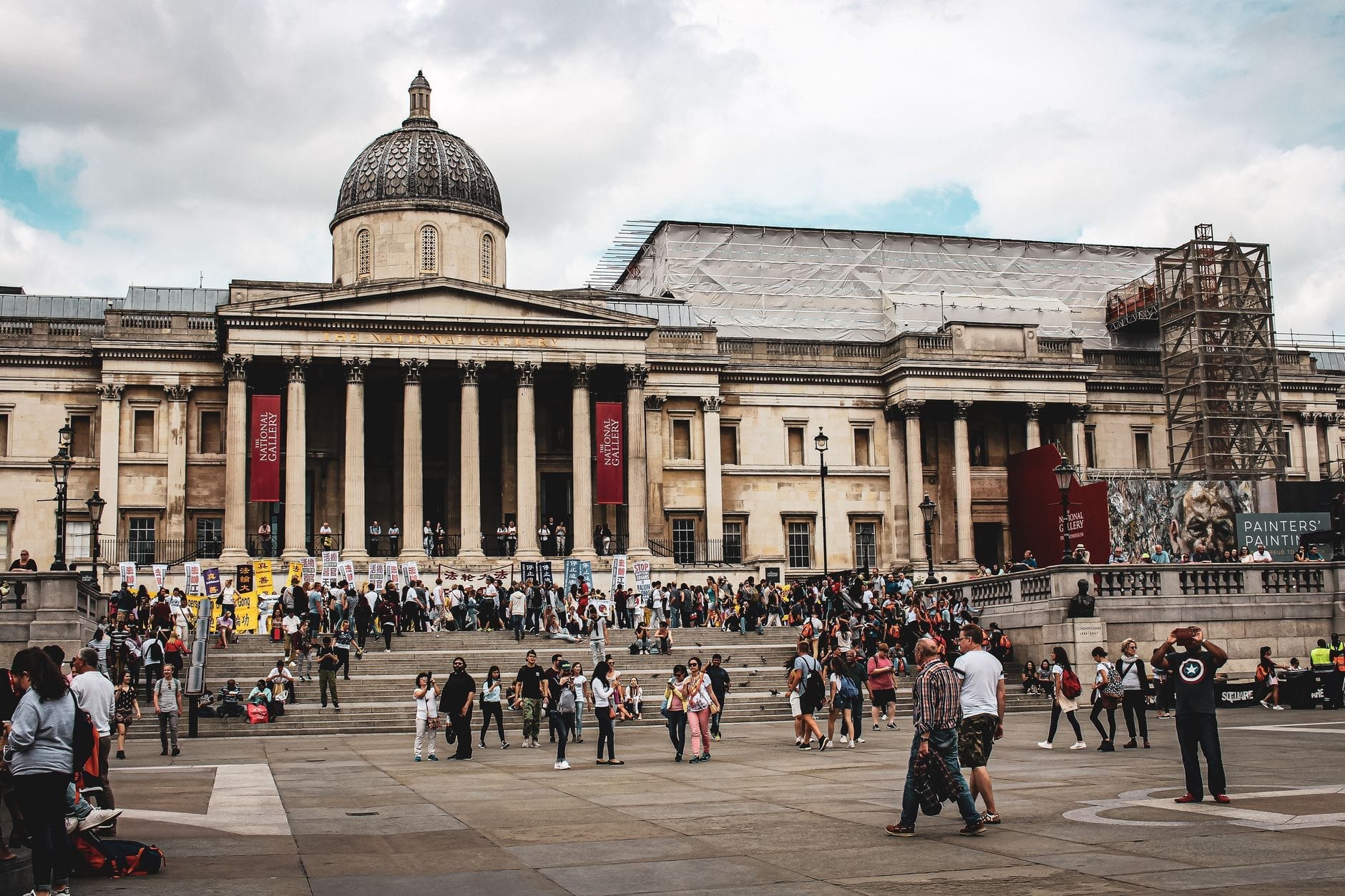
What the National Gallery Actually Is
The National Gallery is a public art museum founded in 1824, housing over 2,300 works of Western European painting spanning from the mid-13th century to around 1900. More than 1,000 of those paintings are on display at any one time. The collection began modestly: the British government purchased 38 paintings from the estate of banker John Julius Angerstein and displayed them at his former townhouse at 100 Pall Mall. Within a decade, the growing collection moved to its current purpose-built home on the north side of Trafalgar Square, where it has remained ever since.
The range of the collection is extraordinary. A single afternoon can take you from Jan van Eyck's Flemish panel paintings of the 1400s to Velázquez's formal portraits, Caravaggio's theatrical lighting, Turner's atmospheric English landscapes, and Van Gogh's late canvases. These are not reproductions or secondary works: they are among the most significant paintings in their respective traditions, displayed within metres of each other.
For anyone building an itinerary that covers multiple cultural institutions, the National Gallery pairs well with a visit to the National Portrait Gallery, which sits immediately adjacent, and is itself free.
The Building and Its Setting
The main facade of the National Gallery is a landmark piece of neoclassical architecture, completed in 1838 to a design by William Wilkins. The grand portico of columns faces directly onto Trafalgar Square, and on a clear morning the view from the top of its steps, looking south past the fountains and Nelson's Column toward the Thames, is one of the better viewpoints in central London without requiring any admission fee or advance booking.
The Sainsbury Wing, added in 1991 and designed by Robert Venturi, handles the main visitor entrance. It sits at the western end of the building and is step-free, which matters if you are visiting with a pushchair or have mobility requirements. The original Wilkins building and the later extensions create a complex interior layout across four wings, but the gallery provides maps at the entrance and the room numbering, while slightly counterintuitive at first, becomes logical once you understand that the rooms broadly trace the chronological progression of the collection.
💡 Local tip
Collect a floor plan from the information desk near the Sainsbury Wing entrance. The gallery's four wings cover different periods: the Sainsbury Wing focuses on 1200–1500, the West Wing on 1500–1600, the North Wing on 1600–1700, and the East Wing on 1700–1930. Decide which era interests you most and start there.
Tickets & tours
Hand-picked options from our booking partner. Prices are indicative; availability and final rates are confirmed when you complete your booking.
Official National Gallery highlights 1-hour guided tour
From 22 €Instant confirmationFree cancellationLondon National Gallery Entrance Ticket and Self-Guided Tour
From 9 €Instant confirmationBritish Museum and National Gallery Semi-Private Guided Tour
From 125 €Instant confirmationFree cancellationLondon National Gallery Ticket and Self-Guided Tour in Spanish
From 15 €Instant confirmation
The Collection: What You Will Actually See
The Sainsbury Wing is often where visitors slow down most noticeably. The lighting here is cooler and more controlled, calibrated for the delicate pigments of early panel paintings. Van Eyck's Arnolfini Portrait is displayed here, a work that rewards close inspection: the mirror on the back wall, the dog at the couple's feet, the Latin inscription above. It is one of those paintings that art historians have argued over for nearly two centuries, and standing in front of it, you understand why.
The North Wing contains the gallery's 17th-century holdings, which are arguably the strongest part of the collection. Rembrandt's self-portraits, Vermeer's A Young Woman Standing at a Virginal, and several major works by Rubens are all here. The galleries in this section are larger, with higher ceilings, and tend to be less crowded mid-morning than the impressionist rooms at the east end of the building.
The East Wing draws significant foot traffic because it contains Turner's The Fighting Temeraire and several Van Gogh paintings including Sunflowers and Van Gogh's Chair. These are heavily reproduced works that people arrive specifically to see, and the rooms around them can feel tight during peak hours. If you want a calmer experience with these particular paintings, arriving at opening time (10:00) on a weekday, or staying until the evening on a Friday when the gallery remains open until 21:00, makes a measurable difference.
ℹ️ Good to know
Friday late opening until 21:00 is a genuine advantage. The atmosphere shifts noticeably after 18:00: fewer school groups, fewer tour parties, and a quieter, more contemplative experience with the collection.
How the Experience Changes by Time of Day
Weekday mornings from 10:00 to around 11:30 are reliably the quietest period. The galleries feel calm at this hour, particularly in the Sainsbury Wing and the 17th-century rooms. You can stand directly in front of major works without other visitors crowding your sightline, which changes the experience considerably.
By midday, Trafalgar Square outside fills with visitors, and that traffic flows into the gallery. Tour groups begin to arrive in number from about 11:00 onward, and the audio-guided clusters around famous paintings become more of a factor. The central hall and the East Wing bear the brunt of this. The West Wing and sections of the North Wing remain noticeably quieter even during peak hours, partly because they contain works that are less photographed and require more context to appreciate.
Weekend afternoons are the most crowded period by a clear margin. If a Saturday afternoon is your only option, focus on the Sainsbury Wing and the Dutch and Flemish rooms, where visitor density stays lower. The impressionist and post-impressionist works in the East Wing can be difficult to view properly at these times.
Special Exhibitions and Events
The National Gallery runs a programme of temporary special exhibitions throughout the year, typically housed in the Sainsbury Wing galleries. These carry a separate admission charge, which varies by exhibition. The quality of these shows is generally high, and they often bring together loans from international collections that would otherwise be impossible to see in one place. Booking in advance for special exhibitions is strongly recommended, as popular shows do sell out for specific time slots.
The gallery also runs free events, talks, and late-night programmes, particularly on Fridays. The café and restaurant inside the building are worth knowing about for a mid-visit break, though the Trafalgar Square area has no shortage of alternatives if you prefer to step outside.
The National Gallery sits in the heart of Westminster, within easy walking distance of other significant attractions. Trafalgar Square immediately in front of the entrance is worth some time in itself, and St Martin-in-the-Fields church on the square's eastern edge hosts free lunchtime concerts on certain weekdays.
Getting There and Practical Logistics
Charing Cross station, served by the Bakerloo and Northern lines as well as National Rail services, is the closest Underground station at roughly a two-minute walk. Leicester Square on the Northern and Piccadilly lines is about four minutes on foot. Embankment station is also walkable at around six to eight minutes. The area is very well connected, and arriving by Tube is straightforward from most parts of central London.
The main entrance through the Sainsbury Wing is step-free. Blue Badge parking is available on Orange Street but requires advance booking by phone (+44 (0)20 7747 2885). Additional designated bays are on St Martin's Street via the Westminster Parking Information Service. The cloakroom typically charges a small fee per item, with discounts or free use for National Gallery Members; check current prices before you go.
If you are spending a full day in this part of London, the area links naturally into a broader Westminster itinerary. Royal London landmarks including Buckingham Palace and St James's Park are within a fifteen-minute walk to the west.
⚠️ What to skip
The gallery is closed on 24, 25, and 26 December and on 1 January. Check the official website before visiting on or around public holidays, as hours may differ.
Photography and Accessibility Notes
Photography of the permanent collection is permitted for personal, non-commercial use without flash. Tripods are not allowed. Special exhibitions may have different rules, usually indicated by signage at the entrance to each show. The phone-camera quality of modern smartphones is generally sufficient for reference shots, though the gallery's own printed publications are often better value than photographing a painting in artificial light.
The gallery is large, and a thorough visit involves a significant amount of standing and slow walking. Comfortable shoes make a difference. Seating is available in most rooms, often in the form of upholstered benches in the centre of the gallery spaces. If you are visiting with young children, the gallery has family-oriented resources and the collection includes works that can engage older children well, particularly the more narrative paintings in the 17th-century rooms. Visitors who find large museums overwhelming may want to limit themselves to two or three rooms rather than attempting a full sweep.
For a broader orientation to London's museum landscape, the best museums in London guide covers the full range of options, from free national collections to specialist paid institutions.
Insider Tips
- Friday evenings after 18:00 are the single best time to see the most famous paintings in the East Wing. The Van Gogh and Turner rooms feel entirely different with half the daytime crowd gone, and there are no school groups.
- The Sainsbury Wing café has a quieter, less-visited feel than the main restaurant and is worth knowing about for a mid-morning coffee without queuing through the central hall.
- If you only have 45 minutes, go directly to the Sainsbury Wing for the Van Eyck and Duccio rooms, then walk through to the 17th-century North Wing. These two sections give the broadest sense of the collection's range with the least walking.
- The free audio guide app (available on the National Gallery website before your visit) is significantly better than standing in crowds to read wall text. Download it in advance over WiFi.
- The steps outside the main Wilkins building facade on the Trafalgar Square side offer one of the best free elevated viewpoints in the West End, particularly in the early morning before the square fills up.
Who Is National Gallery For?
- Art enthusiasts who want to see major Western European works in a single, free visit
- First-time London visitors building a Westminster-area day
- Rainy-day visitors looking for several hours of quality indoor time
- Families with older children interested in history and storytelling through painting
- Anyone with limited time who wants to understand why London's free national museums are considered world-class
Nearby Attractions
Other things to see while in Westminster:
- Apsley House
Known as 'Number 1 London', Apsley House at Hyde Park Corner was the London residence of the Duke of Wellington after his victory at Waterloo. Today it holds one of the finest private art collections in Britain, including old masters, Napoleonic silverware, and the famous colossal nude statue of Napoleon himself.
- Banqueting House
Banqueting House is the sole surviving structure of the vast Palace of Whitehall, designed by Inigo Jones in 1622 and home to the finest painted ceiling in England. It is also the spot where King Charles I was executed in 1649. Admission is just £7.50 for adults, but opening is seasonal — check dates before you go.
- Big Ben & the Houses of Parliament
Few sights in London carry the weight of Big Ben and the Palace of Westminster. The Gothic clock tower rising above the Thames is instantly recognisable, but the complex behind it holds over nine centuries of British political history. Here is everything you need to plan a worthwhile visit.
- Buckingham Palace
Buckingham Palace is the official London residence and administrative headquarters of the UK's sovereign, serving that role since 1837. Whether you are watching the Changing of the Guard from the forecourt railings or touring the lavish State Rooms in summer, this guide covers everything you need to plan a worthwhile visit.