National Portrait Gallery London: What to Expect Before You Go
The National Portrait Gallery holds one of the world's most significant collections of portraiture, tracing British history from the 16th century to the present day through more than 220,000 works. Admission is free, the building is fully step-free, and Friday and Saturday evenings offer a quieter, atmospheric alternative to daytime crowds.
Quick Facts
- Location
- St Martin's Place, London WC2H 0HE (main entrance on St Martin's Place)
- Getting There
- Charing Cross Underground (230 m); Charing Cross rail station (320 m)
- Time Needed
- 2–3 hours for a focused visit; half a day if exploring thoroughly
- Cost
- Free general admission; charges apply for some temporary exhibitions
- Best for
- History lovers, art enthusiasts, portrait photography fans, solo visitors
- Official website
- www.npg.org.uk
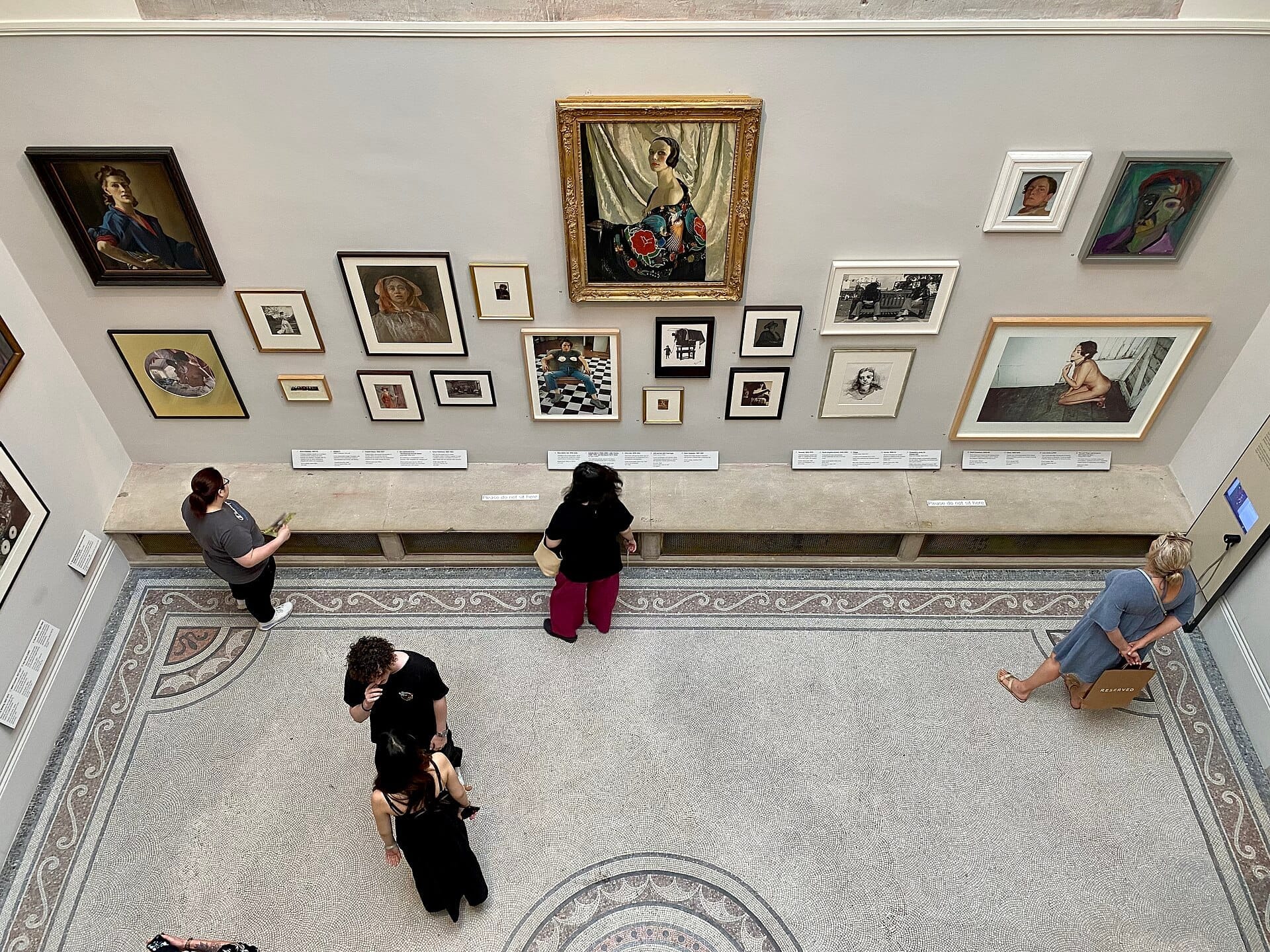
What the National Portrait Gallery Actually Is
The National Portrait Gallery is a museum dedicated entirely to portraiture: paintings, sculptures, photographs, miniatures, and prints of the people who shaped British history and culture. It holds over 220,000 works spanning from the 16th century to the present day, with the collection’s historical subjects extending back to earlier medieval Britain. Founded in 1856 following approval by Parliament, with £2,000 allocated for its first acquisitions, the Gallery opened to the public in 1859 and has been housed at its current St Martin's Place address since 1896.
The premise sounds simple: portraits of notable people. In practice, the collection is a walk through British history told through faces. You move from Tudor monarchs rendered in oil to Regency-era scientists, Victorian novelists, wartime leaders, and contemporary figures photographed by some of the UK's finest photographers. The subject of each work is the entry point, but the art itself rewards close attention.
ℹ️ Good to know
The National Portrait Gallery is not the same institution as the National Gallery, which sits directly next door on Trafalgar Square and focuses on Western European paintings rather than portraiture. First-time visitors sometimes confuse the two — they are separate museums with separate collections and separate entrances.
The Building and Its Location
The Gallery occupies a late-Victorian building on St Martin's Place, immediately behind the National Gallery and just north of Trafalgar Square. After a major three-year renovation that completed in 2023, the interior is significantly improved: better natural light throughout the galleries, a refurbished top-floor restaurant with views toward the City, and a refurbished entrance experience that makes orientation much clearer than it used to be.
The building sits at one of central London's most walkable intersections. Trafalgar Square is steps away, the National Gallery shares the same block, and St Martin-in-the-Fields church is directly across the road. If you are planning a broader day in Westminster, the Gallery fits naturally into a route that also takes in Trafalgar Square and the South Bank.
The main visitor entrance is on St Martin's Place, with additional access from the surrounding streets including Orange Street. Groups use the St Martin's Place entrance. If you arrive from Charing Cross station, walk north along St Martin's Lane and turn left on Orange Street — the entrance will be on your right within about three minutes.
Tickets & tours
Hand-picked options from our booking partner. Prices are indicative; availability and final rates are confirmed when you complete your booking.
Official National Gallery highlights 1-hour guided tour
From 22 €Instant confirmationFree cancellationLondon National Gallery Entrance Ticket and Self-Guided Tour
From 9 €Instant confirmationBritish Museum and National Gallery Semi-Private Guided Tour
From 125 €Instant confirmationFree cancellationLondon National Gallery Ticket and Self-Guided Tour in Spanish
From 15 €Instant confirmation
What You Will See Inside
The permanent collection is arranged broadly chronologically across the floors, beginning with the Tudor and Stuart periods and moving through to the 20th and 21st centuries on the upper floors. The Tudor galleries are among the most visited: the 1505 portrait of Henry VII is among the earliest surviving likenesses of a British monarch, and the famous Holbein cartoon studies draw sustained attention. The atmosphere in these rooms is noticeably hushed, partly because the paintings themselves are small and demand proximity.
The Victorian and Edwardian rooms have a different quality — larger canvases, more theatrical poses, and the recognisable faces of writers like Charles Dickens and George Eliot alongside scientists, engineers, and political figures of the era. The 20th-century galleries, by contrast, move quickly from painted portraiture into photography and mixed media, reflecting how the idea of a portrait evolved across the last hundred years.
Temporary exhibitions occupy dedicated spaces and tend to be thematic rather than retrospective, often pairing historical and contemporary works. These carry an admission charge, typically in the range of around £18–£22 per adult, though prices vary by exhibition. Check the official website before your visit to see what is currently showing, as the programme changes every few months.
💡 Local tip
The free permanent collection alone justifies a visit. You do not need to book a ticketed exhibition to spend two hours here productively. The top-floor restaurant and the permanent galleries are accessible without any ticket purchase.
When to Visit and How the Experience Changes
The Gallery opens daily at 10:30. It closes at 18:00 Sunday through Thursday and at 21:00 on Friday and Saturday; check the website for current last-entry times, which can vary by exhibition. The extended evening hours on Fridays and Saturdays are worth knowing about: the crowd noticeably thins after 18:30, lighting in the galleries takes on a different quality as natural light fades, and the atmosphere becomes considerably calmer. If you are visiting as part of a weekend trip, Friday or Saturday evening is the single best time to be here.
Midweek mornings, particularly Tuesday through Thursday between 10:30 and 12:00, attract the smallest general crowds. School groups tend to arrive between 10:00 and 14:00 on weekdays during term time, which can make the Tudor galleries feel congested. Weekends between 11:00 and 15:00 bring the largest visitor numbers, particularly to rooms associated with well-known faces.
⚠️ What to skip
The Gallery begins closing procedures 10 minutes before its stated closing time, and last entry for ticketed exhibitions is 1 hour before closing. Arrive with sufficient time, particularly on weekday evenings when the 18:00 close approaches quickly.
Practical Details: Getting There, Bags, and Accessibility
The closest Underground station is Charing Cross, roughly 250 metres from the Gallery's main entrance. Charing Cross mainline station is slightly further at about 300 metres, served by Southeastern trains from Kent and southeast London. The Leicester Square and Embankment stations are also walkable, each around 10–12 minutes on foot.
All entrances to the Gallery have step-free access. The recommended drop-off point for wheelchair users is the corner of Orange Street and Charing Cross Road, from where the main Ross Place entrance is a short, flat approach. The Gallery is well-equipped with lifts between floors. For more detail on getting around central London by public transport, the getting around London guide covers Tube zones, Oyster card use, and bus routes in depth.
Backpacks and large bags over 35 x 25 x 15 cm are not permitted in temporary exhibition spaces and must either be carried on the front or left in the cloakroom. The cloakroom charges around £2.50 for small items and £5 for larger bags; it is free for Members and operates on limited capacity, so you may occasionally need to wait. If you are carrying a large camera bag or hiking-style daypack, factor this in.
Food, the Rooftop Restaurant, and What Else Is Nearby
The Gallery's top-floor restaurant was refurbished as part of the 2023 renovation and offers views across rooftops toward the City and Southwark. It is a proper sit-down restaurant rather than a café-style space, with prices to match. The ground-floor café is a more casual option for coffee and light food before or after a visit.
Outside the Gallery, the surrounding streets offer considerable variety. Trafalgar Square is immediately to the south and worth a few minutes even in passing. Covent Garden is a ten-minute walk northeast, while the National Gallery shares the same block and is free to enter. If you are planning a full cultural day in this part of London, the best museums in London guide offers a useful overview of how the major institutions compare.
Who This Attraction Suits and Who Might Not Enjoy It
The National Portrait Gallery rewards visitors with even a passing interest in British history, literature, science, or politics. The collection is legible without specialist knowledge: because you are looking at people rather than abstract subjects, the works invite engagement regardless of your familiarity with art history. Children who have some context for figures like Henry VIII or Charles Darwin can find the Tudor and Victorian rooms engaging, though the absence of hands-on elements means very young children may lose interest after 30–40 minutes.
Visitors looking primarily for landmark impressionist or Renaissance painting will not find it here. The Gallery is deliberately focused on British history through portraiture, which means the collection has a specific character — it is neither a general art museum nor a history museum, but sits usefully between the two. Those expecting the breadth of the British Museum or the scope of the National Gallery may find the singular focus either clarifying or limiting, depending on their interests.
Insider Tips
- Friday and Saturday evenings after 18:30 are the quietest times to visit the permanent collection. The galleries feel different with fewer people, and you can spend time in front of individual works without navigating around groups.
- The top-floor restaurant has views that most visitors never see. Even if you are not eating, checking whether you can access the viewing area near the restaurant is worthwhile — the northeast-facing outlook over central London is one of the less-advertised perspectives in this part of the city.
- The cloakroom has limited capacity. If you are visiting on a busy weekend afternoon with a large bag, arrive early or plan to carry it on the front as instructed. Arriving at opening time on a Saturday sidesteps most queues at bag storage.
- The Gallery's online collection database at npg.org.uk is searchable and extensive. Spending 20 minutes before your visit identifying two or three works you specifically want to see makes the experience considerably more satisfying than arriving cold.
- Ticketed exhibitions carry a separate charge and require booking through the official website. Buy in advance if visiting on a weekend, particularly for high-profile shows, as timed entry slots can fill up for popular exhibitions.
Who Is National Portrait Gallery For?
- History enthusiasts who want to see the faces behind the names in British history
- Visitors interested in photography and how portraiture has evolved from oil paint to lens
- Solo travellers who prefer a quieter, contemplative museum experience
- Anyone combining a half-day in Westminster with the National Gallery and Trafalgar Square
- Travellers on a tight budget who want a high-quality cultural experience at no entry cost
Nearby Attractions
Other things to see while in Westminster:
- Apsley House
Known as 'Number 1 London', Apsley House at Hyde Park Corner was the London residence of the Duke of Wellington after his victory at Waterloo. Today it holds one of the finest private art collections in Britain, including old masters, Napoleonic silverware, and the famous colossal nude statue of Napoleon himself.
- Banqueting House
Banqueting House is the sole surviving structure of the vast Palace of Whitehall, designed by Inigo Jones in 1622 and home to the finest painted ceiling in England. It is also the spot where King Charles I was executed in 1649. Admission is just £7.50 for adults, but opening is seasonal — check dates before you go.
- Big Ben & the Houses of Parliament
Few sights in London carry the weight of Big Ben and the Palace of Westminster. The Gothic clock tower rising above the Thames is instantly recognisable, but the complex behind it holds over nine centuries of British political history. Here is everything you need to plan a worthwhile visit.
- Buckingham Palace
Buckingham Palace is the official London residence and administrative headquarters of the UK's sovereign, serving that role since 1837. Whether you are watching the Changing of the Guard from the forecourt railings or touring the lavish State Rooms in summer, this guide covers everything you need to plan a worthwhile visit.