St Martin-in-the-Fields: London's Most Welcoming Church
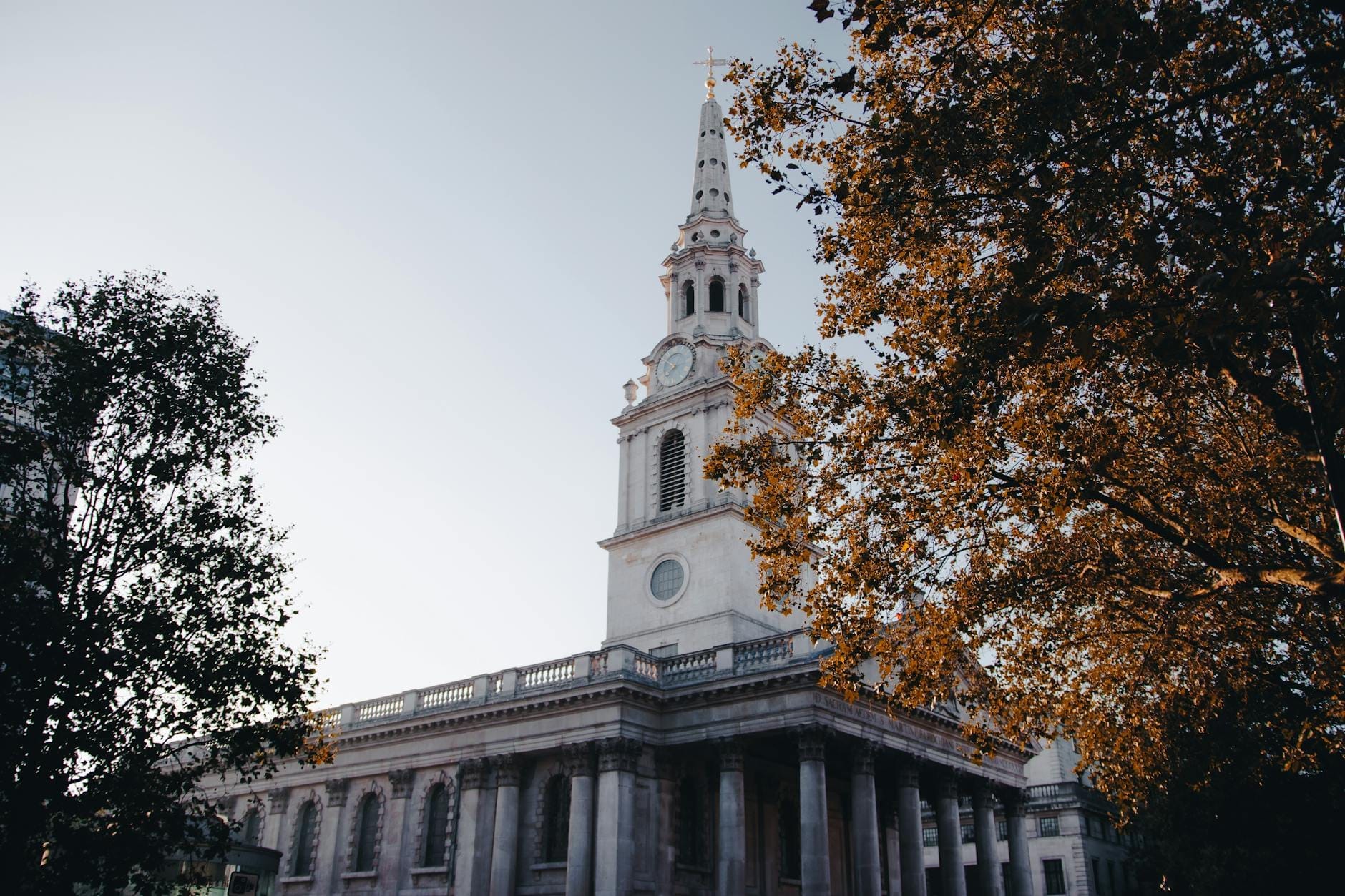
Standing at the northeast corner of Trafalgar Square, St Martin-in-the-Fields is an 18th-century Anglican church with roots going back to 1222. It combines architectural grandeur with a remarkably open spirit: free to enter, home to world-class candlelit concerts, and with a café and art gallery set in its medieval crypt.
Quick Facts
- Location
- Trafalgar Square, London WC2N 4JJ, United Kingdom
- Getting There
- Charing Cross (National Rail & Bakerloo/Northern lines), Leicester Square (Piccadilly/Northern lines) and Embankment (Circle/District/Bakerloo/Northern lines), all a short walk
- Time Needed
- 30–60 minutes for the church; add 30–45 minutes for the crypt café or gallery
- Cost
- Free entry to the church; concerts vary (many are ticketed, some free)
- Best for
- Architecture lovers, classical music fans, solo travellers seeking quiet, anyone needing respite from Trafalgar Square
- Official website
- www.stmartin-in-the-fields.org
Why St Martin-in-the-Fields Earns More Than a Passing Glance
Most visitors see it as the classical stone building that anchors the northeast corner of Trafalgar Square, competing for attention with Nelson's Column and the fountains. That is a mistake. St Martin-in-the-Fields is far more than scenic backdrop. It is a working Anglican parish church with a documented history on this site since at least 1222, a concert venue of genuine international reputation, and one of the few central London spaces where you can sit in near-silence on a Tuesday morning with no ticket and no agenda.
The church sits at the intersection of the Westminster and West End neighbourhoods, which makes it both geographically convenient and culturally layered. You can walk here directly from Trafalgar Square, from Covent Garden, or from the South Bank via Waterloo Bridge in under fifteen minutes. Almost nobody comes here by accident, and almost everyone who comes is glad they did.
💡 Local tip
Opening hours vary by day and can shift seasonally. Always check the official website before visiting, especially if you are combining a church visit with the crypt café or a concert. The café in particular has different hours depending on the day of the week.
Eight Centuries in One Building: The History
A church has stood on this ground since 1222, originally set among open fields to the north of the Thames, which is exactly what the name describes. The 'fields' were farmland between the cities of London and Westminster, and St Martin of Tours, the fourth-century French soldier who became a bishop and patron saint of soldiers and the poor, was chosen as the church's patron. That dedication to marginalised communities has remained a consistent thread through the centuries.
The building you see today was completed in 1726 to a design by James Gibbs, a Scottish architect who had trained in Rome under Carlo Fontana. Gibbs produced something influential: a portico of Corinthian columns supporting a classical pediment, with a steeple rising from directly behind it. At the time, this combination was unusual, even controversial, but the design was so widely copied that it effectively defined what an English-speaking church looked like for the next two centuries, particularly in the American colonies. Churches from Virginia to New England echo this facade.
The parish has royal connections: the church serves as the official parish church of Buckingham Palace, and several notable figures were baptised or buried here over the centuries. But the church has been equally associated with the city's poor and marginalised. In the early 20th century, the vicar Dick Sheppard opened the church doors to soldiers returning from the First World War, to the homeless, and to anyone needing shelter, a policy that helped shape its modern identity as a place of unconditional welcome.
Tickets & tours
Hand-picked options from our booking partner. Prices are indicative; availability and final rates are confirmed when you complete your booking.
Upside Down House Westfield London Entrance Tickets
From 7 €Instant confirmationSoho Instagram a self-guided walking tour to top photo spots
From 6 €Instant confirmationFree cancellationTootbus London by Night: Bus tour
From 32 €Instant confirmationFree cancellationIFS Cloud Cable Car Ride and Uber Boat Hop-on Hop-off 1 Day Ticket
From 38 €Instant confirmationFree cancellation
What to See Inside: The Architecture in Detail
Step through the doors and your eyes adjust to a cool, cream-coloured interior. The nave is broad and relatively shallow, bathed in light from large clear windows, which is unusual for a city church. Gibbs deliberately avoided the gloom of Gothic predecessors: the plasterwork on the vaulted ceiling is intricate without being oppressive, all in white and pale gold, the kind of surface detail that rewards five minutes of patient looking upward.
The box pews visible in historical illustrations are long gone, replaced with simpler seating that makes the space easier to use for concerts and community events. A royal box sits on the left as you face the altar, a reminder of the church's status as a royal parish. At the east end, the Venetian window above the altar draws the eye and fills the chancel with morning light if you arrive early enough.
One detail worth finding: the small window to the south commemorating Nell Gwyn, the 17th-century actress and mistress of Charles II, who is believed to have been buried in the parish of St Martin-in-the-Fields. It is an oddly human note in a formally grand building.
ℹ️ Good to know
Photography inside the church is generally welcomed for personal use. For concerts, the rules will depend on the specific event. If in doubt, ask a member of staff at the door.
Concerts and Music: The Main Reason Many Visitors Come
St Martin-in-the-Fields has one of the longest and most distinguished records of live music performance of any London church. The regular lunchtime concerts, held on selected weekdays, have been a fixture for decades. These are typically chamber music, performed by emerging professional musicians and ensembles, and run for roughly an hour. Many are free, with a retiring collection at the end.
The evening candlelit concerts have a different character entirely. The church is lit by candles and the acoustic, warm and clear without being cavernous, suits string quartets and small orchestras exceptionally well. If you are interested in classical music and Royal Albert Hall feels too large or formal an introduction, a candlelit concert here is among the best alternatives in the city. Tickets for evening events vary in price; check the official website for the current programme.
The BBC Proms connection, various ensemble residencies, and recordings made here over the years mean the building has genuine credibility within the professional music world, not just as a tourist-friendly venue but as a space where serious musicians choose to perform.
The Crypt: Café, Gallery, and Brass Rubbing
Beneath the church, the crypt is accessible from the side entrance on Duncannon Street. The space is functional rather than atmospheric: a stone-floored café and restaurant that serves food and drinks through much of the day, as well as a small gift shop and a gallery hosting changing art and craft exhibitions. The Café in the Crypt is useful for a central London lunch or coffee stop, particularly because it is less crowded and considerably cheaper than many options around Trafalgar Square.
The café hours change by day of the week and can shift seasonally, so verify current timings before treating it as a guaranteed option. On weekday mornings, it is relatively quiet before the lunch rush. By noon it fills with a mix of workers, tourists, and regular locals, the kind of cross-section that feels Londonian rather than curated for visitors.
The brass rubbing centre in the crypt allows you to make your own rubbings from replica medieval brasses. This activity is primarily aimed at families and younger visitors, but it works as an unpretentious and affordable keepsake compared to most London gift options. A small fee applies.
When to Visit and How the Experience Changes
Weekday mornings before 11am are the calmest. The church is open, largely empty, and you can walk the full length of the nave, study the plasterwork ceiling, and sit in quiet without interruption. The light through the east window at this hour is particularly clear. This is when the building most resembles what a 1726 congregation would have experienced.
Lunchtime on any weekday brings a pronounced shift. Concert days see the seats fill rapidly. If you want to attend a free lunchtime concert, arrive fifteen to twenty minutes early; the church is small enough that late arrivals can find no seats. The acoustic from the front third of the nave is noticeably better than from the rear.
Sunday mornings involve regular services, and while the church remains a public space, this is primarily a time for worship rather than sightseeing. Visiting after the main morning service, typically early afternoon on Sundays, avoids any sense of intruding while the building is still accessible.
⚠️ What to skip
On weekends, the pavement directly outside fills with tourists from Trafalgar Square. The interior of the church is almost always quieter than you expect given the chaos outside, but the entrance steps can be crowded, particularly when street performers are active nearby.
St Martin-in-the-Fields sits at the edge of one of London's most photographed public spaces. If you are spending time around the National Gallery or the National Portrait Gallery across the square, this makes an excellent addition to the same half-day without any additional travel.
Getting There and Practical Notes
The church is on Trafalgar Square, with the entrance on Duncannon Street to the side. Charing Cross station (National Rail and Bakerloo and Northern lines) is the closest station, about a three-minute walk. Leicester Square on the Piccadilly and Northern lines is roughly five minutes on foot from the north. Embankment station on the Circle, District, Bakerloo and Northern lines is also nearby.
Buses serving Trafalgar Square are numerous and connect to most of central London. If you are using a travel card or Oyster card, any of these stations work cleanly for a church visit. There is no on-site parking, and given the location, driving is not a practical option.
The church entrance has steps at the front portico. The side entrance on Duncannon Street provides step-free access to the church and to the crypt level. If mobility access is a priority, it is worth contacting the church in advance to confirm current arrangements, as the official website gives only headline information on accessibility provisions.
Insider Tips
- For free lunchtime concerts, arrive 15-20 minutes early. The seats fill faster than you expect and there is no reservation system for most free performances.
- The crypt café is quieter and better value than almost any café within a ten-minute walk. Avoid the noon-to-1:30pm window if you want a seat without waiting.
- Evening candlelit concerts sell out for popular programmes. Check the events calendar a week or two ahead if you have a specific date in mind, rather than assuming tickets will be available on the day.
- The side entrance on Duncannon Street is less obvious but quicker if you are heading directly to the crypt café or gallery without going through the main church.
- Sit in the front third of the nave for any concert. The acoustic difference compared with the rear rows is audible, and latecomers typically fill from the back.
Who Is St Martin-in-the-Fields For?
- Classical music listeners who want an intimate, atmospheric venue rather than a large concert hall
- Architecture enthusiasts interested in the James Gibbs design that influenced church-building across the English-speaking world
- Travellers who want a quiet pause during a dense sightseeing day around Trafalgar Square
- Families with older children interested in history, brass rubbing, or affordable central London dining in the crypt
- Solo visitors and anyone looking for a calm, free indoor space in the heart of central London
Nearby Attractions
Other things to see while in Westminster:
- Apsley House
Known as 'Number 1 London', Apsley House at Hyde Park Corner was the London residence of the Duke of Wellington after his victory at Waterloo. Today it holds one of the finest private art collections in Britain, including old masters, Napoleonic silverware, and the famous colossal nude statue of Napoleon himself.
- Banqueting House
Banqueting House is the sole surviving structure of the vast Palace of Whitehall, designed by Inigo Jones in 1622 and home to the finest painted ceiling in England. It is also the spot where King Charles I was executed in 1649. Admission is just £7.50 for adults, but opening is seasonal — check dates before you go.
- Big Ben & the Houses of Parliament
Few sights in London carry the weight of Big Ben and the Palace of Westminster. The Gothic clock tower rising above the Thames is instantly recognisable, but the complex behind it holds over nine centuries of British political history. Here is everything you need to plan a worthwhile visit.
- Buckingham Palace
Buckingham Palace is the official London residence and administrative headquarters of the UK's sovereign, serving that role since 1837. Whether you are watching the Changing of the Guard from the forecourt railings or touring the lavish State Rooms in summer, this guide covers everything you need to plan a worthwhile visit.