Covent Garden: London's Most Theatrical Public Square
Covent Garden is a pedestrianised piazza and entertainment district in London's West End, free to enter and open all day. From street performers and the Apple Market to world-class theatres and restaurants, it rewards visitors at almost any hour.
Quick Facts
- Location
- Covent Garden, West End, London WC2E
- Getting There
- Covent Garden (Piccadilly line); also Leicester Square, Holborn, Charing Cross
- Time Needed
- 1–3 hours for a casual visit; half a day if dining or catching a show
- Cost
- Free to enter the piazza; individual shops, restaurants and theatres charge separately
- Best for
- First-time visitors, families, theatre-goers, shoppers, street performance fans
- Official website
- www.coventgarden.london
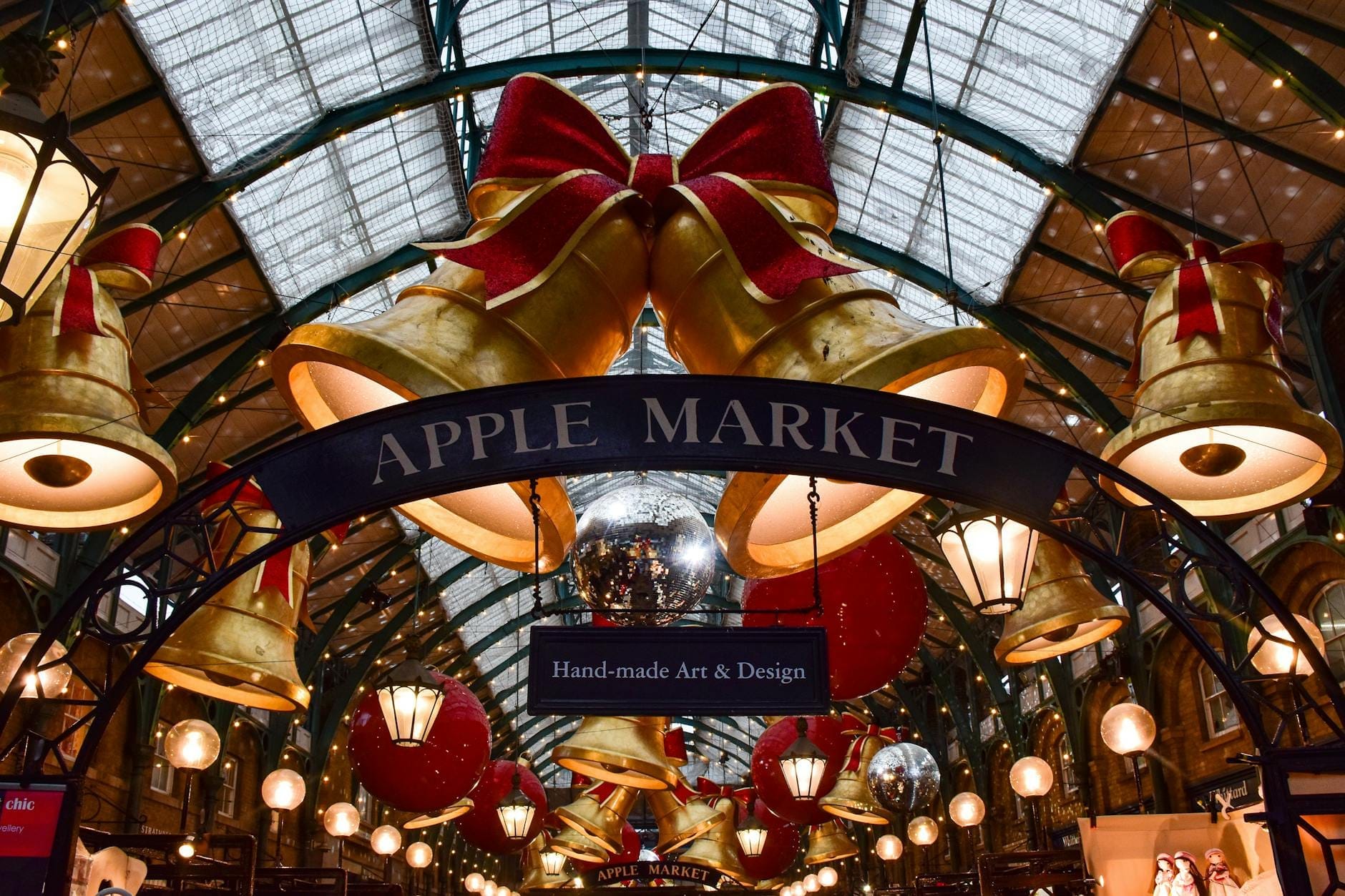
What Covent Garden Actually Is
Covent Garden is not a single attraction but a complete district: a 17th-century piazza, a restored Victorian market hall, dozens of independent shops, restaurants, pubs and two major theatres, all compressed into a roughly ten-minute walk. The central focal point is the pedestrianised square known as the Covent Garden Piazza, bordered by the covered market building (home to the Apple Market) to the north and the portico of St Paul's Church to the west. Entry to the piazza and surrounding streets is free at all times — there is no gate, no ticket barrier, no closing time for the outdoor space.
It sits squarely inside London's West End, a few minutes' walk from the Strand and within easy reach of Leicester Square and the Strand. Visitors doing a three-day London itinerary often combine it with Trafalgar Square and the South Bank in a single half-day loop along the Thames.
A Brief History Worth Knowing
The name comes directly from the "convent garden" belonging to the Abbey of St Peter at Westminster, which occupied the land until the Dissolution of the Monasteries in the 16th century. The land passed to the Earls of Bedford, who commissioned the architect Inigo Jones to design a formal Italianate piazza in the 1630s, one of the first planned squares in London. Jones's St Paul's Church, with its oversized Tuscan portico facing the piazza, still stands and is still in use — a remarkable survival given how thoroughly the rest of the area has transformed around it.
By the mid-17th century, the square had grown into London's principal wholesale market for fruit, vegetables and flowers. For over 300 years, the area operated as a working market, with traders, costermongers and flower sellers defining its character. Samuel Pepys watched the first recorded Punch and Judy puppet show in England here in 1662. The wholesale market eventually outgrew the space and relocated to Nine Elms in 1974, after which the entire district was redeveloped into the entertainment and retail destination it is today. The Victorian-era market building at the centre — now the Apple Market — was preserved and converted rather than demolished, a decision that proved consequential for the area's character.
Tickets & tours
Hand-picked options from our booking partner. Prices are indicative; availability and final rates are confirmed when you complete your booking.
London food tour in Soho, Chinatown, and Covent Garden
From 105 €Instant confirmationFree cancellationLondon Sky Garden Music Night ticket with a glass of Champagne
From 31 €Instant confirmationKensington Gardens guided tour and high tea
From 114 €Instant confirmationWestminster Walking Tour with Visit to Kew Gardens
From 81 €Instant confirmationFree cancellation
How the Piazza Changes Through the Day
Arrive before 10:00 and you have the cobblestones largely to yourself, aside from delivery staff stocking the restaurants. The morning light falls across the iron-and-glass roof of the Apple Market in a way that justifies coming early even if you have no other reason. By 10:30, the first street performers are setting up their pitches — the main pitch in front of St Paul's Church portico is licensed and regulated, meaning the acts here have auditioned for the privilege and tend to be skilled: acrobats, magicians, opera singers, and comics who warm up their crowd with practiced precision.
Between roughly 12:00 and 15:00 is peak crowd time, particularly on weekends. The cobbled square fills with spectators forming tight semicircles around performers, and the acoustic bounce off the stone buildings amplifies everything. This is the most atmospheric hour to visit if you don't mind bodies around you, but be aware of pickpockets in the tightly packed crowds — keep bags zipped and worn in front. After 17:00, the shopping crowd thins and the pre-theatre dinner rush takes over the surrounding restaurants. By 19:30, the piazza takes on a quieter, more adult character as theatres begin their evening performances.
💡 Local tip
The licensed street performer pitches operate on a rotation system. If you see a performer finishing their set, stay put — another act often follows within 15 minutes, sometimes better than the first.
The Apple Market and What to Buy
The covered market building at the heart of the piazza is divided between the Apple Market (arts, crafts, antiques and collectables on certain days) and a permanent set of small retailers and food stalls. The mix changes slightly depending on the day: antique dealers traditionally filled the space on Mondays, while Tuesday through Sunday tends to bring arts and crafts traders. The goods lean toward the artisanal end of the market spectrum — illustrated prints, handmade jewellery, ceramics, small leather goods — with pricing that reflects the location. It is not a budget market.
The market building is generally open during daytime hours, broadly from around 10:00 on most days, though individual stall hours vary. The surrounding streets, particularly the Piazza and James Street, hold a mix of branded flagship stores and independent specialist retailers. Neal Street and Neal's Yard, a short walk north, offer some of the area's more characterful independent shopping.
For comparison, Portobello Road Market offers a more raw, less curated market experience, while Borough Market surpasses Covent Garden significantly for food.
Theatre, Culture, and the Surrounding Streets
Two major theatres anchor the district's cultural identity. The Royal Opera House sits at the northeastern edge of the piazza, its grand Floral Hall visible from the square. Lunchtime recitals and some open rehearsals are occasionally offered, and the Floral Hall (Paul Hamlyn Hall) is generally accessible during daytime building opening hours, though access can be restricted during rehearsals, events or private functions. The London Transport Museum, positioned on the eastern side of the piazza, is one of the most underrated museums in the city: its collection covers the full history of urban transit from horse-drawn omnibuses to modern Tube trains, and it is particularly good with families.
The London Transport Museum charges admission but is included in several multi-attraction passes. If you're planning several days of sightseeing, check whether a London Pass makes sense for your itinerary before paying at the door.
The area immediately south of the piazza, toward the Strand and Aldwych, holds a dense concentration of West End theatres. Seven Dials, a short walk northwest, is a pedestrian-friendly junction with boutique shops and independent cafes worth the ten-minute detour.
Practical Details: Getting There, Getting Around
The nearest Underground station is Covent Garden on the Piccadilly line. A warning worth repeating: the station has lift access and an extremely long spiral staircase (193 steps). On busy afternoons and weekends, Transport for London sometimes imposes a one-way flow or advises passengers to walk from Leicester Square or Holborn instead, both of which are roughly a five-minute walk away. Leicester Square is on the Northern and Piccadilly lines; Holborn is on the Central and Piccadilly lines. Charing Cross National Rail station is about a ten-minute walk southwest, useful if arriving from southeast London or Kent.
The piazza and central streets are pedestrianised and largely level, making them accessible by wheelchair. The cobblestones in the central square can be uneven in places, but the majority of pathways are smooth. Accessibility varies by individual restaurant, shop and theatre, so check directly with specific venues if this is a concern. The London Transport Museum provides step-free access via lift to all floors.
⚠️ What to skip
Covent Garden Tube station has no escalators — only a lift (often queued at peak times) and 193 steps. On busy days, TfL recommends walking from Leicester Square or Holborn instead. Factor this in if you have mobility concerns or are travelling with a buggy.
Photography, Weather, and Honest Expectations
The piazza photographs well at multiple times of day. The early morning is best for architecture shots: empty cobblestones, the clean lines of St Paul's Church portico, and the iron roof of the Apple Market without crowds. Midday light is flat but the performer crowds provide strong human interest. Late afternoon in summer casts warm light across the western face of the market building. The covered market means you can visit in rain without significant disruption, which matters in a city where weather rarely cooperates for long.
It is worth setting realistic expectations. Covent Garden is one of the most visited spots in London, and it shows. The central piazza can feel crowded on summer weekend afternoons, and the commercial offer, while pleasant, is not cheap. The street performers are the strongest argument for visiting: nowhere else in London offers this density of consistently good, free public performance in an architecturally handsome space. If you strip that out, what remains is a well-managed shopping and dining district. Good, but not remarkable on its own.
Visitors specifically interested in free things to do in London will find Covent Garden earns its place on that list primarily for its performers and the architecture. For a broader list, the guide to free things to do in London covers the full range of no-cost options across the city.
Insider Tips
- The best street performances at Covent Garden happen at the lower piazza level, not the upper market level. Head down the steps toward the central cobbled square for the full effect of the stone amphitheatre acoustics.
- St Paul's Church (Covent Garden) is free to enter and a peaceful retreat from the square outside. The interior contains memorials to several famous actors and theatrical figures — its association with the theatre world earned it the nickname 'the Actors' Church'.
- Neal's Yard, a small courtyard about a five-minute walk northwest of the piazza, has a cluster of independent health food cafes and a notable cheese shop. It is significantly less crowded than the main square and worth knowing about for lunch.
- The Royal Opera House's Floral Hall is generally open to the public during the day and is free to walk through when not closed for rehearsals, performances or private events — it is one of the most impressive Victorian interiors in London and almost nobody treats it as a standalone attraction.
- Weekday mornings between Tuesday and Friday are the quietest time to visit. Weekend afternoons between 12:00 and 16:00 are consistently the most crowded; arrive before 10:30 or after 17:00 if crowds bother you.
Who Is Covent Garden For?
- First-time visitors to London wanting a free, atmospheric introduction to the West End
- Families with children: the street performers provide genuine entertainment at no cost
- Theatre-goers pairing a pre-show dinner with the atmosphere of the surrounding piazza
- Photographers wanting architectural detail and candid street performance shots in one place
- Anyone with an interest in London's social and market history, given the depth of the site's 400-year story
Nearby Attractions
Other things to see while in West End:
- British Library
The British Library holds over 170 million items spanning thousands of years of human thought, from the Magna Carta to Beatles lyrics. Entry to the building and permanent collection galleries is free, making it one of the most rewarding stops in central London for curious travellers.
- British Museum
The British Museum holds one of the world's great collections of human history and culture, spanning two million years across more than 60 free galleries. Entry to the permanent collection is free, but knowing how to navigate the scale of it makes the difference between a rewarding visit and an overwhelming one.
- Carnaby Street
Carnaby Street is the pedestrianised shopping district in Soho that defined the look of 1960s London and continues to draw fashion lovers, food hunters, and curious walkers today. Free to explore and five minutes from Oxford Circus, it rewards those who slow down and wander its connecting lanes.
- Coal Drops Yard
Coal Drops Yard is a redeveloped Victorian industrial estate in King's Cross, now home to independent retailers, restaurants, and bars set beneath strikingly restored brick vaults. The public outdoor spaces are free to enter and a short walk from King's Cross St Pancras station.