Tower Bridge: London's Most Recognisable Landmark Up Close
Tower Bridge is more than a crossing point on the River Thames. Step inside its Victorian towers, walk the glass-floored high-level walkways, and watch the bascules lift for river traffic — all while getting one of the finest views of London's skyline.
Quick Facts
- Location
- River Thames, spanning between Tower Hamlets and Southwark, near the Tower of London
- Getting There
- Tower Hill (Circle & District lines); London Bridge (Jubilee & Northern lines); Tower Gateway (DLR)
- Time Needed
- 1.5 to 2 hours for the full exhibition and walkway experience
- Cost
- Paid admission required; free to walk across the bridge itself. Check towerbridge.org.uk for current ticket prices.
- Best for
- Architecture lovers, families, first-time visitors, photographers, Victorian history enthusiasts
- Official website
- www.towerbridge.org.uk
What Tower Bridge Actually Is
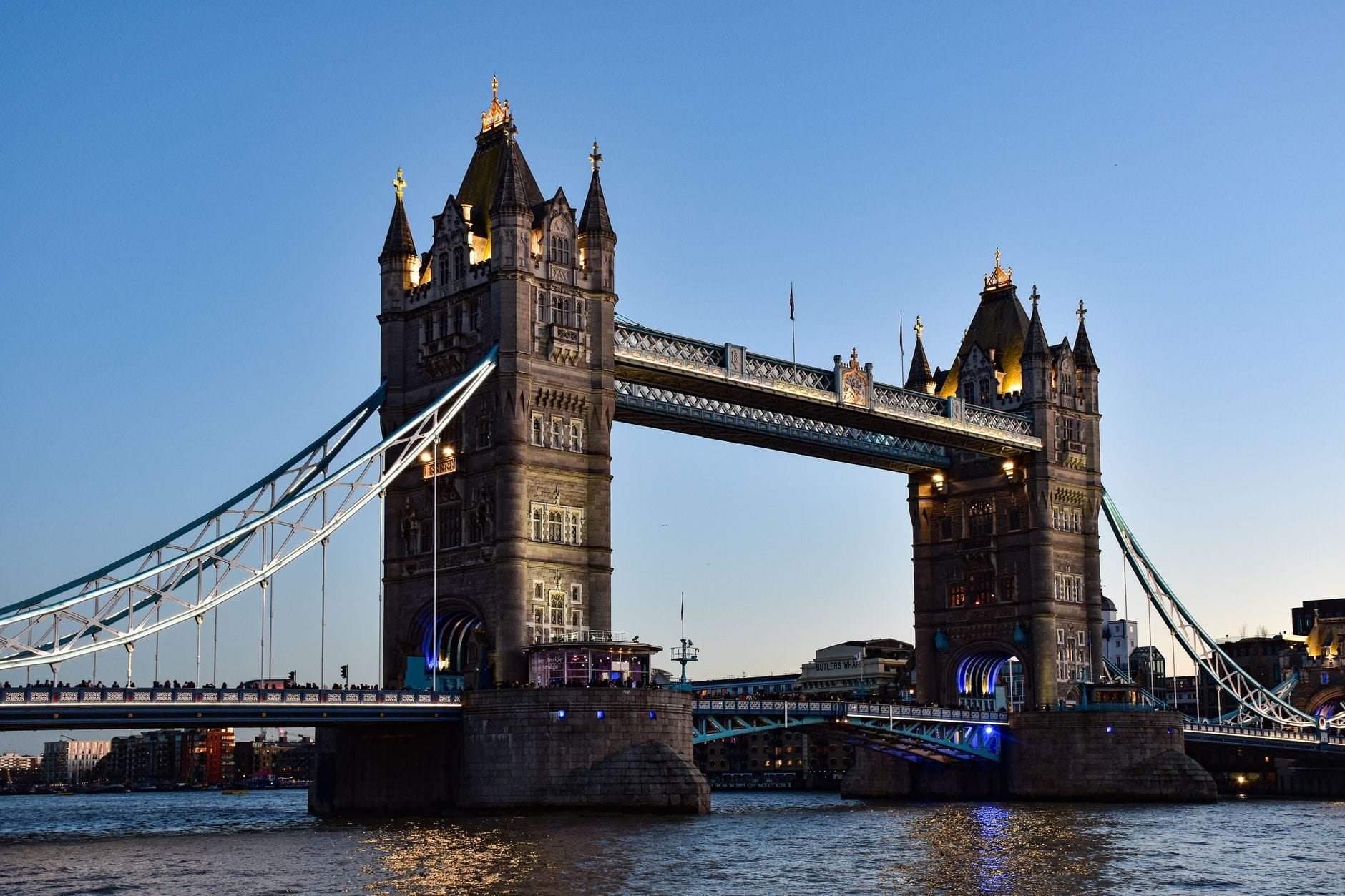
Tower Bridge is one of those rare landmarks that somehow exceeds expectations despite being everywhere: on postcards, tea towels, and the opening credits of countless films set in London. Standing at the eastern edge of the City of London, it spans the Pool of London at a point where the River Thames was historically the gateway to the docks that powered the British Empire. Up close, the sheer scale of the structure hits harder than any photograph suggests.
Construction began in 1886 and the bridge was officially opened on 30 June 1894 by the Prince of Wales, standing in for Queen Victoria. The engineering challenge was considerable: the bridge needed to open frequently to allow tall-masted ships through while simultaneously carrying the heavy traffic of a Victorian city. The solution was a combined bascule and suspension design, with the two central bascule spans capable of being raised hydraulically. The Gothic towers were added partly for aesthetic reasons, clad in Portland stone and Cornish granite to soften what would otherwise have been a purely industrial structure.
Until 1976, the bascules were raised using steam-powered hydraulic engines. Those original Victorian engines are preserved in the Engine Rooms at the south end of the bridge, and they are worth seeing — enormous, gleaming machines that give a concrete sense of the industrial ambition behind a structure that was, at the time, the largest and most sophisticated bascule bridge ever built.
ℹ️ Good to know
Tower Bridge opens daily from 09:30, with last entry at 17:00 and closing at 18:00 (10:00–17:30 from October to March). Walking across the bridge roadway is always free. Admission is charged for the Tower Bridge Exhibition, which covers the high-level walkways, the Victorian Engine Rooms, and the exhibition spaces inside the towers. Verify current prices at towerbridge.org.uk before you visit.
The Glass Walkways: What to Expect
The high-level walkways, suspended 42 metres above the Thames between the two towers, are the centrepiece of the visitor experience. Sections of the floor are glass, and looking straight down at the river, the road traffic crossing below, and the cluster of buildings on either bank is vertiginous — even if you consider yourself fine with heights. The glass panels extend roughly a third of the walkway length, so you can choose how long you linger over them.
The views from the walkways are exceptional in a way that surprises many visitors. To the west, you look directly at the Tower of London and, beyond it, the cluster of glass towers in the City. To the east, the curve of the river leads the eye toward Canary Wharf's towers in the distance. The Shard rises to the south, and on a clear day you can trace the Thames far enough upstream to pick out the dome of St Paul's Cathedral. Come on an overcast day and the light flattens everything into grey; come on a clear morning before 10:30 and the low sun catches the river surface in a way that makes the whole scene feel cinematic.
💡 Local tip
For photography, the walkways face east-west, so morning light favours the view toward the City while late afternoon light works better looking east toward Canary Wharf. Midday light is the flattest and least rewarding for photos.
Tickets & tours
Hand-picked options from our booking partner. Prices are indicative; availability and final rates are confirmed when you complete your booking.
Tower of London and Tower Bridge private half-day guided tour
From 452 €Instant confirmationFree cancellationLondon Castles and Bridges Southbank Walking Tour
From 48 €Instant confirmationFree cancellation2-hour doughnut tour of London's downtown with Tower Bridge
From 56 €Instant confirmationFree cancellationWestminster Walking Tour with Tower of London and Tower Bridge
From 125 €Instant confirmationFree cancellation
The Tower Bridge Exhibition
The paid exhibition begins in the north tower, where you ascend to the high-level walkways via lift or stairs. The exhibition spaces line the walkways and continue through both towers, using original artefacts, archival photographs, and interactive displays to tell the story of how the bridge was designed, built, and operated. It covers the engineering competitions that preceded construction, the workforce conditions, and the politics behind the decision to build a bridge so far downstream.
The Engine Rooms, housed in a separate building at the south end of the bridge, are included in the same ticket. These contain the original steam-powered hydraulic accumulators used to raise the bascules until the switch to electric power in 1976. The machinery is enormous and in exceptional condition, and the space has an industrial-cathedral quality that is atmospheric. Panels throughout explain how the hydraulic system worked in practice, with enough technical detail to satisfy curious adults without overwhelming children.
The exhibition is managed by City Bridge Foundation, the same organisation responsible for the upkeep of all five Thames bridges owned by the City of London Corporation. It has a serious curatorial approach and does not feel like a tourist trap. That said, if you are primarily interested in the view rather than the history, the Sky Garden or the The Shard offer higher vantage points over the same stretch of the Thames, though neither has the iconic context of being inside the bridge itself.
Watching the Bridge Lift
The bascules still open for river traffic, typically several times a week depending on scheduled vessels. The bridge lift schedule is published on the official Tower Bridge website and is worth checking in advance if you want to time your visit around one. The raises usually last around five minutes. Watching from the south bank near Potters Fields Park gives the clearest view, and you can photograph the full span against the City skyline. Watching from the high-level walkways while the bridge opens beneath your feet is a different experience entirely — the mechanism is surprisingly quiet, and the slow, deliberate movement of the bascules is almost meditative.
Bridge lifts are more frequent in summer when river traffic increases, and tall ships occasionally pass through during special events. On weekdays, openings often happen in the early morning or early evening when commercial vessels transit the Pool of London, so check the published schedule rather than guessing.
💡 Local tip
The bridge lift schedule is listed at towerbridge.org.uk under 'Bridge Lifts.' Times can change at short notice depending on vessel movements, so treat the schedule as a guide rather than a guarantee.
Getting There and When to Visit
Tower Hill Underground station on the Circle and District lines is the most direct approach, leaving you a short walk along the north bank of the Thames with views of the Tower of London along the way. London Bridge station on the Jubilee and Northern lines deposits you on the south side, roughly 10 minutes' walk east along the riverbank. Tower Gateway DLR station is another option if you are coming from the east. Buses stop nearby on both sides of the river.
The bridge sits roughly one kilometre from London Bridge, and the two are often confused by visitors. They are easily walkable from each other along the Thames Path, and combining Tower Bridge with the Tower of London to the north and Borough Market to the southwest makes for a natural half-day itinerary in this part of the city.
Arriving at opening time (09:30) gives you the walkways largely to yourself for the first 30 to 45 minutes. By 11:00, especially on weekends and in summer, the space fills noticeably. Midday to early afternoon is the busiest window. Late afternoon, around 16:00 to 16:30, sees another quieter period before last entry. Weekdays in autumn and winter are the least crowded, and the bridge itself takes on a different character in low winter light, the ironwork sharply defined against a pale sky.
Rain does not significantly affect the indoor visitor experience, and the glass walkways are climate-controlled. The exterior bridge deck and the surrounding riverbank areas are obviously more exposed. Fog on the Thames creates one of the more atmospheric conditions for photography — the bridge disappears into grey at each end and the towers acquire a quality you will not see on a sunny July afternoon.
The Surrounding Area
Tower Bridge marks the boundary between the City of London to the north and the London Borough of Southwark to the south, and this stretch of the Thames is one of the most historically layered parts of the city. The Tower of London is a three-minute walk from the north end of the bridge, and together the two form the most photographed pairing in London. St Katharine Docks, a converted Victorian dock now lined with restaurants and moored boats, is five minutes north of the bridge and worth a short detour.
On the south side, the riverbank walk connects quickly to Potters Fields Park, which offers arguably the best free exterior view of Tower Bridge. Continue west along the South Bank and you reach Bermondsey Street, with its independent restaurants and the White Cube gallery. Head in the opposite direction along the south bank path and you arrive at Southwark Cathedral and Borough Market within 15 minutes.
If you are planning a wider day in this part of London, the 3-day London itinerary covers how to combine Tower Bridge with nearby attractions without backtracking.
Accessibility and Practical Notes
The Tower Bridge Exhibition is accessible by lift to the high-level walkways, so visitors who cannot use stairs can still access the main viewing areas. The Engine Rooms at the south end of the bridge are at ground level. The bridge roadway itself is a public right of way with pavements on both sides, and crossing it is free at any time. The official website publishes dedicated accessibility information and it is advisable to check it if you have specific requirements before your visit.
Photography with personal cameras and phones is permitted throughout the exhibition. Tripods are generally not allowed on the walkways due to space constraints. The glass panels can produce reflections depending on light conditions and angle, so shooting at an oblique angle reduces glare. Bags are screened at entry and the usual security protocols apply.
Insider Tips
- Check the bridge lift schedule on the official website before you visit and aim to be on the high-level walkways rather than street level when a lift is scheduled — the perspective from 42 metres above, watching the bascules move below you, is entirely different from watching from the riverbank.
- The Victorian Engine Rooms at the south end are often undervisited because some people miss them entirely. Allow at least 20 minutes here — the scale of the original hydraulic machinery, preserved in working condition, is one of the most impressive examples of Victorian industrial engineering on public display anywhere in London.
- Potters Fields Park on the south bank, roughly 200 metres west of the bridge's south tower, provides the cleanest full-length exterior shot of Tower Bridge with the City skyline behind it. This is the spot that most professional photographs of the bridge use, and it is completely free.
- Early morning on a weekday, especially between 09:30 and 10:15, is when the glass walkways are quietest. If you want unobstructed views and space to photograph without strangers in every frame, this window is significantly better than any afternoon slot.
- Tower Bridge and London Bridge are frequently confused by visitors and even some GPS navigation apps. They are different bridges approximately one kilometre apart. If your Tube directions take you to London Bridge station, you will need to walk east along the south bank for about 10 minutes to reach Tower Bridge.
Who Is Tower Bridge For?
- First-time visitors to London wanting to see one of the city's defining structures from the inside
- Architecture and engineering enthusiasts interested in Victorian infrastructure and hydraulic mechanics
- Families with children who respond well to hands-on exhibitions and interactive history
- Photographers looking for elevated river views and the opportunity to shoot the bridge lift
- Travellers combining a morning at the Tower of London with an afternoon walk along the South Bank
Nearby Attractions
Other things to see while in The City of London:
- Leadenhall Market
Leadenhall Market is a Grade II-listed Victorian covered market in the heart of the City of London, built in 1881 over a site used for commerce since Roman times. With its ornate wrought-iron and glass roof, cobbled walkways, and mix of wine bars, restaurants, and independent shops, it's one of the Square Mile's most atmospheric stops — and it won't cost you a penny to walk through.
- Millennium Bridge
The London Millennium Footbridge is a sleek steel pedestrian span linking the City of London to Bankside, connecting St Paul's Cathedral on the north bank to Tate Modern and Shakespeare's Globe on the south. Free to cross at any hour, it offers some of the most photographed views of the Thames and a front-row look at two of London's most contrasting skylines.
- Sky Garden
Perched 155 metres above the City of London inside the Walkie Talkie building, Sky Garden offers panoramic views across the Thames, St Paul's, and the surrounding skyline — at no cost to visitors. The catch: tickets must be booked in advance, and they go fast.
- St Bartholomew the Great
Founded in 1123 by a courtier of King Henry I, St Bartholomew the Great in Smithfield is London's oldest surviving parish church. It offers free entry, extraordinary Norman architecture, and an atmosphere of genuine antiquity that few places in the capital can match.