The Shard: What to Expect at London's Most Recognisable Skyscraper
At 309.6 metres, The Shard is the tallest building in the United Kingdom and one of the most immediately recognisable structures on the London skyline. The View from The Shard observation deck sits at roughly 244 metres, offering 360-degree panoramas stretching up to 40 miles on a clear day. This guide covers what the experience is actually like, floor by floor, and whether the ticket price justifies the altitude.
Quick Facts
- Location
- 32 London Bridge Street, London SE1 9SG (viewing gallery entrance on Joiner Street, SE1 9QU)
- Getting There
- London Bridge station (National Rail and Jubilee line) — directly adjacent to the building
- Time Needed
- 1.5 to 2 hours including queuing, lifts, and time on the viewing floors
- Cost
- Paid entry; ticket prices vary by type and date. Children under 4 free. Check the official booking site for current rates.
- Best for
- First-time visitors wanting a city orientation, photography, clear-day panoramas, and architectural spectacle
- Official website
- www.theviewfromtheshard.com
What The Shard Actually Is
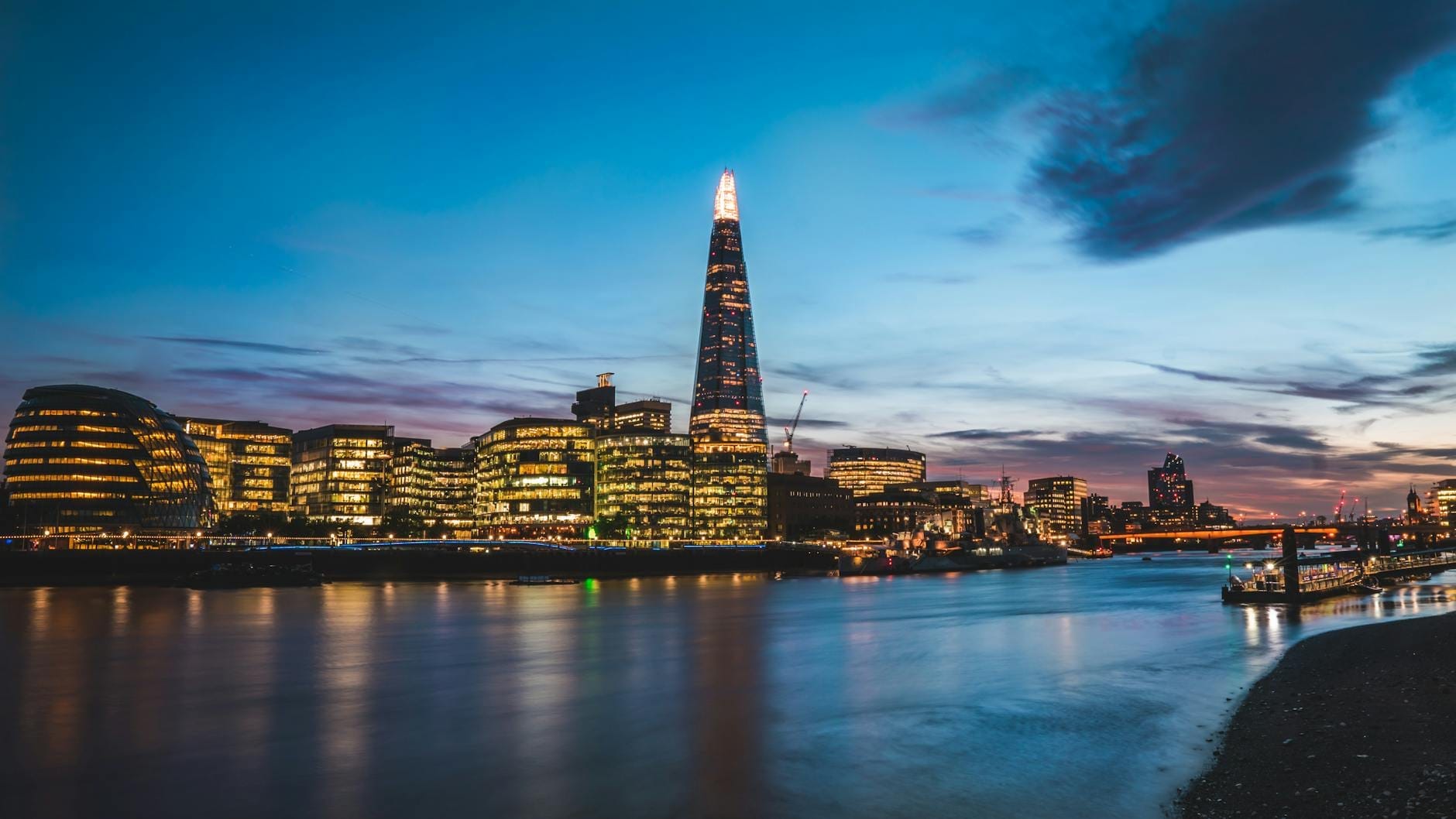
The Shard, formally known as Shard London Bridge and originally designed as London Bridge Tower, is a 72-storey glass-clad skyscraper that reaches approximately 309.6 metres to its tip. Completed in 2012 and opened to the public in 2013, it is the tallest building in the United Kingdom and London, and the eighth tallest in Europe according to CTBUH's Skyscraper Center. Its architect, Renzo Piano, conceived the design as a shard of glass emerging vertically from the Thames, with the irregular facets of the facade deliberately angled to catch and reflect light differently at every hour. The effect from the street is striking: the upper floors appear to dissolve into the sky on overcast days, and the building seems to shift in colour as clouds pass.
The site has its own layered history. Before construction began in March 2009, the plot was occupied by Southwark Towers, a 1970s office block demolished in 2008. The broader London Bridge Quarter around it — the tangle of railway arches, market streets and Victorian warehouses — provides a useful sense of scale when you look down from above. This is not just a glass box in a business park. It sits at one of the oldest river crossings in the city, above the bones of Southwark's medieval past.
💡 Local tip
The Shard is a mixed-use building: below the observation floors you'll find offices, the Shangri-La Hotel, and several restaurants. You do not need a viewing ticket to dine or drink at venues inside the building, though they require their own reservations.
The View from The Shard: Floor by Floor
The View from The Shard occupies Levels 68, 69, and 72. After a security screening at the Joiner Street entrance, high-speed lifts carry visitors to Level 68 in under a minute. The ascent itself is part of the experience: a projected light display lines the lift shafts and there is an odd, slightly pressurised silence before the doors open onto an enclosed panoramic gallery with floor-to-ceiling glass.
Level 68 is the main enclosed viewing floor, with telescopes pointing in each direction and orientation boards identifying landmarks. The room is calm rather than dramatic — climate-controlled, with enough space to move around without elbowing other visitors, provided you avoid peak weekend slots. Level 69 is an additional enclosed floor with different sightlines. Level 72 is the open-air platform, exposed to the elements, where the wind can be sharp even in summer and biting in winter. The sensation here is vertiginous: the glass balustrades are low enough that you feel the height rather than just see it.
At 244 metres, the observation deck delivers the panorama it promises. On a clear day the view stretches to the North Downs in Surrey and beyond Epping Forest to the northeast — a radius of roughly 40 miles. You can trace the full arc of the Thames, identify the dome of St Paul's Cathedral, follow the glass towers of Canary Wharf to the east, and locate the green rectangles of the Royal Parks to the west. What the view does particularly well is reveal London's actual scale: from the ground, the city feels like a series of neighbourhoods. From here, it reads as a single, enormous, continuous thing.
Tickets & tours
Hand-picked options from our booking partner. Prices are indicative; availability and final rates are confirmed when you complete your booking.
Guided tour of Westminster, river cruise and tickets to The Shard
From 100 €Instant confirmationFree cancellationLondon Landmark Walking Tour with Access to The Shard
From 113 €Instant confirmationFree cancellationThe Shard Viewing Gallery and Westminster Walking Tour
From 87 €Instant confirmationFree cancellationThe Shard Viewing Gallery and Westminster Private Tour
From 148 €Instant confirmationFree cancellation
How the Experience Changes by Time of Day
Daytime visits, particularly in the two hours after opening on weekday mornings, offer the clearest visibility and fewest crowds. The light is cool and white, the Thames a dark ribbon below, and you can work through the views methodically without being pressed against the glass by other groups. The city's morning haze, if present, usually lifts before noon.
Sunset visits are the most popular for good reason. As the light drops toward the western horizon, the entire Thames corridor fills with warm tones, the sky shifts through amber and pink, and the City's glass towers begin to glow from within. It is visually spectacular, but it is also when The Shard is at its most crowded. Expect groups pressed against every window on the western side, selfie sticks extended at the telescopes, and a noticeably louder, more energetic atmosphere. If you want the sunset without the scrum, book the earliest available slot that overlaps with the golden hour rather than a peak evening time.
Night visits after dark offer a different kind of beauty: London as a grid of lights, the bridges illuminated, the Gherkin and Walkie-Talkie lit from inside. The downside is that much of the detail visible in daylight disappears. You see the city's infrastructure rather than its geography. For photography, a tripod is not permitted on the observation floors, so night photography depends on stabilising your phone or camera against the glass — which works reasonably well given how clean the windows are kept.
⚠️ What to skip
London's weather affects the experience. On overcast or rainy days, low cloud can partially or entirely obscure the view from the upper floors. There is generally no automatic rain-check or refund policy based on visibility — check a forecast before booking a same-day or next-day slot and consult the official terms for any exceptional arrangements.
Architectural Context: Why The Shard Looks the Way It Does
Renzo Piano's design brief was partly shaped by the building's position directly above London Bridge station, one of the busiest rail terminals in the United Kingdom. The structural solution — eight slender glass facades that converge at the top without meeting in a flat point, leaving the tip deliberately unfinished-looking — was conceived to make the building appear lighter than its mass. Each facade is angled slightly differently, so the building's silhouette changes depending on where you stand in the city.
The irregular, splintered top is not accidental. Piano described his intention as creating something that looked temporary and fragile, more like a geological feature than a permanent monument. Whether it achieves that is debatable — from most angles, The Shard reads as unmistakably intentional — but the philosophy explains the building's refusal to look like other London skyscrapers. The towers of Canary Wharf are corporate and rectilinear. The Gherkin in the City is a formal geometric exercise. The Shard is deliberately rough-edged.
It sits within a wider South Bank cultural corridor that includes Tate Modern, Shakespeare's Globe, and the Southbank Centre. The neighbourhood context matters: this is not an isolated tower in a financial district. It stands at the meeting point of working Southwark — Borough Market a five-minute walk, London Bridge's rail infrastructure directly below — and the leisure waterfront of the Thames.
Getting There and Practical Walkthrough
London Bridge station sits directly beneath and beside The Shard. From the main station exits, the building is visible immediately and takes under two minutes to reach on foot. The Jubilee line serves London Bridge directly; so does National Rail with extensive commuter and intercity services. The station is also a short walk from Borough Market and Bermondsey Street, making it straightforward to combine The Shard with an afternoon in the neighbourhood.
The viewing gallery entrance is on Joiner Street, a narrow lane that runs alongside the building's lower floors. It is clearly signposted. After presenting your booking confirmation, you pass through airport-style security (bags through X-ray, no large sharp objects) before reaching the lift lobby. The whole process from entrance to observation floor takes around 10 to 15 minutes, longer on busy weekend afternoons. Lifts are fully accessible from street level, and full accessibility details are outlined during the booking process on the official site.
Tickets are usually booked in advance through the official booking platform, where you select a specific date and entry time. Walk-in availability exists but is not guaranteed, particularly on weekends and during school holidays. Premium ticket upgrades offer extras including guaranteed access to the open-air Level 72 and, in some packages, food or drink. Children under 4 enter free with any adult ticket.
ℹ️ Good to know
The London Pass and some third-party discount cards include The View from The Shard. If you're visiting several paid attractions, it may be worth calculating whether a pass reduces your overall costs before booking separately.
Is The Shard Worth It? An Worth Knowing
For first-time visitors to London, the answer is usually yes, with conditions. The views are exceptional on a clear day, and nothing else in the city gives you quite the same 360-degree orientation — not theLondon Eye (which caps out much lower and moves slowly through a fixed circuit) and not rooftop bars, which typically face one direction. The Shard gives you the whole city, laid flat, with enough height to see the geography rather than just the buildings.
Worth noting is that the ticket price is significant, and the enclosed floors are, fundamentally, a glass box with a view. You are not interacting with a collection, learning a craft, or experiencing a performance. You are looking out of windows for an hour or so. Some visitors find the experience transcendent. Others find it satisfying but over quickly. If your budget is limited, the free alternatives, such as Sky Garden (when booked in advance), offer elevated views at no cost. For context, the best views in London guide covers the full range of paid and free options across the city to help you decide what suits your priorities.
Who should skip it: visitors returning to London who have already been, anyone travelling on a tight budget who can reach the same neighbourhoods on foot, and anyone visiting on a day with forecast low cloud or rain. The Shard is also a poor choice if you have significant vertigo, as the open Level 72 platform and the floor-to-ceiling glass at Level 68 are deliberately designed to emphasise height.
Photography Tips
Tripods are not permitted on the observation floors. For phone photography, pressing the lens gently against the glass eliminates reflections and produces sharp results. Wide-angle camera modes work well given the scale of the panorama. The best smartphone shots from inside tend to be taken in the early morning or late afternoon when the contrast between sky and cityscape is highest — midday on an overcast day flattens everything into grey.
For photos of The Shard from the outside, the building photographs well from the south bank of the Thames near Millennium Bridge, and from the north side of London Bridge itself. The reflection of the building in the Thames is strongest in calm weather at low tide in the early morning, when the water is still and the light rakes across the facade at a low angle.
Insider Tips
- Book a weekday morning slot in the first session of the day. Crowds are thinnest, the air tends to be clearest before midday haze develops, and you will have space to move freely between the viewing floors without waiting for a window position.
- The open-air Level 72 is the highlight and is included in standard tickets, but check before booking: some entry types are restricted to the enclosed floors only. If you want the full open-air experience, confirm your ticket type during checkout.
- Bring a layer regardless of the season. Level 72 is exposed, and even a warm summer day at street level can feel surprisingly cold at 245 metres with any wind. The enclosed floors are climate-controlled but the transition to the outside platform is abrupt.
- If you are visiting around sunset, book the slot one hour before the forecast sunset rather than the slot at sunset itself. This gives you time to settle, find the best position at a window on the western side, and watch the light change without rushing to catch it.
- The immediate surrounding area rewards some time before or after your visit. Borough Market is a five-minute walk northwest, Bermondsey Street stretches south with independent cafes and galleries, and the Thames path along the South Bank connects easily to Tate Modern and Bankside. Build an afternoon around the neighbourhood rather than treating The Shard as a standalone tick-box.
Who Is The Shard For?
- First-time visitors to London wanting a full city orientation and a sense of its scale
- Photographers seeking dramatic wide-angle panoramas at sunrise or sunset
- Couples looking for a memorable, elevated evening experience (book an early evening slot)
- Families with older children who will engage with the telescopes and landmark-spotting
- Architecture enthusiasts interested in contemporary structural engineering and Renzo Piano's design philosophy
Nearby Attractions
Other things to see while in South Bank:
- Battersea Park
Battersea Park is a 200-acre Victorian park on the south bank of the River Thames, offering free entry, formal gardens, a children’s zoo, riverside paths, and a notable Buddhist Peace Pagoda. Less crowded than Hyde Park yet surprisingly rich in things to do, it rewards a slow, unhurried visit at any time of year.
- Battersea Power Station
Once derelict for nearly three decades, Battersea Power Station reopened in October 2022 as one of London's most dramatic mixed-use destinations. Entry to the main building and public spaces is free, while the glass chimney lift, Lift 109, offers one of the city's most unusual viewpoints. Here is everything you need to plan a visit.
- Borough Market
Borough Market has stood near London Bridge for around 1,000 years, making it one of the oldest food trading sites in Britain. Today it draws traders selling everything from aged cheeses and cured meats to freshly baked bread and street food from around the world. Entry is free, and the Victorian market buildings add a sense of occasion that most food halls simply cannot match.
- Imperial War Museum London
The Imperial War Museum London is one of the city's most thoughtfully constructed free attractions, covering conflict from the First World War to the present day. Housed in a former psychiatric hospital, it combines large-scale hardware, deeply personal testimony, and unflinching Holocaust galleries into an experience that is hard to shake.