Shopping in London: The Complete Guide to Streets, Markets & Stores
London's shopping scene spans everything from 300-store Oxford Street to Sunday flower markets in the East End. This guide covers the best streets, markets, and stores by category, with practical advice on timing, crowds, and where your money actually goes furthest.
Plan and book this trip
Tools from our partner Travelpayouts help you compare flights and hotels. If you book through them, we may earn a commission at no extra cost to you.
Flights
Hotels map
TL;DR
- Oxford Street has over 300 shops and suits mid-range budgets; for true luxury, head to Bond Street or Knightsbridge instead.
- London's markets each have a distinct character: Borough Market for food, Portobello for antiques, Columbia Road for flowers, Camden for subculture.
- Most major shopping areas sit within Zones 1–2 on the TfL network; contactless bank cards work on all public transport.
- Saturdays and the pre-Christmas period (mid-November to December 24) are the busiest times across all shopping districts.
- See the London markets guide for deeper coverage of individual market days, stalls, and logistics.
The Major Shopping Streets: What Each One Actually Offers
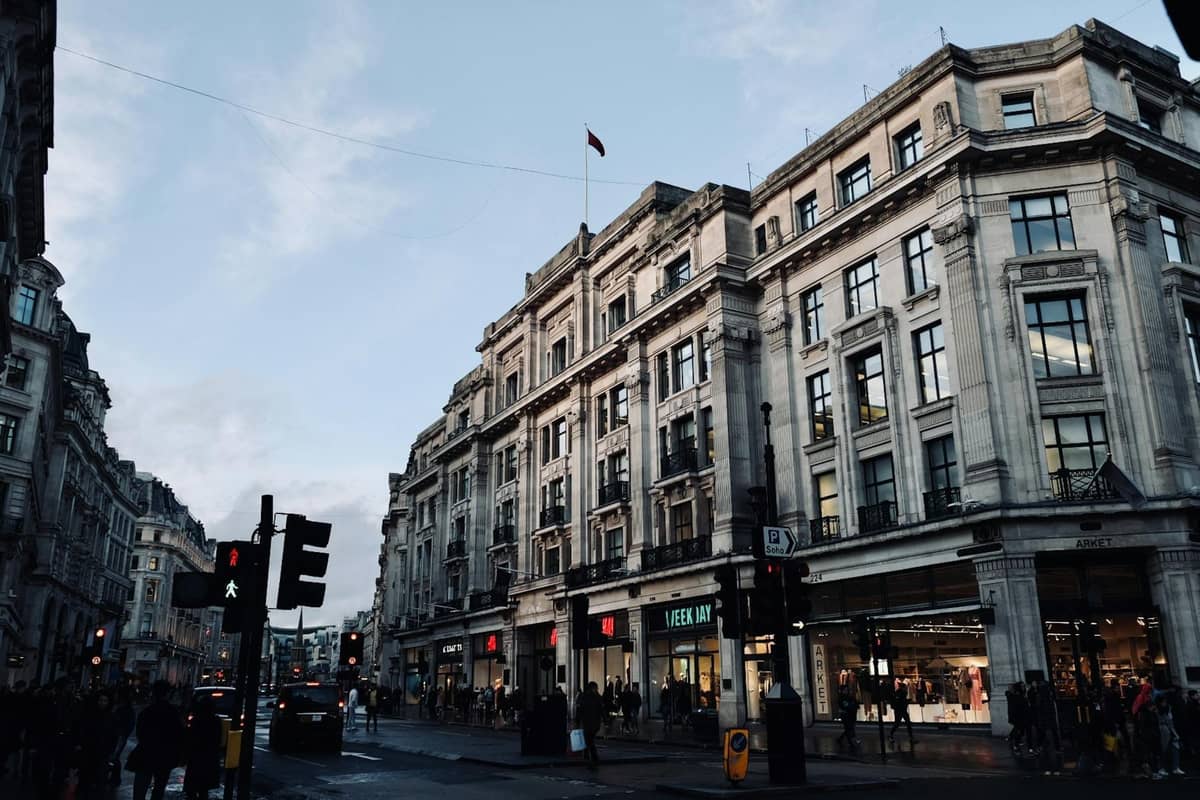
London's reputation as a shopping destination is built on a handful of streets that each serve a very different purpose. Understanding which street fits your needs saves a lot of time, especially if you're working around a broader sightseeing itinerary.
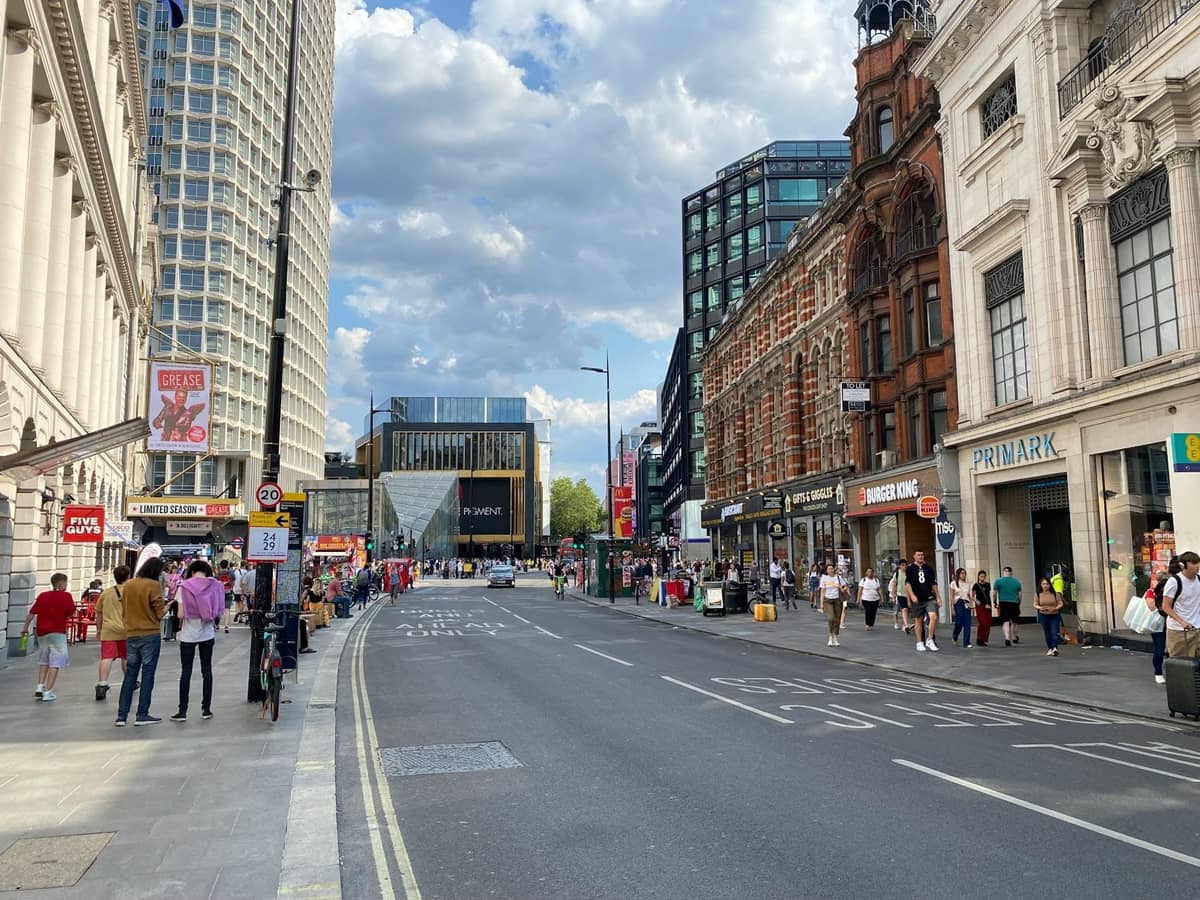
Oxford Street is one of the most visited retail strips in Europe, stretching roughly 1.2 miles between Marble Arch in the west and Tottenham Court Road junction in the east. It mixes mainstream chains like Zara, H&M, and Nike with department store anchors including Selfridges (at the Marble Arch end), John Lewis, and Marks & Spencer. Despite its fame, Oxford Street is firmly mid-range territory. Anyone expecting wall-to-wall luxury is in the wrong postcode.
Regent Street runs south from Oxford Circus to Piccadilly Circus and steps up considerably in tone. You'll find Apple, Anthropologie, and the flagship of Liberty London here, along with the curved John Nash-designed facades that make it one of the more architecturally interesting retail streets in the city. It occupies the sweet spot between Oxford Street's accessibility and the full luxury of Mayfair.
For genuine luxury shopping, Bond Street is the address. Old Bond Street and New Bond Street together form a roughly half-mile corridor through Mayfair lined with Cartier, Louis Vuitton, Chanel, Tiffany, and Rolex. Prices reflect the postcode. Nearby, Harrods in Knightsbridge operates on a scale that's almost overwhelming: seven floors, 330 departments, and a food hall that draws visitors even if they have no intention of spending £80 on Fortnum's tea.
- Oxford Street 300+ shops, mid-range chains and department stores. Best for: Selfridges, H&M, Nike Town. Avoid weekends if crowds are an issue.
- Regent Street Mid-to-high end brands, beautiful architecture. Best for: Liberty London, Apple, Anthropologie. More pleasant to walk than Oxford Street.
- Bond Street Mayfair's luxury corridor. Best for: Cartier, Chanel, Louis Vuitton. Browsing is free; buying is not.
- King's Road, Chelsea Designer boutiques and independent stores. Best for: fashion-forward shoppers, less crowded than central streets.
- Knightsbridge Harrods and Harvey Nichols anchor this area. Best for: premium food, luxury goods, and people-watching.
⚠️ What to skip
Oxford Street's reputation significantly exceeds its reality for many visitors. Pickpocketing is a genuine concern on busy stretches, the pavements are extremely crowded on Saturdays, and the selection is broadly the same as any large city's retail offer. If you're after something distinctive or uniquely London, the markets and independent areas described below will serve you better.
London's Markets: A Practical Breakdown
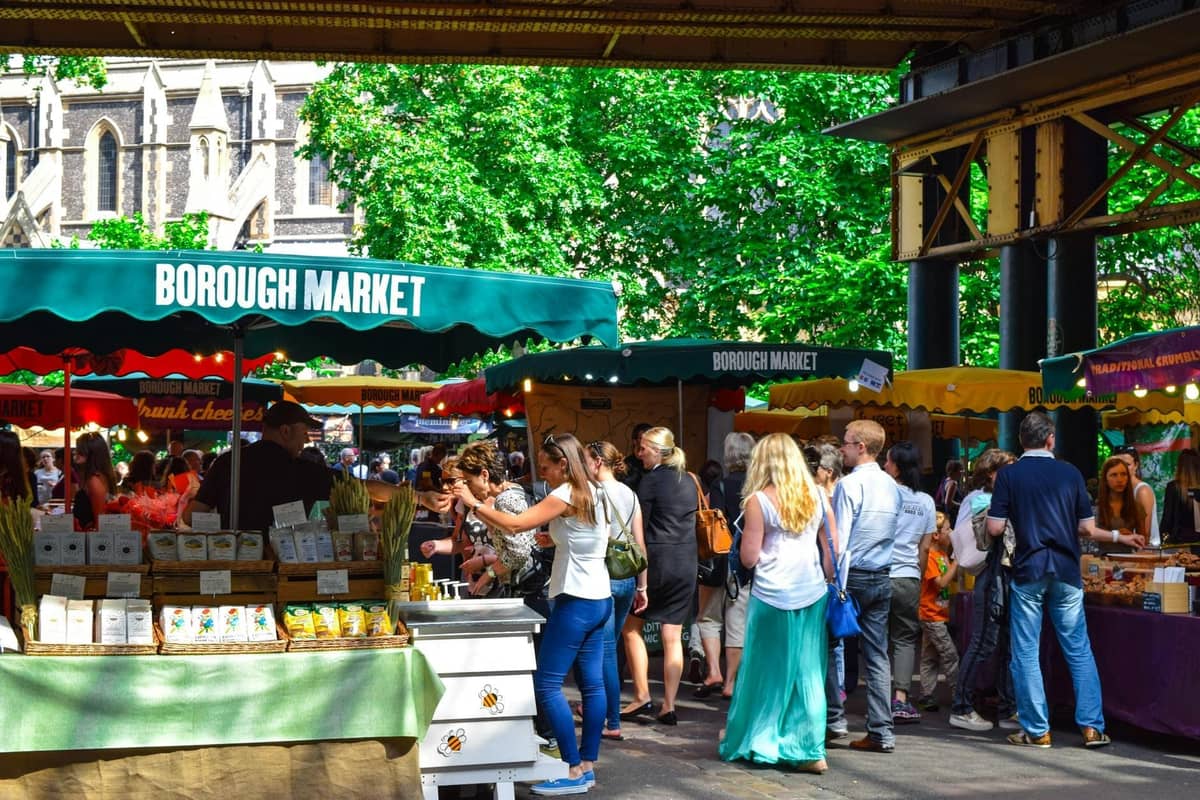
London's market scene is one of its strongest retail assets, but the quality and character vary enormously. Each market has a primary identity, a best day to visit, and some caveats worth knowing before you make the journey.
Borough Market near London Bridge is one of the oldest food markets in London and among the best in the UK. It specialises in fresh produce, artisan foods, and street food from dozens of traders. Core trading hours run Tuesday to Thursday 10:00–17:00, Friday 10:00–18:00, and Saturday 08:00–17:00, with limited trading on Mondays. Friday and Saturday are the busiest days; arriving before 11:00 on a Saturday sidesteps the worst of the lunch crowds. The market is largely covered, which matters on wet days.
Portobello Road Market in Notting Hill is most famous for its Saturday antiques trade, which draws serious collectors and curious tourists alike. But it operates differently across the week: Monday to Wednesday focuses on produce, food, and general goods (roughly 09:00–18:00), Friday and Saturday expand to include fashion, crafts, and street food alongside the antiques (around 09:00–19:00), and Sunday is a smaller market with a mix of traders; Thursday sees reduced trading and some stalls only open in the morning. The idea that Portobello only runs on Saturdays is a common misconception.
Columbia Road Flower Market in east London is a Sunday-only operation, running approximately 08:00–14:00. A single street becomes densely packed with flower and plant sellers, and the surrounding shops open specifically to coincide. It is Shoreditch and East End at its most charming, but arrive before 10:00 if you want to move comfortably and find the best selection. By early afternoon, the crowds thin and sellers often discount to avoid carrying stock home.
Camden Market is a cluster of interconnected market spaces around Camden Lock, running daily from roughly 10:00–18:00. It leans toward alternative fashion, crafts, and street food from global cuisines. The food stalls around the Lock are the most photographed, but the actual produce is inconsistent. Worth visiting for the atmosphere and browsing, less so if you're prioritising value or specialist goods.
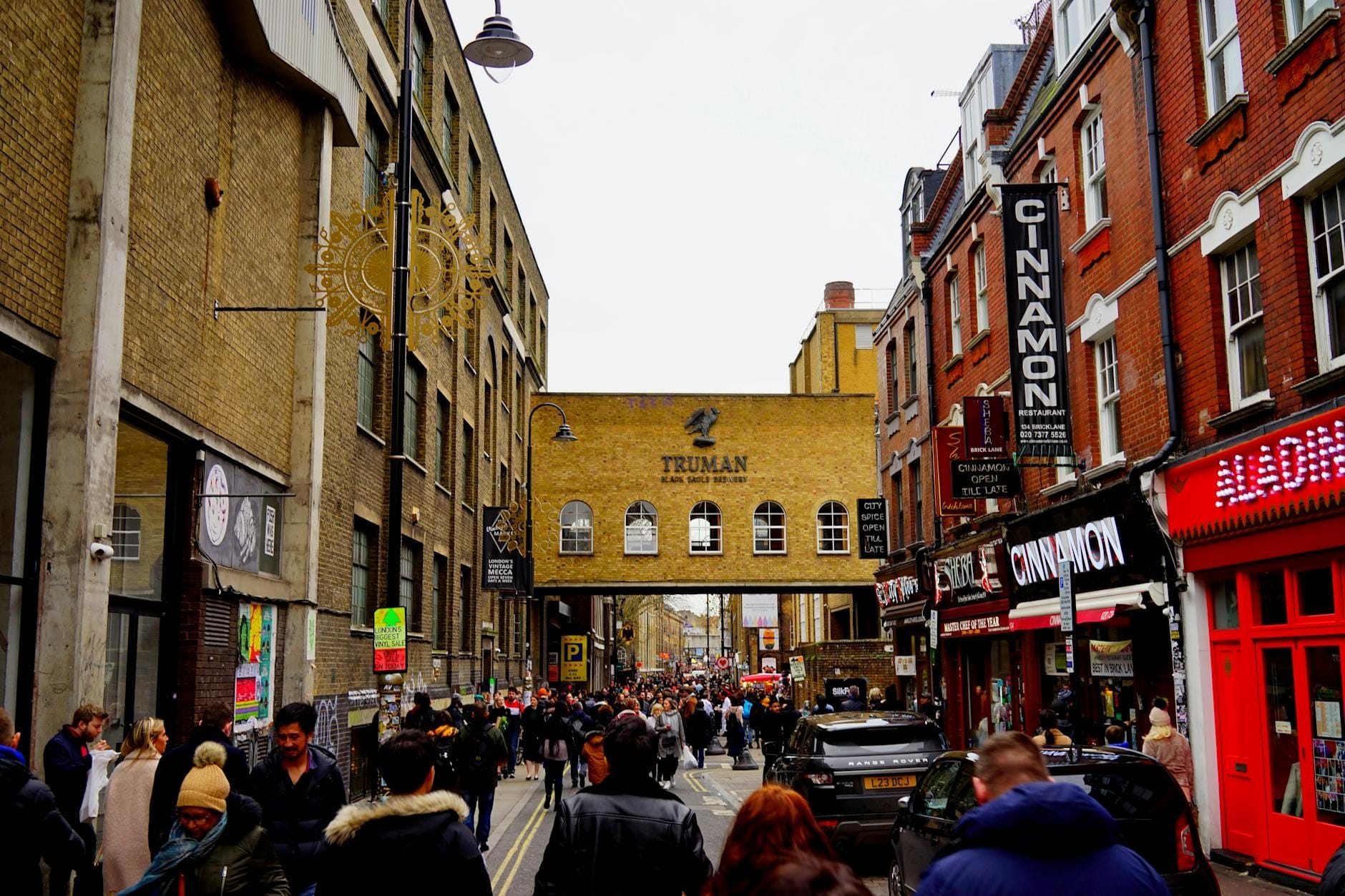
Old Spitalfields MarketOld Spitalfields Market in east London operates daily from around 10:00, with a Saturday Style Market focusing on independent fashion designers and a regular arts and crafts offer. It sits in a striking Victorian market hall and has a thoughtful selection of independent traders. Nearby Brick Lane runs its own Sunday market (roughly 10:00–17:00) with vintage clothing, street food, and bric-a-brac, though quality is variable.
✨ Pro tip
Maltby Street Market in Bermondsey (Sat 10:00–17:00, Sun 11:00–16:00) is a serious food market that remains less overrun than Borough Market. The Ropewalk strip under the railway arches has a concentrated selection of quality producers and fewer tourists competing for counter space. It's particularly strong for cheese, charcuterie, and coffee.
Iconic Stores Worth Visiting in Their Own Right
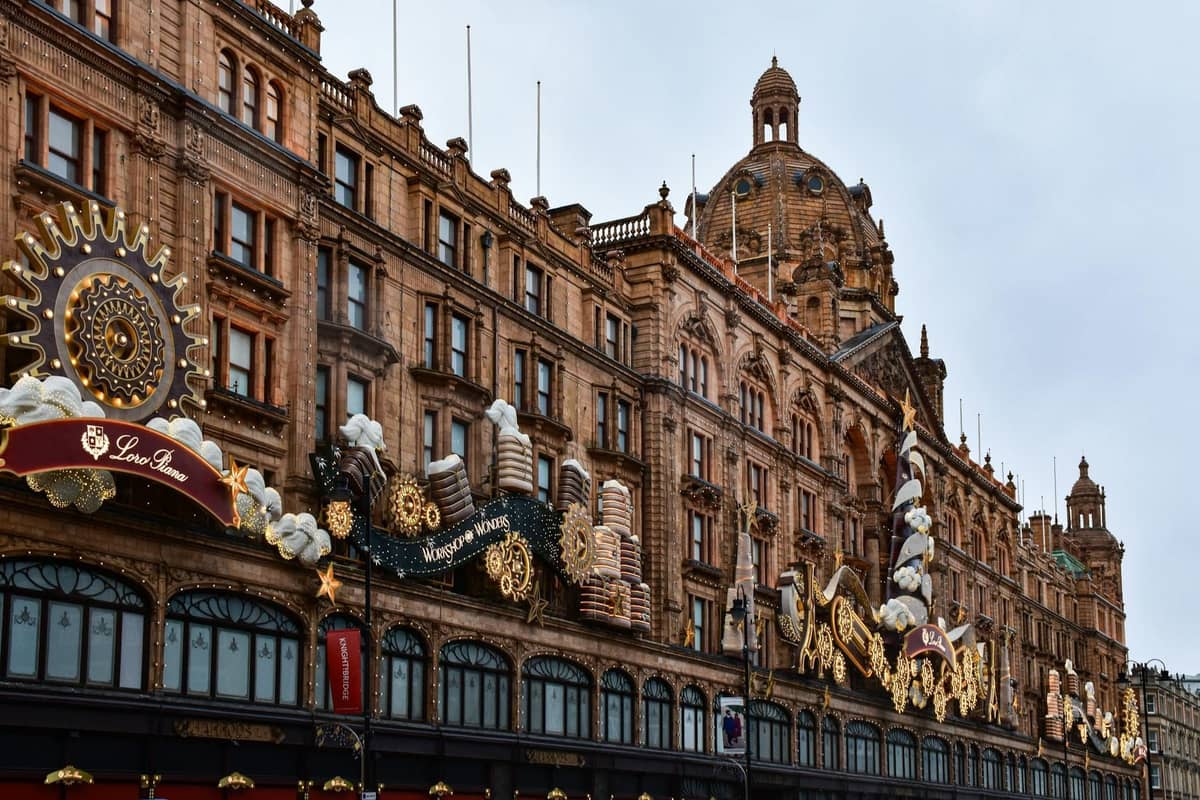
Several London stores have become attractions as much as retail destinations. Whether or not you're buying, they reward a visit for their architecture, food halls, or sheer scale.
Selfridgeson Oxford Street is the most impressive of London's department stores. The food hall, beauty department, and window displays are all worth seeing. It positions itself above the Oxford Street average, with a strong fashion offer spanning multiple price points. The building itself, a 1909 Edwardian-Baroque landmark, sets the tone.
Liberty LondonLiberty London on Great Marlborough Street occupies a Tudor Revival building whose construction incorporated timber from two Royal Navy ships, HMS Impregnable and HMS Hindustan. Inside, it stocks an edited selection of fashion, beauty, and homewares with an emphasis on prints and craftsmanship. It's one of the most distinctive retail environments in London and worth a visit even if you're not planning to spend.
Fortnum and Mason Fortnum & Mason on Piccadilly has been trading since 1707 and remains the definitive destination for British food gifts: teas, preserves, biscuits, hampers. The presentation is immaculate and prices are high, but it doubles as one of the more enjoyable food browsing experiences in central London. The ground-floor food hall is open to browsers without any obligation to buy.
Shopping by Neighbourhood: Matching Areas to Your Interests
Different parts of London have distinct retail personalities. Kensington and Chelsea covers both the affluent designer boutiques of Sloane Street and the more eclectic King's Road, which was the birthplace of British punk fashion in the 1970s and still has a higher concentration of independent fashion stores than most central areas.
Notting Hill beyond Portobello Road has a strong cluster of independent bookshops, vintage clothing stores, and design-led homewares shops along Westbourne Grove and Ledbury Road. It's a good area to spend an afternoon shopping without a specific list, browsing rather than ticking off destinations.
For contemporary fashion and streetwear, Shoreditch and the streets around Brick Lane concentrate independent designers, vintage warehouses, and concept stores. Prices vary widely. Carnaby Street in Soho, though touristy, still has a reasonable selection of independent brands and is worth walking through as part of a broader West End shopping day.
- Best for luxury Bond Street, Sloane Street, Knightsbridge (Harrods, Harvey Nichols)
- Best for mid-range and department stores Oxford Street, Regent Street, Westfield centres (Stratford or Shepherd's Bush)
- Best for independent and vintage Portobello Road, Brick Lane, King's Road, Notting Hill's side streets
- Best for food shopping Borough Market, Maltby Street, Fortnum & Mason food hall, Harrods food hall
- Best for gifts and crafts Covent Garden markets, Liberty London, Old Spitalfields Market
Practical Tips: Timing, Transport, and Getting the Most Out of It
Shopping in London on a Saturday between November and December is an exercise in patience. Oxford Street, Covent Garden, and the major markets are all significantly more crowded during this period. If your schedule has any flexibility, weekday mornings between Tuesday and Thursday offer the calmest experience across virtually every shopping area.
Most major central shopping areas sit within Zones 1 and 2 on the TfL network. Contactless bank cards and mobile payment apps work directly on the Tube, buses, the DLR, London Overground and the Elizabeth line, and daily fare caps mean you won't overpay no matter how many journeys you make. Markets accessed via Zone 1 Tube stations (Borough Market is a 5-minute walk from London Bridge station) require no advance planning.
Currency is pound sterling (GBP). Credit and debit cards are accepted almost universally in shops and at many market stalls; cash is still useful at smaller market traders, though contactless payment has expanded significantly at outdoor markets since 2020. There is no sales tax refund scheme for tourists since the UK ended the Tax-Free Shopping scheme for overseas visitors in January 2021. This is worth knowing if you were planning purchases expecting a VAT refund.
ℹ️ Good to know
The UK ended its VAT retail export scheme (tourist tax refund) in January 2021. Unlike many European countries, London no longer offers tax-free shopping for overseas visitors. Factor this into your budget when comparing prices to other European capitals.
If you want to combine shopping with sightseeing, the 3-day London itinerary builds in time around Covent Garden and the West End, which keeps both agendas manageable. For budget-conscious shoppers, the London on a budget guide covers where to find good-value vintage, charity shops, and market bargains.
FAQ
What is the best shopping street in London?
It depends on what you're looking for. Oxford Street has the widest selection of mid-range stores and department stores. Bond Street is the top address for luxury brands. Regent Street sits in between, with a higher-end feel than Oxford Street and a more walkable environment. For something more distinctive, Portobello Road in Notting Hill or the streets around Shoreditch offer independent and vintage options you won't find on the main commercial strips.
What day is best for Portobello Road Market?
Saturday is the main antiques day and when the market is at its fullest, with dealers covering a long stretch of Portobello Road from Notting Hill Gate down to Golborne Road. Arrive before 10:00 to see the full spread and move comfortably. The market does operate on other days, but with a different focus: mostly food, general goods, and fashion rather than antiques.
Is there tax-free shopping for tourists in London?
No. The UK ended its VAT retail export scheme (commonly called tax-free shopping) in January 2021. Tourists can no longer claim VAT refunds on goods purchased in the UK and taken home. This applies to all nationalities, including those from the EU and US.
What are London's best markets for food?
Borough Market near London Bridge is the most famous and has a strong selection of artisan and fresh produce traders, though it gets very busy on Fridays and Saturdays. Maltby Street Market in Bermondsey is a good alternative with similar quality and fewer crowds (Sat 09:00–16:00, Sun 11:00–16:00). For grocery shopping rather than street food, the food halls at Harrods and Fortnum & Mason are experiences in themselves.
When should I avoid shopping in central London?
Saturdays are busy across all central shopping areas year-round. The period from mid-November through December 24 is the most crowded, with Oxford Street and Covent Garden seeing particularly heavy foot traffic. If you're visiting during this period and dislike crowds, allocating shopping to Tuesday through Thursday mornings makes a significant difference.