Liberty London: Inside the West End's Most Beautiful Department Store
Liberty London is one of the West End's most architecturally striking buildings — a mock-Tudor department store founded in 1875, famous for its printed fabrics, curated homeware, and atmospheric oak-panelled interior. Entry is free, and the building itself is worth the detour even if you have no intention of buying anything.
Quick Facts
- Location
- Great Marlborough Street, London W1B 5AH (just off Regent Street, spanning between Carnaby Street and Kingly Street in the West End)
- Getting There
- Oxford Circus (Central, Bakerloo, Victoria lines) — 3-minute walk. Piccadilly Circus also walkable.
- Time Needed
- 45 minutes to browse all floors; 2+ hours for dedicated shoppers
- Cost
- Free entry. Prices inside range from affordable cosmetics to high-end designer goods.
- Best for
- Architecture lovers, design and fabric enthusiasts, gifts, solo shoppers
- Official website
- www.libertylondon.com
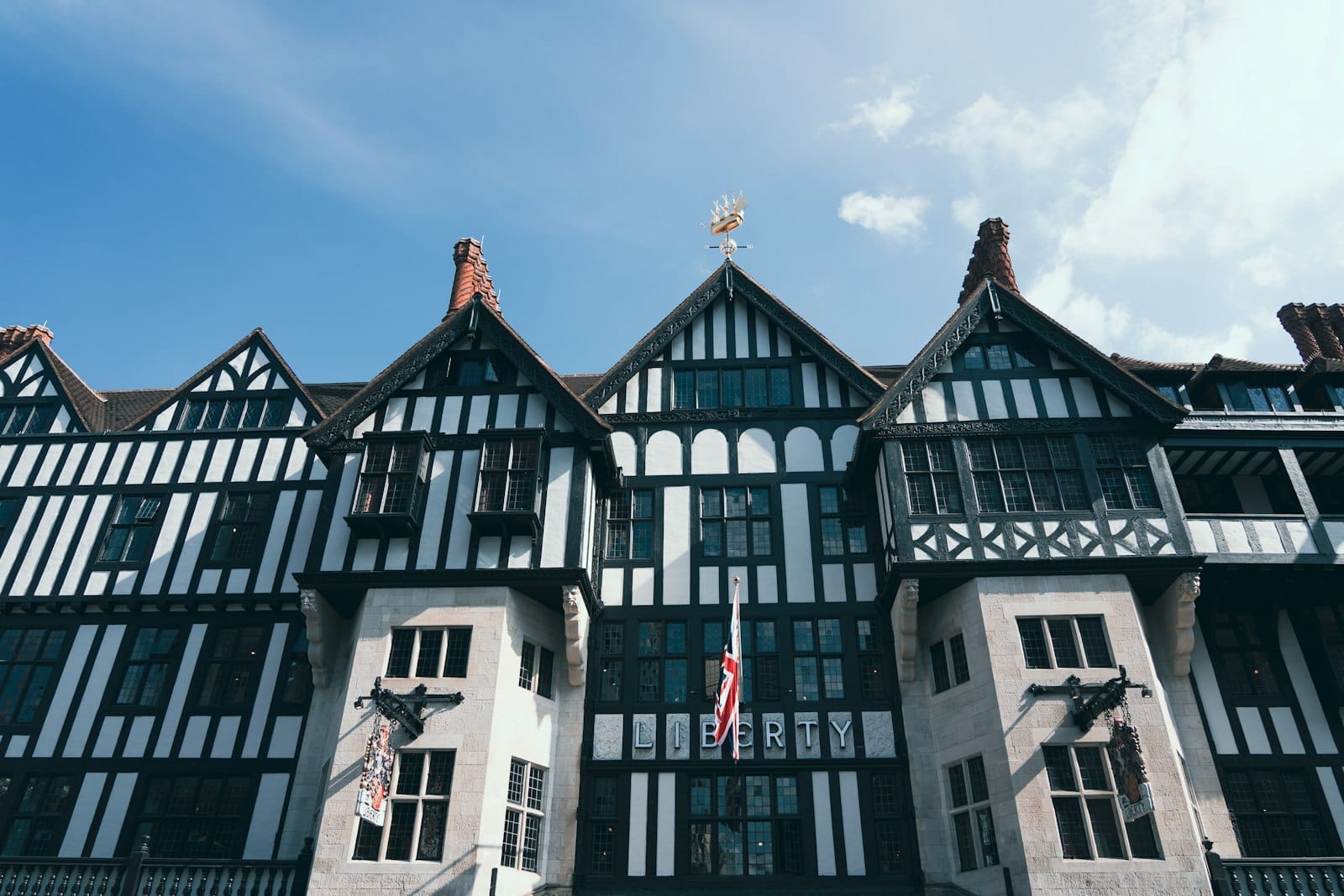
What Liberty London Actually Is
Liberty London is a department store on Great Marlborough Street in the West End, founded in 1875 by Arthur Lasenby Liberty as a small shop selling imported silks, ornaments, and decorative goods from China and Japan. Nearly 150 years later, it occupies a remarkable mock-Tudor building that opened in 1924, with timber-framed overhanging stories, creaking oak staircases, and a central atrium that feels closer to a medieval great hall than a modern retail floor.
The store sits just off Regent Street, tucked between the pedestrian sprawl of Carnaby Street to the east and the busier shopping corridor to the west. Most visitors walk past the Great Marlborough Street facade and stop instinctively. The building has that effect. Whether you spend money here or not, it earns its place on any West End itinerary.
💡 Local tip
Entry is completely free. You do not need to buy anything to explore all floors. Weekday mornings between 10am and noon are noticeably quieter than weekend afternoons, when the ground floor cosmetics and fragrance halls get crowded.
The Architecture: Why the Building Matters
The current Liberty building was completed in 1924 to a design by Edwin Thomas Hall and his son Edwin Stanley Hall. It was built in the Tudor Revival style — deliberately anachronistic for its era — using timber salvaged from two decommissioned Royal Navy ships: HMS Impregnable and HMS Hindustan. The ship timbers are not just decorative. Run your hand along the banisters on the upper floors and you are touching wood that once formed part of a 19th-century warship.
Inside, the building is arranged around a narrow multi-storey light well with open galleried floors overlooking the atrium. The proportions feel deliberately intimate for a department store: low ceilings, irregular room shapes, sudden corners that open into new displays. The wood is dark, slightly worn in the right places, and smells faintly of polish. Natural light filters down from roof skylights, changing the atmosphere depending on the weather outside.
The contrast between the Tudor exterior and the contemporary merchandise inside is part of what makes Liberty interesting as a space. You might be looking at a modern perfume display or a rack of printed scarves, but the shelving is recessed into panelled oak walls that have not changed significantly since 1924. For architecture enthusiasts, this is one of the more unusual retail interiors in London.
Liberty is not formally listed as a tourist attraction in the way that Harrods or Selfridges are positioned, but it appears on most serious lists of London's most photographed interiors and is frequently referenced in architectural surveys of the West End.
Tickets & tours
Hand-picked options from our booking partner. Prices are indicative; availability and final rates are confirmed when you complete your booking.
Tootbus London by Night: Bus tour
From 32 €Instant confirmationFree cancellationThe Making of Harry Potter Guided Tour of London Warner Bros. Studio
From 201 €Instant confirmationFree cancellationWarner Bros. Studio Tour London - The Making of Harry Potter and Oxford guided tour
From 157 €Instant confirmationFree cancellationLondon's Harry Potter themed self-guided walking tour on a mobile app
From 9 €Instant confirmation
What to Expect Floor by Floor
The ground floor is dedicated to beauty and fragrance, and it is the most intensely curated cosmetics floor in London. Liberty edits its beauty selection aggressively — you will not find every mainstream brand here, but you will find smaller independent perfume houses and skincare lines that are difficult to locate elsewhere in the city. The scent is noticeable the moment you walk in: layers of fragrance from testing strips and open testers, absorbed slightly by the old wood.
The upper floors carry Liberty's most well-known category: fabrics and prints. The Liberty print — a distinctive small-scale floral pattern originally developed from the store's imported textile trade — has been produced continuously since the 19th century. The fabric hall stocks hundreds of these prints by the metre, and also offers a haberdashery section with notions, thread, and accessories. It is one of the few surviving fabric retail spaces of this kind in central London.
Beyond fabrics, Liberty stocks fashion (a selective mix of established and emerging designers), homeware, stationery, jewellery, and gifts. The homeware section in particular rewards slow browsing: items here tend toward the distinctive rather than the mainstream. The stationery and gifts floors are useful for anyone looking for something to bring back from London that is not sold at every other shop on Oxford Street.
ℹ️ Good to know
Opening hours: Monday to Saturday 10:00–21:00. Sunday 11:30–18:00 (browsing permitted from 11:30, with purchases typically from midday). Bank Holidays usually follow Sunday hours unless otherwise stated. Always confirm on the official site before visiting, as hours can shift around major holidays.
How the Experience Changes Through the Day
Arriving shortly after 10am on a weekday gives you a near-private experience of the building. The central atrium is quiet enough to hear the timber floors settle. Staff restock displays methodically and there is room to look up at the carved woodwork above the staircases without anyone pressing past you. The light at this hour comes down through the atrium clerestory in soft, diffused columns if the sky is overcast — which in London is most mornings.
By mid-afternoon, particularly on Saturdays, the ground floor and lower levels fill significantly. The narrow corridors between displays become difficult to navigate slowly, and the cosmetics counters are attended with staff and queuing customers. If you are visiting specifically for the atmosphere or the architecture, afternoon weekend visits work against you.
The Christmas period transforms Liberty more dramatically than most London stores. The decorations are applied with genuine restraint relative to the general West End excess — the dark wood responds particularly well to warm lighting, and the store develops an atmosphere that feels more like a Victorian emporium than a modern retail space. If you visit London in December, Liberty is worth building into your itinerary for the atmosphere alone, even if you only spend twenty minutes inside.
For broader context on shopping in this area, the Carnaby Street pedestrian zone begins immediately to the east of Liberty, offering a very different retail atmosphere. The surrounding West End also contains some of London's best theatre and food options within short walking distance.
Getting There and Practical Logistics
The most straightforward route is Oxford Circus station, served by three Underground lines: Central (red), Bakerloo (brown), and Victoria (blue). From the exit at the corner of Oxford Street and Regent Street, Liberty is a three-minute walk south along Regent Street, then right onto Great Marlborough Street. The main entrance with the Tudor facade faces Great Marlborough Street directly.
Piccadilly Circus station (Piccadilly and Bakerloo lines) is also walkable in around eight to ten minutes, which is useful if you are combining Liberty with a visit to the broader Regent Street area or Soho. There is no dedicated parking for visitors, and the surrounding streets are controlled zones; arriving by public transport is strongly recommended.
Accessibility within the building is complicated by its heritage status. The Tudor construction means uneven floors, narrow corridors, and significant use of stairs. Liberty does provide accessibility information through its official Help Centre, and visitors with mobility requirements should check the current situation directly on the Liberty website before visiting, as adaptations may have been updated.
⚠️ What to skip
The building's heritage interior means some floors are more accessible than others. If you have mobility concerns, check Liberty's official accessibility information before visiting rather than assuming full step-free access throughout.
Photography Inside Liberty
Liberty does not prohibit personal photography, and the interior is photogenic. The best angles are from the upper gallery floors looking down into the central atrium — the layered galleries, hanging displays, and light from above make for strong architectural photographs. Low light conditions on overcast days can make handheld shooting difficult on the lower floors; the natural light is best on the upper levels near the skylights.
The exterior facade on Great Marlborough Street photographs well in morning light, before shadows from neighbouring buildings become a factor. The Tudor-framing, decorative frieze, and oriel windows above the entrance are the elements most worth capturing. Avoid shooting during rush periods when pedestrian traffic makes clean exterior shots difficult.
Is Liberty Worth Your Time?
For most visitors, yes — but for reasons that depend on what you are looking for. As a shopping destination, Liberty is distinctive rather than comprehensive. The edit is strong, the prices reflect that, and if you have a specific category in mind (fabrics, niche beauty, design-led homeware), the quality of selection is hard to match elsewhere in the West End.
As an architectural experience, it is one of London's more unusual retail interiors and requires no purchase to justify visiting. Twenty minutes exploring the floors and looking at the building itself costs nothing and offers something that most modern department stores simply cannot replicate.
Those who may find it less rewarding: visitors looking for mainstream brands at accessible price points, those with limited time who need to cover more ground, and anyone who finds heavily merchandised spaces overwhelming. Liberty's layout — by design, somewhat labyrinthine — can feel frustrating if you have a specific item in mind and cannot locate the right floor easily.
If you are building a full day around this part of London, consider pairing Liberty with a walk through Soho to the south or including it as part of a broader London shopping itinerary covering the West End's main retail areas.
Insider Tips
- The fabric hall on the upper floors carries Liberty's printed fabrics by the metre — prices are significant, but the selection includes patterns not available in cut form elsewhere in the store. If you want fabric samples rather than full lengths, ask at the counter.
- The Christmas decorations at Liberty are applied earlier than most stores and taken more seriously. The window displays and internal lighting scheme change significantly from late October; if you are in London in November, this is the version of the store most worth seeing.
- The Tudor building has a second, less prominent entrance from Regent Street, though the Great Marlborough Street facade is the one worth approaching on foot for the full architectural impact.
- Liberty's own-brand products (particularly printed scarves, tote bags, and stationery) are sold at lower price points than the designer merchandise and make practical gifts. They are found across multiple floors rather than grouped together.
- If you are interested in the history of the building and the store's textile heritage, the Liberty website's Our Heritage section provides a more detailed account than any placard inside the store.
Who Is Liberty London For?
- Architecture and design enthusiasts who want to see a unusual surviving retail interior
- Fabric and haberdashery shoppers looking for Liberty prints and quality notions
- Gift buyers wanting something distinctive and specifically London-sourced
- Beauty and fragrance enthusiasts seeking independent or boutique brands not stocked elsewhere
- Anyone visiting London in December who wants to experience one of the city's more atmospheric Christmas shopping environments
Nearby Attractions
Other things to see while in West End:
- British Library
The British Library holds over 170 million items spanning thousands of years of human thought, from the Magna Carta to Beatles lyrics. Entry to the building and permanent collection galleries is free, making it one of the most rewarding stops in central London for curious travellers.
- British Museum
The British Museum holds one of the world's great collections of human history and culture, spanning two million years across more than 60 free galleries. Entry to the permanent collection is free, but knowing how to navigate the scale of it makes the difference between a rewarding visit and an overwhelming one.
- Carnaby Street
Carnaby Street is the pedestrianised shopping district in Soho that defined the look of 1960s London and continues to draw fashion lovers, food hunters, and curious walkers today. Free to explore and five minutes from Oxford Circus, it rewards those who slow down and wander its connecting lanes.
- Coal Drops Yard
Coal Drops Yard is a redeveloped Victorian industrial estate in King's Cross, now home to independent retailers, restaurants, and bars set beneath strikingly restored brick vaults. The public outdoor spaces are free to enter and a short walk from King's Cross St Pancras station.