Soho, London: Food, Culture, and After-Dark Energy in the West End
Soho is the West End neighbourhood that refuses to be defined by a single identity. By day it's a working district of independent restaurants, creative agencies, and crumbling Soho townhouses. After dark, it becomes one of London's most concentrated patches of bars, theatres, and live music. Free to explore and walkable from four Tube stations, it rewards time spent without a plan.
Quick Facts
- Location
- City of Westminster, West End, London. Bounded by Oxford Street (north), Charing Cross Road (east), and roughly by Coventry Street and Piccadilly Circus (south), and Regent Street (west).
- Getting There
- Tottenham Court Road (Central, Northern, Elizabeth lines), Oxford Circus (Bakerloo, Central, Victoria), Piccadilly Circus (Bakerloo, Piccadilly), Leicester Square (Northern, Piccadilly)
- Time Needed
- 2 hours minimum to walk through; a full day or evening if you plan to eat and drink
- Cost
- Free to enter and explore. Individual venues, restaurants, theatres, and events charge their own prices.
- Best for
- Foodies, night owls, LGBTQ+ travellers, theatre-goers, and anyone who wants to understand modern London's social texture
- Official website
- www.thisissoho.co.uk
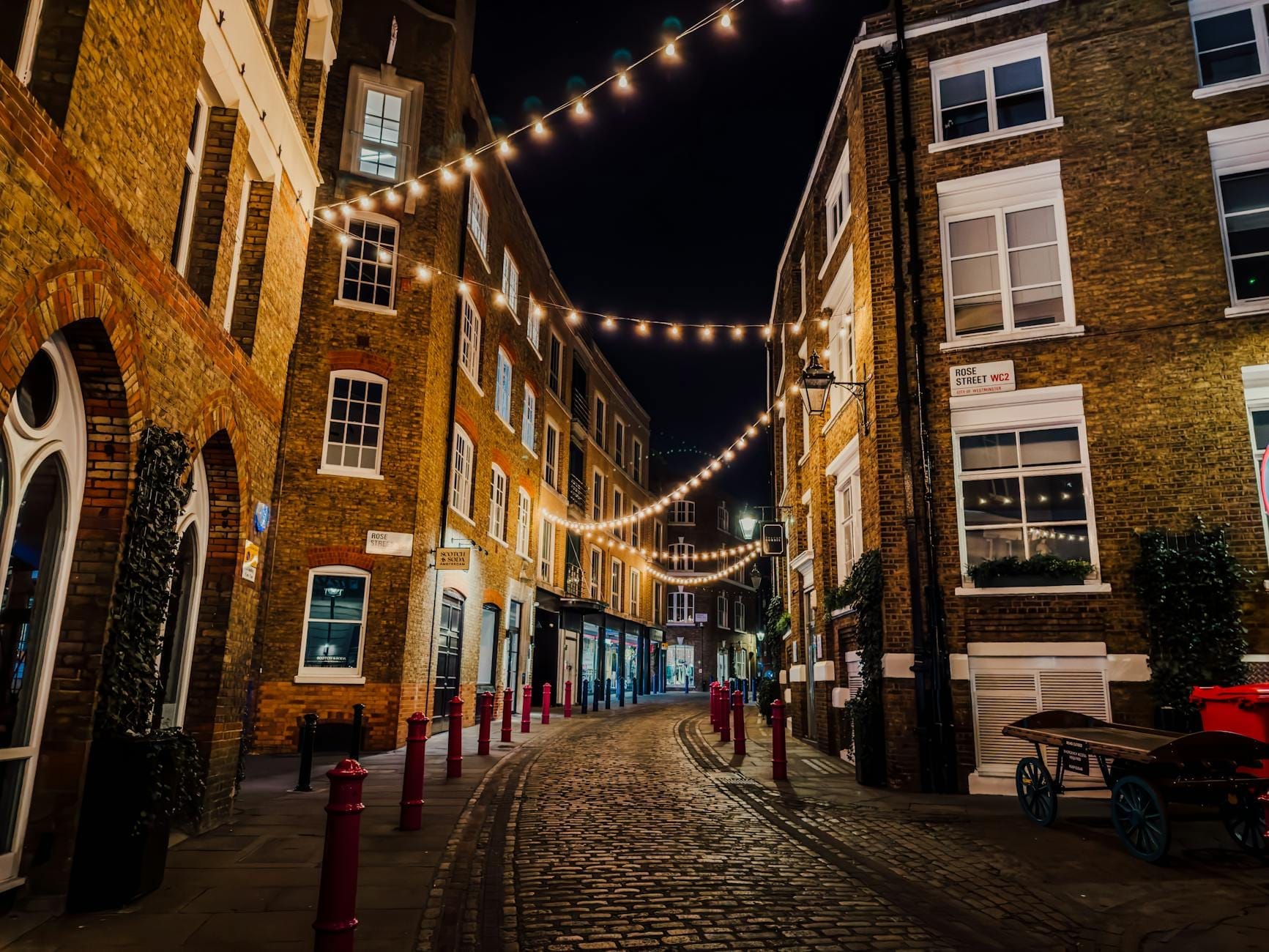
What Soho Actually Is
Soho is one of those London neighbourhoods whose reputation tends to arrive before the place itself does. People expect it to be edgy, or sleazy, or fashionable, and depending on the street corner and the hour of day, it can be all three. In reality, Soho is a roughly one-square-mile grid of Georgian and Victorian streets in the heart of the West End, and what makes it worth your time is less any individual landmark and more the density of things happening within a very short walk of each other.
The neighbourhood sits in the City of Westminster, loosely framed by Oxford Street to the north, Regent Street to the west, Coventry Street and Piccadilly Circus to the south, and Charing Cross Road to the east. Its core streets — Old Compton Street, Frith Street, Dean Street, Wardour Street — form a tight mesh that takes maybe twenty minutes to cross on foot but considerably longer to properly explore. Soho is not a destination with an entrance. You walk in from wherever you're coming from, and the character shifts block by block.
💡 Local tip
Use Tottenham Court Road station (Elizabeth line) as your entry point if you're arriving from further afield — it drops you at the northeast corner of Soho, a short walk from the main streets. Piccadilly Circus station works better if you're approaching from the south or arriving from Heathrow via the Piccadilly line.
A Brief History That Explains the Present
Soho's evolution from farmland to cultural flashpoint is a story of successive waves of immigration. The land was Crown property by the 1530s, and serious urban development began in the 17th century. What set Soho apart from other developing West End districts was that it became a refuge: first for French Huguenot Protestants fleeing religious persecution after 1685, then for Greek, Italian, Chinese, and Jewish communities across the 18th and 19th centuries. Each group left culinary, commercial, and cultural traces that are still detectable today.
By the 19th century, Soho had become London's primary entertainment district, a role it has never fully surrendered. The neighbourhood has also carried a reputation for tolerance of those who didn't fit neatly into mainstream society — which is part of why it became a centre of LGBTQ+ life in London, a significance that Old Compton Street in particular still holds today. That layered history is what gives Soho its specific texture: the sense that every building has had several lives, and the current one is never quite the final word.
For a broader sense of how Soho sits within the wider West End, see our guide to the West End neighbourhood, which covers the surrounding area including Covent Garden and Mayfair.
Tickets & tours
Hand-picked options from our booking partner. Prices are indicative; availability and final rates are confirmed when you complete your booking.
Soho Instagram a self-guided walking tour to top photo spots
From 6 €Instant confirmationFree cancellationBeatles London walking tour of Soho and Mayfair
From 17 €Instant confirmationFree cancellationLondon food tour in Soho, Chinatown, and Covent Garden
From 105 €Instant confirmationFree cancellationSemi-private Soho Rock n Roll walking tour
From 22 €Instant confirmationFree cancellation
Soho by Time of Day
Morning and Lunchtime
Early morning Soho is quiet, which surprises most first-time visitors. By 8am, delivery vehicles crowd the narrow side streets, restaurant staff are taking in stock, and the smell of coffee drifts from the handful of cafes that open early. It is the best time to appreciate the architectural texture of the area: the narrow Georgian brick facades on Frith Street, the Victorian shop fronts on Berwick Street, the occasional ornate pub doorway that looks like it belongs in a Dickens illustration.
Berwick Street Market — a traditional street market with a history stretching back to the early 18th century — comes alive from around 9am on weekdays. It's primarily a fruit, vegetable, and street food market, and while it's smaller than it once was, it remains one of the few working-class remnants in an area that has become increasingly expensive. Grab something to eat here and you'll get a feel for a Soho that hasn't been curated for tourists.
Afternoon
The afternoon is when Soho's food and independent retail scene comes into focus. The grid of streets between Dean Street and Wardour Street contains a concentration of independent restaurants — Japanese, Italian, Chinese, French, West African, Middle Eastern — that reflect the neighbourhood's immigrant history in a still-functioning way. This is not a food quarter assembled by a property developer; the density is organic, and the competition is fierce enough that quality tends to be high.
Wardour Street has long been associated with the British film and post-production industry, and you'll still notice the discreet studio signs and media company offices above the ground-floor restaurants. Ronnie Scott's Jazz Club on Frith Street, which has hosted jazz performances continuously since 1959, is closed during the day but its presence contributes to the neighbourhood's sense of creative seriousness.
Evening and Night
Soho after dark is a different place in energy and volume, though not always in the way new visitors expect. The pre-theatre crowd arrives between 5pm and 7pm, filling the restaurants along Dean Street and Greek Street. By 8pm, the streets around Old Compton Street are properly busy: pavement tables occupied regardless of the weather, the bars visibly full through their large windows, groups forming and splitting on corners. The noise level rises noticeably around 9pm, and on Friday and Saturday nights the streets themselves become social spaces.
This is also when Soho's LGBTQ+ identity becomes most visible. Old Compton Street and the surrounding streets have concentrated some of London's longest-established gay bars and venues. It is not an exclusively LGBTQ+ space — Soho has never worked that neatly — but its acceptance of queerness is deep-rooted and genuine rather than performative. Solo travellers who are LGBTQ+ will generally find Soho among the most relaxed and welcoming parts of London.
⚠️ What to skip
Friday and Saturday nights around Old Compton Street, Wardour Street, and Dean Street get very crowded between 10pm and 2am. If you're not looking for that atmosphere — or if you're visiting with young children in the evening — the eastern streets nearer Charing Cross Road tend to be quieter.
What to Actually Look At (and Where to Walk)
Soho rewards walking without a strict itinerary, but a few anchor points help orient you. Start at the southern end at Piccadilly Circus — not for the illuminated signs themselves, which are more functional than spectacular up close, but because it gives you a baseline. From here, walk north up Wardour Street or Frith Street and you're immediately in the working core of the neighbourhood.
Soho Square, a small public garden at the northern end of the neighbourhood, is worth reaching. It has a curious half-timbered gardener's hut at its centre that dates from the early 20th century and contains underground storage facilities, not a cottage as it appears. On warm afternoons, office workers and students fill the grass — it's one of the few genuine breathing spaces in this dense part of the city.
Old Compton Street runs east-west through the lower half of Soho and is the street most associated with the neighbourhood's social life. The patisseries, delis, and bookshops that once defined it have been largely replaced by bars and restaurants, but the street retains a distinct energy and is worth walking at different times of day to understand how the atmosphere shifts.
Just east of Soho, across Charing Cross Road, you'll find Covent Garden — a logical next stop if you're walking east, particularly for its covered market and street performers.
Theatre, Music, and the Arts
Soho sits at the edge of London's Theatreland, and several smaller independent theatres operate within the neighbourhood itself — including the Soho Theatre on Dean Street, which has a reputation for premiering new writing and stand-up comedy. The large West End productions are concentrated slightly further south around Shaftesbury Avenue, which forms Soho's southern fringe.
If you're planning an evening around theatre, see the broader guide to West End shows in London for advice on booking, pricing, and which productions tend to offer last-minute discounts.
Ronnie Scott's Jazz Club is Soho's most historically significant music venue and still operates nightly with a programme ranging from established artists to up-and-coming jazz musicians. Tickets are required for main shows and should be booked in advance for weekend performances. The room is intimate by the standards of most music venues — it holds around 200–250 people seated — and the sightlines from most tables are reasonable.
Food, Drink, and Shopping
The food offer in Soho is one of the most varied in central London. Chinatown, which technically borders Soho to the south around Gerrard Street, adds a further layer of East and Southeast Asian restaurants to the mix. Within Soho proper, the range runs from long-established Italian trattorias on Frith Street and Old Compton Street to Japanese yakitori restaurants on Golden Square and West African spots tucked into side streets. The neighbourhood is not cheap — the rents are high and the prices reflect that — but the quality-to-price ratio is generally better than in more overtly tourist-facing parts of the West End.
For drinking, the pub landscape includes some old establishments. The French House on Dean Street has been a Soho institution since the early 20th century; during the Second World War it was a meeting point for Free French forces under de Gaulle, and it still serves wine by the half-glass in a deliberately traditional way. It's small, often crowded, and doesn't have loud music — which makes it a rarity in the evening Soho ecosystem.
Shopping in Soho tends toward the independent and specialist: record shops on Berwick Street, photography bookshops near the Photographers' Gallery on Ramillies Street, vintage clothing, and specialist food stores. It is not a retail destination in the way Oxford Street (a short walk north) is, and that's precisely what makes it more interesting for browsing.
If photography interests you, The Photographers' Gallery on Ramillies Street, just off Oxford Street at the northern edge of Soho, is free to enter and shows consistently strong contemporary photography exhibitions.
Practical Notes for Visitors
Soho itself has no admission charge and no fixed hours — it's an open urban neighbourhood accessible at any time. The streets are generally safe at all hours, though the standard urban caution around crowds and busy nightlife areas applies on weekend evenings. Pickpocketing is the main concern in crowded evening spots, not personal safety in any broader sense.
The neighbourhood is almost entirely flat and the streets are paved, making it broadly accessible for wheelchair users on the main routes, though some of the narrower side streets have uneven surfaces or temporary obstructions from outdoor dining. Tottenham Court Road station has step-free access from street to the Elizabeth line and Central line platforms; check the TfL website before your visit for the current step-free map, as it is updated periodically.
Weather affects the experience noticeably: Soho's pavement culture, the tables outside the bars and restaurants on Old Compton Street, functions much better in dry weather. London's climate means rain is possible year-round, with slightly higher frequency from October through January. In wet weather, Soho retreats indoors and its covered or indoor venues become more important — which is when theatres, jazz clubs, and restaurants come into their own.
For a fuller picture of when to visit London and what to expect by season, see the guide on the best time to visit London.
ℹ️ Good to know
Soho is not a neighbourhood that rewards a quick tick-box visit. Its character is cumulative: the more time you spend wandering its streets at different hours, the more it gives back. Half a day is a reasonable minimum if you want to eat, drink, and actually absorb the atmosphere rather than just pass through.
Insider Tips
- Visit Berwick Street Market on a weekday morning rather than at the weekend — the Saturday crowds are thick and the market itself is actually smaller at weekends. A Tuesday or Wednesday morning is when it feels most like a genuine working neighbourhood market.
- The French House on Dean Street has a strict no-mobile-phone policy and serves wine only by the half-glass — a deliberate house rule. Go with that spirit in mind and it's one of the most atmospheric pubs in central London. Go expecting a standard London bar experience and you'll find it odd.
- If you want to hear live jazz at Ronnie Scott's without paying full ticket prices, the late-night 'Late Late Show' sessions (typically starting after the main act finishes, often around midnight on Fridays and Saturdays) operate on a reduced admission. Check their website for current programming before you visit.
- The streets west of Wardour Street — particularly around Golden Square and the quiet lanes between Carnaby Street and Regent Street — are significantly less crowded than the central Soho grid even on busy weekend evenings. They're useful if you want to move between areas without fighting through the Old Compton Street crowds.
- Soho's independent bookshops and record shops along Berwick Street and the surrounding streets still have knowledgeable staff. If you're into vinyl, jazz records in particular, this stretch of Soho remains one of the better places in London to browse.
Who Is Soho For?
- Food lovers who want variety and quality without a single-cuisine focus — the neighbourhood's immigrant history has produced a international and competitive restaurant scene
- LGBTQ+ travellers looking for a central London area with deep-rooted rather than tokenistic acceptance and a long-established social scene
- Evening visitors who want theatre, jazz, and after-dinner drinks within easy walking distance of each other
- Travellers interested in London's social and cultural history, particularly the relationship between immigration and urban character
- Independent shoppers and browsers who prefer specialist, small-scale retail over chain stores
Nearby Attractions
Other things to see while in West End:
- British Library
The British Library holds over 170 million items spanning thousands of years of human thought, from the Magna Carta to Beatles lyrics. Entry to the building and permanent collection galleries is free, making it one of the most rewarding stops in central London for curious travellers.
- British Museum
The British Museum holds one of the world's great collections of human history and culture, spanning two million years across more than 60 free galleries. Entry to the permanent collection is free, but knowing how to navigate the scale of it makes the difference between a rewarding visit and an overwhelming one.
- Carnaby Street
Carnaby Street is the pedestrianised shopping district in Soho that defined the look of 1960s London and continues to draw fashion lovers, food hunters, and curious walkers today. Free to explore and five minutes from Oxford Circus, it rewards those who slow down and wander its connecting lanes.
- Coal Drops Yard
Coal Drops Yard is a redeveloped Victorian industrial estate in King's Cross, now home to independent retailers, restaurants, and bars set beneath strikingly restored brick vaults. The public outdoor spaces are free to enter and a short walk from King's Cross St Pancras station.