The Photographers' Gallery: London's Definitive Space for Photography
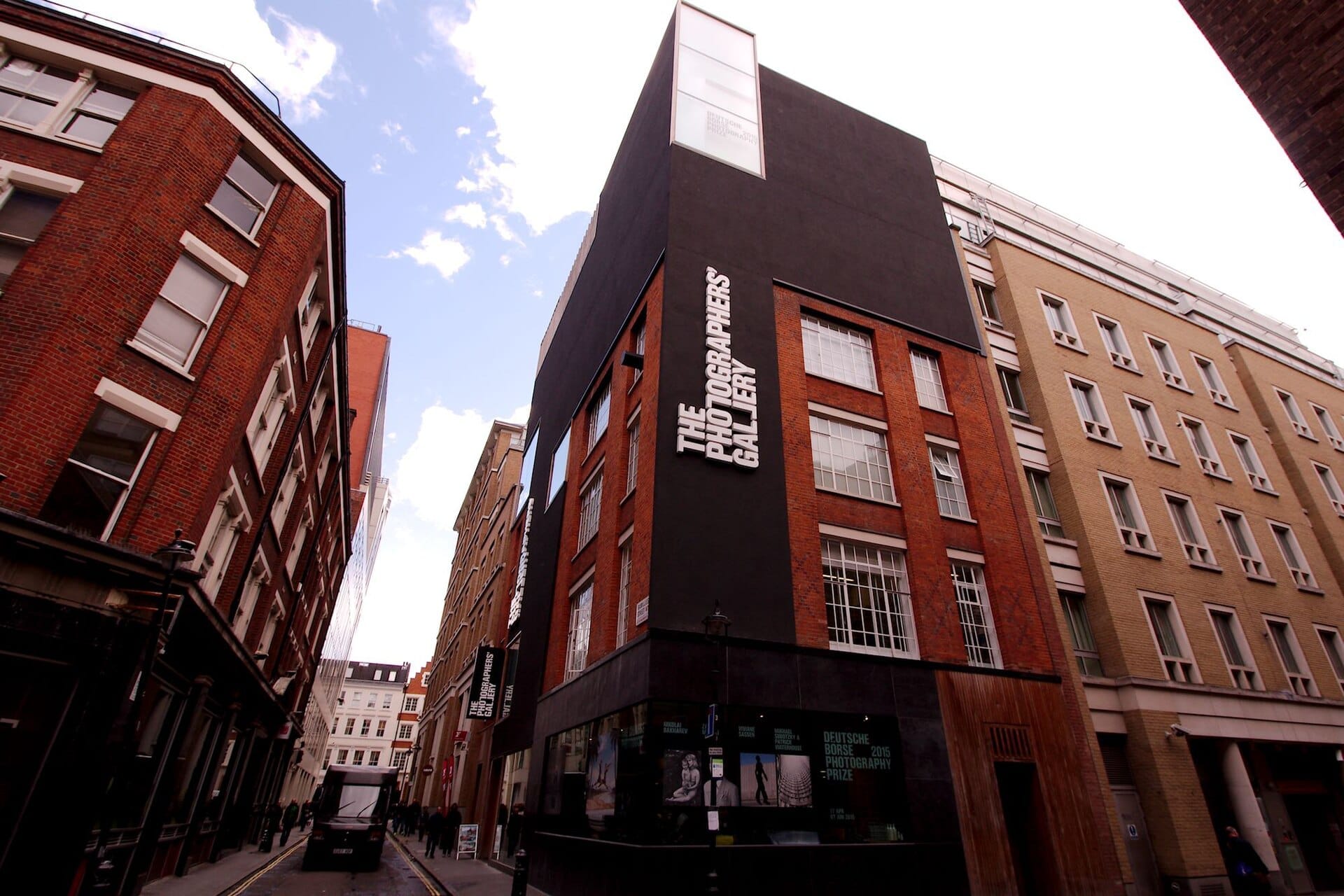
The Photographers' Gallery on Ramillies Street is the largest public gallery in London dedicated solely to photography. Spread across five floors in a purpose-built building on the edge of Soho, it combines ticketed exhibition spaces with a specialist bookshop, print sales room, café, and a free outdoor photography quarter — all within two minutes of Oxford Street.
Quick Facts
- Location
- 16–18 Ramillies Street, London W1F 7LW — border of Soho and Oxford Street, West End
- Getting There
- Oxford Circus (Bakerloo, Central, Victoria lines) — 3-minute walk
- Time Needed
- 1–2 hours for exhibitions; longer if you browse the bookshop or print gallery
- Cost
- Around £7–£8 standard entry (varies by exhibition); 50% off with National Art Pass. Outdoor Soho Photography Quarter is free.
- Best for
- Photography enthusiasts, contemporary art visitors, anyone wanting a serious cultural stop near Oxford Street
- Official website
- thephotographersgallery.org.uk
What Is The Photographers' Gallery?
The Photographers' Gallery is the largest public gallery in London devoted exclusively to photography. It opened on 14 January 1971, founded by Sue Davies in a converted Lyons Tea Bar at 8 Great Newport Street in Covent Garden — making it the UK's first public gallery dedicated solely to the medium. In May 2012 it relocated to its current purpose-designed building on Ramillies Street, created by the architects O'Donnell + Tuomey, just behind Oxford Street on the edge of Soho.
The building has five floors, each with a distinct function: exhibition galleries on multiple levels, an education studio, a specialist café, a print sales gallery, and one of the best photography bookshops in Europe. The architecture is quietly confident rather than showy — clean lines, exposed materials, and a staircase that doubles as a social spine through the building. It does not announce itself loudly from the street, which means plenty of passersby on Oxford Street never discover it is there.
💡 Local tip
The gallery extends onto Ramillies Place with the Soho Photography Quarter — a free outdoor exhibition space opened in 2022. You can absorb large-format photographic works at street level even if you decide not to buy a ticket.
The Exhibitions: What You Actually See Inside
The gallery runs a continuously rotating programme, typically presenting two to three major exhibitions at any one time across its upper floors. Shows span the full range of photographic practice: documentary and photojournalism, fine art photography, historical archives, fashion, portraiture, and experimental image-making. The programming leans toward seriousness and critical depth rather than crowd-pleasing retrospectives, which is one reason it commands genuine respect among photographers and curators internationally.
The most significant recurring event is the Deutsche Börse Photography Foundation Prize, one of the most prestigious awards in the medium. Established in 1996, it recognises photographers who have made a substantial contribution to photography in Europe in the preceding year. Each spring, the shortlisted artists' work is exhibited at the gallery, and the prize is awarded at a ceremony held there. If your visit coincides with the Deutsche Börse exhibition — typically running from late winter through spring — you are likely to see work that defines the direction of contemporary photography.
The gallery also hosts the Bar-Tur Photobook Award, reflecting its long-standing relationship with photobook culture. The bookshop component is not an afterthought: it stocks a depth of monographs, critical writing, and limited editions that is hard to find elsewhere in London. Even visitors who skip the paid exhibitions often spend serious time and money in there.
Tickets & tours
Hand-picked options from our booking partner. Prices are indicative; availability and final rates are confirmed when you complete your booking.
Official National Gallery highlights 1-hour guided tour
From 22 €Instant confirmationFree cancellationLondon National Gallery Entrance Ticket and Self-Guided Tour
From 9 €Instant confirmationBritish Museum and National Gallery Semi-Private Guided Tour
From 125 €Instant confirmationFree cancellationLondon National Gallery Ticket and Self-Guided Tour in Spanish
From 15 €Instant confirmation
The Building Floor by Floor
Ground floor is the entry point into the Soho Photography Quarter, where outdoor works are displayed along Ramillies Place free of charge. Inside, the ground level gives access to the bookshop and the print sales gallery, where original photographic prints — including works by established and emerging artists — are available to buy at a range of price points. This area is worth lingering in regardless of whether you pay for entry upstairs.
Paid entry covers the upper gallery floors, where exhibitions are spread across multiple levels connected by a central staircase. The spaces are flexible: some shows fill large open floors with a spare, gallery-white aesthetic; others make use of more intimate room configurations. Natural light is limited by design, allowing for controlled exhibition lighting that treats each photograph on its own terms. The scale of prints varies considerably between shows — some exhibitions reward close reading of small, quiet images; others hit you with room-sized projections.
The café sits within the building and provides a natural pause between floors. It is a functional rather than destination café — good for a coffee and a break, not a meal. The education studio hosts workshops and talks; check the online events calendar if this interests you, as some sessions are open to the public.
When to Visit and How It Feels at Different Times
Weekday mornings, particularly Tuesday and Wednesday, are when the gallery is at its quietest. The building absorbs a handful of visitors spread across multiple floors with little difficulty, and you can spend as long as you want in front of individual prints without anyone crowding you. This is the time to visit if photography is a serious interest and you want to read wall texts and look carefully.
Thursday and Friday evenings, when the gallery is usually open until 20:00, attract a different crowd — more students, local creatives, and people stopping by after work. The atmosphere becomes more sociable, the bookshop busier, and occasional opening events or talks take place during these extended hours. Weekend afternoons bring the highest footfall, particularly Saturdays, when visitors coming off Oxford Street discover the gallery almost by accident. The building handles moderate crowds well given its vertical layout, but the top gallery floors can feel congested during popular exhibitions.
ℹ️ Good to know
Opening hours: typically Monday–Wednesday 10:00–18:00, Thursday–Friday 10:00–20:00, Saturday 10:00–18:00, Sunday 11:00–18:00; always confirm on the official website as times can occasionally change. Closed Christmas Day, Boxing Day, and New Year's Day.
Weather has little effect on the indoor experience, but the Soho Photography Quarter on Ramillies Place is more enjoyable in dry conditions. The outdoor works are large-format and designed to be read at a distance, so a dry afternoon where you can stand back from the panels is preferable to huddling under a hood in the rain.
Getting There and Practical Logistics
Oxford Circus station (Bakerloo, Central, and Victoria lines) is the most convenient Underground stop, roughly three minutes' walk. Exit onto Regent Street or Oxford Street heading east, then cut south onto Ramillies Street. The street is quiet and slightly hidden from the main shopping thoroughfare, which contributes to the gallery's sense of being a deliberate escape from the commercial noise nearby.
Tottenham Court Road station (Central and Elizabeth lines) is also a manageable 8–10 minute walk via Soho (about 0.4 miles/600–700 metres). If you are combining a visit with other West End stops — the National Gallery and the National Portrait Gallery are both walkable from here — the gallery fits naturally into a half-day cultural circuit.
The building is described as wheelchair accessible, with lift access to the upper floors. Visitors with specific accessibility requirements should confirm details directly with the gallery before visiting, as exhibition installations and temporary configurations can affect movement through certain spaces.
💡 Local tip
If you hold a National Art Pass, entry is 50% off — bringing the standard ticket price down to approximately £5. Always check the official website for current exhibition pricing before visiting, as ticket prices vary by show.
Is It Worth Your Time? An Worth Knowing
The gallery is serious about photography in a way that not everyone will find immediately accessible. It does not curate for broad popularity. If you come expecting a retrospective of famous images you already know — iconic war photographs, celebrity portraits — you may find the current exhibition challenging or even opaque. The programming is deliberately forward-looking and often conceptually demanding.
For visitors with a genuine interest in photography as an art form, this is one of the best-value cultural stops in London. The ticket price is reasonable, the quality of work is consistently high, and the building provides a well-designed space for the medium. The free outdoor element on Ramillies Place means even a 15-minute detour from Oxford Street gives you something worthwhile.
Visitors looking primarily for sightseeing landmarks or entertainment-focused attractions will find a better fit elsewhere — the Tate Modern offers broader contemporary art programming, while the British Museum and the Natural History Museum provide free entry and significant scale. TPG is best understood as a specialist institution, not a general sightseeing stop.
It is also worth noting that if you are building a broader day in central London, the many free cultural institutions nearby mean you can balance a paid gallery visit with no-cost alternatives. The gallery fits particularly well into a three-day London itinerary that includes a Soho afternoon.
Insider Tips
- Check the events calendar on the official website before you go. The gallery hosts regular talks, artist conversations, and workshops — including public-facing sessions — that add significant depth to visiting an exhibition. Many of these take place on Thursday or Friday evenings during extended opening hours.
- The print sales gallery on the lower floors is a underused resource. Works range from affordable limited editions to investment-grade prints, and the staff are knowledgeable rather than pushy. Even if you are not buying, it is a low-pressure way to look at original photographic work up close.
- The bookshop stocks photography titles you will not find in general bookshops. If you are travelling and weight is an issue, photograph the spines of anything that interests you and order later — but the act of browsing the shelves in person surfaces books you would never have searched for online.
- The Deutsche Börse Photography Foundation Prize exhibition, usually on view from around February through May, is reliably the most important moment in the gallery's annual calendar. If your visit falls during this window, the ticketed exhibition is particularly worth the entry price.
- Ramillies Place, where the outdoor Soho Photography Quarter is displayed, is easy to miss because it runs parallel to the main entrance street. Walk around the side of the building and you find the large-format outdoor works without any admission cost — useful if you are short on time or budget.
Who Is The Photographers' Gallery For?
- Photography enthusiasts and practitioners looking for serious contemporary programming
- Cultural visitors who want a focused, mid-length museum experience away from the largest crowds
- Photobook collectors and anyone interested in photography publishing
- Travellers building a West End cultural afternoon who want something more specialised than the major national collections
- Students and practitioners in visual arts, design, or journalism who want to see work that is shaping the field
Nearby Attractions
Other things to see while in West End:
- British Library
The British Library holds over 170 million items spanning thousands of years of human thought, from the Magna Carta to Beatles lyrics. Entry to the building and permanent collection galleries is free, making it one of the most rewarding stops in central London for curious travellers.
- British Museum
The British Museum holds one of the world's great collections of human history and culture, spanning two million years across more than 60 free galleries. Entry to the permanent collection is free, but knowing how to navigate the scale of it makes the difference between a rewarding visit and an overwhelming one.
- Carnaby Street
Carnaby Street is the pedestrianised shopping district in Soho that defined the look of 1960s London and continues to draw fashion lovers, food hunters, and curious walkers today. Free to explore and five minutes from Oxford Circus, it rewards those who slow down and wander its connecting lanes.
- Coal Drops Yard
Coal Drops Yard is a redeveloped Victorian industrial estate in King's Cross, now home to independent retailers, restaurants, and bars set beneath strikingly restored brick vaults. The public outdoor spaces are free to enter and a short walk from King's Cross St Pancras station.