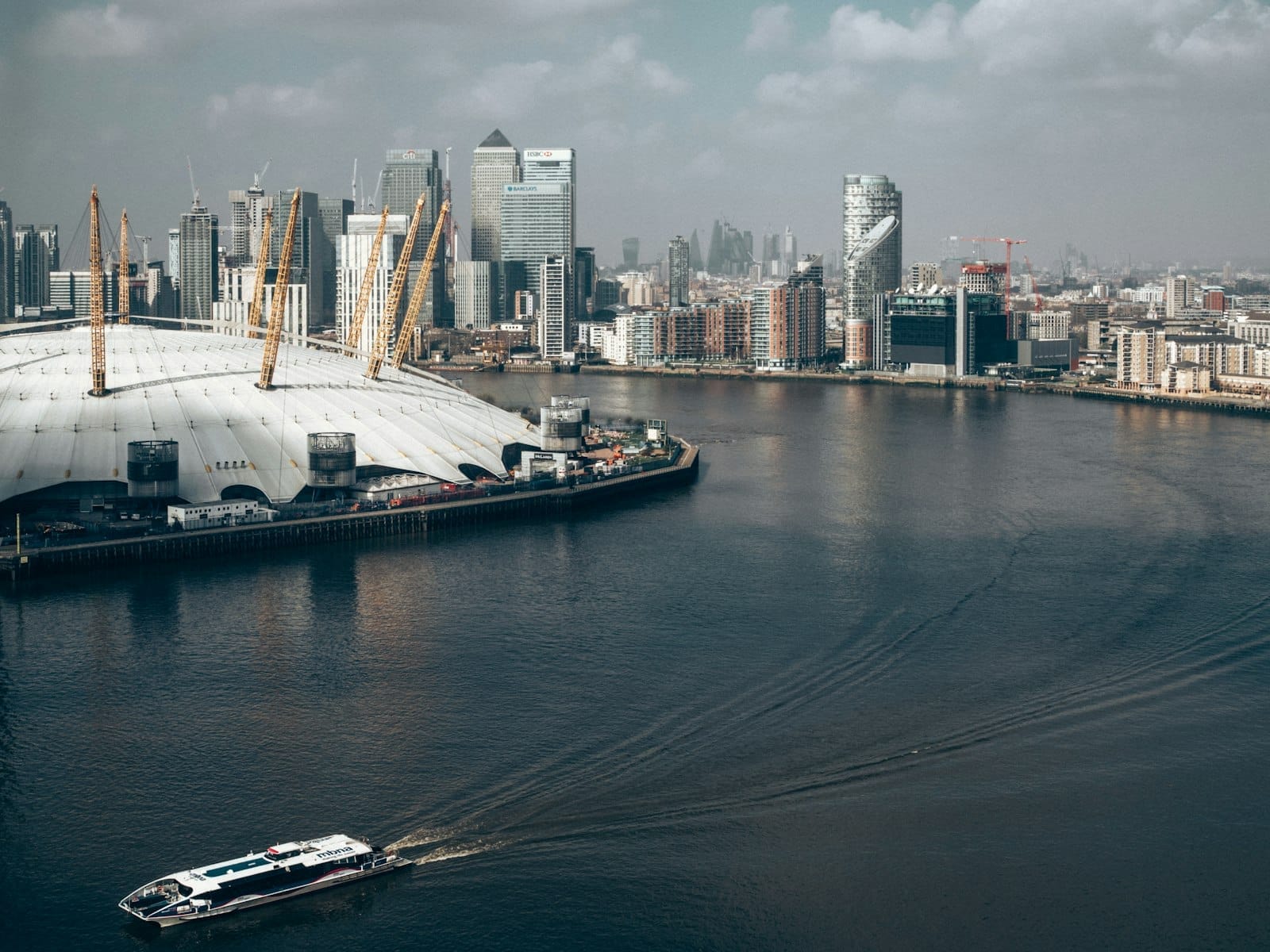
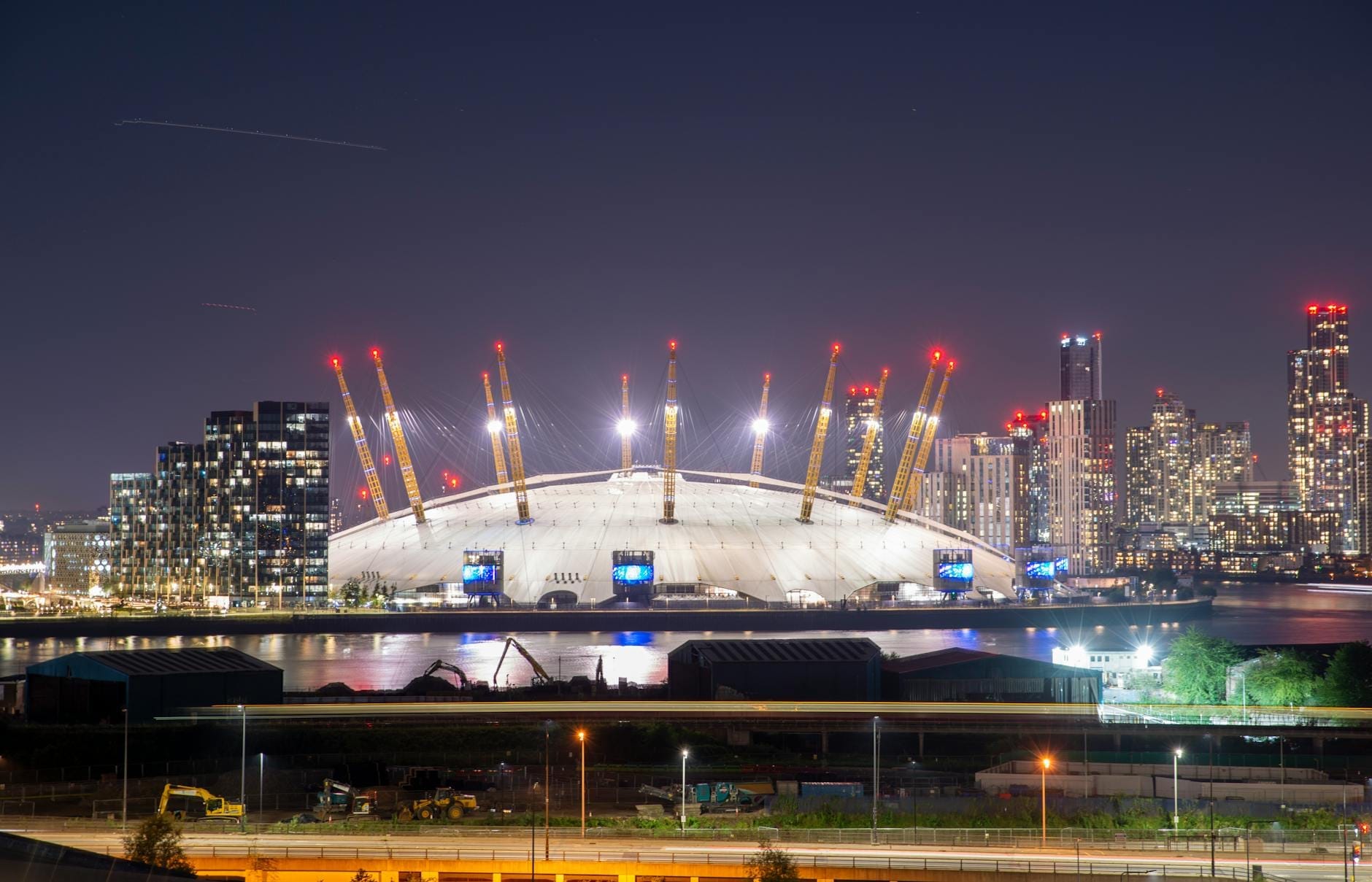
Canary Wharf and the wider Docklands sit on the Isle of Dogs in east London, where a sprawling former port has been replaced by glass towers, waterside plazas, and one of the capital's most ambitious urban regeneration stories. It is simultaneously a global financial hub and a surprisingly walkable waterfront district, with more character and history than its gleaming skyline suggests.
Where Victorian docks once handled the trade of an empire, Canary Wharf now rises in steel and glass as one of Europe's foremost financial districts. The contrast between the area's industrial past and its polished present is everywhere you look: cobbled quaysides beside corporate atriums, converted warehouses beside towers that rival the City of London's skyline. It is not a typical London neighbourhood, but that is precisely what makes it worth understanding.
Orientation
Canary Wharf occupies part of the northern side of the Isle of Dogs, a peninsula formed by a wide bend in the River Thames, about three miles east of the City of London. The Isle of Dogs sits within the London Borough of Tower Hamlets, and the Canary Wharf Estate itself covers roughly 97 acres, taking in Canary Wharf proper, Heron Quays, and the newer Wood Wharf development to the east.
The broader Docklands area extends well beyond the estate's boundaries. To the north and west, it connects through Poplar and Limehouse towards Whitechapel and Shoreditch. To the south, a short DLR ride or ferry crossing brings you to Greenwich. To the east, the Royal Docks — including ExCeL London and the area around London City Airport — continue the story of post-industrial transformation. The Thames forms the southern and western boundaries, giving the district a striking waterfront on multiple sides.
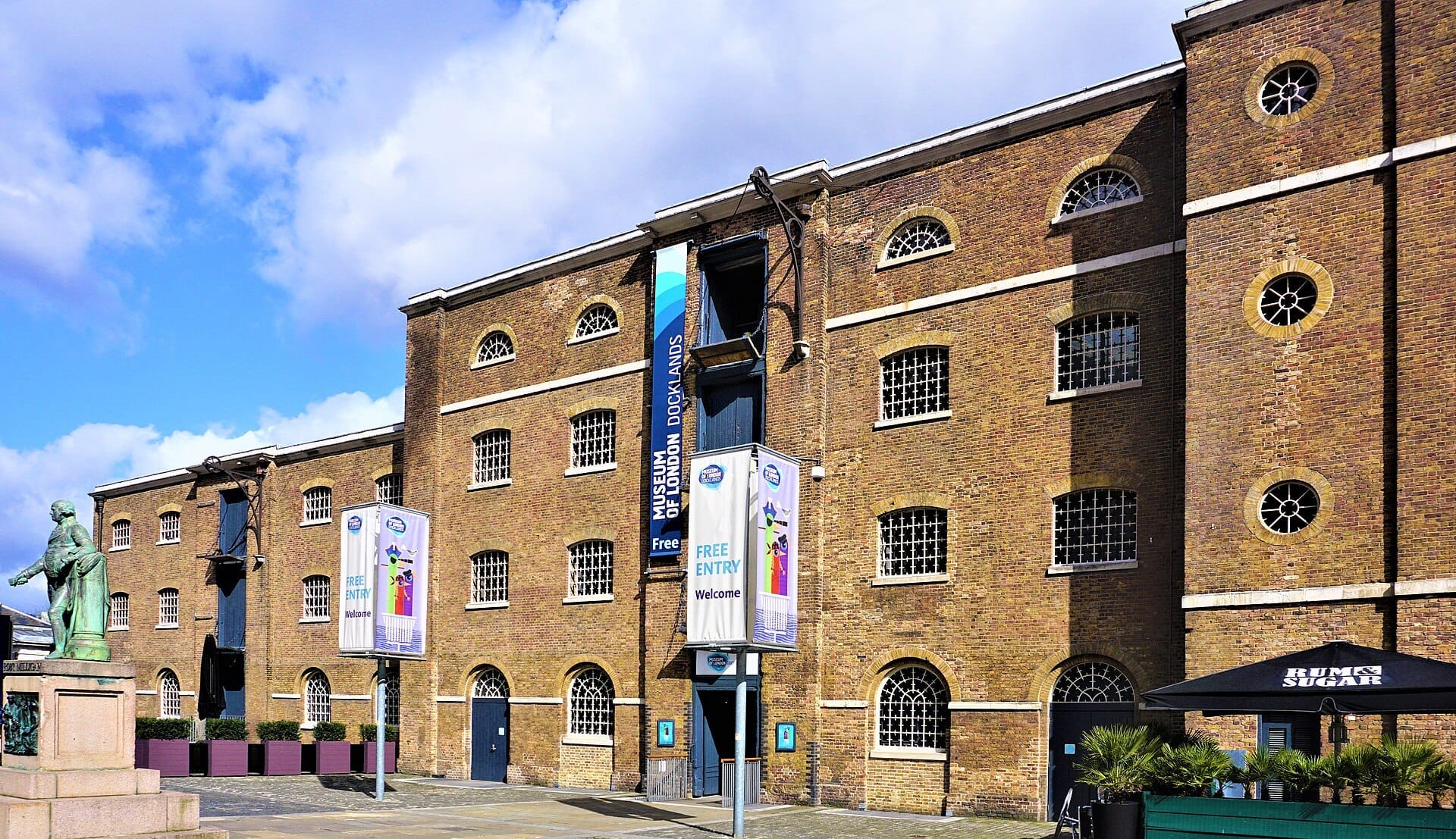
Mentally, it helps to think of Canary Wharf as the district's core, built around three main water features: West India Docks to the north, Millwall Inner Dock to the west, and South Dock to the south. These former trade docks are now ornamental stretches of water flanked by office buildings, restaurants, and public walkways. The nearby Museum of London Docklands sits in a converted sugar warehouse on the West India Quays, and gives the clearest sense of just how much this area has changed.
Character & Atmosphere
Canary Wharf operates on a weekday rhythm that few London neighbourhoods match for intensity. By 7:30 in the morning, the Jubilee Line platforms are packed with workers in suits, coffee cups in hand, moving with the focused efficiency of people who have very early meetings. The piazzas around Canada Square and Cabot Square fill with commuters crossing between towers, and the ground-floor retail corridors beneath the offices — which function almost like indoor streets — are already open and busy.
By late morning the outdoor spaces open up. The waterside walkways around West India Quays and Millwall Dock become pleasant to walk: wide, flat, and lined with benches looking across still water to the tower reflections opposite. In good weather, the lunchtime hour brings hundreds of office workers outside, sitting on the dock edges or crossing Westferry Circus with sandwiches. The light here in early afternoon, bouncing off the water and the glass facades, is unusually bright for an inner-city location.
After about 6pm on weekdays, the character shifts. The commuter tide reverses, the corporate restaurants fill up with after-work crowds, and the whole area takes on a slightly more relaxed register. On weekends, it is quieter still, particularly on Sundays — some visitors find this emptiness eerie, others find it refreshing. The shopping malls stay open, the waterfront remains pleasant, but the weekday kinetic energy is absent. If you are looking for a neighbourhood with consistent weekend life and street-level activity, Canary Wharf will feel subdued.
⚠️ What to skip
Canary Wharf is a corporate district first. Weekend visitors will find the area noticeably quieter, some restaurants closed or running reduced hours, and the streets far less active than during the working week. Plan accordingly if visiting Saturday or Sunday.
The architecture tells its own story. One Canada Square, completed in 1991, was once the tallest building in the UK and remains the area's defining tower, its pyramidal stainless-steel cap visible from much of east London. Around it, successive phases of development have added dozens of towers housing banks, law firms, and media companies. The estate is privately managed, which means the public spaces are clean and well-maintained, but also feel slightly controlled — more like a campus than a traditional London street network.
What to See & Do
The Museum of London Docklands is the single most rewarding cultural stop in the area. Housed in a Georgian warehouse on West India Quays — one of the oldest surviving structures on the estate — it traces the full history of the docks, from the Roman port through the height of imperial trade, the Blitz, the post-war decline, and the regeneration that produced today's skyline. Entry is free, and the building itself is worth the visit.
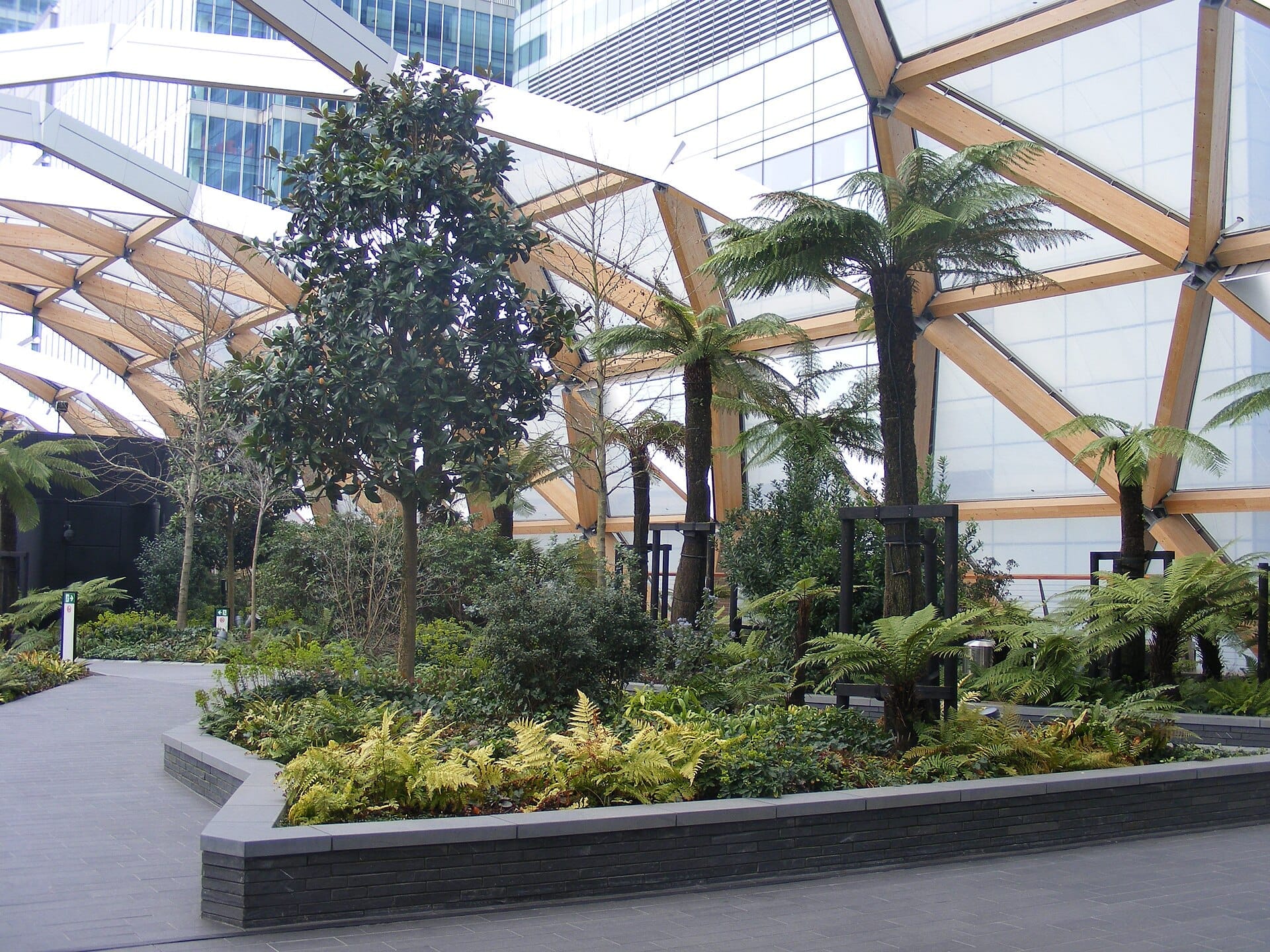
Crossrail Place Roof Garden, above the Elizabeth line station entrance, offers a surprising contrast to the corporate streets below. The garden is enclosed within a half-tunnel timber structure and planted with species from the longitudes the Elizabeth line passes through. It is free to enter and, given how few people seem to know about it, one of the more peaceful spots in the area. For broader context on London's remarkable garden spaces, see the guide to best parks in London.
Walking the waterfront requires no plan. From West India Quays, follow the dock edge south past the Canary Wharf estate and along the Millwall and South Docks. The water is calm and the views back toward the towers change constantly as you move. Continue south and you reach the Thames path, which offers open river views across to Greenwich. The full circuit of the Isle of Dogs, following the Thames path along the riverbank, takes about two hours at a comfortable pace and passes through residential Docklands neighbourhoods that feel entirely different from the corporate core.
Museum of London Docklands: free entry, Georgian warehouse on West India Quays
Crossrail Place Roof Garden: free, open daily, best in spring and summer
West India Quays waterfront walk: flat, scenic, good at any time of day
Isle of Dogs Thames path circuit: about two hours, river views throughout
Cabot Square and Canada Square: architectural landmarks, good for skyline photography
Billingsgate Market area: former fish market near West India Dock Road, interesting industrial heritage
💡 Local tip
The roof garden at Crossrail Place is free and rarely crowded. Bring lunch and eat with a view of the dock and the skyline — it is one of the more unusual and underused public spaces in east London.
Eating & Drinking
The food scene in Canary Wharf is extensive, corporate-oriented, and concentrated in the shopping malls and dock-side terraces. The Canary Wharf estate contains several indoor food halls and restaurant rows — particularly around Jubilee Place, the Westferry Circus and Crossrail Place shopping areas, and the ground-floor retail streets beneath the towers. Most major international chains have a presence here, alongside a range of mid-market and upscale restaurants catering to expense-account lunches.
The waterfront terraces along West India Quays and South Quay are the most atmospheric options for eating and drinking. On a warm evening, sitting outside with a view across the dock to the tower lights is pleasant. Restaurants along these quayside stretches tend toward the mid-to-upper price range, reflecting the corporate clientele they serve during the week.
Prices across the board run higher than the London average. A sit-down lunch at a mid-range restaurant will typically cost £18 to £30 per person, and dinner at a smarter quayside spot will push well above that. Budget travellers will find the food hall options in the malls more manageable, with counter-service meals available in the £10 to £14 range. There is a useful cluster of everyday cafes and sandwich shops along the internal walkways for quick, affordable daytime food.
For a wider range of independent restaurants and street food, the surrounding Docklands neighbourhoods offer more variety. Limehouse to the northwest and Poplar to the north have long-established Bengali and East Asian restaurants at much lower price points. The nearby Shoreditch and Whitechapel areas, accessible via DLR or bus, have a significantly richer independent food scene if you are willing to travel 15 to 20 minutes.
ℹ️ Good to know
Many restaurants in Canary Wharf operate reduced hours or close entirely on Sundays. If visiting on a weekend, check opening times in advance rather than assuming the same options will be available as on a weekday.
Getting There & Around
Canary Wharf is exceptionally well connected by public transport. The Jubilee line runs directly here from central London, with journey times of around 12 minutes from London Bridge and 17 minutes from Westminster. The Elizabeth line, which opened fully in 2022, added a high-frequency east-west connection, cutting journey times to Liverpool Street to around 6 minutes and to Tottenham Court Road to around 14 minutes. See the full guide to getting around London for wider transport context.
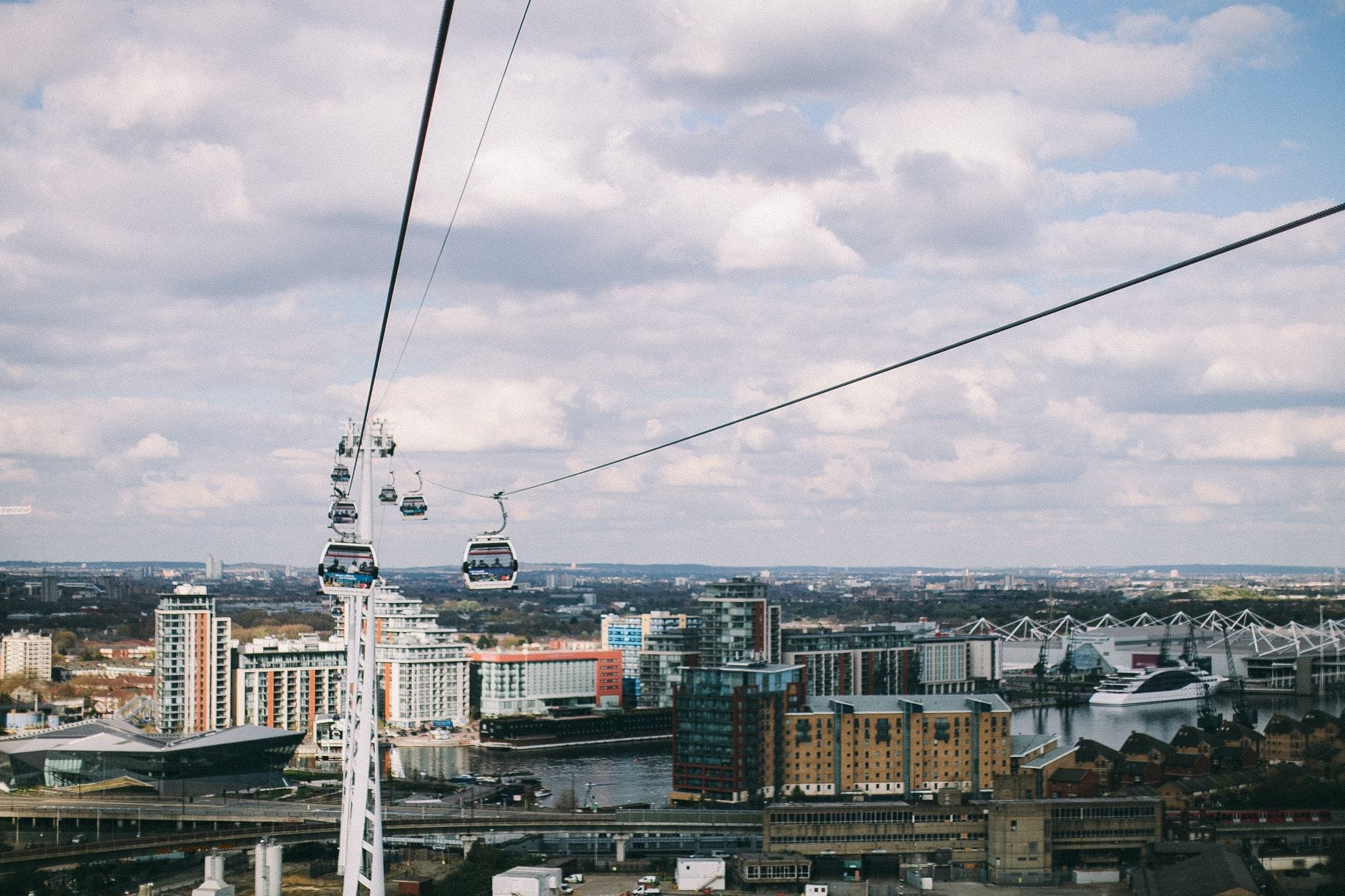
The Docklands Light Railway (DLR) is the third major rail link, and arguably the most useful for exploring the wider Docklands area. DLR services run from Canary Wharf station south to Cutty Sark and Greenwich (about 10 minutes), east to London City Airport (around 15 minutes via the Royal Docks route), north to Stratford and the Queen Elizabeth Olympic Park, and west toward Bank in the City of London. The DLR runs elevated for much of its route, giving excellent views over the docks and east London rooftops — taking a front seat gives you an almost cab-ride perspective of the area.
Uber Boat by Thames Clippers operates a river bus service from Canary Wharf Pier, connecting west to London Bridge City, Bankside, Blackfriars, Embankment, and ultimately to Putney, and east toward North Greenwich. This is a slower but far more scenic way to travel, and the views of the Canary Wharf skyline from the river are among the more dramatic in London. Journey times to London Bridge are around 20 to 25 minutes, with Oyster and contactless fares applying.
Within the Canary Wharf estate, everything is walkable. The main plazas and dockside walkways are flat, well-lit, and clearly signed. The estate covers a compact enough area that no single destination within it should require more than 10 to 15 minutes on foot from the main stations. Walking north toward Limehouse or Poplar takes about 20 to 30 minutes; walking south along the Thames path toward Greenwich takes around 45 to 60 minutes depending on pace.
Day Trips and Nearby Neighbourhoods
Canary Wharf's greatest travel asset may be its position as a transit hub for east and southeast London. Greenwich is just a few stops south on the DLR, or a short Thames Clipper ride across the river. The combination of the Old Royal Naval College, the National Maritime Museum, the Royal Observatory and Greenwich Park makes it a full day in its own right, and the contrast with the corporate towers of Canary Wharf could hardly be sharper.
Heading north on the DLR takes you to Stratford and the Queen Elizabeth Olympic Park, the legacy site of the 2012 London Olympics. The park is large, free to enter, and home to several major venues and cultural institutions. Westfield Stratford City, adjacent to the park, is one of the largest urban shopping centres in Europe.
To the west, the Elizabeth line or Jubilee line puts Shoreditch and the East End within easy reach, offering a very different kind of east London experience: independent galleries, street art, weekend markets, and a lively bar scene. The City of London is also just a few minutes west, with landmarks including St Paul's Cathedral and the Sky Garden accessible on a short DLR or Jubilee line journey.
Where to Stay
Canary Wharf is not a natural first choice as a base for a leisure visit to London. The hotel stock is dominated by business-oriented four and five-star properties, which offer high standards of comfort and excellent transport links but come with prices calibrated to corporate travellers. Rates can be notably lower on weekends, when business demand drops, making a Friday or Saturday check-in more financially reasonable.
The practical case for staying here is strongest if you have business in the area, are arriving via London City Airport, or prioritise having a quiet, clean, well-connected base over being immersed in neighbourhood life. From Canary Wharf, central London is 15 to 20 minutes by tube, and southeast London sights including Greenwich are closer still. The absence of nighttime noise — this is not a neighbourhood with late-night bars spilling onto residential streets — makes it a comfortable sleep option.
Leisure travellers who want more neighbourhood texture and a wider range of accommodation price points should look at Shoreditch to the northwest or, further west, the South Bank, which offers Thames views and proximity to major sights at a greater variety of price ranges. For broader advice on where to base yourself across London, the where to stay in London guide covers all the main options.
TL;DR
Canary Wharf is London's second financial district, built on the former West India Docks on the Isle of Dogs, about three miles east of the City of London.
Best visited on weekdays, when the area has real energy; weekends are noticeably quiet, with reduced restaurant hours and empty plazas.
The Museum of London Docklands and the Crossrail Place Roof Garden are genuine highlights; the waterfront walks around the old dock basins are free and rewarding.
Outstanding transport connections via the Jubilee line, Elizabeth line, DLR, and Thames Clippers make it an efficient base for exploring east and southeast London, including Greenwich.
Well-suited to business travellers and those who prefer a quiet, modern, well-connected base; less suited to travellers seeking neighbourhood character, independent restaurants, or nightlife.
Afternoon tea in London ranges from grand hotel rituals at £95 per person to relaxed neighbourhood spreads under £50. This guide covers the top venues across every budget, how to book, what to wear, and which hyped spots are actually worth it.
London has more world-class museums than almost any city on Earth, and the majority are free. This guide covers the essential institutions across art, history, science, design, and beyond, helping you plan your visits with confidence.
London has more parkland per capita than almost any major world city, and its eight Royal Parks alone cover just under 4,900 acres of public green space. This guide covers the finest parks across the city, from the grand central Royal Parks to wilder escapes on the edges of Greater London.
London rewards visitors in every season, but the experience shifts dramatically depending on when you go. This guide breaks down crowd levels, weather, prices, and key events month by month so you can plan a trip that matches exactly what you want from the city.
London's skyline is one of the world's great visual spectacles, mixing centuries-old domes with glass towers and royal parks. This guide covers the best places to see it all — free rooftop gardens, paid observation decks, hilltop parks, and river vantage points that reward at any time of day.
London is perfectly placed for world-class day trips. Whether you want a Tudor palace on the Thames, a city of dreaming spires, or a prehistoric stone circle, all of it is within two hours. This guide covers the best options, how to get there, and what to prioritise.
London is one of the world's great free cities. From world-class museums and contemporary art galleries to royal parks, iconic walks, and spectacular viewpoints, this guide covers the best experiences in London that are completely free to enjoy.
London has one of the most comprehensive urban transport networks in the world, covering 9 million residents across 1,572 km² of Greater London. This guide breaks down every option, from the Tube to river buses, with fare details, airport transfer routes, and insider tips to save time and money.
London gave the Wizarding World its real-world addresses, from the glass-roofed arcade that stood in for Diagon Alley to the Islington townhouses of Grimmauld Place. This guide covers every major filming location, the Warner Bros. Studio Tour, how to get there, and what to skip — with practical advice on crowds, costs, and what each spot actually looks like in person.
London has six airports, and choosing the wrong one can add hours and serious cost to your journey. This guide breaks down Heathrow, Gatwick, Stansted, Luton, City, and Southend with practical advice on every transport option, realistic fares, and which airport actually suits your trip.
London's food scene is one of the most diverse and underrated in the world. This guide cuts through the noise to tell you what to actually eat, which neighbourhoods to target, what things cost, and how to avoid the tourist traps.
London is one of the world's great cities, spanning 1,572 km² across 32 boroughs with 9.1 million residents and over 300 languages spoken. This guide covers everything a first-time visitor needs: how to get in, how to get around, which neighborhoods to prioritize, what to book in advance, and the practical details that make the difference between a stressful trip and a great one.
London rewards those who look beyond the headline attractions. From ruined churches turned secret gardens to world-class free museums tucked down side streets, these are the places locals love and most visitors miss entirely.
London's hop-on hop-off buses are everywhere, but are they the smartest way to see the city? This guide breaks down the main operators, what you get for your money, who benefits most, and when to skip the pass entirely.
December transforms London into one of Europe's most atmospheric winter destinations. From Hyde Park Winter Wonderland to the South Bank's riverside market stalls, this guide covers everything you need to plan a memorable Christmas visit, including what to skip, what to book in advance, and how to get around without the crowds.
Summer in London runs from late June through August and delivers a different city: long daylight hours, royal parks at their peak, and a packed calendar of festivals, sporting events, and outdoor culture. This guide covers what to expect, what to book in advance, and what to skip.
Three days in London is enough to cover the essential sights, explore a couple of neighbourhoods, and get a real feel for the city. This itinerary is built around practical logistics, clear priorities, and current ticket prices so you can spend less time planning and more time exploring.
Five days in London is enough to cover the iconic landmarks, explore distinct neighbourhoods, and still have time to eat and drink well. This day-by-day guide cuts through the noise with specific recommendations, realistic timings, and practical advice on what is worth your time.
London's market scene spans 1,000-year-old food halls, world-famous antiques rows, and creative street markets under Victorian ironwork. This guide covers the best across every category, with practical tips on when to go and what to expect.
London's nightlife spans everything from underground warehouse raves in Greenwich to velvet-rope cocktail bars in Mayfair. This guide breaks down the best areas, top clubs, practical costs, and the timing tricks that separate a great night from an expensive disappointment.
London has a reputation for expense, but a well-planned trip can be surprisingly affordable. From world-class free museums to discount West End seats and Oyster card tricks, this guide covers every practical angle for stretching your pounds in one of Europe's great capitals.
The London Pass promises access to 100+ attractions for a flat daily fee. But does it actually save you money? This guide breaks down the real costs, the best use cases, and who should skip it entirely.
The River Thames is the backbone of London, stretching 215 miles through southern England and shaping the city's history, skyline, and daily life. This guide covers sightseeing cruises, the Thames Path, riverside eating and drinking, water sports, and the key landmarks you'll pass along the way, with practical advice on what's worth your time and what to skip.
London is a remarkably safe city for its size, but petty theft and tourist-targeted scams are real risks. This guide covers the most common threats, where they happen, and exactly what to do to protect yourself and your belongings.
London's shopping scene spans everything from 300-store Oxford Street to Sunday flower markets in the East End. This guide covers the best streets, markets, and stores by category, with practical advice on timing, crowds, and where your money actually goes furthest.
Getting from London to Amsterdam is one of Europe's most popular city-to-city trips. This guide breaks down every option — Eurostar, budget flights, overnight ferry, and long-distance coach — with realistic journey times, current price ranges, and advice on which suits your trip.
Covering every way to travel between London and Edinburgh, this guide breaks down real journey times, current price ranges, and which option makes sense depending on your budget, schedule and priorities. The answer is not always what you expect.
There are three realistic ways to get from London to Paris: the Eurostar train, a short-haul flight, or an overnight coach. This guide breaks down journey times, realistic fares, booking strategy, and the practical details that trip-planning sites usually skip.
London rewards walkers more than almost any other city. From the medieval lanes of the Square Mile to the riverbanks of the South Bank, the best way to understand this city is on foot. This guide covers guided group tours, official City of London walks, tip-based 'free' options, and self-guided routes, with practical advice on pricing, booking, and when to show up.
London is one of the world's great family destinations, with free world-class museums, royal parks, river adventures, and enough child-friendly attractions to fill a week. This guide cuts through the noise with practical advice on what's worth booking in advance, what's actually free, and how to keep the whole family sane on the Tube.
From Mayfair's grand hotels to Knightsbridge's world-class restaurants and private cultural experiences, this guide covers everything you need to plan a high-end stay in London. Expect specific neighbourhood advice, booking strategies, and clear assessments of where the money is well spent.
London is one of the world's great photography cities, with iconic landmarks, colourful streets, and unexpected architectural gems around every corner. This guide covers the 20 most photogenic spots, from the obvious classics to the lesser-known spaces that will make your feed stand out.
Notting Hill Carnival is Europe's largest street festival, drawing over a million visitors to west London every August Bank Holiday weekend. This guide covers the 2026 schedule, the full route, how to get there, what to eat, and what to expect on each day.
Open House Festival is London's annual architecture celebration, opening over 800 buildings, tours, and talks across all 33 boroughs — most of them free. This guide covers dates, booking strategy, neighbourhood planning, and which events fill up fastest.
London rewards couples who know where to look. This guide covers the most romantic experiences in the city — from sunset river cruises and West End theatre to free viewpoints and atmospheric parks — with practical advice on what's worth the price and what you can enjoy for nothing.
From the Ceremony of the Keys at the Tower of London to the summer opening of Buckingham Palace's State Rooms, London's royal sites are more accessible than most visitors realize. This guide covers what to see, when to go, what to book in advance, and what to skip.
London rewards visitors who go beyond the obvious. This guide covers the best things to do in London across culture, history, food, and neighbourhoods, with practical tips on what's worth your time, what to skip, and how to do it all without overpaying.
London's West End is one of the world's great theatre destinations, with around 40 major venues and over 17 million audience visits a year. This guide covers everything from buying tickets and finding discounts to getting there, picking the right seat, and knowing what to expect on the night.
Choosing where to stay in London shapes your entire trip. This guide breaks down the city's best neighbourhoods by location, transport access, price range, and atmosphere, so you can book with confidence rather than guesswork.
Getting into Wimbledon is more accessible than most people think — if you know the system. This guide covers every official ticket route, real price ranges, The Queue strategy, and practical tips for making the most of your day at the world's most famous tennis tournament.